

Food reactions – causes, types, and solutions
More than 45 percent of adults in Central Europe regularly experience digestive problems after eating. Anyone who lives mindfully and values preventive healthcare knows how confusing it can be to distinguish between allergies, intolerances, and other food reactions. In this article, you will learn how personalized tests and targeted knowledge can help you gain clarity about your individual symptoms and optimally adjust your diet.
Table of contents
- Definition of a food reaction and differentiation
- Types: Allergies, intolerances, cross-reactions
- Common symptoms and underlying mechanisms
- Diagnostic methods and laboratory medicine procedures
- Risks of self-diagnosis and common misconceptions
- Personalized prevention and nutrition strategies
Key findings
| Point | Details |
|---|---|
| Definition of food reactions | Food reactions go beyond allergies and are divided into immunological and non-immunological reactions. |
| Main types of reactions | Allergies, intolerances, and cross-reactions have different mechanisms and symptoms, while allergies can potentially be life-threatening. |
| Diagnostic methods | A multi-stage diagnostic process is crucial for precisely identifying specific food reactions. |
| Risks of self-diagnosis | Self-diagnoses are often inaccurate; a professional medical diagnosis is essential to avoid risks. |
Definition of a food reaction and differentiation
Food reactions are complex health phenomena that encompass far more than simple allergies. The German Federal Institute for Risk Assessment defines them as undesirable physical responses after consuming certain foods, triggered by various physiological mechanisms.
These reactions can generally be divided into two main categories: immunological and non-immunological reactions. Immunological reactions, particularly allergies, arise from an abnormal immune response in which harmless proteins are interpreted as a threat. Non-immunological reactions, such as intolerances, are instead based on metabolic problems, such as enzyme deficiencies that prevent the breakdown of certain food components.
The crucial difference lies in the underlying pathomechanisms. While an allergy is a specific IgE-mediated immune response that occurs quickly and is often severe, food intolerances usually manifest as gradual, less acute symptoms. These may include digestive problems, skin reactions, or systemic inflammation.
Pro tip: Keep a food diary to systematically identify potential triggers for food reactions and analyze them with a nutritionist.
Types: Allergies, intolerances, cross-reactions
Food reactions are a complex health phenomenon comprising three main types: allergies, intolerances, and cross-reactions. The Allergy Information Service provides a precise overview of these different types of reactions.
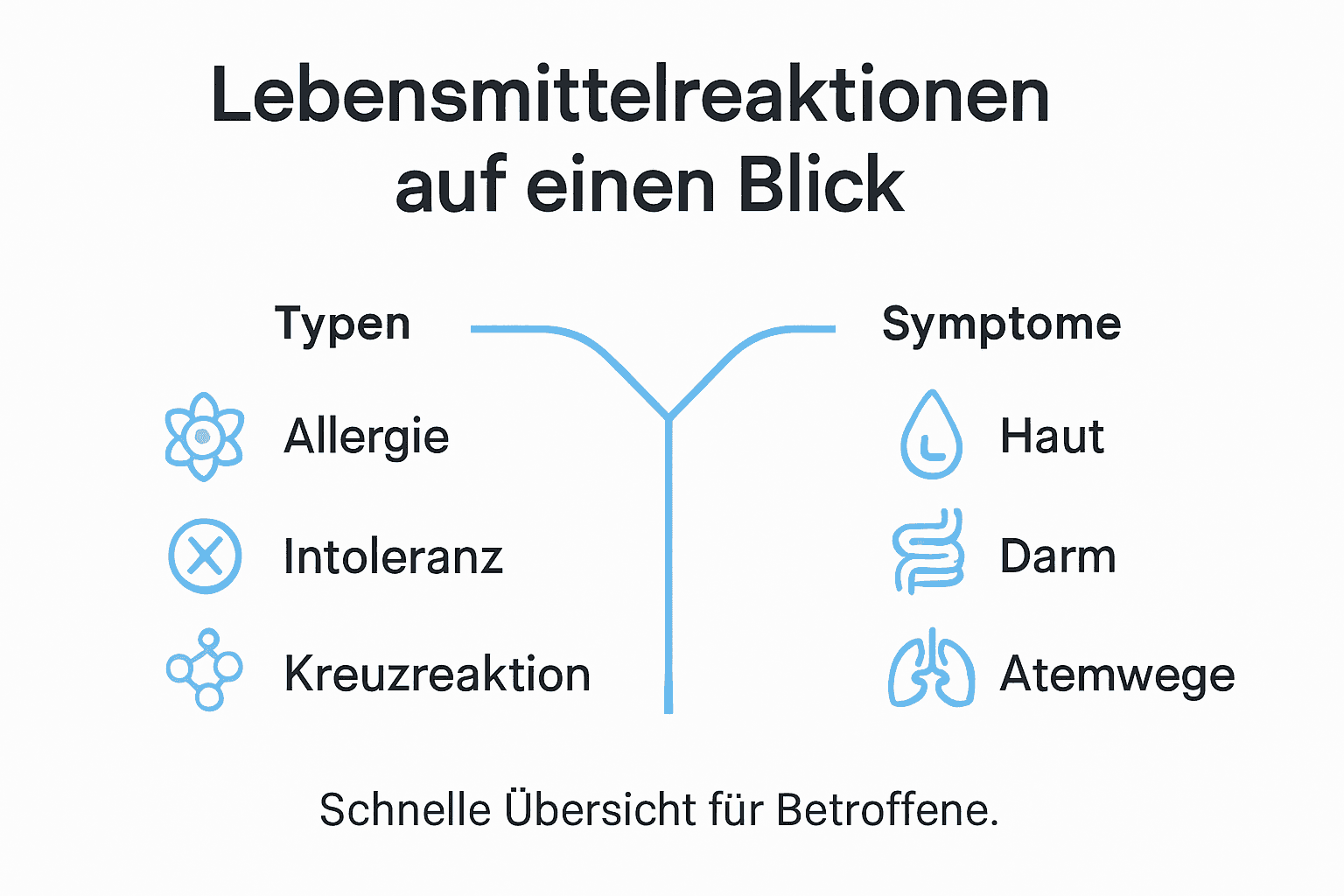
Food allergies are generally immunologically mediated reactions in which the immune system overreacts. They can be classified into two subgroups: IgE-mediated allergies, which occur quickly and are often severe, and cell-mediated allergies with delayed symptoms. Typical examples include peanut allergies, milk allergy, and shellfish allergy, in which even the smallest amounts of the allergen can trigger a reaction.
Intolerances, on the other hand, are based on metabolic problems without the involvement of the immune system. Cross-allergies occur when the immune system recognizes similar protein structures in different foods or allergens. A classic example is pollen allergy, which can lead to reactions to pome fruit. The best-known intolerances are lactose intolerance, in which the body lacks the enzyme needed to break down milk sugar, and fructose malabsorption, which impairs the breakdown of fruit sugar.
The third category consists of cross-reactions, which occur when pre-existing allergies lead to reactions to structurally similar allergens. Here, the immune system and protein structures interact in complex ways.
Pro tip: Document your diet and possible reactions systematically to identify triggers and patterns in your individual food reactions.
The following table provides a concise overview of the key differences between allergies, intolerances, and cross-reactions:
| Characteristic | Allergy | Intolerance | Cross-reaction |
|---|---|---|---|
| Reaction mechanism | Immune system, IgE antibodies | Enzyme deficiency, metabolism | Immune system, similar proteins |
| Time of onset | Minutes after consumption | Hours to days | Shortly after exposure |
| Common examples | Peanuts, milk, fish | Lactose, fructose | Pollen and apples |
| Severity of symptoms | Acute, potentially life-threatening | Moderate, gradual | Variable, often mild |
Common symptoms and underlying mechanisms
AOK describes food reactions as complex health phenomena with a wide range of different symptoms that vary depending on the type of reaction. Allergic reactions typically manifest as rapid and intense physical responses, while intolerances tend to cause more subtle complaints.
In the case of allergies, symptoms such as skin rashes, itching, swelling, and, in severe cases, breathing difficulties predominate. These reactions are usually triggered by IgE antibodies and can occur within minutes of food contact. Anaphylactic shock is particularly dangerous, as it can cause life-threatening circulatory and respiratory problems.

Intolerances, by contrast, primarily manifest through gastrointestinal complaints. Typical symptoms include bloating, diarrhea, abdominal pain, and digestive disorders. Leaky gut syndrome can be a possible consequence of persistent food reactions, in which the intestinal barrier is damaged and nutrients are no longer absorbed optimally.
Pro tip: Keep a detailed food diary to document individual triggers and symptom patterns precisely and analyze them with medical professionals.
Diagnostic methods and laboratory medicine procedures
The Allergy Information Service describes a multistage diagnostic process for food reactions that combines various scientific methods. The laboratory diagnostic assessment includes highly sensitive examination techniques that provide precise insight into the body's reaction mechanisms.
The most important diagnostic procedures can be divided into several main categories. Blood tests play a central role, particularly in detecting specific IgE antibodies. These tests provide information about allergic sensitization and help identify potential triggers. Skin tests, such as the prick test, are also performed; suspected allergens are applied to a small area of skin to observe immediate reactions.
Testing for intolerances also requires specific diagnostic methods, such as breath tests for lactose intolerance or molecular diagnostic procedures. The challenge test is considered the gold standard, in which suspected foods are consumed under medical supervision to document individual reactions. Molecular allergy tests also enable a detailed analysis of protein structures and can precisely identify cross-reactions.
Pro tip: Carefully document all previous symptoms and reactions before visiting the doctor to support comprehensive and targeted diagnostic testing.
Below is an overview of typical diagnostic methods and their respective benefits:
| Diagnostic method | Area of application | Diagnostic value |
|---|---|---|
| Blood test (IgE) | Allergies | Identifies sensitization |
| Prick test | Immediate reaction to allergens | Shows skin reactions |
| Breath test | Lactose/fructose intolerance | Measures breakdown products |
| Challenge test | Allergies & intolerances | Confirms an individual reaction |
Risks of self-diagnosis and common misconceptions
The Allergy Information Service urgently warns of the dangers of self-diagnosis for food reactions. More than half of all self-diagnoses prove to be incorrect, posing potential health risks and leading to unnecessary dietary restrictions.
The most common everyday misconceptions arise from misinterpreting symptoms. Many people mistake nonspecific digestive complaints for a food allergy, even though an intolerance or entirely different causes may actually be involved. Food intolerance tests can help provide initial indications but in no way replace a professional medical diagnosis.
Self-directed elimination diets are particularly dangerous because they can lead to nutrient deficiencies. Experts strongly advise seeking medical advice before making drastic dietary changes. Common misconceptions include assuming that all symptoms after eating indicate an allergy or that symptoms must always occur immediately after consumption.
Pro tip: Keep a detailed food diary and consult a doctor before eliminating foods from your diet on your own.
Personalized prevention and nutrition strategies
The German Nutrition Society shows that modern prevention strategies go far beyond traditional dietary recommendations. Personalized prevention takes individual genetic, metabolic, and psychological factors into account to develop tailored health plans.
The core elements of personalized nutrition strategies include a detailed analysis of individual risk factors. Genetic testing and DNA-based nutritional analyses make it possible to identify specific metabolic predispositions and nutritional needs. Modern technologies such as microbiome tests, wearables, and AI-supported analysis methods help develop precise prevention plans.
The future of nutritional prevention lies in taking a holistic approach. The focus is shifting away from standardized recommendations toward individually tailored strategies. Lifestyle, genetic predisposition, metabolic processes, and personal health goals are systematically linked to identify and minimize health risks at an early stage.
Pro tip: Continuously collect data about your diet, digestion, and physical reactions to create an increasingly accurate foundation for personalized health strategies.
Understanding food reactions and taking targeted action
Food reactions such as allergies and intolerances pose significant challenges for many people. The exact cause often remains unclear, and symptoms such as digestive problems or skin reactions significantly impair quality of life. With targeted allergy & intolerance tests from mybody®x, you can gain clarity. Our scientifically validated at-home blood tests provide precise results that reliably help you identify your individual triggers.
Take the opportunity to take your health into your own hands and choose personalized solutions for effective prevention and dietary changes. Also discover our offers for support with digestive problems and optimize your diet with evidence-based analysis and personalized recommendations. Get started with mybody®x at https://mybody-x.com and experience how evidence-based diagnostics and innovative tests can sustainably improve your quality of life.
Frequently asked questions
What are food reactions?
Food reactions are undesirable physical responses after consuming certain foods, triggered by immunological or non-immunological mechanisms.
What are the main types of food reactions?
The main types are allergies, intolerances, and cross-reactions. Allergies are immune-mediated reactions, while intolerances are based on metabolic problems. Cross-reactions occur when similar protein structures in different foods trigger a reaction.
How can food reactions be diagnosed?
Diagnosis is carried out using blood tests, skin tests, breath tests, and challenge tests. These procedures help identify the type of reaction and determine potential triggers.
What should I do if I have symptoms of a food reaction?
It is recommended to keep a food diary to systematically identify possible triggers. You should also consult a doctor or nutritionist to properly assess your symptoms and look for solutions.



Share now:
Speed up your metabolism: 8 home remedies that really work
How to create and make the most of your personalized nutrition plan