

How to create and make optimal use of your personalized nutrition plan
More than 60 percent of all people in Central Europe struggle with digestive problems and stagnant weight despite eating mindfully. Choosing the right foods often remains unclear when individual genetic and microbiological differences are not taken into account. Anyone who truly wants to optimize their health should use the latest methods of personalized nutrition planning. Here you will learn how innovative analyses enable personalized nutrition strategies that are effective and scientifically sound.
Table of contents
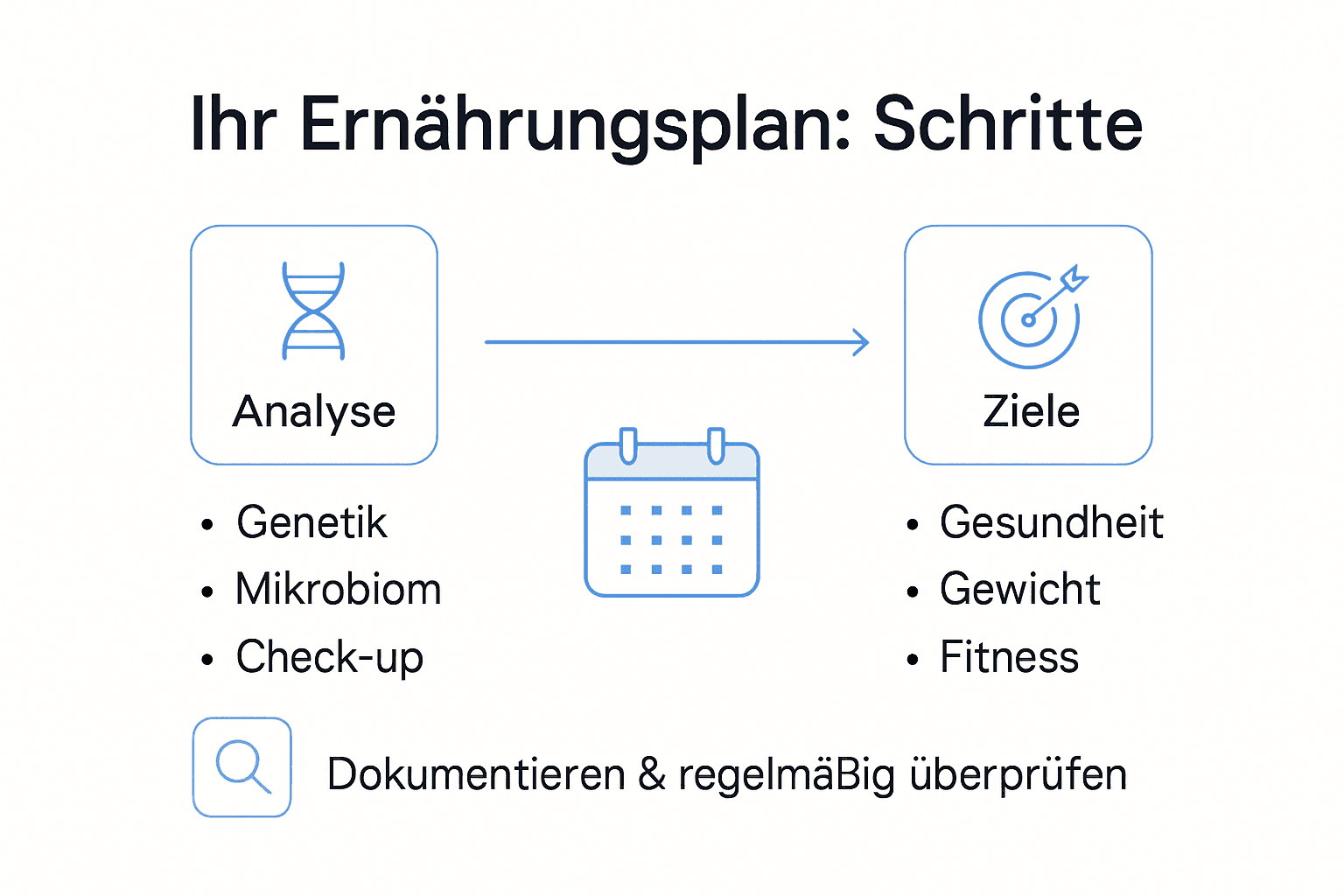
- Step 1: Analyze your genetic and microbiological data
- Step 2: Determine your personal dietary needs and goals
- Step 3: Integrate scientific recommendations into your plan
- Step 4: Create a practical nutrition plan for everyday life
- Step 5: Review and optimize your progress
Quick summary
| Important point | Explanation |
|---|---|
| 1. Genetic analysis serves prevention | Genetic testing can identify individual health risks at an early stage. This enables targeted measures to promote health. |
| 2. Define clear nutrition goals | A systematic analysis of your health goals is essential. This makes it possible to formulate realistic and achievable nutrition goals. |
| 3. Integrate scientific recommendations | Based on current research findings, dietary recommendations should be incorporated into the plan to achieve optimal results. |
| 4. Develop a flexible nutrition plan | A practical nutrition plan is important for ensuring adherence and enjoyment of your diet. It should be flexible and suited to everyday life. |
| 5. Document and review your progress | Continuous monitoring of dietary habits is essential. Through logging and tracking, adjustments can be made promptly. |
Step 1: Analyze your genetic and microbiological data
Modern nutritional medicine now offers you the opportunity to understand your health on an entirely new level. With a genetic analysis of nutritional interactions, you can gain precise insights into your individual metabolic processes and nutrient needs.
The first step in creating your personalized nutrition plan begins with a comprehensive data analysis. Your genetic markers and microbiological information are examined to determine how your body processes specific nutrients and which foods are optimal for you. Modern genetic tests enable you to identify health risks at an early stage and develop targeted preventive nutrition strategies.
Pro tip: Keep your analysis results in a safe place and have nutrition experts interpret them individually.
The following overview shows how you can make targeted use of genetic and microbiological analyses in your nutrition plan:
| Type of analysis | Goal setting | Typical findings |
|---|---|---|
| Genetic analyses | Risk assessment, prevention | Response to carbohydrates, fats, caffeine |
| Microbiome analysis | Digestive optimization | Gut microbiota composition, intolerances |
Step 2: Determine your personal dietary needs and goals
As part of your personalized nutrition plan, you now need to define your individual health and nutrition goals precisely. European food safety authorities recommend a scientifically sound approach that takes your specific life situation, health status, and personal needs into account.
Determining your dietary goals involves a systematic analysis. This includes considering aspects such as weight management, performance enhancement, prevention, or specific health challenges. The plate model allows you to flexibly adapt your meals to your individual preferences and energy needs. It is important to formulate realistic and measurable goals that fit your daily life.
Pro tip: Document your dietary goals in writing and regularly review their feasibility and effectiveness.
Step 3: Integrate scientific recommendations into your plan
Scientific dietary recommendations from the German Nutrition Society provide a solid foundation for a balanced, health-promoting nutrition plan. These recommendations are based on current scientific findings and can be individually adapted to your personal needs.
Scientific findings are incorporated through a targeted analysis of your eating habits and consideration of current research results. The DGE's mathematical model enables you to combine health considerations with environmental protection concerns and develop a holistic approach to nutrition. When doing so, ensure that your meals are composed in a balanced way that takes both your individual health goals and ecological aspects into account.
Pro tip: Review your nutrition plan regularly and adapt it to new scientific findings and your personal development.
Step 4: Create a practical nutrition plan for everyday life
Creating a practical nutrition plan requires careful alignment with your individual circumstances and goals. The plan must be flexible and realistic so that it can be seamlessly integrated into your daily life.
When planning, the first step is to determine your individual energy needs and align them with your personal nutrition goals. Use tools and templates to help you structure meals and take nutrient requirements into account. Make sure your plan is designed not only to work in theory but also to be practical and enjoyable.

Pro tip: Plan your meals in advance and prepare them over the weekend to ensure spontaneity and flexibility in your nutrition plan.
Step 5: Review and optimize your progress
Methodologically valid dietary surveys and digital tracking tools give you the opportunity to continuously analyze and optimize your nutrition plan. These methods enable an objective assessment of your nutrient intake and help you make targeted adjustments.
Systematic self-monitoring and motivating strategies are essential for the long-term success of your dietary change. Keep regular food records, set clear interim goals, and compare your progress with the goals you originally set. Stay flexible and be ready to adjust your plan as needed.
Pro tip: Document your progress in a food diary and take monthly measurements to objectively assess your development.
This table compares various methods for monitoring nutritional progress:
| Method | Benefits | Typical use |
|---|---|---|
| Food diary | Detailed self-documentation | Longitudinal analysis |
| Digital tracking tools | Automatic evaluation | Daily updates |
| Monthly measurements | Objective progress monitoring | Goal review |
Create your personalized nutrition plan with mybody®x
A personalized nutrition plan is the key to more energy, better health, and lasting well-being. The challenges described in the article, such as precisely analyzing your genetic and microbiological data and identifying nutrient deficiencies early, can be handled optimally with professional support. The combination of DNA tests for metabolism, targeted intolerance tests, and monitoring your nutrient intake enables a scientifically sound, individually tailored diet.
Start your journey toward a personalized nutrition plan now with the certified, easy-to-use tests from DNA Metabolism Tests for Your Optimal Nutrition – mybody®x. At the same time, discover our At-Home Intolerance Tests | mybody®x for digestive well-being and use the Detect & Prevent Nutrient Deficiencies – At-Home Tests | mybody® – mybody®x to identify deficiencies at an early stage.
Visit mybody-x.com and benefit from state-of-the-art diagnostics, free consultation, and a data-protection-compliant process. Lay the foundation for your personalized nutrition and take control of your health for long-term success.
Frequently asked questions
How do I start creating my personalized nutrition plan?
To begin creating your personalized nutrition plan, first analyze your genetic and microbiological data. Take a genetic test and consult a nutrition expert to identify your specific nutrient needs.
What personal nutritional needs should I consider when planning?
When planning, you should consider your health goals, lifestyle, and any potential health challenges. Set specific and measurable goals that are both realistic and suited to your daily life.
How do I incorporate scientific nutrition recommendations into my plan?
Incorporate scientific recommendations by analyzing your current eating habits and comparing them with the latest research findings. Make sure your meals are balanced and support your individual health goals.
What are effective methods for reviewing my nutrition progress?
Effective methods for reviewing your progress include keeping a food diary, using digital tracking tools, and taking regular monthly measurements. Document your progress and compare it with your goals at set intervals.
How can I make my nutrition plan practical for everyday life?
To make your nutrition plan practical for everyday life, keep it flexible and adaptable to your circumstances. Plan your meals in advance to avoid spontaneous decisions and promote healthy eating habits.
How do I adjust my nutrition plan over time?
Adjust your nutrition plan by regularly reviewing your progress and considering new scientific findings. Set aside time every 4–6 weeks to critically review your goals and results and make any necessary changes.



Share now:
Food Reactions – Causes, Types, and Solutions
7 Helpful Tips for Testing at Home for Your Health