

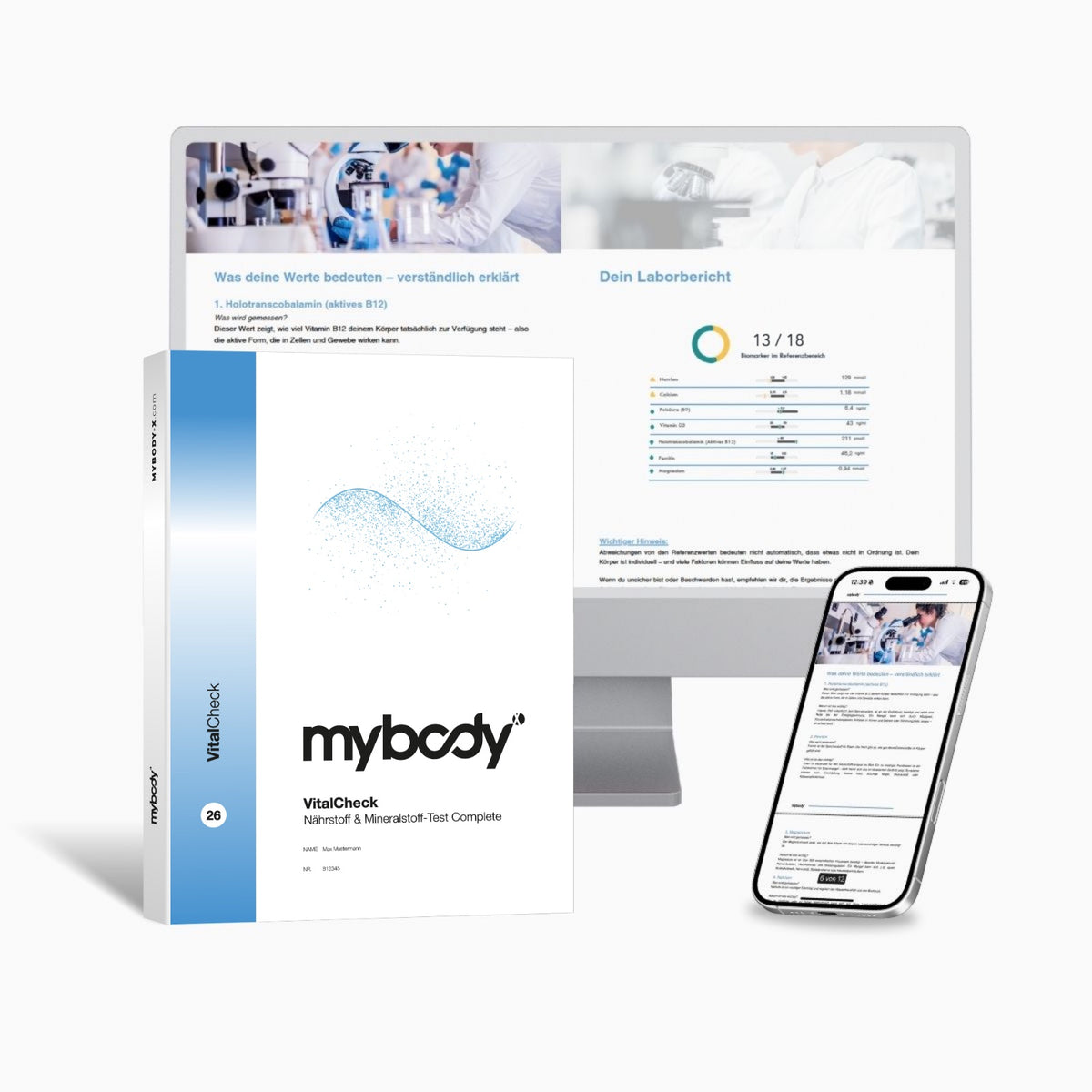

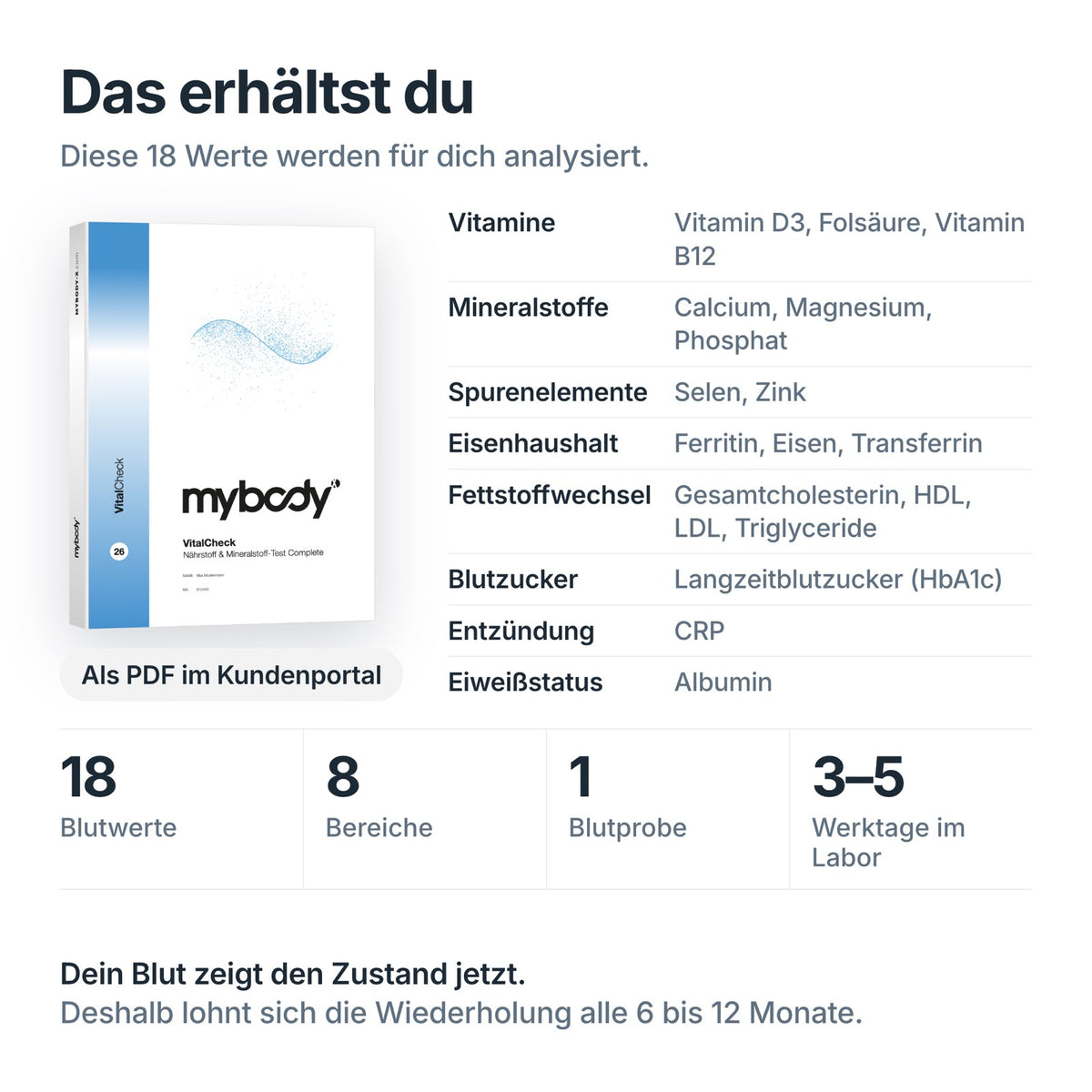

VitalCheck | Complete Nutrient & Mineral Test

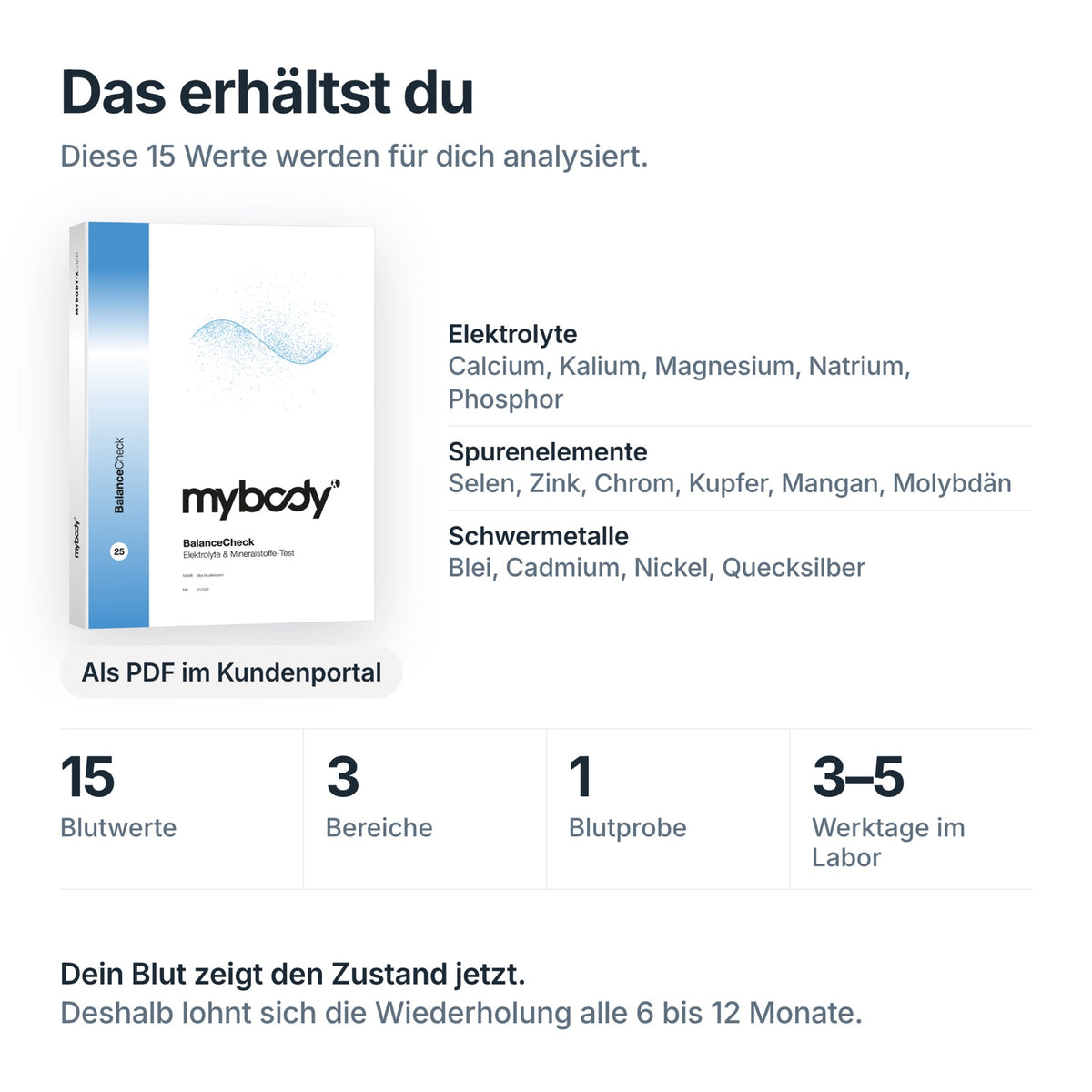

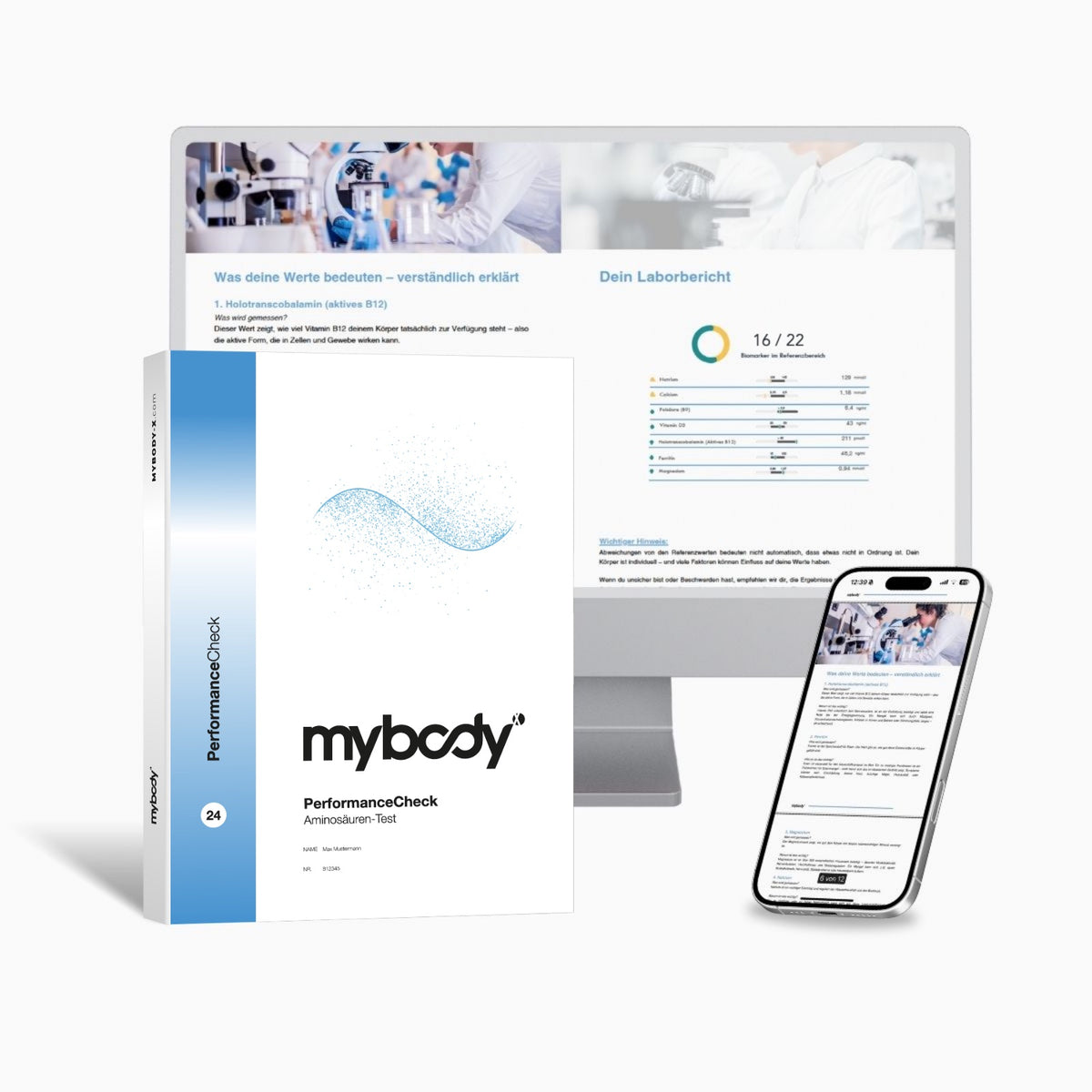

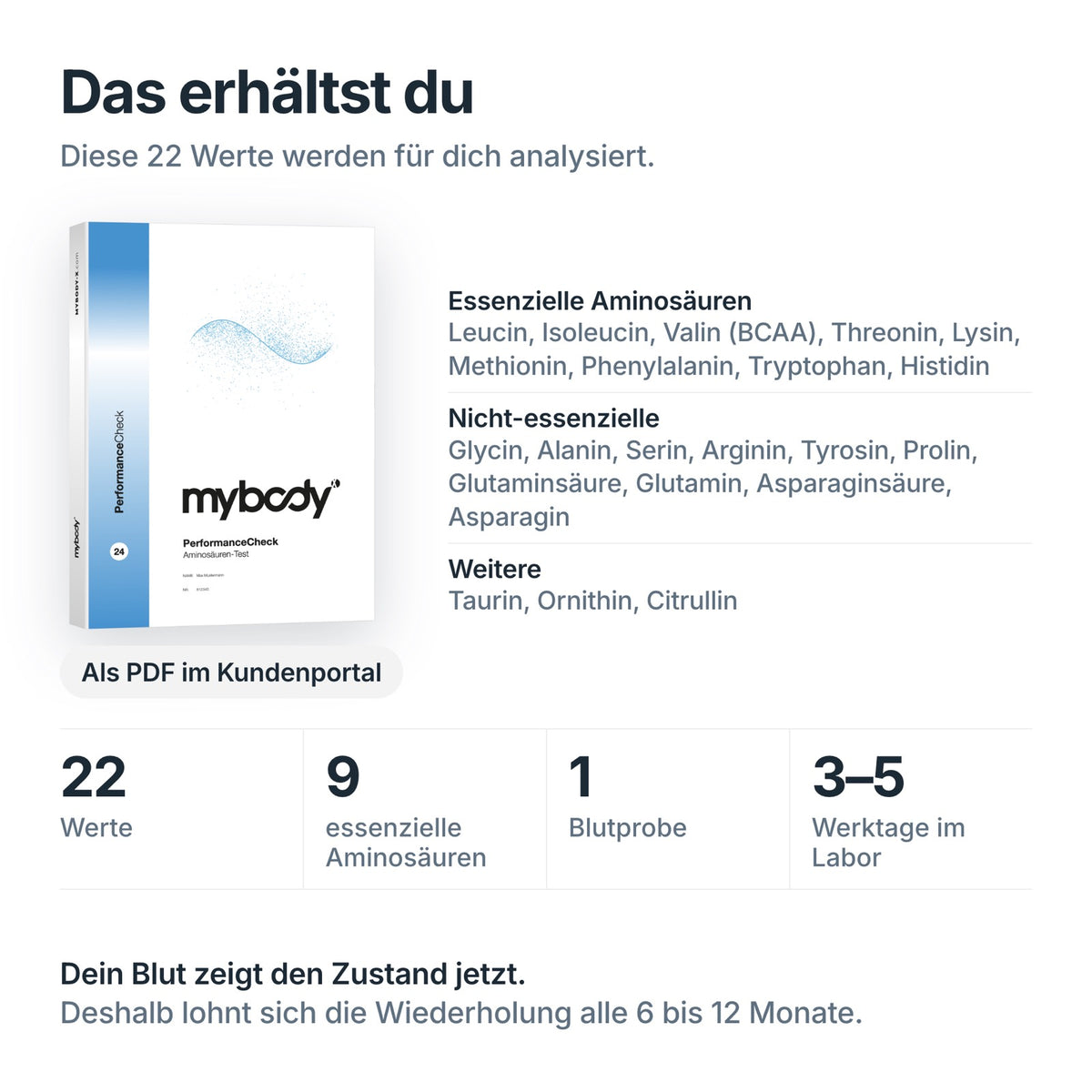

PerformanceCheck | Amino Acid Test
What’s behind a (nutrient) vitamin deficiency?
A vitamin or nutrient deficiency occurs when your body does not receive sufficient essential vitamins, minerals, or trace elements. These vital nutrients are involved in almost all important bodily functions—from energy metabolism to immune defense. If they are lacking over an extended period, the body can no longer function optimally.
Common causes include an unbalanced diet, too few fresh foods, stress, sleep deprivation, gastrointestinal diseases, a disrupted microbiome, or an increased need due to exercise, growth, pregnancy, or medication. Too little sunlight can also lead to a pronounced vitamin D deficiency.
Because the symptoms are often nonspecific—fatigue, hair loss, difficulty concentrating, susceptibility to infections, or muscle cramps—a deficiency often remains unnoticed for a long time. A blood test is therefore the most reliable way to find out which vitamins your body is actually lacking and how you can specifically improve your nutrient intake.
mybody® gives you valuable clarity
Highest quality standard
Our analyses are not only ISO-certified, but are also recognized as medical self-tests.
Personal customer service
You will receive a free consultation and discussion of your results reports from us.
Scientific analyses
Our detailed reports are based on your information and analysis results.

Why Get a Blood Test for Vitamin Deficiency?
A blood test if you suspect a vitamin deficiency is the most reliable way to determine which nutrients your body is actually lacking. Many symptoms, such as fatigue, hair loss, a weakened immune system, or concentration problems, are nonspecific—they may indicate a vitamin deficiency, but they can also have entirely different causes. Without laboratory analysis, it often remains pure speculation.
A blood test precisely measures important markers such as vitamin D, B12, folate, ferritin/iron, magnesium, zinc, or omega-3. This gives you a clear overview of your actual nutritional status and helps you avoid unnecessary or incorrect supplementation.
A mybody® blood test is very easy to perform at home: collect capillary blood, send in the sample, and receive a detailed results report with personalized recommendations a few days later. This tells you exactly which measures—diet, supplements, or lifestyle changes—are genuinely useful for sustainably improving your vitamin levels.
A blood test therefore provides certainty instead of guesswork—and is the first step toward more energy, a stronger immune system, and long-term well-being.
Causes of a Possible Vitamin Deficiency
Vitamin deficiency often develops gradually and can have many possible causes—far beyond “poor nutrition”:
Common causes:
- Unbalanced Diet or frequent consumption of processed foods
- Too Little Sunlight → vitamin D deficiency
- Vegetarian/Vegan Diet → risk of B12, iron, and zinc deficiency
- Stress & Lack of Sleep → increased vitamin & mineral consumption
- Gastrointestinal Conditions (e.g., irritable bowel syndrome, celiac disease) → impaired absorption
- Disrupted Microbiome → reduced nutrient utilization
- Hormonal Changes (e.g., menstruation, pregnancy)
- Age & Medications (e.g., Metformin, acid blockers)
Many people do not notice a deficiency until symptoms have already progressed. An early test helps identify deficiencies in time, before they lead to chronic problems.
Understanding Vitamin Deficiency in Everyday Life
A vitamin deficiency can affect your well-being in almost every area of life—even if you generally eat a healthy diet. This is because vitamins perform essential functions:
- Energy Production (B Vitamins, Magnesium)
- Immune System (Vitamin C, D, Zinc, Selenium)
- Skin, Hair & Nails (Vitamin A, B7/Biotin, Zinc)
- Mood & Nervous System (B12, B6, Omega-3)
- Bones & Muscles (Vitamin D, Calcium)
If just one link in this chain is missing, the entire metabolism suffers. Fatigue, muscle tension, skin problems, flaky skin, depressive moods, or susceptibility to infections can result from a single vitamin deficiency.
That is why it is important to know your actual status—instead of treating symptoms only superficially.
Optimize your diet with a blood test—from the comfort of your home
A blood test shows you which vital nutrients your body is actually lacking. The mybody® tests are simple and convenient:
- Order the test kit
- Take a capillary blood sample from your fingertip
- Send the sample to a certified laboratory
- Online results report with clear recommendations
The report shows you which vitamins are in the normal range, which are slightly low, and which urgently need to be improved. You will also receive specific guidance:
- Which foods you should incorporate more
- Whether supplements are useful and in what form
- Which lifestyle factors (sun, stress, sleep) affect your levels
This allows you to optimize your diet specifically, and you will often notice improvements in your energy levels, skin, and sleep after just a few weeks.
What consequences can vitamin deficiency have?
Untreated vitamin deficiency can cause both short-term symptoms and long-term health problems. Possible consequences include:
Short-term consequences:
- Exhaustion & low energy
- Poor concentration
- Weak immune system
- Mood swings
- Muscle weakness
- Hair loss & brittle nails
- Skin problems, redness & dryness
Long-term consequences:
- Vitamin D deficiency → bone loss, susceptibility to infections, muscle weakness
- Iron/ferritin deficiency → anemia, shortness of breath, reduced performance
- B12 deficiency → nerve damage, memory problems
- Folate deficiency → changes in blood count
- Omega-3 deficiency → inflammation, concentration problems
- Zinc/selenium deficiency → hormonal fluctuations, metabolic disorders
An early test therefore protects you not only from acute deficiency, but also from long-term damage.
Why does my diet affect my vitamin balance?
Your vitamin balance depends heavily on how you eat, because the body cannot produce many vitamins itself. But it’s not just about what you eat, but also about how your body processes food:
Diet influences your vitamin status because:
- Too few fresh foods → too few vital nutrients
- Too much sugar & processed foods → nutrient deficiency despite high calorie intake
- Gut flora determines → how many vitamins you absorb
- Stress & alcohol → increase vitamin consumption
- Fat-soluble vitamins (A, D, E, K) → need sufficient healthy fats
- Plant-based diet → requires B12, iron & zinc intake
So, your diet determines how well supplied you are with vitamins—but only a blood test shows you in black and white which levels are actually lacking.
Identify vitamin deficiencies and take targeted action
Headaches caused by vitamin deficiency – causes and solutions. Headaches can be a sign of a vitamin deficiency. In particular, a deficiency in B vitamins, such as vitamin B12, can cause these symptoms. A balanced diet rich in these vitamins can help. If symptoms persist, it is advisable to have your vitamin levels checked.
Iron deficiency as a cause of fatigue and difficulty concentrating. Iron deficiency often manifests as fatigue, difficulty concentrating, and headaches. These symptoms are caused by reduced oxygen supply to the body. An iron-rich diet including meat, legumes, and leafy green vegetables can help meet the body’s needs. If a deficiency is suspected, a blood test should be performed.
Vitamin deficiency as a possible migraine trigger. Migraine attacks may be triggered by a deficiency in certain vitamins, such as vitamin D and B vitamins. Ensuring an adequate supply of these nutrients may help reduce the frequency and intensity of attacks. It is advisable to check vitamin levels regularly and take supplements if necessary.
Difficulty concentrating due to inadequate nutrient intake. A deficiency in essential nutrients, such as iron and B vitamins, can lead to difficulty concentrating and reduced mental performance. A balanced diet containing these micronutrients supports cognitive function. If concentration problems persist, it is advisable to check your nutrient intake.
Recognize the symptoms of vitamin B12 deficiency early. Vitamin B12 deficiency can cause fatigue, difficulty concentrating, and neurological symptoms. Vegans and older people are particularly at risk. Early diagnosis through a blood test enables targeted treatment and prevents long-term health problems.
The role of vitamin D in preventing headaches. Vitamin D plays an important role in overall well-being. A deficiency may be associated with symptoms such as fatigue and headaches. Regular sun exposure and, if necessary, taking dietary supplements can help keep vitamin D levels within the optimal range.
FAQs - You asked, we answer:
Why should I regularly check my nutrient intake?
A balanced supply of nutrients is essential for energy, performance, and overall well-being. The Nutrient | VitalCheck Basic helps you identify potential deficiencies early and address them specifically. This allows you to effectively prevent fatigue, concentration problems, and other symptoms.
What distinguishes the VitalCheck Basic from the VitalCheck Complete?
VitalCheck Basic focuses on analyzing essential nutrients such as vitamin D3, magnesium, and iron. VitalCheck Complete offers a more comprehensive examination, including additional vitamins, minerals, and trace elements, to provide a detailed picture of your nutrient levels.
How can the Fitness | LifestyleCheck improve my physical performance?
The Fitness | LifestyleCheck analyzes important markers such as creatine kinase, cholesterol levels, and vitamin B12, which provide insights into muscle health, metabolism, and the cardiovascular system. With this information, you can develop targeted training and nutrition strategies to achieve your fitness goals efficiently.
How does sample collection work for mybody® tests?
Sample collection is conveniently done from home. You will receive a test kit with detailed instructions. After collecting the sample, send it in the enclosed return envelope to our certified laboratory. Within a few days, you will receive a detailed results report with personalized recommendations.
How long will it take to receive my test results?
Once your sample arrives at the laboratory, you will generally receive your results within 10 to 15 business days. They will be made available to you digitally, including specific recommendations for optimizing your nutrient intake and fitness.
Are mybody® tests suitable for everyone?
mybody® tests are suitable for anyone who wants to proactively improve their health. Whether you are physically active, have specific health concerns, or simply want to ensure that your body is optimally nourished, mybody® tests provide valuable insights into your health status.