
Leaky gut test: How to easily find clarity about your gut health
Do you often feel tired even though you've had enough sleep? Do you constantly struggle with skin problems or are you plagued by recurring digestive issues? These could be the first subtle signals from your body indicating a "leaky gut" —a compromised or permeable intestine. A test can clarify whether your intestinal barrier is truly weakened and allowing unwanted substances into your bloodstream.
What your body tells you about a leaky gut

Imagine your intestinal wall as an extremely fine, intelligent filter. When it's intact, it only lets through what your body truly needs: vital nutrients, vitamins, and minerals. At the same time, it keeps out everything harmful – undigested food residue, toxins, and bacteria. A perfect protective shield.
In leaky gut syndrome, this protective barrier develops cracks. The tight connections between the intestinal cells, the so-called "tight junctions," loosen. Suddenly, particles that have absolutely no business being there can enter your body. Your immune system, of which around 70% resides in the gut , recognizes the invaders and immediately sounds the alarm.
The problem? This constant state of alert triggers low-grade inflammation throughout the body. This is precisely why the symptoms of leaky gut are so incredibly diverse and are often not directly associated with the abdomen.
More than just stomach aches: the hidden signals
Many people immediately think of bloating, cramps, or diarrhea when they have intestinal problems. But a leaky gut can manifest itself in completely different ways. The constant immune activity drains your body of energy and can lead to symptoms that significantly impact your daily life.
Pay attention to whether any of these signs seem familiar:
- Digestive chaos: You constantly have a bloated stomach, irregular bowel movements, cramps, or feel uncomfortably full after eating.
- Sudden intolerances: Foods you used to love suddenly cause you problems.
- Skin problems: Unexplained acne, eczema, or rashes that just won't go away.
- Persistent exhaustion: You constantly feel tired and lacking in energy, even after a full night's sleep. Many describe this as "brain fog," a kind of mental fog.
- Joint pain: Nonspecific, sometimes migrating pain in the joints can indicate silent inflammation in the body.
- Weak immune system: You constantly catch colds or every infection that's going around.
These symptoms don't all have to occur at the same time. Often it's a gradual process with varying intensity, which makes diagnosis so difficult.
Typical symptoms and their connection to leaky gut
This table summarizes common symptoms that may indicate increased intestinal permeability and briefly explains the possible connection.
| symptom | Possible link to leaky gut |
|---|---|
| Chronic digestive problems | A disrupted intestinal barrier impairs normal digestion and nutrient absorption. |
| New food intolerances | Undigested food components enter the bloodstream and trigger an immune response. |
| Skin problems (acne, eczema) | Pro-inflammatory substances from the intestines put a strain on the body and can manifest themselves through the skin. |
| Persistent fatigue & brain fog | Constant immune activation consumes a lot of energy; inflammatory messengers can impair brain function. |
| Autoimmune diseases | Leaky gut is discussed as a possible trigger, as the immune system overreacts and can attack the body's own tissue. |
| Joint pain | Systemic inflammation that begins in the gut can affect the joints. |
It is this complex interplay that often makes diagnosis a real detective job.
The close connection to irritable bowel syndrome
Science is discovering more and more links between leaky gut and other diseases. The connection to irritable bowel syndrome (IBS) is particularly clear. In Germany, an estimated 10% of the population suffers from IBS symptoms, which often overlap with those of leaky gut. Interestingly, women are affected about twice as often as men, which could point to hormonal influences or different reactions to stress.
Your gut is far more than just a digestive organ. It's the central interface between you and the outside world. A healthy gut barrier is the foundation for your overall health.
If you recognize yourself in these descriptions, you're not alone. Many people spend years searching for the cause of their vague symptoms. The good news is: you don't have to remain in the dark any longer. A targeted blood test from mybody-x.com can finally provide clarity and help you regain control of your health. If you'd like to delve deeper into the topic, also read our comprehensive article on the basics of Leaky Gut Syndrome .
How lifestyle and diet affect your intestinal barrier
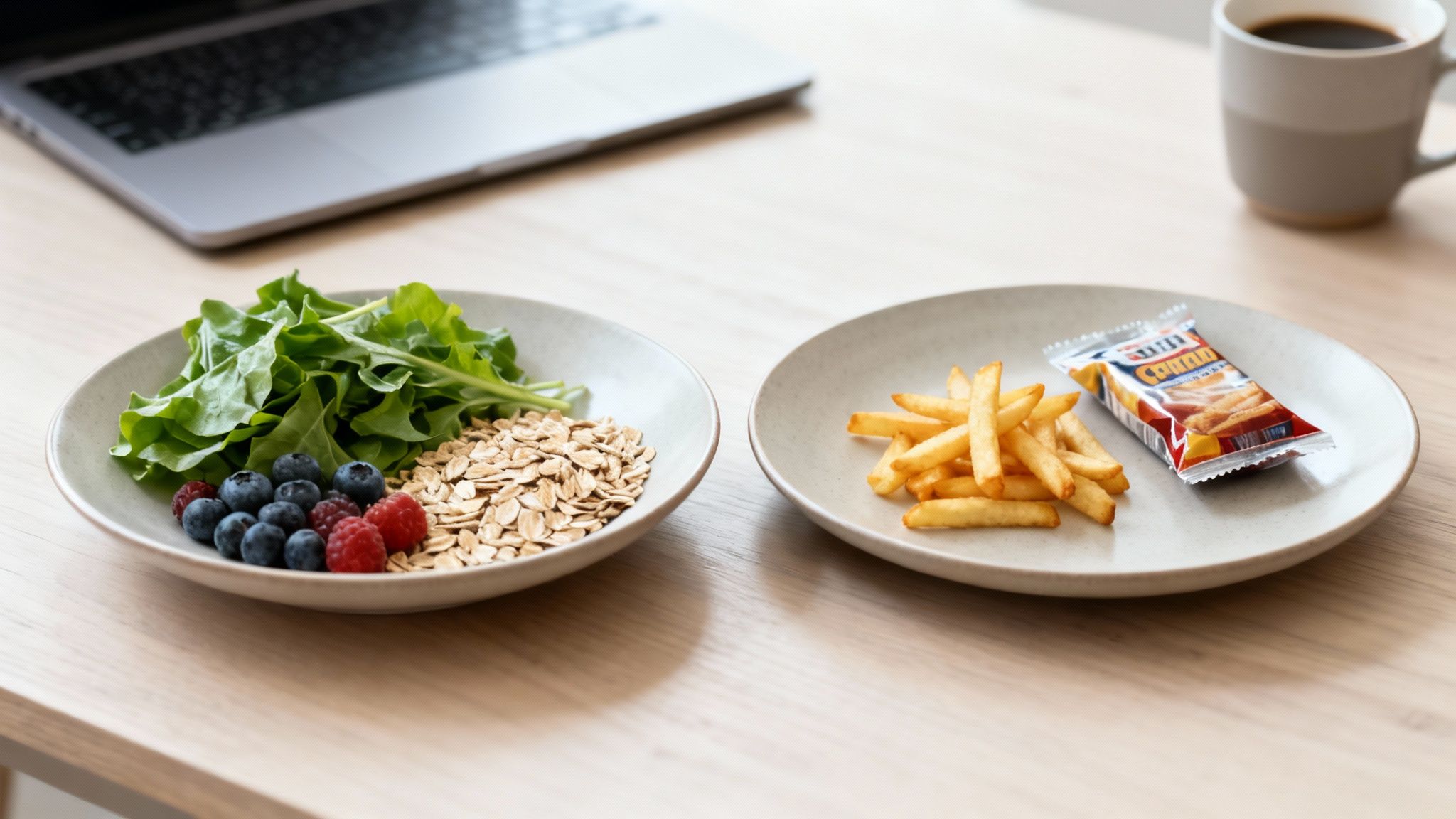
Leaky gut rarely appears out of nowhere. It's usually the result of habits and influences that put a strain on your intestinal barrier over a long period. Think of your intestinal lining like a bouncer – if you give it the wrong tools or constantly interfere with it, it can no longer do its job properly.
At the top of the list of culprits is diet. A diet full of sugar, highly processed foods, and unhealthy fats feeds precisely the wrong gut bacteria. The harmful strains love sugar and multiply rapidly, while the good, protective bacteria are left behind. This alone can trigger minor inflammation of the intestinal wall and weaken the important "tight junctions," the connections between cells.
The impact of stress on your gut
But it's not just about what ends up on your plate. Your mind has a direct connection to your gut. Chronic stress is one of the biggest saboteurs of a healthy intestinal barrier.
If you're constantly under pressure – whether from work, personal worries, or a packed schedule – your body continuously releases the stress hormone cortisol . This hormone can directly attack the cell connections in your intestinal wall, making it more permeable. Are you familiar with that queasy feeling in your stomach or sudden digestive problems before an important exam? That's the gut-brain axis in action.
Stress isn't just a feeling in your head, but a real physical strain. A stressed mind almost always leads to a stressed gut – creating the perfect conditions for leaky gut syndrome.
Other risk factors in everyday life
Besides diet and stress, there are a number of other factors that can negatively impact your gut health. Often, their effects accumulate over months or years until something finally breaks the camel's back.
Keep the following points in mind in your life:
- Frequent medication use: Certain painkillers (NSAIDs like ibuprofen) can irritate the intestinal lining. Antibiotics are, of course, a whole different story: They not only eliminate pathogens but also destroy a large portion of your beneficial gut flora. This throws the entire ecosystem out of balance.
- Environmental toxins and alcohol: Regular alcohol consumption directly damages intestinal cells and weakens the intestinal barrier. But environmental toxins from food or air can also put a significant strain on your system.
- Lack of sleep: Good sleep is the time when your body regenerates – this also applies to your intestinal lining. If you consistently get too little sleep, you don't give your gut a chance to recover from the daily strain.
- Too little exercise: Moderate activity stimulates digestion and promotes a healthy diversity of gut bacteria. A predominantly sedentary lifestyle, on the other hand, tends to sluggish the intestines.
All these influences act like small but constant pinpricks against your intestinal barrier. At first, your body might be able to cope, but over time, the "cracks" in your protective shield will grow larger. Recognizing which of your habits pose the greatest risk is the most important step in counteracting this. A conscious diet is an incredibly powerful tool in this process. Learn more in our article about how you can specifically build up your gut flora with the right nutrition . Deciding to get tested for leaky gut will then give you concrete confirmation of your current situation and which measures are most urgent for you.
Test for leaky gut and finally get clarity
Do you recognize yourself in the symptoms and risk factors? Then the next logical step is to finally gain certainty. This constant guesswork about the cause of your symptoms can be truly exhausting. Fortunately, precise analytical methods are now available that provide you with clear answers and put an end to the guesswork.
Modern diagnostics specifically examine certain biomarkers. These are measurable indicators in your body that, like tiny spies, reveal the state of your intestinal barrier. So instead of blindly trying out random diets, a targeted blood test finally allows you to make informed decisions about your health.
The most important markers for your gut health
A key indicator in leaky gut diagnosis is a protein called zonulin . You can think of zonulin as the gatekeeper that controls the tight junctions between your intestinal cells. Elevated zonulin levels mean, in plain terms, that the gatekeeper is too lax, opening too many gates and making the intestinal wall more permeable. A high zonulin level is therefore a strong indicator of a compromised intestinal barrier.
But a single value rarely tells the whole story. To get a comprehensive picture of the situation in your gut, other markers are often considered:
- Alpha-1 antitrypsin: This protein is normally produced in the liver. If it is suddenly found in increased amounts in the stool, this is a clear indication that the intestinal wall is "leaky" and proteins from the blood are passing into the intestine.
- Calprotectin: This value is a direct indicator of inflammation in the gut. Elevated calprotectin levels show that your immune system is working overtime and fighting something – a typical symptom of leaky gut.
- LPS (lipopolysaccharides): These are essentially fragments of bacterial cell walls. If they manage to pass through a leaky intestinal wall into the bloodstream, they can cause problems throughout the body and trigger severe immune reactions.
Together, these markers form a complex puzzle that shows us what's really going on in your gut.
Clinic visit or home test – which is right for you?
Traditionally, the path to diagnosis leads through a specialist, who then initiates the necessary laboratory tests. This is certainly always a good option, but often involves long waiting times for appointments and results. And let's be honest: not everyone likes to talk at length about intimate digestive problems.
This is precisely where a home test comes into play as a modern and discreet alternative. With a test kit from mybody-x.com , you can easily and stress-free collect the sample in the comfort of your own home.
The option of performing a leaky gut test at home gives you back complete control. You decide when and where you take the test and receive your results directly and in an easy-to-understand format, without having to wait weeks for a doctor's appointment.
A self-test not only saves you time, but also gives you the opportunity to act proactively. You don't have to wait until the symptoms become so severe that a doctor's visit is unavoidable.
Biomarkers as a window to your health
The importance of an intact intestinal barrier is becoming increasingly clear in research. In Europe alone, around two million people struggle with chronic inflammatory bowel diseases (IBD). In Germany, approximately 250,000 of these are affected by Crohn's disease and 400,000 by ulcerative colitis – both diseases in which leaky gut plays a central role.
Another interesting marker in this context is I-FABP (Intestinal Fatty Acid Binding Protein) . This protein is released when intestinal cells are damaged and is considered a reliable indicator of increased intestinal permeability, for example in celiac disease or after extreme physical exertion. More information can be found in the current medical guidelines for irritable bowel syndrome .
A test is therefore much more than just a snapshot. It provides you with concrete data and crucial insights into the processes in your body. With the results, you can finally stop groping in the dark and take targeted action – for your well-being and your health.
Here's how to use your mybody-x.com home test correctly.
Great, you've decided to take control of your gut health – a really important step! But to ensure the test gives you reliable results, performing it correctly is crucial. Don't worry, the whole process is incredibly easy, and I'll guide you through it step by step so that absolutely nothing can go wrong.
The path to greater clarity about your gut is actually quite simple: from the first symptoms to the test and finally to a valuable, concrete result.
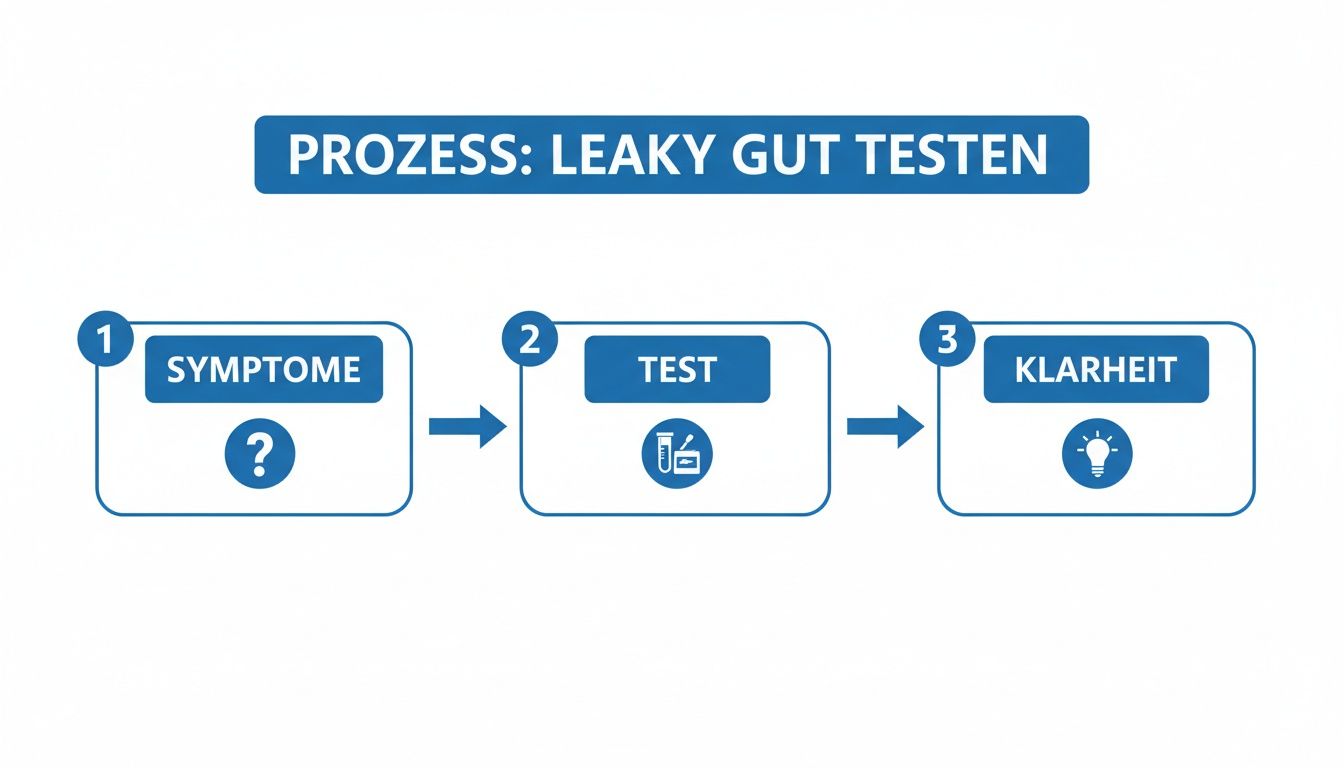
This graphic illustrates it perfectly: A simple home test can bridge the gap between vague symptoms and the knowledge you need to finally do something specifically for your well-being.
Unpack and activate your test kit
As soon as your mybody-x.com test kit arrives, take a quiet moment. Unpack everything and lay the parts out in front of you. You'll find everything you need inside, including super easy-to-understand instructions.
The very first and most important thing, even before you think about the sample, is to activate your test online . You'll find a unique test ID in your kit. Use this ID to go to the mybody-x.com website, enter it, and create your personal, secure health account.
Very important: Our lab can only clearly identify your sample with an activated test. Without this step, analysis is unfortunately impossible and you won't receive any results. So please don't forget!
Mastering sample collection – practical tips
Depending on which test you have chosen, you will either provide a small stool sample or take a few drops of blood from your fingertip. Both methods are designed to be as simple and hygienic as possible.
For the stool sample:
- The right time: Choose a moment when you are undisturbed and stress-free.
- The right amount: The instructions specify exactly how much material is needed – usually a tiny amount is sufficient. More is definitely not better here; it can even interfere with the analysis.
- Work cleanly: Use the enclosed stool collection aid. This ensures that the sample remains clean and does not come into contact with the toilet water.
For the blood sample from the fingertip:
- Good preparation is everything: Wash your hands thoroughly with warm water. Warmth stimulates blood circulation and makes things much easier.
- The best spot: The middle or ring finger of your non-dominant hand is best. The side of the fingertip is significantly less sensitive to pain than the middle.
- Gentle pressure: After pricking your finger with the lancet, gently massage it from the base of your hand towards the fingertip. This stimulates blood flow without applying direct pressure to the puncture site.
A real-life example: Julia, 32
Julia, a project manager, had long struggled with constant fatigue and sudden food intolerances. She decided to take a mybody-x.com test to get to the bottom of it. "I was a little apprehensive about the finger prick at first," she says, "but the instructions were so clear and the lancet so good that it really was just a tiny prick. It was all over in five minutes."
She activated her kit, took the sample in the morning before work, packed everything securely in the return envelope, and took it straight to the post office. This small effort immediately gave her the feeling that she was finally actively doing something about her symptoms.
Off to the lab – secure shipping
Once you have taken your sample, carefully pack everything according to the instructions in the prepaid return envelope. You can simply drop it in the nearest mailbox – that's it.
Your sample will now travel directly to our German, ISO-certified partner laboratory . There, experts will analyze it using state-of-the-art methods. As soon as the results are available, you will receive an email notification and can access your personal results in your secure mybody-x.com account.
For visual step-by-step assistance, we also have detailed instructions for the gut flora and microbiome test on our website, which will give you additional reassurance.
Use your test results as a guide
The moment has finally arrived: your mybody-x.com results are in. What you're holding in your hands now isn't just a collection of numbers and graphs, but your very own personal guide to greater well-being. And of course, we won't leave you alone with this valuable data. Together, we'll translate the lab results into language you understand and derive concrete, actionable steps for your everyday life.
Your results report is presented in such a way that you can see at a glance where everything is fine and where there might be a need for action. Your zonulin level may be elevated, a clear indication of a more permeable intestinal barrier. Or the analysis of your microbiome might show that the balance between beneficial and less helpful bacteria is somewhat disrupted.
Each of these values is like a puzzle piece that helps us understand the bigger picture of your gut health. The goal isn't to bombard you with technical jargon, but to show you the connections. Suddenly, it becomes clear why you might often feel tired or simply no longer tolerate certain foods well.
From measurement value to action
A test result is only as good as the actions that follow. Your findings form the basis for your personalized plan. Imagine your results show a low diversity of beneficial gut bacteria. The logical consequence would be to specifically include more fiber-rich foods in your diet.
This could look something like this:
- Prebiotic food: Jerusalem artichokes, chicory, leeks or even cooled potatoes are the absolute favorite food of your good gut inhabitants.
- Live cultures: Sauerkraut, kefir or natural yogurt directly introduce new, beneficial strains of bacteria into your gut and provide reinforcement.
- Colorful variety: Try eating 30 different plant-based foods per week – this also includes herbs and spices!
These recommendations are not generic, off-the-shelf advice. They are based directly on what your body has told you through the test.
Your mybody-x.com report is not a medical diagnosis, but an incredibly powerful tool for self-reflection. It shows you where you can start to proactively take control of your gut health and noticeably improve your quality of life.
When should you consult a doctor?
A home test is a fantastic first step towards taking responsibility for your own health. It provides guidance and very concrete indications. However, there are of course situations in which the results make a medical examination unavoidable.
This is especially the case when:
- Your values deviate significantly from the norm, especially inflammatory markers such as calprotectin.
- You are suffering from severe, persistent or worsening symptoms (e.g., severe pain, blood in the stool).
- There is a suspicion of a chronic illness that requires medical attention.
Consider your mybody-x.com results as a valuable basis for your conversation with your doctor or therapist. You'll no longer arrive with vague assumptions, but with solid data. This allows for much more targeted diagnostics and therapy. Many of our customers report that precisely this kind of test has significantly facilitated communication with their doctor.
The symptoms of leaky gut can overlap significantly with those of other conditions. For example, it's known that one in ten Germans suffers from irritable bowel syndrome (IBS), with women being twice as likely to be affected as men. Many typical IBS symptoms point to increased intestinal permeability. In fact, studies show that food intolerances play a role in up to 60% of IBS patients – another important aspect that testing can reveal. You can read more about these connections in current publications on IBS in the German Medical Journal (Ärztezeitung) .
Your individual health roadmap
The interpretation of your results will lead to a personalized plan. We'll help you identify the points that are most important and easiest for you to implement. Often, even small changes can have a huge impact. It might turn out that targeted supplementation with L-glutamine or zinc is exactly what your intestinal lining needs to regenerate.
Getting tested for leaky gut is the first step. But real change only begins when you use the results to make conscious choices about your diet and lifestyle. If you'd like to delve deeper into the subject, we recommend our in-depth article on analyzing and interpreting a gut microbiome test . With this knowledge, you'll be well-equipped to give your gut exactly what it needs for a strong and healthy life.
Frequently Asked Questions about the Leaky Gut Test
Here we've compiled the answers to the most frequently asked questions about leaky gut testing. We want you to feel well-informed and know exactly what to expect.
Can't I just have a leaky gut test done by my doctor?
Sure, that's absolutely possible. The traditional route would be to see a gastroenterologist or a doctor specializing in holistic medicine. They can perform blood or stool tests to check biomarkers like zonulin or general inflammation levels.
The major advantage of a home test often lies in its convenience and speed. You save yourself long waiting times for a specialist appointment and can take the sample discreetly and without stress in the comfort of your own home. Your results then go directly to your secure online account – providing an excellent basis for a targeted discussion with your doctor.
How reliable are these leaky gut home tests anyway?
This is an important question, and the answer is simple: Reliability depends entirely on the quality of the provider. A reputable test, like the one from mybody-x.com , must meet the highest standards to be truly meaningful.
Pay attention to these key features:
- Certified laboratory: Your sample belongs in a German, ISO-certified specialist laboratory. These are precisely the laboratories that doctors also work with.
- Scientific basis: The markers that are evaluated (e.g., zonulin, alpha-1-antitrypsin) must be scientifically sound and established as indicators of intestinal health.
- Correct sampling: If you follow the simple step-by-step instructions exactly, the quality of your sample is absolutely comparable to that in a doctor's office.
A well-conducted home test will therefore provide you with precise and reliable results that you can build on.
And what if the test actually indicates a leaky gut?
First of all: A positive result is no reason to panic. On the contrary, it's your chance to finally take action and take matters into your own hands. Your results from mybody-x.com don't come alone – they already contain specific recommendations for diet and lifestyle that are tailored directly to your results.
Typical first steps are often:
- Adjust your diet: Remove foods that could irritate your gut – such as gluten, lots of sugar, or highly processed products – from your diet for a while.
- Strengthen the intestinal lining: Specifically supply nutrients that your intestinal wall loves, for example L-glutamine, zinc or omega-3 fatty acids.
- Build up your microbiome: Incorporate more fiber (prebiotics) and fermented foods (probiotics) into your daily routine.
If your levels are significantly elevated or if you are experiencing severe symptoms, you should definitely discuss the results with a doctor or therapist. This way, you can develop the best strategy for you together.
Do I need to change my diet before the test?
No, absolutely not – and that's a very important point! To test for a leaky gut , you should eat normally, just as you always do. The test is meant to provide an honest picture of your current situation under everyday conditions.
If you drastically change your diet shortly beforehand, it could skew the results. Imagine cutting out everything that could cause problems – the test might show a normal result even though something is lurking in the background. So, just continue eating normally so the test shows how your body reacts to your usual routines.
Your test result is the starting point, not the destination. It gives you the necessary clarity to understand where you stand and empowers you to set the right course for your future health.
Are you ready to finally gain clarity about your gut health and find the cause of your symptoms? With a blood or nutrient test from mybody-x.com , you'll receive sound insights and concrete recommendations to take control of your well-being.
Discover your perfect test now at mybody-x.com
Share:
Build up your gut flora with the right diet: Your path to greater well-being
DNA test for weight loss as the key to a personalized genetic diet