
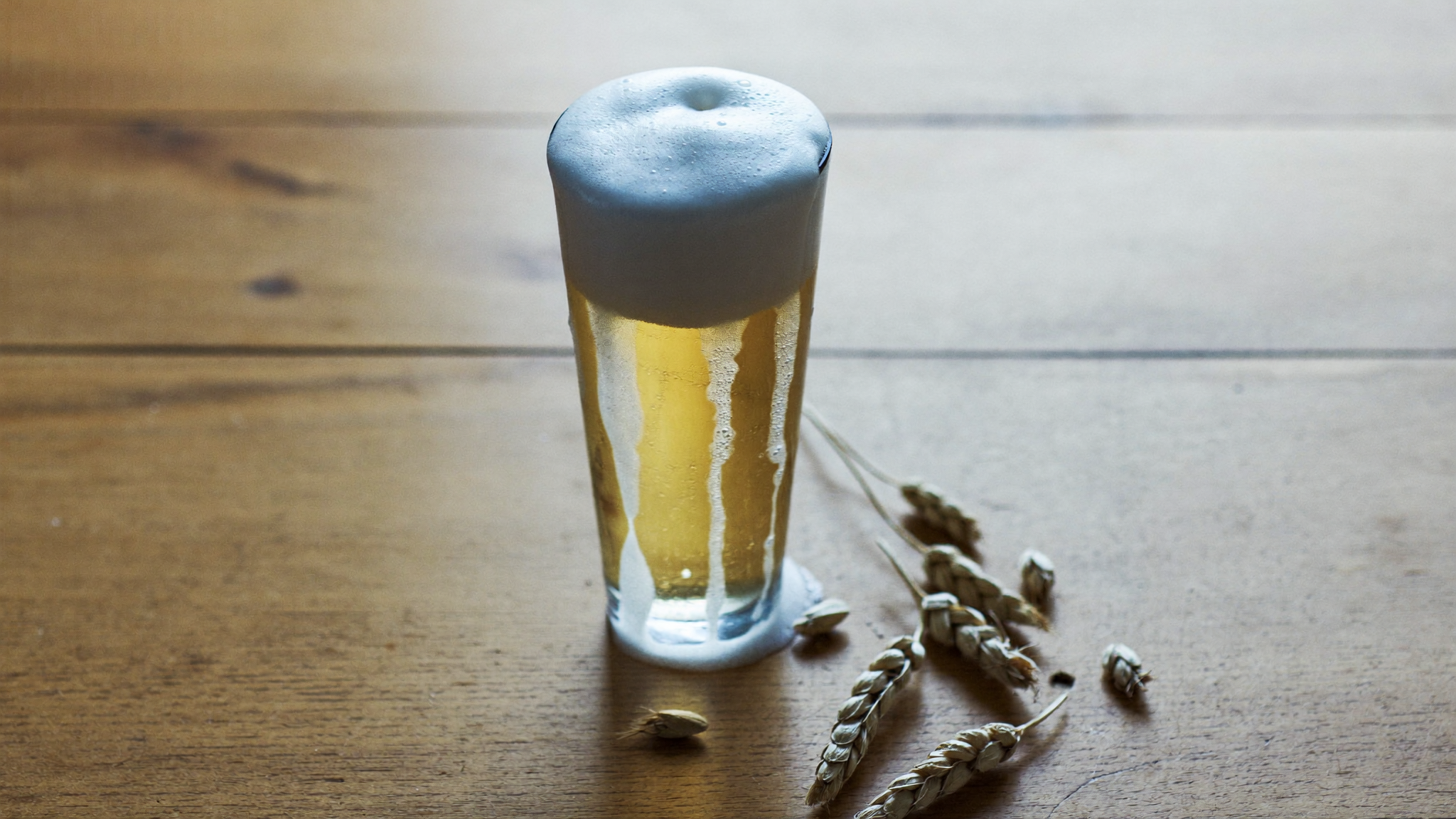
Is alcohol-free beer really healthy? What it contains and what it does not
The essentials at a glance
“Alcohol-free” is a designation, not a statement of zero alcohol. According to the Federal Institute for Public Health, beverages containing less than 0.5% alcohol by volume may be labeled this way—and alcohol-free beer does in fact contain alcohol in most cases, just less than this limit.
Putting this amount into perspective is the real point of this article. A banana can contain up to 0.6% alcohol by volume, fully fermented sauerkraut up to 0.5%, and bread often up to 0.3%. Anyone who considers alcohol-free beer a problem would face a bigger one at the fruit bowl.
When it comes to the question “healthy or not,” this article remains honest: The common claims surrounding alcohol-free beer are not substantiated by the source material used and are therefore not asserted here. Something else is substantiated—and it appears below.
What to expect in this article
1. What “alcohol-free” means legally
2. Where alcohol is found
3. Whether alcohol-free beer is healthy
4. Alcohol-free, 0.0%, and regular beer compared
5. The standard that matters
6. Three misconceptions about alcohol-free beer
7. Why people process alcohol differently
8. Who alcohol-free beer is not right for
9. The answer in one paragraph
Frequently asked questions
Sources
What “alcohol-free” means legally
Most people interpret “alcohol-free” as “without alcohol.” That is understandable, but it is not what the term actually means. It describes an upper limit, not an absence.
“
“Beverages containing less than 0.5% alcohol by volume may be labeled ‘alcohol-free.’”
Federal Institute for Public Health (BIÖG), kenn-dein-limit.de
Nine “alcohol-free” foods containing alcohol, as of 2025
This leads to a statement that surprises many people: “alcohol-free” products contain alcohol in most cases—just less than 0.5% by volume. This applies to beer as well as to other beverages labeled this way.
Why this limit exists at all
The reason lies in the production process. Alcohol forms wherever sugar and yeast come together—in beer, that is the whole point of the process. If the alcohol is removed afterward or fermentation is stopped early, a residual amount generally remains.
Reducing this remainder completely to zero is technically more complex and is listed as a separate category. That is precisely why two different statements appear side by side on the shelf: “alcohol-free” and “0.0%.” They do not mean the same thing, even though they are commonly understood that way in everyday life.
For the vast majority of situations, this difference is irrelevant. But there are situations in which it matters—and those are explicitly identified in Chapter 8 of this article, rather than hidden between the lines.
Why the term still makes sense
At first glance, a limit that permits alcohol seems like deceptive labeling. But it makes sense as soon as you read it for what it is: a threshold below which an amount is practically insignificant in everyday life.
The reason is explained in Chapter 2 of this article. Numerous completely ordinary foods fall within the same range or exceed it, without anyone perceiving them as containing alcohol. Setting the limit at zero would, in practice, mean labeling half the fruit bowl.
What the designation does not indicate, however, is anything about health. It says how much alcohol may be present at most—not whether the drink is good for you. These two questions are constantly conflated in everyday life, and the rest of this article separates them.
Where alcohol is found
The 0.5% limit only becomes clear when you place it alongside other foods. Small amounts of alcohol in the diet are not an exception, but a by-product of everyday processes—from ripening and fermentation to baking.
Alcohol content of everyday foods in percent by volume
Figures according to the Federal Institute for Public Health (BIÖG), kenn-dein-limit.de, as of 2025. For fruit juice, the figure indicates the limit for “alcohol-free” at the time of bottling. These are upper limits or guideline values, not measurements of individual products.
The banana at the top of this list is not a curiosity but a useful point of reference. The riper the fruit, the more sugar has already been converted—it can contain up to 0.6% ABV. That is more than is permitted in beer labeled alcohol-free.
The same applies to sauerkraut, which is produced through lactic acid fermentation and can accumulate up to 0.5% ABV. And to bread, in which yeast does exactly what it is used for—most of the alcohol produced evaporates during baking, but often up to 0.3% ABV remains.
Fruit juice is somewhat different, because the limit for “alcohol-free” is defined there itself: at approximately 0.38% ABV at the time of bottling. “At the time of bottling” is not a side note here, but the crucial part—in an opened bottle in the refrigerator, natural fermentation continues.
The point of this list is not to make non-alcoholic beer look good. The point is that the number alone is not yet an assessment. Anyone who finds 0.5% concerning would, consequently, also have to find bananas, sauerkraut, and bread concerning—and rightly, hardly anyone does.
Conversely, the comparison is no carte blanche either. The fact that a banana can contain a higher alcohol percentage by volume than non-alcoholic beer says nothing about regular beer—and that is precisely where the amount that actually matters lies. Chapter 5 shows how far apart the two orders of magnitude are.
Whether non-alcoholic beer is healthy
Here is the part missing from many texts on this subject. Numerous health claims circulate about non-alcoholic beer—it is said to be isotonic, provide vitamins and polyphenols, and be suitable as a recovery drink after exercise. In the source material used for this article, none of this is supported by evidence. That is why it is not claimed here.
What the sources do support instead is a statement about alcohol in general, and it is unequivocal: Today, it is generally accepted that drinking no alcohol at all is best for your health. According to the same source, experts assume that alcohol fundamentally increases the risk of harm to health, meaning that there is no completely risk-free alcohol consumption (BIÖG, as of 2025).
The better question to ask
Against this background, “Is non-alcoholic beer healthy?” is not the most productive question. A more productive question is: What are you replacing it with? Anyone who drinks a non-alcoholic beer instead of a regular beer significantly reduces their alcohol intake—and that is the direction indicated by the cited assessment.
By contrast, anyone who drinks three non-alcoholic beers in addition to water has mainly done one thing: consumed energy. According to the BIÖG, pure alcohol contains 7 kilocalories per gram—almost as much as a gram of fat, at 9 kcal, and more than a gram of sugar, at 4 kcal. In non-alcoholic beer, however, most of the energy comes not from alcohol but from the carbohydrates it contains.
The honest answer to the question in the title is therefore: Non-alcoholic beer is not a health drink, and the common claims about it cannot be substantiated here. As a substitute for alcoholic beer, however, it is exactly what the available evidence suggests—a way to reduce alcohol intake.
Why “not supported by evidence” does not mean “disproved”
At this point, a clarification that is often overlooked is worthwhile. The fact that no evidence for a statement can be found in the sources used here does not mean that it is false. It means that this article may not present it as fact.
The distinction is practically useful for you as a reader. Where there is a source, you can check it. Where there is none, you know you are dealing with an assumption—even when it is presented in a friendly tone and repeated in many texts.
That is precisely why this article names the common claims instead of quietly omitting them. Omitting them would leave the question unanswered. Naming them shows where the boundary between evidence and assertion lies.
In brief
The common health claims about alcohol-free beer – isotonic, rich in polyphenols, ideal for recovery – are not supported by the source material used here and are therefore not asserted. What is supported is a more general statement: According to the Federal Institute for Public Health, it is now generally believed that the best choice for health is not to drink any alcohol at all. As a substitute for alcoholic beer, alcohol-free beer significantly reduces the amount of alcohol consumed; as an additional drink, it primarily provides energy.
Alcohol-free, 0.0%, and regular beer compared
Three labels sit side by side on store shelves and are regularly confused. The following comparison categorizes them according to the same criteria.
The last row is important. It remains blank in all three columns because the source material used does not identify a separate health benefit for any of the three variants. Showing this gap openly is more informative than filling a column with wording for which there is no evidence.
| Criterion | “Alcohol-free” | “0.0% ABV” | Regular beer |
|---|---|---|---|
| What the label means | Less than 0.5% ABV | Labeled as 0.0% ABV | Alcohol content is stated on the label |
| Does it contain alcohol? | In most cases, yes, but below the limit | Labeled as 0.0% | Yes, clearly above the limit |
| Order of magnitude in everyday comparison | Below the content of a ripe banana (up to 0.6% ABV) | Below all the foods shown in the graphic | Half a liter corresponds to the amount of alcohol in 9 to 10 liters of fruit juice |
| During pregnancy | Not suitable – only foods with 0.0% ABV are recommended | Corresponds to the recommendation of 0.0% ABV | Not suitable – complete abstinence is recommended |
| Documented health benefits in the source material used | None identified | None identified | None – according to the BIÖG, there is no completely risk-free alcohol consumption |
Information according to the Federal Institute for Public Health (BIÖG), kenn-dein-limit.de, as of 2025. The line indicating the order of magnitude is an interpretation based on the values stated there. The source material used makes no positive statement regarding documented health benefits; these cells are therefore explicitly labeled as blank.
The benchmark that matters
The most revealing figure in this topic is a comparison made by the Federal Institute for Public Health itself. In one sentence, it makes clear what alcohol is actually about: not traces, but quantities.
The amount of alcohol in half a liter of beer is only matched by nine to ten liters of fruit juice.
The amount of alcohol in half a liter of beer is only matched by nine to ten liters of fruit juice. This is how the source phrases it: A person would have to drink nine or ten liters of fruit juice to consume as much alcohol as is contained in half a liter of beer (BIÖG, as of 2025).
This factor explains why trace amounts in food are irrelevant in practice, while the amount in alcoholic drinks is not. The difference is not a nuance; it is many times greater.
No one drinks nine to ten liters of juice in an evening, whereas half a liter of beer is a perfectly ordinary amount. That is precisely the point: What matters is not whether alcohol is present, but the amount that realistically accumulates. An ingredient list does not answer this question—your own evening does.
For non-alcoholic beer, this means a significant reduction in alcohol intake. Anyone who drinks it is quantitatively closer to the foods from Chapter 2 than to a standard drink. The accusation that “non-alcoholic” is a gimmick misses the point at this scale.
The standard drink as a unit of calculation
To make quantities comparable at all, calculations use a standard drink. According to the BIÖG, it contains between 10 and 12 grams of pure alcohol—regardless of whether it is beer, wine, or spirits, because the serving sizes are adjusted accordingly.
This measure is more useful in everyday life than any percentage figure. It answers the question that actually matters: not how strong a drink is, but how much alcohol has accumulated by the end of the evening.
Compare the 10 to 12 grams with the trace amounts from Chapter 2, and the difference in scale becomes tangible. The amounts found in bananas, sauerkraut, or bread are on a scale that would not register at all in this calculation. The amount in a standard drink is the unit used to measure alcohol consumption.
This also makes clear where a discussion about non-alcoholic beer belongs—and where it does not. It does not belong in the question of whether 0.4% ABV is cause for concern—it is not at this level. It belongs in the question of which beverage it replaces, or does not replace.
Three misconceptions about non-alcoholic beer
Assumptions about this topic persist that are wrong in both directions—some downplay the issue, while others exaggerate it. Three of them are worth correcting.
Why people process alcohol differently
The fact that the same amount of alcohol affects two people differently is not imaginary. According to IQWiG, in addition to the amount consumed, weight and sex in particular influence how long alcohol takes to break down; women have a higher body-fat percentage than men, while their bodies contain less water (as of 2023).
The same source gives specific figures for the rate itself: approximately 0.1 per mille per hour for women and 0.1 to 0.2 per mille for men. By contrast, it takes only 3 to 5 minutes for alcohol to reach the brain via the bloodstream; most of it is absorbed through the stomach.
The combination of these factors explains a common everyday observation: The same amount consumed over the same period produces different levels and different effects in two people. This is not a matter of tolerance or willpower, but of body composition and the rate at which alcohol is broken down.
What is remarkable here is the mismatch between the timelines. Alcohol takes only a few minutes to take effect, but it takes hours to be broken down. If you drink late in the evening, you may still have measurable levels the next morning—regardless of how well-rested you feel.
Alongside weight and sex, there is a third factor at play that you cannot choose: your genetically determined complement of the enzymes responsible for breaking alcohol down. If you react much more strongly than those around you after small amounts, you have probably asked yourself this question before.
What a genetic analysis can contribute
Before mentioning a product, this needs to be stated clearly: No DNA test can tell you whether non-alcoholic beer is healthy for you. No analysis can answer that question; the evidence can—and it is presented earlier in this article.
What a genetic analysis can describe is something different: predisposition in areas such as alcohol and caffeine metabolism. This is information about you, not a recommendation for or against a particular drink—and it does not change the general conclusion that, for your health, it is best not to drink any alcohol at all.
Such an analysis is therefore primarily useful for people who want to put a recurring observation about themselves into context. Anyone expecting permission or a prohibition, on the other hand, will be disappointed by any test result—it describes predisposition; it does not make a decision.
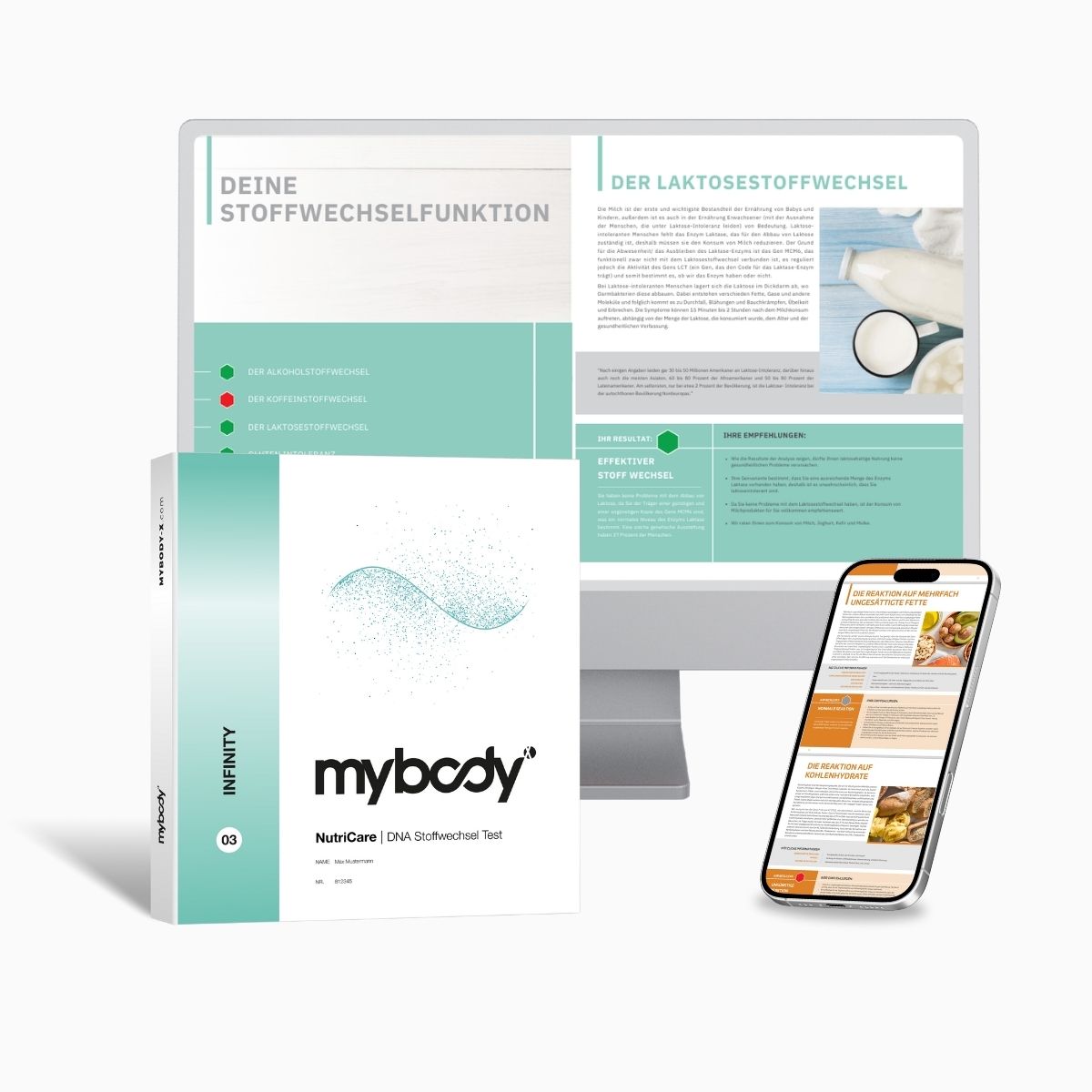
NutriCare | INFINITY DNA test
Analyzes more than 140 genetic variations and provides 54 reports in eight chapters—including a report on alcohol metabolism, as well as caffeine metabolism, vitamin and mineral requirements, and a food-table analysis covering more than 1,000 foods. What the test does not do: It does not measure the alcohol content of beverages, evaluate products, or tell you how much you may drink. It does not provide a diagnosis. Method: SNP genotyping with more than 700,000 SNPs; no whole-genome sequencing.
Price: €269.00 · Sample type: Saliva sample · Processing time: Kit shipping 1–3 business days, laboratory analysis 15–25 business days after sample receipt · Laboratory: ISO-certified laboratory analysis in Germany
About NutriCare INFINITYAll price and service information is current as of August 5, 2026. Prices and the scope of services may change; the respective product page is always authoritative.
Who non-alcoholic beer is not right for
For most people, the 0.5 percent limit is irrelevant in everyday life—it is lower than the amount found in a ripe banana. However, there are situations in which the difference between “non-alcoholic” and “0.0%” matters, and these should be explicitly identified.
The first concerns pregnancy. The Federal Institute for Public Health is unequivocal on this point: Pregnant women should completely abstain from alcohol and therefore consume only foods containing 0.0% ABV alcohol (as of 2025). This includes beverages labeled “non-alcoholic.”
The second concerns people who have overcome alcohol dependence or who consciously abstain completely. Here, the issue is less the amount than the taste, ritual, and triggers—a drink that resembles beer can be problematic in this situation. This assessment belongs in professional support, not in a guide. The residual alcohol below the 0.5 percent limit is not the decisive point; what matters is what the drink triggers.
The third is simply the energy balance. Non-alcoholic beer is not a calorie-free drink, and three bottles in an evening are still three bottles, even if they contain hardly any alcohol. Anyone watching their weight should count them in—just like any other sugary or carbohydrate-containing drink. Removing the alcohol does not automatically make a drink light; it merely removes one of several sources of energy.
The figure from Chapter 3 helps put the energy question into perspective: Pure alcohol provides 7 kilocalories per gram, almost as much as fat at 9 kcal and more than sugar at 4 kcal. In alcohol-free beer, this contribution is naturally small—the energy there comes predominantly from carbohydrates, and those do not disappear when the alcohol does.
And a fourth reason, which is less obvious: Anyone who drinks alcohol-free beer to drink less alcohol should check whether that is actually happening. If it replaces regular beer, the calculation works. If it is added on top, it does not—and no label can make that distinction for you.
The answer in one paragraph
Alcohol-free beer is not a health drink—at least not based on what can be established. The widespread claims about it are not supported by the source material used, and passing them on without evidence helps no one.
This is not a rejection of the beverage, but a correction of expectations. Those who drink alcohol-free beer because they like the taste, because they have to drive, or because they want to drink less alcohol have three good reasons. Those who drink it expecting a health benefit are relying on something that cannot be established here.
What can be established is more reassuring than the concern about the 0.5 percent: This amount is less than what a ripe banana contains, and within a range that makes no difference to the body. What can also be established is more uncomfortable: There is no risk-free amount of alcohol itself.
Your specific next step: The next time you shop, check the label—“alcohol-free” or “0.0%.” During pregnancy, this is a real difference; otherwise, it is a matter of precision. And ask yourself honestly whether the alcohol-free beer replaces another beer for you or is added to it. This answer says more about the health effect than any ingredient list.
Frequently asked questions
Does alcohol-free beer really contain alcohol?
In most cases, yes. According to the Federal Institute of Public Health, beverages containing less than 0.5% ABV may be labeled “alcohol-free,” and “alcohol-free” beer does in most cases contain alcohol—just less than this threshold (as of 2025). If you want zero alcohol, look for the indication “0.0% ABV.”
Is alcohol-free beer healthier than regular beer?
It contains significantly less alcohol, and that is the relevant direction: According to the Federal Institute of Public Health, it is now generally believed that the best choice for health is to drink no alcohol at all (as of 2025). By contrast, the source material used does not establish any health benefits specific to alcohol-free beer—sensible as a replacement, but as an addition, primarily a source of energy.
Can I drink alcohol-free beer during pregnancy?
The Federal Institute for Public Health recommends that pregnant women completely avoid alcohol and consume only foods containing 0.0% alcohol by volume (as of 2025). Drinks labeled “alcohol-free” do not necessarily meet this condition, as they may contain just under 0.5% alcohol by volume. Raise this question during your prenatal care.
Which foods contain more alcohol than alcohol-free beer?
A ripe banana can contain up to 0.6% alcohol by volume, putting it above the 0.5% threshold. Ready-made sauerkraut can contain up to 0.5% vol., bread often up to 0.3%, while for fruit juices the threshold for being considered “alcohol-free” is around 0.38% vol. at the time of bottling (BIÖG, as of 2025).
How quickly does the body break down alcohol?
According to IQWiG, the body breaks down alcohol only slowly—approximately 0.1 parts per thousand per hour in women and between 0.1 and 0.2 parts per thousand in men (as of 2023). In addition to the amount consumed, weight and sex primarily influence how long this takes. The breakdown cannot be accelerated.
Why do you react differently from others?
Weight and sex explain some of the differences in alcohol breakdown. Another part is genetic—NutriCare INFINITY includes a dedicated report on alcohol metabolism. It does not answer whether you should drink, but describes a predisposition.
View NutriCare INFINITY Longevity ALL IN ONEYou might also be interested in this
→ Is beer healthy for the gut? What the science says
The same question from a different angle: not the alcohol content, but the effect on the gut microbiome.
→ Recognizing alcohol intolerance: ALDH2, symptoms, and when a genetic test can really help
For anyone who already reacts much more strongly than those around them after just small amounts.
Sources
- Federal Institute of Public Health (BIÖG): Nine “alcohol-free” foods containing alcohol, kenn-dein-limit.de, as of 2025 — kenn-dein-limit.de
- Federal Institute of Public Health (BIÖG): Frequently asked questions about alcohol, kenn-dein-limit.de, as of 2025 — kenn-dein-limit.de
- Institute for Quality and Efficiency in Health Care (IQWiG): How does alcohol work—and how quickly is it broken down?, as of 2023 — gesundheitsinformation.de
The definition of the term “alcohol-free,” all information on the alcohol content of bananas, sauerkraut, bread, and fruit juice, the comparison with nine to ten liters of fruit juice, and the recommendation for pregnant women come from source [1]. The statements that there is no completely risk-free alcohol consumption and that it is best for health not to drink any alcohol at all, as well as the information about the standard glass containing 10 to 12 grams of pure alcohol and 7 kilocalories per gram of alcohol, come from source [2]. The rate of breakdown, the influencing factors of weight and sex, absorption through the stomach, and the 3 to 5 minutes until the effects reach the brain come from source [3]. None of the three sources provides evidence for the commonly made health claims about alcohol-free beer—its isotonic effect, polyphenols, or suitability for recovery; the article therefore does not claim them and explicitly identifies this gap. Product information comes from the mybody®x product pages, accessed on August 5, 2026.

mybody®x Editorial & Expert Team
Nutritional science Metabolism Nutrigenetics
This article was created and medically reviewed by the mybody®x Editorial and Expert Team. The team combines expertise in nutrigenetics, microbiome and gut science, blood analysis interpretation, nutritional science, and laboratory diagnostics.
Published on August 5, 2026 · Last updated on August 5, 2026
Medical notice: This article is intended for general information and does not replace medical advice, diagnosis, or treatment. During pregnancy and breastfeeding, as well as in cases of a history of alcohol dependence, questions about alcohol-free beverages should be addressed with medical or professional support. Anyone who finds their own alcohol consumption burdensome can find support at counseling centers and in general medical practice.

Share now:
How do I calculate my calorie needs: the calculation in four steps
Healthy Weight Loss Plan: What Really Works Without a Crash Diet