

DNA test for weight loss as the key to a personalized gene diet
Have you tried countless diets, but long-term success simply refuses to materialize? A DNA test for weight loss could be the answer. It provides personalized guidance for your body instead of making you follow general advice that may not work for you at all.
Such a test deciphers how your metabolism is genetically wired and helps you finally leave frustrating diet experiments behind.
Can a DNA test really help with weight loss?
Does this sound familiar? The latest trendy diet works wonders for your friends, but barely makes a difference on the scale for you. The answer often lies in our unique genetic makeup. A DNA test for weight loss addresses precisely this point: It analyzes how your body individually responds to nutrients such as fats, carbohydrates, and proteins.
Imagine knowing exactly which foods your metabolism processes most efficiently and which type of exercise will get you to your goal most effectively. That is precisely the idea behind what is known as a gene diet. It is based on the science of nutrigenetics, which examines the direct relationship between your DNA and your diet.
Instead of continuing to grope in the dark, you gain clear, scientifically grounded insights into your own body. A test like this can, for example, provide information about the following areas:
- Your personal metabolic type: Find out whether you process carbohydrates better than fats—or vice versa.
- Your individual sense of satiety: Understand whether you may have a genetic predisposition to a weaker sense of satiety and therefore be more prone to cravings.
- Your optimal type of exercise: Find out whether you benefit more from endurance training or intense strength training to burn fat.
With this knowledge in hand, you can finally make much more targeted and informed decisions about your health. Of course, a DNA test is no miracle cure that makes the pounds melt away overnight. But it is an extremely valuable tool for starting your journey toward a comfortable weight on a solid, personal foundation—and finally achieving sustainable results.
The scientific foundations of nutrigenetics
Have you ever wondered why your body reacts completely differently to a plate of pasta than your best friend’s does? The answer is provided by nutrigenetics, a fascinating field that studies the interplay between your genes and your diet. This is precisely why “one-size-fits-all” diets so often fail.
Each of us carries a unique genetic code that functions like a personal blueprint for the body. This blueprint determines not only your hair color, but also how your metabolism responds to certain nutrients. A DNA test for weight loss essentially reads the key instructions in this blueprint.
Your genes: the blueprint for your metabolism
At the heart of nutrigenetics are tiny variations in our DNA called SNPs (Single Nucleotide Polymorphisms). Think of these SNPs as small, individual notes in your body’s blueprint. They are the reason you might feel sluggish and tired after a serving of pasta, while someone else gets a real energy boost from it.
These subtle genetic differences have a direct influence on processes that are absolutely crucial for managing your weight:
- Metabolism of macronutrients: Your genes determine how efficiently your body converts fats, proteins, and carbohydrates into energy—or whether it is more likely to store them as fat reserves.
- Feeling of fullness: Certain genetic variants can regulate your feelings of hunger and fullness. This explains why some people simply feel full faster than others.
- Predisposition to being overweight: Some genes influence your underlying susceptibility to weight gain.
A well-known example is the FTO gene. Certain variants of this gene are associated with increased appetite and a preference for very high-calorie foods. If you know that you carry such a variant, you can develop targeted strategies to better manage your feelings of fullness and prevent cravings.
Research has already uncovered many fascinating connections here. In a massive analysis of 125 studies involving data from nearly 340,000 people, scientists identified a total of 97 genes that are directly linked to body weight. Although these genes account for only a small portion of weight differences when considered individually, the overall influence of our DNA is enormous: It is estimated that between 40 and 70 percent of weight differences between people can be attributed to genetic factors.
Not destiny, but a guide
However, this knowledge does not mean that you are at the mercy of your genetic destiny. Quite the opposite! It gives you an incredibly valuable guide. A DNA test provides the crucial information you need to adjust your diet and lifestyle so that you can work with your body instead of constantly fighting against it.
If you would like to delve even deeper into this topic, be sure to read our article about what nutrigenetics is and how it determines our lives. The findings from this field of science provide the basis for understanding how a DNA test can help you develop a nutrition strategy that truly suits you.
Which genes are relevant to weight loss
A DNA test for weight loss is far more than just a vague recommendation—it offers a targeted look at your personal genetic blueprint. Imagine that this blueprint contains highly specific instructions about how your body responds to different nutrients and which processes are crucial to your weight. The analysis focuses on specific gene markers that are considered key players in your metabolism.
These markers are not abstract codes. They have a very real influence on how you feel, how quickly you become full, and how efficiently your body burns energy. By understanding these key genes, we can finally find personalized answers to why previous diets may simply not have worked.
This infographic sums up the basic principle of nutrigenetics.
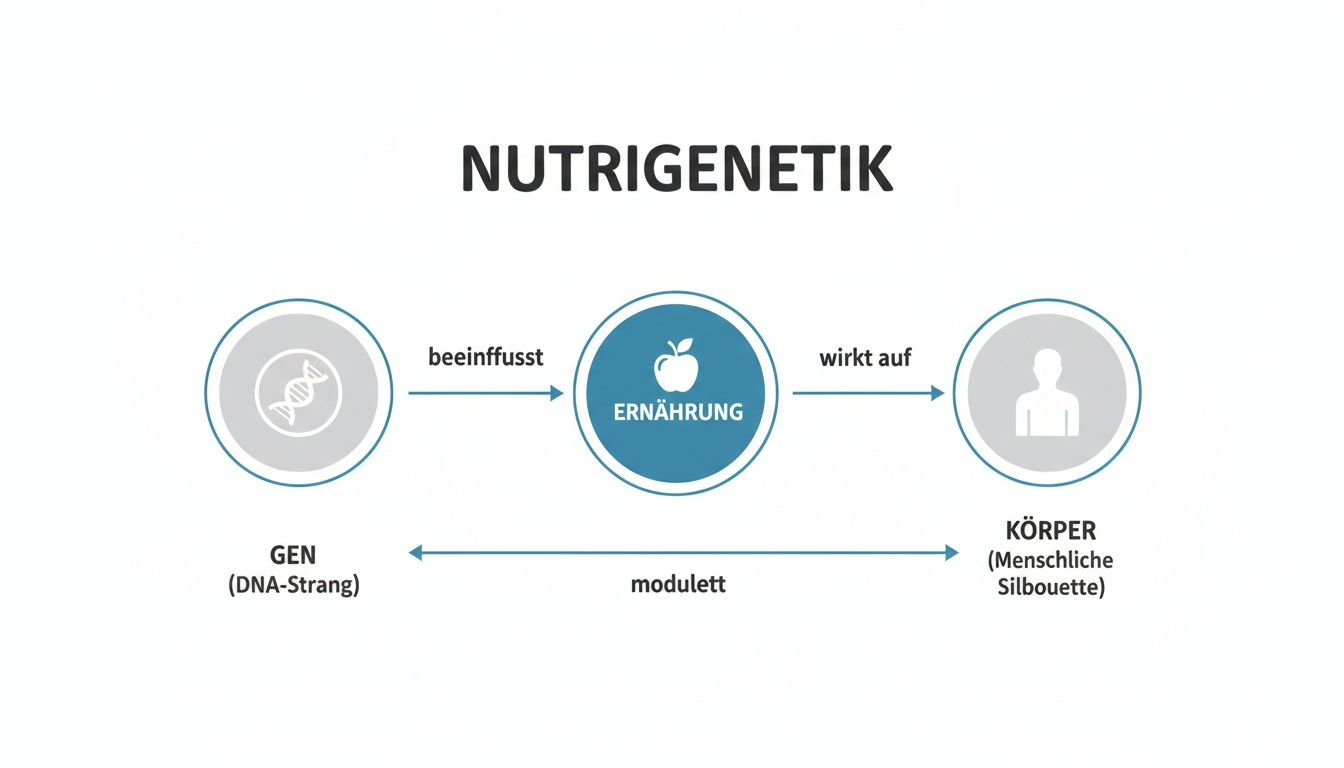
It shows how our genes form the foundation that can be positively influenced by the right diet—which in turn has a direct impact on our bodies. A cycle you can use to your advantage.
The most important gene groups at a glance
To make the whole concept more tangible, the relevant genes can be divided into different functional groups. Each group controls a different area of your metabolism, but only their interaction provides a comprehensive picture of your individual predisposition.
- Macronutrient genes: They determine how your body responds to the main sources of energy—fats, carbohydrates, and proteins.
- Satiety and appetite genes: These regulate how pronounced your hunger is and how quickly you truly feel full after eating.
- Sports and muscle genes: These markers provide insight into which type of exercise is most effective for you to burn fat and build muscle.
Analyzing these genes is the key to understanding why a low-carb approach is ideal for one person, while another achieves much better results with a reduced-fat diet.
The FTO gene – More than just an “obesity gene” One of the best-known genes in this context is the FTO gene. Certain variants of this gene are often associated with increased hunger and a preference for calorie-dense foods. However, knowing that you have such a variant is not your fate but a real opportunity: it means that you may benefit particularly from a protein- and fiber-rich diet that keeps you full for longer and helps curb cravings.
Concrete examples and their significance
Let’s take a look at some other important genes and their practical significance for your everyday life. Each of these markers provides a valuable piece of the puzzle for your very personal nutrition strategy.
APOA5 and PPARG – Your fat processors These genes play a central role in fat metabolism. An unfavorable variant of the APOA5 gene, for example, may mean that your body processes fats less efficiently and is more likely to store them as reserves.
- Practical recommendation: If you have this genetic variant, reducing saturated fats (e.g., from sausages and processed foods) and choosing unsaturated fats from avocados, nuts, and olive oil instead may be particularly effective for you.
MC4R – Your inner satiety regulator The MC4R gene is crucial for transmitting your satiety signals. Certain variations may cause your brain to perceive the “I’m full” signal later or less strongly.
- Practical recommendation: Mindful and slow eating is even more important for you. Give your body time to send the fullness signal, and choose voluminous, low-calorie foods such as vegetables and salads to fill your stomach.
ACTN3 – Your genetic training partner This gene is often referred to as the “sprint gene.” It determines whether your muscle fibers are better suited to fast, explosive power (sprinter type) or prolonged endurance performance (endurance type).
- Practical recommendation: As a sprinter type, you benefit particularly from intense strength training or HIIT, while as an endurance type, jogging or cycling can effectively boost your fat burning.
If you would like to delve deeper into these connections, you can learn more in our article about your genes and their analysis for nutrition and health.
Implement your results in a specific nutrition plan
A good DNA test for weight loss provides more than raw data. It translates the data into clear, actionable recommendations for your everyday life. That is exactly what we are going to do now: We will take the scientific findings from the lab and bring them directly to your plate and into your training plan. See the results as your personal blueprint—now you will learn how to build your house with it.
A high-quality results report, such as the one from mybody®, is structured so that you can understand it intuitively. It guides you and explains step by step what each individual gene variant means for you. The goal is not only to tell you what to do, but also to explain why it makes sense for your body.

Adjust your macronutrients to your metabolic type
Perhaps the most important insight from your DNA analysis is your genetic metabolic type. It tells you how your body prefers to process the three main energy sources—carbohydrates, fats, and proteins. Instead of blindly following a diet trend, you can now tailor your meals specifically to this.
Let's look at this using two specific examples:
-
Example of a “carbohydrate-sensitive” metabolic type: Your analysis shows that your body uses fats particularly well as an energy source, but quickly responds to too many carbohydrates with weight gain.
- Your action: Reduce simple carbohydrates such as white bread and sugar. Instead, focus on high-quality fats (avocado, nuts, olive oil) and sufficient protein (fish, lean meat, legumes). Your plate could therefore consist of 50% healthy fats, 30% protein, and only 20% complex carbohydrates.
-
Example metabolic type “Protein-optimized”: Your genes suggest that you have an increased protein requirement to maintain muscle and stay full for longer.
- Your action: Include a good source of protein with every main meal. A protein-rich snack such as Greek yogurt or a handful of almonds in the afternoon can help prevent cravings and keep your metabolism active.
This adjustment is the key to working with your body instead of fighting against it. If you want to delve deeper into planning, you can find more valuable tips in our guide on how to create your personalized nutrition plan.
This table illustrates how genetic metabolic types differ and which dietary and exercise recommendations can be derived from them.
Overview of genetic metabolic types and recommendations
| Metabolic type (example) | Genetic tendency | Optimal macronutrient distribution | Recommended sports |
|---|---|---|---|
| Balance type | Processes all macronutrients relatively evenly. | 40% carbs, 30% fat, 30% protein | A mix of endurance and strength training (e.g., jogging & bodyweight exercises) |
| Fat-sensitive type | Tends to store fat more efficiently; benefits from carbohydrates. | 50% carbs, 20% fat, 30% protein | Endurance sports such as cycling, swimming, and running |
| Carbohydrate-sensitive type | Responds to carbohydrates with greater blood sugar fluctuations. | 25% carbs, 45% fat, 30% protein | Strength training, HIIT, and sprints to promote muscle mass |
Please note that these are simplified examples. A detailed report like the one from mybody® provides a much more nuanced analysis of your unique profile.
The right foods and sports for your genetic type
In addition to your macronutrient distribution, the test also provides guidance on the optimal choice of foods and physical activities. Your genes also help determine whether you are more of an endurance or strength type.
A reputable results report goes beyond general tips. It provides specific food lists and training recommendations tailored directly to your genetic profile.
Imagine that your test identifies you as a “strength type.” This means your muscle fibers are ideally suited to short, intense exertion.
- Exercise recommendation: Instead of jogging for hours, you will benefit much more from intense strength training or HIIT (High-Intensity Interval Training). These methods boost fat burning and create a lasting afterburn effect.
Personalized recommendations for dietary supplements
Sometimes a DNA test also reveals a genetically determined increased need for certain vitamins or minerals. For example, certain gene variants can make the conversion of folic acid (vitamin B9) less efficient.
In such a case, your mybody® report would not only point out the potential deficiency, but also give you a specific recommendation for a suitable dietary supplement. This ensures that your body is fully supplied with the nutrients it needs—and that is crucial for your energy and weight-loss success.
Opportunities and limitations of gene-based diets: What you can really expect
A DNA test for weight loss is a fascinating tool that gives you highly personal insights into your body. Nevertheless, it is important to approach it with realistic expectations. Such a test is not a miracle cure that makes the pounds melt away overnight, but a valuable component of your holistic health strategy.
The greatest strength clearly lies in personalization. You learn things about your metabolism that no standard diet could ever reveal to you. Instead of blindly chasing one trend after another, you get a scientifically sound foundation for finally tailoring your diet and training to your needs. This can save you a great deal of frustration and help you find an approach that truly suits you.
Your genes are only one piece of the puzzle
At the same time, you need to understand that your genetics are only one part of the overall picture. Imagine your genes as a blueprint. How that blueprint is ultimately put into practice depends crucially on your lifestyle and environment.
The following factors play at least as important a role, if not an even greater one:
- Your eating habits: The best genetic advice is completely useless if your diet consists mainly of highly processed foods.
- Your stress level: Chronic stress disrupts your hormonal balance and can promote cravings and fat storage.
- Your sleep quality: Getting enough good-quality sleep is fundamental for regulating the hormones that control your feelings of hunger and fullness.
- Your daily physical activity: Regular activity is essential for burning calories and keeping your metabolism running efficiently.
So your DNA test gives you the instructions, but putting them into practice in everyday life—that’s up to you.
A DNA test is the starting point, not the finish line. It gives you the best possible direction, but you have to walk the path yourself. Its true power only unfolds when you translate the insights into consistent, healthy habits.
Critical voices and scientific reality
The market for DNA tests is booming, and providers’ claims are often enormous. That’s why it’s important to listen closely to what critics have to say. Providers such as Lykon charge 189 euros for their DNA SLIM TEST, while specialized analyses such as the MetaCheck Gen-Diet can cost as much as 350 euros. In view of such prices, the consumer advice center warns against excessive optimism and points out that the scientific basis for many commercial tests still requires further research.
The German Society for Human Genetics also emphasizes that misinterpretations can pose a risk. For example, a well-known Stanford University study involving more than 600 participants found that a genetically personalized diet offered hardly any measurable additional benefit compared with a conventional diet. You can read more here about the critical assessment of such metabolic analyses.
However, this does not mean that the tests are worthless. Rather, it underscores how crucial it is to choose a reputable provider such as mybody®, which does not present results as absolute truth, but as what they are: evidence-based recommendations within a holistic approach.
Choosing the right DNA test provider
The market for DNA tests for weight loss is growing rapidly, but the differences in quality between providers are enormous. To help you make an informed decision and avoid falling for an empty marketing promise, we’ve created a checklist for you. These criteria will help you identify a reputable partner who can genuinely support you on your journey.
It’s about far more than just the price. A reliable test stands or falls with the quality of the laboratory, the protection of your data, and how clearly your results are presented. After all, the insights should genuinely help you improve your life.
Laboratory quality and scientific basis
The heart of every analysis is the laboratory. Make absolutely sure that the provider works with a certified laboratory. An ISO certification (such as ISO 9001 or ISO 15189) is a clear mark of quality here. It guarantees that the analysis processes are standardized, precise, and up to date with the latest scientific knowledge.
Another important point is the scope of the analysis. A good test should not be limited to the well-known FTO gene, but should examine a broad range of relevant genetic markers. This is the only way to gain a comprehensive picture of your metabolism.
Also take a close look at the results report. Is it presented in an understandable way, or is it merely a collection of technical jargon? Reputable providers such as mybody® focus not only on providing you with data, but also on translating it into clear, actionable recommendations for nutrition and exercise.
Data protection as the highest priority
Your genetic data is probably the most personal information that exists about you. Protecting it must therefore be given the highest priority. You can recognize a trustworthy provider by complete transparency and the highest security standards.
You should pay close attention to these points:
- GDPR compliance: The provider must fully comply with the European General Data Protection Regulation. This is non-negotiable.
- Pseudonymization: Your sample should be assigned a code immediately after arriving at the laboratory and separated from your personal data. This ensures that laboratory staff never know whose sample they are analyzing.
- Guaranteed destruction: After the analysis, your biological sample must be safely and completely destroyed. Storing it without your explicit consent is an absolute no-go.
At mybody®, we guarantee exactly that. We process your data exclusively on servers in the EU, pseudonymize every individual sample, and destroy it once the analysis is complete. Your data belongs only to you.
Service and consultation after the test
A good provider will not leave you alone with your results report. The best insights are worthless if you do not know how to put them into practice. Therefore, check whether personal consultation is also offered. The opportunity to go through your results with an expert and clarify individual questions often makes the decisive difference to your long-term success.
Good customer service that provides fast and competent support with questions completes the picture of a reliable partner. If you are unsure how others experienced their journey, take a look at what our customers have to say in their reviews of the DNA test for weight loss. These genuine insights can help you make your choice.
Frequently asked questions about the DNA test for weight loss
A DNA test for weight loss is a very personal matter—and it is perfectly normal to have questions about it. That is actually a good sign, because it shows that you are taking your health seriously. To help you make your decision, we have collected the most frequently asked questions here and answered them as honestly and directly as possible.
How scientifically sound are these tests really?
Nutrigenetics provides the foundation for these tests—a reputable field of research that examines the precise relationship between our genes and nutrition. Researchers have now identified a whole range of gene variants (known as SNPs) that demonstrably regulate processes such as fat metabolism, our sense of hunger, and the way we respond to carbohydrates.
A good test analyzes precisely these scientifically described markers. However, it is important to interpret the results correctly: Your genes are a strong predisposition, but they are not an unalterable destiny. They provide an important piece of the puzzle, but ultimately your lifestyle remains the decisive factor in your success.
A reputable DNA test does not give you absolute truths, but scientifically grounded tendencies. It shows you the path that is most likely to lead your body to its goal—in other words, a valuable shortcut on the way to your ideal weight.
What happens to my genetic data after the analysis?
This is one of the most important questions of all, and the answer should be at the top of your list when choosing a provider. Your genetic data is extremely sensitive, and protecting it must be our highest priority. At mybody®, we follow a uncompromising process in this regard.
How we protect your data:
- Strict pseudonymization: As soon as your sample arrives at the laboratory, it is immediately separated from your personal data and assigned a unique code. This means the laboratory staff never knows whose sample is being analyzed.
- Highest GDPR standards: Your data is processed and stored exclusively on secure servers within the EU. We comply with the strictest requirements of the General Data Protection Regulation.
- Guaranteed destruction: After the analysis, your biological sample will be securely and irrevocably destroyed. We do not retain anything unless you give us your explicit permission.
Your data will never be sold to third parties or misused for other purposes. It belongs solely to you and serves one purpose only: creating your personal results report.
Is a DNA test alone enough to lose weight successfully?
A DNA test alone is not a miracle cure, and any provider who claims otherwise is not reputable. Think of the test instead as an extremely detailed, personal map. It shows you the most efficient route to your goal, but you have to walk that path yourself.
The test is the starting point, not the finish line. It’s an incredibly powerful tool because it puts an end to frustrating guesswork. Afterward, you’ll know which strategies are most likely to work for you. However, true success comes only when you take these insights and integrate them into your everyday life—in the form of sustainable, healthy habits.
A DNA test is therefore an important component of a holistic strategy that also includes these elements:
- A mindful, balanced diet
- Regular exercise that you enjoy
- Sufficient sleep and effective stress management
Who can benefit most from such a test?
A personalized DNA test for weight loss can make a decisive difference for many people. However, those who have reached a point where general advice simply no longer works often benefit the most.
The test is ideal for you if you:
- Have already tried many diets without success: You feel like you’ve tried everything, but nothing works in the long term. The test can finally show you why that was and point you toward a new approach that suits you.
- Want to understand your body better: You’re simply curious and finally want to know how your metabolism really works so you can make informed decisions about your health.
- Want to optimize your efforts: You already live a healthy lifestyle but have hit a plateau and aren’t making further progress. The test can provide crucial insights for fine-tuning your nutrition and training.
- Looking for a sustainable approach: You’re tired of short-term diet trends and the yo-yo effect. Instead, you’re looking for a long-term strategy that truly fits you and your life.
Are you ready to put an end to the guesswork and find an approach that truly suits you? At mybody®, we offer scientifically backed DNA analyses that give you clear, actionable insights into your body. Discover now how your genetic blueprint can help you achieve your health goals sustainably.



Share now:
Coffee before a blood test: Can I drink coffee or not?
How weight loss works with DNA analysis: Your genetic path to your desired weight