
Build up your gut flora with the right diet: Your path to greater well-being
Do you want to specifically build up your gut flora through diet ? Excellent, because this lays the foundation for your overall well-being. The key lies in a conscious selection of foods that nourish and strengthen your internal ecosystem – above all, fiber and fermented products.
Why your gut flora is the key to greater well-being
Do you often feel tired, struggle with digestive problems, or seem to catch every infection you can find? The answer to these questions could lie right in your gut. Don't just think of your intestines as a digestive tract, but as a highly complex, living ecosystem.
Your gut flora, also known as the microbiome by experts, is a vast community of trillions of microorganisms. These tiny helpers are responsible for far more than just digestion. They are crucial for your immune system, nutrient absorption, and even influence your mood. If this delicate balance is disrupted, your entire body feels it.
Your invisible universe inside you
The numbers are truly impressive: According to current estimates, between 10 and 40 trillion microorganisms live in the gut of an adult human. Together, they weigh around two kilograms – making them the largest microbiome in our body.
Considering that roughly one in four people in Germany suffers from gastrointestinal problems several times a year, it quickly becomes clear how important this internal balance is. The composition of these gut microbes is unique to each of us, almost like a fingerprint. That's why general advice often doesn't work.
A healthy microbiome is like a diverse, flourishing garden. The more different beneficial plants (bacteria) grow in it, the more resistant it is to pests (disease-causing germs) and environmental stress.
What your gut flora does for you
Your gut bacteria are not passive inhabitants, but true team players for your health. They perform vital tasks:
- They strengthen your immune system: A large proportion of your immune cells reside in the gut. A diverse gut flora trains your defenses and keeps pathogens in check.
- They produce important nutrients: Your little helpers produce essential vitamins such as vitamin K and some B vitamins, which the body cannot produce itself.
- They regulate digestion: They break down food components that are indigestible for us, such as fiber. This process produces valuable short-chain fatty acids, which in turn serve as an energy source for your intestinal lining.
Once you understand how closely your health is connected to this ecosystem, you'll also realize the power you have to influence it. Building up your gut flora through proper nutrition isn't a short-term trend, but a sustainable path to more energy and quality of life.
But where do you begin? What exactly does your gut need? You can find out more in our follow-up article on why gut flora is so important .
Determine your personal starting point
Before you overhaul your diet to specifically build up your gut flora, it's crucial to know where you actually stand. Think of it like a journey: without a starting point, you can't plan a sensible route to your destination. Symptoms like persistent bloating, unexplained fatigue, or sluggish digestion can have very different causes.
Perhaps the underlying cause is a general imbalance in your gut microbiota, a condition known as dysbiosis . Or you may be lacking specific, beneficial bacteria strains, while others have proliferated excessively. Another often overlooked cause is undetected food intolerances, which keep your immune system constantly on edge and thus sabotage the development of a healthy gut flora.
Knowledge instead of guesswork
Simply spooning up probiotic yogurts or indiscriminately eating more fiber is rarely the most effective approach. In the worst case, it can even worsen symptoms – for example, if you're feeding the wrong bacteria or eating foods your body is sensitive to.
This is precisely the crucial point: You need a clear, scientifically sound foundation. Instead of groping in the dark, you gain a precise picture of your internal ecosystem.
The following infographic illustrates the process of going from a disturbed balance to a healthy gut flora.

It shows how important it is to first recognize the imbalance in order to then begin targeted rebuilding efforts.
Your tools for a clear view
To take this first, important step, at-home self-tests are ideal. They provide you with data-driven insights without requiring a direct doctor's appointment, giving you the facts you need for a truly personalized nutrition strategy.
-
The mybody®x Gut Microbiome Test: This test is like an inventory of your gut. It analyzes the precise composition and diversity of your gut bacteria and shows you in black and white which strains are predominant and which might be missing. This way, you uncover whether problematic germs have gained the upper hand and finally understand what's really going on in your gut.
-
The mybody®x food intolerance test can also uncover hidden reactions. Sometimes, seemingly healthy foods like almonds, tomatoes, or eggs can unknowingly burden your immune system and trigger underlying inflammation. Such reactions can severely hinder the development of a healthy gut flora.
The goal is to replace assumptions with knowledge. With the results of these tests, you'll have a personalized roadmap that shows you exactly which adjustments you need to make.
Imagine discovering that you're deficient in important bifidobacteria , but also sensitive to wheat. With this knowledge, you can perfectly adjust your diet: more fermented dairy products and lentils (for the bifidobacteria) while replacing wheat products with alternatives like oats or quinoa.
This approach is so much more effective than general advice. You invest your energy precisely where it's most beneficial for your body. If you'd like to delve deeper into the subject, you can learn more about how it works and its advantages in our article on the mybody®x gut microbiome test .
The first step is always analysis. Only when you know your starting point can you specifically optimize your diet to build up your gut flora and achieve lasting success for your well-being.
The right nutrients for your gut bacteria
If you want to actively support and specifically build up your gut flora, you basically need two types of helpers: probiotics and prebiotics . It's best to think of them as a well-coordinated team.
Probiotics are the live, beneficial bacteria themselves. Prebiotics, on the other hand, are the food these good bacteria need to grow and thrive. A diet that cleverly combines both creates the ideal environment for a strong, diverse microbiome. But don't worry, it's much easier than it sounds.
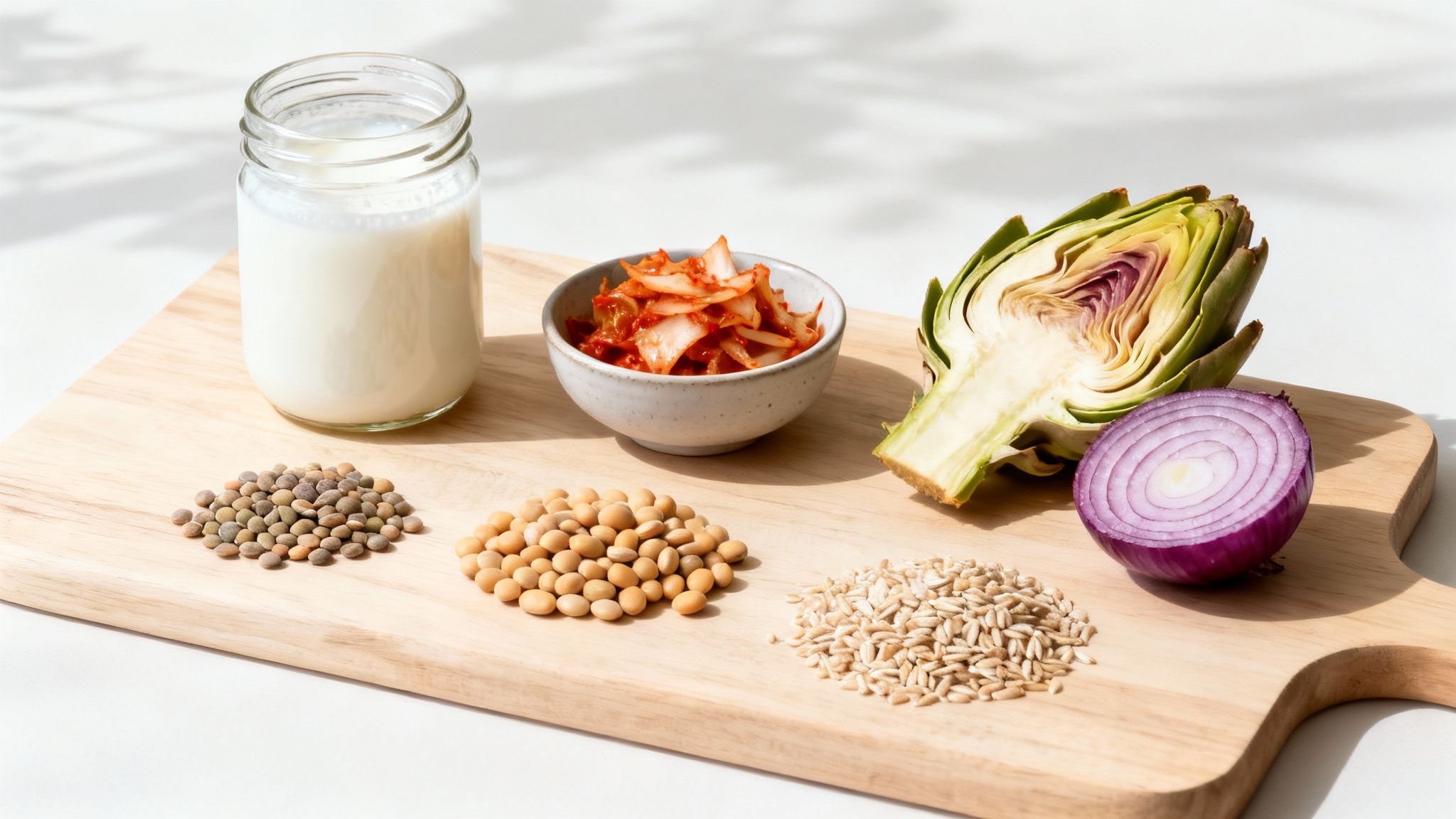
Probiotics: The living helpers for your gut
Probiotics are practically the stars of the show. You'll find them in all fermented foods. Through the fermentation process, beneficial bacteria strains like lactic acid bacteria multiply, which can then colonize your gut and strengthen your existing gut flora.
These foods are excellent sources of probiotics:
- Natural yogurt & kefir: Look for products without added sugar. They provide live cultures that support your digestion.
- Sauerkraut: My tip: Be sure to choose unpasteurized sauerkraut from the refrigerated section. The heat treatment used in conventional preservation unfortunately kills the beneficial bacteria.
- Kimchi: This fermented Korean dish made from Chinese cabbage and radish is a true bacteria bomb and adds a great spice to your meals.
- Kombucha: A fermented tea drink that is a super refreshing alternative to sugary sodas.
Prebiotics: Food for your good bacteria
While probiotics attract new inhabitants to your gut, prebiotics ensure that the good bacteria in your intestines thrive and multiply. Prebiotics are special, indigestible fibers that serve as food for beneficial microbes like bifidobacteria and lactobacilli.
Try to regularly include these prebiotic-rich foods in your diet:
- Alliums: Garlic, onions and leeks are not only great flavor carriers, but also first-class food for your gut inhabitants.
- Root vegetables: Chicory, artichokes, Jerusalem artichokes and parsnips are particularly rich in the prebiotic dietary fiber inulin.
- Legumes: Lentils, chickpeas and beans not only provide plant-based protein, but also plenty of valuable fiber.
- Whole grain products: Oats, barley and rye contain so-called beta-glucans, which specifically promote the growth of beneficial bacteria.
The real secret to a resilient gut flora lies in diversity. The more varied your diet and the more different prebiotic fiber sources you combine, the more diverse and stable your microbiome will ultimately be.
Synbiotics: The power duo on your plate
The most effective strategy is to combine probiotics and prebiotics directly in one meal. Such combinations are also known as synbiotics . A very simple example is natural yogurt (probiotic) with a handful of rolled oats and a sliced banana (both prebiotic).
As you can see, a gut-friendly diet isn't rocket science. It's primarily about focusing on natural, unprocessed foods. Studies repeatedly show that the Mediterranean diet in particular – rich in vegetables, legumes, whole grains, olive oil, and fish – promotes a diverse gut microbiome. Dietary fiber plays a key role here: beneficial bacteria break it down into short-chain fatty acids like butyrate , which in turn strengthens the intestinal barrier and regulates the immune system.
Individual customization is crucial
But what if you continue to experience symptoms despite a healthy diet? Sometimes our bodies simply don't tolerate certain "healthy" foods well. A mybody®x food intolerance test can reveal whether you have a silent immune reaction to certain foods, which may be imperceptibly disrupting the development of your gut flora.
You might also be lacking specific strains of bacteria. A mybody®x gut microbiome test gives you a clear picture of the exact composition of your microbiome. For example, if you have a deficiency in bifidobacteria, you can specifically increase your intake of prebiotic foods such as lentils, asparagus, and whole grains. Learn more about the important role of bifidobacteria in your gut health in our guide.
With these personalized insights, you can truly optimize your diet and give your gut exactly what it needs.
An example daily plan for your gut health
Theory is one thing, but what does a gut-friendly diet look like in real life? Often, it's not a lack of knowledge that's the problem, but rather a lack of concrete, practical ideas that are easy to implement. That's precisely why we've put together a practical daily plan for you.
Think of this plan as a starting point, not a rigid rule. It's designed to show you how easy and delicious it can be to incorporate pre- and probiotic foods to optimally support your gut flora. Use it as inspiration and adapt it to your taste – and, of course, to the results of your personal mybody®x tests .
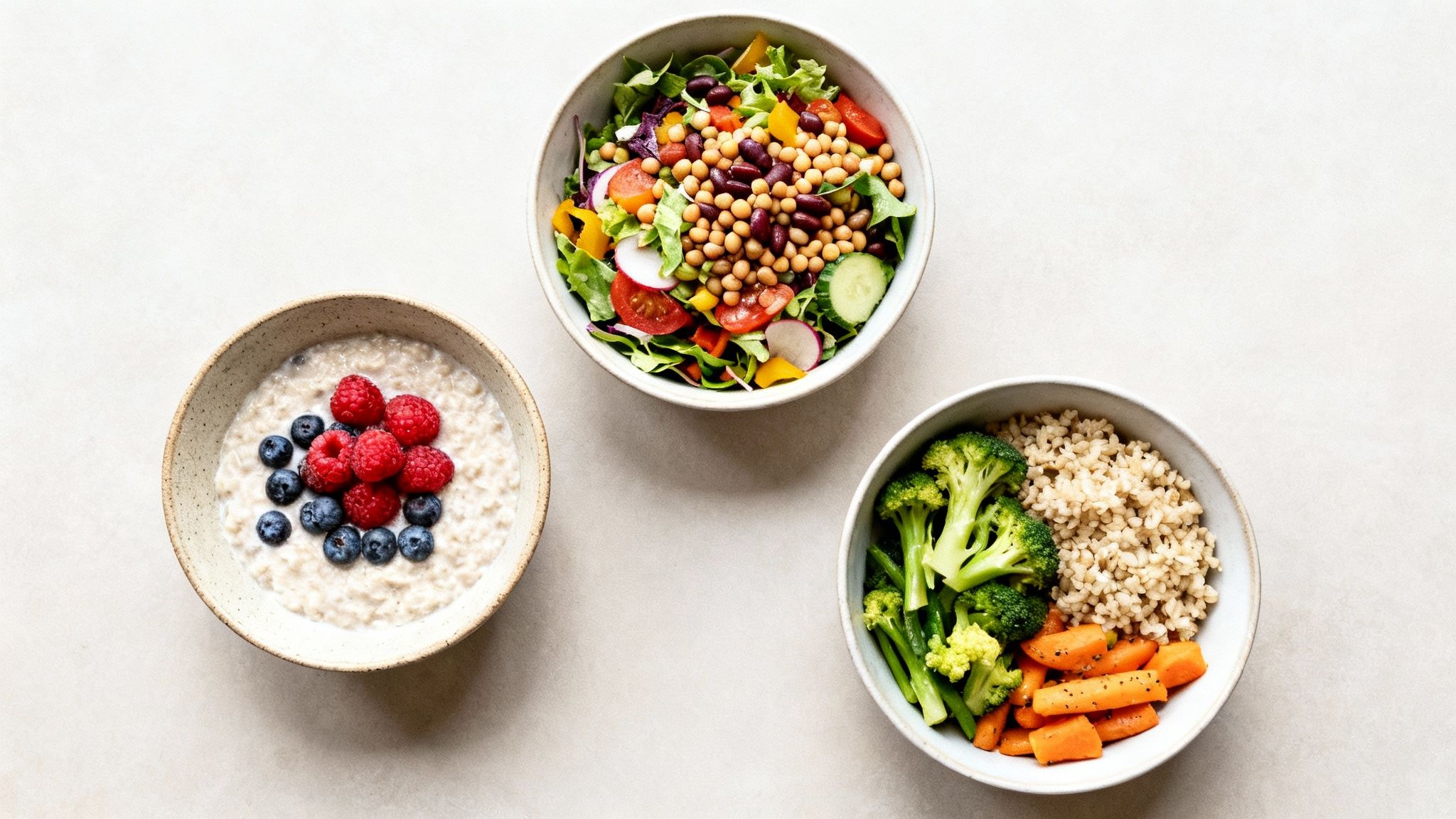
The start of the day: Breakfast
A good breakfast is the best foundation. Instead of starting the day with quick carbohydrates from white bread or sugary cornflakes, give your body something that's good for it: long-lasting energy and valuable fiber.
An absolute classic that never goes out of style is porridge made from rolled oats . Oats are packed with beta-glucans – a prebiotic fiber that specifically promotes the growth of beneficial gut bacteria. Cooked with water or unsweetened plant-based milk, it's the perfect base.
You can get really creative with the topping:
- The prebiotic boost: Half a sliced banana and a teaspoon of flaxseed.
- The probiotic boost: Mix a spoonful of natural yogurt or kefir into the slightly cooled porridge.
- For flavor and antioxidants: A handful of fresh berries, for example blueberries or raspberries.
This way you not only stay full for a long time, but also feed your hardworking gut inhabitants right in the morning.
The lunch break: Recharging your batteries
Many people opt for quick but often nutrient-poor meals, especially at lunchtime. However, a gut-friendly meal that prevents the afternoon slump can be easily prepared in advance.
A large, colorful salad is the ideal choice here. The variety of vegetables provides different types of fiber and polyphenols, which your gut flora will greatly appreciate.
Here's how to easily put together a power salad:
- The base: Mix different leafy greens such as arugula and lamb's lettuce.
- The filling foods: Cooked chickpeas or lentils (from a can, but rinse well!) provide plant-based protein and prebiotics.
- The colorful vegetables: bell peppers, cucumbers, tomatoes and grated carrots provide a wide range of nutrients.
- The dressing: Simply made from olive oil, apple cider vinegar, a little mustard, and herbs. A small bonus: Apple cider vinegar also contains traces of probiotic cultures.
Need more ideas for a whole week? Our blog features a detailed article showing you how to create a healthy weekly meal plan .
Dinner: Light and nourishing
In the evening, it's a good idea to eat something easily digestible to avoid putting unnecessary strain on the body, and especially the digestive system. Steamed vegetables are an excellent choice here, as they are much gentler on the gastrointestinal tract than raw vegetables.
A colorful vegetable stir-fry with quinoa is ready in just a few minutes and provides you with complex carbohydrates, fiber and important micronutrients.
And here's how it works:
- Simply steam your favorite vegetables such as broccoli, zucchini and bell peppers in a little water or broth.
- Finely chopped garlic and onions are essential – both are excellent prebiotics.
- Serve the vegetables with a portion of freshly cooked quinoa.
- For an extra probiotic boost, serve with a dollop of natural yogurt or a small portion of kimchi as a side dish.
Your personal plan: This daily routine is just a framework. For example, if your mybody®x intolerance test shows that you react to tomatoes, simply replace them. If your microbiome test detects a deficiency of certain bacteria, you can specifically incorporate the foods that boost their growth.
The following table gives you a quick overview and a clear structure for your gut-friendly day.
This is what your gut-friendly day could look like.
Here is a concrete suggestion on how you can immediately put the principles of a gut-healthy diet into practice.
| Have a good meal | Court proposal | Focus on the gut |
|---|---|---|
| Breakfast | Oat porridge with berries, flax seeds and a dollop of yogurt | Prebiotic fiber (oats, flaxseed) and probiotics (yogurt) |
| Lunch | Large salad with chickpeas, colorful vegetables and apple cider vinegar dressing | Variety of plant fibers, proteins and probiotic traces |
| Dinner | Steamed vegetables with quinoa and a side of kimchi | Easily digestible dietary fiber (prebiotics) and live cultures (probiotics) |
For a quick snack, things like a handful of nuts, an apple, or vegetable sticks with hummus are perfect. Ultimately, it's not about perfection. It's about making conscious choices every day that sustainably support the development of your gut flora through proper nutrition .
Typical mistakes that weaken your gut flora
Does this sound familiar? You make an effort, eat salads, choose whole-grain products, and yet your stomach just doesn't feel right. This can be incredibly frustrating. Often, it's unconscious habits or routines that we consider healthy, but which unknowingly sabotage the development of a strong gut flora.
Sometimes the devil really is in the details. One of the biggest pitfalls is a diet that is too one-sided. Even if you eat oatmeal and chicken every day – both excellent foods in their own right – your gut bacteria are lacking crucial diversity. They need a colorful buffet of fiber from a wide variety of plant sources to build a strong and resilient ecosystem.
The sugar trap and processed foods
One of the biggest enemies of your beneficial gut bacteria is undoubtedly refined sugar. It's not just hidden in sweets, but also lurks in ready-made meals, sauces, and even cereals advertised as "healthy." Sugar is like fast food for the unwanted bacteria and yeast in your gut.
This can cause them to multiply explosively and displace the beneficial bacteria. The result is dysbiosis – an imbalance often manifested by bloating, constant cravings, and inflammation. The situation is quite similar with highly processed foods. They not only lack essential fiber, but often also contain emulsifiers and artificial additives that have been shown to irritate the intestinal lining and negatively alter the composition of the microbiome.
Your gut loves it in its natural state. The closer a food is to its natural state, the better your microbiome can utilize the nutrients it contains.
The misconception of radical diets
In their desire to lose a few pounds quickly, many people resort to radical diets with drastic calorie reduction. However, this approach can have disastrous consequences for your gut flora. If you drastically reduce the quantity and variety of food you eat, you essentially starve your beneficial bacteria.
The diversity of your microbiome decreases rapidly, weakening the entire system and making it more vulnerable. Researchers at Charité – Universitätsmedizin Berlin have impressively demonstrated this in a study: A severely calorie-restricted diet not only drastically reduces the number of microorganisms in the gut, but also fundamentally alters the composition of the gut flora. Interestingly, the diet even led to an increased colonization with the potentially problematic bacterium Clostridioides difficile . If you would like to understand the profound connections, you can read the full study on the effects of diet on the gut flora here.
Underestimated disruptive factors in everyday life
Diet is the most important factor in building up your gut flora , but it's not the only one. Two factors we often overlook in our stressful daily lives are chronic stress and lack of sleep.
- Chronic stress: Did you know that your brain and gut communicate directly with each other via the so-called gut-brain axis? Persistent stress leads to the release of hormones like cortisol, which make your intestinal barrier more permeable ("leaky gut") and negatively affect the composition of your microbiome.
- Lack of sleep: Too little or poor-quality sleep disrupts your internal ecosystem. Studies show that even a few nights of poor sleep are enough to reduce the diversity of gut bacteria and shift the balance in favor of harmful bacteria.
Knowing these stumbling blocks is already the first big step towards improvement. It's not about being perfect overnight, but about making more conscious choices based on what your gut tells you. If you feel like you're not making progress despite all your efforts, it's worth taking a closer look. A mybody®x gut microbiome test can give you a clear picture of the diversity of your gut bacteria. At the same time, a nutrient test can reveal whether you might be lacking important building blocks for a healthy intestinal lining. This allows you to take targeted action instead of continuing to grope in the dark.
Still have questions? Frequently asked questions about a gut-healthy diet
Finally, we'd like to address a few frequently asked questions about building up your gut flora through proper nutrition. We hope to dispel any remaining uncertainties and provide you with clear, understandable answers to guide you on your journey.
How quickly will I notice the effects of a dietary change in my gut?
Your microbiome is truly remarkably adaptable. The first small changes in the composition of your gut bacteria are actually measurable after just a few days when you change your diet.
Noticeable improvements, such as more regular digestion or simply feeling more energetic, often appear after two to four weeks . However, for a profound and, above all, lasting change in the ecosystem of your gut, you should think in terms of months. Patience and consistency are truly the keys to long-term success.
Do I now have to completely give up sugar and wheat?
Radical abstinence is usually unnecessary and often difficult to maintain – which can quickly lead to frustration. It's much more important to significantly reduce consumption and find a conscious way of dealing with it.
Highly processed foods and added sugar should really be the absolute exception in your diet. With wheat, however, things are a bit different: many people actually tolerate high-quality whole-grain products quite well.
Unsure about your situation? A mybody®x food intolerance test can provide clarity. It shows you specifically whether your immune system reacts particularly to wheat or gluten and whether avoiding these foods would be beneficial for you personally.
Are probiotic supplements beneficial?
In certain situations, probiotics can be absolutely beneficial, for example after a course of antibiotics. They help to specifically repopulate important strains of bacteria that may have been harmed by the medication.
But – and this is important – they should never be seen as a substitute for a varied, fiber-rich diet. At most, they can be a supplement. The foundation always remains a diet that naturally nourishes and strengthens your gut bacteria. Incidentally, a mybody®x gut microbiome test can show whether there is a deficiency of certain strains that would justify targeted supplementation.
What if my digestive problems still don't improve?
You've changed your diet, but symptoms like bloating or constant fatigue just won't go away? Then other factors could be at play. Common causes include undetected food intolerances or nutrient deficiencies. What many don't know: Hormonal imbalances can also significantly affect gut health.
Here, the at-home blood tests from mybody®x , which check, for example, vitamins, minerals or hormones, can provide valuable insights and uncover hidden causes.
Do you feel that despite all your efforts, something is still amiss? Do you finally want certainty instead of just guesswork? The at-home health tests from mybody®x give you a clear picture of your intolerances, nutrient levels, or the state of your microbiome.
Share:
Coffee before blood test: Am I allowed to drink coffee or not?
Leaky gut test: How to easily find clarity about your gut health