

Losing weight step by step with laboratory analysis – How it works
More than 60 percent of people fail to achieve their weight-loss goals because they do not know their own metabolism well enough. Every body processes food differently, which is why many people fail despite their discipline when following one-size-fits-all diets. Those who understand how their own metabolism works can make targeted dietary choices and finally achieve lasting results. This approach helps you better understand your body and reach your goals more effectively.
Table of contents
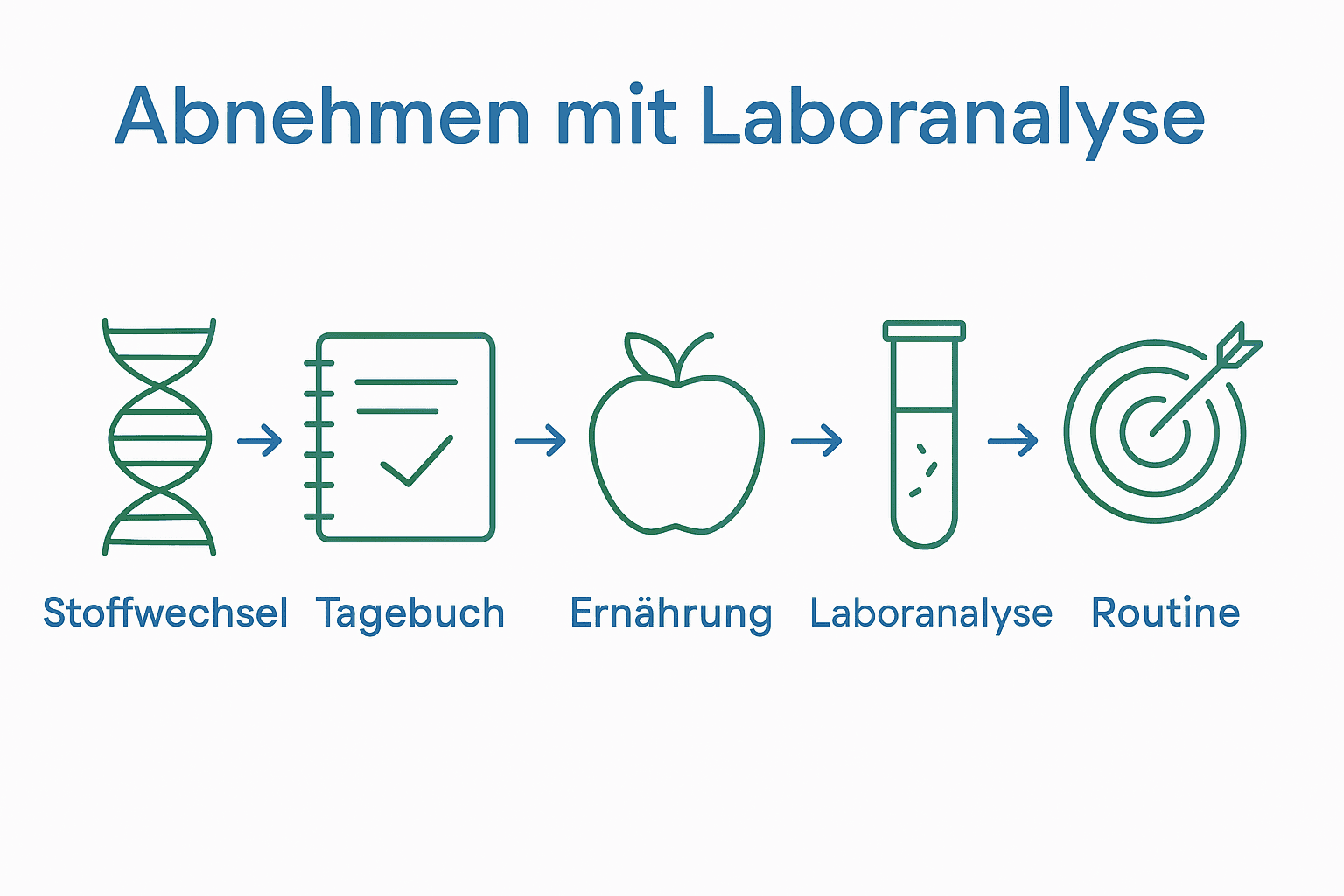
- Step 1: Determine your individual metabolic type
- Step 2: Analyze your diet and lifestyle habits
- Step 3: Optimize your nutrition strategy with a targeted approach
- Step 4: Monitor Your Progress with Laboratory Checks
- Step 5: Adjust your routine for sustainable success
Quick overview
| Key message | Explanation |
|---|---|
| 1. Determine your metabolic type | A DNA analysis helps identify individual metabolic characteristics and develop suitable nutrition strategies. |
| 2. Analyze your diet regularly | Document all foods and eating habits over the course of a week for a precise analysis of hidden calories. |
| 3. Optimize your diet strategically | Adapt your diet to your metabolic characteristics to reduce weight effectively and maintain it long term. |
| 4. Monitor your progress with laboratory checks | Have laboratory analyses performed every 3–4 months to track important health parameters and make adjustments. |
| 5. Continuously adjust your routine | Evaluate your health strategies regularly so you can respond flexibly to changes in your progress. |
Step 1: Determine your individual metabolic type
Your metabolic analysis is the key to effective and personalized weight management. This first step helps you understand your individual biological characteristics and develop a tailored weight-loss strategy.
The concept of metabolic typing is based on the idea that people have different metabolic processes Wikipedia. However, it is important to know that scientific evidence for strictly defined metabolic types is currently limited. Nevertheless, a detailed analysis of your metabolism can provide valuable insights into your individual needs.
To determine your metabolic type, I recommend a DNA nutrition test that analyzes genetic markers and provides insights into your metabolic characteristics. This test examines specific genes that influence metabolism, nutrient utilization, and weight management.
The process is simple: You receive a test kit, collect a saliva sample, and send it to the laboratory. After approximately 2–4 weeks, you will receive a detailed report that helps you understand your individual metabolic characteristics. Based on these results, you can then develop a customized nutrition strategy.
Tip: Carefully follow the instructions in the test kit when collecting the sample to ensure accurate results.
With this information, you are ready for the next step in your weight-loss journey: personalized nutrition planning.
Step 2: Analyze your diet and lifestyle habits
After determining your metabolic type, the next crucial step is a comprehensive analysis of your current diet and lifestyle habits. This step will help you gain precise insights into your health and eating patterns.
The importance of a detailed analysis is highlighted by scientific studies. The EPIC study shows that examining eating habits is crucial for understanding the connections between lifestyle and health. This is not just about the quantity of food, but also its quality and composition.
For a comprehensive analysis, I recommend creating a detailed nutrition report. Document the following precisely over the course of one week:
- All meals and snacks
- Beverage consumption
- Meal times
- Portion sizes
- Emotional states while eating
Pay particular attention to hidden calories, irregular meal times, and emotional eating. These factors often affect your metabolism and weight development more than you initially realize.
Tip: Be honest with yourself. Only a complete and honest analysis can truly help you.
This detailed documentation provides the foundation for a personalized and successful weight-loss strategy.

Step 3: Optimize your nutrition strategy with a targeted approach
After analyzing your eating habits, you can now begin the crucial step of targeted dietary optimization. The goal is to scientifically tailor your nutrition strategy to your individual needs.
The German Nutrition Society emphasizes the importance of evidence-based nutritional counseling for successful weight loss. Based on your previous analyses, you will now make specific adjustments tailored to your metabolic characteristics.
An effective strategy could be the LOGI method, a low-carbohydrate diet that enables weight loss without hunger. It is important to view your diet not as a short-term diet, but as a long-term change.
Your dietary optimization should take the following aspects into account:
- Protein-rich foods with high satiety
- Complex carbohydrates instead of simple sugars
- Healthy fats in moderation
- Sufficient vegetables and fiber
Tip: Experiment with different food combinations and observe how your body feels as a result.
Losing Weight Through Nutrition does not mean deprivation, but rather making smart choices and understanding your body. Stay patient and consistent with your new dietary strategy.
Step 4: Monitor Your Progress with Laboratory Checks
The progress of your weight loss can be assessed most accurately using scientific methods. In this step, you will learn how to document your dietary progress precisely and objectively through laboratory analyses.
Research findings such as DietGlance show that personalized analyses are crucial. This system demonstrates how modern technologies can revolutionize dietary monitoring and provide detailed insights into our metabolism.
For comprehensive progress monitoring, I recommend the Nährstoff VitalCheck Complete, which examines the following aspects:
- Minerals and trace elements
- Vitamin balance
- Hormonal changes
- Inflammatory markers
- Metabolic parameters
Tip: Have the laboratory analysis every 3–4 months to document long-term changes.
These scientifically sound checks not only help you lose weight but also provide valuable insights into your overall health.
 They are the key to sustainable and healthy weight management.
Step 5: Adjust your routine for sustainable success
Now that you understand your nutrition and metabolism, it is time to continuously optimize your weight-loss routine. This step is crucial for long-term success and sustainability.
The DEGS study by the Robert Koch Institute shows how important it is to regularly evaluate and adjust health routines. Not every strategy works equally well for everyone, so you need to remain flexible and observant.
To successfully adjust your routine, I recommend the following strategy:
- Conduct a progress review every 3–4 months
- Compare your laboratory results
- Analyze your energy levels
- Monitor your weight changes
- Adjust your nutrition and exercise accordingly
Tip: Don't be too hard on yourself. Small adjustments are often more effective than radical changes.
Stimulating fat burning is an ongoing process. Stay patient, scientific, and analytical in your approach.
Lose weight in a targeted and sustainable way with laboratory analysis
The path to your desired weight begins with understanding your own body. The step-by-step guide to losing weight with laboratory analyses shows how important an individual metabolic analysis and regular monitoring of nutrients, hormones, and inflammatory markers are. Many people are looking for a solution that not only works in the short term but also improves well-being in the long term and optimally supports the body. Personalized nutrition recommendations and scientifically sound tests play a decisive role in this.
At mybody®x, we offer you precisely this innovative support. Our certified tests help you accurately determine your metabolic type and develop a customized strategy based on your results. Discover our Individual Solution for Excess Weight | Lose Weight Permanently – mybody®x and benefit from valuable insights for your nutrition and health. Start your journey toward a new sense of well-being today with a scientifically validated analysis and take the next step toward a healthier you. Learn more at mybody-x.com and secure your personal consultation.
Frequently asked questions
How do I determine my individual metabolic type?
To determine your metabolic type, you can take a DNA nutrition test. Order a test kit, collect a saliva sample, and send it to a laboratory to receive results within 2 to 4 weeks.
What should I consider when analyzing my diet?
Make sure to document every meal and snack in detail over the course of a week. Also note how you feel while eating to identify hidden calories and eating habits.
How do I optimize my nutrition strategy based on my metabolic analysis?
Adjust your diet by including protein-rich foods, complex carbohydrates, and healthy fats. Regularly experiment with different food combinations and observe how your body responds.
How often should I have lab checks to monitor my progress?
Have lab checks every 3 to 4 months to document long-term changes in your health and diet. These checks help you evaluate your progress and adjust your strategy accordingly.
How do I adjust my weight-loss routine for sustainable success?
Review your progress every 3 to 4 months by evaluating your lab results and energy levels. Small adjustments to your diet and exercise are often more effective than radical changes.
What role does emotional eating play in my weight management?
Emotional eating can strongly affect your metabolism and weight trajectory. Pay attention to your feelings when eating and try to reduce irregular mealtimes so you can lose weight more effectively.
Recommendation
- Nutrition and weight-loss DNA metabolic analysis | Your gene diet – mybody®x
- Low-carb diet: Your simple guide to getting started – mybody®x
- DNA analysis for weight loss: Find your path to your ideal weight – mybody®x
- WeightLoss SLIM DNA Test | DNA-based weight loss – mybody®x
- Naturally regulate blood sugar: Healthy strategies for your well-being



Share now:
How does a saliva test work: A complete practical guide
Analyze Your Personal Metabolism: The Complete Guide