

Analyzing Your Personal Metabolism: The Complete Guide
More than 90 percent of all people have genetic characteristics that make their metabolism unique. What provides quick energy for one person may make another feel sluggish or increase their risk of disease. Anyone who understands how individual these processes are can make targeted adjustments to their nutrition and lifestyle. Here you will learn how modern analyses can help you decode your personal metabolism and get more out of your health.
Table of contents
- What does personal metabolism mean?
- Analytical methods: Scientific techniques compared
- Types of tests: DNA, blood, stool, and saliva explained
- Typical areas of application and benefits
- Risks, limitations, and data protection for home tests
Key findings
| Point | Details |
|---|---|
| Individual metabolism | Personal metabolism influences how the body burns calories, stores fat, and processes nutrients. Understanding it can help optimize nutrition and lifestyle. |
| Scientific analysis methods | Modern methods such as metabolomics, genetic profiling, and proteomic analyses offer in-depth insights into individual metabolism and support tailored health strategies. |
| Types of tests and their significance | DNA, blood, stool, and saliva tests provide valuable information about individual metabolic processes and enable a comprehensive health assessment. |
| Risks and data privacy | Caution is advised with at-home tests regarding the interpretation of results and data privacy in order to protect sensitive health information and handle results responsibly. |
What does personal metabolism mean?
Your metabolism is like an individual biological operating system that is unique to you and as personal as your fingerprint. It encompasses all the biochemical processes that take place in your body to produce energy, process nutrients, and nourish cells.
Research from the Berlin Institute of Health shows that our genetic code has an enormous influence on our metabolism. bihealth.org has shown that genetic variations can directly affect blood markers such as cholesterol and amino acids. This means that not everyone responds to nutrition, exercise, or stressful situations in the same way.
Your personal metabolism determines how quickly you burn calories, store fat, build muscle, and produce energy. It influences key aspects of your health:
- Weight management
- Energy levels
- Hormone balance
- Digestive efficiency
- Disease risks
Anyone who understands their individual metabolism can optimize their diet and lifestyle in a targeted way. 8 tips for naturally boosting your metabolism can help you improve your metabolic health.
Analytical methods: Scientific techniques compared
Modern metabolic analysis uses highly complex scientific methods that provide detailed insight into your individual biological processes. The goal is to understand precisely how your body processes nutrients, produces energy, and responds to various influences.
According to research by the Karlsruhe Institute of Technology (KIT), metabolomics methods are used to examine human metabolism precisely. ifss.kit.edu shows that myokines and exerkines in particular play a central role as signaling molecules in physiological adaptation processes. These methods provide insights into areas such as athletic performance and physical resilience.
Modern analytical methods encompass various scientific techniques:
- Genetic profiling: Examination of genetic variations
- Metabolomics: Analysis of metabolic products
- Protein analysis: Examination of protein structures
- Hormonal measurements: Determination of hormone levels
According to orgprints.org, profiling techniques enable comprehensive analysis at the molecular level—from mRNA and proteins to metabolic metabolites. This means that modern analyses provide a complex picture of your individual metabolism that goes far beyond traditional examination methods.
Each of these methods has its specific strengths and can shed light on different aspects of your metabolic health. Foods that boost metabolism can also help you actively use your results.
Types of tests: DNA, blood, stool, and saliva explained
To gain a comprehensive understanding of your personal metabolism, there are various analytical methods, each offering different insights into your health. Each testing method has its own strengths and provides specific information about your individual biological processes.
The DNA analysis plays a key role here. bihealth.org shows that researchers at the Berlin Institute of Health have studied genetic influences on metabolism by analyzing the effects of the genetic code on blood values such as cholesterol and amino acids. This method can provide insights into your individual metabolic processes and potential genetic predispositions.
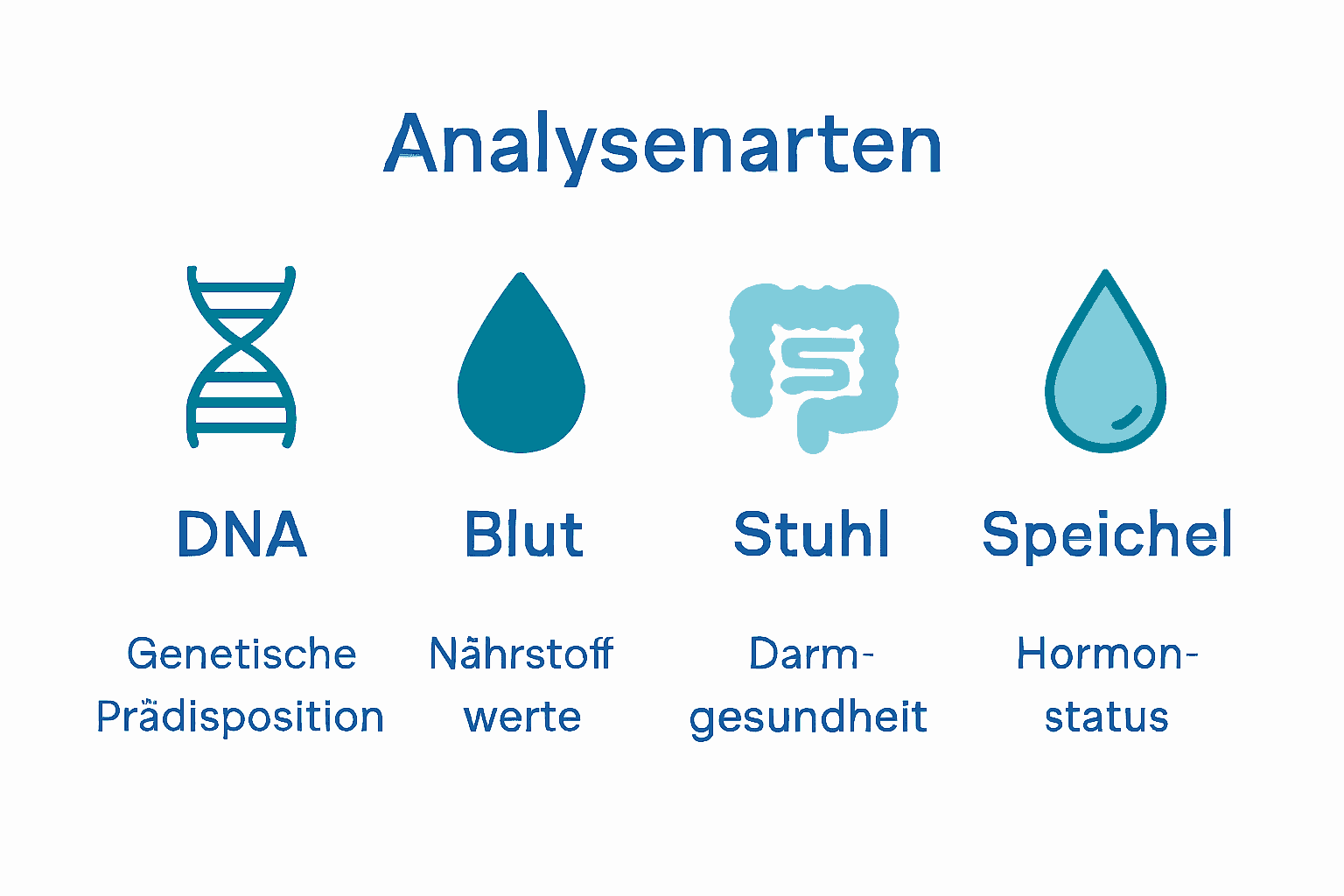
The different types of tests at a glance:
- DNA test
- Genetic variations
- Metabolic predispositions
- Long-term health risks
- Blood test
- Current metabolic values
- Hormonal balance
- Nutrient status
- Stool test
- Gut health
- Microbiome composition
- Digestive functions
- Saliva test
- Hormonal markers
- Stress levels
- Inflammation markers
For a precise metabolomics analysis, scientists use state-of-the-art analytical methods. ifss.kit.edu shows that metabolomics methods analyze metabolites in the blood to understand the effects of nutrition and physical activity. With an at-home stool test, for example, you can check your gut health directly and easily.

Typical areas of application and benefits
Analyzing your personal metabolism is more than just a medical test—it is an individual key to better understanding your health and performance. With the right insights, you can make targeted decisions about your nutrition, fitness, and prevention.
ifss.kit.edu shows that studying energy metabolism is central to preventing lifestyle-related diseases. By identifying metabolic determinants, tailored health strategies can be developed to meet your individual needs precisely.
Typical areas of application include:
- Weight management Understand how your body processes calories
- Athletic performance Optimize energy and recovery
- Nutrition planning Recognize individual nutrient needs
- Disease prevention Identify genetic risk factors
- Hormonal balance Understand your metabolic processes
The benefits of such an analysis are diverse: You gain scientifically sound insights into your body, can identify health risks at an early stage, and take preventive action. Understanding genetic analysis provides you with a personal compass for your health strategy.
Every person is unique—and that is precisely what is reflected in a comprehensive metabolic analysis. It helps you understand your individual strengths and work purposefully on your health.
Risks, limitations, and data protection for home tests
There are important aspects you should be sure to consider when conducting health tests at home. Not every test provides completely reliable results, and handling personal health data requires the utmost care and responsibility.
bihealth.org emphasizes that although genetic analyses can open up new treatment options, they require sensitive data to be handled responsibly and ethically. Protecting your personal information must always come first.
Important risks and limitations of home tests:
- Result interpretation Not every result is medically conclusive
- Technical accuracy Potential sources of error when collecting samples
- Psychological aspects Dealing with potentially distressing information
- Data protection risks Protecting sensitive health information
To ensure maximum safety, you should choose certified providers for at-home health tests that comply with the highest data protection standards. It is also important not to view the results as a sole diagnosis, but always consult a doctor if in doubt.
Ultimately, home tests offer a great way to learn more about your health—provided you use them responsibly and with informed awareness.
Discover your individual metabolism with mybody®x
Your personal metabolism is the key to your well-being and health. Many people struggle with challenges such as unclear weight management, low energy, or hormonal fluctuations without truly understanding the cause. This is where a well-founded analysis comes in, taking your exact genetic and metabolic characteristics into account—so you can specifically optimize your nutrition, fitness, and lifestyle and make your progress visible.
Get started now with our DNA metabolism tests for your optimal nutrition – mybody®x and discover how your genes influence your metabolism. Supplement your analysis with at-home hormone tests – triglycerides, cortisol, testosterone & more – mybody®x for a comprehensive picture of your metabolic health. Rely on modern laboratory diagnostics with the highest data protection standards and scientifically sound analysis. Visit mybody-x.com and take the opportunity now to actively and independently shape your health.
Frequently asked questions
What is a personal metabolism?
Your personal metabolism encompasses all the biochemical processes in your body that affect how you produce energy, process nutrients, and burn calories. It is unique to each person and is influenced by genetic factors as well as lifestyle.
How can I analyze my metabolism?
There are various analysis methods for examining your metabolism, including DNA tests, blood tests, stool tests, and saliva tests. Each method provides different insights into your metabolic health and individual needs.
What are the benefits of metabolic analysis?
A metabolic analysis can help you optimize your weight management, improve your athletic performance, identify specific nutritional needs, and detect genetic risk factors for diseases.
What should I consider when taking a self-test at home?
When taking a self-test at home, it is important to ensure the test’s quality and reliability and to consider the protection of personal data. If in doubt, always consult a doctor to interpret the results appropriately.



Share now:
Guide: Losing Weight Step by Step with Laboratory Analysis
Metabolism explained: functions, types, and influence