

Lowering cortisol with magnesium: Your practical guide to greater inner calm
Yes, magnesium can definitely help lower your cortisol levels. Think of it as a natural counterbalance to the stress hormone. It calms your body's stress axis and reduces cortisol release from the adrenal glands. Maintaining healthy magnesium levels is therefore a crucial building block for escaping the chronic stress trap and finding your inner balance again.
How chronic stress keeps your body constantly on edge
Does this sound familiar? You constantly feel rushed, feel tired during the day, and still cannot unwind in the evening. This could be a clear sign that your body is stuck in a state of constant alert—driven by the stress hormone cortisol.
Normally, cortisol is your friend. It wakes you up in the morning, gives you energy for the day, and helps you respond to challenges. To do this, it follows a natural rhythm: high in the morning, low in the evening.
But when stress becomes a permanent state—because of work, personal worries, or being constantly reachable—this finely tuned system becomes completely disrupted. Your body then releases cortisol constantly and forgets how to put on the brakes.
The consequences of disrupted cortisol levels
This abnormally high level of the stress hormone does not remain without consequences. Your body is permanently stuck in “fight-or-flight” mode, triggering an entire cascade of reactions. Some of these warning signs may sound familiar:
- Poor sleep: Do you toss and turn in bed at night or wake up constantly? This is often because your cortisol levels are too high to drop into restorative deep sleep.
- Intense cravings: Cortisol sends your appetite for quick energy—namely sugar and fat—soaring. The result is often weight gain, especially around the abdomen.
- Concentration problems: An overworked stress system can lead to “brain fog.” You feel forgetful and find it difficult to focus on one thing.
- Weak immune system: Over the long term, too much cortisol puts the brakes on your immune defenses. The result: You become more susceptible to every infection going around.
This graphic shows the chemical structure of cortisol—the steroid hormone that has such a profound impact on our bodies.
From providing energy to regulating inflammation, this small molecule plays a role in everything.
A cortisol level that has fallen out of balance is far more than just a feeling of being “stressed.” It is a measurable biological state that carries serious health risks.
The long-term consequences really shouldn't be underestimated. A large German population study (the KORA study) showed that people with altered cortisol secretion had a significantly higher risk of dying from cardiovascular disease years later. You can read more about these alarming study results on stress hormones and mortality here.
It is therefore extremely important to take your body's warning signals seriously. Understanding why your cortisol levels are getting out of control is the first and most important step toward taking active countermeasures and taking charge of your health again. A hormone test from mybody-x can provide clarity here.
Magnesium as a natural resting pulse for your nervous system
Do you often feel as though your inner motor simply won't switch off? As though you're constantly running at full speed, even when you actually want to relax? This is where magnesium comes in—the key to gently calming your overstimulated nervous system.
Think of this mineral as a natural buffer that tackles the root of your stress problem. When you're stressed, your body releases cortisol. Magnesium acts like a bouncer here: It helps reduce the release of ACTH (adrenocorticotropic hormone) in the brain—and this hormone is precisely what signals the adrenal glands to produce cortisol. Less ACTH therefore directly means less cortisol.
The vicious cycle of stress and magnesium deficiency
At the same time, magnesium stimulates the production of the calming neurotransmitter GABA (gamma-aminobutyric acid). GABA is essentially the brake for your brain. It dampens neural activity and creates that pleasant feeling of calm and serenity. Well-stocked magnesium stores therefore help you avoid flying off the handle at every little thing.
But the real problem is the vicious cycle that quickly develops: chronic stress is a major magnesium drain. During these phases, your body uses huge amounts of it to maintain a constant state of alert.
The interplay between magnesium and cortisol is a two-way street: cortisol causes you to excrete more magnesium through your kidneys. At the same time, a magnesium deficiency causes your body to ramp up cortisol release.
This cycle makes you increasingly vulnerable to the negative effects of stress. It's like trying to put out a fire with less and less water. According to international recommendations from 2022, serum magnesium levels should be at least 0.85 mmol/l to support health. You can read more here about how to prevent stress-related heart disease.
How magnesium promotes sleep
Magnesium's calming effect is especially valuable in the evening. Normally, your cortisol levels should drop then so that you become tired and can fall asleep. A deficiency can disrupt this natural rhythm and is often the reason for dreaded difficulty falling asleep and restless nights.
Ensuring an adequate magnesium supply is therefore one of the simplest and most effective strategies for breaking this cycle. It helps calm your nervous system, lower your cortisol levels, and set the stage for restorative sleep. In our article, you'll learn even more about how important magnesium is for the nerves.
Ultimately, targeted magnesium intake directly influences your biochemical stress response. You're giving your body back the tool it needs to regulate itself and return to a state of inner calm. Instead of feeling at the mercy of stress, you can actively do something to strengthen your resilience.
Which form of magnesium is best suited to your stress level?
When you search for magnesium at a drugstore or online, you're faced with an enormous selection. It quickly becomes clear: not all magnesium is the same. To lower your stress levels and get your cortisol levels under control, choosing the right compound is crucial. Not every supplement is equally suitable.
The decisive factor here is bioavailability. It's a technical term, but it simply describes how well your body can absorb and actually use a nutrient. Your body can utilize some magnesium compounds much more easily than others, which naturally has a significant impact on their effects.
The most common magnesium compounds at a glance
So you don't lose track in the jungle of available options, let's take a closer look at the most important forms of magnesium. This will help you determine which one makes the most sense for your goal—lowering cortisol.
-
Magnesium glycinate: This form is the absolute star when it comes to stress and relaxation. Here, magnesium is bound to glycine, an amino acid that itself has a calming effect on the nervous system. Magnesium glycinate is extremely bioavailable and also very gentle on the stomach. Perfect for taking in the evening to wind down and sleep better.
-
Magnesium citrate: The body also absorbs this organic compound very well. Many people know magnesium citrate for its mildly laxative effect—it can therefore be great for relieving constipation. It is a good all-round solution if you want not only to reduce your stress level but also to give your digestion a little boost.
-
Magnesium oxide: A little caution is advised here. Although magnesium oxide has a high proportion of elemental magnesium, its bioavailability is unfortunately very low. Your body can absorb only a tiny fraction of it. The rest is excreted unused and often causes gastrointestinal problems. It is therefore the poorer choice for lowering cortisol.
A little practical tip: Your body gives you fairly clear signals as to whether the dose is right. A magnesium dose that is too high almost always shows up as loose stools or mild diarrhea. There is no need to worry; it simply means you should reduce the amount a little. It is best to start with a lower dose and gradually work your way up to the amount that feels right for you.
This graphic helps you better assess your current stress level and understand why taking a closer look at your magnesium levels might be a good idea right now.
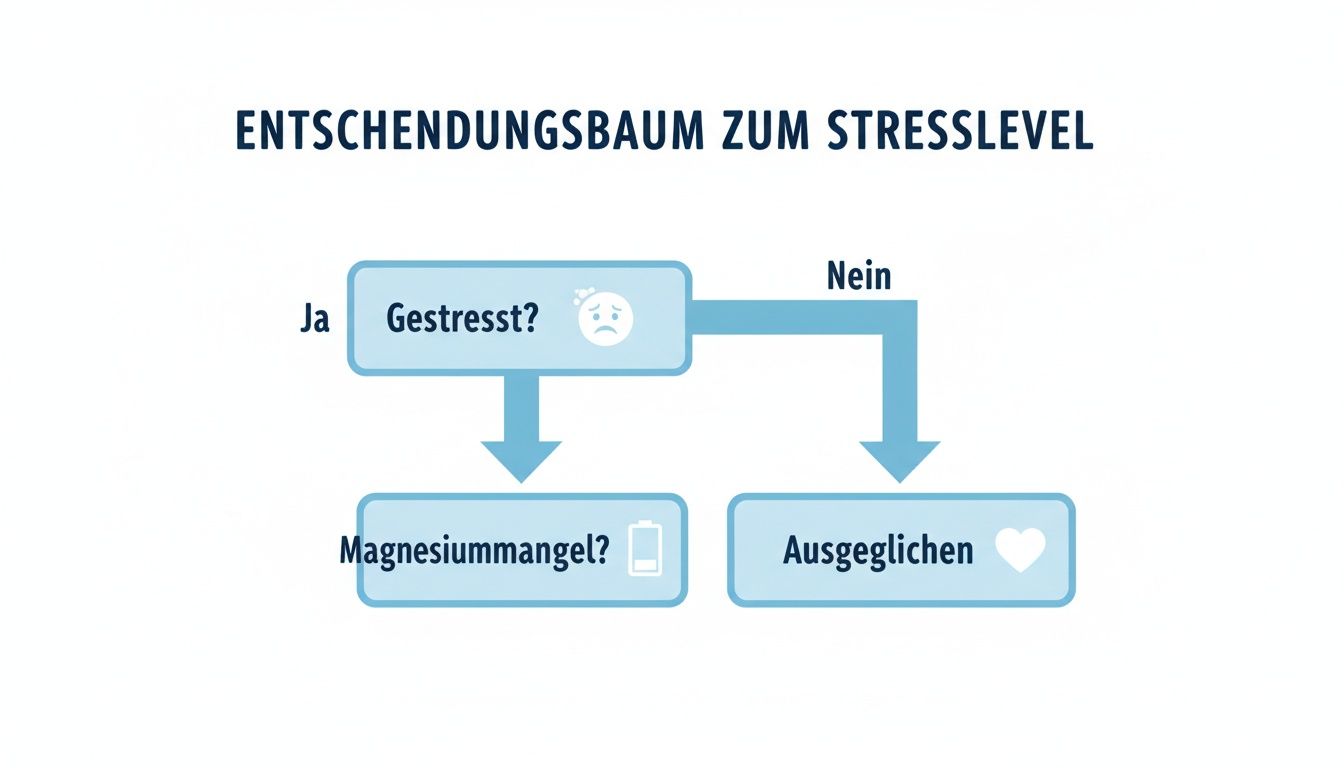
The decision tree clearly shows how closely the feeling of stress can be linked to a possible magnesium deficiency—a vicious cycle that you can break.
Which form of magnesium is right for you?
This table compares the most common magnesium compounds so you can make the best choice for your individual needs.
| Form of magnesium | Bioavailability | Especially suitable for |
|---|---|---|
| Magnesium glycinate | Very high | Stress relief, relaxation, and better sleep; very gentle on the stomach. |
| Magnesium citrate | High | General magnesium supplementation, digestive support (in cases of constipation). |
| Magnesium oxide | Low | Not recommended for reducing cortisol; often causes digestive issues. |
Each of these forms has its place, but if your focus is on lowering your cortisol levels, magnesium glycinate is generally the best choice.
Timing is everything: When you should take magnesium
To fully benefit from magnesium’s calming effects, the right timing plays a crucial role. Especially for effectively lowering cortisol levels, one particular timing window has proven especially effective.
It’s best to take magnesium glycinate one to two hours before going to bed. It can work wonders! It helps your nervous system switch into rest mode and supports the natural evening decline in cortisol, which is essential for restful sleep.
If you’d like to learn more about how a deficiency becomes noticeable in the first place, you’ll find detailed information about typical signs of magnesium deficiency in our article. With the right form and perfect timing, you have a powerful tool against stress at your disposal.
How to replenish your magnesium reserves through your diet
A well-stocked magnesium reserve starts on your plate. So before you reach for capsules and powders, let’s take an honest look at your diet. Often, you can make a big difference with just a few targeted adjustments to replenish your reserves and tame your cortisol levels.
The good news is that magnesium is found in many delicious, everyday foods. So you don’t have to start a complicated diet. It’s more about consciously adding a few real powerhouses to your meal plan.
The top magnesium sources for your everyday life
Variety is key here. Just try to combine several of these foods regularly, and you’ll also benefit from many other important nutrients along the way. Here are a few of my favorites:
- Pumpkin seeds: A small handful (about 30 g) already covers a substantial portion of your daily requirement. I like sprinkling them over salads or into my morning muesli—super simple and effective.
- Almonds: The perfect snack between meals. They provide not only magnesium but also healthy fats and plant-based protein, which keeps you full for a long time.
- Spinach: In general, leafy green vegetables are a great choice. Cooked spinach is especially rich in magnesium and is easy to enjoy as a side dish or even add to a smoothie.
- Dark chocolate: Yes, you read that right! A piece of chocolate with a high cocoa content (at least 70%) is a delicious and completely legitimate source of magnesium.
- Legumes: Lentils, chickpeas, and black beans are true all-rounders. They’re packed with fiber, protein, and a generous amount of magnesium, too.

As you can see, it is not that difficult to improve your daily magnesium intake through your diet.
Why diet alone is sometimes not enough
Let’s be honest: Despite the best intentions, it is often not easy these days to meet your entire magnesium requirement through food alone. One reason is that modern farming has often depleted our agricultural soil, making it less nutrient-rich than it used to be. This directly affects the magnesium content of vegetables.
Your personal lifestyle also plays a huge role. Chronic stress, lots of exercise, or regular consumption of coffee and alcohol are real magnesium depleters. During such periods, your body may be crying out for more than you can take in through your diet.
This is exactly where it pays to look beyond the obvious. If you notice that you are constantly tired, stressed, or restless despite eating a healthy diet, targeted supplementation could be the next logical step. However, it is important not to start taking supplements blindly, but to first find out your own status. A mybody-x nutrient test can provide clarity here.
In our comprehensive guide to minerals and trace elements, you can learn more about which building blocks are essential for your well-being and how they work together in the body.
Why a test gives you clarity about your status
General recommendations will not get you very far when it comes to taking targeted control of your health. To bring your cortisol and magnesium levels into a healthy balance, you first need to know where you stand. That is the foundation for any meaningful change.
Feeling around in the dark is a complete waste of time. Are you taking too much magnesium? Or perhaps so little that it has no effect at all? That is why a simple at-home self-test is the smartest first step toward finally getting clarity.
From guesswork to targeted action
A blood test provides the facts you need to make the right decisions. Think of it as a compass that shows you exactly where you stand and where you need to go.
- Determine your magnesium status: The mybody-x nutrient test accurately measures how much magnesium is in your blood. This gives you clear, objective evidence of whether you have a deficiency and how large the gap is that you need to fill.
- Make your stress level visible: At the same time, a mybody-x hormone test can reveal your daily cortisol pattern. It shows you whether your levels rise sufficiently in the morning and—crucially for restorative sleep—fall adequately again in the evening. Any imbalance becomes immediately visible.
With these specific values in hand, you can finally stop guessing. You’ll immediately know whether taking magnesium makes sense for you at all and can adjust the dosage precisely to your actual needs.
A test is more than just a measurement—it’s the starting point for a self-directed journey toward greater well-being. You take control and create a scientific foundation instead of relying on general advice.
Science also confirms this targeted approach. For example, a randomized, placebo-controlled study showed that taking 350 mg of magnesium citrate daily for 24 weeks significantly reduced cortisol excretion. Clear evidence of the positive impact magnesium can have on stress hormone metabolism. If you’d like to delve deeper into the research findings on the effects of magnesium on cortisol, you can read about the scientific background here.
A test gives you the opportunity to apply these scientific findings to your individual situation. Instead of groping in the dark, you get clear recommendations tailored to your unique body—all from the comfort of your home.
Would you like to learn more about how to best keep an eye on your cortisol levels? Then read our detailed guide on measuring and understanding cortisol.
What else you should know about magnesium and cortisol
Here we’ve summarized the answers to the most pressing questions about magnesium as a stress reliever. Short, concise, and to the point, so you’re fully informed.
How quickly will I feel the effects of magnesium against stress?
Many people notice after just a few days that their muscles relax and their nervous system calms down. This is often the first noticeable sign that the magnesium is starting to do its job.
However, if your goal is to sustainably lower your cortisol levels, your body needs a little more time. Think of it this way: your magnesium stores first need to be replenished. So give your body several weeks and take the magnesium consistently—you’ll then see the best, and above all, long-term results.
Can you overdose on magnesium?
Yes, that can happen, but with healthy kidneys it is rarely a cause for concern. Your body is quite clever and has a built-in protective mechanism: excess magnesium is simply excreted through the intestines.
You’ll notice this fairly quickly through softer stools or mild diarrhea. This is not a warning sign, but simply your body’s signal that you should reduce the dose slightly. It’s best to follow the recommended daily dose on your product’s packaging; that way, you’ll be on the safe side.
When is the best time to take it?
To effectively lower cortisol and maximize relaxation, a specific routine has proven effective.
The best time to take magnesium is in the evening, about one to two hours before going to bed. This supports your body’s natural daily rhythm, during which cortisol levels naturally fall in the evening to prepare you for restful sleep.
Certain forms of magnesium are particularly suitable for taking in the evening:
- Magnesium glycinate: This form is very gentle on the stomach. What makes it special is the bound amino acid glycine, which also has a calming effect on the nervous system—ideal for the evening.
- Magnesium citrate: This is also a form that the body can absorb very well. It reliably provides you with magnesium and helps you relax.
You can of course also split the dose, for example between morning and evening. This keeps your magnesium levels stable throughout the day.
Does magnesium also help with stress-related cravings?
Absolutely, in two ways. On the one hand, it tackles the problem at its root: It helps regulate the trigger, namely high cortisol levels. Fewer stress hormones generally also mean fewer cravings for sweet, salty, or fatty foods.
On the other hand, magnesium plays an important role in regulating blood sugar levels. Stable blood sugar prevents the typical energy dips that often lead to cravings. An adequate magnesium supply is therefore an important building block for stable energy and less emotional eating.
Are you ready to finally gain clarity about your body instead of continuing to feel in the dark? With the self-tests from mybody-x, you can find out what you’re really lacking. Specifically measure your magnesium and cortisol levels, identify connections, and receive concrete recommendations tailored to you. Take control of your health now—simply and conveniently from home. Discover the right test for you now at mybody-x.com.



Share now:
Omega-3 deficiency symptoms in women: Recognize, understand, and take targeted action
Vitamin D Self-Test: The easy way to greater well-being