
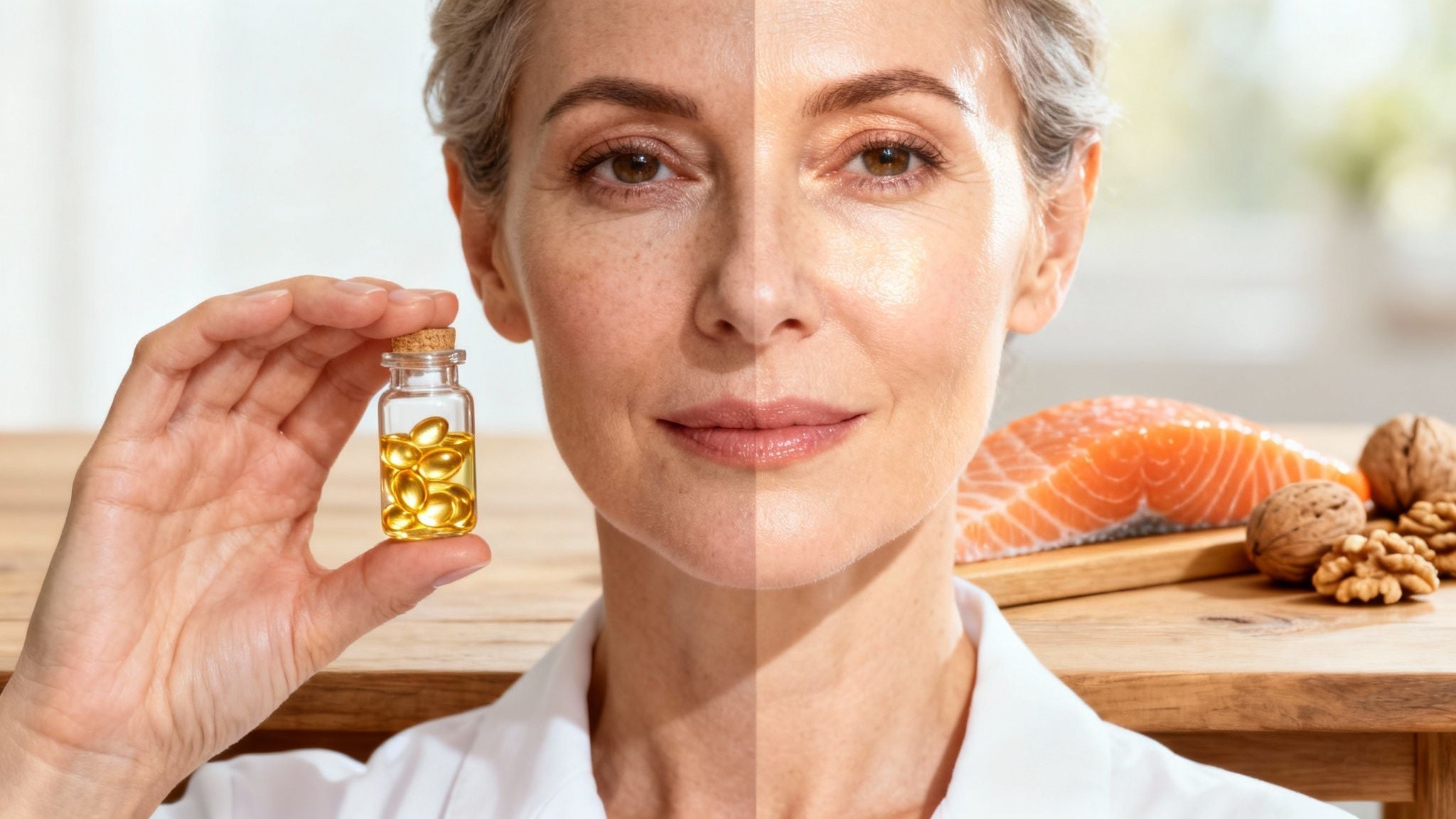
Omega-3 Deficiency Symptoms in Women: Recognize, Understand, and Take Targeted Action
Do you often feel tired, does your skin seem dry, or does your mood fluctuate for no apparent reason? Such nonspecific signals may indicate a nutrient deficiency that is widespread but often overlooked. Omega-3 fatty acids in particular are invaluable for you as a woman because they play a key role in your hormonal balance, skin health, and mental resilience.
Why Omega-3 Is So Important for Your Health as a Woman
Think of omega-3 fatty acids simply as the flexible foundation of your body's cells. They are essential building blocks that keep every cell membrane supple. This ensures that communication between cells and the exchange of nutrients function smoothly. This is especially important for you as a woman, as this function directly affects processes that shape the female body.
Yet many women have no idea that their reserves have long been running low. A study by the University of Hanover even showed that almost two thirds of German women between the ages of 40 and 60 have an omega-3 index that is too low.
The foundation of your well-being
A deficiency in these important fats can manifest itself in many different ways and significantly affect your well-being. The symptoms are often so subtle that you may easily mistake them for everyday stress or other causes.
These include, for example:
- Hormonal imbalances: Omega-3 helps regulate inflammation, which is often associated with PMS or symptoms during menopause.
- Mental health: These fatty acids are crucial for normal brain function and can noticeably influence your mood and concentration.
- Skin and hair: They moisturize you from within and strengthen your skin's natural protective barrier.
To truly understand how important omega-3 is for your health as a woman, you need to understand the complex connections within the body. The way nutrients interact with the body's regulatory mechanisms is explained very well, for example, in the article on hormones and how they work.
This guide is designed to help you recognize the signs and understand why taking a targeted look at your nutritional status is so important. Often, the first step is simply gaining certainty. A simple at-home blood test, such as the nutrient test from mybody-x.com, can quickly clarify whether you are lacking omega-3 or other important nutrients. In our article about omega-3 fatty acids, you can learn more about their central role in your body.
Interpreting your body's hidden signals correctly
An omega-3 deficiency is often like a silent saboteur that gradually slips unnoticed into your life. The symptoms are usually nonspecific at first, and you may not immediately connect them with your diet. But your body is sending you clear signals—you just need to learn how to understand them.
Perhaps you notice that your skin remains dry despite all your creams, your nails keep splitting, or your hair is losing its shine. These are often the first visible cries for help. Omega-3 fatty acids are a crucial building block for a healthy skin barrier that locks in moisture and protects you from environmental influences. Without them, this important protective layer becomes porous and brittle.
This graphic sums it up and shows the three key areas in which omega-3 is especially important for you as a woman: hormonal balance, skin health, and psychological stability.

You can immediately see how closely these areas are interconnected. A deficiency can therefore affect your overall well-being.
When your mental health gets out of balance
But the signs go far beyond your appearance. Do you often feel down for no apparent reason, become irritated quickly, or feel as though your head is full of cotton wool? Your brain consists largely of fat, and omega-3 fatty acids are absolutely essential for its function.
They keep the membranes of your nerve cells flexible, ensuring smooth communication. A deficiency can disrupt this flow of information, directly affecting your mood and concentration. The omega 3 mangel symptome frau can therefore also manifest as mental exhaustion or mood swings.
Imagine that an omega-3 deficiency is not only an empty nutrient account, but also fuel for chronic, low-grade inflammation in the body. These very inflammations are suspected of contributing to many lifestyle-related diseases and simply robbing you of your energy.
Physical discomfort as a warning sign
Your body can also clearly show you that something is missing. Do you have trouble getting out of bed in the morning, often feel drained during the day, or experience aching joints? This could also be related to your omega-3 intake.
These valuable fatty acids have a powerful anti-inflammatory effect. You can think of them as a natural lubricant for the joints that helps alleviate painful processes in the body. Without this protection, inflammation can flare up more easily, leading to joint pain or general fatigue.
Many of these signs also overlap with other deficiencies. You can learn more in our article about general nutrient deficiency symptoms.
To give you a quick overview, we have summarized the most common signs of omega-3 deficiency in a table.
An overview of typical symptoms of omega-3 deficiency
This table summarizes the most common signs of omega-3 deficiency and assigns them to the affected areas of the body to give you a quick overview.
| Area | Common symptoms and signs | Why omega-3 is important here |
|---|---|---|
| Skin & Hair | Dry, flaky skin, eczema, brittle nails, dull hair | Stabilizes cell membranes and strengthens the skin barrier, which retains moisture. |
| Mind & Concentration | Mood swings, depressive moods, irritability, concentration problems, “brain fog” | Is a major component of the brain and is essential for signal transmission between nerve cells. |
| Energy & Body | Persistent fatigue, joint pain, muscle weakness, increased susceptibility to inflammation | Has a strong anti-inflammatory effect and supports joint health as well as overall vitality. |
These symptoms are important signals from your body that something has become unbalanced. Learning to interpret these signals correctly is the first step toward taking an active role in your health and strengthening your well-being from within.
Why women are particularly often affected
Have you ever wondered why the topic of omega-3 deficiency keeps coming up, especially among us women? The answer is actually quite simple: Your female biology and the different stages of life you go through place particular demands on your body. Several factors mean that your need for these valuable fatty acids is often higher or that your stores are depleted more quickly than in men.
One crucial factor is your hormonal system. Omega-3 fatty acids are directly involved in the production and regulation of hormones. They are the building blocks for hormone-like messengers called prostaglandins, which, among other things, regulate inflammatory processes in the body.
And this delicate balance is put to the test particularly during certain phases of your life.
Hormonal rollercoaster rides during the female cycle
Every month, your body goes through hormonal ups and downs. Omega-3 fatty acids can play an important role in alleviating typical cycle-related symptoms.
They help slow the inflammatory processes that often underlie symptoms such as premenstrual syndrome (PMS). Mood swings, cramps, or uncomfortable breast tenderness can be intensified by an imbalance in these messengers. A good supply of omega-3 helps your body find its natural balance.
A lack of omega-3 can disrupt hormonal balance—imagine it as an orchestra without a conductor. The result is often a chaotic mix of moods and physical discomfort.
During menopause as well, when hormone production gradually changes, maintaining stable omega-3 levels is extremely valuable. It can help reduce the intensity of hot flashes and support your emotional stability.
Pregnancy and breastfeeding as nutrient drains
One of the most demanding phases for the female body is pregnancy and breastfeeding. During this time, your need for omega-3 fatty acids rises dramatically because you are supporting not only yourself but also your growing baby.
The fatty acid DHA in particular is absolutely crucial for the development of a child's brain and eyes.
- Brain development: Your baby's brain grows explosively during the final months of pregnancy and the first few years of life. DHA is one of the most important building blocks of brain structure.
- Vision: The retina also needs a large amount of DHA for healthy development.
- Your own stores: Your baby draws directly and unreservedly from your reserves. If you do not get enough omega-3 from your diet, your own stores become depleted—and that makes you more susceptible to the typical omega 3 mangel symptome frau.
The modern diet as an invisible adversary
Unfortunately, our modern Western diet also contributes significantly to the problem. It is often overloaded with omega-6 fatty acids, which we find in plant oils such as sunflower or safflower oil, in many processed foods, and in meat from factory farming. Omega-6 is not inherently bad, but the ratio to omega-3 needs to be right.
While omega-3s have anti-inflammatory effects, too many omega-6 fatty acids can fuel inflammation in the body. An ideal ratio is around 2:1 to 5:1 (omega-6 to omega-3). For most people, however, the reality looks very different: the ratio is often 15:1 or even higher. This imbalance can promote hormonal problems and low-grade inflammation, which you may often feel more strongly as a woman because of your sensitive hormonal system.
A global study shows that around three out of four people worldwide consume too little omega-3. Pregnant women need even more: they require an additional 100 to 200 milligrams of DHA for their child’s healthy development. To make matters worse, the body can convert plant-based omega-3 (ALA) into the important forms EPA and DHA only very inefficiently—the conversion rate is a meager 1–10%. You can read more about the background to the global omega-3 deficiency on smartup-news.de.
This combination of biological factors and modern lifestyles makes it clear why, as a woman, you should pay particular attention to your omega-3 status. Rather than groping in the dark, a simple nutrient test from mybody-x.com can show you exactly where you stand. This gives you the clarity you need to take targeted action for your well-being.
How a blood test can finally give you certainty
Symptoms such as fatigue or dry skin are important indicators, but they are like a map without an exact location. You may suspect that an omega-3 deficiency could be behind them, but ultimately it remains mere speculation. Instead of continuing to grope in the dark and potentially taking the wrong measures, you can have your status determined precisely and objectively. A blood test is the only reliable way to turn uncertainty into clear knowledge.
The mybody-x.com nutrient test gives you exactly this clarity, conveniently from the comfort of your own home. You don’t need to make a doctor’s appointment or spend ages sitting in a waiting room. With a simple test kit, you receive everything you need to collect your sample, delivered directly to your home.
What your blood reveals about your omega-3 status
When we talk about an omega-3 test, we generally mean measuring the so-called Omega-3 Index. Think of this value as the fill level of your personal nutrient tank. It shows exactly what percentage of the important fatty acids EPA and DHA is present in the membranes of your red blood cells.
Why is this so informative? It’s quite simple: your red blood cells have a lifespan of around 120 days. The Omega-3 Index therefore reflects not just what you ate for dinner yesterday, but provides a stable and reliable picture of your omega-3 status over the past three to four months.
Experts consider the omega-3 index the gold standard because it provides a long-term and reliable assessment of your nutritional status. It is the key measurement for objectively confirming a deficiency and monitoring the success of your efforts.
An optimal index is above 8 %. Values below 4 %, on the other hand, are critical and are associated with an increased risk of health problems. Many omega 3 deficiency symptoms in women only become truly understandable when you know your personal value.
Your path to certainty in three simple steps
The entire process is deliberately designed so that you can complete it yourself easily and safely. It is about giving you back control over your own health data.
- Easy sample collection: With the test kit from mybody-x.com, you collect a tiny blood sample yourself. A small, almost painless prick to your fingertip is all it takes. Everything you need is included in the kit and explained in a child’s-play manner.
- Analysis in a specialist laboratory: You send your sample in the enclosed return envelope to our certified German laboratory. There, it is analyzed according to the highest quality standards to determine your precise omega-3 index.
- Easy-to-understand results report: After just a few days, you will receive your results in a clear and easy-to-understand report. You will see not only your exact value but also receive personalized recommendations for action. These will help you specifically optimize your level—whether through your diet or the appropriate dosage of dietary supplements.
This process takes the guesswork out of the equation. You find out in black and white where you stand and receive a concrete roadmap for improving your intake. The symptoms of a deficiency are the impetus, but the test provides the facts you can finally use to take action.
If you would like to delve deeper into the subject, you will find everything important about the omega-3 index test and its importance for your health in our detailed article. This is how you turn a vague feeling into a concrete plan for greater well-being and energy.
Your path to an optimal omega-3 level
Okay, now you know where you stand—whether through the typical symptoms or, even better, through the clear result of a blood test like the one from mybody-x.com. That is the first and most important step. And now comes the best part: you can take action yourself and deliberately get your levels under control. Your path to your goal is based on two strong pillars: a conscious diet and, if necessary, smart supplementation.
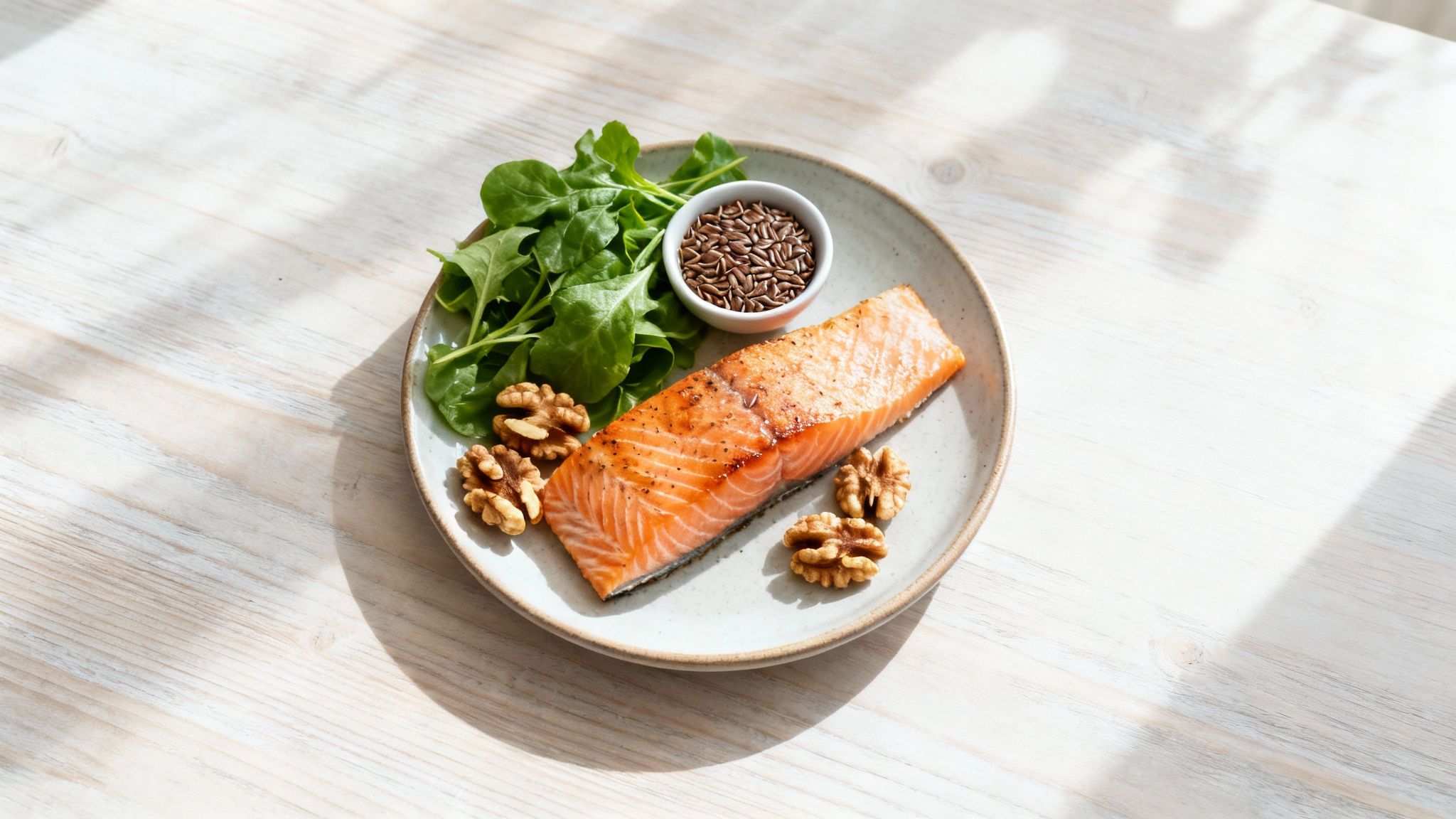
The absolute foundation is always a diet rich in good nutrients. Think of it this way: When you build a house, you start with a solid foundation, right? It's the same with your health. The crucial omega-3 fatty acids that the body can use most effectively, EPA and DHA, are found primarily in fatty cold-water fish.
The best omega-3 sources from the sea
Not all fish are created equal. To effectively replenish your stores, you should choose varieties that live in cold waters. There, they feed on algae and plankton, accumulating these valuable fatty acids in their tissues.
Here are the absolute top sources of EPA and DHA:
- Salmon: Wild salmon in particular is a real treasure trove. It provides not only plenty of omega-3, but also high-quality protein and vitamin D.
- Herring: An often-underestimated powerhouse! Whether as matjes in a bread roll or freshly fried, herring is a great choice.
- Mackerel: Admittedly, its strong flavor isn't for everyone. But its extremely high omega-3 content makes it one of the best options around.
- Sardines: Small but mighty! A can of sardines in good-quality oil is an uncomplicated and quick way to improve your intake.
- Tuna: It's worth paying attention to good quality and not putting it on your plate every day because of possible heavy metal exposure.
Just two servings of fatty fish per week can make a huge difference and help cover your basic needs or compensate for minor deficiencies. It's easier to incorporate into your daily routine than you might think: How about a delicious salmon fillet during the week and a herring salad for lunch on Saturday?
Plant-based sources and their limitations
But what if you don't like fish or follow a strictly plant-based diet? That's when plant-based sources of omega-3 come into play. The most important fatty acid here is alpha-linolenic acid (ALA). Although your body can convert ALA into the important forms EPA and DHA, this process is unfortunately anything but efficient. The conversion rate is often only a meager 1 to 10%.
Good plant-based sources of ALA include, for example:
- Flaxseeds and flaxseed oil: The undisputed front-runner. A tablespoon of fresh flaxseed oil daily in salad dressing or muesli is a good start.
- Chia seeds: These little all-rounders are great in puddings, smoothies, or as a topping for pretty much anything.
- Walnuts: A handful of walnuts is the perfect snack between meals—and it also nourishes your brain.
For vegetarians and vegans in particular, knowing their omega-3 index is therefore almost essential. If your mybody-x.com test result shows a deficiency, it becomes extremely difficult to correct it through plant-based foods alone. This is exactly where targeted supplementation comes in.
Think of your test result as a personal map. It not only shows you where you are now, but also how far you still have to go to reach your goal. With this knowledge, you can choose the right dose for your supplement instead of stumbling around in the dark.
Smart supplementation that works
If your diet alone is not enough or you have a significant deficiency, high-quality supplements are the most effective and fastest solution. But beware: the market is huge and confusing. Your mybody-x.com results report is your compass here: It provides a clear dosage recommendation tailored precisely to your individual needs.
When choosing your product, be sure to look for these quality features:
- Purity and freedom from contaminants: The oil must be purified of heavy metals such as mercury and other environmental toxins. Independent laboratory certificates provide assurance here.
- High concentration: Don’t just look at the total amount of fish oil, but at the actual amount of EPA and DHA per capsule. This is where the wheat is separated from the chaff.
- Freshness (TOTOX value): A low oxidation value (TOTOX) is crucial. It shows that the oil is fresh and not rancid—because only then can it work effectively.
- Sustainability: Certifications such as “Friend of the Sea” guarantee that fishing is carried out responsibly.
For anyone who avoids fish, there’s a fantastic alternative: algal oil. Algae are the original source of EPA and DHA—fish only accumulate these fatty acids by eating algae. High-quality algal oil therefore provides the active fatty acids directly, is entirely plant-based, and is sustainable.
Choosing the right supplement can be overwhelming. In our guide on supplement testing, you’ll learn exactly what to look for when making your choice so you can find the best quality for your health.
Still have questions? Here are the answers about omega-3 for women
We have now taken a close look at how to recognize an omega-3 deficiency, why you as a woman are often affected, and what you can do about it. To wrap things up, we will answer the questions we encounter most often in practice. This will allow you to start improving your omega-3 intake with confidence and peace of mind.
How quickly will I notice that something is happening?
A very important question! When you finally take action, you naturally want to see that it is making a difference. The honest answer, though, is that it depends entirely on you, your starting level, and the dose you choose. Think of it this way: The new omega-3 fatty acids first have to painstakingly secure a place in the walls of your trillions of body cells. That does not happen overnight.
You can often notice the first subtle improvements—perhaps in your skin or mood—after just four to six weeks. Your body immediately uses the new building blocks wherever cells renew themselves quickly.
However, your body needs more time for truly profound effects, such as those on your hormonal balance or concentration. Expect it to take around three to six months for everything to stabilize. Patience—and, above all, consistency—are essential here.
That is also the perfect time for a follow-up test from mybody-x.com. It will show you clearly whether your strategy is working and whether you have brought your omega-3 level into the healthy range.
Can I meet my omega-3 needs entirely through plant-based sources?
Yes, it is possible, but it is significantly trickier than getting omega-3 from fish. The problem is the conversion process in the body. Plant-based sources such as flaxseeds, chia seeds, and walnuts initially provide only the precursor, alpha-linolenic acid (ALA). Your body then has to convert this ALA into the forms it can use directly: EPA and DHA.
And that is exactly where the problem lies: This conversion is extremely inefficient. The conversion rate is often only 1 to 10%. So you would have to eat enormous amounts of flaxseeds and similar foods to get enough EPA and DHA. Especially when omega-3 deficiency symptoms in women are already present, that is often simply not enough.
That is why it is especially important for vegan and vegetarian women to have their omega-3 levels checked regularly. A blood test gives you the reassurance you need and shows whether targeted supplementation would be beneficial.
The best plant-based solution is therefore to take EPA and DHA directly—specifically, in the form of high-quality algae oil. Algae are the original source of these fatty acids; fish contain them only because they eat algae. This way, you can be on the safe side without relying on animal products.
Fish or capsules—which is better?
A good, fatty cold-water fish such as salmon or herring is a fantastic natural source. It provides not only omega-3, but also a whole package of nutrients, including high-quality protein, iodine, and vitamin D. A real meal is always more than the sum of its individual parts.
But there are also downsides: The exact omega-3 content can vary considerably depending on where the fish comes from and when it was caught. In addition, potential contamination with heavy metals such as mercury is an ongoing concern.
High-quality omega-3 capsules are the controlled, clean alternative here.
- Precise dosage: You know exactly how much EPA and DHA you are taking in. This is crucial for specifically correcting a deficiency, especially when your test provides a clear recommendation.
- High purity: Good-quality supplements undergo extensive purification to safely remove contaminants and heavy metals.
- Easy to use: Capsules fit into any routine, even when you don't have time to cook or simply don't like fish.
At the end of the day, a combination of both is often the best approach. Enjoy the benefits of fresh fish and supplement strategically with a good-quality product to safely meet your individual needs.
Can you also have too much omega-3?
The concern is absolutely justified with high-dose supplements. An overdose through a normal diet is virtually impossible, even if you eat a lot of fish. Concentrated capsules or oils are a different matter.
Extremely high doses of more than 5 grams of EPA and DHA per day can affect blood clotting and slightly increase the risk of bleeding. So if you already take blood-thinning medication, you should discuss taking omega-3 supplements with your doctor.
But don't worry: The personalized recommendations you receive after taking a mybody-x.com test are always safe and designed to effectively correct your deficiency. It's about restoring a healthy balance—not following the motto “more is better.”
Are you ready to finally gain clarity about your personal omega-3 status and get to the root of the causes of your symptoms? A deficiency doesn't have to be your constant companion. With the mybody-x.com nutrient test, you receive not only a precise result, but also a clear, personalized roadmap to take charge of your well-being again.
Find out now what you're missing – here's the link to the test



Share now:
What intolerances are there, and how do you find out if you have them?
Lowering Cortisol with Magnesium: Your Practical Guide to Greater Inner Calm