
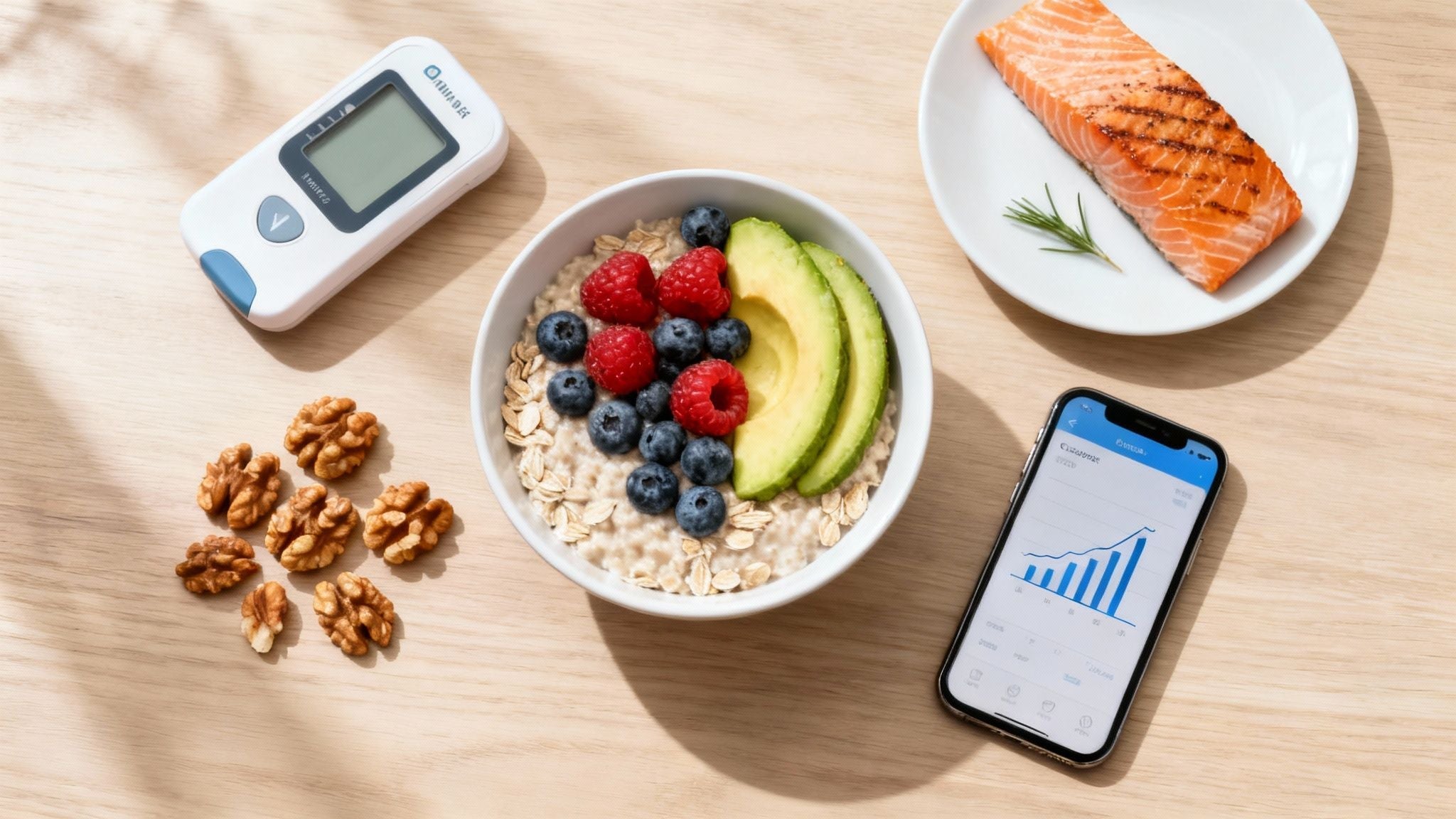
Lowering cholesterol with the right diet: Your path to healthy levels
If you want to get elevated cholesterol levels under control, a conscious diet is by far the most powerful lever you can control yourself. The goal is to deliberately put fiber-rich foods such as oatmeal, legumes, and plenty of vegetables on your plate while replacing saturated fats with high-quality unsaturated fats. You can find plenty of these in vegetable oils, nuts, and fatty fish. With this simple change, you can actively lower your “bad” LDL cholesterol and better understand your body.
Why your diet is the key to healthy cholesterol levels
Before we look at the specific tips, let’s briefly clarify why what you eat every day has such a tremendous influence. Cholesterol is a fat-like substance and absolutely vital to your body—it is a building block for cell walls and hormones. Your body even produces most of it itself, primarily in the liver.
It only becomes problematic when the delicate balance between the cholesterol transport teams gets disrupted. And this is where the familiar opposing players come into the picture: “bad” LDL (low-density lipoprotein) and “good” HDL (high-density lipoprotein).
- LDL cholesterol: Think of it as a delivery service that transports cholesterol from the liver to the cells. If too many of these “delivery trucks” are circulating in the blood, cholesterol can build up on the artery walls. That is what narrowing is made of.
- HDL cholesterol: This team is essentially the “garbage collection service.” It collects excess cholesterol in the body and transports it back to the liver, where it is eventually broken down.
So a cholesterol-lowering diet has one clear goal: to reduce the number of LDL “delivery trucks” and actively support the HDL “garbage collection service.”
The impact of your meals is greater than you think
It used to be said that you simply had to avoid cholesterol-rich foods such as eggs. Today we know that it isn’t quite that simple. Much more important than the cholesterol in food are other nutrients that influence the body’s own production in the liver.
The main roles here are played by the types of fat you eat and the amount of fiber. Saturated fats—such as those found in fatty meat, sausage, butter, and many processed foods—signal the liver to produce more LDL cholesterol. Unsaturated fats from vegetable oils, nuts, or fish, on the other hand, can have a positive effect on this process.
The tricky thing? You don’t feel elevated cholesterol levels. Many people go through life with them without realizing it.
A survey conducted by the Robert Koch Institute is rather sobering: Almost 60 percent of adults in Germany have cholesterol levels that are too high. At the same time, on average we eat almost twice as much fat as the German Nutrition Society (DGE) recommends. You can find more information about these alarming figures at stiftung-gesundheitswissen.de.
This knowledge is the foundation for everything that follows. The tips below aren’t strict prohibitions, but logical and effective steps toward better heart health. The first step toward change is always understanding your own body—and that’s exactly what we want to help you do.
These foods actively lower your LDL cholesterol
Now that we’ve covered the theory, it’s time to get practical. Which foods should you deliberately put in your shopping cart to actively lower your LDL cholesterol? By the way, a smart change in diet doesn’t mean giving things up, but rather making clever substitutions.
Let’s take a look together at the most effective helpers from nature. They’re very easy to incorporate into your daily routine and can really make a difference to your heart health. These are practical tips you can put into action right away.
The power of soluble fiber
Soluble fiber is a true superhero in the fight against high cholesterol. Think of it like a sponge in your digestive tract. There, it binds bile acids, which your body produces from cholesterol.
What happens then? Your body has to produce new bile acids and obtains the cholesterol it needs directly from your blood. This naturally lowers your LDL level.
You’ll find particularly high amounts of these valuable helpers in:
- Oats and barley: They contain beta-glucan, an extremely effective form of soluble fiber.
- Legumes: Lentils, beans, and chickpeas are true powerhouses—not only full of fiber, but also rich in plant-based protein.
- Fruit and vegetables: Apples, pears, citrus fruits, carrots, and broccoli stand out in particular.
Why not start your day with a porridge made from oats and fresh berries? That way, you’ll already have made an important contribution to your blood lipid levels in the morning.
Beta-glucan: the cholesterol magnet in oats and barley
We need to take a closer look at beta-glucan. Its cholesterol-lowering effect is so well documented scientifically that manufacturers are even allowed to advertise it. It forms a kind of gel in the intestines that literally traps the “bad” LDL cholesterol and carries it out of the body.
Studies show that as little as 3–4 grams of beta-glucan daily can noticeably lower cholesterol levels. It is found, for example, in oats, barley flakes, and oat bran.
Practical tip: A serving of about 50 grams of oats for breakfast already provides a large portion of the recommended amount. Combine them with a handful of berries and nuts to enhance the effect even further.
Healthy fats as a counterbalance
Not all fats are the same. Some fats are even essential for getting your cholesterol under control. Polyunsaturated fatty acids play the leading role here, especially the well-known omega-3 fatty acids.
They have anti-inflammatory properties and can positively affect blood lipid levels. The best sources come directly from the sea.
- Salmon
- Mackerel
- Herring
- Tuna
Try to plan two to three fish meals per week to meet your needs. Plant-based alternatives rich in omega-3 include flaxseeds, chia seeds, and walnuts.
High-quality plant oils are ideal for preparing your meals. Rapeseed oil is great for frying, while cold-pressed olive oil or flaxseed oil enhances your salad dressing. You can find more information in our comprehensive guide to lowering LDL cholesterol.
The following overview perfectly summarizes the problem of cholesterol and the simple, diet-based solution once again.
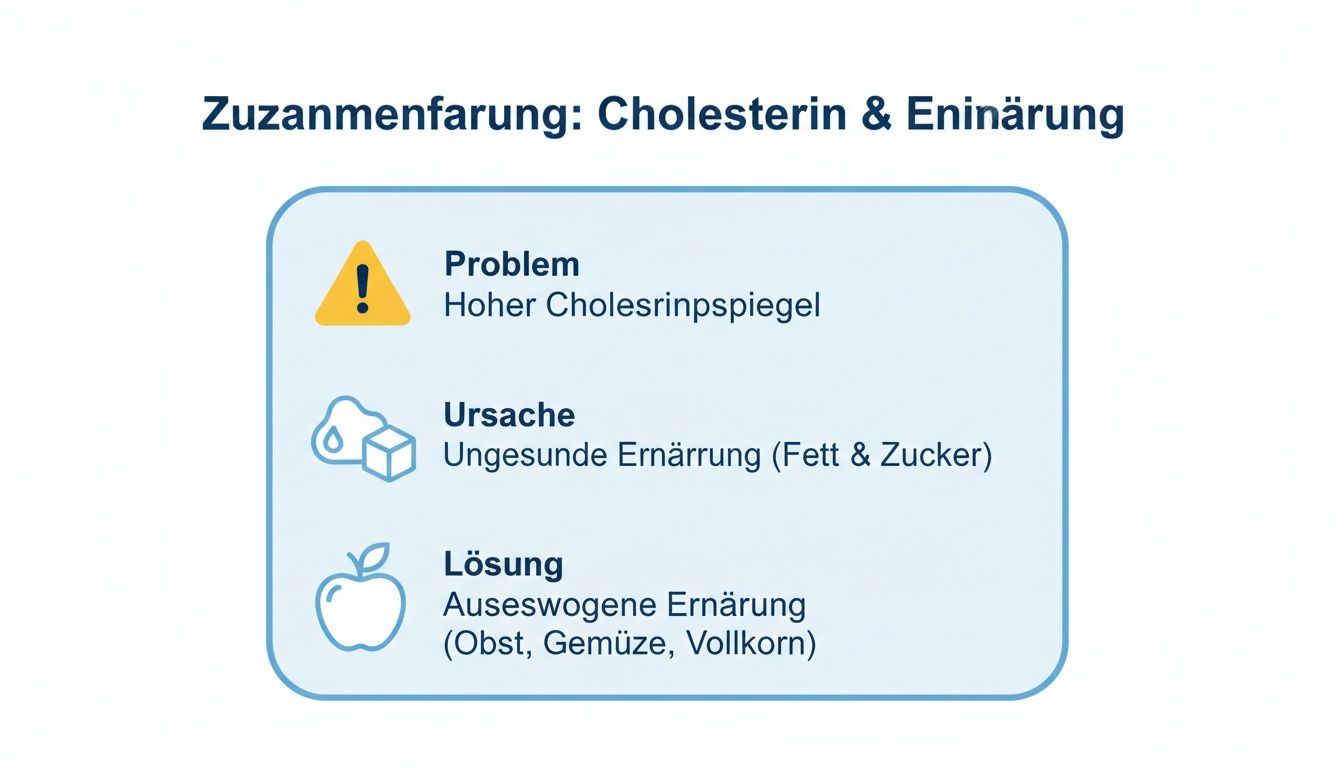
The graphic makes it clear: The cause of elevated levels often lies in an unbalanced diet—and the solution is right on our plate.
Nuts and plant sterols for every day
Nuts are not only the perfect snack between meals, but also valuable allies for your heart. They are packed with unsaturated fatty acids, fiber, and so-called plant sterols.
Plant sterols are similar in structure to cholesterol. In the intestines, they compete with cholesterol for absorption into the body. The clever result: Less cholesterol enters the bloodstream.
Even a handful of nuts a day (approx. 25–30 grams) can have a positive effect. It is best to choose unsalted and unroasted varieties to enjoy the full health benefits.
- Almonds
- Walnuts
- Pistachios
- Hazelnuts
They are perfect as a snack, in muesli, or as a topping for salads and vegetable dishes. A cholesterol-conscious diet can be this simple!
To help you keep track, we have summarized the most important food groups in a table.
Your top foods for healthy cholesterol levels
This table gives you an overview of which food groups lower your LDL cholesterol, why they are so effective, and how you can effortlessly incorporate them into your everyday life.
| Food group | Active ingredient/reason | Practical example |
|---|---|---|
| Whole-grain products | Soluble fiber (beta-glucan) binds bile acids | 50 g of rolled oats in your morning porridge |
| Legumes | Rich in fiber and plant-based protein | Lentil dal for lunch or hummus as a dip |
| Fatty fish | Omega-3 fatty acids have anti-inflammatory effects | Two servings of salmon or mackerel per week |
| Nuts & seeds | Unsaturated fats, fiber, and plant sterols | A handful of walnuts (approx. 30 g) as an afternoon snack |
| Fruit & vegetables | Rich in fiber (pectin) and antioxidants | An apple as a snack or broccoli as a side dish |
| Plant oils | Replace saturated fats with unsaturated fatty acids | Olive oil for salads, rapeseed oil for frying |
Don't view this list as a strict rule, but as inspiration for your next grocery trip. Small, conscious changes make the biggest difference in the long run.
Choose the right fats and avoid hidden pitfalls
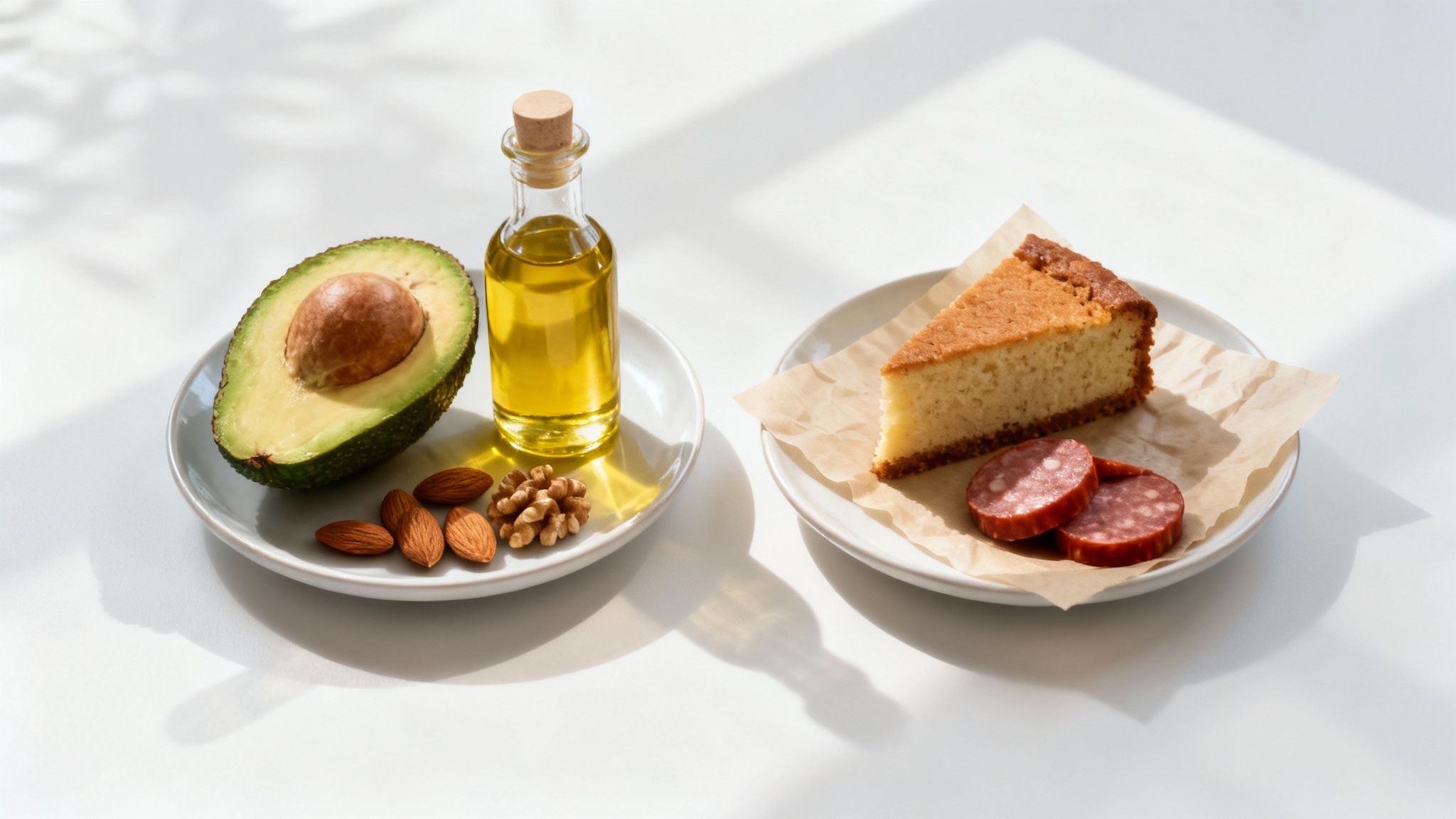
When it comes to a cholesterol-lowering diet, fat quickly comes under general suspicion. But here's the good news: fat is not your enemy! It all depends on choosing the right fats and using them wisely.
The world of fats is anything but black and white. We can broadly divide them into three groups, each with its own distinct effect on your blood values. Knowing this difference is the key to making conscious, truly effective choices for your heart health.
Saturated fats: The turbo boost for your LDL cholesterol
Saturated fatty acids are the ones you should keep an eye on. They prompt your liver to produce more LDL cholesterol—the very cholesterol that can lead to unwanted deposits in the arteries.
You mainly find them in animal products that are solid at room temperature. Think of:
- Fatty meat and processed meats: Salami, liver sausage, bratwurst
- Full-fat dairy products: Butter, cream, full-fat cheese
- Certain plant-based fats: Coconut fat and palm fat
That doesn't mean you have to completely eliminate these foods from your diet. It's more about the amount and frequency. Being mindful about them is already a huge step in the right direction.
Monounsaturated fats: Your heart-healthy everyday allies
Now for the good news! Monounsaturated fatty acids are true stars when it comes to lowering LDL cholesterol. They can even help stabilize or slightly increase “good” HDL cholesterol.
These fats should form the basis of your daily fat intake. So go ahead and enjoy plenty of:
- Olive oil: Particularly high-quality, cold-pressed extra-virgin olive oil for salads.
- Rapeseed oil: A versatile oil that is also well suited to gentle frying.
- Avocados: Perfect as a spread on bread instead of butter or as a creamy ingredient in salads.
- Nuts: Almonds, hazelnuts, and pecans are especially rich in them.
These fats not only benefit your cholesterol levels but also provide important vitamins such as vitamin E, which protects your cells.
Polyunsaturated fats: The essential specialists
This group includes the well-known omega-6 and omega-3 fatty acids. They are essential, meaning your body cannot produce them on its own. You therefore need to obtain them through your diet. Omega-3 fatty acids in particular are known for their anti-inflammatory properties and play a central role in heart health.
The goal is less to drastically reduce your total fat intake and more to optimize the composition of the fats. According to the German Nutrition Society (DGE), people in Germany often eat twice as much fat as recommended, with the proportion of saturated fats being far too high. Recommendations on fatty acid composition can be found, for example, at vitrea-gesundheit.de.
The best sources of these valuable fats are:
- Fatty sea fish: Salmon, mackerel, and herring are excellent sources of omega-3.
- Plant oils: Flaxseed oil, walnut oil, and hemp oil.
- Nuts and seeds: Walnuts, flaxseeds, and chia seeds.
Since the ratio of omega-6 to omega-3 is particularly important for your health, knowing your own status can be very revealing. Want to know how well supplied you are with these important fats and whether your body is in balance? An Omega-3 Index test from mybody-x.com gives you clear answers from the comfort of your own home.
Hidden fat traps on supermarket shelves
The biggest challenge often lies not in obvious sources of fat like butter or sausage. The real traps are hidden in highly processed foods, where you may not suspect them at all.
Pay particular attention to these product groups:
- Ready-made meals: From frozen pizza to ready-made lasagna, they are often packed with saturated fats and trans fats.
- Baked goods and sweets: Croissants, cookies, cakes, and puff pastries often contain cheap, hydrogenated fats.
- Chips and snack foods: Fried products are a classic source of unhealthy fats.
- Processed sausage and cheese products: These often contain high amounts of saturated fatty acids as well.
A quick look at the ingredient list and nutrition facts helps you avoid these pitfalls. As a rule of thumb, the shorter and easier-to-understand the ingredient list, the better it usually is for your health. Choose fresh, unprocessed foods—this way, you retain full control over the type and amount of fats you eat.
What a heart-healthy day looks like in practice
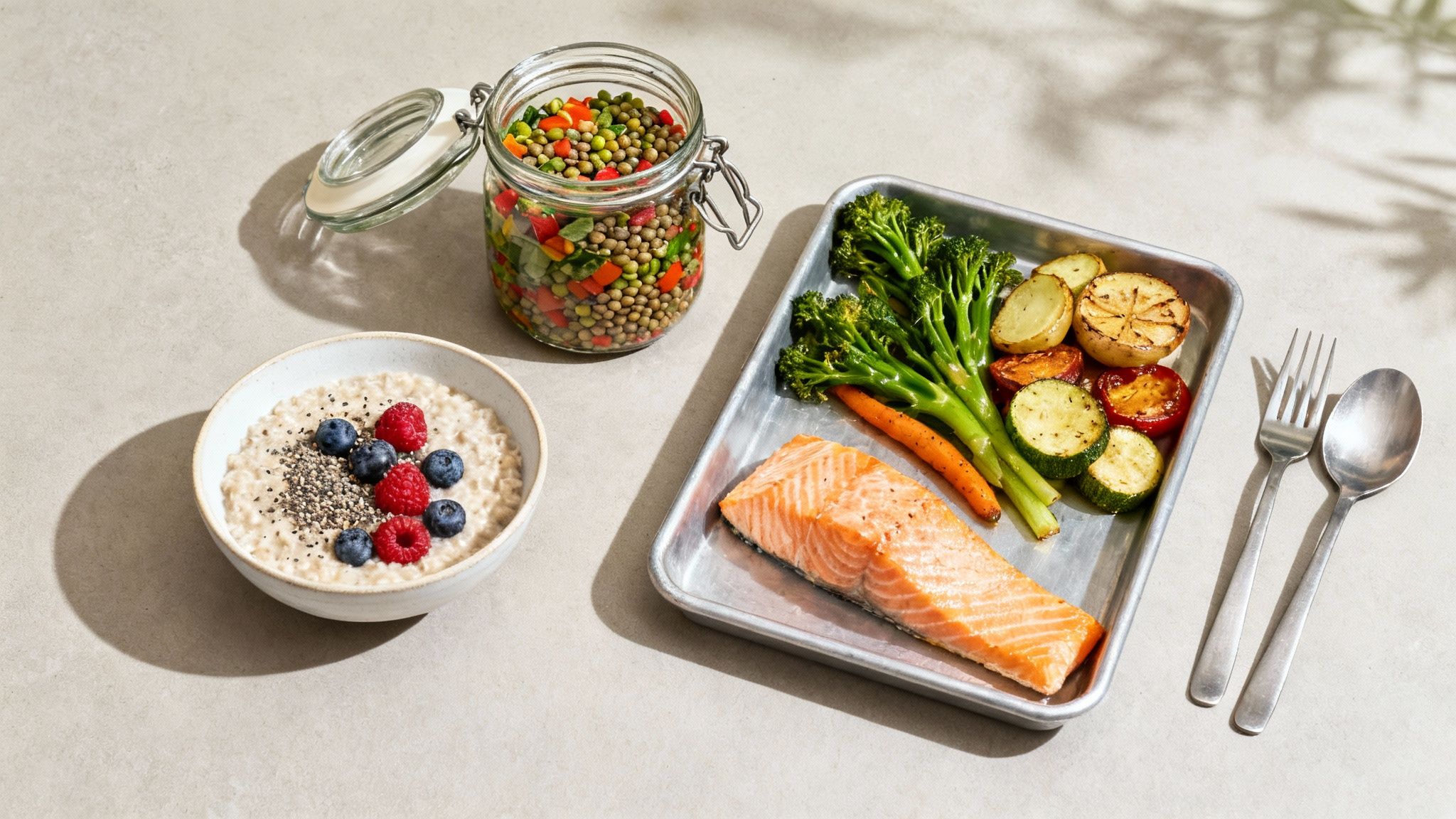
Theory is one thing, but how do you integrate all this knowledge into an already busy daily routine? Here’s the good news first: A heart-healthy diet doesn’t have to be complicated or time-consuming. It’s not about turning your life upside down overnight. Rather, it’s the small, smart adjustments that ultimately make the biggest difference.
This section is intended to inspire you. It shows what a delicious, cholesterol-conscious day can look like—without exotic ingredients or hours of cooking. We’ll take you from breakfast through dinner and show you how easy it can be to do something good for your heart.
Your start to the day: Breakfast with superpowers
The morning lays the foundation for the rest of the day. Instead of reaching for quick white bread with jam or sugary cereal, try a real power meal. One that keeps you full for a long time and has a direct positive effect on your blood lipid levels.
Porridge made from oats is an absolute classic here, and for good reason. The beta-glucans it contains are, as you already know, highly effective at lowering cholesterol.
- The base: Use about 50 grams of rolled oats and cook them with water or low-fat (plant-based) milk until everything is nice and creamy.
- For sweetness & fiber: Add a handful of fresh or frozen berries, such as blueberries or raspberries. This provides vitamins and an extra serving of fiber.
- Healthy fats & crunch: Finish your porridge with a tablespoon of ground flaxseeds and a small handful of walnuts. This gives you valuable omega-3 fatty acids.
This combination not only tastes fantastic, but also provides everything you need for an energizing start to the day.
Power through lunch: light enjoyment instead of the cafeteria slump
Lunch is often the biggest challenge, especially during the workday. Instead of heavy, greasy cafeteria food or a quick snack from the bakery, a well-prepared meal is worth its weight in gold. A colorful lentil salad is perfect for this.
It’s rich in soluble fiber and plant-based protein, keeps you full for a long time, and can easily be prepared the night before.
- The base: Cooked lentils (for a quick version, simply use canned lentils; otherwise, cook them yourself).
- The vegetable power: Finely chop bell peppers, cucumber, tomatoes, and spring onions, then mix everything into the lentils.
- The dressing: A simple dressing made with high-quality olive oil, a little vinegar, mustard, salt, and pepper perfectly complements the salad.
A heart-healthy day also means making conscious choices during working hours. If you’re looking for more inspiration for lunch at the office, you’ll find plenty of practical tips for healthy eating at work online to make everyday life easier.
A well-planned lunch not only prevents the afternoon slump but also keeps you from reaching for unhealthy snacks later out of hunger. Meal prep is your best friend here!
Often, it’s small, conscious swaps that make the biggest difference. Here’s an overview of how you can easily make typical meals more heart-friendly.
Easily swap meals
A direct comparison showing how you can replace typical meals with cholesterol-friendly alternatives without sacrificing flavor.
| Meal | Typical choice (high LDL risk) | Heart-healthy alternative |
|---|---|---|
| Breakfast | White bread with cold cuts or cheese | Oatmeal porridge with berries and nuts |
| Lunch | Cafeteria schnitzel with French fries | Large lentil salad with colorful vegetables and an olive oil dressing |
| Dinner | Pasta with cream sauce and ground meat | Oven-baked salmon on a bed of Mediterranean vegetables |
| Snack | Chocolate bar or chips | A handful of almonds or an apple |
These examples show that it’s not about deprivation, but about making smarter, more nutritious choices that taste just as good—or even better.
Dinner: a colorful meal for body and soul
In the evening, something warm that helps you unwind after work can be just the thing. How about a delicious oven-baked dish? It’s easy to prepare, requires hardly any prep, and the oven does the rest of the work for you.
A juicy salmon fillet on a bed of colorful vegetables is an ideal choice.
- Chop the vegetables: Cut your favorite vegetables, such as broccoli, zucchini, bell peppers, and carrots, into bite-sized pieces. Spread everything on a baking sheet, drizzle with some rapeseed oil, and season it.
- Add the fish: Place a salmon fillet (approx. 150 g) on the vegetables and season with herbs, salt, pepper, and a splash of lemon juice.
- Into the oven: Bake everything for about 20–25 minutes at 180 °C fan-assisted. Done!
A small serving of brown rice or quinoa goes perfectly with this. This meal provides high-quality omega-3 fatty acids from the salmon and an abundance of vitamins and fiber from the vegetables.
Snacks Between Meals: Small Helpers
Sometimes you get a little hungry between meals. Instead of reaching for chocolate or chips, there are fantastic alternatives that can even support your dietary goals.
- A handful of nuts: Almonds or walnuts are perfect for a snack.
- An apple: Provides pectin, a valuable soluble fiber.
- A cup of plain yogurt: Topped with a few oats.
- Vegetable sticks: Carrots, cucumbers, or bell peppers with a light herb quark dip.
As you can see, a cholesterol-lowering diet is incredibly varied and delicious. It’s about making conscious choices and putting fresh, unprocessed foods at the center. This sample day is meant to take away your apprehension and show you: You don’t have to give up anything to improve your levels sustainably.
More Than Just Diet: What Else Can Help Your Levels
Your diet is undoubtedly the most powerful lever for getting your cholesterol levels under control—but it isn’t the only one. If you want to see truly lasting results, you should take a broader view. After all, your body is a complex system in which everything is connected in some way.
Regular exercise, managing stress wisely, and, of course, not smoking are the perfect complements to your dietary changes. These factors enhance the positive effects and benefit your heart in several ways. It’s about understanding how even small but consistent adjustments in your daily life can make a huge difference.
Exercise: The Simple Cholesterol Killer
Exercise is a real miracle cure for your blood lipid levels. Of course, it helps you maintain your weight, but it also directly affects cholesterol metabolism. Regular physical activity can increase “good” HDL cholesterol, which you can think of as a kind of cleaning crew that transports excess cholesterol out of your blood vessels.
At the same time, exercise can positively change the structure of “bad” LDL cholesterol. The problem is often the small, dense LDL particles, because they are especially likely to become lodged in artery walls. Endurance exercise can help transform them into larger, fluffier particles that cause significantly less damage.
And don’t worry, you don’t have to run a marathon. You’ll get the best results from regular, moderate activity that fits easily into your daily routine:
- Brisk walks: Try walking briskly for 30 minutes on most days of the week. This works well during your lunch break, on your way to work, or simply by getting off one stop earlier.
- Endurance exercise: Cycling, swimming, or jogging are ideal. Choose something you genuinely enjoy; otherwise, you won’t stick with it for long. Two to three sessions per week are already a great goal.
- Strength training: Building muscle is also a good idea. More muscle mass boosts your metabolism and can also have a positive effect on your blood fat levels.
Every minute of movement counts! It’s not about peak athletic performance, but about breaking up long periods of sitting and simply staying active. Your heart will thank you.
Stress and smoking: the silent adversaries
Chronic stress is pure poison for your cholesterol levels. Under constant pressure, the body releases hormones such as cortisol, which can raise blood fat levels over the long term. Let’s be honest: During stressful periods, we’re all more likely to reach for a bag of chips in the evening than an apple.
So find ways to consciously counteract stress and relax:
- Breathing exercises: Just a few minutes of deep breathing in and out can immediately calm your nervous system.
- Yoga or meditation: These methods have been proven to help clear your mind and reduce stress.
- Time in nature: A walk in the woods or a park can work wonders and help you feel grounded again.
Smoking is the other major risk factor you must not ignore. It damages the sensitive inner walls of your blood vessels, making it much easier for cholesterol to build up. On top of that, smoking also lowers levels of protective HDL cholesterol. Quitting smoking is therefore one of the best decisions you can make for your heart health.
By the way, it’s also worth taking a look at your other blood fats in addition to cholesterol. If you’re wondering what to do if your triglycerides are too high, you’ll find valuable tips in our related article. These levels often go hand in hand with elevated cholesterol.
Measure your progress and stay motivated
Changing your diet is a journey, not a sprint. You invest time, change your habits, and make conscious decisions every day. But honestly: How do you know whether all the effort is really worthwhile? You can find the answer in black and white in your blood values.
Regular checkups are the key to seeing your progress and staying motivated. This tangible proof not only gives you a tremendous boost but also helps you adjust your strategy if things do not go according to plan. Instead of waiting months for your next doctor’s appointment, you can take matters into your own hands.
How to easily measure your blood lipid levels at home
Fortunately, it is easier than ever to keep track of your own values. The mybody-x blood lipid test was developed precisely for this purpose: It gives you a simple and completely reliable way to check your cholesterol—conveniently and discreetly from home.
The process could not be simpler. You collect a few drops of blood with a small finger prick. It may sound unfamiliar at first, but it is really quick and barely noticeable. You then simply send your sample in the enclosed return envelope to a certified German laboratory, where it is professionally analyzed.
You do not have to be a medical professional to understand your results. Your findings are presented clearly, and you receive specific recommendations tailored to you. This means you not only see numbers but also understand what they mean for you and which steps make sense next.
Understanding your values and staying on track
Regularly checking your values shows you how your body is responding to your new diet. Is your LDL decreasing? Is your “good” HDL remaining stable, or perhaps even increasing? These concrete results are the best motivation of all—especially on days when old habits start to tempt you.
A test like this provides important insights into your complete blood lipid profile. In addition to LDL and HDL, non-HDL cholesterol is often measured—a value that summarizes all the “bad” blood fats. If you would like to learn more, take a look at our article explaining what non-HDL cholesterol is and why this value is so meaningful.
The mybody-x blood test is your convenient solution for home use. It is evaluated in ISO-certified laboratories in Germany and provides you with personalized tips. More than 11,314 customers already use this opportunity to take targeted control of their health. By measuring your progress, you turn hope into certainty—and stay fully motivated on your path to better cholesterol levels.
Your most frequently asked questions about a cholesterol-lowering diet
Finally, we would like to address a few questions that come up repeatedly in our practice. Here are the answers, short and to the point, to clear up any remaining uncertainties.
One of the most persistent questions concerns the breakfast egg. For a long time, eggs were considered pure cholesterol bombs, but today we take a much more relaxed view. Enjoyed in moderation, they are completely unproblematic for most healthy people. You can read more about whether Are eggs unhealthy or healthy in relation to cholesterol? in this helpful article.
How quickly will I see the first results?
This naturally varies from person to person, but many people already see noticeable improvements in their levels after just a few weeks. Sticking with it is essential! The first measurable results often appear after just four to six weeks.
It’s important not to view this change as a short-term diet, but as a new lifestyle. Patience and consistency pay off most in the end.
Do I have to give up fat completely now?
A clear no. It’s not about avoiding fat in a panic, but about choosing the right fats. The key is to replace saturated fats—that is, those found in sausages, full-fat cheese, and ready-made meals—with high-quality unsaturated fats.
Remember: The quality of the fat is much more important than the amount alone. Healthy plant oils such as olive and rapeseed oil, along with nuts, seeds, and avocados, are the cornerstone of a cholesterol-conscious diet.
How important is fiber really?
Extremely important! They are your secret superheroes in the fight against high cholesterol. A fiber-rich diet can lower “bad” LDL cholesterol by up to 10%. The DGE also recommends consuming less than 300 mg of cholesterol per day—a plant-focused diet makes this easy to achieve.
So make a conscious effort to put whole-grain products, legumes, plenty of vegetables, and fruit on your plate. This will provide you not only with valuable fiber but also with a great mix of vitamins and minerals.
Are you ready to take control of your health and finally understand what’s going on in your body? With the blood tests from mybody-x, you’ll gain precise insights into your levels and specific recommendations to improve your health in a targeted way. Discover now how easy the path to greater well-being can be: https://mybody-x.com.

Share now:
Too Many White Blood Cells: Causes Explained Clearly
Understanding your gamma-GT blood level: What it reveals about your health and how you can lower it