

Too many white blood cells: causes explained clearly
The diagnosis “too many white blood cells” may sound worrying at first. But don’t worry—most of the time, it is caused by something completely harmless. In the vast majority of cases, an elevated level is simply a sign that your immune system is working hard, for example fighting an infection. It is your body’s normal and healthy response to intruders.
What your body is trying to tell you with elevated white blood cells
Have you received your blood count results and found that your leukocyte level is elevated? This is a very common finding and, at first, is simply a signal from your body that something has caught its attention.
Think of your white blood cells, or leukocytes, simply as your body’s security patrol. An increased number, known medically as leukocytosis, simply means that reinforcements have been called in for an operation.
But what is actually “normal”? The exact reference ranges may vary slightly from one laboratory to another, but these values are generally used as a rough guide for adults:
- Normal range: approximately 4,000 to 10,000 leukocytes per microliter of blood
- Leukocytosis: values above 10,000 per microliter of blood
It is important to remember: A single laboratory value is always just a snapshot. It provides an important clue, but rarely tells the whole story. The true cause is often found in the details.
The specialists of your immune system
Your immune system does not work with a single force, but with a highly specialized team. The so-called differential blood count breaks leukocytes down into their subgroups, each of which has a very specific task.
This table gives you a quick overview of the normal reference ranges and the main functions of the different types of leukocytes.
Types of white blood cells and their functions
| Type of white blood cell | Normal range (proportion) | Main function in the body |
|---|---|---|
| Neutrophilic granulocytes | 50–70 % | First line of defense against bacterial infections and inflammation |
| Lymphocytes | 20–40 % | Fight viruses, produce antibodies, immune memory |
| Monocytes | 2–8 % | Removal of cell debris and pathogens (“scavenger cells”) |
| Eosinophilic granulocytes | 2–4 % | Defense against parasites, involved in allergic reactions |
| Basophilic granulocytes | 0–1 % | Involved in allergic reactions, release histamine |
The distribution of these cells alone often provides the first important clues about the causes of having too many white blood cells. An increase in neutrophils? This often indicates a bacterial infection. Are the lymphocytes elevated? Then a viral illness is more likely. And an increase in eosinophils may point to allergies or a parasitic infection.
An elevated leukocyte count is less of an alarm signal than a valuable indicator. It shows that your body is responding intelligently and activating its defense mechanisms. The key is to interpret this signal correctly and understand the underlying cause.
This differentiation is crucial for understanding why your levels are elevated. A short-term reaction to a simple cold is, after all, completely different from a lasting increase caused by chronic inflammation.
When you learn how to actively reduce inflammation in the body, you help your immune system return to balance. With this knowledge, you are well equipped to interpret your body’s signals and take proactive care of your health instead of letting a single laboratory value unsettle you.
The most common reasons for an increase in leukocytes

You now know what leukocytes are and which specialists your immune system calls into action. But why do their numbers rise so sharply in the first place? In the vast majority of cases, everyday and readily treatable causes are behind having too many white blood cells.
Imagine your body sounding the alarm—whether because of a virus, a bacterium, or a simple injury. A signal is immediately sent to the bone marrow to ramp up the production and release of leukocytes.
These mobile response forces then travel through the bloodstream directly to the site of action to fight invaders or stimulate healing. An increase is therefore initially a good sign: Your immune system is alert and doing its job. Let’s take a deeper look now so that you can better interpret your body’s reactions.
Infections as the number one main cause
By far the most common cause of leukocytosis is infection. The classic scenario: Your body mobilizes its defense forces to specifically eliminate pathogens. The good news is that clear patterns can often already be seen in the differential blood count.
- Bacterial infections: In cases of tonsillitis, pneumonia, or a urinary tract infection, it is primarily the neutrophil granulocytes that spring into action. Their numbers can skyrocket because they are the “first responders” on the front line against bacteria.
- Viral infections: If your body is fighting the flu, a cold, or mononucleosis, lymphocytes are more likely to be involved. A marked increase in these cells is typical of the body’s defense against viruses.
In healthy adults, the white blood cell count is normally between 4,000 and 10,000 per microliter of blood. Granulocytes, which are particularly important in bacterial infections, account for about 60 to 70 percent of this. If the level rises far above that range, it is a strong indication of an acute immune response.
Chronic inflammation as silent drivers
It doesn’t always have to be an acute cold. Sometimes long-lasting, “silent” inflammation can also keep your white blood cell count slightly elevated. Your immune system is then, so to speak, constantly running on low power, and this shows up in your blood.
These chronic sources of inflammation include:
- Autoimmune diseases: In rheumatoid arthritis, Crohn’s disease, or lupus, the immune system mistakenly attacks the body’s own tissue. The result is persistent inflammation and therefore a constantly elevated white blood cell count.
- Allergic reactions: An allergy is essentially an overreaction of the immune system to substances that are actually harmless. In these cases, it is often the number of eosinophilic granulocytes that increases. If you suspect that an allergy is behind your symptoms, it may be worth taking an allergy test yourself to finally get some clarity.
- Hidden sources of inflammation: Sometimes unnoticed problems such as chronic inflammation such as periodontitis can smolder beneath the surface and drive white blood cell levels upward.
Important distinction: A sudden, sharp rise in white blood cells usually indicates an acute infection. A level that remains slightly elevated over a longer period, on the other hand, may be a sign of a chronic process that you should investigate.
Your lifestyle and its effects
Your daily life has a much greater impact on your blood count than you might think. Certain habits or situations can cause your white blood cell count to rise temporarily, without any underlying illness.
- Severe physical or emotional stress: Whether it’s an intense workout, exam anxiety, or pressure at work, stress puts the body on high alert. Stress hormones such as cortisol and adrenaline cause more white blood cells to be released into the bloodstream. However, this increase usually subsides quickly.
- Smoking: Smoking permanently irritates the airways and causes chronic inflammation there. The body responds by keeping the number of white blood cells consistently slightly elevated to combat the ongoing irritation.
- Medications: Certain medications, especially corticosteroids (cortisone), can stimulate the bone marrow to release more leukocytes. The result: elevated levels in the blood.
- Pregnancy: Pregnancy places enormous demands on the body. A slight increase in leukocytes is a completely normal adaptation and absolutely no reason for concern.
This knowledge is invaluable for correctly interpreting your lab results. An elevated level right after a marathon is completely different from a level that remains elevated for weeks without any apparent reason. It gives you the ability to understand your body’s signals and distinguish between normal reactions and genuine warning signs.
When elevated levels indicate more serious illnesses
So far, we have looked at the most common and usually harmless reasons for an increase in leukocytes. But it is just as important to talk openly about the rare cases in which an abnormal blood count may be the first sign of a more serious illness. Don’t worry—this is not about causing panic. Rather, I want to give you the knowledge you need to correctly assess warning signs and act wisely.
In some cases, leukocytosis may indicate a so-called hematological disorder. This is especially the case when the levels are extremely high or remain elevated for a long time without a clear reason, such as an infection. The underlying cause is then a disorder in the blood-forming system itself, usually directly in the bone marrow.
When production gets out of control
The best-known group of these diseases is leukemia, which is also commonly called blood cancer. In this condition, white blood cells multiply completely uncontrollably. The problem is not just the enormous quantity, but above all the poor quality of these cells.
Imagine the bone marrow as a highly specialized factory. With leukemia, production is running at full speed, but the factory is churning out huge numbers of immature and nonfunctional white blood cells. These immature cells, called blasts, flood the blood and gradually displace the healthy, hard-working blood cells—namely the functioning leukocytes, red blood cells (erythrocytes), and platelets (thrombocytes).
This displacement process naturally has major consequences for the body, because the lack of healthy cells leads to very typical symptoms.
Warning signs you should know
Unlike with a normal infection, after which you feel fit again within a few days, the symptoms of hematological diseases often develop gradually and nonspecifically. That is precisely why it is so important to pay attention when several of these signs occur together:
- Extreme and persistent fatigue: Unexplained exhaustion that does not go away even after getting enough sleep. It is often caused by a shortage of red blood cells (anemia).
- Frequent or severe infections: Although there are huge numbers of white blood cells, they may be unable to perform their immune defense function. This leaves the immune system extremely weakened.
- Unexplained bruises or bleeding: A shortage of platelets interferes with blood clotting. This may manifest as frequent nosebleeds or bleeding gums, or large bruises without an apparent cause.
- Unintentional weight loss, night sweats, and fever: These so-called B symptoms are general warning signals from the body indicating that it is fighting something serious.
Important to understand: Each of these symptoms on its own may have a completely harmless cause. Only when several occur together and persist over a longer period do they become a serious warning sign that you should definitely have medically evaluated.
To make the whole thing a little more tangible, a direct comparison is helpful:
Harmless elevation versus possible warning sign
This table helps you better understand the possible reasons for elevated white blood cell counts by comparing typical characteristics.
| Characteristic | More likely a harmless cause (e.g., infection, stress) | Possible warning sign (medical evaluation necessary) |
|---|---|---|
| Level of the values | Usually mildly to moderately elevated (e.g., up to 15,000-20,000/µl) | Often very to extremely elevated (e.g., > 30,000/µl, sometimes even > 100,000/µl) |
| Course | Levels return to normal after the cause subsides (e.g., after a few days or weeks) | Levels remain consistently high or continue to rise over weeks or months |
| Associated symptoms | Typical signs of infection (fever, cough, pain) that disappear again | Persistent fatigue, night sweats, weight loss, tendency to bleed |
| Blood count | Often, only one specific type of white blood cell (e.g., neutrophils) is elevated | Often, other blood values are also abnormal (red blood cells, platelets) |
This comparison is naturally a simplification, but it gives you a good initial guide to when you should pay attention.
Acute versus chronic forms
In medicine, a broad distinction is made between acute and chronic leukemias. Acute forms develop very quickly, almost aggressively. Chronic leukemias, by contrast, often progress slowly over many years.
The most common form of leukemia among adults in Germany is chronic lymphocytic leukemia (CLL). It is one of the main causes of an extremely high white blood cell count. In patients with CLL, the proportion of lymphocytes practically explodes: while it is 20 to 30 percent in healthy people, it can rise to as much as 95 percent in those affected.
A complete blood count with differential is the most important tool for an initial diagnosis. If you would like to explore the topic in greater depth, our article explains which diseases can be detected through a complete blood count and what matters in this context.
The good news is that even with a serious diagnosis, medical treatment options are now highly advanced. However, the crucial first step is always to interpret your body’s signals correctly and not hesitate to seek medical advice if you suspect something is wrong.
Learn to read your blood count like a pro
An elevated white blood cell count is initially just the headline. It tells you that something is happening in your body—but not exactly what. The truly interesting story lies deeper, in what is known as the differential blood count. Think of it as the detailed deployment report of your body’s specialized units.
Here, the total number of your white blood cells is broken down in detail. Instead of seeing a single, generalized figure, you can see exactly which units of your immune system are currently fighting on the front line. With this knowledge, you go from being a passive reader of a lab report to an active participant in discussions about your health.
Understanding the detectives in your blood
Each type of white blood cell has its own specialized role. Their percentage distribution often gives experienced doctors an initial indication of which direction to investigate further. It is a bit like detective work: each cell type is a piece of the puzzle that helps solve the case.
Let’s take a closer look at the main players:
-
Neutrophils: These are your immune system’s rapid-response team. If their number shoots up (neutrophilia), it is the classic sign of a bacterial infection—think tonsillitis or pneumonia. They are always the first to arrive.
-
Lymphocytes: These cells are the specialists in defending against viruses. Elevated lymphocytes (lymphocytosis) usually indicate that your body is currently fighting viruses, such as those that cause the flu or glandular fever.
-
Monocytes: They could be described as the body’s “cleanup crew.” Their numbers often increase during chronic inflammation or when an acute infection is subsiding and they are clearing away the remnants of the battle.
-
Eosinophils: True experts in allergic reactions and parasite defense. Elevated eosinophils could indicate hay fever, asthma, or, more rarely, a parasitic infection.
-
Basophils: They are the rarest cells in this team, but they play an important role in certain immediate allergic reactions because they release the messenger substance histamine.
The following graphic clearly shows how the interpretation of an elevated leukocyte count can range from harmless to alarming, depending on exactly which cell type is elevated.
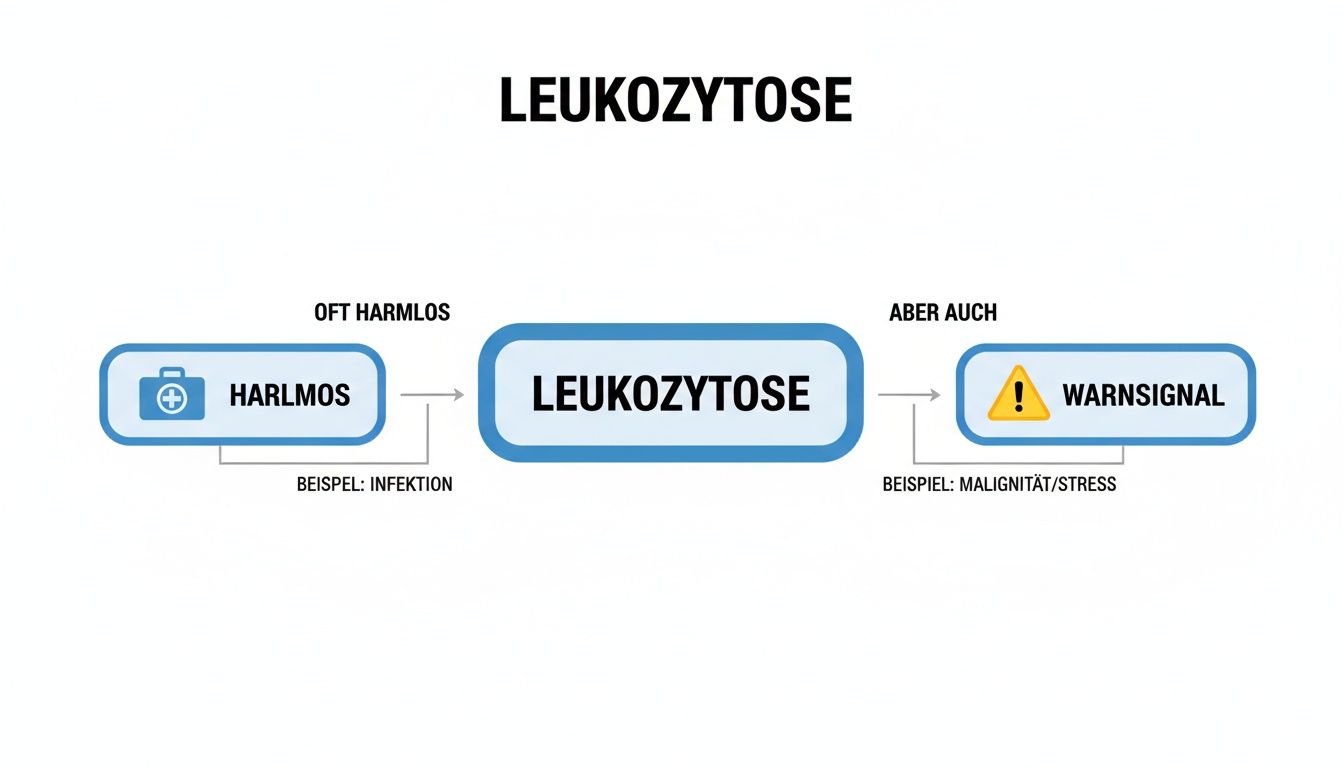
So, as you can see: Only a differential blood count makes it possible to meaningfully classify leukocytosis and provides the crucial clues.
When the levels suddenly become extremely high
In the vast majority of cases, the changes in the blood count are moderate and fit well with your symptoms. However, there are also situations in which the levels shoot up extremely high and point to a more serious problem with blood formation itself. Diseases such as leukemia can cause an uncontrolled proliferation of often immature white blood cells, bringing the entire system to a standstill.
While a healthy adult normally has between 4,000 and 10,000 leukocytes per microliter of blood, these levels can skyrocket in acute leukemia because the bone marrow produces massive numbers of immature cells.
A differential blood count is not rocket science. It is a logical system that helps you translate the language of your immune system. A high neutrophil count with a sore throat is to be expected, whereas an extremely high lymphocyte count without signs of infection is a reason to take a closer look.
Once you understand these connections, your next blood test result will be much easier to understand. You’ll be able to see why your doctor may remain relaxed or why they might prefer to carry out a few more tests.
A great first step toward understanding your values is to learn the basics. Our guide, what a complete blood count reveals, explains everything important you need to know. With this knowledge, you’ll be well prepared to make the right decisions for your health together with your doctor.
How you can actively support your body
You now know what may be behind elevated white blood cell counts and how to interpret your blood test results better. Great! But knowledge alone changes nothing—now it is time to take action. One thing is clear: If your results are abnormal, seeing a doctor is the first and most important step to clarify the exact cause. Under no circumstances should you try to do this on your own.
But beyond that, you have countless opportunities to support your body in a targeted way and restore balance to your immune system. It is about taking responsibility for your health and turning the right dials.
Uncover the hidden helpers and brakes
Your immune system is not an isolated unit. It needs an optimal supply of nutrients and reacts very sensitively to things like stress or hormonal imbalance. These hidden disruptive factors are often precisely what lead to chronic overexertion—and then show up as persistently slightly elevated white blood cell counts.
This is exactly where mybody-x’s at-home blood tests come in. They are like looking under the hood of your body and help you conveniently investigate possible causes from home that are placing unnecessary strain on your immune system.
-
Detect nutrient deficiencies: Without vitamins such as vitamin D or minerals such as zinc and selenium, your white blood cells cannot function properly. A deficiency weakens your immune defenses. A targeted nutrient test can uncover such gaps before they become a serious problem.
-
Check your hormonal balance: Your hormones are also constantly communicating with your immune system. An imbalance, for example in your thyroid hormones or the stress hormone cortisol, can literally fuel areas of inflammation in the body. A hormone test can provide valuable clues here.
The idea behind it is quite simple: Instead of groping around in the fog, concrete data gives you a clear overview. A mybody-x self-test is like your personal map, showing you exactly where your body needs support to regain its balance.
Take the wind out of inflammation’s sails with nutrition
What you eat every day is one of the most effective tools for managing inflammation in your body. Every meal can either add fuel to the fire or act like a soothing balm. The key phrase is an anti-inflammatory diet—one that eases the burden on your immune system instead of challenging it even further.
Getting started is easier than you think:
-
Choose omega-3 fatty acids: These valuable fats are natural anti-inflammatory agents. They are abundant in fatty fish such as salmon and mackerel, as well as plant-based sources such as flaxseed oil and walnuts. They help your body maintain balance.
-
Eat the rainbow: Colorful fruits and vegetables are packed with antioxidants and phytonutrients. These little helpers protect your cells from oxidative stress, which often goes hand in hand with inflammation. Be sure to enjoy plenty of berries, leafy greens, broccoli, and turmeric.
-
Reduce what fuels the fire: Sugar, white flour products, and highly processed foods can fuel “silent inflammation” in the body. Try to remove these fire starters from your diet as often as possible.
With these simple adjustments, you give your body exactly the building blocks it needs to manage inflammatory reactions effectively and return to a state of calm.
Stress management as immune system care
Chronic stress is toxic to your immune system. It causes the constant release of the hormone cortisol, which may stimulate leukocyte production in the short term but exhausts your defense system in the long term and promotes inflammation. Good stress management is therefore not merely a wellness exercise, but direct care for your blood count.
Find out what personally helps you unwind:
- Regular exercise: Moderate exercise such as walking, yoga, or a swim is a real stress reliever.
- Mindfulness and meditation: Just a few minutes a day can noticeably calm your nervous system.
- Get enough sleep: During sleep, your body regenerates and recalibrates your immune system. 7–8 hours per night is the goal.
By incorporating these three pillars—targeted diagnostics, a smart diet, and effective stress management—into your daily routine, you create the best conditions for a balanced immune system. You actively help your body stay strong and ready for action without having to remain in a constant state of alert.
Frequently asked questions about elevated leukocyte levels
Now that you’ve delved deeply into the topic of elevated leukocytes, you may still have a few very specific questions. That’s completely normal. Here, we answer the most common concerns to dispel any lingering doubts and provide quick guidance.
Can stress really increase my white blood cells?
Yes, it definitely can. Both acute stress—such as before an important presentation—and chronic stress can increase the number of your white blood cells, especially neutrophils. In these situations, your body releases stress hormones such as cortisol and adrenaline and switches into “fight-or-flight” mode.
This alarm response also involves mobilizing immune cells from the bone marrow to prepare for a possible threat. So a short-term increase after a hard workout or a stressful period is nothing unusual at first and usually subsides on its own.
However, if the stress persists, it can fuel chronic, low-grade inflammation in the body. This keeps white blood cell levels slightly elevated and places a long-term burden on your immune system. That is precisely why relaxation techniques such as meditation, exercise, and good sleep are so important—even for maintaining a balanced blood count.
My white blood cell count is only slightly elevated—should I be worried?
A value that is only slightly above the normal range is, in the vast majority of cases, no reason to panic. However, it should be understood as a gentle hint from your body to take a closer look. The causes are often harmless: an infection that is just starting, an intense workout the day before, smoking, or pregnancy.
What matters is the overall picture: Do you otherwise feel completely healthy? Or are there accompanying symptoms such as fever, fatigue, or pain troubling you? A single laboratory value is always just a snapshot.
Your doctor will probably check the level again after a while. If it remains slightly elevated for a longer period without an obvious cause, further steps such as a differential blood count may be appropriate to get to the bottom of it. So view it as an important signal, but not automatically as an alarm signal for a serious illness.
What role does diet play in the number of white blood cells?
Your diet has a tremendous, although usually indirect, influence on the health of your immune system. A diet full of sugar, processed fats, and additives can fuel chronic inflammatory processes in the body. These “silent inflammations” put your immune system on constant alert and can thereby slightly increase your white blood cell count.
Conversely, you can restore balance to your immune system with a targeted anti-inflammatory diet.
- Omega-3 fatty acids: Found in fatty fish, flaxseed oil, and walnuts, they act as natural anti-inflammatory agents.
- Antioxidants: Found abundantly in colorful fruits and vegetables, they protect your cells from oxidative stress.
- Fiber: Feeds your beneficial gut bacteria, and a healthy gut is essential for a strong immune system.
At the same time, your white blood cells need certain nutrients to be produced properly and do their job. A deficiency can therefore directly weaken your defenses.
Important immune nutrients:
- Vitamin C: The classic nutrient that supports the activity of your leukocytes.
- Vitamin D: A key player in regulating immune responses.
- Zinc: Essential for the development and function of immune cells.
- Selenium: Protects your cells from damage caused by inflammatory responses.
A nutrient deficiency can therefore seriously affect your immune system. A targeted nutrient test from mybody-x can help you uncover such deficiencies and adjust your diet to optimally support your immune defenses.
How quickly do the levels return to normal?
That depends entirely on the cause. With a simple, acute infection such as a cold, leukocyte levels often return to normal just a few days after the symptoms subside. Your body then simply scales back its defense production.
With more persistent infections, such as pneumonia, it can also take a few weeks for the blood count to settle down completely. Chronic triggers are somewhat different:
- Chronic inflammation: Here, levels often remain elevated until the cause—for example, an autoimmune disease or an undetected inflammation in the jaw—is found and treated.
- Lifestyle factors: In smokers, it can take several months after quitting for leukocyte levels to fully return to normal.
So patience is key here. In many cases, a follow-up measurement after a few weeks is useful to check whether the levels are moving back in the right direction.
As you can see, the causes of too many white blood cells are usually harmless, but the results provide valuable insights into your body. If you want to take a deeper look and proactively support your health, the self-tests from mybody-x are the perfect next step. Use our nutrient, hormone, or intolerance tests to find out whether silent inflammation is putting strain on your immune system, and receive clear, scientifically sound recommendations for action. Take control and bring your body back into its natural balance.
Discover the right at-home blood tests now at https://mybody-x.com.



Share now:
Vitamin B12 Deficiency Test: Your Practical Guide for Home Use
Lowering cholesterol with the right diet: Your path to healthy levels