
Understanding your gamma-GT blood level: What it reveals about your health and how you can lower it
When it comes to your liver health, the gamma-GT level is one of the most important early indicators in your blood. It often becomes elevated while other liver values are still unremarkable, and it reacts particularly sensitively to stress caused by alcohol, medication, or metabolic problems. In this guide, I explain in clear terms what lies behind this value and how you can actively support your liver.
What your gamma-GT level in the blood really indicates
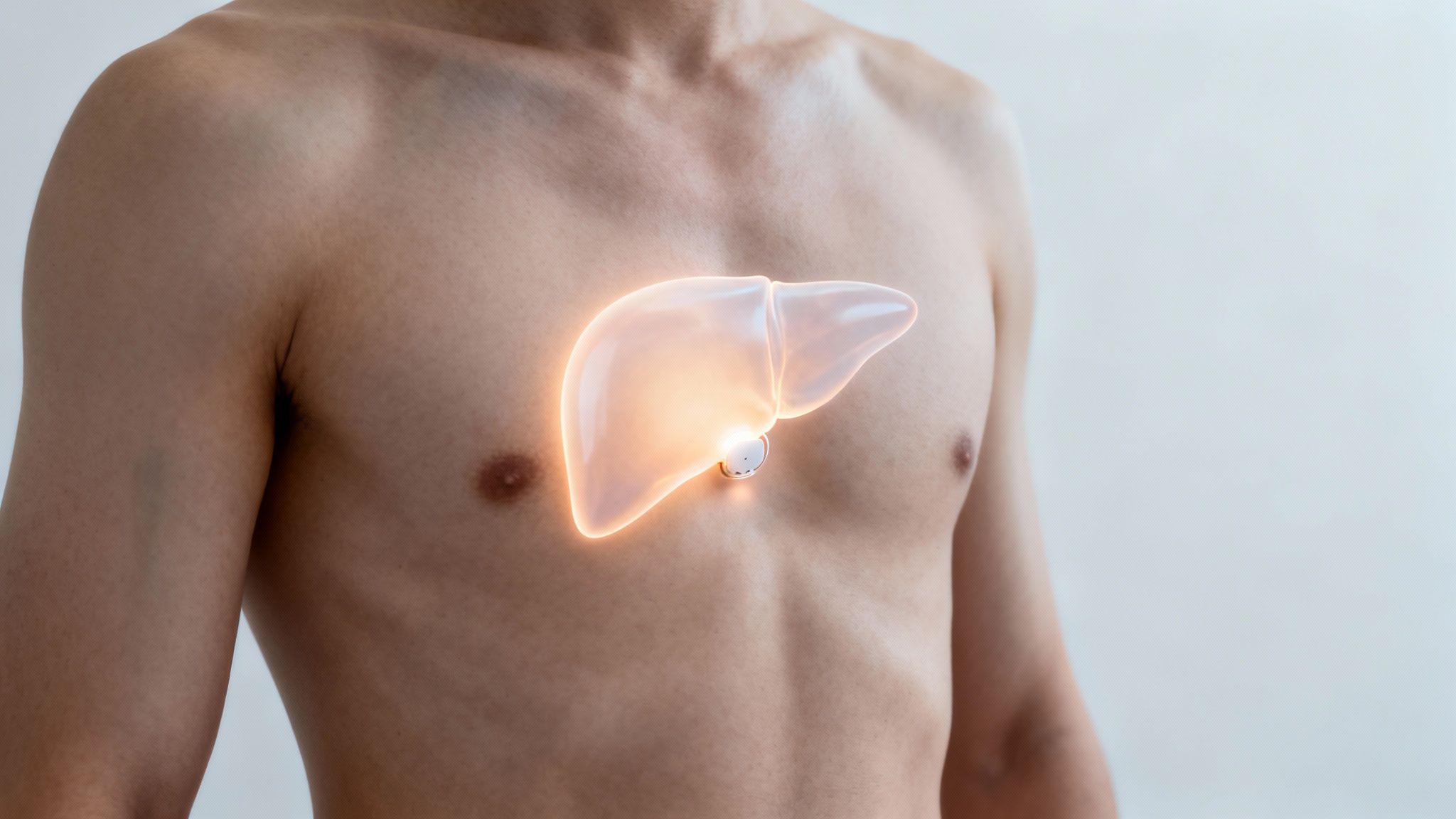
Think of your liver as your body's central treatment plant. It works around the clock, filters harmful substances from the blood, and keeps your metabolism running. The gamma-GT level (GGT for short) acts like a highly sensitive alarm sensor for this plant. When it goes off, it is often the first warning signal that something is wrong somewhere—sometimes long before other values indicate a problem.
This enzyme, whose full name is gamma-glutamyl transferase, plays an important role in the liver's detoxification processes. Its job is to break down and transport certain molecules. When the liver cells or the delicate bile ducts are under stress, they become damaged and release more GGT into the blood. An elevated gamma-GT level is therefore a clear sign that your liver is currently working overtime.
Understanding the reference values
To interpret your GGT level correctly, you need to know the so-called reference or normal values. These may vary slightly from one laboratory to another, but they provide useful guidance on whether everything is within the normal range.
The following table provides an overview of the common reference values for adults and what deviations could mean.
| Gamma-GT reference values at a glance | ||
|---|---|---|
| Group | Reference range (at 37°C) | Possible significance of an abnormal result |
| Women | up to 39 U/l | Elevated levels may indicate liver or bile duct diseases, alcohol consumption, medication use, or fatty liver disease. |
| Men | up to 66 U/l | Elevated levels often have similar causes, although men tend to have slightly higher normal values. |
Even small but regular amounts of alcohol, such as 1 to 2 glasses of wine daily, can already drive the level up. Studies suggest that around 20–30% of adults in Germany have elevated gamma-GT levels, often without knowing it. The causes are frequently chronic alcohol consumption or undiagnosed fatty liver disease.
An elevated GGT level is not a verdict, but important information. It gives you the opportunity to take timely action and get to the bottom of the causes before more serious problems develop.
It is important to know that although the GGT level is very sensitive, it is not particularly specific. This means it reliably shows that there is a strain, but not always exactly where it comes from. That is why doctors always examine the level in the context of other blood values to get a complete picture. If you would like to learn more, read our article on what is examined in a complete blood count.
What is really behind an elevated gamma-GT level?
An elevated gamma-GT level is not an abstract numbers game on your lab report — it is a direct signal from your liver. It is telling you: “Hey, I’m under pressure and have to work harder than usual!” But what exactly triggers this stress? Most people immediately think of alcohol, but the list of possible culprits is surprisingly long.
When you know the most common causes, you learn to understand your body’s signals better and can take targeted action. It’s about deciphering the “why” behind your gamma-GT level in the blood so you can make the right choices for your health.
Alcohol: The liver’s undisputed driving force
Let’s start with the best-known factor: alcohol. Your liver is your body’s central detoxification station, and breaking down alcohol is genuinely hard work for it. With regular or excessive consumption, it increases production of the GGT enzyme to cope with the resulting workload.
Think of it like a company: Every glass of wine or beer is a new order. The more orders come in, the more “staff” — in this case, GGT — has to be hired. This increase can then be detected directly in the blood.
The gamma-GT level is considered one of the most important markers in Germany for assessing the strain alcohol places on the liver. Even moderate but regular amounts can raise the level above the normal limits of up to 40 U/l for women and 60 U/l for men. In cases of serious alcohol-related liver damage, such as cirrhosis, the level can sometimes shoot up to over 300 U/l. The Apotheken Umschau's article on liver values also provides detailed insights into this.
When medications keep the liver busy
Not only alcohol, but countless medications are also metabolized by the liver. This means it must convert, break down, and excrete active ingredients here as well. This can place considerable demands on the liver cells and cause the GGT level to rise.
Medications that often affect liver enzyme levels include:
- Painkillers: Paracetamol in particular can put considerable strain on the liver when taken in excessive doses or over a prolonged period.
- Antibiotics: Certain antibiotics can cause temporary liver irritation.
- Antiepileptic drugs: Medications for seizures are known to increase GGT levels.
- Statins: Cholesterol-lowering medications can also affect liver enzymes.
It is important: Never stop taking medication on your own! If you suspect that a medication is affecting your levels, the first step is always to talk to your doctor.
Good to know: A medication-related increase in GGT levels does not necessarily indicate permanent liver damage. The levels often return to normal on their own once the medication is discontinued or the dose adjusted—of course, only after consulting a doctor.
The silent danger: Non-alcoholic fatty liver disease
One of the most common but often overlooked causes of elevated GGT levels is non-alcoholic fatty liver disease (NAFL). This lifestyle-related disease develops when too much fat accumulates in liver cells. The name says it all: The cause here is not alcohol but usually an unhealthy lifestyle.
The biggest risk factors for non-alcoholic fatty liver disease are:
- Overweight and obesity: Abdominal fat in particular plays a decisive role.
- Unhealthy diet: Too much sugar, fructose, and highly processed carbohydrates fuel fat accumulation.
- Lack of exercise: People who get little exercise slow down their metabolism.
- Type 2 diabetes: Insulin resistance and fatty liver often go hand in hand.
The insidious thing about fatty liver? It causes no pain or symptoms for a long time. Often, an elevated GGT level found during a routine blood test is the very first indication.
When liver and gallbladder diseases are behind it
Last but not least, specific diseases of the liver or bile ducts can also drive up GGT levels. The GGT enzyme is found not only in liver cells but also in the fine channels of the biliary system.
In the case of bile stasis (cholestasis), which can be caused by gallstones, for example, bile can no longer drain properly. Pressure in the bile ducts rises, the cells become damaged, and they suddenly release GGT. The result is often extremely high levels in the blood.
Other disease-related causes include:
- Hepatitis: Any form of liver inflammation, whether acute or chronic (e.g., caused by hepatitis B or C viruses), leads to the destruction of liver cells and therefore to an increase in liver enzyme levels.
- Autoimmune diseases: Sometimes the immune system mistakenly attacks the liver or bile ducts, which can also raise these levels.
Finding the exact cause is the most important step. An elevated GGT level is not a verdict but a wake-up call—a chance to take a closer look and take charge of your liver health again.
Understanding how your liver enzymes work together
Your Gamma-GT level in the blood is a brilliant early indicator, but it is not a solo performer. Think of it as an extremely sensitive scout that sounds the alarm first. To understand the full picture, however, it needs its colleagues from the diagnostic team: the liver enzymes ALT (alanine aminotransferase) and AST (aspartate aminotransferase).
While GGT is particularly sensitive to stress caused by alcohol or problems with the bile ducts, ALT and AST provide much more specific indications of damage occurring directly in the liver cells themselves. Only by considering all three values together can we truly assess what is going on in your liver.
GGT, ALT, and AST: The specialists on the liver team
Each of these three values has its own specific role. Their concentration in the blood—and especially the relationship between them—reveals to the doctor what kind of strain your liver is currently dealing with.
- Gamma-GT (GGT): The sensitive sentinel. This value signals cellular stress, especially in the liver and the small bile ducts. If only the GGT level is elevated, this often points to bile duct obstruction, regular alcohol consumption, or the use of certain medications.
- ALT (also called GPT): The liver-cell specialist. This enzyme is found almost exclusively in liver cells. A high ALT level is therefore a fairly clear sign that liver cells are being damaged—for example, by inflammation (hepatitis) or fatty liver disease.
- AST (also called GOT): The versatile indicator. AST is found not only in the liver but also in the heart and skeletal muscles. If the level is elevated together with ALT, the liver is the most likely source. However, an isolated elevation in AST can also indicate a muscle problem.
Here you can see the most common reasons for an elevated GGT level at a glance.
As you can see, alcohol, certain medications, and fatty liver disease play a central role in putting strain on the liver and driving up GGT levels.
To show you how these values interact in a laboratory report, we have compared the three most important liver enzymes directly. This will help you understand their different roles even better.
The most important liver enzymes in direct comparison
| Liver enzyme | Main indicator of | Typical causes of an elevated level |
|---|---|---|
| GGT | Cellular stress in the liver and bile ducts, effects of alcohol | Chronic alcohol consumption, bile stasis, medications, fatty liver |
| ALT (GPT) | Direct damage to liver cells | Fatty liver, hepatitis (viral or autoimmune), liver damage caused by toxins |
| AST (GOT) | Damage to liver, heart, or skeletal muscle cells | Liver diseases (often with ALT), heart attack, intense muscle strain |
This table makes it clear: No single value tells the whole story. Only the pattern they form together provides the crucial clues for an accurate diagnosis.
Typical value patterns and what they mean
To help you better understand your next lab report, let's look at a few classic scenarios. Once you recognize the patterns behind the numbers, everything becomes much easier to understand.
Scenario 1: Only the GGT level is elevated
If only GGT is out of range while ALT and AST are completely normal, two main suspects come into focus:
- Chronic alcohol consumption: Even moderate but regular alcohol intake can cause an isolated rise in GGT long before other values respond.
- Bile duct problems: Developing bile stasis (cholestasis), perhaps caused by tiny gallstones, irritates the bile ducts and causes the GGT level to rise.
Scenario 2: GGT and ALT are significantly elevated
This combination is a classic indication that the liver cells themselves are under pressure or being damaged. The most common reasons are:
- Non-alcoholic fatty liver (NAFL): Excessive fat deposits in the liver cause cellular stress and can trigger inflammation.
- Viral hepatitis: Acute or chronic inflammation of the liver caused by viruses destroys liver cells and drives both values up.
An isolated elevated GGT is often a lifestyle signal. However, if ALT and AST also rise, this indicates structural strain or damage to the liver cells that should be investigated more closely.
Scenario 3: All three values (GGT, ALT, AST) are significantly elevated
When all three key markers in liver diagnostics rise sharply, this indicates acute and more serious liver damage. Possible causes include acute hepatitis, poisoning, such as a paracetamol overdose, or acute bile stasis affecting the liver. Such a combination always requires prompt medical evaluation.
Liver health is closely linked to general inflammatory processes in the body. Would you like to learn more about how to correctly interpret a general inflammation marker in the blood? Our related article provides valuable insights. This knowledge helps you view your health from a holistic perspective.
What your GGT level reveals about your cardiovascular risk
For most people, an elevated gamma-GT level in the blood is a clear warning sign of liver problems. However, science now paints a much broader picture: this value is also an often-overlooked but all the more important indicator of your cardiovascular health. Your GGT level therefore extends far beyond the liver and can provide valuable clues about your overall health risk.
This connection, surprising at first glance, has a clear biological basis. The GGT enzyme is involved not only in detoxification but also plays a key role in the metabolism of glutathione, one of your body's most powerful antioxidants. When GGT levels rise, this is often an alarm signal for increased oxidative stress.
Oxidative stress and its effects on your heart
Imagine oxidative stress as invisible rust in your cells. It develops when aggressive molecules—so-called free radicals—take over and attack important cell structures. But this process damages not only liver cells; it also affects the sensitive inner walls of your blood vessels.
In the long term, this damage can have serious consequences:
- Inflammation in the blood vessels: The “rusted” areas become susceptible to chronic inflammatory processes.
- Arteriosclerosis (hardening of the arteries): Cholesterol and fats can accumulate more easily on damaged vessel walls, narrowing and stiffening the arteries.
- High blood pressure: The elasticity of the blood vessels decreases, and pressure within the system rises.
An elevated GGT level therefore signals that processes are taking place in the background that directly threaten your cardiovascular system.
Your GGT level is therefore more than just a liver value. It is an early warning system for cellular stress, which underlies many cardiovascular diseases.
Especially in Germany, this connection is becoming increasingly important. An isolated elevation of the gamma-GT level—that is, without excessive alcohol consumption being the cause—is increasingly regarded as a strong indicator of cardiovascular risks. Studies show that when levels exceed 60 U/L in men or 40 U/L in women, the risk of coronary heart disease (CHD) increases noticeably. With more than 300,000 deaths from cardiovascular disease in Germany each year, it becomes clear how crucial such early indicators are. The Ärztezeitung provides an in-depth report on this connection.
Why you should keep an eye on your GGT level
The realization that GGT levels are so closely linked to heart health gives you an entirely new perspective on your personal preventive care. They become an important piece of the puzzle in better assessing your risk—often long before serious symptoms appear. This can motivate you to question your lifestyle and take corrective action in good time.
A high GGT level often has the same causes that also harm the heart: an unhealthy diet, obesity, or metabolic syndrome. So when you do something to relieve the strain on your liver, you’re also doing your heart a favor at the same time.
Alongside GGT levels, other blood lipid levels also play a decisive role in your cardiovascular risk. In our related article, you’ll learn what you can do if your triglycerides are too high—another important factor in maintaining healthy blood vessels. Taking a holistic look at your blood results gives you the power to make informed decisions for a long and vibrant life.
Your roadmap to healthier liver levels
An elevated gamma-GT level in the blood isn’t a fate you simply have to accept. Instead, see it as a clear signal from your body that it’s time to take action. Your liver is asking for support, and you have the power to give it exactly that. This roadmap shows you which specific, practical steps can noticeably relieve the strain on your liver and bring your levels back into the healthy range.
This isn’t about turning your life upside down overnight. Every small step counts and adds up to a big impact. It’s about gradually integrating conscious, liver-friendly habits into your everyday life.
Diet as the foundation for a healthy liver
Your diet may be the most powerful tool for helping your liver regenerate. Every meal is a decision: Are you putting a strain on your most important metabolic organ, or giving it exactly the building blocks it needs for its demanding detoxification work?
Imagine your liver as a hardworking gardener. To work optimally, it needs the right tools and nutrient-rich soil.
Some foods are true superheroes for your liver:
- Bitter compounds: Foods such as artichokes, chicory, radicchio, and arugula stimulate the production of bile. This helps your liver digest fats more effectively and eliminate toxins efficiently.
- Sulfur-containing vegetables: Broccoli, cauliflower, garlic, and onions contain valuable compounds that stimulate the liver’s detoxification enzymes.
- Antioxidants: Berries, green leafy vegetables such as spinach or kale, and nuts are packed with antioxidants. They protect your liver cells from damage caused by oxidative stress—a common cause of elevated GGT levels.
- Milk thistle: This herb is a true classic. Its active ingredient, silymarin, is known for its liver-protective and regenerative properties.
On the other hand, there are naturally foods that put unnecessary strain on your liver. Try to reduce highly processed products, sugary drinks, fried foods, and high-fat meals. They force your liver to work overtime and promote harmful fat deposits. If you need inspiration for delicious, liver-friendly dishes, take a look at our article on anti-inflammatory nutrition and recipes.
Exercise gets your metabolism moving
Regular physical activity is a key factor in getting fatty liver disease—one of the main causes of elevated GGT levels—under control. Exercise not only helps reduce excess weight but also improves your cells’ sensitivity to insulin.
Put simply, this means that sugar from the blood is transported into the cells more effectively and burned there for energy instead of being converted into fat in the liver. Just 30 minutes of moderate exercise on most days of the week, such as brisk walking, cycling, or swimming, can make a huge difference.
Exercise is like a fresh start for your metabolism. It helps the liver break down stored fat and regenerate its cells.
Medication and stress as hidden factors
Sometimes it is not just dietary habits or alcohol that drive the gamma-GT level in your blood up. Certain medications can also put considerable strain on your liver.
If you take medication regularly, speak openly with your doctor about whether it could affect your liver values. There are often gentler alternatives for the liver. However, it is important never to stop taking medication on your own!
Another often underestimated factor is chronic stress. Persistent stress causes the release of hormones such as cortisol, which can raise blood sugar levels and promote inflammation in the body. Both put additional strain on your liver.
So make a point of incorporating targeted relaxation into your everyday life:
- Breathing exercises: Take a few minutes several times a day to consciously breathe in and out deeply.
- Mindfulness or meditation: Just 5–10 minutes a day can help noticeably reduce your stress levels.
- Enough sleep: Good, restful sleep is absolutely essential for your liver to regenerate.
Your journey toward healthier liver levels begins today. Each of these steps is a small sign of appreciation for the most important metabolic organ in your body.
Check your gamma-GT level easily at home
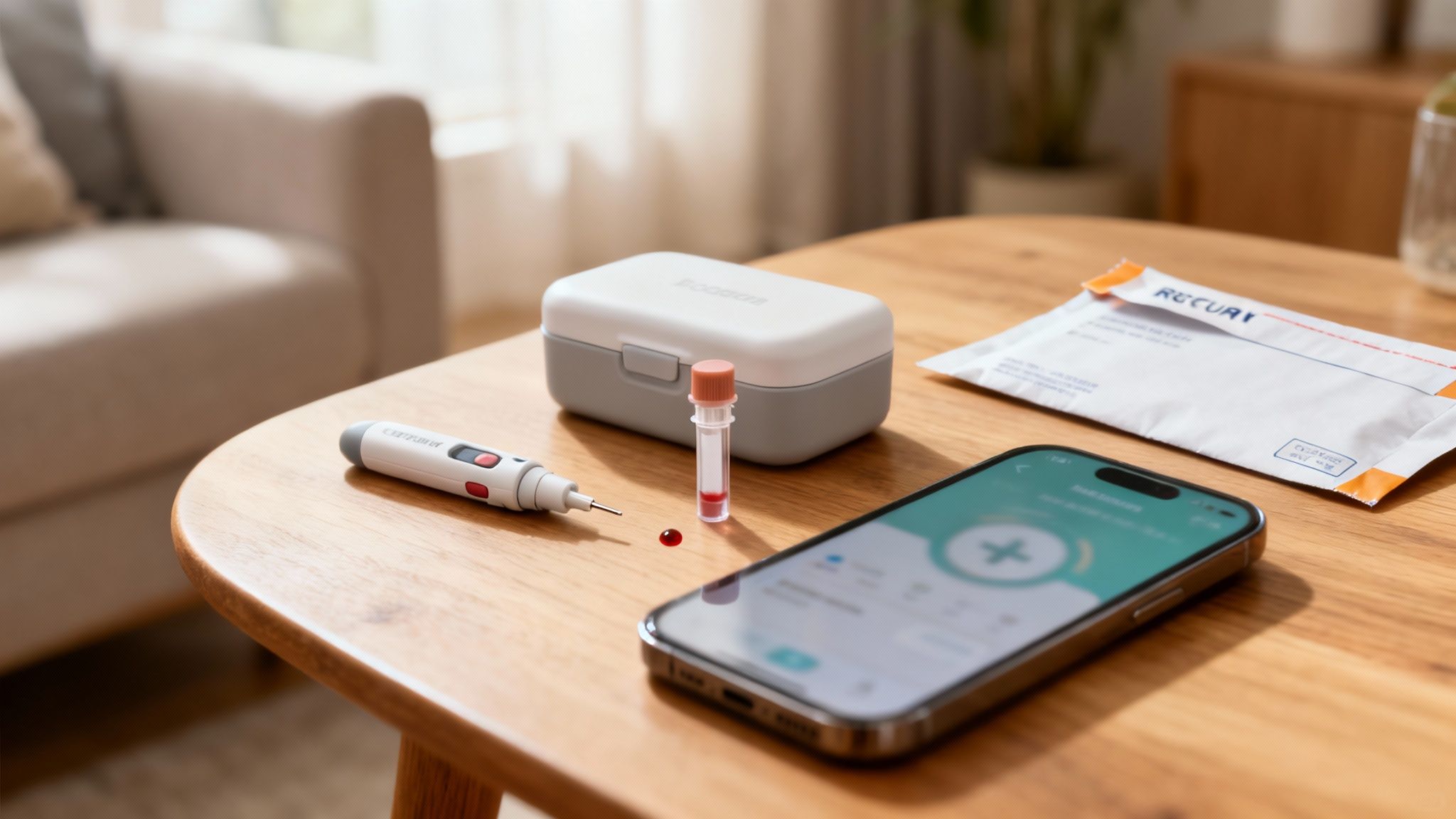
Do you finally want clarity about your liver health, but are put off by the waiting times for a doctor's appointment? The modern approach to preventive healthcare comes directly to your home. With an at-home blood test, such as the one from mybody®x, you take control of important levels yourself, including the gamma-GT level in your blood.
The days when you had to spend your valuable time in a waiting room for a simple blood check are over. Today, you can take proactive and discreet action—whenever it suits you best.
How the at-home test works
We have designed the entire process to be as easy and completely safe for you as possible. You don't need any prior knowledge, as everything you need is included directly in the test kit.
The process couldn't be simpler:
- Low-pain sample collection: A small prick to your fingertip is all it takes. Use the included lancet to collect a few drops of blood—it takes just a few seconds and is barely noticeable.
- Secure shipping: Simply pack your sample in the provided return envelope and send it free of charge to our certified German specialist laboratory.
- Fast analysis: In the laboratory, experts carefully analyze your blood to determine your exact gamma-GT level.
You can access your personal results report after just a few days—conveniently and discreetly online.
Your results report is more than just a dry number. It translates medical data into understandable language and provides you with specific, personalized recommendations for action.
This approach not only gives you a clear overview of your current health status, but also shows you directly what you can do. This allows you to identify changes early, track the success of lifestyle changes, and take an active role in managing your health.
Preventive healthcare becomes a completely normal and uncomplicated part of your everyday life. Find out more about how you can easily and conveniently measure your levels from home with the mybody®x blood test.
Frequently asked questions about gamma-GT levels
Finally, I have answers to the questions we receive most frequently about the gamma-GT level. Here are the facts at a glance, so you can put any lingering doubts to rest.
Can my gamma-GT level be elevated even without alcohol?
Yes, absolutely. Many people immediately associate a high GGT level with alcohol, but that is often only half the story. Sometimes it is precisely the crucial clue to finding the actual cause.
Your level can also rise for completely different reasons. These include, for example:
- Certain medications: Some painkillers, anti-epileptic medications, and cholesterol-lowering drugs can put strain on the liver.
- Non-alcoholic fatty liver disease: It is a typical lifestyle-related disease, often resulting from being overweight, consuming too much sugar and fat, and lack of exercise.
- Problems with the bile ducts: If bile cannot drain properly, for example because of gallstones, the GGT level often shoots up.
- Oxidative stress: High levels of stress in the body—regardless of the cause—can also affect your liver values.
How quickly does the gamma-GT level decrease when I stop drinking alcohol?
Your body is a true regeneration miracle, and your liver especially so! How quickly your level recovers naturally depends on how high it was and how healthy your liver is overall.
As a rough guide, remember that the GGT enzyme has a half-life of around 26 days. This means that if you consistently avoid alcohol, your level may already have halved after around four weeks—provided there is no other serious underlying condition. If levels are only slightly elevated and you maintain a healthy lifestyle, GGT can often return to normal completely within one or two months.
Monitor your GGT level when you make changes! If it decreases, it is direct and incredibly motivating feedback from your body. It shows you in black and white that your efforts to support your liver are paying off.
Is a gamma-GT level that is too low dangerous?
No, quite the opposite. A very low GGT level is completely harmless from a medical perspective and no cause for concern. It is generally a really good sign.
A result in the lower range usually indicates a healthy, unstressed liver and a mindful lifestyle. Medical attention therefore always focuses on elevated values, as only these are warning signs of possible strain or illness in your body.
Would you like to gain clarity about your levels and take control of your liver health? With the blood tests from mybody®x, you can easily and conveniently check your gamma-GT level and many other important health markers from home. Discover what’s going on inside you now at https://mybody-x.com.



Share now:
Lowering cholesterol with the right diet: Your path to healthy levels
Fasting Before a Blood Test: Why Water Is Your Best Friend