
Coffee before having blood drawn: Can I drink coffee or not?
The short answer to the question of whether you can drink coffee before having blood drawn is: It’s better not to. Especially if you need to fast for your test, even black coffee without sugar or milk is a no-go. It can affect your blood values and distort your test results.
Why your morning coffee affects your blood test results
For most of us, morning coffee is a sacred ritual—the indispensable start to the day. But this beloved pick-me-up can become a real source of interference before having blood drawn. The reason is caffeine, an active ingredient that sets off a whole cascade of processes in your body.
Caffeine doesn’t just make you alert; it also stimulates the release of hormones such as cortisol. This stress hormone signals your body to release energy reserves, which can temporarily raise your blood sugar level. And this happens even if you haven’t eaten anything for hours.
This effect becomes particularly problematic when you are specifically monitoring certain values. Imagine taking a mybody®x hormone test to check your stress level. A cortisol level artificially elevated by coffee would give you a completely inaccurate picture of your hormonal balance.
This simple decision tree helps you see at a glance what the situation is.
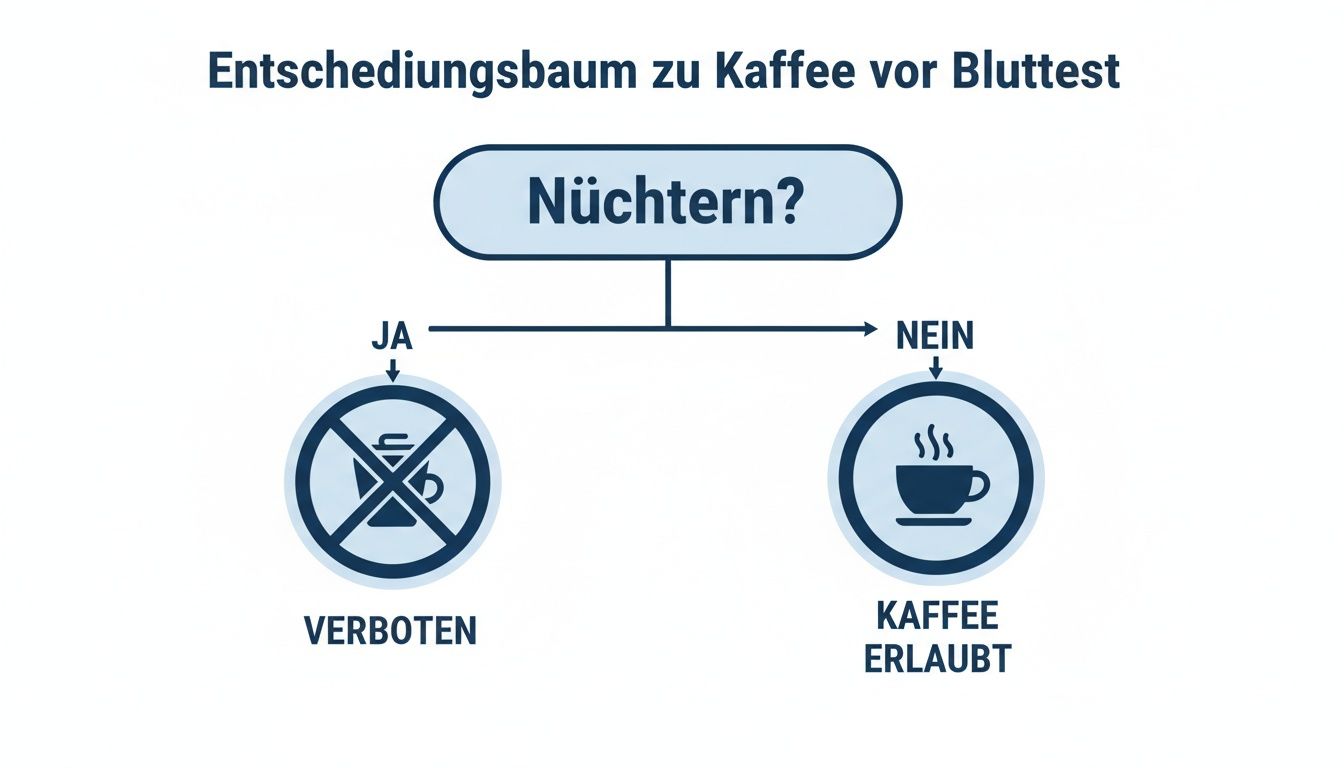
The graphic makes it unmistakably clear: Whenever fasting is required, coffee is off the table. That’s the only way to be sure that your results truly reflect your body.
How significant is the effect really?
In Germany, around 70 percent of people reach for a cup of coffee every day. But with sensitive tests such as a glucose tolerance test, coffee can raise blood sugar by up to 10–15 percent. For good reason, laboratory guidelines therefore recommend strict caffeine abstinence to guarantee precise and reliable results.
The rule of thumb is: The more specific and sensitive the test, the more important meticulous preparation becomes. And while the question of coffee often causes uncertainty, one thing is crystal clear: Can you drink water before having blood drawn? Absolutely! Not only is it allowed, it’s even encouraged.
How coffee really affects your blood values
For most people, coffee is simply the morning kickstart. But what many don’t know is that every cup triggers a whole cascade of reactions in your body that can directly affect your blood values—almost as if you were flipping a few levers in the engine room of your body.
The caffeine it contains is a real wake-up call for your central nervous system. It causes your body to release hormones such as adrenaline and cortisol. These “stress hormones” signal your system to release energy immediately. The result? Your blood sugar level can rise even if you have not eaten for hours.
At the same time, coffee has a diuretic effect. This can quickly disrupt the concentration of important electrolytes in your blood and thereby affect the test results.
What happens to hormones and metabolism in the short term
Imagine your body performing a short but intense sprint because of the caffeine. It mobilizes all available reserves and ramps up systems that would normally be in rest mode. Naturally, this leaves traces that we can measure in your blood:
- Cortisol spike: The stress hormone cortisol is particularly sensitive to caffeine. A coffee in the morning can artificially raise this level and give you a false impression of your actual stress level.
- Blood sugar fluctuations: To provide energy for the simulated “fight-or-flight” mode, your body releases sugar into the bloodstream.
- Altered blood lipid levels: Coffee can also temporarily affect cholesterol and triglyceride levels.
These effects are only temporary, but they occur precisely during the time window in which your blood is drawn. This makes it practically impossible to determine a reliable, neutral baseline value.
Did you know that as little as 200 mg of caffeine—the equivalent of about two cups of regular filter coffee—can significantly increase cortisol levels? Some studies report a deviation of up to 20 percent. With an estimated more than 100 million blood draws per year in Germany alone, it becomes clear how important proper preparation is for an accurate result. You can read more about the study findings here: Learn more about the effects of coffee on biokaffeewelt.de.
Especially when you are specifically looking for answers about your health, accuracy is essential. Suppose you want to find out why you are constantly tired with a comprehensive nutrient analysis from mybody®x. Values distorted by coffee could mask a genuine iron or vitamin deficiency. Instead of finally gaining clarity, you might end up following a completely wrong lead. That is precisely why it is so important to consciously leave your cup of coffee untouched before the test.
Why Caution Is Needed with Hormones and Nutrients
When you have your hormonal balance or nutrient status checked, every little detail counts. Especially with these sensitive measurements, your morning cup of coffee can become a real source of interference that completely skews your test results.
Imagine your body as a finely tuned orchestra in which hormones and nutrients work together precisely. Caffeine essentially storms onto the stage and throws everything into disarray.
The Influence on Your Hormone Balance
A prime example is the stress hormone cortisol. Your cortisol level follows a completely natural daily rhythm: It is highest in the morning, helping you wake up and get ready for the day, and then gradually decreases. Coffee in the morning gives this level an additional artificial boost.
The problem? With a mybody®x hormone test, this artificially elevated level could mistakenly indicate chronic stress, when in fact coffee was the only culprit.
- Stress level analysis: A distorted cortisol level makes it impossible to assess your actual stress level.
- Thyroid hormones: The sensitive balance of thyroid hormones can also be temporarily disrupted by caffeine's stimulating effect.
- Cycle tracking: Precise hormone levels are particularly important for women who want to understand their cycle or fertility. Even the slightest deviation can distort the interpretation.
So if you finally want clarity about your hormonal situation, avoiding coffee before having your blood drawn is an absolute must. Would you like to delve deeper into the role of this important hormone? Read more here about what cortisol actually is and how it controls your body.
Nutrients and Their Absorption
Coffee can also seriously disrupt the results of a nutrient test. The effect may be somewhat subtler here, but it is no less important. Coffee contains tannins, which can block the absorption of certain minerals in the intestines.
The absorption of plant-based iron in particular can be reduced by coffee by up to 39 % decrease when both are consumed shortly one after the other. If your iron level is already low, this can make the difference between a deficiency being detected or going unnoticed.
So if you want to find out with a mybody®x nutrient test whether a deficiency is behind your constant fatigue, you should play it safe. Give your body the chance to show an unaltered picture, and simply leave the coffee cup in the cupboard that morning. This way, you can ensure that the results truly reflect you—and not your coffee habits.
How to prepare your mybody®x home test optimally
mybody®x home tests give you the freedom to take your health into your own hands—without the stress and rush of your familiar surroundings. No hectic morning, no waiting in a crowded waiting room. Instead, you can simply integrate the test into your usual morning routine.
But even though it’s convenient to do it at home, one thing remains crucial: Proper preparation is the be-all and end-all for reliable and truly meaningful results. The great advantage is that you are in control of everything yourself.
Your instructions—your path to clear results
Every mybody®x test kit includes precise instructions explaining exactly whether and for how long you should fast for your specific test. These instructions are incredibly important, as they are the only way to get an unaltered insight into your body.
For most of our tests—whether they are nutrient, hormone, or intolerance tests—the sample should be collected immediately after waking up. More specifically: before your first coffee, before breakfast, and ideally even before your first sip of water.
This allows us to ensure that your values are measured in their completely resting state, without any external factors affecting them.
Think of it this way: You want to take a photo of a perfectly still lake at sunrise. Even the smallest wave caused by a passing boat (your morning coffee) would spoil the perfect picture. It’s very similar with your blood values—we want to capture your body in its unaltered, calm state.
We guide you step by step through the entire process. From preparation and choosing the right time for the little finger prick to safely shipping your sample to our certified German specialist laboratory. You can also find detailed instructions on how to carry out your blood test at home in our health portal.
By following these simple steps, you create the perfect foundation for an accurate analysis. On this basis, you will then receive sound, personalized recommendations for action that will genuinely help you take control of your health.
The golden rule: What “fasting” really means before a blood test
The term “fasting” often causes confusion. Does it only mean solid food, or are drinks such as your beloved morning coffee also off-limits? The medical rule of thumb for most blood tests is actually easy to remember: eat nothing for 8 to 12 hours before the blood is drawn.
Why is this so important? Quite simply, during this time your body completely processes the nutrients from your last meal, such as sugars and fats. This ensures that no “residual values” remain circulating in your blood and artificially elevate your results. After all, your blood count should show the true, unaltered state of your body.

Your checklist for proper preparation
To ensure that you are perfectly prepared for your next blood test—whether at the doctor’s office or with a mybody®x home test—we have put together a clear checklist for you.
What is allowed?
- Water: Still water without additives is not only allowed but even encouraged! Staying well hydrated makes your veins fuller and noticeably facilitates blood collection.
- Medication: Continue taking your prescribed medication as usual unless your doctor has explicitly advised you otherwise.
What should you avoid?
- Solid food: Absolutely no meals, snacks, or even a small bite in between.
- Coffee and tea: Yes, unfortunately, this includes unsweetened black coffee or tea. Caffeine is a stimulant and, as we saw above, can disrupt certain hormone and blood sugar levels.
- Other drinks: Juices, soft drinks, milk, or even water with a splash of lemon contain sugar or other substances that can distort your results.
- Chewing gum and sweets: Even sugar-free varieties are off-limits, as they stimulate digestion and can thereby affect your metabolism.
- Alcohol and nicotine: Ideally, you should avoid both for at least 24 hours before the test, as they can significantly affect liver values and other parameters in particular.
Just remember: “Fasting” means that your body is in a state of complete rest. Any substance that stimulates your metabolism or activates your hormonal system can distort your test result and reduce its informative value.
If you follow these simple rules, you create the best conditions for precise and reliable results. This applies just as much to testing at a doctor’s office as to the convenient at-home sample collection with a mybody®x nutrient, hormone, or intolerance test. This way, you are investing not only in a test but in genuine clarity about your health.
Other factors that can affect your blood values
Your body is not a machine but a complex system that constantly reacts to countless stimuli. While coffee before having your blood drawn is a well-known troublemaker, there are a whole range of other everyday habits that can temporarily throw your laboratory values significantly out of balance.
Knowing these factors puts you at a clear advantage. This helps you avoid unnecessary worry or misinterpretations of your test results.
For example, imagine going straight from a sweat-inducing workout at the gym to a blood test. The result? Probably elevated muscle and inflammation markers that say nothing about your actual state of health, but simply reflect the physical exertion. Your body is still fully in recovery mode—and this is clearly visible in your blood count.
What else you should watch out for besides coffee
For your mybody®x test to provide a truly accurate and unbiased picture of your body, there are a few things you should keep in mind:
- Alcohol the night before: Even a glass of wine or beer can temporarily raise liver enzyme levels (especially GGT). To get an accurate analysis of liver function, you should completely avoid alcohol for at least 24 hours before the test.
- Intense exercise: As mentioned earlier, a strenuous workout can increase levels of creatine kinase (a muscle enzyme) and inflammatory markers. Ideally, give your body a day of rest before having your blood drawn.
- Stress and anxiety: Even a hectic journey to the doctor or nervousness before the needle can stimulate the release of stress hormones such as cortisol. So make a conscious effort to allow yourself enough time and try to be as relaxed as possible.
Hidden influences: Medication and dietary supplements
An often underestimated factor is medication and supplements. Certain preparations can directly affect laboratory results and thus lead to misleading diagnoses.
A classic example is biotin, also known as vitamin B7. It is found in many supplements for healthy hair and nails. However, high doses can significantly distort the results of hormone tests, especially thyroid tests. Therefore, always inform the person evaluating your test about everything you take.
This overview summarizes the most common influences that can distort your lab results and gives you tips on how to avoid them as effectively as possible.
Overview of factors that can interfere with blood tests
| Factor | Affected values (examples) | Recommended action |
|---|---|---|
| Food & drinks | Glucose, triglycerides, cholesterol, uric acid | Fast for 8–12 hours (water only) |
| Coffee (caffeine) | Cortisol, blood sugar, catecholamines | Avoid for at least 4–6 hours before the test |
| Alcohol | Liver values (GGT, GOT), triglycerides, uric acid | Avoid for at least 24 hours before the blood draw |
| Intense exercise | Creatine kinase (CK), inflammatory markers (CRP), liver values | Avoid strenuous exercise for 24 hours before the test |
| Stress/anxiety | Cortisol, adrenaline, blood sugar, white blood cells | Go to the blood draw relaxed and avoid rushing |
| Medications | Varies greatly depending on the active ingredient (e.g., thyroid and blood lipid levels) | Discuss use with your doctor; disclose all supplements |
| Dietary supplements | Biotin (B7) interferes with hormone tests; iron supplements affect iron levels | Pause use after consulting your doctor; disclose all supplements |
| Smoking | Cortisol, adrenaline, white blood cells | Do not smoke immediately before the blood draw |
By keeping these additional sources of interference in mind and minimizing them, you create the best conditions for a truly meaningful result. This ensures that your mybody®x nutrient, hormone, or intolerance test gives you genuine clarity about your health.
The most frequently asked questions about coffee and blood tests
There are many myths and uncertainties surrounding coffee before a blood test. So that you know exactly what to expect during your next test instead of being left in the dark, we have answered the most important questions for you—clearly, directly, and on equal terms.
Can I at least drink decaffeinated coffee?
Even if it sounds like a harmless alternative, caution is advised here. Even decaffeinated coffee is not completely caffeine-free. It also contains other bioactive substances that can interfere with sensitive tests.
For simple routine checks, it may hardly matter. But when it comes to precise hormone levels or your blood sugar—as with many mybody®x tests—it is better to play it safe. A glass of water is always the better choice in this case.
Darn, I accidentally drank coffee—what now?
No panic—this can easily happen in the morning rush. The most important thing now is to be honest! Inform the person drawing your blood, or clearly note it on your at-home test kit.
For many standard values, a small cup of black coffee often has no dramatic effect. However, when it comes to sensitive analyses such as hormones or glucose metabolism, it is usually wiser to postpone the test. This is the only way to be sure that you ultimately receive a result you can truly rely on.
Honesty is the best approach here. A distorted result because you failed to mention the coffee helps no one—least of all you, as you seek greater clarity about your health.
Does coffee with milk and sugar make a bigger difference?
Yes, a huge one! While caffeine is the main factor in black coffee, coffee with milk and sugar is essentially a small meal for your body.
- Sugar: Causes your blood sugar level to rise immediately.
- Milk: The fats and proteins in it can interfere with your blood lipid levels, especially triglycerides.
So a coffee with milk completely breaks the fasting requirement. Before a blood draw for which you need to fast, it is absolutely off-limits because it would make the results unusable.
And what about urine tests? Do I need to avoid coffee for those too?
It depends entirely on the test. For most simple routine urine tests, coffee is generally not a problem.
However, if you are undergoing a more specialized analysis, such as a 24-hour urine collection test to measure certain hormones, your doctor may recommend avoiding coffee. For the mybody®x tests that are based on a blood sample, this question is less relevant, but it is still good to know the difference. When in doubt, always read the instructions for your test kit carefully or ask.
Do you finally want clarity about your nutrient levels, hormone status, or possible intolerances? With the at-home tests from mybody®x, you gain precise insights into your body—simply and conveniently from home. Discover the right test for you now at https://mybody-x.com.


Share now:
Genetic test for weight loss: Your journey to your desired weight begins in your DNA
DNA test for weight loss as the key to a personalized genetic diet