
16/8 intermittent fasting or DNA-based nutrition: Which one is really right for you?
Are you wondering which dietary approach really suits you? The key difference is actually quite simple: 16/8 intermittent fasting determines when you eat, while DNA-based nutrition shows you what you should eat. Intermittent fasting is a popular method for influencing metabolism, but it does not take your unique biological predisposition into account. DNA analysis, on the other hand, provides a tailored blueprint directly aligned with your body. Your choice therefore depends on whether you are looking for a general rule for your daily routine or prefer an in-depth, scientifically grounded, and personalized strategy for your meals.
Intermittent fasting and DNA analysis compared directly
When it comes to taking your health to the next level, two exciting approaches are currently in the spotlight. On the one hand, there is the popular 16/8 intermittent fasting, a method based on clearly defined eating and fasting periods. On the other hand, there is cutting-edge DNA-based nutrition, which precisely aligns your meal plan with your genetic requirements—as enabled by our Infinity NutriCare DNA solution.
Both approaches promise to enhance your well-being, but they work in fundamentally different ways. To make it easier for you to decide which approach is right for you, let's take a closer look at the differences, the scientific foundations, and the ideal use cases.
Two dietary approaches at a glance
As mentioned, the biggest difference lies in the focus. Intermittent fasting is a timing strategy—it is about giving the body targeted breaks from food intake. DNA analysis, on the other hand, is a personalization strategy. It provides you with a scientifically based blueprint showing which nutrients your body processes optimally.
This table summarizes the key principles of the two approaches:
| Feature | 16/8 intermittent fasting (standard approach) | DNA-based nutrition (e.g., Infinity NutriCare) |
|---|---|---|
| Basic principle | Time-restricted eating (8-hour window) and fasting (16-hour window) | Analysis of genes to determine individual nutrient requirements |
| Focus | When you eat to activate metabolic processes such as autophagy | What you eat, based on your genetic predisposition for macronutrients and micronutrients |
| Ideal for | People looking for a clear structure in their daily routine who want to get started without strict diet rules | People who want precise, scientifically grounded, and personalized nutrition recommendations in order to finally achieve sustainable results |
The overview makes it clear: While one approach aims to change behavior, the other relies on in-depth biological knowledge about you and your body.
The method behind the 16/8 rhythm
The 16:8 intermittent fasting method has experienced a real boom in recent years. The idea is simple: You fast for 16 hours every day and consume all your meals within an 8-hour window. The reason for its popularity? It can often be easily incorporated into everyday life without having to completely overhaul your diet. It is a first, simple step toward more mindful eating habits.
The following graphic illustrates the principle clearly:
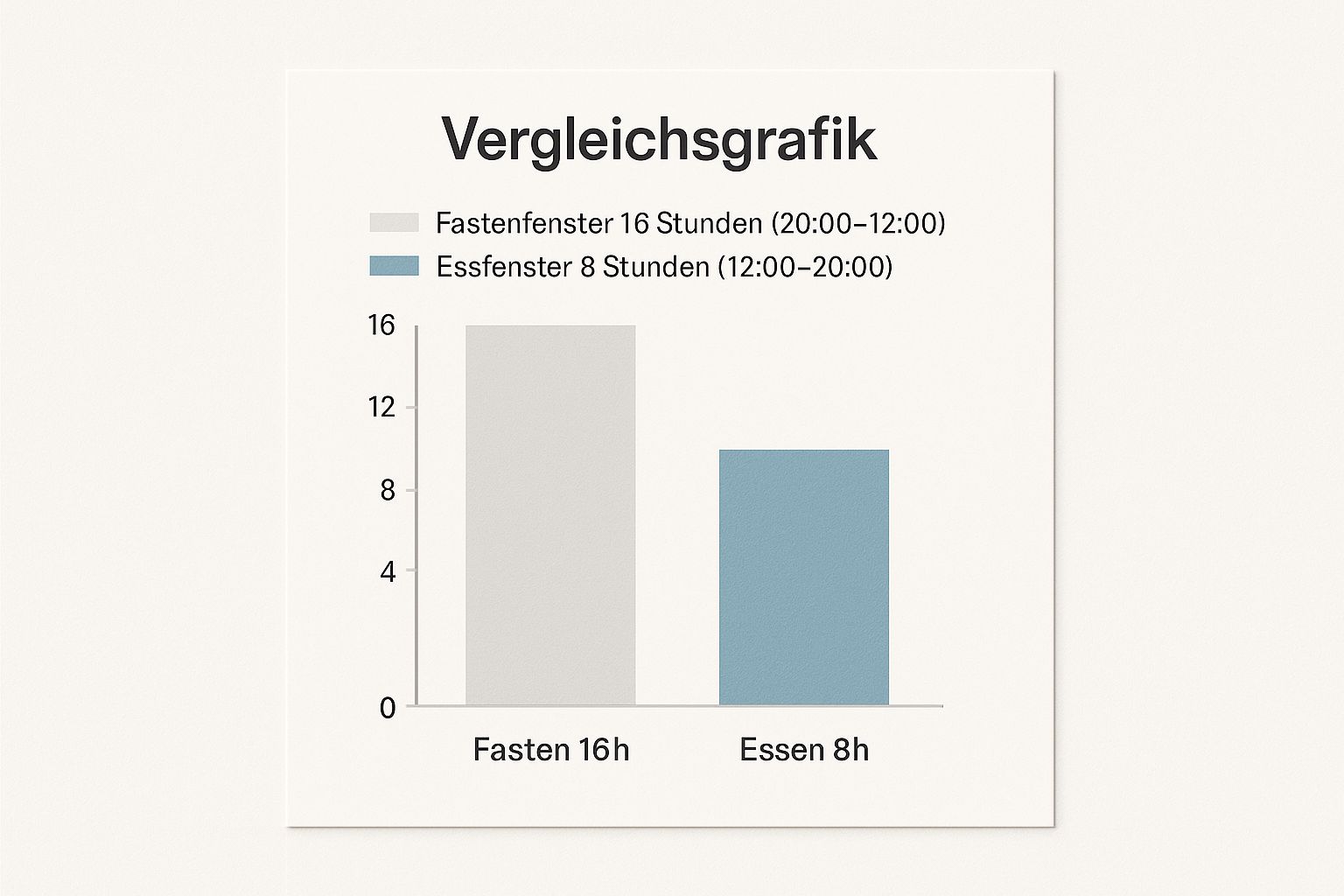
You can immediately see how the fasting window occupies most of the day, while the eating window is deliberately compressed into just a few hours. But the method leaves open what is eaten during this window.
The genetic fingerprint of your nutrition
The DNA-based nutrition approach stands in complete contrast to this. Meal times play no role here—only your biological individuality matters. Your body has unique genetic characteristics that determine how efficiently you metabolize fats, carbohydrates, and proteins. Intermittent fasting ignores these crucial individual differences.
A DNA analysis is like looking at your body’s personal handbook. It reveals which “fuel” your metabolism prefers in order to function optimally. This is where the Infinity NutriCare DNA solution comes in.
This approach offers an exceptional degree of personalization that goes far beyond general nutrition trends. Instead of guessing what might be healthy for you, you receive clear, evidence-based recommendations. If you want to understand exactly how a DNA test for your nutrition works, you will find all the important information here.
How 16/8 intermittent fasting affects your body
The principle behind the 16/8 method sounds quite simple at first: You only eat within an 8-hour window and fast for the remaining 16 hours. But what happens in the body during this time is anything but simple. It is about much more than simply skipping meals—it is a targeted stimulus that triggers profound biological processes.
When you give your body a longer break from constant digestive activity, it can finally use its energy for other things. Instead of processing nutrients continuously, it essentially switches into repair and regeneration mode. This change is precisely the key to the many health benefits that so many people report.

The cellular cleanup program: autophagy
One of the most fascinating processes that begins during fasting is autophagy. You can think of it as an internal recycling system for cells. The body begins breaking down and reusing damaged cell components, misfolded proteins, and other cellular "waste."
This cellular spring cleaning is extremely important for keeping our cells healthy and functioning properly, and in the long term it may even help prevent disease. Autophagy typically gets fully underway after about 12 to 16 hours without food—and that is exactly the window used by the 16/8 method.
By giving your body regular fasting periods, you give it the chance to repair and renew itself. You often notice this not only through increased energy, but it can also manifest as better overall health.
Stabilization of blood sugar and hormones
Constant snacking throughout the day keeps our blood sugar levels consistently high. In response, the body repeatedly releases insulin—the hormone that transports sugar from the blood into the cells. Over time, this can make the cells less responsive and lead to insulin resistance, a precursor to type 2 diabetes.
16/8 intermittent fasting breaks this vicious cycle. During the fasting phase, blood sugar levels drop, and the body has to produce significantly less insulin. This has several positive effects:
- Improved insulin sensitivity: Your cells become more sensitive to insulin again, which noticeably improves blood sugar regulation.
- Access to fat stores: When insulin levels are low, the body can access its own fat stores as an energy source much more easily.
- Regulation of growth hormones: The release of human growth hormone (HGH) may increase during fasting, which promotes fat loss while protecting muscle mass.
Metabolism and energy production
Many people worry that fasting slows down their metabolism. However, with short-term fasting, as in the 16/8 method, the opposite may happen. Through hormonal adjustments, particularly an increase in the stress hormone noradrenaline, metabolism may even receive a small boost.
More importantly, your body becomes metabolically more flexible during the fasting periods. In other words, it learns to switch more efficiently between burning glucose (that is, sugar) and ketones (which are produced from fat). This metabolic flexibility is a clear sign of a healthy metabolism. If you would like to explore the topic in greater depth and learn how to stimulate your metabolism naturally, you will find valuable tips in our follow-up article.
Your genes as your personal nutrition advisor
Imagine your nutrition plan being as unique as your fingerprint. While 16/8 intermittent fasting sets the rhythm for when you eat, DNA-based nutrition addresses a completely different question: What does your body really need? The underlying approach is remarkably simple yet extremely effective: Your genes hold the key to your optimal nutrition.
Instead of following general advice such as intermittent fasting, which is intended for the general population, you get a completely personalized plan here. With the Infinity NutriCare DNA Solution, you receive a customized navigation system for your body that guides you safely and efficiently toward your health goal.
A look at your genetic blueprint
The scientific basis for this is provided by nutrigenetics, which explores the interplay between our genes and nutrition. Using a simple saliva sample, as with the Infinity NutriCare DNA Analysis from mybody-x.com, specific genetic markers in your genetic makeup are analyzed. These markers reveal a surprising amount about how your body works.
The process is remarkably straightforward: You collect a saliva sample at home and send it to a certified laboratory. There, your DNA is examined for variations that may influence your metabolism, your nutrient requirements, and even your susceptibility to certain intolerances.
The results are often surprisingly precise and can finally provide answers to questions you may have been asking yourself for years.
What your genes reveal about your diet
A genetic analysis does not provide you with a rigid diet plan, but with valuable information that enables you to make informed decisions. The Infinity NutriCare DNA solution covers several key areas of your individual biology and provides you with specific, actionable recommendations.
For example, the analysis can show you:
- Your metabolic type: Do you process carbohydrates, fats, or proteins particularly efficiently? Some people gain weight more quickly when they eat a lot of carbohydrates, while others do much better on a higher-fat diet.
- Individual vitamin and mineral needs: Do you have a genetic predisposition indicating an increased need for certain micronutrients, such as vitamin D, B vitamins, or iron?
- Potential intolerances: Do you have a genetic predisposition to lactose intolerance or gluten sensitivity (celiac disease)? This information can help explain the cause of digestive problems that have persisted for years.
- Response to caffeine and alcohol: How quickly does your body break down these substances? This affects not only how well you tolerate them, but also how they affect your sleep and overall well-being.
These detailed insights go far beyond what general nutrition advice or a trend like intermittent fasting can offer. They provide a scientifically sound basis for truly tailoring your diet to you. Learn more about what nutrigenetics is and how it shapes our lives in our in-depth science portal article.
Your DNA is the most personal advisor you will ever have. It does not tell you what you must eat; it shows you what your body works best with in harmony.
When fasting is a better fit and when genetics is
Intermittent fasting and DNA analysis are not competitors. Instead, think of them as two different tools in your health toolkit. The key question is therefore not which method is universally “better,” but which one can make the greatest difference in your current situation.
You could look at it this way: Intermittent fasting is general advice—a rule that works for many people but is perfect for no one. A DNA analysis, on the other hand, is the exact blueprint of your body. It shows you where the “power lines” run and where you need to start to achieve the greatest results without groping in the dark.

When intermittent fasting 16/8 is a good starting point
The 16/8 method stands out for its simplicity. It brings clear structure to your daily routine without requiring you to overhaul your entire diet right away. It's a good starting point if you're looking for an uncomplicated way to regulate your calorie intake and give your body a break.
Let's look at a few specific scenarios:
- The beginner in mindful eating: You want to do something for your health but feel overwhelmed by complex diet plans. Intermittent fasting 16/8 is a great starting point for developing a better sense of hunger and fullness.
- The busy professional: Your day is tightly scheduled, and you tend to snack unhealthily in the evening. A firm rule not to eat after a certain time can help you break this habit.
The limitations of time management alone
As effective as the method can be, it has one crucial weakness: It doesn't tell you what you should eat during your 8-hour window. Simply changing the timing without improving the quality of your food often doesn't deliver the desired results. If you fill your eating window with highly processed foods that don't suit your body, the major health benefits simply won't materialize.
Intermittent fasting is like tidying up a room—it creates order and space. But if you then fill it with trash again, all that effort was pointless.
This is exactly where genetics comes into play and offers the decisive solution.
When a DNA analysis makes the difference
A DNA-based diet, made possible by the Infinity NutriCare DNA Analysis, answers the question of “what.” This approach is ideal for you if general advice has gotten you nowhere so far and you're looking for a truly personalized and sustainable solution.
The following situations practically cry out for a genetic approach:
- You're struggling with stubborn weight: You've already tried all sorts of things, but the scale simply won't budge. A genetic analysis can reveal whether you may respond better to fats or carbohydrates and how your metabolism really works.
- You suffer from digestive problems: Unexplained symptoms such as bloating or discomfort after eating may indicate genetic predispositions to intolerances, such as lactose intolerance, which a test can detect.
- You want to optimise your athletic performance: Your genes tell you how your body responds to training, how quickly it recovers, and what nutrients it needs to build muscle and improve your performance.
The power of combining both: the best of both worlds
Fasting alone is no guarantee of successful weight loss. This was impressively demonstrated by a large-scale study conducted by the German Cancer Research Center (DKFZ): intermittent fasting offers no significant weight-loss advantage over a normal calorie-reduced diet. This makes it clear that, ultimately, making lasting changes to your diet is the key. You can read more about the DKFZ study results here.
This is where the great opportunity lies: intermittent fasting gives you the perfect framework—the “when”. Your Infinity NutriCare DNA analysis fills this framework with the content that is optimal for you—the “what”. You discover which foods give you energy and which ones hold you back. This turns 16/8 intermittent fasting from a simple timing strategy into a highly effective, personalised health concept based on facts about your own body.
The perfect synergy: DNA knowledge as the foundation for your success
Why choose one method when you can benefit from the strengths of both approaches? Intermittent fasting can be a useful tool, but DNA analysis provides the foundation for any successful nutrition strategy. When you know what your body needs, you can make any method—whether intermittent fasting, low-carb, or another form of nutrition—much more effective.
The Infinity NutriCare DNA solution gives you the scientific foundation. You learn which nutrients truly help you progress. This knowledge is the key to turning methods such as intermittent fasting into not just a temporary diet, but a sustainable and personalised lifestyle.
Optimise your 8-hour window genetically
The biggest lever clearly lies in structuring your 8-hour eating window. While 16/8 intermittent fasting gives you the discipline of a set schedule, the Infinity NutriCare DNA analysis ensures that every meal within this window is precisely tailored to your body's needs.
What this means in concrete terms:
- Choose the right macronutrients: Your genetic analysis reveals whether your metabolism is geared more toward carbohydrates, fats, or proteins. You can therefore deliberately fill your eating window with the nutrients your body processes most effectively—this keeps cravings under control and your energy levels stable.
- Correct micronutrient deficiencies: Does your DNA indicate an increased need for certain vitamins or minerals? Then simply make a conscious effort to include foods rich in precisely these nutrients in your meals. This strengthens your immune system and supports your overall well-being.
- Remove hidden “brakes”: Perhaps you struggle with bloating or fatigue after eating. Your genes can provide clues to a predisposition to lactose or gluten intolerance. With this knowledge, you can specifically avoid the culprits and noticeably ease the burden on your digestion.
Protect muscles and maximize fat burning
A common concern with fasting is the potential loss of muscle mass. Especially if you exercise, it is crucial to optimally nourish your body during your eating periods. And this is exactly where the power of your DNA analysis becomes particularly clear.
It gives you insight into your individual protein requirements. With this knowledge, you can plan your eating window so that you reliably consume enough high-quality protein. A well-timed, protein-rich meal after training—but within your 8-hour window—supports muscle repair and growth much more effectively.
The combination is simply brilliant: Intermittent fasting can switch your body into fat-burning mode. Your DNA analysis ensures that, during your eating window, you get exactly the nutrients that protect your muscles and further fuel fat burning instead of unknowingly sabotaging it.
From a general trend to a personalized strategy
Intermittent fasting is a successful starting point for many people. But without the right food choices, the results often remain short-lived. When you combine fasting with the insights from your DNA, however, you transform this general trend into a profound, personalized strategy based on biological facts.
You no longer have to guess which foods are good for you. You know. This not only creates confidence and security, but also makes implementation in everyday life much easier and more motivating. You see and feel the results faster because you are no longer working against your own biology, but finally in harmony with it.
You can learn more about the basics of this kind of personalized nutrition in our detailed article.
Frequently asked questions about intermittent fasting and DNA-based nutrition
When you embrace new approaches such as 16/8 intermittent fasting or DNA-based nutrition, questions quickly arise. That is completely normal, since you are leaving familiar paths behind. We have collected the most common concerns and provide clear, easy-to-understand answers here.
This FAQ is intended to help you resolve your remaining doubts and understand why a personalized approach is the key.

Can I build muscle during 16/8 intermittent fasting?
Yes, it definitely can, but it requires smart planning of your eating window. Many people are afraid of muscle loss, and this concern is not entirely unfounded. To maintain or even build muscle, two things are crucial: enough protein and targeted strength training.
With 16/8 intermittent fasting, you therefore need to make sure that you meet your entire protein requirement within the 8-hour window. This works best when you strategically schedule your meals around your workout.
This is exactly where a DNA analysis such as Infinity NutriCare can give you a real advantage. It determines your individual protein requirements. This means you no longer have to guess how much protein you really need to prevent muscle loss and promote muscle growth.
What can I drink during the 16-hour fasting period?
During the fasting phase, it is crucial not to provide your body with any calories that trigger an insulin response. This would immediately stop the positive effects, such as autophagy (cellular cleansing) and fat burning.
The following are allowed and even highly recommended:
- Water: Whether still or sparkling, water is the best choice for staying hydrated.
- Unsweetened tea: Herbal or green teas are perfect.
- Black coffee: Coffee is also fine without milk, sugar, or syrup.
Anything containing sugar, sweeteners, milk, or protein is off-limits. This includes juices, soft drinks, milk coffee, and even broth containing solid ingredients.
Does 16/8 intermittent fasting really help with weight loss?
Intermittent fasting can be an effective tool for weight loss, but it is not a miracle cure. Ultimately, success depends on what and how much you eat during your eating window. Restricting the time period helps many people automatically reduce their total calorie intake because, for example, evening snacking on the couch is eliminated.
But timing alone is not always the decisive factor. A 2023 analysis of published studies showed that participants following 16/8 fasting did not lose significantly more weight than control groups and even lost muscle mass more often. This underscores how important diet quality and sufficient protein intake are. You can find more details in the summary from the Science Media Center.
For sustainable results, the combination is crucial: the right when (intermittent fasting) with the right what (a DNA-based diet tailored to you).
How does the Infinity NutriCare DNA solution specifically help me in everyday life?
The Infinity NutriCare DNA analysis from mybody-x.com takes complex genetic data and translates it into simple, practical recommendations for everyday life. So you receive not a general guide, but your very own personal roadmap.
- When shopping: You know exactly which foods are ideal for your metabolism type. Instead of standing uncertainly in front of the shelf, you confidently reach for what will truly help you move forward.
- When cooking: You put your meals together so that they are perfectly tailored to your macro- and micronutrient needs. This prevents cravings and ensures stable energy levels throughout the day.
- When experiencing symptoms: You suddenly understand why you feel tired or bloated after certain meals, because you know your genetic predispositions to specific intolerances.
Ultimately, the Infinity NutriCare DNA solution gives you the confidence to make the right decisions for your body. You are no longer pursuing your health goals blindly, but on a solid, scientific basis.
Are you ready to stop guessing and finally know what your body really needs? The Infinity NutriCare DNA analysis from mybody-x.com provides your personal roadmap for nutrition and health. Discover now how to achieve your goals with the power of your genes. Learn more and start your journey at https://mybody-x.com.



Share now:
Causes of a bloated stomach: Understanding what your body is trying to tell you
Strengthen your immune system in autumn