

DNA test nutrition experiences: what's really behind it?
Do you sometimes feel like you're eating according to all the rules, but your body just isn't cooperating? While friends and colleagues seem to effortlessly achieve success, you just can't seem to make any progress. If this sounds familiar, the answer might lie deeper than you think – namely, in your DNA. Real-life "DNA test nutrition experiences" repeatedly show that a personalized approach is often the key to finally understanding how your body truly processes fats, carbohydrates, and nutrients.
Can your DNA unlock the ideal diet?
Many of us know this frustrating feeling: You count calories, exercise, and strictly adhere to diet plans, but the scale or your own well-being just won't budge. This isn't a personal failure, but a widespread phenomenon. The catch is that traditional nutritional science often only offers general recommendations that don't take into account the unique needs of your body.
The crucial difference lies in our genes. Think of your DNA as a personal instruction manual for your body. It not only determines your hair and eye color, but also sets the pace for your metabolism. This is why some people can eat pizza and stay slim, while others seem to gain weight at the mere sight of an extra carbohydrate.
The gap between general recommendation and individual need
Traditional "one-size-fits-all" approaches clearly reach their limits here. In 2017, for example, around 53 percent of adults in Germany suffered from being overweight , even though many knew and followed the established guidelines of the German Nutrition Society (DGE). This clearly shows that blanket recommendations are often insufficient.
This is precisely where DNA nutrition tests come in. They attempt to bridge the gap between general recommendations and your individual needs. Research in nutrigenetics—the science of the interplay between genes and nutrition—has uncovered fascinating connections. A well-known example is the FTO gene on chromosome 16, which plays a crucial role in regulating hunger in the brain. You can find out more about these intriguing connections in the findings on gene-based diets at spiegel.de .
A DNA test promises to give you precisely these individual insights. Instead of continuing to grope in the dark, you receive concrete clues that come directly from your genetic code.
A DNA nutrition test is not a miracle cure, but a tool. It doesn't replace healthy habits, but it can give you crucial clues as to which habits are right for you .
This article delves deep into the world of DNA nutrition tests . We examine what's really behind the promise of personalized nutrition plans and separate the hype from the facts. You'll learn how these tests work, what they can achieve, and how you can use the results effectively to make informed decisions on your path to a better body image.
This is how a DNA nutrition test really works
You might be wondering how a simple saliva sample can become a complete nutritional guide. The idea that our genes reveal whether we tolerate pasta or steak better sounds like science fiction at first. But the process behind it is actually quite clever and much simpler than you think.
Think of your DNA as your body's personal blueprint. A DNA nutrition test doesn't read the whole, huge book, but only the crucial chapters that deal with your metabolism. The entire process starts in the comfort of your own home.
All it takes is a simple saliva sample. Just swab the inside of your cheek with a cotton swab for a few seconds. It's completely painless and takes no time at all. This sample contains thousands of your cells – and therefore your complete genetic information. Afterwards, you place the swab in the prepared envelope and send it to a certified laboratory.
From saliva to data point
Things get really exciting in the lab. There, specialists isolate your DNA from the cells in the sample. These long DNA strands are then prepared for the actual analysis, which involves modern technology: A so-called genotyping chip scans your DNA at hundreds of thousands of pre-defined locations.
This chip specifically searches for tiny but crucial variations in your genetic code. These variations are called SNPs (Single Nucleotide Polymorphisms), pronounced "snips".
You can think of DNA as a huge recipe. A SNP is like a tiny change in the text – instead of "a pinch of salt," your recipe might say "two pinches of salt." This small deviation can noticeably affect the flavor of the entire dish, and thus your metabolism.
The analysis focuses solely on genes that have been proven to play a role in nutrition and metabolism. Years of research have shown that certain SNPs are directly related to how efficiently your body processes individual nutrients.
Your genes and what they reveal
The analyzed SNPs then provide very specific information about your individual predispositions. For example, the test can allow conclusions to be drawn about your personal metabolic type.
- Fat metabolism: Genes like APOA2 can influence how your body reacts to saturated fats. A specific variant of this gene is associated with greater weight gain on a very high-fat diet.
- Carbohydrate metabolism: Other gene variants provide information about whether you are more likely to experience a rapid spike in your blood sugar after consuming carbohydrates.
- Satiety and eating behavior: The well-known FTO gene is often referred to as the "appetite gene." Certain SNPs in this gene can influence the feeling of satiety and lead to a stronger craving for high-calorie foods.
This entire process transforms your biological sample into an understandable and actionable report.
The following infographic illustrates this process very nicely: from your personal health question to DNA analysis and personalized nutrition recommendations.
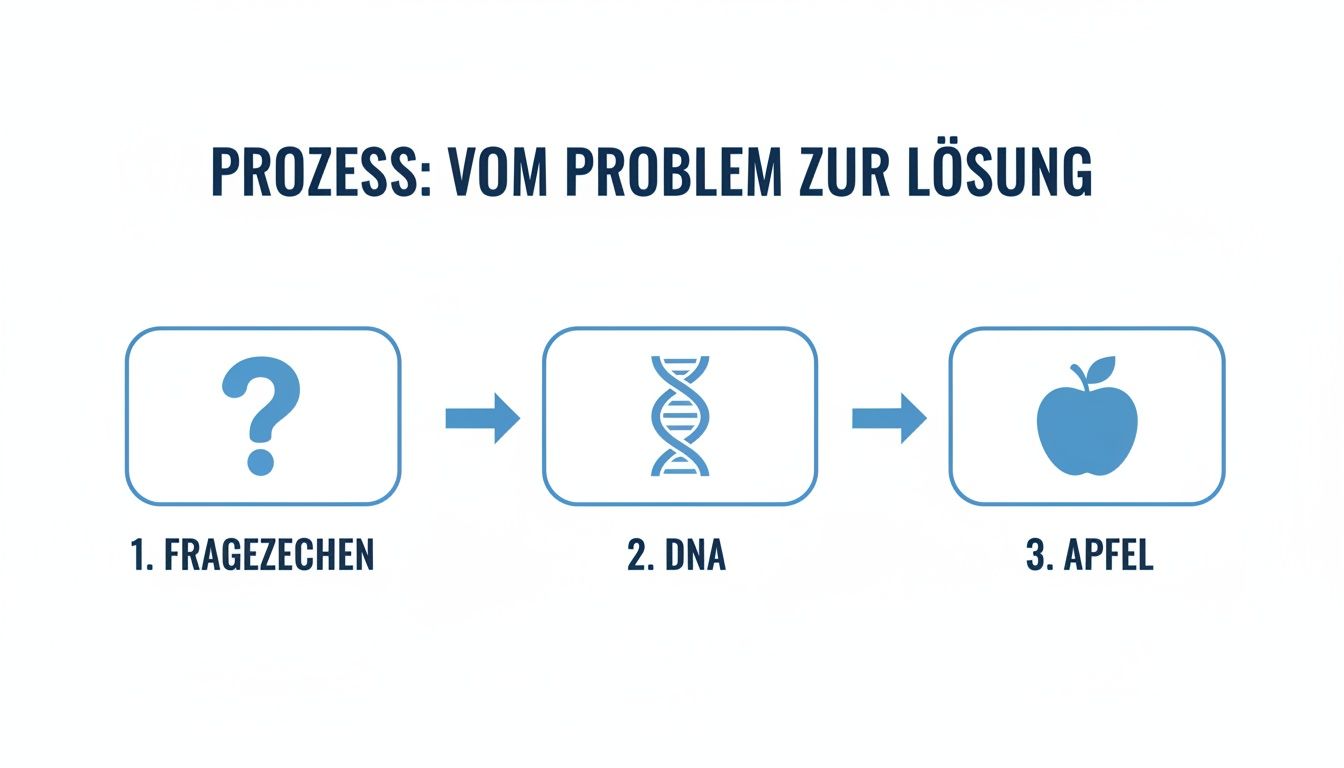
The graphic clearly illustrates how a vague question of "why" becomes a very concrete answer through precise DNA analysis – in the form of the right foods for you.
In the end, you won't be holding a cryptic lab report, but a clear and concise one. This report explains exactly what your genetic predispositions mean and provides practical recommendations for your everyday life. This makes the complex topic of genetics tangible, and you gain a scientifically sound foundation for specifically optimizing your diet – based on the unique blueprint that lies within you.
What users report about their results
The whole theory behind a DNA nutrition test sounds quite exciting, but the really crucial question is: What do these findings mean in real life? To find out, we'll now delve deep into the world of authentic DNA nutrition test experiences . This isn't about empty marketing promises, but about real stories that show the potential, but also the limitations, of the results.
The moment the results report arrives is a real turning point for many. Suddenly, you're holding a kind of personal roadmap in your hands, one that can unravel years of confusion and frustration. It's a liberating feeling to realize that it wasn't a lack of discipline, but often a discrepancy between common nutritional myths and your own unique genetic predisposition. Many users report experiencing precisely this "aha moment."

Success stories that inspire courage
The range of experiences is vast, yet certain patterns recur. Anna and Markus's stories are two typical examples that represent many positive responses and demonstrate how diverse the insights gained can be.
Take Anna, for example: For years, she was a staunch advocate of low-carb diets. Although she strictly adhered to the rules, she often felt sluggish, and the scale remained stagnant. Her DNA test brought a surprising turnaround. Her genes showed that her body could process carbohydrates, especially those from whole grains, very efficiently. Fats, on the other hand, were not the optimal energy source for her. With this knowledge, she changed her diet, consciously incorporating complex carbohydrates and reducing her fat intake. The result was astonishing: more energy in her daily life and weight loss that finally became sustainable.
Or take Markus, who constantly battled inexplicable fatigue. Doctors couldn't find a clear cause. His genetic test revealed a predisposition for inefficient vitamin B12 metabolism. Although his diet provided sufficient B12 on paper, his body couldn't utilize it optimally. A subsequent blood test from mybody®x confirmed the suspicion of a latent deficiency. With targeted dietary adjustments and the right supplementation, he regained his energy.
These DNA test nutrition experiences make it clear that it often comes down to small but crucial adjustments.
The most valuable insight from a DNA test is often not what you did completely wrong, but why certain "healthy" strategies simply didn't work for you personally. It's the liberation from guesswork and the turn towards knowledge.
Overview of the positive effects
Many users' reports can often be summarized in a few key points that go far beyond simply losing weight:
- Increased energy levels: The disappearance of the dreaded afternoon slump is one of the most frequently cited benefits. A stable blood sugar level, tailored to one's individual metabolic type, directly impacts daily performance.
- Improved body awareness: Many report that they can suddenly interpret their body's signals – such as hunger, satiety, and discomfort – much better. They develop a new, intuitive understanding of what is good for them.
- Targeted weight loss: Instead of frustrating diet odysseys, the results allow for a targeted strategy. Knowing whether your body responds better to a reduction in fats or carbohydrates makes the process more efficient and motivating.
An honest look at critical voices
As inspiring as these success stories are, it's equally important to take an honest look at the other side. Not every DNA test nutrition experience is a pure success story. Some users are disappointed with the results because they find the recommendations too general.
Some criticize the advice – more vegetables, less sugar – saying it's not really new. This is often a misunderstanding: the test doesn't offer any secret magic formulas, but rather uses genetic data to confirm why these basics are particularly important for your own body. However, expectations are crucial. A test is a tool, not a magic pill. It still requires personal initiative and a willingness to change habits. If you'd like to read more about what other customers have to say, you can find a collection of authentic customer testimonials directly at mybody®x .
Ultimately, the spectrum of experiences offers a realistic perspective: For many, the DNA test is the decisive catalyst for lasting change, while for others it represents interesting but not life-changing information. The true value lies in what you do with the results.
What science says about DNA diets
The market for genetic tests is booming, and countless positive testimonials about DNA tests and nutrition are circulating. However, while marketing often promises quick results, a sober look at the scientific perspective is worthwhile. Many researchers and consumer advocates are considerably more cautious. This critical view helps you to realistically assess test results and not consider them the sole, irrefutable truth.
The main criticism from many experts focuses on a simple but crucial point: Large, controlled studies proving a clear advantage are still lacking. Scientifically, it has not yet been definitively proven that a gene-based diet works significantly better than traditional, well-founded nutritional advice. Your success depends on so many different factors that focusing solely on genetics often falls short.
The Stanford study as an important example
One of the best-known and most frequently cited studies on this topic is the "DIETFITS" study from the renowned Stanford University. Over 600 overweight participants were followed for a full year. Half of them received a diet that was genetically suited to them (either low-carb or low-fat). The other half received a diet that was not genetically suited to their genes.
The result was surprising, almost sobering, for many: In the end, there was hardly any significant difference in weight loss between the groups. Those whose diet was "genetically perfect" lost no more weight than the others. This study makes a crucial point clear: Your genes are just one small piece of the puzzle in the bigger picture.
The scientific community agrees: The relationship between genes, diet, and weight is extremely complex. Thousands of genes work together and interact with your lifestyle, sleep, stress levels, and exercise. A test that analyzes only a handful of genetic markers can never fully capture this complex interplay.
What consumer advocates advise
Consumer organizations also frequently urge caution. The North Rhine-Westphalia Consumer Center, for example, has clearly concluded that no evidence-based, randomized, and controlled studies have yet proven the effectiveness of DNA tests in nutritional counseling. Such studies are considered the gold standard in science for definitively demonstrating the effectiveness of a method. If you would like to delve deeper into this critical assessment, you can learn more about the Consumer Center's evaluation of DNA tests .
However, this doesn't mean that DNA tests are completely useless. They can provide valuable insights and prove to be a powerful psychological motivator. Many users report that knowing their genetic predispositions has helped them to be more mindful of their diet and to stay on track.
Understanding the role of nutrigenetics
The science that studies the fascinating interplay between genes and nutrition is called nutrigenetics . It's an incredibly exciting and rapidly growing field. While its direct impact on weight loss is still debated, nutrigenetics already provides valuable insights into highly individual nutritional needs and predispositions to certain intolerances.
Here are some areas where the scientific basis is already much more solid:
- Lactose intolerance: The genetic predisposition for it (via the LCT gene) is very well documented scientifically.
- Caffeine metabolism: The CYP1A2 gene determines how quickly your body breaks down caffeine. This explains why some people can't fall asleep after a late-night coffee.
- Vitamin requirements: Certain gene variants (e.g., MTHFR) can actually influence the need for folic acid (vitamin B9).
A DNA test isn't a miracle cure, but it can be a useful tool for getting to know your body better. If you'd like to learn more about the basics, our article explains what nutrigenetics is and how it influences our lives . The scientific perspective helps you see the results for what they are: valuable additional information that, together with your lifestyle and how you feel about your body, can pave the way to greater well-being.
Here's how to find a provider you can trust.
If, after careful consideration, you've decided to take a DNA test, you're faced with the next major hurdle: choosing the right provider. The market for genetic tests can seem confusing at first glance, and the differences in quality are sometimes enormous. Your experience with a DNA test and nutrition depends crucially on whom you entrust with your sensitive data.
This section is your practical compass for making a safe and well-informed decision. We'll show you what to look out for to distinguish reputable offers from less trustworthy ones.

Data privacy first
Your genetic data is among the most sensitive information we have about you. It's essentially your biological fingerprint. That's why data privacy should be your top priority. Before you order a test, ask yourself these critical questions:
- Where is my data stored? Reputable providers for the European market store your data on servers within the EU . This is an important detail, as it is the only way they comply with the strict rules of the General Data Protection Regulation ( GDPR ).
- Who has access to my sample and my data? The privacy policy should clearly and understandably explain how your data is used. Above all, it must be crystal clear that it will not be passed on to third parties (such as pharmaceutical companies or insurance companies) without your explicit consent.
- Is the data transfer secure? Look for an encrypted connection (recognizable by the "https://" in the web address) and high security standards such as ISO 27001 certification for information security.
A reputable provider like mybody®x transparently discloses its data protection practices. Your data is handled strictly in accordance with GDPR guidelines and analyzed in certified German laboratories to ensure maximum security.
Check laboratory quality and certifications
The accuracy of your results depends directly on the quality of the laboratory analyzing your sample. A layperson can hardly assess this, but there is one clear quality indicator you can look for: certification.
Look out for ISO certification , such as ISO 15189 or ISO 9001. These standards ensure that the laboratory operates according to internationally recognized quality standards, is subject to regular audits, and delivers reliable, reproducible results. Suppliers who work with such certified laboratories usually highlight this prominently on their website – it's a real selling point.
Compare costs and services transparently
The price range for DNA nutrition tests is wide. The costs for tests like the DNA SLIM TEST from Lykon for €189 or the MetaCheck Gene Diet for €350 demonstrate how different the offerings can be. However, price alone says nothing about quality. It's important that you understand what you're getting for your money.
Pay close attention to the fine print. In Germany, there's the Genetic Diagnostics Act (GenDG), which sets strict rules. Medical genetic tests may only be performed by doctors. While tests for metabolism or ancestry aren't covered by this law, the risk of misinterpretation remains. You can read more about the background and warnings from professional associations in this Spiegel article about the DNA diet .
Pay attention to the following points:
- One-time costs vs. subscription traps: Is the price a one-time payment for the test and the report? Or are there hidden follow-up costs for an app, coaching, or premium reports?
- Scope of the analysis: How many gene variants (SNPs) are analyzed? Which areas (metabolism, nutrients, intolerances) does the test cover? A cheaper test that only checks a few genes is often less informative.
- Additional support: Does the provider offer personal consultation or coaching to help you interpret the results? This can be a huge advantage, as the data alone is often not enough.
Choosing the right provider is the most important step to ensure your DNA test nutrition experience is positive and insightful. Take the time to carefully examine the offers – it's an investment in your health and data security.
Your conclusion: Tools instead of miracle cures
After this in-depth journey through the world of genetic testing, it's time for an honest conclusion. The most important takeaway is this: A DNA test is not a miracle cure that will magically give you your dream figure overnight or replace healthy habits. Instead, see it as a fascinating and very personal tool in your health toolbox – but just one of many.
Your experience with a DNA test and nutrition depends crucially on your expectations. The test doesn't offer a magic shortcut, but rather valuable insights. It provides a scientifically sound foundation for a more conscious approach to your body and your diet. The recommendations can be incredibly motivating because they come directly from your own biological code.
Keeping the big picture in mind
However, it's absolutely crucial to understand that your genes only tell part of the story. As we've seen, the scientific evidence for significantly greater weight loss success through a genetically engineered diet alone is still quite weak. Your lifestyle has at least as much, if not more, an impact on your well-being and your weight.
Remember the most important pillars of your health:
- Exercise: Regular physical activity boosts your metabolism and strengthens your cardiovascular system.
- Sleep: Sufficient and restful sleep is fundamental for your hormonal balance and regeneration.
- Stress management: Chronic stress can have a massively negative impact on your metabolism and eating habits.
- Intuition: Learn to listen to your body's signals again – hunger, satiety, and discomfort.
All these factors interact in complex ways with your genetic predispositions. While a DNA test can show you which fuel is best suited for your engine, you still have to drive the car yourself – and keep an eye on the oil level and tire pressure.
A DNA test is like a detailed map of your body. It shows you possible paths and potential obstacles. But you have to embark on the journey yourself, with mindfulness and a willingness to listen to your body's signals.
Our final recommendation for you
Our final recommendation is therefore clear: Use the results of a DNA test as valuable inspiration and a starting point for conscious change. It can help you understand years of frustration and finally recognize why certain diets may never have worked for you. If you're looking for concrete guidance, you'll find tips in our guide on how to optimize your diet after receiving your test results .
However, continue to rely on the proven principles of a balanced diet with plenty of fresh vegetables, high-quality proteins, and healthy fats. Don't view the results as a rigid set of rules, but rather as guidelines. They will help you find your own individual path to greater well-being. The test provides you with the knowledge – you create the change.
The most important questions about DNA nutrition tests, summarized.
After all the insights into the science, the possibilities, and personal experiences, a few very specific questions often remain. No problem! Here I've compiled the most frequently asked questions and give you clear, honest answers that repeatedly arise in connection with a DNA test and nutrition .
How secure is my genetic data with these providers?
Quite frankly, this is the most important question of all. Your genetic data is extremely sensitive, and its protection must be a top priority. Reputable providers operating in Germany or Europe are subject to the strict General Data Protection Regulation (GDPR). This isn't marketing hype; it's a hard-line law that grants you, as a consumer, important rights.
Specifically, this means: Your data may only be processed with your explicit consent and must be stored with absolute security. When choosing a provider, pay attention to transparency: Where are the servers located? Ideally, within the EU. Laboratory certifications according to ISO standards are another indicator of quality. Take the time to read the privacy policy before ordering. This is for your security.
Can I lose weight with a DNA test?
No, and anyone who promises you that is unreliable. Such a guarantee doesn't exist. As we saw in the scientific section, large studies have so far failed to demonstrate a clear advantage in weight loss through purely gene-based diets compared to traditional methods. Your lifestyle, exercise, and habits are and will remain the decisive factors.
The real value of the test lies elsewhere: it can be an incredibly powerful motivator. Many users report that the personal insights help them to implement their diet much more consciously and consistently. Understanding why a particular strategy might be better for your body greatly increases your perseverance.
Are the test results valid for a lifetime?
Yes, your basic genetic makeup – that is, your raw DNA data – doesn't change. It's essentially set in stone. What is constantly evolving, however, is science and our understanding of what individual gene variants mean for us. Nutrigenetics is an incredibly dynamic field of research.
Good providers know this. They regularly update their analyses and recommendations based on the latest scientific findings. So, you might well receive a notification after a few months or years because new studies have become relevant to your genetic profile. The underlying data remains the same, but the interpretation becomes increasingly refined.
Imagine your genetics as a map. It shows you possible paths and potentials. Science is the compass that helps us to read this map better and better.
Can a DNA test replace professional nutritional advice?
Absolutely not. A DNA test is an exciting and valuable addition, but it can never replace the holistic perspective of a trained expert. A good nutritionist or doctor will always consider your entire life.
- Your personal likes and dislikes when it comes to food
- Pre-existing medical conditions, allergies, or medications
- Your current health status, including blood test results
- Your daily routine, your stress level, and how much you move around.
However, the test results can provide a fantastic basis for professional advice. They enable the professional to tailor recommendations even more precisely to your individual predisposition and to develop the best possible strategy together with you.
Are you ready to stop the guesswork and find out what your body really needs? mybody®x offers scientifically sound self-tests with the highest standards for data protection and laboratory quality. Discover your personal path to greater well-being and start your journey now with one of our tests at https://mybody-x.com .

Share:
What is the yo-yo effect? Identify the causes and maintain your weight permanently.
Determine your metabolism: Find out what your body really needs