

Understanding Antioxidants: Your Guide to Healthy Eating
TL;DR:
- Antioxidants protect cells from harmful free radicals, but isolated supplements can be harmful in certain situations. Compared with supplements, a varied, colorful diet of real foods offers better protective effects and avoids risks such as overdosing. Personalized analyses help identify individual nutrient deficiencies and target measures to improve cellular health.
Antioxidants are considered essential for cellular health, yet hardly anyone knows that isolated antioxidants from drugstores can, in certain situations, do more harm than good. Anyone who truly understands antioxidants quickly realizes that it is not about individual pills, but about the complex interaction of hundreds of plant compounds in real foods. This article explains how antioxidants work in the body, which foods are the best sources, what risks supplements pose, and how to incorporate an antioxidant-rich diet into your everyday life in a practical and personalized way.
Table of contents
- What are antioxidants, and how do they work in the body?
- The best foods for an antioxidant-rich diet
- Food vs. dietary supplements: opportunities and risks
- Practical tips for a personalized antioxidant-rich diet
- Why many people still underestimate the true value of antioxidants
- Mybody-x: Your partner for personalized nutrition and health
- Frequently asked questions about antioxidants
Key findings
| Point | Details |
|---|---|
| Choose antioxidant-rich foods | A plant-based, colorful diet provides synergistic antioxidants that protect your cells. |
| Use supplements with caution | Isolated antioxidants can pose risks and should only be used after consulting a doctor. |
| Personalization increases effectiveness | Personalized dietary recommendations based on tests help optimize your antioxidant protection. |
| An anti-inflammatory diet works | More vegetables, legumes, and healthy fats reduce inflammation and promote health. |
| Foods work better together | Antioxidants in food work best through the interaction of different compounds. |
What are antioxidants, and how do they work in the body?
Antioxidants are molecules that neutralize so-called free radicals. Free radicals are aggressive oxygen compounds that arise in the body during completely normal metabolic processes, but also as a result of environmental toxins, UV radiation, stress, or smoking. The problem is that these molecules are chemically unstable and attack healthy cell structures.
Antioxidants neutralize aggressive oxygen compounds that can damage cells. Specifically, they protect three critical areas:
- DNA: Damage to the cell nucleus that could promote mutations in the long term is reduced.
- Proteins: Enzymes and structural proteins remain functional and are not oxidized.
- Cell membranes: Fat-containing membranes are protected from so-called lipid peroxidation, a process in which fats become rancid and make the cell permeable.
The effects of antioxidants in the body are not a solo performance. Vitamin C, vitamin E, carotenoids, polyphenols, glutathione, and selenium work like a well-coordinated team. When vitamin E neutralizes a free radical and is itself oxidized in the process, vitamin C can regenerate the vitamin E. This is the core of antioxidant network theory: No single substance is strong enough; they all work together.
Antioxidants and free radicals are always in a dynamic balance. Not all free radicals are harmful: Your immune system needs them in low concentrations to kill bacteria. Oxidative stress only occurs when the balance shifts and free radicals become excessive. This is precisely where the antioxidant effect of your skin comes into play, as it faces daily pressure as the first barrier against external influences.
Now that you know why antioxidants are essential, let’s take a look at which foods contain them.
The best foods for an antioxidant-rich diet
When it comes to antioxidant-rich foods, the most important rule is: color is key. The pigments that give fruits and vegetables their vibrant colors are, in most cases, antioxidants themselves or accompany them as cofactors.
Blueberries, plums, kiwis, and broccoli are valuable sources of antioxidants. There are also other foods that are often underestimated:
- Tomato paste (cooked): Provides significantly more bioavailable lycopene than raw tomatoes because heat breaks down the cell walls.
- Walnuts: Contain ellagic acid and polyphenols, which are converted in the body into urolithins, a class of antioxidants directly associated with cellular cleansing (autophagy).
- Black tea and green tea: Rich sources of catechins and theaflavins, which have anti-inflammatory effects.
- Legumes: Lentils and beans provide polyphenols as well as fiber, which supports the microbiome, which in turn produces antioxidant compounds itself.
Antioxidants in fruits and vegetables are also not distributed evenly. In apples, most polyphenols are found directly in the peel. Peeling them can reduce their antioxidant capacity by up to 70 percent. The same applies to onions: the outermost layers have the highest concentration of quercetin.
100 g of strawberries provide more than 60 percent of the daily requirement for vitamin C, while broccoli provides even more. This makes these foods true everyday heroes that eliminate the need for expensive supplements.

Pro tip: Always combine fat-soluble antioxidants such as lycopene or beta-carotene with a healthy source of fat. A drizzle of olive oil on tomatoes or a handful of nuts alongside carrots can increase the absorption of these compounds in the gut many times over.
Overview: Antioxidants in important foods
| Food | Key antioxidants | Special feature |
|---|---|---|
| Blueberries | Anthocyanins, vitamin C | Very high ORAC values |
| Broccoli | Vitamin C, sulforaphane | Sulforaphane activates the body’s own antioxidants |
| Tomato paste | Lycopene | Heat increases bioavailability |
| Walnuts | Ellagic acid, polyphenols | Promote autophagy through urolithins |
| Green tea | Catechins, EGCG | One of the strongest sources of polyphenols |
| Lentils | Polyphenols, flavonoids | Combined with fiber for microbiome health |
| Spinach | Lutein, zeaxanthin | Protects the eyes from oxidative stress |
Read more about selecting and preparing antioxidant-rich foods to get the most out of your daily meal.
Now that you know the most important foods, we’ll compare the effects of foods with those of isolated supplements.
Food vs. dietary supplements: opportunities and risks
This section is the most important in the entire article, because this is where sound nutrition knowledge is separated from dangerous half-knowledge. Antioxidants in capsule form may sound temptingly simple. The reality is more complicated.
The central problem with isolated preparations is that what works as a complex system in food is removed from its context. High-dose beta-carotene increases the risk of lung cancer in smokers by up to 28 percent. This was the result of two large clinical studies that originally aimed to prove the opposite. Instead of protection, there was more cancer. The reason is that high doses of beta-carotene can be broken down in the body into vitamin A-like compounds that, in already damaged lung tissue, can stimulate cell growth uncontrollably.
Another specific risk: isolated antioxidants can reduce the effectiveness of chemotherapy by up to 30 percent. Cancer cells also use oxidative stress as a target during chemotherapy. Reducing it may protect not only healthy cells but possibly also tumor cells.
Comparison: Food vs. dietary supplements
| Criterion | Antioxidants from food | Isolated dietary supplements |
|---|---|---|
| Synergistic effect | High, with many compounds working together | Low, with a single active compound in isolation |
| Risk of overdose | Very low | Relevant for fat-soluble vitamins |
| interactions | No known negative | Can affect medications and therapies |
| Bioavailability | Often high due to natural accompanying compounds | Variable, often lower than assumed |
| Flexibility | Can be adjusted daily to meet individual needs | Fixed dosage without individual adjustment |
| Recommendation | Suitable for everyone | Only on medical advice |
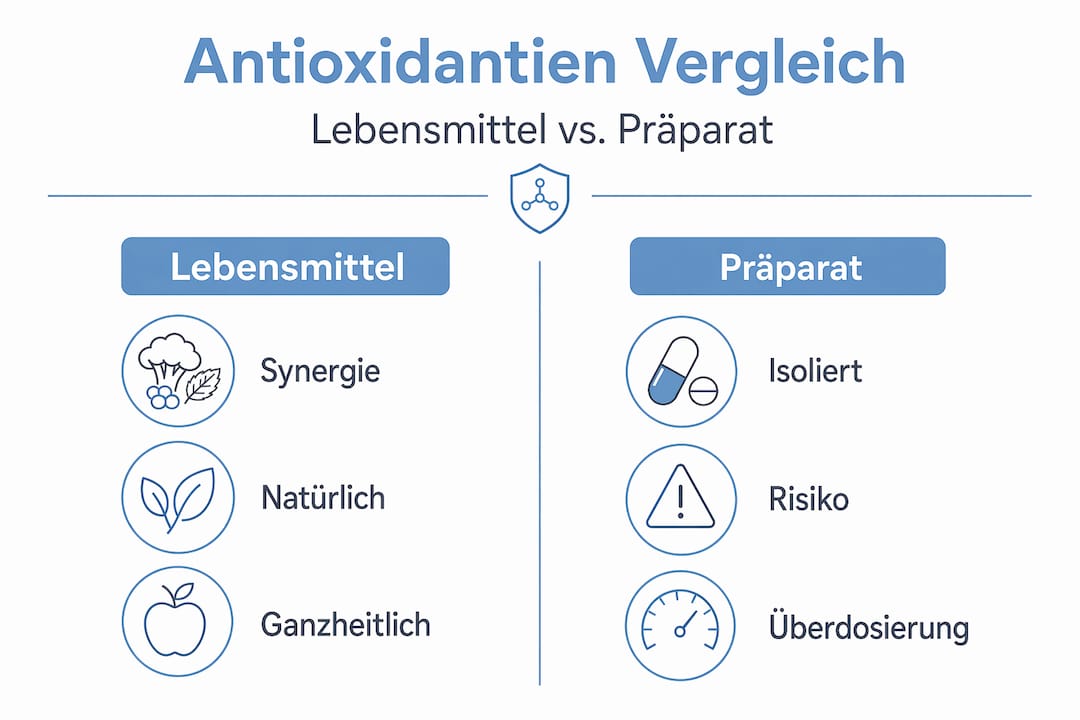
When can supplements nevertheless be useful? In cases of a confirmed deficiency—for example, a diagnosed vitamin D or selenium deficiency—targeted supplementation may be beneficial. But even then, the following applies: Have interactions with medications checked beforehand, especially when taking blood pressure medications or blood thinners or undergoing cancer treatment.
Pro tip: Instead of reaching for the shelf of expensive antioxidant complexes, invest the same money in a wider selection of fresh, colorful foods. You get not just one active compound, but thousands in the right proportions.
- Smokers should avoid isolated beta-carotene.
- Cancer patients should take antioxidant supplements only in consultation with their treatment team.
- Pregnant women need specific amounts of certain nutrients, for which individual medical advice is indispensable.
- People taking blood thinners should avoid very high doses of vitamin E.
After this overview of the opportunities and risks, you will learn how to improve your diet with a few simple steps to make it more antioxidant-rich.
Practical tips for a personalized antioxidant-rich diet
Knowledge is the first step. But what exactly will you do differently tomorrow morning? That is the crucial question. Good intentions without structure lead to the same shopping habits as always.
Double the amount of vegetables per meal, swap butter for olive oil, and add legumes to noticeably increase the antioxidant effect of your diet. This sounds simple but is effective because these three measures simultaneously increase the intake of polyphenols, vitamin E, and fiber. The latter, in turn, support a healthy microbiome that itself produces anti-inflammatory metabolites.
Here are specific steps you can take right away:
- Start with color on your plate. Plan each main meal to include at least three different colors of vegetables or fruit. Each color represents a different group of antioxidants.
- Replace saturated fats. Swap butter for extra-virgin olive oil when frying. It provides polyphenols and improves the absorption of fat-soluble antioxidants.
- Eat legumes at least three times a week. Lentils, chickpeas, and beans are affordable, filling, and provide a broad spectrum of polyphenols.
- Choose whole grains instead of white flour. The bran contains most of the grain’s antioxidants. Products made with white flour have lost this protective effect.
- Cook tomatoes. Tomato sauce, tomato paste, and roasted cherry tomatoes provide more lycopene than raw salad tomatoes.
- Drink herbal tea or green tea every day. Just two cups of green tea provide a significant portion of the daily polyphenol requirement.
Expert tip: Learn about the proper use of vitamin C before reaching for a pill. Many people take too much at once, even though the body can absorb only limited amounts per meal. Better: smaller amounts spread throughout the day from different sources.
The truly underestimated lever is personalization. Not everyone responds to the same antioxidants in the same way. Genetic variants influence how well you convert, for example, carotenoids into vitamin A or how efficiently your body produces glutathione itself. A healthy eating checklist can help you structure your starting point and set your initial priorities.
DNA tests and microbiome analyses can now show which nutrients you absorb less effectively or use up more quickly. This makes it possible to prioritize the right foods, rather than consuming everything indiscriminately.
Let us now summarize how you can use these findings for your health.
Why many people still underestimate the true value of antioxidants
The honest answer is: because the market creates the wrong incentives. Pills can be marketed; broccoli cannot. Over the past decades, the supplement industry has linked antioxidants so strongly with the image of health that many people instinctively reach for a capsule instead of picking up a fork.
This is not an attack on supplements in general. It is an observation reflected in studies. Antioxidants work best in combination with various plant compounds, not in isolation. Science has made this point clear. And yet sales of individual supplements continue to rise.
What really helps is appreciating complexity. A blueberry contains more than 25 different anthocyanins, along with vitamin C, fiber, folic acid, and trace elements. No supplement in the world can replicate this spectrum. The body is not a laboratory that prefers pure substances. It is designed for complexity.
Another underestimated factor is the microbiome. Many polyphenols from antioxidant-rich foods are barely absorbed in the small intestine and end up in the colon, where gut bacteria convert them into highly effective metabolites. This means that people with a healthy microbiome get more out of the same meal. Those who neglect it lose a significant portion of the antioxidant potential.
Personalized perspective is the next level of maturity. General recommendations like “eat more berries” are a start. But anyone who knows that they are genetically less efficient at processing vitamin E or that their microbiome does not process certain polyphenols well can take more targeted action. That is the difference between good intentions and real impact.
Mybody-x: Your partner for personalized nutrition and health
You now know how antioxidants work, which foods really matter, and why generic supplements are often not the answer. The next step is to apply this knowledge to your personal biology. At personalized health with mybody-x, you will find DNA tests and microbiome analyses that show you exactly how your body processes nutrients, which antioxidant defense functions you may be genetically less able to develop, and how you can specifically adapt your diet. All tests can conveniently be performed at home, are ISO-certified, and provide scientifically validated reports with specific dietary recommendations. More than 11,300 satisfied customers show that personalized health analyses are not a thing of the future but are already effective and accessible today.
Frequently asked questions about antioxidants
Can I simply take antioxidants as dietary supplements?
Isolated dietary supplements are usually less effective and can be harmful in certain situations: High doses of beta-carotene increase the risk of lung cancer in smokers. Consulting a doctor before taking them is always advisable.
Which foods contain the most antioxidants?
Blueberries, plums, and broccoli are among the richest sources. Tomato paste is particularly effective due to lycopene’s improved bioavailability, as heat significantly enhances absorption.
How can I recognize an antioxidant overdose?
Symptoms of an overdose are rare with a natural diet, but realistic with supplements: High doses of vitamin E increase the risk of prostate cancer and stroke. Therefore, any high-dose intake should be medically supervised.
How can I personally optimize my diet for antioxidant protection?
More vegetables, legumes, and healthy fats are a good start. Personalized nutrition with DNA tests can reveal which nutrients you individually absorb less efficiently or use up more quickly, thereby specifically improving antioxidant protection.



Share now:
Bifidobacteria: Your Key to Gut Health
Your microbiome test kit: A guide to gut health in 2026