
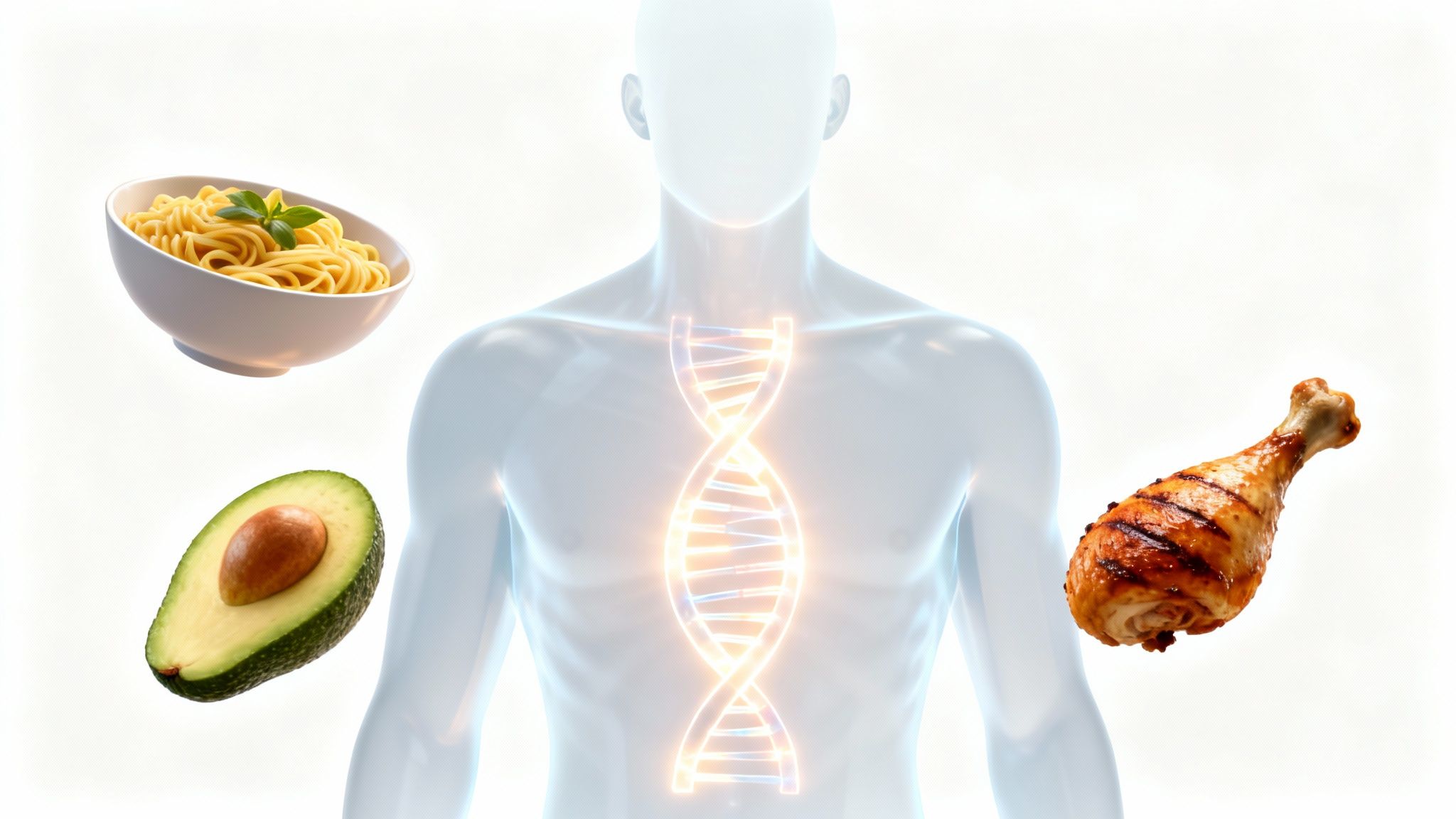
Understanding metabolic types: Find out how you really lose weight
Have you tried countless diets, but long-term success just won’t materialize? You’re not alone. The reason is often not a lack of discipline, but a simple truth: The one perfect diet for everyone is a myth. Your body is unique—and that is exactly what most standard plans ignore.
Why your body needs a personalized roadmap
Imagine your body as a finely tuned engine. You would never put the wrong fuel in an expensive car and expect it to perform at its best, would you? The same applies to your metabolism. Not everyone processes nutrients in the same way. What means pure energy for one person can cause fatigue and cravings for you.
This is often where the frustration with rigid eating plans begins. They simply fail to address your body’s unique needs. What’s missing is knowledge of your personal metabolic type.

The limitations of one-size-fits-all diet advice
You’ve probably experienced this: A friend raves about their low-carb diet, while a colleague is celebrating great results with a low-fat diet. You try both, but little changes for you—or the opposite even happens. This is no coincidence; it’s pure biochemistry.
Your genetic blueprint determines how efficiently your body:
- Converts carbohydrates into quick energy or instead stores them as fat.
- Taps into fats as its primary energy source.
- Uses proteins to build muscle and stay full for longer.
This article is your personal guide to finally understanding your body properly. We’ll show you how to find the nutrition strategy that truly suits you and delivers sustainable results.
The link between weight and metabolism in Germany
The importance of this topic is also reflected in current health statistics. The number of people with obesity, which is closely linked to individual metabolic types, has changed significantly in Germany over the past two decades. According to the Robert Koch Institute, obesity prevalence rose from 12.2% in 2003 to 19.7% in 2023. These figures make one thing clear: General recommendations are often simply not enough to do justice to our biological diversity.
Knowing your metabolic type is not a trend, but the scientific foundation for your health. It ends the guesswork and gives you back control.
Instead of continuing to feel in the dark, you can find out which fuel is best for your engine. A personalized diet is not a luxury but the logical next step for anyone who takes their health goals seriously.
What Your Metabolism Really Is
When we hear the word “metabolism,” most people immediately think of losing weight or body types—whether someone is naturally more wiry, builds muscle easily, or tends toward a curvier shape. But that is only a small part of the whole story.
Your metabolism, also known as the metabolic system, is much more than that. It is the sum of all the biochemical processes that continuously take place in every single cell of your body. Think of it as a huge, invisible power plant that keeps you alive.
Everything you eat and drink is broken down and converted in this power plant and made available as energy. It is a highly complex factory where construction, repairs, and energy production are constantly taking place—so you can think, breathe, and move.
The Three Main Energy Sources in Your Body
Your body gets its energy mainly from three major nutrient groups, the macronutrients. Each has its own specific role, and how efficiently your body uses them ultimately determines your personal metabolic type.
- Carbohydrates: They are the quick starter. Your body converts them into glucose in a flash, providing immediately available energy for your brain and muscles. When you eat a banana, this energy is practically ready at the push of a button.
- Fats: They are your long-distance power plant. Fats provide more than twice as much energy as carbohydrates, but converting them takes a little longer. They are also essential for hormone production and protecting your organs.
- Proteins: They are primarily the building blocks of the body. Your body uses them to build muscles, skin, and enzymes. Only in absolute emergencies does it turn to proteins as a direct source of energy.
The key point is this: Not everyone processes these three energy sources equally well. Your genetic blueprint determines whether your internal “factory” is specialized more for the rapid burning of carbohydrates or the slow but steady production of energy from fats.
Why the Same Meal Has Such Different Effects
This individual predisposition is exactly why you and a friend might react completely differently to the same food. Have you ever experienced feeling totally energized after a large portion of pasta, while your friend crashes afterward and would rather lie down?
Or perhaps your partner can easily tolerate high-fat meals such as cheese and avocado, while afterward you simply feel heavy and sluggish. This is no coincidence, nor does it have anything to do with willpower. It is a direct signal from your body showing you which “fuel” works best for you.
Your body constantly sends you signals about what it needs. Understanding your metabolic type helps you finally interpret these signals correctly and provide it with the right nourishment.
This fundamental understanding of your unique biochemistry is the very first and most important step. Before starting a new diet or overhauling your nutrition plan, you should know how your internal power plant actually works. Only then can you make decisions that truly suit you and sustainably move you toward your goal, instead of jumping from one failed attempt to the next. The answer does not lie in blanket rules, but in your DNA.
The classic models of metabolic types
If you want to understand how your own body works, sooner or later you will come across models that classify us into so-called metabolic types. These approaches are often the first attempt to bring some order to the complex world of nutrition. They can provide useful initial guidance, but it is important to understand how they work—and where their limitations lie.
Most of these classic models are based on observations and experience, not always on solid scientific evidence. They attempt to make a rough classification based on external characteristics, personal preferences, or reactions to certain foods. Let’s take a closer look at the best-known concepts.
Classification by macronutrients
The most widespread model classifies people according to which of the three main nutrients—their body can process best: carbohydrates, proteins, or fats. It is an attempt to provide a simple answer to the question: “What should I eat to feel good and maintain my weight?”
This generally results in three categories:
- The carbohydrate type: People of this type are supposed to convert carbohydrates into energy extremely efficiently. A diet rich in whole grains, vegetables, and fruit allegedly gives them consistent energy, while too much fat and protein tends to make them sluggish.
- The protein type: This type is supposed to process proteins and fats significantly better than carbohydrates. A protein-rich diet with meat, fish, and healthy fats provides long-lasting satiety. A carbohydrate-heavy meal, on the other hand, could quickly lead to renewed cravings.
- The mixed type: As the name suggests, this type falls somewhere in between. It is thought to benefit from a balanced mix of all three macronutrients and to react less extremely to certain foods.
The following table provides a quick overview of the characteristics and recommendations of these simplified models.
Comparison of common metabolic type models
This table compares the characteristics and dietary recommendations of the best-known, often simplified metabolic type classifications.
| Characteristic | Carbohydrate type | Protein type | Mixed type |
|---|---|---|---|
| Best source of energy | Complex carbohydrates | Proteins & fats | Balanced mix |
| Typical appetite | Often smaller, regular hunger | Strong appetite, often for savory foods | Moderate, balanced |
| Response to sweets | Tolerated well in moderation | Quickly leads to cravings | Generally well tolerated |
| Optimal meal | Large salad, whole-grain pasta, lean meat | Steak with vegetables, fish with avocado | Chicken with rice and vegetables |
| Tendency toward | Fatigue when consuming too few carbohydrates | Energy dips after carbohydrate-rich meals | Few extreme reactions |
It is important to note that these classifications are substantial simplifications and are intended more as food for thought than as rigid rules.
This infographic clearly shows how nutrients travel from the cell throughout the body and how central this process is to our energy.
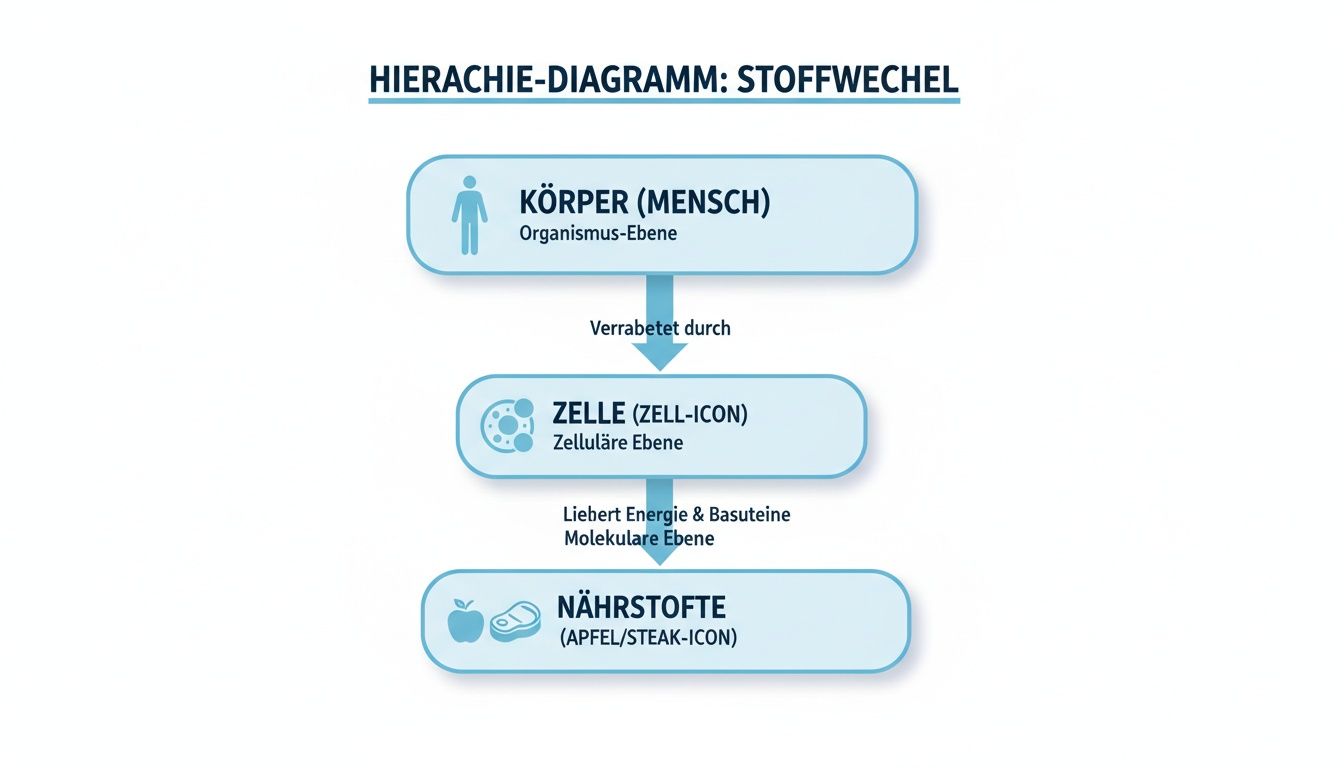
It is clear: Metabolism begins at the cellular level. The way we process nutrients affects our entire organism.
The role of the autonomic nervous system
Another, somewhat more complex approach brings the autonomic nervous system (ANS) into the picture. This system controls all our unconscious bodily functions, such as heartbeat and digestion. It consists of two opposing branches: the sympathetic nervous system (responsible for “fight or flight”) and the parasympathetic nervous system (responsible for “rest and digest”).
The theory behind this: In some people, one of the two branches is dominant, which directly affects metabolism.
- Sympathetic-dominant types: They are said to have a faster metabolism. They are thought to prefer lighter foods such as chicken, fish, and plenty of vegetables, as heavy meals could quickly overwhelm their system.
- Parasympathetic-dominant types: These people allegedly have a slower metabolism and more robust digestion. They are thought to benefit from richer, protein- and fat-rich foods to get their metabolism going.
These models are like a rough map: They point you in a general direction but do not show the exact, personal route. They are based more on generalizations than on your individual biology.
The limitations of classic models
As helpful as these categories may be for initial guidance, they have one crucial drawback: They are often far too generalized and are not clearly supported by scientific evidence. Many of these classifications are based on questionnaires, personal preferences, or outward appearance. But your metabolism is far more complex and cannot be so easily placed into one of three categories.
The reality is that most people are a mix of different characteristics. Your actual needs can change depending on your stage of life, stress level, or amount of exercise. Above all, however, these models ignore the most important factor of all: your unique genetic predisposition.
Interestingly, research shows that our basal metabolic rate is much more stable than is often assumed. A large meta-study using data from 6,421 people found that metabolism remains remarkably constant from puberty to retirement age and only begins to decline noticeably at around age 60. This underscores how fundamental the genetic basis of your metabolic type is—because it remains with you for life. You can learn more about these fascinating findings about metabolism on deutschlandfunk.de.
So classic models only scratch the surface. To truly understand which “fuel” is best for your engine, we need to look deeper—directly into your genetic blueprint.
How a DNA analysis deciphers your metabolism
We have seen where the classic models for determining metabolic types reach their limits. Now let’s go one step deeper—directly into the world of your genetics. Imagine no longer having to guess or rely on generic questionnaires. Instead, you could look directly at your body’s blueprint to understand how your metabolism really works.
That is exactly what a DNA analysis does. It is the most precise way to get reliable answers that remain valid for life. Instead of relying on guesswork, it provides facts firmly anchored in your cells.

SNPs: The small switches in your genes
The key to your metabolism lies in tiny variations in your DNA, known as SNPs (Single Nucleotide Polymorphisms). That may sound complicated at first, but it isn’t. Simply think of SNPs as small, individual switches in your genetic code.
Every one of us has millions of these SNPs. They make us unique and determine not only external features such as hair and eye color, but also invisible processes—including how your body processes nutrients. A DNA analysis specifically looks for the SNPs that are relevant to your metabolism.
This is how your genetics can reveal whether you:
- Whether you burn fat more efficiently than carbohydrates (or vice versa).
- Whether you tend toward a stronger feeling of hunger or cravings.
- Whether you naturally feel full faster or more slowly.
- How your body responds to different types of exercise.
These genetic markers are why personalized nutrition is so much more effective than any standard diet. It is based not on observations, but on your very own biology.
Your DNA is like a personal handbook for your body. An analysis translates this handbook for you and gives you clear instructions on how to optimally support your metabolism—once and for all.
How genes regulate hunger and weight
An impressive example of the influence of genetics is the MC4R gene. It plays a central role in regulating appetite and energy expenditure in the brain. Certain variants of this gene can significantly influence how our bodies manage weight. Research shows that in Germany, around 2% of people with extreme obesity carry mutations in this gene that can lead to substantial excess weight. Conversely, there are also protective variants that can even reduce the risk of obesity. Learn more about how genes can act as the true drivers of obesity on gesundheitsforschung-bmbf.de.
This clearly demonstrates why blanket approaches often fail. Your tendency toward hunger or satiety is not a matter of willpower, but is often deeply rooted in your DNA.
From science to practical application
This is exactly where the mybody® DNA metabolic analysis comes in. It takes these complex scientific findings and translates them into a clear, understandable, and above all actionable plan for you. Instead of leaving you alone with technical jargon, you receive concrete recommendations based on your unique genetic predisposition.
You will learn not only which of the various metabolic types you are, but also what this means for your everyday life. Imagine finally knowing for sure whether a low-carb or low-fat diet is personally the faster route to your goal.
This precision puts an end to the endless guesswork and frustrating cycles of trial and error. You receive a scientifically sound foundation on which to build a nutrition strategy that truly works—because it is perfectly suited to you. If you would like to know more about how such an analysis works, our guide provides a detailed explanation of the DNA metabolic analysis and how to understand it.
Developing your personal nutrition strategy
A DNA analysis doesn’t simply provide abstract data. It gives you a concrete, actionable roadmap for your body. The endless guesswork is over. Imagine knowing exactly what ratio of carbohydrates, fats, and proteins is ideal for you—and why you feel full of energy after some meals while others leave you completely tired.
That clarity is exactly the goal. It’s about giving you a well-founded strategy that applies for a lifetime and helps you genuinely achieve your health and weight goals sustainably. You don’t get a snapshot, but a blueprint of your body that doesn’t change because it is based on your unique DNA.
Perfectly tailoring macronutrients to you
The centerpiece of your mybody® analysis is a recommendation for your very own macronutrient distribution. Instead of following blanket advice such as “Just eat fewer carbohydrates,” you’ll learn how your body is genetically programmed to process the three main sources of energy.
From this, we derive clear recommendations for you. You’ll find out whether you benefit more from a diet that:
- Is rich in healthy fats and proteins (Low-Carb): Your body may be genetically adapted to use fat as its primary energy source. This is the case for many people.
- Is based on complex carbohydrates and less fat (Low-Fat): Your cells may be specialized in obtaining energy particularly efficiently from glucose.
- Needs a balanced mix of everything (Balanced): Your metabolism performs at its best when it gets a little of everything.
This one insight is often the decisive lever for finally stopping cravings, stabilizing your energy levels, and effectively getting your weight under control.
More than just nutrition: understanding your feeling of fullness
Have you ever wondered why some people feel completely full after a small portion while you’re still hungry? The answer often lies in your DNA. Your genes have a massive influence on how quickly and strongly your feeling of fullness kicks in.
The mybody® analysis takes a close look at the genetic markers associated with your hunger and satiety patterns. You’ll learn whether you naturally tend to experience stronger hunger or whether your satiety signal may reach you with a slight delay.
Knowing how your sense of satiety works is not a free pass, but a powerful tool. It helps you listen much more consciously to your body’s signals and structure your meals so that you feel satisfied for longer.
With this knowledge, you can adjust your eating habits in a targeted way. For example, if you are genetically predisposed to a weaker sense of satiety, meals rich in fiber and protein can work wonders. They help your body strengthen its satiety signal and prevent you from unconsciously eating too much.
Finding your optimal exercise program
Your metabolic type influences not only what you should eat, but also how your body responds to exercise. Some people achieve the best results with endurance sports such as running or cycling. Others benefit much more from short, intense strength-training sessions.
Your DNA can provide valuable clues about which type of exercise best matches your genetic predisposition:
- Endurance type: Your body could be ideally suited to long, moderate activities such as jogging, swimming, or cycling.
- Power type: Short, explosive efforts such as sprints or intense strength training could be particularly effective for you in building muscle and burning fat.
This information helps you design your training so that it truly moves you forward instead of working against your natural predisposition. This allows you to use your time and energy as effectively as possible.
The results of your DNA analysis are the foundation on which you can build everything else. They are the starting point for optimizing your diet in a targeted, scientifically sound way. If you now want to take a deeper dive into how to proceed after the test, our guide provides detailed instructions on how to optimize your diet based on your test results. It’s about giving you the knowledge you need to make the best decisions for your health—today and in the future.
Start your journey with a mybody® DNA metabolic analysis
Now it’s your turn. We’ve seen that one-size-fits-all diets often fail because they ignore one crucial thing: your unique biology. Understanding your personal metabolic type is the key to finally achieving lasting success and taking control of your well-being.

This isn't about the next complicated diet trend, but about your personal, scientifically grounded roadmap. Instead of continuing to guess, you get clear answers that remain valid for life—directly from your genetic blueprint.
Your path to clarity in three steps
The process with mybody® is deliberately kept simple so that you can focus on what matters most: your health. You don't have to fill out confusing questionnaires or arrange complicated appointments.
How it works:
- Conveniently from home: You can easily and painlessly collect the sample yourself at home using a saliva test.
- Analysis in a certified laboratory: Your sample is pseudonymized and analyzed in a German specialist laboratory certified to ISO standards. Your data is, of course, safe and protected at all times.
- Your personal results report: You receive a detailed yet easy-to-understand report that translates your genetic results into specific, practical recommendations for nutrition and exercise.
Your DNA is the most precise guide to your nutrition that you can find. It provides the scientific foundation you need to finally make the right choices for your body.
Instead of working against your body, you learn to provide it precisely with what it truly needs. This is the foundation for regulating your weight, boosting your energy, and staying healthy in the long term.
Are you ready to stop guessing and take control? Take the first step and discover what really lies within you. Learn more here about the mybody® DNA Metabolism Analysis for Weight Loss and start your journey toward a better relationship with your body today.
Frequently asked questions about metabolic types and DNA tests
Here, we answer the most important questions you may encounter along the way. We dispel common myths and provide clear, honest answers so you can feel confident.
Can my metabolic type change over the course of my life?
Your genetically determined metabolic type is firmly encoded in your DNA and remains the same throughout your life—it is, so to speak, your body's stable blueprint.
What does change, however, is your metabolic rate and your daily energy requirements. Factors such as your age, having more or less muscle mass, hormonal changes (especially menopause), and how active you are in everyday life have a huge impact on how many calories your body burns. A DNA analysis gives you the basic strategy, which you can then adapt flexibly to your current stage of life.
Is the classification into body types the same as metabolic types?
No, and this is a persistent misconception. The familiar terms ectomorph (rather slim), mesomorph (athletic), and endomorph (rather rounded) describe only body types—that is, your outward appearance.
Metabolic types go much deeper and describe the inner biochemical processes of your body. They explain how efficiently your cells actually process nutrients such as fats or carbohydrates. Of course, there are often overlaps, but it is not a fixed rule. A slim person may still metabolize fats poorly. A DNA analysis looks beneath the surface and reveals how your engine really runs.
Is knowing my metabolic type enough to lose weight?
Knowing your metabolic type is perhaps the most important key and the foundation for successful—and above all sustainable—weight management. It is the decisive lever because you finally know which “fuel” your body processes best.
But that is only one piece of the puzzle. For long-term success, it is the combination that matters:
- A sensible, healthy adjustment to your calorie intake.
- Regular exercise that you enjoy and that suits you.
- A healthy lifestyle with enough sleep and good stress management.
Imagine your DNA analysis giving you the perfect map. It ensures that your efforts finally move in the right direction instead of leaving you going in circles and giving up in frustration.
How secure is my data with a DNA test from mybody®?
Protecting your data is an absolute priority for us at mybody®. We fully understand how sensitive this information is, and we guarantee an absolutely secure and transparent process.
Your sample is analyzed exclusively in certified German specialist laboratories that comply with the strictest European data protection regulations (GDPR). Your data is pseudonymized in the process. This means the laboratory only receives a code, never personal information such as your name or address. You retain full control at all times and can rely on us to apply the highest security standards, allowing you to focus entirely on your health journey.
Are you ready to end the guesswork and find out what your body really needs? At mybody®, you'll find scientifically backed analyses that provide clear answers. Discover the right DNA analysis for your goals now.



Share now:
DNA tests for health – Their impact on prevention
Weight Loss Metabolism Analysis: Your Personal Path to Success