

DNA tests for health – their impact on prevention
Around 30 million people worldwide have already taken a DNA test. For many, it is surprising to discover how much their own genes reveal about health, nutrition, and fitness. Modern genetic analyses now offer insights that go far beyond simple ancestry reports. Anyone who wants to understand how personal predispositions influence well-being and disease risks will find DNA tests to be an important tool for individual prevention and targeted healthcare.
Table of contents
- What DNA tests reveal about health
- Different types of DNA tests and areas of application
- How genetic health analyses work
- Personalized nutrition and prevention through DNA tests
- Privacy, costs, and typical sources of error
Key insights
| Point | Details |
|---|---|
| DNA tests reveal health risks | They provide insights into genetic predispositions to various diseases and help develop individual health strategies. |
| Personalized nutrition | Genetic analyses can provide tailored nutrition recommendations aligned with your individual metabolism. |
| Importance of interpretation | DNA test results are probability estimates and should not be considered definitive diagnoses; a sound analysis is crucial. |
| Data security and choosing a provider | Data privacy is essential with DNA tests; you should choose a reputable provider with transparent policies and scientifically validated methods. |
What DNA tests reveal about health
DNA tests are more than just a scientific snapshot. They are a personal key to a deeper understanding of your genetic health predisposition. Modern genetic analyses can reveal far more today than they could in the past: from individual metabolic risks to personalized nutrition recommendations.
Your genes are like a complex map containing information about potential health risks, nutrient utilization, and even athletic performance. Genetic analyses can show, for example, how your body processes vitamins and minerals, which type of diet is optimal for you, or whether you have an increased risk of certain metabolic diseases.
What DNA tests can specifically reveal:
- Individual nutrient utilization
- Genetic predispositions to diseases
- Personal metabolic characteristics
- Potential fitness and nutrition recommendations
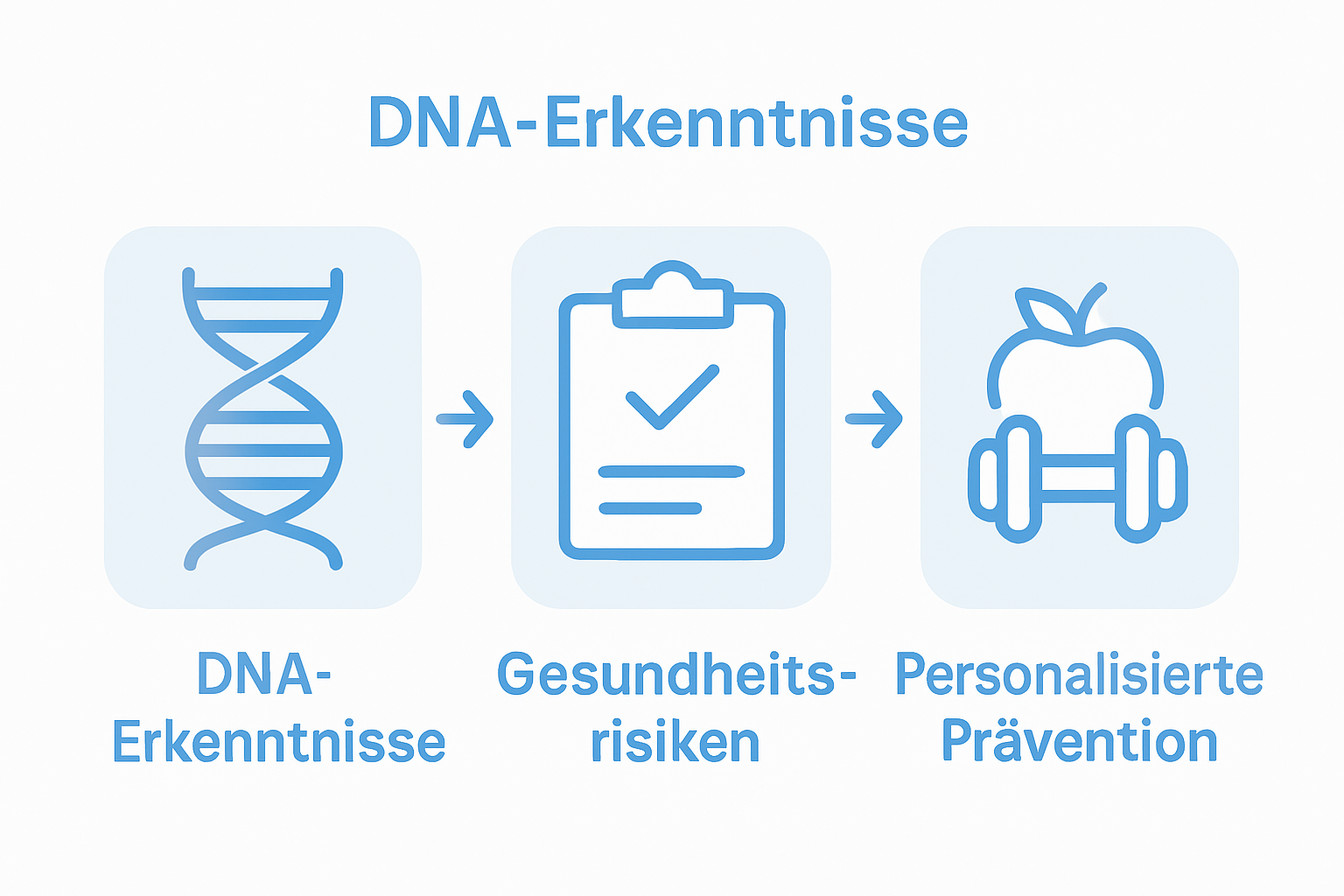
The science behind DNA tests enables an entirely new dimension of prevention. Instead of simply reacting to symptoms, you can now proactively shape your health strategy based on your genetic profile. The key lies in interpretation: Not every genetic predisposition automatically means that a disease will develop. Rather, this knowledge gives you the opportunity to minimize potential risks through targeted lifestyle adjustments.
Different types of DNA tests and areas of application
DNA tests are more diverse today than ever. They cover a broad range of applications, from preventive healthcare to personalized nutrition optimization. DNA health tests can identify genetic predispositions related to various areas of health, offering a unique perspective on your personal health situation.
The most important types of DNA tests include:
- Health risk tests: Analysis of genetic predispositions to diseases
- Nutrition tests: Examination of individual nutrient utilization
- Fitness DNA tests: Assessment of genetic predispositions for athletic performance
- Metabolism tests: Analysis of genetics and weight management
Scientific research has shown that DNA tests for health forecasting are promising but also present challenges. Not every genetic predisposition automatically means that a disease will develop. Rather, these tests provide valuable preventive information that can help you make targeted adjustments to your lifestyle.
Interpreting the results is crucial. Modern DNA tests do not provide diagnoses, but rather probability assessments. They are a tool for prevention and self-awareness that helps you make informed decisions about your health. Professional advice is always essential to place your individual test results in a holistic context.
How genetic health analyses work
Genetic health analyses are a complex field of science based on decoding your individual DNA. Modern DNA analysis techniques examine specific gene regions to obtain information about your health predispositions. Non-coding DNA regions are analyzed to provide insights into potential health risks and individual metabolic processes.
The genetic health analysis process can be divided into several steps:
- Sample collection (usually saliva or cheek swab)
- Genetic extraction and sequencing
- Bioinformatic analysis of gene variants
- Creating a personalized health profile
From a scientific perspective, these tests use markers and gene variants associated with specific health risks. Genetic analysis methods, such as the analysis of Short Tandem Repeats (STRs), enable precise identification of genetic patterns.
Interpretation is crucial: A DNA test does not provide diagnoses, but probability estimates. It reveals genetic predispositions that can help you take preventive action. It is important not to view the results as an unchangeable fate, but as valuable information for optimizing your individual health.
Personalized nutrition and prevention through DNA tests
DNA tests open up a revolutionary perspective on nutrition and health prevention. Personalized nutrition strategies are based on your individual genetic profile and enable a tailored approach to metabolism, nutrient utilization, and weight management.
The key aspects of genetically based nutrition optimization:
- Recognize individual nutrient requirements
- Identify genetic risks for metabolic disorders
- Determine the optimal diet based on your genome
- Develop personalized prevention strategies
Scientific findings show that not every diet affects every person in the same way. DNA-based nutrition tests can reveal how your body processes nutrients, which foods are ideal for you, and which potential health risks you may have due to your genetics.

Prevention begins with understanding. By knowing your genetic predispositions, you can make targeted nutrition and lifestyle choices. It is not about imposing prohibitions, but about understanding your body and giving it exactly what it needs. The art lies in translating scientific findings into practical, everyday strategies.
Privacy, costs, and typical sources of error
Data security and transparency play a crucial role in DNA tests. Genetic data raises significant privacy concerns, as it is among the most sensitive personal information. Reputable providers must comply with the highest security standards and ensure complete transparency about data use and storage.
Typical risks and sources of error in DNA tests include:
- Inaccurate or incomplete test results
- Incorrect interpretations of genetic data
- Inadequate data protection measures
- Insufficient scientific validation
Commercial DNA tests can pose unexpected challenges, which is why critical evaluation is important. Not every test delivers equally accurate results. It is important to choose a reputable provider that:
- Uses ISO-certified laboratories
- Has transparent privacy policies
- Uses scientifically validated analytical methods
When it comes to cost, a low price should not be the only deciding factor. Invest in quality and credibility. A good DNA test costs between 100 and 300 euros and offers comprehensive analyses, personal consultation, and the highest data security standards.
Rediscover your health with DNA tests from mybody®
Your genetic profile holds valuable keys to prevention and personalized nutrition. If you would like to learn how individual metabolic analyses and genetic insights can help prevent illness and improve your well-being, our DNA metabolism tests for your optimal nutrition – mybody®x offer precisely the solutions built around your genetic characteristics. With scientifically validated reports, we support you in implementing targeted nutrition recommendations and preventive strategies.
Take the opportunity to actively shape your health. Visit our tests & product overview – mybody®x and start your individual analysis now at mybody®x. Benefit from certified laboratory quality, personalized advice, and maximum data protection—for precise and sustainable preventive healthcare.
Frequently asked questions
What are the key health benefits of DNA tests?
DNA tests make it possible to identify individual health risks, nutrient utilization, and personalized nutrition recommendations, leading to a proactive health strategy.
How exactly does a genetic health analysis process work?
The process includes sample collection, usually saliva or cheek swabs, genetic extraction, sequencing, bioinformatic analysis, and the creation of a personalized health profile.
What types of DNA tests are available, and what can they reveal?
There are various types of DNA tests, such as health risk tests, nutrition tests, fitness DNA tests, and metabolism tests, which can identify genetic predispositions and individual metabolic characteristics.
What should you consider when choosing a DNA test provider?
Criteria such as ISO-certified laboratories, transparent data protection policies, and scientifically validated analysis methods are essential to ensure high-quality and reliable test results.
Recommendation
- DNA nutrition: The genetic code for your health – mybody®x
- DNA analysis for weight loss: Find your path to your ideal weight – mybody®x
- Understanding genetic analysis: Your personal compass for health – mybody®x
- DNA test for nutrition: Your personal guide to optimal nutrition – mybody®x
- 7 important steps to the perfect medical report checklist - Mein-Arztbefund



Share now:
Lose weight according to your metabolic type: Why diets fail and what really helps
Understand metabolic types: Find out how you really lose weight