

Celiac disease test: When it is truly useful and provides clarity
A celiac disease test provides clarity when unclear symptoms such as constant digestive problems or persistent fatigue are affecting your daily life. Instead of having to guess, it specifically looks for certain antibodies in your blood or checks for a genetic predisposition. This finally gives you a reliable answer and allows you to regain control over your well-being.
Why your symptoms could be more than just a passing phase

Do you often feel inexplicably exhausted, repeatedly struggle with bloating, or feel that your digestion simply isn’t cooperating? You are definitely not alone. Many people attribute such symptoms to stress or a harmless “mood” of their body. Yet undiagnosed celiac disease could be the real cause.
This is not a simple intolerance, but a serious autoimmune disease. It is triggered by gluten— a protein found in wheat, spelt, rye, and barley. In affected individuals, gluten causes chronic inflammation of the small intestinal lining, which can have far-reaching consequences for the entire body.
The chameleon among diseases
Celiac disease is often called a chameleon, and for good reason: Its symptoms are incredibly diverse and manifest differently in everyone. The classic abdominal pain and diarrhea are often just the tip of the iceberg.
To give you a better overview, we have summarized the most common signs in a table.
Typical and atypical signs of celiac disease
A quick overview of the wide range of symptoms that may indicate celiac disease, giving you an initial opportunity to assess your symptoms yourself.
| Symptom category | Examples of signs |
|---|---|
| Classic digestive symptoms | Diarrhea, bloating, abdominal pain, nausea, constipation, fatty stools |
| General symptoms & nutrient deficiencies | Chronic fatigue, exhaustion, iron-deficiency anemia, weight loss |
| Neurological & psychological signs | Recurring headaches or migraines, concentration problems, "brain fog" |
| Skin and bone problems | Itchy skin rashes (dermatitis herpetiformis Duhring), osteoporosis |
| Other nonspecific symptoms | Joint pain, mood swings, mouth ulcers, menstrual irregularities |
You may recognize yourself in some of these points. Many people affected suffer from nonspecific signs for years without ever linking them to their diet.
It’s about understanding that your symptoms could have a real cause. A targeted celiac disease test is often the first and most important step toward finally gaining clarity and sustainably improving your quality of life.
The high number of unreported cases and late diagnoses
The insidious thing about celiac disease is that many diagnoses are not made until adulthood, often after a long odyssey from one doctor’s appointment to the next. The number of unreported cases is alarmingly high.
In Germany, approximately one in every 100 people is affected, but estimates suggest that 80 to 90% of cases remain undiagnosed. Only a minority display the classic full range of unmistakable symptoms. Most people experience atypical or barely noticeable symptoms, which makes diagnosis extremely difficult. You can find more information about the background of celiac disease in Germany at dzg-online.de.
These figures make it clear how important it is to stay alert when symptoms are unclear. However, suspicion alone is not enough. Self-diagnosis or temporarily avoiding gluten can distort the results of a later test and unnecessarily delay diagnosis. To better understand the difference between celiac disease and a simpler gluten intolerance, read our detailed article on celiac disease and gluten intolerance.
Why testing is the right approach
A professional celiac disease test can shed light on the situation. Instead of continuing to guess and try different diets, it analyzes specific markers in your blood that indicate a clear immune response to gluten. This gives you a sound basis for all further decisions.
Ignoring the symptoms of celiac disease can lead to serious long-term consequences, including osteoporosis, infertility, or an increased risk of other autoimmune diseases. That’s why it’s so crucial not to wait any longer. Perhaps now is exactly the right time to take responsibility for your health and find out what’s really behind your symptoms.
What testing methods are available and what they reveal
If you suspect that gluten is behind your symptoms, you face an important question: Which celiac disease test is right for you? There are various ways to finally get clarity, and each provides different insights. Let’s go through the options together so you can find the best approach for you.
Serological blood tests: The search for antibodies
The very first and most common step is usually a blood test at the doctor’s office. Think of it this way: With celiac disease, your immune system produces special “defense soldiers”—so-called antibodies—as soon as it comes into contact with gluten. The problem is that these antibodies mistakenly attack the body’s own tissue, especially an enzyme in the small intestine called tissue transglutaminase.
The blood test specifically looks for these telltale antibodies in your blood. The most important markers are:
- Transglutaminase IgA Antibodies (tTG-IgA): This is the most reliable and sensitive marker. If this value is elevated, it is a very strong indication of active celiac disease.
- Endomysial Antibodies (EMA): This test is extremely specific. That means it is almost never falsely positive and is often used to confirm a high tTG-IgA value.
- Total IgA: This value is also measured to rule out a rare IgA deficiency. If you had this deficiency, the tTG-IgA test would produce a false-negative result. In that case, other antibodies are tested instead (IgG-based).
A positive antibody test practically screams “celiac disease!” However, it is not yet a definitive diagnosis, but rather the crucial clue that sets further investigations in motion.
Genetic Tests: A Look at Your Predisposition
A genetic test takes a completely different approach. It does not look for current disease activity; instead, it checks whether you have the genetic predisposition to celiac disease at all. Almost everyone with celiac disease carries certain gene variants called HLA-DQ2 or HLA-DQ8.
The result is especially valuable when it is negative. If these genes are not found in you, celiac disease can be ruled out with almost 100 percent certainty. That is a huge relief and may save you from undergoing a gastrointestinal endoscopy.
But be careful: A positive genetic test does not automatically mean that you have celiac disease. It only tells you that you carry the predisposition to it—as do around 30 % of the general population. However, the vast majority of them never develop celiac disease.
So, the genetic test is perfect for reliably ruling out celiac disease or providing additional certainty when findings are unclear.
The Small-Intestinal Biopsy: The Gold Standard for Confirmation
If the blood tests strongly suggest celiac disease, the next step is usually a small-intestinal biopsy. It is considered the definitive “gold standard” because it provides direct proof. During a gastroscopy, the doctor takes tiny tissue samples from your small intestine.
Under the microscope, doctors then check whether the typical changes associated with celiac disease are visible—for example, flattened intestinal villi. These villi are responsible for absorbing nutrients. If they are damaged, that explains many of the symptoms, such as deficiencies or constant fatigue. Only this direct evidence definitively confirms the diagnosis and is also important for recognition by health insurers.
The Celiac Disease Self-Test: Initial Guidance for Home Use
Perhaps you would first like to get a quick and discreet assessment before making a doctor’s appointment. This is exactly where a celiac disease self-test comes in. These tests, such as those offered by mybody-x.com, provide genuinely useful initial guidance.
They work very similarly to the serological tests used by doctors and also detect tTG-IgA antibodies—but all you need is a small drop of blood from your fingertip.
Such a test can provide you with an initial, valuable indication:
- Positive result: You should definitely see a doctor to confirm the result through further laboratory tests and possibly a biopsy.
- Negative result: Celiac disease is unlikely, but it is not ruled out 100%. If your symptoms persist, it is still advisable to speak with a doctor.
A self-test does not replace a medical diagnosis, but it puts you back in control and can be the decisive push you need to finally take action. If you would like to learn more about how a home celiac disease test works and who it is suitable for, you can find further information from us. It helps you take the first step independently.
How to Properly Prepare for the Test

So you have decided to finally get to the bottom of the suspicion that you may have celiac disease. That is a very important step that can bring you clarity! But for the test to really be meaningful, there is one crucial rule you absolutely must follow.
And that is: Under no circumstances should you start a gluten-free diet on your own just yet.
That sounds paradoxical at first, I know. But it is the most common mistake leading to incorrect results. A celiac disease test, whether a blood test or biopsy, looks for your body’s reaction to gluten. If you eliminate gluten, your immune system calms down. The telltale antibodies are no longer produced, the inflammation in your intestines subsides—and the test finds nothing. The result would then be falsely negative, even though you may have celiac disease.
Why Gluten Now Has to Be Your (Unwelcome) Friend
For a doctor to detect active celiac disease, your body needs to be, so to speak, “in action.” This means you must continue consuming gluten-containing foods as usual. Doctors call this a “gluten challenge.” This is the only way to make the specific antibodies measurable in your blood and any damage to the small intestinal lining visible in a biopsy.
I understand that this can be difficult, especially if you are experiencing severe symptoms. If it is making you feel really unwell, be sure to discuss it with your doctor. But unfortunately, there is no way around this step if you want an absolutely certain diagnosis.
The golden rule is: Never start a gluten-free diet before the entire diagnostic process is complete. A false-negative result can leave you uncertain for years and block the path to the right treatment.
What does “gluten challenge” mean in practical terms?
So how much gluten is actually needed? Fortunately, medical guidelines provide clear recommendations to help guide you.
- How long? You should eat gluten daily for at least six weeks before the test.
- How much? The goal is approximately 10 to 15 grams of gluten per day. That corresponds to about two to three slices of regular wheat bread.
You don't need to stuff yourself with huge amounts of pizza and pasta. A normal, balanced diet with bread, noodles, cereal, or baked goods is completely sufficient.
Prepare for your doctor's appointment
A well-prepared conversation with your doctor is half the battle. The more accurately you can describe your situation, the better you can be helped. Take some time before your appointment to write down a few things.
A symptom diary is perfect for this. Simply keep track over one to two weeks of:
- What do you eat and drink? Be as precise as possible.
- Which symptoms occur? Everything is relevant, from bloating and headaches to fatigue.
- When do they occur? Is there a connection with eating?
- How severe are they? A simple scale from 1 (barely noticeable) to 10 (very severe) is extremely helpful.
These records not only help you identify patterns but also provide your doctor with invaluable clues. Be sure to mention whether there have already been cases of celiac disease or other autoimmune diseases in your family.
Diagnostics in Germany have one major pitfall: In 70 to 90% of those affected, celiac disease is recognized far too late or not at all because the symptoms are incredibly diverse. German medical societies therefore recommend that people in at-risk groups—such as those with type 1 diabetes or a family history—be tested regularly. You can find additional information about who should be particularly vigilant, for example, at springermedizin.de. By preparing well, you are actively helping to close this diagnostic gap for yourself.
What your test result means for you
The moment has arrived: The letter is on the table or the doctor calls. You’re holding the result of your celiac disease test in your hands—and now what? Whether the result is positive, negative, or unclear, such a finding initially raises many questions. Let’s go through the different scenarios together so you know exactly what the result means for you and what steps come next.
Understanding the positive test result
A positive result on a blood test, in which elevated antibodies such as tTG-IgA are detected, is a very strong indication of celiac disease. This means that your immune system is reacting to gluten and producing antibodies that mistakenly attack the body’s own tissue.
However, this is not yet the final diagnosis. Consider this result a clear signal from your body that you now need to investigate. In the vast majority of cases, your doctor will recommend a small-intestinal biopsy as the next step. This examination is considered the gold standard for definitively confirming the diagnosis and determining how severely your intestine has already been damaged.
If the test is positive: The next steps
A positive antibody test is therefore the starting point for further evaluation. Panic is the wrong response now. Instead, a structured approach is needed.
- See your doctor: Discuss the findings in detail with your gastroenterologist. They can correctly interpret the results in the context of your symptoms.
- Plan a biopsy: Most likely, your doctor will recommend a gastroscopy with a small tissue sample (biopsy) taken from the small intestine. This is the only way to determine conclusively whether the intestinal villi have already been damaged.
- Important: Keep eating gluten! Even if it may be difficult for you: Continue eating a normal gluten-containing diet until the biopsy. Changing your diet would distort the results and make the diagnosis more difficult.
This graphic shows how accurate two of the most common antibody tests are.
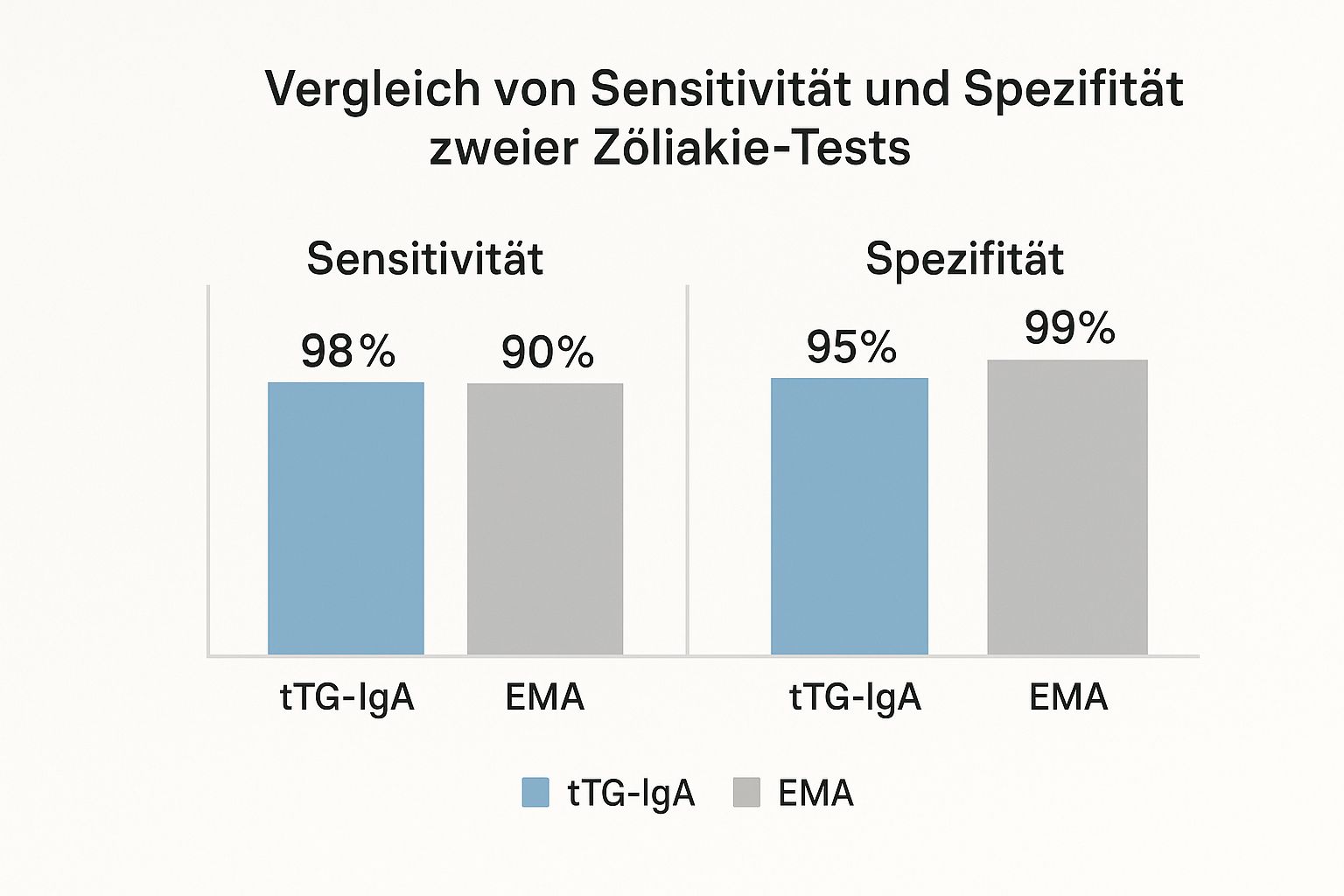
You can see clearly here: The tTG-IgA test is extremely sensitive and rarely misses a case. The EMA test, on the other hand, is particularly reliable (specific) at confirming positive cases.
What a negative result really means
You receive a negative test result—a huge relief at first! But what if you still don’t feel well and the symptoms persist? Although a negative antibody test makes celiac disease very unlikely, it does not rule it out completely. 100 % out.
There are rare cases, such as congenital IgA deficiency, in which standard tests can produce a false result. Much more often, however, another cause is behind your symptoms.
A negative result is not an endpoint, but an important signpost. It shifts the focus to other possible reasons for your symptoms and protects you from an unnecessary, very strict diet.
So, if your symptoms continue even though your celiac disease test was negative, it’s time to continue the search.
When symptoms persist despite a negative test
Your symptoms are real, even if it isn’t celiac disease. Now it’s crucial that you stay persistent and consider other possibilities together with your doctor.
A common alternative is non-celiac gluten sensitivity (also often called wheat sensitivity). Here, your body also reacts negatively to components of wheat, but without the autoimmune reaction and intestinal damage typical of celiac disease. However, the symptoms can be confusingly similar.
Other possible causes could include:
- Irritable bowel syndrome (IBS)
- Other food intolerances, such as lactose or fructose intolerance
- A wheat allergy, which involves a completely different type of immune response
The best approach is often to keep a detailed symptom and food diary. This helps you and your doctor identify patterns and get to the bottom of the true culprits. To better understand the differences, you can find more information in our guide on how to identify different food intolerances.
Every test result is valuable information on your path to greater well-being. It gives you the power to ask the right questions and take the next steps for your health into your own hands.
Your start to a gluten-free life after diagnosis

The diagnosis of celiac disease is here. First, take a deep breath. It’s completely normal to feel overwhelmed or perhaps even a little lost right now. But look at it this way: You finally have a clear answer—and with it, the key to soon feeling much better.
This section is designed to be your practical guide for the first phase. Forget the talk about strict deprivation. It’s about discovering a new, incredibly diverse, and enjoyable way of eating that works for you. We’ll show you how to manage the transition in everyday life—without stress and one step at a time.
Reorganizing the kitchen
Your first point of focus is your own kitchen. Good organization from the start is half the battle when it comes to preventing accidental gluten consumption—known as cross-contamination. Even tiny crumbs can trigger symptoms in people with celiac disease.
Start with a clear separation. Set up a separate area in your pantry just for gluten-free products. It is best to store these foods on the upper shelves so that gluten-containing crumbs cannot fall down from above.
These little helpers make everyday life so much easier:
- Dedicated kitchen utensils: Having your own toaster is worth its weight in gold. Alternatively, you can use reusable toast bags. A separate cutting board (preferably plastic, as it is easier to clean) and your own wooden spoons are also a worthwhile investment.
- Separate storage: Use separate containers for butter, jam, or cream cheese. This prevents breadcrumbs from getting into them.
- Thorough cleaning: Work surfaces, pots, and pans must always be cleaned carefully before preparing gluten-free meals. This quickly becomes routine.
Shopping safely and mastering ingredient lists
The first grocery shop after your diagnosis often feels like an expedition. Suddenly, you have to read labels you had barely noticed before. But don’t worry—with a little practice, you’ll quickly become a pro at decoding ingredient lists.
Your best friend at the supermarket is the crossed-out ear of wheat symbol. Products with this seal are certified gluten-free and therefore completely safe for you. You can now find it on more and more packages in every supermarket.
Pay particular attention to hidden gluten. It can be found in ready-made sauces, spice blends, processed meats, and even some sweets. Terms such as “malt extract” or “modified wheat starch” are clear warning signs.
The German Celiac Society (DZG) offers incredibly helpful lists of safe foods and apps that make shopping easier. Its website is definitely worth a look.
Eating out without stomach pain
Yes, you can still enjoy eating out without worry even with celiac disease! The key is good communication. My tip: Call the restaurant beforehand and ask whether they offer gluten-free options and how the kitchen team handles cross-contamination.
When ordering at a restaurant, be clear and confident:
- Explain that you have celiac disease and must follow a strictly gluten-free diet for medical reasons.
- Ask specifically whether sauces are thickened with flour or whether the French fries are cooked in a separate fryer.
- Emphasize that this is not a lifestyle preference, but a medical necessity.
You’ll be surprised by how many restaurants are now very well equipped to meet the needs of people with celiac disease. A gluten-free life therefore by no means marks the end of your social life.
Don’t forget the familial component
Did you know that celiac disease has a strong genetic component? First-degree relatives of affected individuals have a tenfold higher risk of developing it as well. Since the only treatment is a lifelong, strict gluten-free diet, early testing of family members is particularly important. Standard blood tests that measure antibodies against tissue transglutaminase (tTG-IgA) are very reliable for this purpose. You can find more information about these connections, for example, at the German Allergy and Asthma Association.
So it can be very useful to encourage your close relatives to get tested as well. And if you’d like to learn more about how the symptoms of celiac disease differ from those of a simple gluten intolerance, take a look at our detailed article on celiac disease and gluten intolerance.
Every beginning involves an adjustment, but see the diagnosis as an opportunity: an opportunity to get to know your body better, eat more consciously, and reach a whole new level of energy and well-being. You can do this!
Frequently asked questions about celiac disease testing
After all this information, a few very specific questions often remain unanswered. That’s completely normal. To help you clear up any remaining uncertainties, we’ve answered the most frequently asked questions briefly and concisely here.
Does my child also need to be tested if I have celiac disease?
Yes, it is definitely recommended. Celiac disease has a strong genetic component. If you as a parent are affected, your child has a statistically higher risk of about 10 %also developing it.
A proactive celiac disease test can detect the condition long before significant symptoms even have a chance to appear. This is extremely important for preventing potential growth or developmental disorders from the outset. It’s best to talk to your pediatrician about the best way to proceed.
What is the actual difference between celiac disease and a wheat allergy?
This question often causes confusion, even though two fundamentally different processes take place in the body.
Think of an allergy as a false fire alarm: The immune system reacts immediately and intensely to a substance that is actually harmless (wheat protein) and releases histamine. The reaction usually occurs promptly—everything from a skin rash to breathing difficulties is possible.
Celiac disease, on the other hand, is an autoimmune condition. When exposed to gluten, the immune system does not attack the “enemy” directly; instead, it mistakenly attacks the body’s own tissue, namely the lining of the small intestine. This process is gradual, and the symptoms are often chronic rather than acute.
So the crucial difference lies in the type of immune response. An allergy is an immediate defensive reaction against an allergen, whereas celiac disease is a long-term, self-destructive attack on the body itself.
Can celiac disease go away on its own?
Unfortunately, no. Celiac disease is a chronic autoimmune condition that stays with you for life. Once diagnosed, it does not simply disappear again. The genetic predisposition remains.
But the really good news is that the symptoms and intestinal damage are completely reversible! By following a strict gluten-free diet, you give your small intestine the chance to fully recover. You can therefore live completely symptom-free as long as you consistently avoid gluten.
How long does it take to feel better after changing my diet?
This varies greatly from person to person and depends largely on how severely your intestine was affected. However, many people notice a significant improvement within the first few weeks. Digestive problems subside, the “brain fog” clears, and energy gradually returns.
However, it can take several months to up to two years for your intestinal lining to fully recover. Antibody levels in the blood usually return to the normal range within six to twelve months. So be patient with yourself and your body—the positive change is definitely worth the effort.
Do you suspect that you might have celiac disease and want to take a first, straightforward step toward clarity? The self-tests from mybody-x offer a reliable and discreet way to get an initial assessment from home. Discover the testing options now at https://mybody-x.com and take control of your health.



Share now:
Understanding Celiac Disease & Gluten Intolerance: Symptoms & Tips
Leaky Gut Syndrome: What’s really behind it