
Leaky gut syndrome: What is really behind it
Imagine your intestinal wall as an extremely selective bouncer at an exclusive club. He carefully scans every guest and lets in only the best: valuable nutrients from your food. With Leaky Gut Syndrome, however, this bouncer has, so to speak, abandoned his post. The door suddenly stands open to everyone – including unwelcome guests.
What leaky gut syndrome really means
The term “Leaky Gut” translates simply as “holey gut” and captures the essence of the problem quite accurately. Your intestinal wall is far more than just a passive covering. It is a highly intelligent, dynamic barrier that monitors your overall health. This barrier consists of a single layer of cells arranged closely together like LEGO bricks.
These cells are held together by so-called “Tight Junctions” – you can think of them as a zipper. When your gut is healthy, this zipper is firmly closed. It opens only very selectively and briefly to let vitamins, minerals, and other important building blocks into your bloodstream.
With leaky gut syndrome, however, this zipper becomes loose and leaky. Tiny but consequential gaps form between the individual intestinal cells.
The consequences of a leaky intestinal barrier
When this important barrier loses its protective function, substances can enter your body that have absolutely no place there. These include, for example:
- Undigested food components: Larger protein particles such as gluten or casein slip through the gaps and can irritate your immune system.
- Toxins and metabolic waste: Harmful substances from food or the environment overcome the weakened barrier and enter the bloodstream.
- Bacterial fragments: Pieces of intestinal bacteria that would normally remain in the gut trigger a strong immune response in the bloodstream.
This constant exposure to foreign substances puts your immune system in a state of permanent alert. It responds with silent but chronic inflammation that can spread unnoticed throughout the body and lead to a wide range of symptoms.
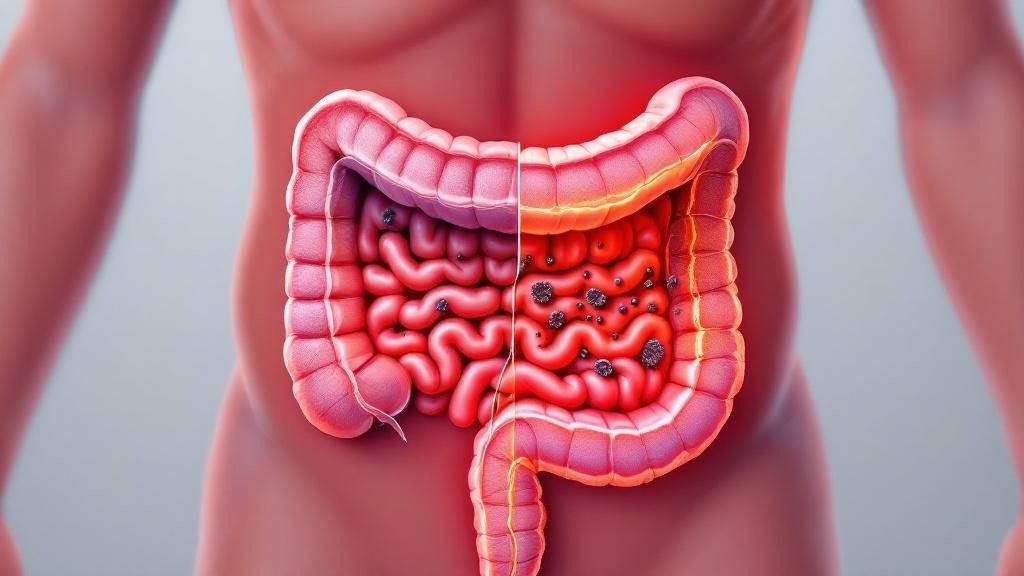
The following graphic clearly shows how a compromised intestinal barrier opens the door to inflammation and nutrient loss.
It is clear here: The integrity of your intestinal barrier is absolutely crucial for protecting the body from unnecessary inflammatory reactions and ensuring optimal nutrient absorption.
To make the differences even clearer, here is a brief comparison:
Intact gut compared with leaky gut
This table shows the key differences between healthy intestinal function and the changes associated with leaky gut syndrome.
| Characteristic | Healthy gut (intact barrier) | Leaky gut (permeable barrier) |
|---|---|---|
| Cell connections (tight junctions) | Tightly closed, regulated transport of substances | Loosened and permeable, uncontrolled passage |
| Transport of substances | Selective: Only nutrients pass through | Non-selective: Toxins and undigested particles also enter the bloodstream |
| Immune system activity | Normal, balanced | Chronically activated, constantly on alert |
| Inflammation levels | Low and controlled | Elevated, often systemic (throughout the body) |
| Nutrient absorption | Optimal and efficient | Disrupted; can lead to deficiencies |
| Overall well-being | Vitality, energy, stable digestion | Fatigue, intolerances, various complaints |
The table makes clear how fundamental a healthy gut barrier is to your overall well-being. Leaky gut is therefore far more than just a "hole in the gut"—it is a condition that can throw the entire system out of balance.
Scientific classification of the phenomenon
Leaky gut syndrome, also known in German as the syndrome of increased intestinal permeability, has long been discussed, particularly in functional and alternative medicine. In conventional medicine, the phenomenon is now recognized as an important symptom or accompanying condition of other diseases. Increased permeability of the intestinal lining is clearly measurable scientifically, especially in chronic inflammatory bowel diseases such as Crohn’s disease or celiac disease.
Leaky gut is less an independent disease than a condition that can open the door to numerous other health problems. Restoring an intact gut barrier is therefore a fundamental step toward your well-being.
This knowledge is the first and most important step toward regaining control over your gut health. Once you understand this mechanism, you can much better understand the connections between your diet, lifestyle, and well-being. Learn more about the fundamentals of a healthy gut in our articles on gut health.
How a leaky gut can develop
Leaky gut rarely develops overnight. Think of it more like a crack in a wall that slowly grows larger. It is usually the result of many small stresses that affect your gut over a long period and weaken its sensitive barrier. Many of these triggers are deeply rooted in our modern lifestyle, making it all the more important to know them and consciously counteract them.
The good news, however, is this: When you understand the potential disruptive factors, you regain control. You can take targeted action to protect your gut.
The influence of diet and lifestyle
Your daily choices have the greatest influence on the health of your intestinal wall. Certain habits can directly attack the protective “tight junctions” or create an environment in which harmful bacteria can flourish.
Chronic stress: Your brain and gut are directly connected through the so-called gut-brain axis. Prolonged stress causes the release of stress hormones such as cortisol, which have been shown to loosen the connections between intestinal cells and make the barrier more permeable.
Unbalanced diet: A diet rich in sugar, processed foods, and unhealthy fats acts like a constant assault on your intestinal lining. These foods promote inflammation and feed precisely the bacterial strains that harm your intestinal wall.
Regular alcohol consumption: Alcohol is a cellular toxin that can directly damage intestinal cells. It also reduces the production of mucus, which coats the intestinal wall like a protective film. Even moderate but regular consumption has been shown to increase intestinal permeability.
The role of the gut microbiome
A huge community of microorganisms lives in your gut—your microbiome. A healthy balance of these bacteria is absolutely crucial for a strong intestinal barrier. When this ecosystem becomes unbalanced, it is called dysbiosis.
Dysbiosis is one of the main drivers of leaky gut syndrome. When harmful bacteria gain the upper hand, they produce substances that irritate the intestinal wall and weaken the tight junctions. At the same time, the beneficial helpers that produce important protective substances such as butyrate are lacking—a short-chain fatty acid that is the main energy source for your intestinal cells.
A healthy microbiome is like a well-tended garden that nourishes and protects the intestinal wall. Dysbiosis, on the other hand, is like weeds overgrowing and damaging the protective wall.
Certain factors can disrupt this delicate balance particularly severely:
- Antibiotics: They are often lifesaving, but unfortunately do not distinguish between good and bad bacteria. Antibiotic treatment can drastically reduce the diversity of your microbiome, paving the way for problematic pathogens.
- Other medications: Painkillers such as ibuprofen (NSAIDs) and acid blockers can also negatively affect the intestinal lining and microbiome when taken long term.
- Environmental toxins: Pesticides in food or other environmental chemicals can also contribute to dysbiosis and directly attack the intestinal barrier.
Other important risk factors
In addition to the major influencing factors, there are other aspects that can contribute to the development of leaky gut. Often, it is the interaction of several of these factors that ultimately overwhelms the intestinal barrier.
Chronic infections: Persistent infections in the gut—whether caused by bacteria, viruses, or parasites—lead to a lasting inflammatory response that gradually wears down the intestinal wall.
Nutrient deficiencies: Certain nutrients are essential for the regeneration of intestinal cells. A deficiency in zinc, vitamin A, or the amino acid L-glutamine can hinder the repair processes of the intestinal lining.
Too little exercise: Regular, moderate exercise promotes intestinal motility and supports a healthy microbiome. A predominantly sedentary lifestyle, on the other hand, can impair gut health.
Knowing these risk factors can help you better understand the causes of your symptoms. It is not about being perfect. It is about developing an awareness of how these factors are connected and adjusting the right levers to make your gut strong again over the long term.
Recognizing common signs and symptoms
Leaky gut rarely announces itself with a loud bang. Instead, your body sends a series of subtle, often misunderstood signals over a long period of time, and they are by no means limited to the abdominal area.
These symptoms can be so vague and seemingly unrelated that many people overlook the true cause for years: a weakened, permeable intestinal barrier. Once you learn to interpret these clues correctly, however, that is the first crucial step toward regaining control of your health. Consider the following signs your body's language—it is trying to draw your attention to a deeper problem in your gut.

Digestive problems: The most obvious warning signs
Of course, the most obvious symptoms of leaky gut appear exactly where the problem is located: in the digestive tract. Many people get used to these complaints over the years and consider them normal. Yet they are a clear warning signal from your gut.
Typical signs include:
- Bloating and a distended abdomen: After eating, your stomach often feels like a balloon, even when you have not eaten very much.
- Irregular bowel movements: A constant alternation between constipation and diarrhea is a classic sign of an imbalanced gut.
- Abdominal cramps and discomfort: You repeatedly experience pulling or cramping pain without being able to identify a clear cause.
These direct symptoms are often only the tip of the iceberg. The real problems begin when the intestinal barrier loses its protective function and unwanted substances enter the bloodstream.
When problems extend beyond the gut
As undigested food remnants, toxins, and bacterial fragments break through the intestinal wall, your immune system becomes active. It recognizes these particles as foreign invaders and immediately launches a defensive response. The result is silent, chronic inflammation that can spread throughout the body and cause trouble in a wide variety of places.
Imagine that a small fire is burning unnoticed inside your body. This smoldering fire gradually weakens your system and causes symptoms you would never associate with your gut.
This very principle explains why the signs of leaky gut can be so incredibly diverse.
Skin problems as a reflection of the gut
Your skin is often a direct reflection of your gut health. Chronic inflammation and a body overloaded with toxins often show up directly on the surface of the skin.
- Acne and blemished skin: Persistent acne, especially in adulthood, can be a clear indication of an inflammatory process originating in the gut.
- Eczema and rosacea: These inflammatory skin conditions are often worsened by a misguided immune response that may originate in a leaky gut.
Cognitive and psychological symptoms
The connection between the gut and the brain—the gut-brain axis—is close and direct. Pro-inflammatory messengers circulating through your body can cross the blood-brain barrier and impair your brain function.
- Brain fog: You often feel dazed, unfocused, and forgetful. Forming clear thoughts is difficult.
- Constant tiredness and exhaustion: Your immune system is working at full speed to fend off the constant threat. This requires enormous amounts of energy and leads to profound, unexplained fatigue.
- Mood swings: Anxiety or depressive moods may also be linked to chronic inflammatory processes in the body.
Further systemic effects of leaky gut
The list of possible symptoms is long because systemic inflammation can affect virtually any organ and tissue in the body. Also look out for these often-overlooked signs:
- Newly developing food intolerances: Suddenly, you can no longer tolerate foods you used to eat without any problems. The reason: Your immune system is hypersensitive to incompletely digested food particles.
- Unexplained joint pain: Inflammatory substances can accumulate in the joints, causing pain and stiffness that strongly resemble arthritis.
- Weakened immune system: Are you constantly sick and catching every infection? An overburdened immune system has no reserves left to effectively fight off viruses and bacteria.
- Autoimmune reactions: Leaky gut is considered one of the main triggers of autoimmune diseases, in which the immune system begins attacking the body's own tissue.
Statistically speaking, the number of people in Germany with intestinal complaints is very high, indirectly suggesting a problem with a disrupted intestinal barrier. Studies show that approximately 10 to 15 percent of the German population suffer from irritable bowel syndrome—and some of these patients show symptoms associated with increased intestinal permeability. You can learn more about the connection between intestinal permeability and various diseases here.
Modern diagnostic options for the gut
If, after all these symptoms, you suspect that you might have a leaky gut, you have already taken the most important step. But a gut feeling alone is usually not enough to take targeted action. You want certainty, not speculation. Fortunately, modern laboratory tests now provide deep insight into the condition of your intestinal barrier and microbiome.
These diagnostic tools replace vague suspicions with solid facts. They provide a sound basis for discussing things with your doctor or therapist and make it possible to develop a strategy that is truly tailored to you and your gut health.
Zonulin as a key marker of intestinal permeability
One of the most important and best-researched markers for a leaky intestinal barrier is the protein zonulin. Think of it as a bouncer who opens and closes the gates between your intestinal cells (the tight junctions). Zonulin is a natural regulator that ensures the intestinal wall becomes briefly more permeable when needed. This is perfectly normal.
It becomes problematic when certain triggers—such as gluten or harmful bacteria—continuously stimulate zonulin production. Then the gates, so to speak, remain permanently open. An elevated zonulin level in stool or blood is therefore a strong warning signal: The intestinal barrier can no longer properly perform its protective function.
An elevated zonulin level signals that the “bouncers” guarding your gut have left their posts. This is often the first measurable sign of leaky gut syndrome and confirms that action is needed.
The clinical relevance of this marker is becoming increasingly clear. In Germany, there are already case studies showing how serious severely increased intestinal permeability can be. In a 35-year-old patient, an extreme zonulin level of 4829,1 ng/g was measured after severe pancreatitis—the normal value is below 107 ng/g. Such cases underscore how crucial diagnostic markers such as zonulin are for complex clinical conditions. You can find more about the gut-brain connection in this specialist article.
Other important laboratory parameters
Zonulin is a strong indication, but only when considered together with other values does it provide a complete picture of your gut health. Additional markers help not only identify the gaps in the barrier but also the underlying inflammation.
- Alpha-1-antitrypsin: This protein is actually produced in the liver. If it is found in increased amounts in the stool, this is a clear indication of damaged intestinal lining. It shows that the barrier has become so leaky that even larger proteins from the blood can enter the intestine.
- Calprotectin: This value is an established marker of inflammation in the intestine. Elevated levels indicate active inflammation of the intestinal lining, as occurs not only in chronic inflammatory bowel diseases but also in leaky gut.
The comprehensive microbiome analysis
Looking at the intestinal barrier alone often falls short. Dysbiosis—in other words, an imbalance of intestinal bacteria—is one of the most common causes of leaky gut. That is why a detailed stool analysis provides the crucial pieces of the puzzle.
A microbiome analysis gives you deep insight into the fascinating ecosystem of your gut. It shows you not only whether harmful bacteria have gained the upper hand, but also whether you are lacking important protective bacteria.
Bacteria such as these are of particular interest:
- Akkermansia muciniphila: This little helper is a true guardian of the intestinal lining. It feeds on the protective mucus that coats the intestinal wall and even stimulates the cells to produce fresh mucus.
- Faecalibacterium prausnitzii: This bacterium is one of the most important producers of butyrate, the main source of energy for your intestinal cells. Without it, the cells lining the intestine effectively starve and become weak.
If you want to know exactly how your gut community is structured and which bacteria you may be lacking, an at-home microbiome test can provide valuable, highly personal insights. With this knowledge, you can then work specifically on restoring your gut balance.
An effective roadmap for your gut health
If you suspect that your intestinal barrier is no longer fully intact, I have good news for you: Your gut is a master of regeneration. The cells of your intestinal lining renew themselves at a rapid pace—they only need the right conditions and the appropriate building blocks to do so. You play the leading role in this, because it is an active process.
Repairing a leaky gut is not a sprint, but more of a marathon based on a well-thought-out, holistic strategy. Think of it like renovating an old house: First, you have to eliminate the causes of the damage. Then you replenish missing building materials, bring a diligent team of tradespeople on board, and finally begin the targeted repair of the cracked wall.
Pillar 1: Removing disruptive factors
The first and absolutely most important step is to reduce everything that constantly irritates your intestinal wall and fuels low-grade inflammation. Without this step, any further measure would be like trying to put out a fire while someone keeps pouring oil onto it.
Take a very close look at your diet for this purpose. Identify and minimize the usual suspects we have already discussed:
- Highly processed foods and sugar: They are harmful bacteria’s favorite food and fuel inflammation throughout the body.
- Excessive alcohol consumption: Alcohol is pure poison for your sensitive intestinal cells. Period.
- Potential trigger foods: If your gut is already compromised, gluten, dairy products, or other foods you react sensitively to can make the problem worse. A temporary elimination diet can provide clarity here.
It is just as important to get chronic stress under control. Techniques such as meditation, yoga, walks in nature, or simply getting enough sleep are not a nice bonus, but fundamental building blocks for stopping the harmful effects of stress hormones on your gut.
Pillar 2: Replacing what is missing
A healthy gut needs specific tools to do its job. These include, above all, digestive enzymes and enough stomach acid to properly break down food. When these are lacking, large, undigested chunks of food end up in the gut and mechanically irritate the intestinal lining.
One small trick: Bitter compounds from chicory, arugula, or radicchio before meals can naturally stimulate the production of digestive juices. Also, make sure to eat calmly and chew each bite thoroughly—digestion starts in the mouth, after all!
Pillar 3: Establishing beneficial helpers
Now it is time to call in your team of workers: the good gut bacteria. A diverse and balanced microbiome is your best ally for keeping harmful germs in check and protecting the intestinal wall.
This is where targeted nutrition comes into play:
- Prebiotics (The food): Fiber from leeks, onions, garlic, asparagus, oats, or psyllium husks is the favorite food of your beneficial helpers. They convert these fibers into protective substances such as butyrate.
- Probiotics (The workers): Fermented foods such as sauerkraut, kimchi, kefir, or plain yogurt provide a direct supply of beneficial bacterial cultures.
Imagine your microbiome as a garden. You fertilize the soil with prebiotics so that valuable plants can grow strong. With probiotics, you deliberately plant new, beneficial flowers.
Pillar 4: Repairing the intestinal wall
The final and crucial step is the targeted repair of the intestinal lining itself. Your intestinal cells need specific nutrients to close the gaps between the cells and strengthen the protective barrier.
These are the most important building blocks for a stable intestinal wall:
- L-Glutamine: This amino acid is the primary energy source for your intestinal cells. It is essential for regenerating and rebuilding an intact intestinal lining.
- Zinc: This trace element plays a key role in stabilizing tight junctions and supports cell division.
- Omega-3 fatty acids: Found in fatty fish, flaxseeds, or walnuts, they have a strong anti-inflammatory effect and promote healing.
This is precisely where targeted products can provide valuable support. Our 'Darmwohl' from mybody-x.com was developed to address several pillars of this strategy at the same time. It provides high-quality psyllium husks, which serve as an excellent prebiotic and promote the growth of beneficial gut bacteria.
At the same time, it contains the important amino acid L-Glutamine, which serves as a direct building block for repairing your intestinal lining. However, it is important to note that such products only achieve their full effect when integrated into a healthy lifestyle. They are not miracle cures, but intelligent aids that specifically support your body's regeneration process.
Restoring your gut health is a process that requires patience and consistency. But every single step is an investment in your overall well-being—from more energy in everyday life and clearer skin to a sharper mind. If you would like to explore the diagnostics in greater depth before getting started, you can learn more about the options for a leaky gut test in our article.
Frequently asked questions about leaky gut
After all the information about leaky gut syndrome, a few specific questions often remain unanswered. So you don't have to search for long, we have collected the most frequently asked questions and answered them briefly here.
Can a leaky gut heal on its own?
Although your body has impressive self-healing abilities, your active participation is needed when it comes to leaky gut syndrome. Think of it like a crack in a wall: It is unlikely to disappear on its own as long as the strain that caused it persists.
Without addressing the causes—whether an unfavorable diet, chronic stress, or an undetected dysbiosis—lasting healing is rather unlikely. Simply waiting rarely leads to the desired outcome here.
The key, therefore, lies in consistently changing your habits. It is an active process in which you give your body the right tools and the necessary rest to rebuild the intestinal barrier.
How long does it take for the intestinal barrier to regenerate?
Above all, patience is needed here, because healing a leaky gut is not a sprint but rather a marathon. Although the outermost layer of your intestinal cells renews itself every few days, regenerating the deeper structures and addressing the underlying causes takes considerably more time.
Exactly how long it takes depends largely on your individual condition, the severity of the damage, and your consistency. Generally, you can expect a period of three to twelve months before you notice a stable and tangible improvement in your symptoms.
Consistency is more important here than perfection. Every healthy meal, every night of good sleep, and every moment of relaxation is another building block in rebuilding your strong intestinal lining.
Be patient with yourself and keep going—your body will thank you.
What role do probiotics play?
Probiotics are living, beneficial bacterial strains that play a crucial role in restoring a healthy gut environment. You can think of them as diligent helpers that steer the balance in your microbiome back in the right direction.
They work in several ways:
- They push out unwanted germs: By strengthening the beneficial bacteria, they literally deprive harmful microorganisms of their habitat and food.
- They strengthen the gut barrier: Many probiotic strains produce important substances such as butyrate, a short-chain fatty acid. Butyrate is essentially super fuel for your intestinal cells, helping them renew themselves and strengthen the connections between cells (the tight junctions).
- They regulate the immune system: A healthy microbiome is in constant communication with your immune system and helps dampen excessive inflammatory responses.
Probiotics are therefore an important building block, but they are not a miracle cure on their own. They work best in combination with prebiotics—food for beneficial bacteria, found abundantly in fiber-rich foods such as vegetables, legumes, and whole grains.
Are gluten and dairy products always harmful?
There is no blanket answer to this question for everyone. However, if you have an existing leaky gut, these two food groups can indeed become a problem because they can place additional strain on an already irritated intestinal wall.
Gluten: This storage protein found in many types of grain can stimulate the production of zonulin in some people. As you already know, zonulin is the protein that opens the gates between intestinal cells, making the gut barrier more permeable.
Dairy products: Two components in particular can cause problems here. One is the milk protein casein, which can promote inflammation when gut function is impaired, and the other is the milk sugar lactose, which already causes digestive problems for many people.
A temporary elimination diet in which you consciously avoid gluten and dairy products for several weeks is often the best way to find out whether you benefit from doing so. This is frequently a crucial step in reducing inflammation in the gut and giving the body a chance to heal. If you would like to learn more about how to identify intolerances, you will find a helpful guide in our health portal.
At MYBODY Lab GmbH, we understand that the path to better health often begins with a deeper understanding of your own body. Our scientifically grounded analyses give you the tools to understand the causes of your symptoms and take targeted measures tailored to you. Discover at https://mybody-x.com how you can take control of your health with precise data.



Share now:
Celiac disease test: When it’s truly worthwhile and provides clarity
Understand SIBO and restore gut balance