

What is the microbiome? Understanding its significance
Our bodies are home to more than 100 trillion microorganisms, which together can weigh more than the human brain. This may sound like a chaotic mix of bacteria, viruses, and fungi. But the real surprise is that this tiny diversity influences almost every aspect of our health beyond digestion—from weight and mood to immune defense.
Table of contents
- The microbiome: Definition and fundamental concepts
- The role of the microbiome in human health
- How the microbiome influences our metabolism
- The influence of diet and lifestyle on the microbiome
- Future perspectives and research on the microbiome
Quick overview
| Takeaway | Explanation |
|---|---|
| The microbiome has a decisive influence on health. | It is involved in digestion, immune defense, and metabolism. |
| Diversity is the key to the microbiome. | A balanced composition of microorganisms contributes to good health. |
| Diet has a major influence on the microbiome. | Certain foods promote healthy bacterial strains and microbial diversity. |
| Stress and lifestyle damage the microbiome. | Negative habits can disrupt the microbial communities in the body. |
| Personalized medicine is being driven forward by microbiome research. | Future therapies could be tailored to individual microbial profiles. |
The microbiome: Definition and fundamental concepts
The microbiome is a fascinating biological system that permeates our entire body and plays a crucial role in our health. It describes the totality of all microorganisms, such as bacteria, viruses, fungi, and single-celled organisms, that live in and on our bodies. These tiny living organisms are not merely inhabitants but active participants in complex biological processes.
Composition and diversity of the microbiome
Every person harbors a unique composition of microorganisms that differs significantly from person to person. The greatest concentration is found in the gut, where more than 100 trillion microorganisms live. This microbial community comprises over 1,000 different bacterial species and weighs up to two kilograms in total.
According to current scientific findings, the composition of the microbiome plays a crucial role in various aspects of health:
- Digestive functions
- Immune system regulation
- Metabolic processes
- Mental health
Functions and significance for the human body
The microbiome is far more than a passive part of our bodies. It functions as an active ecosystem that performs numerous vital functions. Microorganisms help digest food components, produce essential vitamins, and support the defense against pathogens.
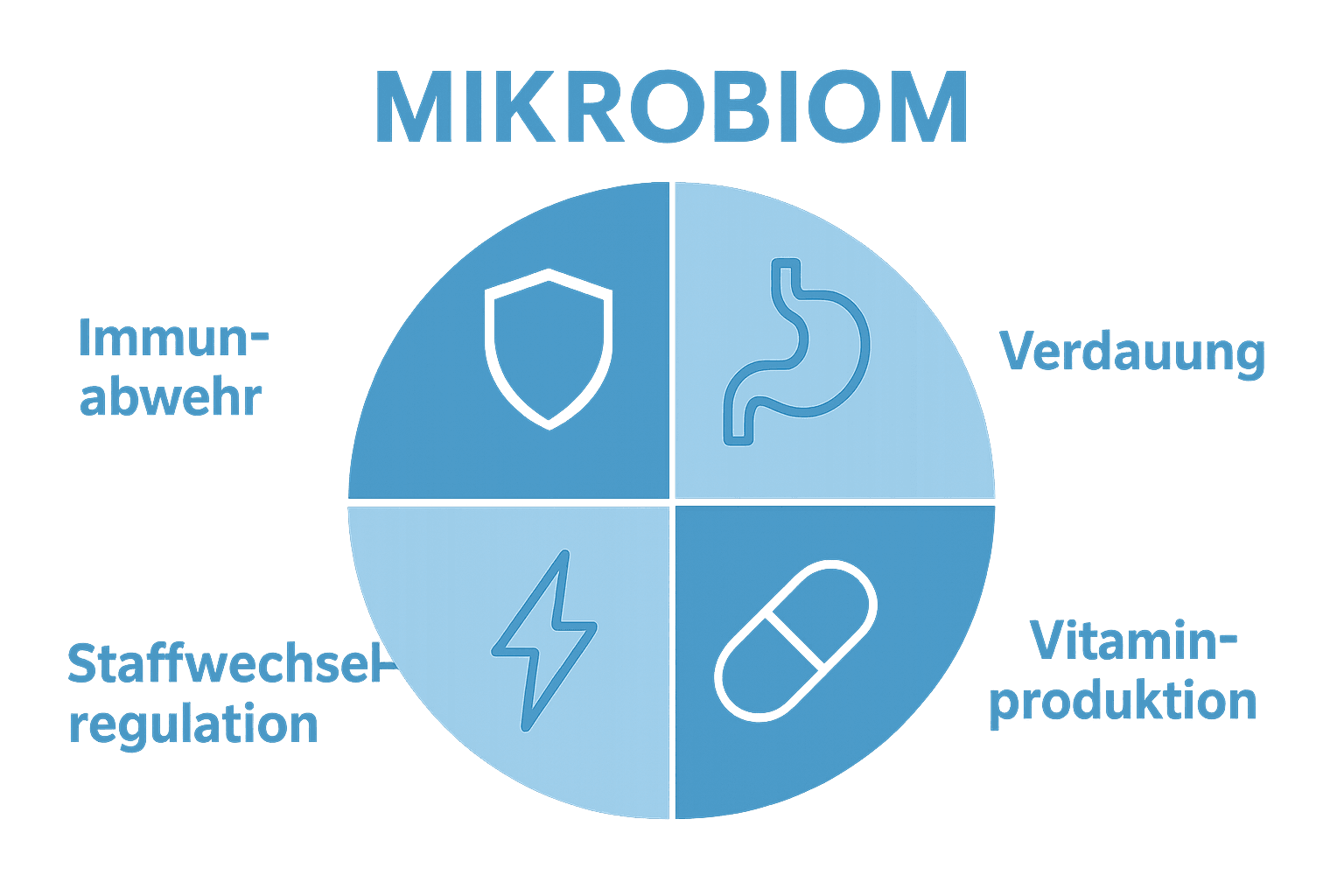
Our microbiome test analysis can help you understand the individual composition of your gut flora and identify potential health risks at an early stage. The diversity and balance of microorganisms are essential for a properly functioning immune system and good health.
For a clearer overview, the following table presents important functions of the microbiome in the human body and describes the significance of each.
| Function | Description |
|---|---|
| Digestion | Support in breaking down complex food components |
| Vitamin production | Synthesis of vitamins such as B12 and K by gut bacteria |
| Immune defense | Protection against pathogens and regulation of the immune system |
| Energy production | Conversion of fiber into short-chain fatty acids as an energy source |
| Mental health | Influence on neurotransmitters and potential effects on mood |
| Inflammation regulation | Support in controlling inflammatory processes |
The role of the microbiome in human health
The microbiome is more than just a passive collection of microorganisms. It functions as a complex ecosystem that fulfills essential roles in our health and well-being. Its importance extends far beyond the digestive system and influences nearly every aspect of our physical and mental functions.
Immune system and defenses
The microorganisms in our bodies play a crucial role in regulating and strengthening our immune system. They act as the first line of defense against pathogens and help the body distinguish between harmful and beneficial microbes. Scientific studies show that a balanced microbiome stimulates the production of immune cells and regulates inflammatory processes.
Important functions of the microbiome for the immune system include:
- Detection and defense against pathogens
- Production of antimicrobial substances
- Support for communication between immune cells
- Prevention of immune system overreactions
Metabolism and digestion
The gut is not only a digestive organ but also a complex ecosystem in which microorganisms control crucial metabolic processes. They help break down nutrients, produce important vitamins, and regulate energy metabolism. Our nutrition guide offers further insights into how you can positively influence your gut flora.
A disrupted microbiome can be associated with various health challenges, such as:
- Digestive disorders
- Weight problems
- Metabolic diseases
- Chronic inflammation
Research increasingly shows that the composition of our microbiome has a significant impact on our health. A balanced and diverse gut flora contributes substantially to our physical and mental well-being.
How the microbiome influences our metabolism
Metabolism is a complex interplay of biochemical processes in which the microbiome plays a crucial and often underestimated role. Our gut bacteria are not merely passive observers but active regulators of metabolic processes that significantly influence our energy levels, weight regulation, and nutrient absorption.
Energy production and nutrient utilization
Microorganisms in the gut have the unique ability to process nutrients that our bodies cannot digest on their own. They convert complex fiber into short-chain fatty acids, which serve as an important energy source for intestinal cells and other bodily functions. Scientific studies show that these microbial processes directly regulate our energy metabolism.
Important functions of gut bacteria in energy production:
- Conversion of indigestible fiber into usable energy
- Synthesis of vitamins such as B12 and K
- Supporting the absorption of minerals
- Regulation of blood sugar levels
Weight regulation and metabolic health
An imbalanced microbiome can be directly linked to metabolic disorders and weight problems. Certain bacterial strains influence not only digestion but also the hormones that regulate hunger and satiety. Our microbiome test can help you understand the individual composition of your gut flora.
Potential effects of a disrupted microbiome:
- Increased risk of overweight
- Insulin resistance
- Inflammatory processes
- Disruptions of energy metabolism
Research increasingly emphasizes that a healthy and diverse gut flora is the key to a balanced metabolism. The composition of our gut bacteria can have far-reaching effects on our metabolic health and influences how efficiently our body processes nutrients and produces energy.
The influence of diet and lifestyle on the microbiome
Our daily habits and dietary patterns have an enormous influence on the composition and health of our microbiome. Every meal, source of stress, and activity can directly affect the diversity and balance of our gut bacteria. A mindful lifestyle can therefore be crucial for a balanced and properly functioning microbiome.
Diet as a key factor
The food we eat is the most important factor determining the composition of our gut flora. Different foods promote different bacterial strains and can either positively or negatively affect microbial diversity. Current studies show that a fiber-rich and varied diet significantly supports the health of our microbiome.
Foods with particularly positive effects on the microbiome:
- Prebiotic foods such as artichokes, asparagus, and onions
- Fermented products such as yogurt, kefir, and sauerkraut
- Whole-grain products high in fiber
- A variety of plant-based foods
Lifestyle and the microbiome
It is not just diet; our lifestyle also plays a crucial role in gut health. Stress, lack of exercise, irregular sleep, and excessive alcohol consumption can negatively affect the composition of our microbiome. Our Gut Health Nutrition Guide offers practical tips on how you can support your gut flora.
Factors that can impair the microbiome:
- Chronic stress
- Irregular sleep patterns
- Lack of physical activity
- Frequent antibiotic use
- Environmental toxins and pollution
A mindful and balanced lifestyle can help stabilize and strengthen the microbiome. Research increasingly emphasizes that through targeted dietary and lifestyle choices, we can actively promote the health of our gut bacteria.
The following table provides an overview of lifestyle and dietary factors that can positively or negatively affect the microbiome.
| Factor | Effect on the microbiome | Illustrative effects |
|---|---|---|
| Fiber-rich diet | Positive | Greater diversity, support for beneficial bacterial strains |
| Fermented foods | Positive | Promotion of healthy microorganisms |
| Chronic stress | Negative | Reduced microbial diversity, disrupted balance |
| Lack of physical activity | Negative | Unfavorable changes in the gut flora |
| Frequent antibiotic use | Negative | Destruction of beneficial bacteria, longer recovery time |
| Sleep deprivation | Negative | Impact on microbial composition |

Future perspectives and research on the microbiome
Microbiome research is on the threshold of revolutionary discoveries that could fundamentally change our understanding of health and disease. Scientists worldwide are working to unravel the complex interactions between microorganisms and the human body and develop new therapeutic approaches.
Personalized medicine and the microbiome
The dream of personalized medicine is coming closer through microbiome research. Future medical treatments could be tailored to each individual’s specific microbial composition. Current research suggests that the microbiome could serve as a biomarker for various diseases and enable personalized prevention strategies.
Key areas of personalized microbiome medicine:
- Early detection of disease risks
- Customized dietary recommendations
- Individually tailored therapies
- Precise prediction of treatment outcomes
Therapeutic innovations
Researchers are developing new methods to manipulate the microbiome in a targeted way. Concepts such as microbiome transplants, precise bacterial strain therapies, and innovative probiotics promise breakthrough treatment options. These approaches could revolutionize treatments for chronic diseases, autoimmune conditions, and mental health conditions.
Promising areas of research:
- Development of targeted bacterial therapies
- Understanding the microbiome–gut–brain axis
- Research into microbiome modulators
- Genetic manipulation of gut bacteria
Science is on the verge of understanding the microbiome not merely as an observer, but as an active shaper of our health. The future of medicine will increasingly be shaped by understanding this microscopic community of life within our bodies.
Your microbiome—the key to lasting health
Many people experience digestive problems, a loss of energy, or a weakened immune system without knowing the underlying cause. The central topic of your article—the importance of a healthy microbiome—directly addresses these challenges. An imbalanced microbiome can trigger numerous complaints and impair well-being in the long term. Only those who truly understand the composition of their gut flora can take targeted steps to improve it.
Discover how your individual microbiome affects your health. With a gut flora analysis from mybody®x, you receive scientifically sound insights based on state-of-the-art laboratory analysis. Take advantage of our wide range of products and services related to digestive problems and personalized health solutions. Take the initiative now for a better gut feeling and visit mybody®x. Choose clarity and a better quality of life—get started today.
Frequently asked questions
What is the microbiome?
The microbiome refers to all the microorganisms, such as bacteria, viruses, fungi, and single-celled organisms, that live in and on our bodies and play an important role in our health.
Why is the microbiome important for health?
The microbiome influences key functions such as digestion, the immune system, metabolism, and even mental health. A balanced microbiota makes a significant contribution to our well-being.
How can I keep my microbiome healthy?
A diet rich in fiber, prebiotics, and probiotics, along with a healthy lifestyle free from chronic stress and with sufficient exercise, can promote the health and diversity of the microbiome.
What are the consequences of a disrupted microbiome?
An imbalanced microbiome can lead to digestive disorders, weight problems, metabolic diseases, and chronic inflammation. Therefore, it is important to maintain a balanced microbiota.



Share now:
Leaky Gut Tests 2025: The best analyses for your gut health
What to do about intestinal problems? Your guide to quick relief and lasting solutions