
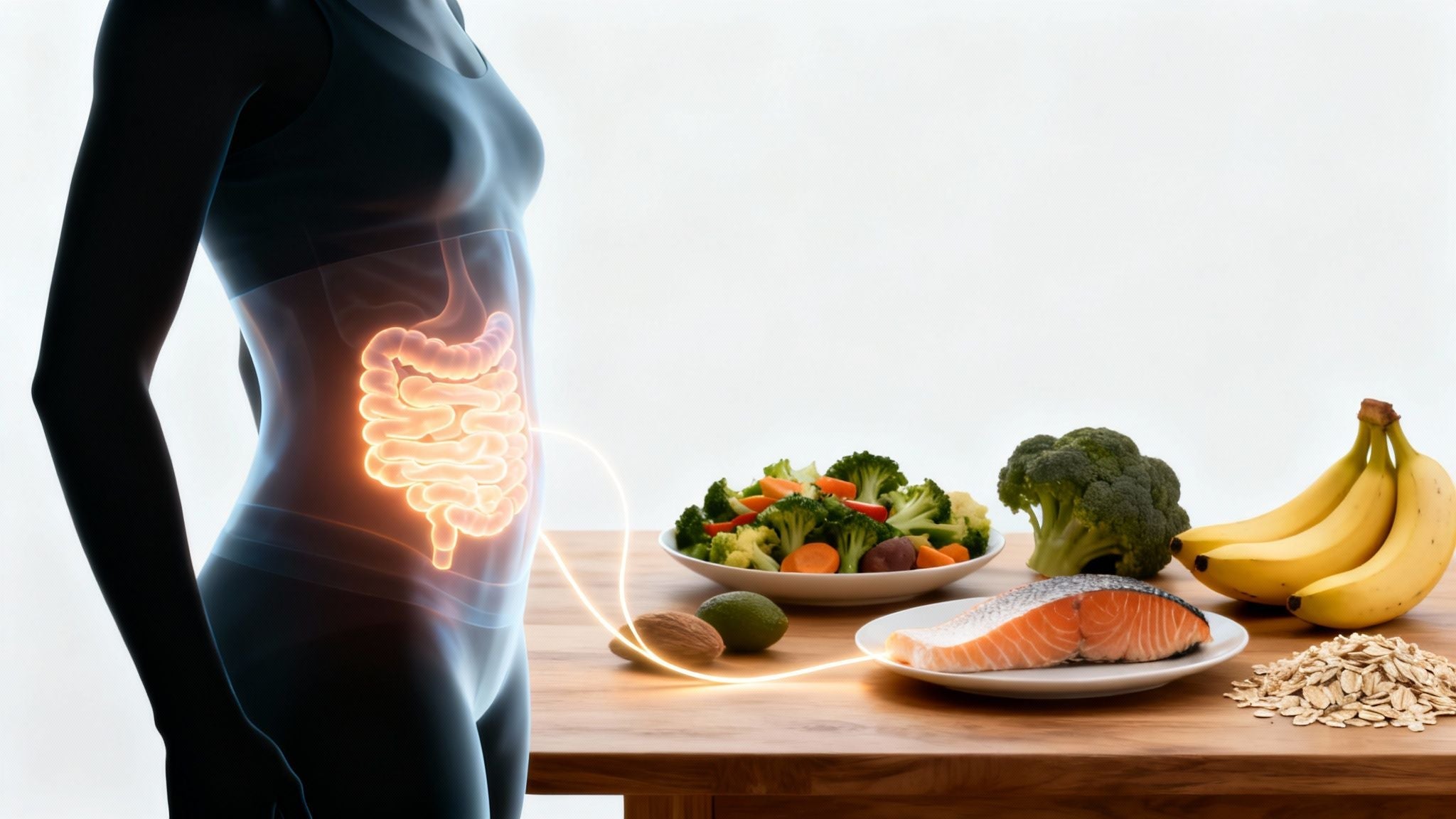
Chronic inflammatory bowel disease and diet—your path to greater well-being
A conscious diet for chronic inflammatory bowel disease is often the key to alleviating inflammation and getting troublesome symptoms such as abdominal pain or diarrhea under control. It is not about following a strict diet, but about understanding what your body really needs. By avoiding inflammation-promoting foods and instead choosing a nutrient-rich, gut-friendly diet tailored to your needs, you actively take control of your well-being.
How your food directly affects your inflammatory bowel disease
If you live with chronic inflammatory bowel disease (IBD) such as Crohn’s disease or ulcerative colitis, you know what it feels like when your own body works against you. You are not alone: Around 650,000 people in Germany live with IBD, and the number is rising. Our Western lifestyle, with its typical dietary habits, is considered an important risk factor in particular. You can find more information on the leben-mit-ced.de website.
Imagine your intestinal lining as the bouncer of an exclusive club. Its job is to let important nutrients in while keeping troublemakers such as bacteria and toxins out. But with IBD, this bouncer is overwhelmed and weakened. The protective barrier becomes permeable—what experts call “Leaky Gut.”
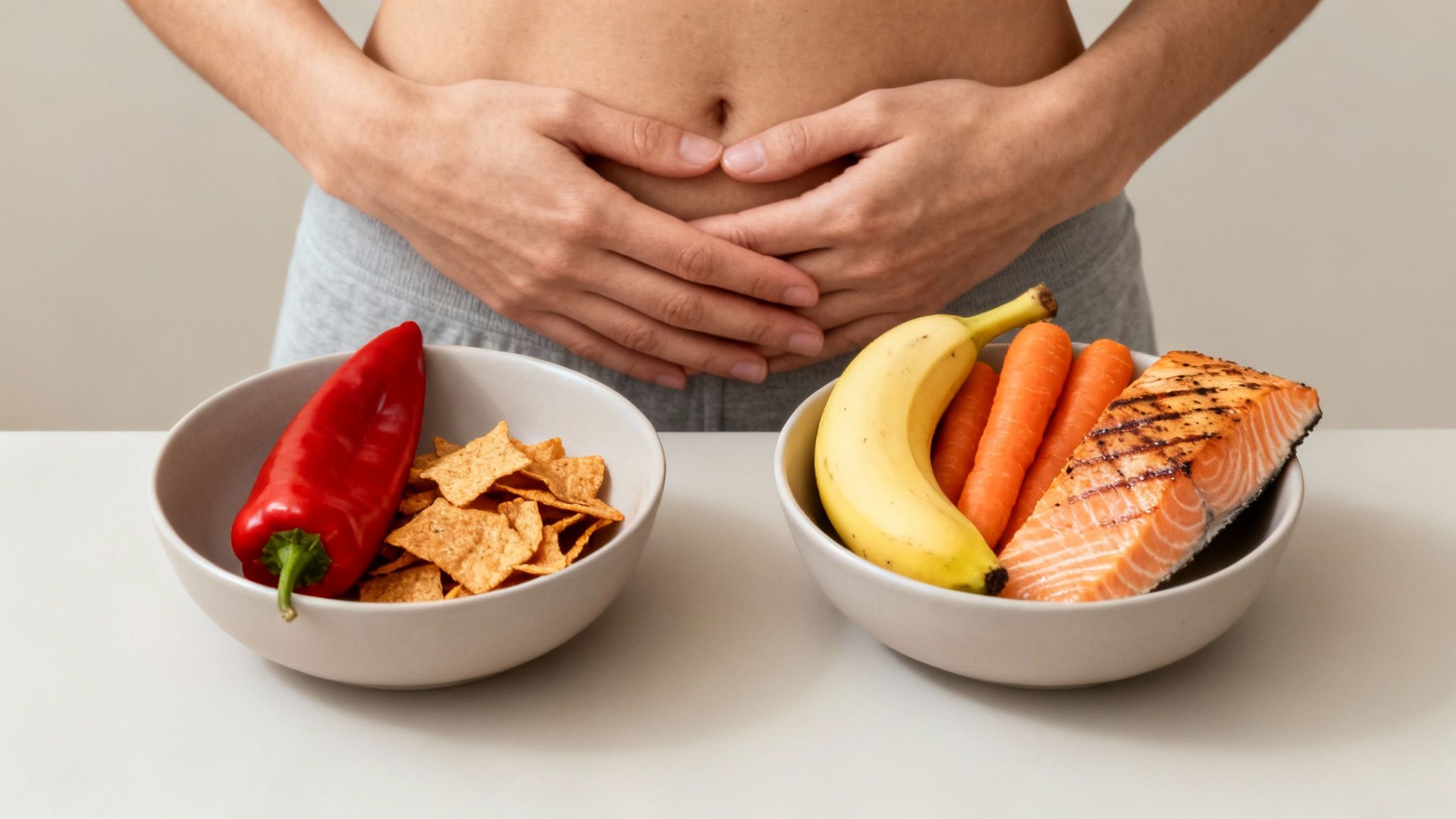
When eating becomes a problem
This is exactly where your diet comes in—it can be either a friend or a foe. The wrong foods irritate the weakened bouncer even more and further fuel the inflammation. The right ones, on the other hand, support it and help it recover.
The following table will help you quickly identify typical symptoms of chronic inflammatory bowel disease and shows which food groups are often possible triggers. This can help you better identify initial connections between your diet and your symptoms.
Symptoms and possible dietary triggers
| Common symptom | Possible diet-related triggers | What you should observe |
|---|---|---|
| Abdominal pain & cramps | Hard-to-digest, fatty, or heavily spiced foods | Pay attention to whether the pain occurs shortly after eating or with a delay. |
| Persistent diarrhea | Lactose, fructose, artificial sweeteners, and sometimes too much fiber | Keep a food diary to identify connections with specific meals. |
| Bloating & fullness | Legumes, cabbage, onions, carbonated beverages | Note which foods feel particularly heavy in your stomach. |
| Weight loss & fatigue | Insufficient nutrient absorption due to the damaged intestinal lining | Notice whether you feel particularly low on energy after certain meals. |
These symptoms are not imaginary. They are important signals from your body, showing you that something inside has fallen out of balance.
Your diet is one of the most powerful tools you can take into your own hands. It is not about strict deprivation, but about understanding what your body really needs to calm down.
The key lies in understanding
Instead of letting complicated diet rules overwhelm you, take the first step: learn to recognize the direct connection between what ends up on your plate and how you feel. It is about understanding the language of your gut.
Every meal is a decision—for more inflammation or for greater calm. When you know which foods often act as troublemakers and which act as peacemakers, you regain control. This guide helps you build the knowledge you need to make conscious, healthy choices for your health again. Inflammation is also an issue that affects the entire body. In our article, you can learn more about how to reduce inflammation in the body in general.
Proven dietary strategies for a calm gut
When your gut is acting up, the feeling of helplessness can often be overwhelming. But there is good news: with the right strategies, you can regain control and give your digestive system a targeted break. Think of these approaches as a toolbox. Not every tool is made for every screw, but with the right selection, you can finally address the causes of your symptoms.
The right diet for chronic intestinal inflammation is not a rigid set of rules, but a process of trying things out, observing, and learning. Your goal is to find out what makes you feel good and what does not. Three approaches have proven particularly effective in practice and can serve as your guide.
Low-FODMAP: the clever reduction of carbohydrates
Have you ever heard of FODMAPs? The word may sound complicated at first, but the idea behind it is quite simple. It is an abbreviation for Fermentable Oligo-, Di-, Monosaccharides und Polyols. These are certain short-chain carbohydrates found in many foods—from apples and onions to wheat and dairy products.
The problem? Our small intestine can absorb them only poorly. So they continue into the large intestine, where they are a feast for the bacteria living there. Imagine it as a wild party for your gut bacteria that unfortunately ends with unpleasant consequences: gas production, bloating, cramps, and diarrhea. A low-FODMAP diet restricts these “party guests” for a while to give your gut a much-needed break. It is important to note that it is not a long-term solution, but a tool for finding out your personal tolerance threshold.
The elimination diet as detective work
An elimination diet is essentially detective work for your body. It is not about giving up everything forever. Instead, for a limited period (usually 4-6 weeks), you deliberately eliminate foods that are often responsible for discomfort. Typical suspects often include:
- Gluten-containing grains: Wheat, spelt, or rye.
- Dairy products: Especially those high in lactose.
- Certain vegetables: Such as cabbage or onions.
- Highly processed foods: Full of additives and sugar.
After this strict phase, you start reintroducing the food groups one at a time and very slowly. You carefully observe how your body reacts. This way, you gradually identify your personal triggers and can adjust your diet without unnecessarily giving up everything.
An elimination diet is not a guessing game, but a systematic process. It gives you clear answers about which foods are your friends and which you should avoid, at least for now, to give your gut a chance to heal.
This microscopic image shows what happens in the intestinal lining with ulcerative colitis, a form of chronic intestinal inflammation.
You can clearly see how inflammatory cells (the many small dark dots) penetrate the tissue and disrupt its normal structure. This is exactly what causes the symptoms and shows why a soothing diet can be so crucial.
Anti-inflammatory diet: the foundation for healing
While the first two strategies primarily identify sources of trouble, an anti-inflammatory diet aims to actively support your body in healing. It is less of a short-term diet and more of a long-term lifestyle that reduces inflammation throughout the body.
The basic pillars are simple but effective:
- Healthy fats: Omega-3 fatty acids from oily fish such as salmon or mackerel, as well as from flaxseed oil and walnuts, are considered strongly anti-inflammatory.
- Colorful fruits and vegetables: Blueberries, broccoli, kale, and bell peppers are packed with antioxidants that protect your cells from stress.
- High-quality protein: Lean poultry, fish, and plant-based sources such as lentils (if you tolerate them well) provide the building blocks your body needs for regeneration.
- Powerful spices: Turmeric, ginger, and cinnamon can have a positive effect on inflammatory processes in the body.
At the same time, you are trying to reduce inflammation-promoting things such as sugar, trans fats (in fast food and processed foods), and too much red meat. This approach not only strengthens your gut but also your entire immune system, laying the foundation for sustainably improved well-being.
Your shopping list for a gut-friendly everyday life
We have covered the theory. Now let us move on to practice. A mindful diet for chronic bowel inflammation does not begin on the plate, but at the supermarket. With the right shopping list in hand, going to the supermarket suddenly becomes much easier. What was once a minefield of potential triggers becomes a true treasure trove for your gut.
This little guide is designed to give you confidence and help you make mindful choices in everyday life. It is about easing the burden on your gut while giving it the nutrients it needs to regenerate. So, do not view the following lists as strict rules, but rather as a caring recommendation for your gut.
Green light: These foods soothe your gut
These foods are generally well tolerated, especially when you are experiencing a flare-up or your gut is simply sensitive. They are easy to digest, rich in important nutrients, and help calm your entire digestive system.
- Lean protein: Chicken or turkey breast (skinless), white fish such as cod or pollock, and eggs are fantastic, easily digestible sources of protein.
- Well-tolerated carbohydrates: White pasta, white rice, or peeled and boiled potatoes provide energy without burdening your gut. Well-cooked oatmeal is often a good choice too.
- Steamed or boiled vegetables: Carrots, zucchini (without seeds), pumpkin, and parsnips are especially gentle when cooked.
- Ripe, low-acid fruit: A ripe banana or a spoonful of applesauce is often a great choice when you want something sweet but still easy to tolerate.
Always remember: Preparation makes a huge difference. Steaming, boiling, or gently pan-frying is almost always a better option than deep-frying or searing over high heat.
A calm gut begins with a well-planned shopping list. Every item in your basket is a choice for or against your well-being. Choose foods consciously that nourish your body instead of burdening it.
The following overview summarizes the most important dietary strategies to help you identify your personal triggers and get inflammation under control.
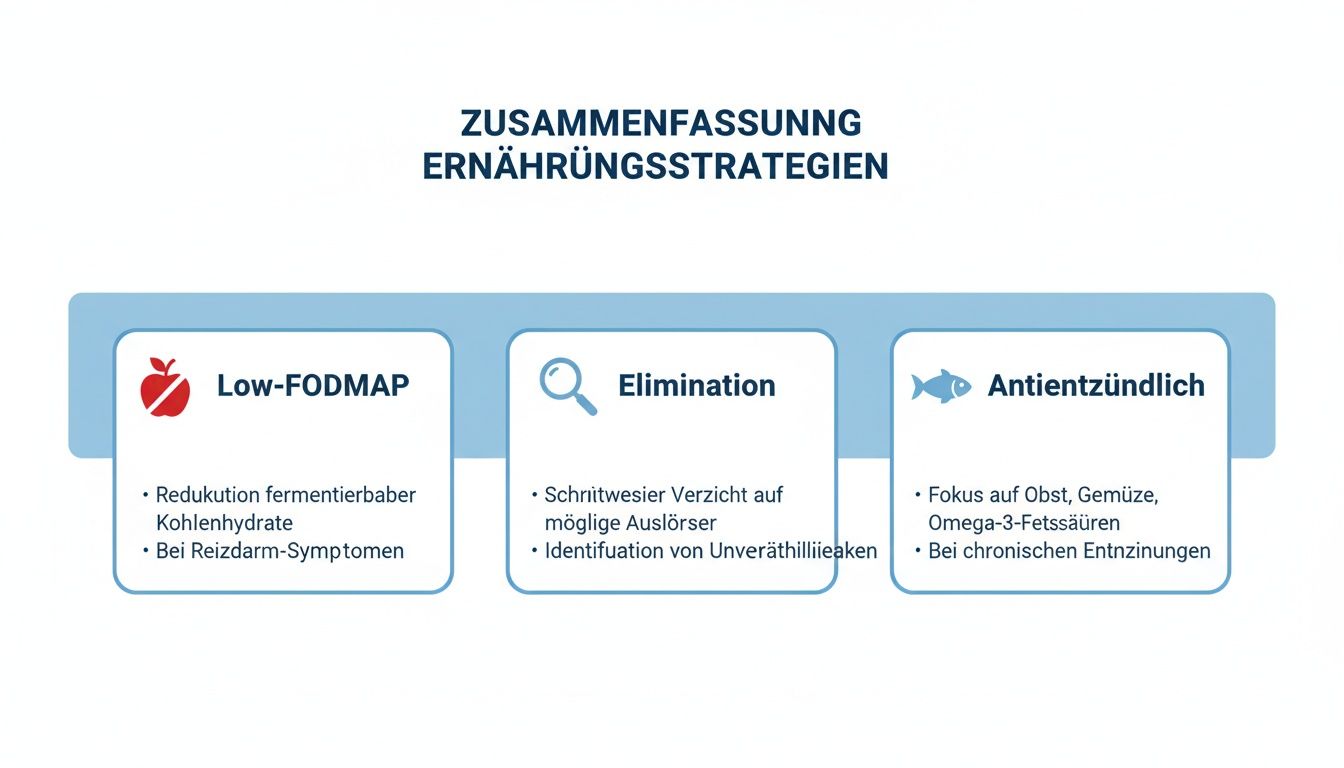
Here you can see at a glance how approaches such as the low-FODMAP diet, an elimination diet, and a generally anti-inflammatory diet can work together to specifically improve your gut health.
Be cautious with these potential troublemakers
While some foods soothe your gut, others can literally fuel inflammation. It’s incredibly important to know which products you should initially enjoy with caution or perhaps even avoid altogether. This gives your digestive system a chance to finally recover.
- Fatty and highly processed foods: Fast food, chips, fatty sausages, and most ready-made meals are difficult to digest and can promote inflammation.
- Spicy seasonings and sauces: Chili, pepper, and hot curries can further irritate the sensitive intestinal lining.
- Certain dairy products: Full-fat milk, cream, and strong cheeses can trigger symptoms in many people, often because of their high fat content or lactose.
- Sugar and artificial sweeteners: Soft drinks, sweets, and many processed foods are packed with sugar or sweeteners that can disrupt the balance of your gut flora.
- Alcohol and carbonated beverages: Both can directly irritate the intestinal lining and cause uncomfortable bloating.
A look at the figures in Germany shows how relevant the topic is: An estimated 150,000 to 400,000 people have ulcerative colitis, and diet plays a key role. Studies suggest that highly processed foods increase the risk, while a Mediterranean-style diet may help alleviate flare-ups. Since up to 47% of patients also experience accompanying conditions such as joint inflammation, the importance of a holistic, anti-inflammatory diet becomes even clearer.
By consciously adapting your shopping list, you are laying the foundation for a successful dietary change. This is an active step that allows you to regain a little quality of life every day. If you’re now looking for specific ideas on how to turn these foods into delicious dishes, you’ll find suitable anti-inflammatory diet recipes here.
Good and less suitable foods at a glance
So you don’t have to spend a long time thinking in everyday situations, we’ve put together this practical overview for you. This table compares gut-friendly options with potential trigger foods and is designed to provide quick guidance when shopping and cooking.
| Food category | Recommended (gut-friendly) | Best avoided (potential triggers) |
|---|---|---|
| Proteins | Chicken or turkey breast, white fish (cod, saithe), eggs, tofu (in moderation) | Red meat, processed meats, breaded or fried proteins |
| Carbohydrates | White rice, peeled potatoes, gluten-free pasta, well-cooked oatmeal | Whole-grain products (during a flare-up), bread with lots of seeds, muesli, legumes |
| Vegetables | Cooked carrots, zucchini (without seeds), pumpkin, parsnips, fennel | Raw vegetables, gas-producing varieties (cabbage, broccoli, onions), bell peppers |
| Fruit | Ripe bananas, applesauce, peeled and cooked pears, melons | Acidic fruit (citrus fruits), berries with small seeds, dried fruit |
| Fats & oils | Olive oil, flaxseed oil, avocado (in small amounts), nut butters (depending on tolerance) | Butter, margarine, sunflower oil, fried foods, trans fats |
| Dairy products | Lactose-free products, plant-based alternatives (oat and almond drinks), hard cheese (small amounts) | Whole milk, cream, soft cheese, yogurt with lots of sugar |
| Drinks | Still water, unsweetened herbal teas (fennel, chamomile), diluted juices | Carbonated drinks, coffee, alcohol, sugary soft drinks |
| Snacks & sweets | Dark chocolate (>70%), rice cakes, homemade energy balls (well tolerated) | Chips, sweets, pastries, ice cream, artificial sweeteners |
Use this table as a starting point. Keep in mind that every body reacts differently. What is beneficial for one person may trigger symptoms in another. Through mindful experimentation, find out what works well for you and your gut.
The key role of nutrients and gut bacteria
When you think about your gut health, abdominal pain or cramps probably come to mind first. But the issue goes much deeper. Your diet for chronic inflammatory bowel disease plays a huge role on two levels: It supplies your body with energy and important nutrients, and it influences the delicate balance of the trillions of bacteria living in your gut.
Imagine your intestines during a flare-up as a sieve full of holes. Constant inflammation can make the intestinal lining permeable. Even if you eat a very healthy diet, valuable vitamins and minerals can simply “slip through” without your body being able to absorb them. That is why nutrient deficiencies are not uncommon in people with IBD, but rather a serious accompanying condition.
Why nutrients are so crucial
If your body lacks important building blocks, this can worsen your symptoms and seriously drain your energy in everyday life. Do you constantly feel tired, are you more susceptible to infections, or can you barely concentrate? This is often not a coincidence, but a direct result of depleted nutrient stores.
You should pay particular attention to these nutrients:
- Iron: A deficiency causes anemia, which manifests as extreme fatigue and paleness.
- Vitamin B12: Essential for blood formation and your nerves. A deficiency can lead to exhaustion and even neurological problems.
- Zinc: This trace element is a true key player for your immune system and helps the intestinal lining regenerate.
- Vitamin D: Plays a central role in regulating inflammation in the body and is important for healthy bones.
- Omega-3 fatty acids: These “good” fats have a strong anti-inflammatory effect and can help reduce disease activity.
In Germany alone, 200,000 to 400,000 people are affected by IBD, yet the nutritional aspect is often underestimated. Did you know that an omega-3 deficiency is observed in up to 40% of those affected? Iron-deficiency anemia is also one of the most common accompanying conditions and can be easily identified with a simple blood test. You can find more information about these connections on the IBD Care Atlas website. A targeted nutrient test can finally provide clarity as to whether you may be lacking important building blocks.
Your gut bacteria: The invisible helpers
Now things get really exciting, as we delve into the fascinating world of your gut microbiome. It is the vast community of trillions of microorganisms that live in your gut. The best way to picture them is as a colorful, thriving garden. In a healthy garden, many different beneficial plants grow and keep weeds in check all by themselves.
With chronic intestinal inflammation, this garden unfortunately often becomes unbalanced. Experts then refer to this as dysbiosis. This means that the “good” bacteria that inhibit inflammation and protect your intestinal lining become fewer and fewer. At the same time, the “bad” bacteria that fuel inflammation have free rein and can multiply undisturbed.
Your microbiome is not a passive roommate, but an active partner in your health. The right diet feeds the good bacteria and helps you restore balance—one of the most important pillars in the treatment of IBD.
This is exactly where it becomes clear why a standard nutrition plan often falls short. Your microbiome is as unique as your fingerprint. What strengthens the good bacteria in your friend’s gut may not be right for you at all.
By deliberately eating foods rich in certain types of fiber (prebiotics)—such as oats, flaxseeds, or well-cooked vegetables—you give your beneficial gut inhabitants their absolute favorite food. They repay you by producing anti-inflammatory substances that help your intestinal lining heal. You can also read more about exactly how this interplay works in our comprehensive guide to the role of gut bacteria.
A personalized approach that takes both your nutrient supply and your microbiome’s needs into account is the key to success. It’s not just about calming your gut, but actively equipping it with the right tools so it can help itself.
How mybody-x tests finally give you clarity
You have now read a lot about the theory, but how can you find out what is really going on in your body? The best diet for chronic intestinal inflammation is not a one-size-fits-all solution; it is highly personal. Instead of continuing to grope around in the dark and guess what is good for you, you can establish clear facts. The mybody-x self-tests are like a personal compass that helps you finally gain clarity and make decisions based on solid evidence.
Think about it: You would not take medication without an accurate diagnosis, would you? You should take the same approach to your diet. Why eliminate entire food groups on a hunch when you can pinpoint exactly where the real causes of your symptoms lie?

Targeted identification of intolerances
Sometimes the obvious suspects are not actually causing the problems. An undetected reaction to gluten, lactose, or other foods can keep your immune system on constant alert without you realizing it, repeatedly fueling inflammation in your gut.
The mybody-x intolerance test analyzes your blood for highly specific IgG4 antibodies. If these levels are elevated, this may be a clear sign that your body is responding to certain foods with an immune reaction. This gives you a solid indication of which foods you should specifically eliminate for a while as part of an elimination diet to relieve your gut.
Identifying nutrient deficiencies precisely
As you now know, nutrient deficiencies are unfortunately common with IBD. Constantly feeling tired, weak, and unable to concentrate is not something you simply have to accept as a permanent condition. Often, depleted stores of iron, vitamin B12, or zinc are behind it.
With the mybody-x nutrient test, you can find out exactly whether and where you have deficiencies. Instead of trying random supplements, you can specifically replenish the nutrients your body really needs. This is a huge step toward regaining your energy and giving your immune system the building blocks it needs to heal.
Decoding your gut microbiome
The heart of your gut health is and remains your microbiome. An imbalance among the countless gut bacteria (known as dysbiosis) is a key factor that can perpetuate inflammation.
Your gut is as unique as your fingerprint. Testing your microbiome gives you a detailed map of your inner world and shows you which levers to adjust to restore balance.
The mybody-x gut microbiome test gives you a clear picture of your gut flora using a simple stool sample. You will learn specifically:
- Diversity: How diverse is your microbiome? High diversity is essential for a healthy gut.
- Balance: Is the ratio between the “good” and “bad” bacteria right?
- Recommendations: You receive personalized recommendations on which foods you can use to specifically nourish and strengthen your beneficial gut inhabitants.
Analyzing your microbiome is an incredibly powerful tool. If you would like to delve even deeper into the topic, you can find more fascinating insights in our article about the gut microbiome test.
From sample to result—it's that easy
The entire process is designed to make things as easy as possible for you. You conveniently order your test kit to your home, collect the sample yourself (blood, saliva, or stool) in just a few minutes, and send it free of charge to our German ISO-certified partner laboratory.
Your sample is analyzed there using scientifically validated methods. You then receive a detailed—and above all, easy-to-understand—report that provides you with the facts in black and white. This data-based foundation gives you the confidence to change your diet in a targeted and effective way, rather than simply going by how you feel.
While mybody-x tests help you gain clarity about your personal situation, healthcare as a whole is also moving forward: For practices and clinics looking to optimize their processes with secure digital technology, the use of AI in healthcare is an exciting field. For you personally, our tests offer the most direct way to take control of your health.
Your path to a better quality of life with the right diet
You have now seen how closely your diet and well-being are intertwined when you have chronic inflammatory bowel disease. It’s a journey, of course—but one where you are in the driver’s seat and can actively determine the direction toward a better quality of life.
Your diet is not an enemy, but one of your most powerful tools. It’s not about forcing yourself into a rigid corset of restrictions, but about finding a mindful diet tailored entirely to you that makes you feel good.
Find your personal path
The key to success is identifying your individual triggers and providing your body with exactly the nutrients it urgently needs for regeneration. An intolerance test or a nutrient test from mybody-x can help you put an end to the endless guesswork and replace assumptions with hard data.
Always remember: Small but consistent steps often have the greatest and most lasting effect. Every conscious choice of a gut-friendly food is a small victory for your health.
Use the knowledge from this guide to make informed decisions instead of letting your symptoms control you. From now on, you are in control.
You now know which foods are considered potential troublemakers and which ones can support your stomach as soothing helpers. You understand the importance of your microbiome and know how important optimal nutrient intake is. This knowledge gives you the power to actively shape your everyday life again.
It's best to start today—your gut and your entire body will thank you. With more energy, fewer symptoms, and a completely new sense of well-being.
Frequently asked questions
After all this information, you probably still have a few specific questions on your mind. That is completely normal. Here, we answer the most frequently asked questions we receive about chronic inflammatory bowel disease and nutrition to give you even more confidence on your journey.
Can changing your diet cure chronic inflammatory bowel disease?
Let's not kid ourselves: Changing your diet alone cannot cure a complex autoimmune disease such as Crohn's disease or ulcerative colitis. The causes are simply too complex for there to be a single miracle cure.
But—and this is the crucial point—your diet is one of the most powerful levers you have control over yourself. It is a central building block of your treatment and can make a massive contribution to getting your symptoms under control, making flare-ups less frequent and less severe, and significantly extending the good, symptom-free phases (remission). It is about calming the gut, reducing inflammation, and filling nutritional gaps. Many people affected regain a huge amount of quality of life through a smart, personalized diet for chronic inflammatory bowel disease.
How quickly will I notice an improvement from changing my diet?
This is one of the most individual questions there is and depends entirely on the severity of your symptoms and the path you choose. Some people notice bloating or cramps easing after just a few days. That is often a huge initial boost in motivation!
With broader strategies, such as a consistent anti-inflammatory diet or the low-FODMAP diet, it can also take several weeks for a truly stable improvement to set in. The most important thing is to stick with it and be patient. A food diary is invaluable here—it helps you keep track and see in black and white what makes you feel good and what doesn’t.
Patience is your most important companion. Your gut needs time to heal. Every day you make a conscious, gut-friendly choice is a step in the right direction.
Which mybody-x test is the most important one to start with?
If you’re just getting started and don’t know where to begin, a combination of the gut microbiome test and the food intolerance test is often the best and most informative starting point.
- The microbiome test gives you an overview of the ecosystem in your gut—a key factor in IBD. You can immediately see whether there is an imbalance (dysbiosis) that is aggravating the problems.
- The food intolerance test also reveals which foods may be quietly causing stress in the background and thereby keeping the inflammation going.
These two tests give you an exceptionally strong, data-based foundation. Instead of continuing to grope in the dark, you can adjust your diet strategically and focus on the things that make the biggest difference for you.
Do I have to give up my favorite foods forever?
No, that doesn’t have to be the case! The goal isn’t a life full of prohibitions, but learning to understand your body’s signals and explore your personal limits. It’s about identifying your individual triggers and developing a sense of how much of what is okay for you.
During stable, symptom-free phases, you can often carefully try small amounts of certain foods to see whether you tolerate them again. Many people find a great approach that works for them: They eat in a gut-friendly way most of the time, but can consciously allow themselves a small exception now and then without immediately triggering another flare-up. It’s about smart management, not lifelong, rigid restriction.
Are you ready to end the guesswork and finally gain clarity about your body’s needs? At mybody-x, you’ll find the right tests to put your diet on a solid, scientific foundation. Discover the possibilities now and take control of your gut health. Learn more at mybody-x.com.



Share now:
What white pieces in stool really say about your health
Intestinal Candida yeast: symptoms you should know about