

What white pieces in your stool really say about your health
Have you discovered white pieces in your stool and are worried? I can certainly understand that. Most of the time, something completely harmless is behind it, such as undigested food remnants. Sometimes, however, it is also a subtle signal from your body drawing attention to an underlying issue.
What your stool reveals about your gut health
Think of your bowel movements as a daily health update straight from your abdomen. Color, shape, consistency—and unusual additions such as white particles—are valuable clues about what is currently happening in your body. Many people quickly dismiss them, even though they are often the first clues to better understanding your own digestion and responding to imbalances at an early stage.
So, if you see white specks or flakes in the toilet, there can be many different reasons. The possibilities range from “completely normal” to a sign that you should examine more closely. This guide is intended to help you assess the situation more accurately without immediately panicking.
Why taking a closer look matters
The goal is to give you the tools to interpret your body’s signals correctly. Let’s take a step-by-step look at the most common causes:
- Undigested food: This is the classic explanation. Often, they are simply remnants of nuts, seeds, or very high-fiber vegetables.
- Fat digestion: Are the particles whitish, greasy, and floating on top? This may indicate impaired fat absorption.
- Inflammatory processes: Visible mucus is often a sign that your intestinal lining is irritated.
- Parasitic infection: Do you see tiny, perhaps even moving, specks? This could be a sign of worms.
Taking a mindful look in the toilet is nothing to be ashamed of; it’s an act of self-care. It gives you the opportunity to take proactive action for your health instead of ignoring the first warning signs.
In this article, we’ll guide you through it: You’ll learn how to distinguish between the different causes, when a visit to the doctor is really necessary, and how modern at-home analyses can provide clarity.
A at-home stool test, for example, can be an extremely useful tool for getting to the bottom of the exact causes and providing targeted support for your gut health. We want to give you reassurance and practical knowledge so that you can make informed decisions for your well-being.
The most common causes of white pieces in the stool
White pieces in the stool can have many different causes. Usually, however, the explanation is quite simple and harmless. Let’s go through the most common causes together so you can better understand what your body may be trying to tell you.
Undigested food residue as the most common reason
By far the most common cause of white particles is simply undigested food residue. Certain foods contain components that are difficult to digest, such as fiber or tough shells, which pass through our gastrointestinal tract almost unchanged.
This is completely normal and no reason for concern. It simply shows that your digestive system was unable to fully break down these particular components.
Typical culprits behind such harmless remnants include:
- Nut fragments: Small, hard pieces of almonds or walnuts.
- Seed shells: Shells from sunflower seeds, pumpkin seeds, or flaxseeds.
- Fiber-rich vegetables: Pieces of corn kernels, asparagus, or mushrooms.
- Medication capsules: Sometimes the insoluble shells of extended-release capsules are simply excreted again.
So if you ate something like this recently, there is a very good chance that you have already found the cause. Usually, these particles are clearly recognizable as what they are and appear only once.
Impaired fat digestion or fatty stool (steatorrhea)
However, if the white pieces look different—more whitish-yellow, greasy, shiny, or like small drops of fat—impaired fat digestion could be the cause. Doctors call this phenomenon steatorrhea, or simply fatty stool.
This means that your body cannot properly break down and absorb fats from food. The undigested fat is then simply excreted again.
Possible reasons often include a lack of important digestive enzymes from the pancreas or problems with bile production. Fatty stools often smell particularly unpleasant, are very bulky, and may float on the surface of the water.
Mucus as an indication of irritation
Another possible cause is visible mucus in the stool. A small amount is normal because it protects the intestinal lining. However, if you notice larger whitish or yellowish strands or clumps of mucus, this may indicate irritation or inflammation in the intestines.
You can think of mucus as a kind of “protective bandage” for your intestines. If your body produces noticeably large amounts of it, this often signals that the intestinal lining needs support—for example, because it is strained by inflammation or intolerances.
Common triggers of increased mucus production include irritable bowel syndrome and food intolerances. You should keep an eye on this observation, especially if other symptoms such as abdominal pain or bloating occur.
This infographic helps you make an initial assessment and decide whether further evaluation is advisable.
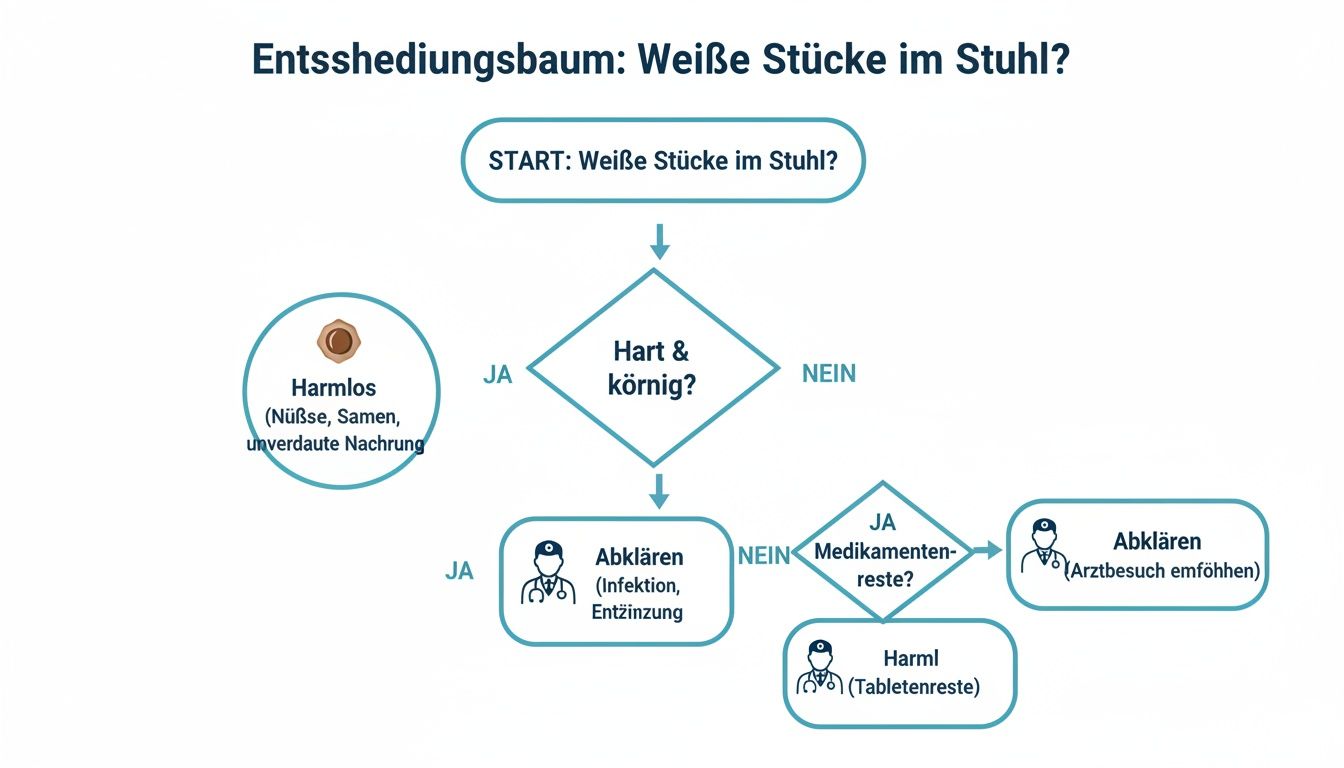
The decision tree makes it clear: The shape and any accompanying symptoms are crucial for distinguishing between harmless causes and signs that require medical evaluation.
Parasites as a less common cause
Even if the thought is unpleasant, we should address it: In rarer cases, small, white, thread-like specks that may even move can indicate a parasitic infection. Most often, these are pinworms, which are more common especially in children.
These specks are often only a few millimeters in size and may be accompanied by symptoms such as intense itching around the anus, which occurs particularly at night. Such an infection is generally easy to treat, but should be evaluated by a doctor to initiate the right treatment and prevent transmission to others.
How to recognize a parasitic infection as the cause
The thought of having worms or other parasites in our bodies is quite unpleasant for most of us. Nevertheless, it is important to consider this possibility objectively, because white pieces in stool can indeed be a sign of it. An infection has absolutely nothing to do with poor hygiene and can affect anyone.
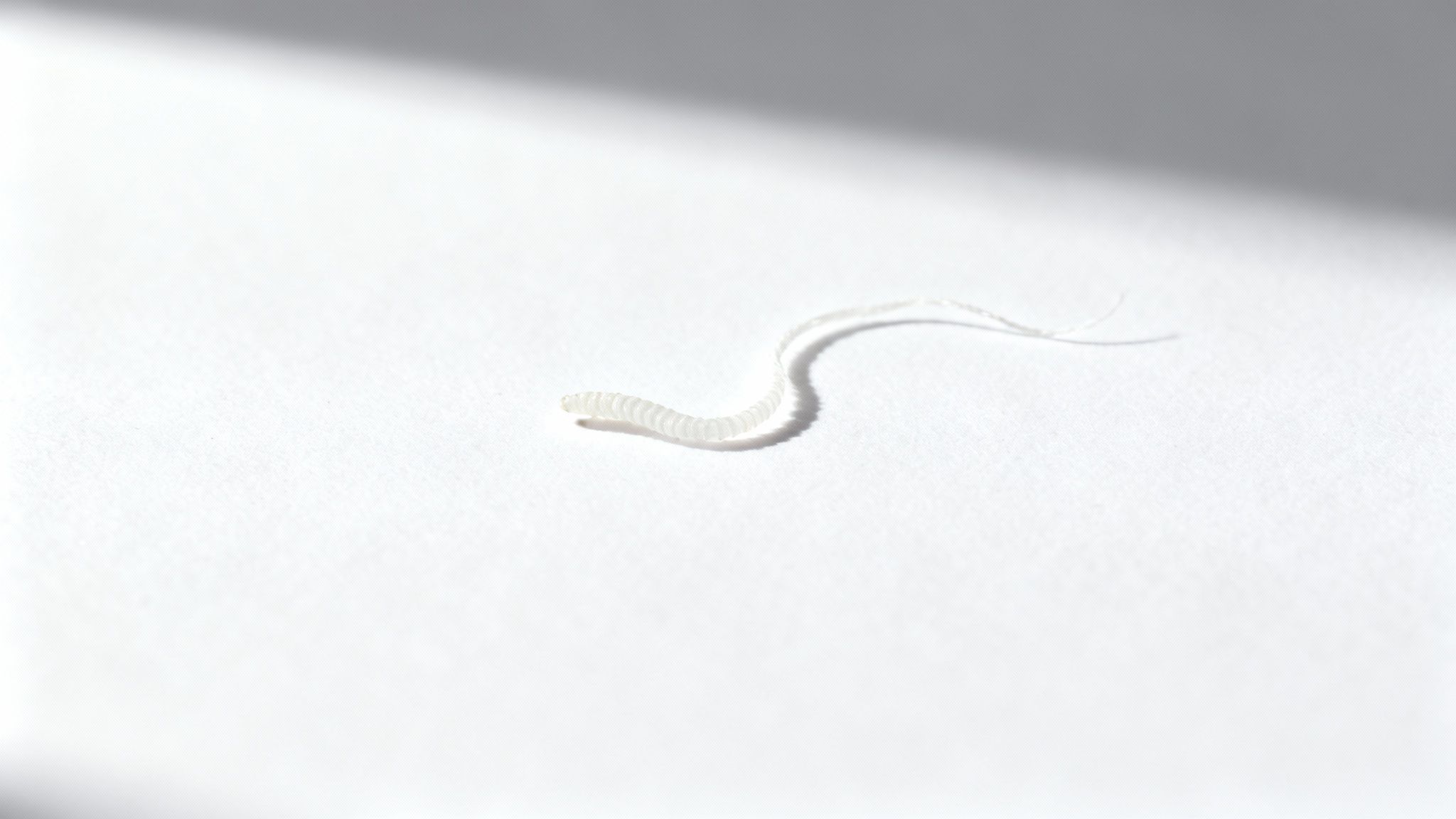
Pinworms (Enterobius vermicularis) in particular are a widespread cause of small, white specks or thread-like structures in stool. They are often only a few millimeters long and look like tiny, white pieces of thread. Sometimes they even move, which makes the situation fairly clear.
Understanding the life cycle of pinworms
To understand how an infection occurs in the first place, it is worth taking a brief look at the life cycle of these parasites. Infection usually happens unnoticed when tiny worm eggs are ingested. These eggs are extremely resistant and survive for weeks on surfaces such as toys, bed linens, or door handles.
If the eggs then enter the mouth—for example, via unwashed hands—the larvae hatch in the small intestine. They continue into the large intestine, where they develop into adult worms. At night, the female worms crawl to the anus to lay their eggs there. This process causes the most characteristic symptom of all.
Typical symptoms of a worm infection
A pinworm infection often does not go unnoticed. In addition to the visible white particles in the stool, there are other signs you should watch out for:
- Severe itching around the anus: This symptom is particularly characteristic. It occurs mainly at night or in the early morning and can really keep you awake.
- Restless sleep: The itching at night often leads to sleep disturbances, teeth grinding, and general irritability the next day.
- Abdominal pain: Sometimes nonspecific abdominal pain or mild nausea may also occur.
The important thing is that a parasitic infection is a medical issue you should not ignore. Prompt diagnosis is crucial to prevent further spread to family members and restore the balance in your gut.
In fact, pinworms are not uncommon in Germany, especially among children. Studies suggest that parasites are responsible for around 5–10% of all digestive complaints in children under 10. Because the eggs remain infectious for up to three weeks, other family members are also infected in 70% of cases. You can find more background information on this topic at praxistipps.focus.de.
How a parasitic infection is diagnosed
If you suspect that you have contracted something, accurate diagnostic testing is the next logical step. Your doctor can, for example, perform a simple tape test. In the morning, immediately after waking up, a piece of adhesive tape is applied to the skin around the anus and later examined under a microscope for eggs.
For a more comprehensive analysis, modern laboratory tests are now available. The mybody® Parasite Test enables a discreet and thorough examination from home. Your stool sample is tested in the laboratory for a whole range of worms, eggs, and other single-celled parasites (protozoa), which are often impossible to detect with the naked eye. To ensure that your sample provides meaningful results, you can find detailed instructions here on how to collect a stool sample correctly. After all, an accurate diagnosis is the key to the right treatment.
What fatty stool reveals about your digestion
Besides the white pieces in your stool, have you also noticed that your bowel movements look somewhat different? Perhaps they have an oily sheen, float on the water, or smell particularly unpleasant. These could be clear signs of impaired fat digestion—a phenomenon also known as fatty stool or medically as steatorrhea.
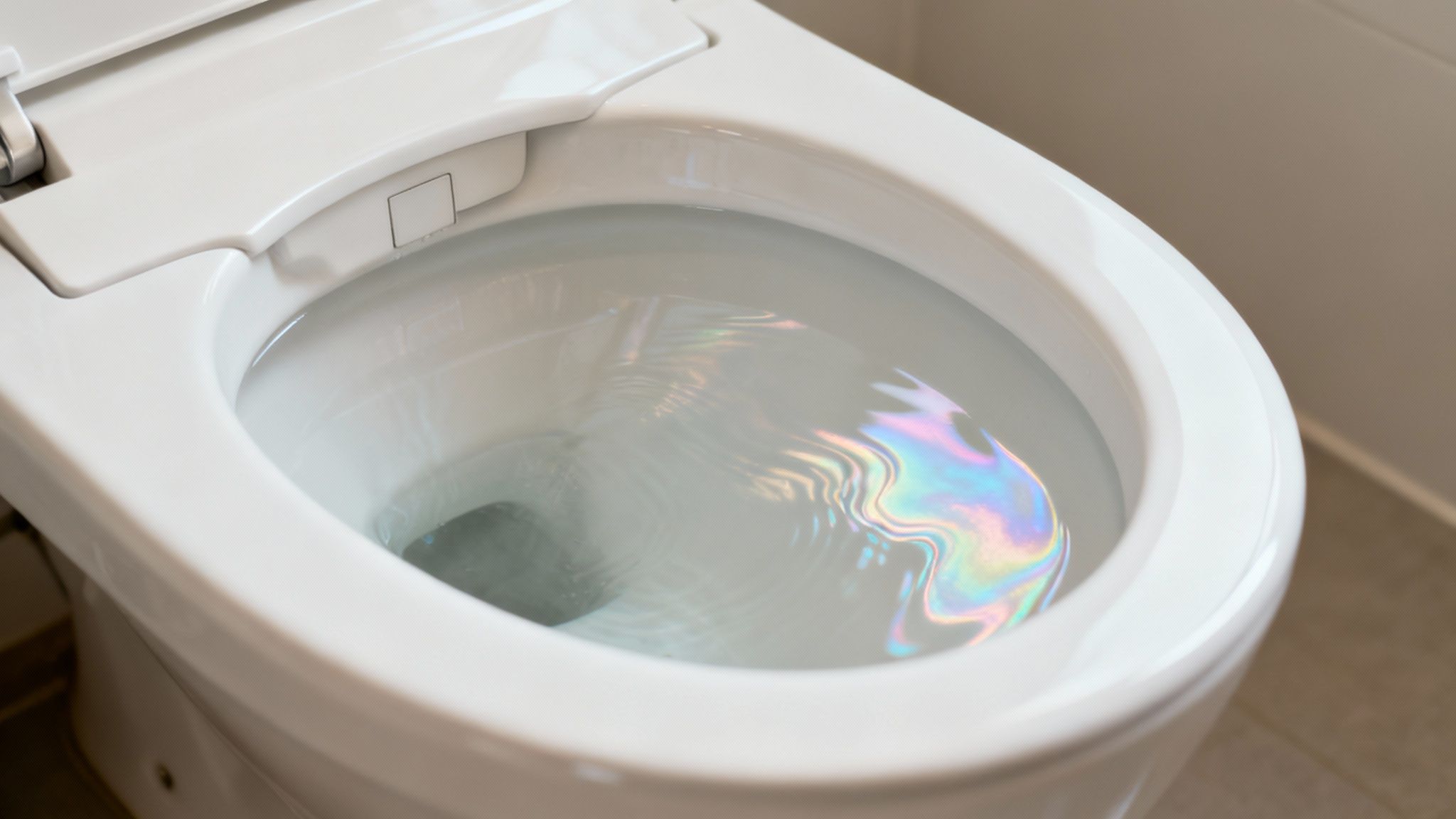
But what exactly does that mean? Basically, it is an unmistakable signal from your body: The fats from your food are not being broken down and absorbed properly. Instead of serving as a valuable source of energy and building blocks for hormones or cells, they pass through your digestive tract undigested and end up straight back in the toilet.
How impaired fat digestion develops
Imagine your fat digestion as a perfectly coordinated team. The main players are your pancreas and gallbladder. The pancreas provides the crucial enzymes (lipases) that break fats down into tiny, usable building blocks. At the same time, the gallbladder sends bile acids into the game, which you can think of like dish soap: They break up large fat droplets so the enzymes can act on them at all.
If either of these two players fails or does not perform at full capacity, the entire system becomes unstable. The fat remains undigested and causes the typical symptoms.
The causes can vary widely:
- A weak pancreas: It may not produce enough digestive enzymes.
- Gallbladder problems: Gallstones or insufficient production of bile acids can disrupt the preliminary “wash” of fats.
- Diseases of the small intestine: Inflammation or damage to the intestinal lining can hinder the absorption of fats that have already been broken down.
- Certain medications: Some medicines can block fat absorption as a side effect.
Fatty stool is more than just an unpleasant digestive problem. It is a clear indication that your body is excreting valuable nutrients and energy unused. In the long term, this can have far-reaching consequences for your health.
The consequences of undetected fat malabsorption
If your body does not absorb fats properly, it lacks more than just energy. The associated deficiency of fat-soluble vitamins is particularly critical. Your body needs fat to absorb the vitamins A, D, E and K from food in the first place. These vitamins are essential for a strong immune system, healthy bones, protecting your cells, and proper blood clotting.
Chronic fatty stool can go unnoticed and lead to a serious vitamin deficiency, which can manifest as fatigue, increased susceptibility to infections, or skin problems. Bright white or greasy particles in the stool are often an early warning sign of steatorrhea, which affects as much as 2–5% of the population in Germany. In medicine, fat excretion of more than 7 grams per 24-hour stool sample is considered the threshold. This is often accompanied by unpleasant bloating and a constant feeling of fullness.
How to gain clarity about your fat digestion
So, as you can see: Observing white pieces in the stool, especially in combination with signs of fatty stool, is an important first step. If you suspect that something is not working properly with your fat digestion, a targeted stool test can provide valuable insights.
A laboratory analysis can determine the exact fat content in your stool and provide objective confirmation of whether action is needed. This knowledge is the foundation for taking targeted measures for your diet and lifestyle and sustainably strengthening your digestion. Your body’s ability to use fats efficiently is central to your overall well-being. In our article, you can learn more about what fat metabolism actually is.
Mucus in the stool as a possible sign of inflammation
Don’t worry, a thin layer of mucus on your intestinal lining is completely normal at first and even very important. You can think of it as a fine, invisible protective film that shields your sensitive intestinal wall from irritation and pathogens. Normally, this mucus is so unobtrusive that you don’t even notice it.
But if you suddenly find clearly visible whitish or yellowish strands of mucus or even entire clumps in your stool, this is a clear signal from your body. A signal to take a closer look. Increased mucus production is almost always a defense reaction. Your intestines are trying to combat or eliminate something that is irritating them.
Why your intestines produce more mucus
Such a reaction can have a wide range of triggers. In most cases, it is caused by irritation, which in turn can be attributed to various factors.
Possible reasons for visible mucus in the stool include:
- Irritable bowel syndrome (IBS): This is a functional disorder in which intestinal movements and sensory perception become uncoordinated. This often leads to excessive mucus production.
- Food intolerances: Your body cannot tolerate certain foods, responds with mild inflammation, and produces more mucus as a protective measure.
- Chronic inflammatory bowel diseases (IBD): In conditions such as Crohn’s disease or ulcerative colitis, the intestinal lining is permanently inflamed.
- Infections: Even completely “normal” bacterial or viral infections can temporarily trigger inflammation and stimulate mucus production.
These inflammatory processes are not only unpleasant; they can also significantly impair the absorption of nutrients from your food. When the intestinal wall is irritated and virtually “leaky,” it can no longer perform its functions properly. This brings us full circle to another important topic. You can learn more about how a damaged intestinal barrier affects your overall health in our article on Leaky Gut Syndrome.
Calprotectin as a marker of inflammation
But how can you find out whether there really is inflammation in the intestines? This is exactly where a crucial laboratory value comes into play: Calprotectin.
Calprotectin is a protein found primarily in certain white blood cells—the small helpers of our immune system. When inflammation is raging in the intestines, these immune cells migrate there to “clean up.” In the process, they release calprotectin, which is then easily excreted in the stool.
Imagine calprotectin as a small smoke alarm for your gut. The more smoke (that is, inflammation) there is, the louder the alarm sounds—and the higher the measurable calprotectin level in your stool.
An elevated calprotectin level is therefore a very reliable indication of inflammatory processes in the gastrointestinal tract. Data from IMD Berlin show that in approximately 15 % elevated levels (>50 µg/g) are found in stool samples from 30- to 50-year-olds with digestive problems. Often, this is due to what is known as proinflammatory dysbiosis—an imbalance of gut bacteria that actively fuels inflammation.
How a mybody® stool test can help you
This is exactly where modern at-home analyses come in. The mybody® gut analysis not only measures your calprotectin level, but also provides a complete picture of your gut flora through a comprehensive microbiome analysis.
This is how you can find out whether you have dysbiosis, which beneficial bacterial strains are missing, or which troublemakers are present in excessive amounts. Based on your results, you'll then receive personalized, scientifically sound recommendations. You'll learn how to calm your gut and restore balance to your gut flora with a targeted anti-inflammatory diet and the right nutrients.
When you should definitely see a doctor
Of course, in most cases, white specks in the stool are harmless. Often, they're simply undigested remnants of lunch. But it's just as important to recognize the moments when your body may be sending you a more serious signal. Your health comes first, and when certain warning signs appear, you shouldn't hesitate to seek professional advice.
This isn't about causing panic, but about giving you peace of mind. You should know when it's time to take action, simply to be on the safe side. Seeing a doctor provides clarity and is always the right step if you're unsure or your gut feeling tells you that something isn't right.
Red flags when there are white pieces in the stool
Some symptoms are like red flags that you shouldn't ignore. If you notice white particles in your stool and also experience one of the following signs, seeing a doctor is urgently recommended. This combination may indicate more serious problems that require a prompt diagnosis.
Your personal checklist for your doctor's visit:
- Severe or persistent abdominal pain: We don't just mean a slight twinge, but truly intense, cramp-like pain that simply doesn't go away.
- Fever and chills: An elevated temperature together with digestive problems is often a sign of an infection or more severe inflammation in the body.
- Blood in the stool: Whether bright red or black, this is always a warning sign that requires immediate medical evaluation.
- Unexplained weight loss: Are you losing weight even though you haven’t changed your diet or lifestyle? This could indicate impaired nutrient absorption.
- Sudden and drastic changes: Has your bowel movement become completely different from one day to the next? For example, have you suddenly had diarrhea for days or severe constipation?
- Signs of dehydration: A dry mouth, intense thirst, dizziness, or very dark urine often accompany severe diarrhea and indicate significant fluid loss.
Always remember: You know your body best. If something feels fundamentally wrong or you are seriously concerned, that is reason enough to make an appointment. It’s better to ask once too often than to overlook an important warning sign.
A doctor can determine what is really going on by asking targeted questions, performing a physical examination, and possibly conducting further tests such as blood work or an ultrasound scan. This professional evaluation is crucial to ensure that nothing serious is overlooked. Ultimately, it’s about your well-being and health.
Your questions about white pieces in the stool—answered quickly
Here, we answer the questions we are most frequently asked about white pieces in the stool. We want to provide you with quick, easy-to-understand answers so you can better assess your situation.
Can medications cause white pieces in the stool?
Yes, absolutely—and in most cases, it is completely harmless. Certain medications, especially capsules with a hard-to-dissolve shell (so-called extended-release tablets), do not dissolve completely in the digestive tract.
The active ingredient is absorbed normally by the body, but the empty shell simply continues through the intestines and is excreted as a small, white or transparent particle. This therefore does not mean that the medication did not work.
Some heartburn remedies (antacids) that contain a lot of calcium carbonate can also lighten the stool or cause white specks. If you’re unsure, take a quick look at your medication’s leaflet or simply ask your doctor’s office or pharmacist.
My child has white specks in their stool—what should I do?
In children, small, thread-like white specks in the stool are often a classic sign of a pinworm infection. That may sound alarming at first, but it’s common, easily treatable, and definitely no reason to panic.
Look out for additional symptoms that could reinforce this suspicion:
- Severe itching around the anus, which occurs especially at night and deprives the child of sleep.
- General restlessness and irritability, often a consequence of poor sleep.
- Sometimes also mild abdominal pain.
Seeing a pediatrician is the right step here. They can usually confirm the diagnosis quickly and prescribe a suitable deworming treatment—generally for the entire family. This is important to prevent reinfection among family members. Of course, undigested food residue can also be the cause in children, but when in doubt, it is better to have it checked once too often.
If your child has white spots in their stool and itching around the anus, seeing a doctor is always advisable. A pinworm infection is widespread and can quickly be brought under control with the right treatment.
How does a mybody® test help me find the cause?
A mybody® test offers you a scientifically sound and discreet analysis at home to investigate the causes of your digestive problems. Depending on what you suspect, very different tests may be suitable.
If you suspect that a fat digestion disorder is behind the white particles, a stool analysis can measure the exact fat content in your stool. This gives you an objective value that shows whether action is really needed.
If you mainly notice mucus in your stool and suspect inflammation, the corresponding test determines your calprotectin level. This marker is a reliable indication of whether inflammatory processes are currently occurring in your intestines.
The most comprehensive option is our microbiome analysis. It deciphers the exact composition of your gut flora. An imbalance (dysbiosis) is often at the root of many digestive problems. Based on your individual results, you’ll receive personalized, easy-to-implement recommendations for your diet and lifestyle—so you can specifically strengthen your gut health and address the cause of your symptoms sustainably.
Do you finally want clarity about your gut health and the cause of your symptoms? At MYBODY Lab GmbH, you’ll find scientifically sound analyses for use at home. Discover the possibilities now and receive personalized recommendations to specifically improve your well-being. Find the right test at mybody-x.com


Share now:
Rebuilding gut flora after diarrhea: Your ultimate guide
Chronic Inflammatory Bowel Disease and Nutrition – Your Path to Greater Well-Being