

Nutrient Deficiency Symptoms – Recognize Early, Take Targeted Action
Constant fatigue, difficulty concentrating, or weakened immune defenses can quickly become a burden in everyday life. A frequently overlooked cause is a nutrient deficiency, which affects many people even in Central Europe and can have individual causes. Those who familiarize themselves with the typical signs at an early stage gain valuable knowledge to take targeted countermeasures and use modern tests to optimally tailor their nutrient intake.
Table of Contents
- What Is Nutrient Deficiency? Definition and Misconceptions
- Common symptoms of various nutrient deficiencies
- Typical causes and risk factors in Central Europe
- Which nutrients are often affected – examples
- Modern diagnostics: laboratory tests and self-tests
- Individualized prevention and avoiding mistakes
Key Insights
| Point | Details |
|---|---|
| Nutrient Deficiency | Nutrient deficiency occurs when the body does not receive sufficient essential nutrients and can be divided into marginal and absolute forms. |
| Causes and Risk Factors | The most common causes are an unbalanced diet, chronic illnesses, and increased nutrient requirements, particularly in pregnant women and athletes. |
| Recognizing Symptoms | The most common symptoms include chronic fatigue, difficulty concentrating, and a weakened immune system; these may indicate a nutrient deficiency. |
| Prevention and Diagnostics | Regular nutrient checks through blood tests and a balanced diet are crucial for preventing deficiencies and maintaining health. |
What Is Nutrient Deficiency? Definition and Misconceptions
Nutrient deficiency is a complex health phenomenon in which the body does not receive sufficient essential nutrients. Essential macro- and micronutrients play a central role in our metabolic processes and health.
There are two basic forms of nutrient deficiency:
- Marginal nutrient deficiency: Subtle under-supply in which the first mild symptoms are not yet apparent
- Absolute nutrient deficiency: Severe under-supply that can lead to serious deficiency diseases
The causes of nutrient deficiencies are varied and can have different origins:
- Unbalanced diet
- Chronic illnesses
- Metabolic disorders
- Medication use
- Increased nutrient requirements (e.g., during pregnancy or intensive exercise)
Important to know: Not every deficiency immediately manifests through noticeable symptoms. Deficiencies often develop gradually and are only recognized at a late stage. Chronic fatigue, difficulty concentrating, and a weakened immune system can be the first indications.
Pro tip: Have your nutrient levels checked regularly to identify deficiencies at an early stage.
Common symptoms of various nutrient deficiencies
Nutrient deficiencies can manifest in many ways and affect our overall health. Typical symptoms of a nutrient deficiency range from mild complaints to serious health problems.
The most common signs of a nutrient deficiency include:
- Chronic fatigue
- Difficulty concentrating
- Weakened immune system
- Hair loss
- Paleness
- Muscle weakness
- Mood swings
The specific symptoms vary depending on which nutrient is lacking:
- Iron deficiency: Leads to anemia with symptoms such as fatigue and reduced performance
- Vitamin D deficiency: Can cause bone problems and a weakened immune system
- Vitamin B12 deficiency: Can cause nerve damage and neurological disorders
The causes of nutrient deficiencies are varied and range from an unbalanced diet and chronic illnesses to individual metabolic processes.
If symptoms persist, seek medical advice and have your nutrient levels checked.
Groups at particular risk include vegetarians, vegans, athletes, pregnant women, and people with certain chronic illnesses.
Pro tip: Have your nutrient levels checked regularly with a blood test to detect deficiencies at an early stage.
Typical causes and risk factors in Central Europe
Nutrient deficiencies are a growing health problem in Central Europe with complex causes. Multifactorial development mechanisms shape the development of nutrient deficiencies in our region.
The most common causes of nutrient deficiencies include:
- An unbalanced diet
- Chronic illnesses
- Increased metabolic demands
- Medication use
- Stress and an irregular lifestyle
- Vegan and vegetarian diets
Groups at particular risk include:
- Older people
- Pregnant and breastfeeding women
- People with chronic illnesses
- Athletes with high training loads
- People with restricted food intake
Other risk factors also play a decisive role:
- Highly processed foods
- Fast food consumption
- Inadequate nutrient intake
- Hormonal changes
- Environmental pollution
Around 30–40% of Central Europeans suffer from one or more nutrient deficiencies.
The most critical nutrient deficiencies in our region concern vitamin B12, iron, vitamin D, and iodine. These deficiencies can have significant long-term health consequences.

Pro tip: Have your nutrient levels checked at least once a year through a comprehensive blood test.
Which nutrients are often affected – examples
Nutrient deficiencies can affect various essential micronutrients and vitamins. Frequently underconsumed nutrients have specific effects on our organism.
The nutrients most commonly affected are:
- Vitamin B12
- Iron
- Folic acid
- Calcium
- Iodine
- Vitamin D
- Magnesium
Gender-specific differences in nutrient deficiencies:
-
Women are particularly at risk of:
- Iron
- Iodine
- Vitamin B12
-
Men are more likely to suffer from deficiencies in:
- Magnesium
- Zinc
- Vitamin B6
A nutrient deficiency can lead to significant health problems in the long term.
Different risks apply to different stages and situations in life:
For a better overview of which population groups are particularly at risk of nutrient deficiencies and why, see the following overview:
| Risk group | Typical reason for risk | Recommended preventive measure |
|---|---|---|
| Pregnant women | Increased nutrient requirements | Special supplements and monitoring |
| Older people | Nutrient absorption decreases | Regular blood tests and counseling |
| Vegetarians & vegans | Lack of animal products | Targeted nutritional supplementation |
| Athletes | Higher consumption | Individual nutrition plans |
| People with chronic illnesses | Impaired absorption | Targeted medical monitoring |
- Pregnant women need more folic acid
- Athletes have an increased need for magnesium
- Vegetarians need to pay attention to vitamin B12
- Older people often have problems absorbing calcium
These nutrients play a role ranging from blood formation and immune defense to bone development.
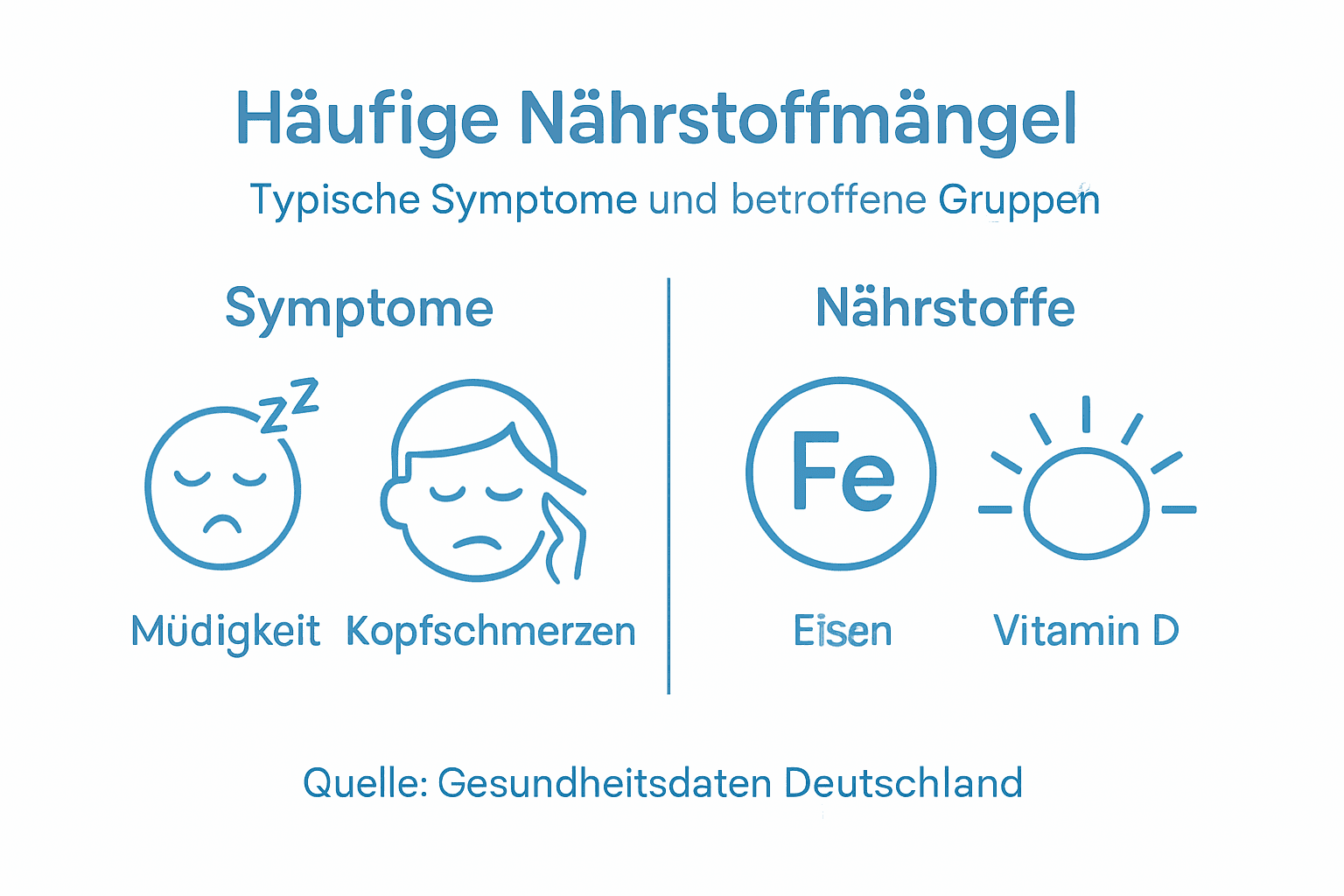
Pro tip: Have your individual nutrient levels checked regularly through a comprehensive blood test.
Modern diagnostics: laboratory tests and self-tests
The diagnosis of nutrient deficiencies has improved significantly through modern technologies. Laboratory diagnostic procedures now enable a precise analysis of nutritional status.
Modern diagnostic methods include:
- Blood tests
- Saliva analyses
- Hair analyses
- Urinalyses
- Genetic screenings
Important laboratory parameters in diagnostics:
A quick comparison highlights the key features of modern diagnostic procedures for nutrient deficiencies:
| Diagnostic method | Sample material | Accuracy | Area of application |
|---|---|---|---|
| Blood test | Blood | Very high | Comprehensive nutrient monitoring |
| Saliva analysis | Saliva | Moderate | Initial guidance on minerals |
| Hair analysis | Hair | Variable | Conclusions about long-term status |
| Urinalysis | Urine | Medium | Short-term excretion analysis |
| Genetic screening | Blood cells | High | Assessment of individual risks |
- Albumin
- Cholesterol
- Folic acid
- Vitamin B12
- Transferrin
- Prealbumin
Distinction between laboratory tests and self-tests:
-
Laboratory tests:
- Professionally performed
- Highest accuracy
- Comprehensive analysis
- Medical interpretation
-
Self-tests:
- Simple to perform
- Lower accuracy
- Quick result
- Initial guidance
Professional laboratory analyses provide the most reliable results for nutrient diagnostics.
Particularly recommended tests for risk groups:
- Vitamin B12 test
- Vitamin D test
- Iron test
- Folic acid test
Pro tip: Always have your test results interpreted and discussed by a medical specialist.
Individualized prevention and avoiding mistakes
Nutrient supply in Germany requires a holistic and individualized approach that encompasses more than just dietary supplements.
The most important prevention strategies:
- Balanced diet
- Regular exercise
- Stress management
- Targeted nutrient supplementation
- Regular health checkups
Common mistakes you should avoid:
- Overdosing on dietary supplements
- Self-medication without medical advice
- Ignoring signs of deficiency
- Un targeted supplementation
- Neglecting individual needs
Risk groups with increased prevention needs:
- Pregnant women
- Older people
- People with chronic illnesses
- Vegetarians and vegans
- Athletes
- People with high stress levels
A personalized nutrition strategy is the key to effective nutrient prevention.
Fundamentals of a successful prevention strategy:
- Analyze individual needs
- Check laboratory values regularly
- Choose high-quality dietary supplements
- Take a holistic view of your lifestyle
- Seek professional advice
Pro tip: Document your diet and symptoms in a health journal to track progress and changes.
Detect Nutrient Deficiencies Early and Take Targeted Action
An undetected nutrient deficiency can manifest through symptoms such as chronic fatigue, difficulty concentrating, and a weakened immune system. This is where mybody®'s modern diagnostics come in. With scientifically validated tests for At-Home Nutrient Deficiency Detection, you can precisely analyze your nutritional status and take action at an early stage.
Take the opportunity to improve your health individually and effectively. With tests such as Identify and Address Vitamin Deficiency | mybody®x, we offer reliable solutions that you can conveniently complete at home. Take active steps to combat nutrient deficiencies and benefit from personalized nutrition recommendations to boost your vitality and performance in the long term.
Start your health journey now at mybody-x.com and discover how easy and safe preventive healthcare can be.
Frequently asked questions
What are the most common symptoms of a nutrient deficiency?
The most common symptoms of a nutrient deficiency are chronic fatigue, difficulty concentrating, a weakened immune system, hair loss, paleness, and muscle weakness.
How can I recognize a vitamin B12 deficiency?
Vitamin B12 deficiency can manifest as fatigue, reduced performance, nerve damage, and neurological disorders. If you suspect a deficiency, you should consult a doctor.
Which groups are particularly at risk of nutrient deficiencies?
Groups at particular risk include pregnant people, vegans and vegetarians, older adults, athletes with high training loads, and people with chronic illnesses.
How can I prevent nutrient deficiencies?
A balanced diet, regular exercise, stress management, and targeted nutrient supplementation are essential measures for preventing nutrient deficiencies.



Share now:
Vitamin D Self-Test: The easy way to greater well-being
Hormone status: When is a test really worthwhile for you?