

Chronic exhaustion: What you can really do when you lack energy
Do you constantly feel drained and ask yourself, “Chronic exhaustion—what can you do?” If every day feels like a marathon that you begin already exhausted, then the most important first step is: Listen to your body’s signals.
Unlike normal fatigue after a strenuous week, which disappears with some sleep, chronic exhaustion is a profound condition. It can paralyze your entire daily life and often has causes that lie far beneath the surface. In this guide, we will accompany you on the journey to better understand your body and take targeted steps—for you do not simply have to accept this condition.
Understanding exhaustion and taking the first steps
When every day feels like a battle against invisible weights, you are not alone. This leaden exhaustion, which does not improve simply with sleep, is a clear sign from your body that something is out of balance. It is more than just “being tired”—it is a condition that reduces your physical, mental, and emotional energy to an absolute minimum.
In Germany alone, an estimated 650,000+ people are affected by one of the most severe forms, myalgic encephalomyelitis/chronic fatigue syndrome (ME/CFS). Since the COVID-19 pandemic, this number has more than doubled, showing how serious this issue is. Anyone seeking more in-depth information can find valuable resources from Fatigatio e.V..
Fatigue or already exhaustion? The subtle difference
It is incredibly important to distinguish between these two conditions so that you can take the right measures for yourself.
It is often difficult to correctly categorize your own symptoms. This table can provide you with an initial indication of whether you tend more toward normal fatigue or whether the signs point toward chronic exhaustion.
Quick check for exhaustion symptoms
| Symptom characteristic | Typical fatigue | Indication of chronic exhaustion |
|---|---|---|
| Cause | Usually clearly identifiable (e.g., lack of sleep, stress) | Often unclear or disproportionate to the activity |
| Recovery | Sleep and rest provide noticeable relief | Recovery brings no or only minimal improvement |
| Duration | Short-term; disappears after a few days | Lasts for weeks or months (by definition, > 6 months) |
| Impact | You feel sluggish but are still functional | Even the smallest tasks (showering, cooking) feel insurmountable |
| Additional symptoms | Rarely, apart from yawning or difficulty concentrating | Often accompanied by muscle pain, “brain fog,” and dizziness |
| After exertion | You are tired but recover normally | Your condition worsens significantly after minimal exertion (“crash”) |
Remember: This table does not replace a medical diagnosis, but it is a good starting point for self-reflection and talking to your doctor.
“The first step toward improvement is acknowledgment. Your exhaustion is real; it is not a sign of weakness, but an important signal from your body that you need to learn to decipher.”
Your first practical step: The energy diary
Before you look for solutions, you first need to understand what you are dealing with. A simple energy diary is the best tool for this. This is not about counting calories or tracking performance, but about recognizing patterns in your everyday life.
Take a notebook and rate your energy level several times a day on a scale from 1 (completely exhausted) to 10 (full of energy)—for example, immediately after waking up, at noon, in the afternoon, and before going to bed.
Also record:
- Meals: What did you eat and drink?
- Activities: What did you do? Even small things like showering, making phone calls, or taking a short walk count.
- Sleep: How long and how well did you sleep?
- Stress & emotions: Were there any stressful situations or particularly emotional moments?
After just one or two weeks, you will probably start to notice some initial patterns. Do you feel particularly sluggish after eating certain foods? Is there a time of day when your energy always drops? These observations are worth their weight in gold—for you and your doctor.
If you would like to explore the possible physical causes in greater depth, read our article about the most common causes of chronic fatigue.
Uncover hidden causes with blood tests
You diligently keep an energy diary and have completely changed your lifestyle, but that crushing fatigue simply refuses to go away? If so, the cause often lies deeper. Many people struggle with vague symptoms for months without realizing that the answer could be hidden in their blood—in the form of a nutrient deficiency or hormonal imbalance.
Instead of waiting weeks for a specialist appointment just to have basic values checked, you can take action yourself. A home blood test from mybody-x.com puts you back in control. It gives you concrete data about your body so you no longer have to feel left in the dark. The goal is to finally find targeted answers instead of simply guessing.
The path out of exhaustion almost always begins with carefully observing your own symptoms and asking the right questions to uncover the true causes.
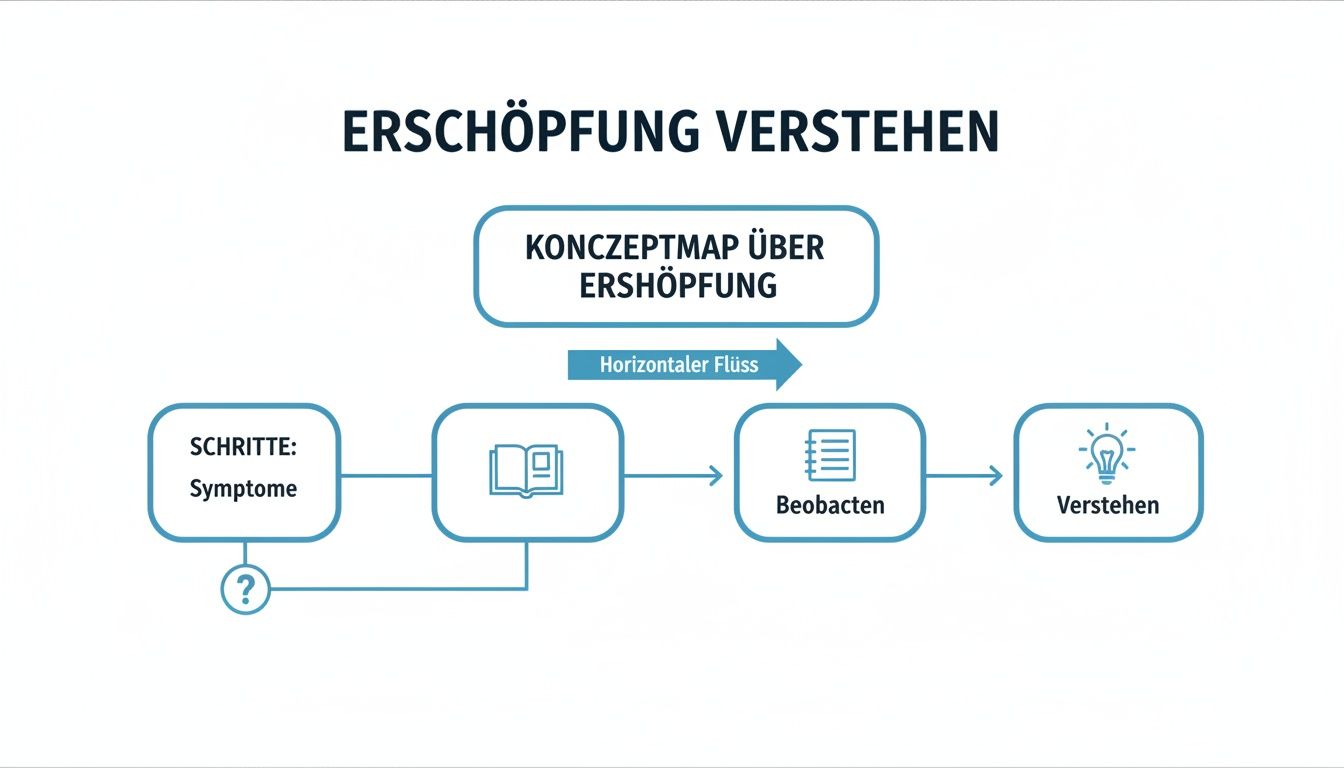
This illustration gets to the heart of the matter: First, you consciously notice your symptoms, then identify certain patterns through observation, and ultimately gain a true understanding of your body through targeted analyses—such as a nutrient or hormone test.
The silent energy thieves in your blood
Chronic exhaustion is rarely the result of a single problem. Usually, it is a combination of several minor imbalances that together drain your energy reserves. A blood test can finally make these invisible energy thieves visible.
Here are the main suspects you should keep an eye on:
- Iron deficiency: Iron is the key to transporting oxygen in the blood. When it is lacking, your cells feel as though they are constantly gasping for air. The result: debilitating fatigue, often accompanied by paleness and shortness of breath.
- Vitamin B12 deficiency: This vitamin plays a central role in energy production in your cells. A deficiency slows down your metabolism and can even lead to neurological symptoms such as tingling or a feeling of “brain fog.”
- Vitamin D deficiency: The “sunshine vitamin” is also essential for the function of your mitochondria—the small power plants in your cells. A deficiency is particularly common during the darker months and is a frequent cause of seasonal fatigue and lack of energy.
- Underactive thyroid: Think of the thyroid as the accelerator pedal of your metabolism. If it produces too few hormones (TSH, fT3, fT4), your entire body runs on low power. In addition to exhaustion, weight gain and constantly feeling cold are typical signs.
You don’t have to accept being constantly tired. Data is the first step toward change. A blood test gives you the facts you need to target the root causes of your exhaustion.
Important blood values for exhaustion
Find out which blood markers are crucial for your energy levels and how you can easily check them at home with a mybody-x.com home test.
| Blood value or range | Why it matters for your energy | Suitable mybody-x.com Test |
|---|---|---|
| Iron (ferritin) | Important for oxygen transport. A deficiency leads to cellular energy deficiency and fatigue. | Iron Deficiency Test |
| Vitamin B12 | Essential for cellular energy production and nervous system function. | Vitamin B12 Test, Nutrient Deficiency Test |
| Vitamin D | Supports mitochondrial function (the cell’s power plants) and the immune system. | Vitamin D Deficiency Test |
| Thyroid Levels (TSH) | TSH controls the production of thyroid hormones, which regulate the entire metabolism. | Thyroid Test (TSH) |
| Inflammation Markers (hs-CRP) | Indicates silent, chronic inflammation that constantly drains the body’s energy. | Vitamin Deficiency Test that also measures this level |
| Hormone Status (Cortisol) | An unbalanced cortisol level disrupts the sleep–wake rhythm and leads to exhaustion. | Stress Hormone Test (Cortisol) |
With the right data, you stop merely treating symptoms and start addressing the causes.
Hormonal chaos and silent inflammation
In addition to classic nutrient deficiencies, your hormones and immune system can also play a central role. An unbalanced cortisol level, our primary stress hormone, can completely disrupt your sleep–wake rhythm. Do you feel exhausted in the morning and suddenly “wired” in the evening? This could be a clear indication of an imbalance that you can uncover with a hormone test.
Silent inflammation in the body can be just as insidious. It forces your immune system to remain constantly on high alert, consuming enormous resources. An elevated hs-CRP level in the blood can indicate such hidden processes.
These complex connections are also becoming an increasing focus of research. From 2024, the German federal government will invest at least 500 million euros in research into ME/CFS and Long COVID. The Robert Koch Institute estimates that 5–10% of the population develop post-COVID symptoms, which are often accompanied by severe exhaustion.
The at-home self-tests from mybody-x.com help you uncover common contributing causes such as nutrient deficiencies or hormonal imbalances that can further exacerbate these conditions.
Taking a closer look at the relevant values can help you choose the right tests for your situation. If you would like to learn more, also read our article about which blood values are crucial when you are tired.
Managing your energy in everyday life: What you can do right away
While you wait for medical diagnoses or blood test results, you do not have to remain inactive. There is a lot you can already do today to manage your energy reserves more effectively. This is not about forcing yourself through the day through sheer willpower. It is much smarter to handle the energy available to you mindfully and intelligently.
For many people asking themselves, “Chronic fatigue—what can I do?”, this approach is precisely the first crucial step in the right direction.

Pacing: Learn to live in rhythm with your body
One of the most powerful strategies for chronic exhaustion is what is known as pacing. Imagine your daily energy as a bank account. Instead of recklessly going into the red every day and starting the next morning completely overdrawn, you learn to stay within your budget.
Pacing means consciously planning your activities and taking breaks before exhaustion overwhelms you.
- Break tasks into bite-sized chunks: Instead of cleaning continuously for an hour, divide the work into four focused 15-minute sessions, with short breaks in between.
- Set ruthless priorities: What really needs to happen today? Pick out the one or two most important tasks and focus your energy on them. Everything else can wait.
- Alternate activity and rest: After every strenuous task—whether physical or mental—schedule a set break. For example: spend 20 minutes working through emails, then spend 10 minutes simply looking out the window. With no need to feel guilty.
This method helps prevent the dreaded “crashes,” when even slight overexertion can leave you unable to function for days (also known as post-exertional malaise, PEM).
A large part of energy management is simply self-care that helps you conserve your resources. This is especially essential in demanding professions. You can read more about this, for example, in the guide on self-care for healthcare workers.
Use your diet as fuel
What ends up on your plate directly affects how much energy your cells can produce. If you are chronically exhausted, you should fuel your body with nutrients that build it up rather than put additional strain on it.
Two things are crucial here:
- Stable blood sugar levels: Sugar, white bread, and sugary drinks send your blood sugar soaring, only to make it crash shortly afterward. The result? The classic afternoon slump. Complex carbohydrates (whole grains, legumes), healthy fats (avocado, nuts, olive oil), and a good portion of protein with every meal are better choices.
- Anti-inflammatory foods: Low-grade inflammation in the body is a real energy drain. A diet rich in omega-3 fatty acids (fatty fish, flaxseed), antioxidants (berries, dark green vegetables), and polyphenols (turmeric, green tea) helps your body keep this inflammation in check.
Think of your mitochondria as the small power plants in your cells. Every meal is a fuel delivery. Give them the best fuel they can work with.
Here’s what that could look like in practice:
- Breakfast: Instead of sugary cornflakes, try scrambled eggs with spinach and half an avocado.
- Lunch: A colorful salad with chicken strips and chickpeas instead of quick pasta.
- Snack: A handful of nuts and an apple instead of the chocolate bar.
Even these small swaps can make a big difference. You can find more science-backed ideas in our 7 Tips for More Energy.
Sleep better for genuine recovery
Anyone who is chronically exhausted knows the feeling: You sleep, but still wake up feeling completely drained. So the goal isn’t just to sleep longer, but above all to sleep better. Quality is key.
Consistent sleep hygiene is essential here. And that means more than just “going to bed earlier”:
- Consistent bedtimes: Try to go to bed and get up at the same time every day—yes, even on weekends. This trains your internal clock.
- Complete darkness: Even a small standby light can interfere with the production of the sleep hormone melatonin. Make your bedroom as dark as possible.
- An evening screen detox: The blue light from your phone, tablet & other devices signals to your brain: Stay awake! Put your devices aside at least one hour before bedtime.
- A relaxing evening routine: Whether it’s a good book, a warm bath, or calming music, a consistent ritual signals to your body that it’s time to wind down.
By consciously addressing these three pillars—pacing, nutrition, and sleep—you can regain some control. You create a solid foundation from which you can then tackle the deeper causes of your exhaustion.
Exposing mental strain as a hidden energy drain
Physical exhaustion and your mental state are inseparably linked. Often, it isn’t physical exertion that drains our batteries—it’s a quiet inner pressure constantly running in the background. When stress becomes a permanent condition, your system switches into a perpetual state of alarm.
This causes your body to constantly release the stress hormone cortisol. In the short term, that’s a good thing, because cortisol boosts our performance. But if levels remain chronically elevated, your body begins to literally drain your energy reserves.

When stress sabotages your sleep
Does this sound familiar? You collapse into bed completely exhausted in the evening, but the carousel of thoughts keeps spinning endlessly. Or you wake up in the middle of the night, suddenly wide awake, with your heart racing. Often, a disrupted cortisol rhythm is the culprit.
Normally, your cortisol levels should be highest in the morning to get you ready for the day, then gradually decline. With chronic stress, this pattern is often disrupted: In the evening, levels are still too high and prevent you from falling asleep, while in the morning they are too low—which is why you feel exhausted despite getting enough sleep.
“Stress isn't the real problem; it's the lack of recovery afterward. If your nervous system never gets the chance to exit fight-or-flight mode, you pay the price with your energy.”
This creates a vicious cycle: Poor sleep leaves you even more exhausted the next day, which in turn lowers your stress tolerance. External factors often fuel this cycle. Problems such as constant overtime due to staff shortages can be an enormous mental burden that drains your batteries day after day.
Your first-aid kit for the nervous system
To break this cycle, you need simple but effective techniques. They signal to your nervous system: “Everything is okay; you may relax.” These methods take hardly any time and can be incorporated into your daily routine right away.
The 4-7-8 breathing technique: This simple exercise often calms your nervous system within minutes.
- Calmly inhale through your nose for 4 seconds.
- Hold your breath for 7 seconds.
- Slowly and audibly exhale through your mouth for 8 seconds.
- Repeat the whole thing 3–4 times.
You can do this exercise anywhere—in your office, on the subway, or right before falling asleep. It helps shift your focus from the endless chatter in your head back into your body.
Micro-breaks for the mind: Mindfulness doesn't have to mean hours of meditation. It's about sprinkling small, intentional breaks throughout your day.
- The 30-second body scan: Briefly close your eyes. How do your feet feel on the floor? Is your jaw tense? Simply notice, without judgment.
- Mindful drinking: Instead of quickly gulping down your coffee, take a minute. Feel the warmth of the cup, smell the aroma, and consciously savor the first sip.
- A look out the window: Give the clouds in the sky or the leaves of a tree your full attention for a moment.
These small islands of calm help your brain step out of the constant barrage of stimuli and recharge.
If you suspect that your stress levels are throwing your hormones off balance, a detailed analysis can provide clarity. Learn more on our blog about how to measure your cortisol levels so you can make informed decisions about your health. Ultimately, it is about consciously protecting your mental resources just as much as your physical ones—by setting clear boundaries and giving yourself permission to switch off before your battery runs completely empty.
When you need professional medical help
Self-care, good energy management, and at-home tests are incredibly valuable tools on your journey out of exhaustion. But they also have their limits. It is absolutely crucial to recognize when the time has come for professional medical evaluation to become unavoidable.
This is not about giving up control. On the contrary: You are bringing a strong team of experts to your side. Think of the doctor’s visit as the next logical step, where you piece together the information you have already gathered.
Clear warning signs you must not ignore
Some symptoms are more than just a sign of deep fatigue—they may indicate more serious underlying conditions. If you experience any of the following signs, do not hesitate to schedule a doctor’s appointment promptly. They are genuine red flags that require immediate medical evaluation.
- Unexplained weight loss: You lose a significant amount of weight without changing your diet or exercise routine.
- Severe, unexplained pain: Persistent muscle, joint, or headaches that appear suddenly and have no apparent explanation.
- Neurological symptoms: These include sudden dizziness, vision problems, numbness or tingling in your arms or legs, and severe coordination problems.
- Fever and night sweats: Recurring fever or heavy night sweats unrelated to the room temperature.
- Shortness of breath or rapid heartbeat: You become short of breath even with minimal exertion or while at rest, or your heart suddenly starts racing.
- Severe cognitive impairment: The “brain fog” becomes so intense that it interferes with your daily life, you constantly get lost, or you have trouble finding words.
These symptoms are not minor. They require a thorough examination to ensure that nothing serious is overlooked.
How to prepare optimally for your doctor’s appointment
Many people affected worry that their exhaustion will not be taken seriously. The key to communicating as equals and ensuring that you are heard is good preparation. You are the expert on your body—now it is about explaining your observations clearly and understandably.
A well-prepared patient is every doctor’s best partner. You provide the crucial clues that often reveal far more than a brief examination in the consultation room can show.
Be sure to bring the following documents to your appointment:
- Your energy diary: Show your records from the past few weeks. They make your symptoms visible, reveal patterns, and demonstrate how much your daily life is truly affected.
- The results of your mybody-x.com tests: Bring the laboratory reports. Concrete data on nutrient deficiencies, such as a low ferritin or vitamin D level, or hormonal imbalances, such as abnormal thyroid levels, are solid facts. They immediately give the conversation an objective basis and show that you have already researched the topic thoroughly.
- A list of your symptoms: Write down everything you notice, even if it seems unimportant to you.
- A list of your questions: What do you want to know? Which additional tests do you consider useful?
With these documents, a vague “I’m always so tired” becomes a focused conversation about facts, values, and the next diagnostic steps.
Finding the right specialists
Your primary care doctor is always the first and most important point of contact. They can provide an initial assessment and refer you to the right specialists if necessary. If the cause of your chronic exhaustion is not immediately clear, the following specialties may be involved:
- Endocrinology: The specialist for hormones. Important if a thyroid disorder, adrenal insufficiency, or other hormonal disorders are suspected.
- Immunology/Rheumatology: The specialists to consult when investigating autoimmune diseases or chronic inflammatory processes.
- Neurology: The right specialty when neurological symptoms such as dizziness, severe cognitive problems, or unexplained pain are the main concerns.
- Specialist clinics: For complex conditions such as ME/CFS (myalgic encephalomyelitis/chronic fatigue syndrome), some hospitals now offer specialized consultations.
The path to the right diagnosis can sometimes require patience. But with the results of your self-tests and your knowledge of your body, you are well equipped to play an active role in shaping this journey.
Your questions, our answers: Clarity on your journey
Anyone dealing with chronic exhaustion has many questions. That is completely normal. To give you some guidance, we have collected and answered the most frequently asked questions here—briefly, clearly, and directly.
Can I cure chronic exhaustion through diet alone?
A good diet is an essential foundation on your path to more energy, but it is rarely the only magic solution. Think of chronic exhaustion as a complex puzzle. Nutrition is a large, important piece, but there are often others missing too—for example, undiscovered nutrient deficiencies, a hormonal imbalance, or silent inflammation in the body.
With a nutrient-rich, anti-inflammatory diet, you give your body the best building blocks for regeneration and energy production. But to really make targeted changes, you need to know where the actual gaps are.
This is exactly where a nutrient or hormone test from mybody-x.com can provide clarity. Perhaps you are lacking iron for oxygen transport, or your vitamin D level is far too low. So see nutrition as your powerful starting point and combine it with targeted energy management, stress reduction, and, if necessary, medical evaluation. That is the most sustainable way to regain your strength.
How long will it take until I finally feel better?
This is probably the question that is foremost on everyone’s mind. Understandably! Unfortunately, there is no blanket answer, because the duration depends entirely on the cause of your exhaustion.
For example, if you have a simple iron or vitamin B12 deficiency, many people notice a significant improvement after just a few weeks once their stores have been replenished.
However, if more complex issues are behind it—such as a thyroid disorder, hormonal imbalance, or a condition like ME/CFS—the road may be longer. Then it is more of a process of trying things out, making adjustments, and persevering patiently.
Be kind to yourself. Your body did not get into this state overnight, and it also needs time to find its way back into balance.
Your energy journal is worth its weight in gold here. It helps you see even the small improvements that you might otherwise overlook. Maybe today you manage a five-minute walk that would have been unthinkable last week. That is a huge achievement! These small victories keep your motivation up and show you that you are on the right track.
Which mybody-x.com test is best for getting started?
If you are at the beginning and do not know where to start, a targeted blood test is the smartest first step. Instead of groping around in the dark, you get solid data to build on.
A great starting point is the “nutrient deficiency test”. It is, so to speak, the base camp for your expedition toward more energy and checks the most common suspects behind fatigue:
- Vitamin D
- Vitamin B12
- Magnesium
- Iron (ferritin)
These four are absolute key players in your cellular energy, nervous system, and oxygen transport. A deficiency in just one of these areas can completely slow you down.
Do you also suspect that chronic stress or your hormones are out of balance? Then additional tests such as the hormone test for women or a targeted stress hormone test (cortisol) are a useful addition. These results tell you exactly which areas you need to address.
What is the difference between burnout and chronic fatigue?
This distinction is extremely important because, although the symptoms can be similar, the causes and, above all, the right approaches to resolving them are completely different.
Burnout is primarily the result of chronic stress and emotional overload, usually at work. The exhaustion here is mainly mental and emotional, even though it feels physical. Those affected feel burned out and cynical. A longer break and a change in the stress factors often lead to noticeable improvement.
The chronic fatigue syndrome (ME/CFS), on the other hand, is a severe, complex neuroimmunological disease. Its defining feature is so-called post-exertional malaise (PEM). This means that even minimal exertion—physical or mental—can trigger a massive worsening that may last for days or even weeks.
While moderate activity is beneficial for burnout, it causes a severe “crash” in ME/CFS. The exhaustion is profound and is often accompanied by symptoms such as muscle pain or “brain fog.” An accurate medical diagnosis is essential here.
Are you ready to take the first concrete step and find out what is behind your fatigue? With the self-tests from mybody-x.com, you get precise insights into your nutrient and hormone levels—simply and conveniently from home. Take your health into your own hands now.



Share now:
Which nutrients does the body really need every day?
Why am I always tired? Causes, symptoms, and how to regain your energy