

Why am I always tired? Causes, symptoms, and how to regain your energy
Do you often feel as though you are getting through the day with the handbrake on? This feeling of being tired all the time is more than just annoying. It is a clear signal from your body – and it is high time to listen and find the causes instead of accepting the exhaustion as the new normal.
Always tired? That’s not normal

A yawn in the morning or the classic afternoon slump – sure, everyone knows that. But when the question “Why am I always so tired?” becomes your constant companion, there is usually more to it than just one too-short night.
Chronic fatigue is a serious symptom that can severely affect your quality of life, your concentration at work, and even your mood. And you are far from alone. On the contrary: Exhaustion is developing into a genuine social problem.
A problem affecting more and more people
Recent figures clearly demonstrate this. According to a representative study, 55.7% of people in Germany feel exhausted. That is not only more than half the population, but also a worrying increase of 6.1 percentage points in just two years. Particularly alarming: Around one in six people has already reached critical levels of exhaustion. Find out more about the background to this study on presseportal.de.
These figures make it clear: It is time to see fatigue for what it really is – a warning signal that something in your body has become unbalanced.
Searching for the real cause
The reasons for this persistent lack of energy are as diverse as we are and are often interconnected. Think of your body as a finely tuned orchestra: If even a single instrument is out of tune, the entire melody suffers.
Your fatigue could be caused by many different factors:
- Your lifestyle: Lack of sleep, constant stress, or an unbalanced diet are often the most obvious suspects.
- Hidden nutrient deficiencies: If you lack important vitamins or minerals such as iron, vitamin B12, or vitamin D, your energy metabolism cannot function properly.
- Hormonal imbalances: When thyroid hormones or the stress hormone cortisol get out of balance, fatigue is an almost inevitable consequence.
Persistent fatigue isn’t a sign of weakness. It’s your body’s honest feedback, asking you to take a closer look and find the root of the problem instead of merely fighting the symptoms.
This is exactly where you can start. By understanding the possible causes, you’re taking the first and most important step toward reclaiming your energy. A blood test from mybody-x.com can help you uncover hidden nutrient deficiencies or hormonal imbalances—simply and conveniently from home. This gives you clear facts instead of vague assumptions, allowing you to take targeted action.
The hidden energy drains in your everyday life

Sometimes the answer to the age-old question “Why am I always tired?” is right under our noses—well disguised in our everyday routines. Often, it’s precisely the habits we no longer question that quietly drain our energy. Let’s investigate together and expose these everyday suspects.
Usually, it’s not individual culprits but a combination of several factors that reinforce one another. The key is to recognize them and consciously counteract them so your battery can finally recharge fully.
Your sleep quality: the foundation of your energy
It sounds almost too obvious, but it’s the most common cause of exhaustion: too little sleep or simply poor-quality sleep. What matters isn’t just the number of hours shown on the clock, but above all the quality of your nighttime rest.
While you sleep, your body regenerates, repairs cells, and your brain processes the day’s impressions. When this process is disrupted—whether by scrolling on your phone late at night or by an erratic sleep schedule—these important recovery phases don’t happen. The result? You wake up in the morning already feeling completely exhausted, as if you hadn’t slept at all. A classic example of an acute energy drain is jet lag after a trip, which can throw you off track for days.
Chronic stress: the invisible marathon runner
A little stress isn’t inherently bad. It helps us push beyond our limits in the short term. It only becomes dangerous when stress turns into a permanent state. Your body then constantly releases the stress hormone cortisol and remains in a permanent state of alert.
Imagine your body running a marathon nonstop, without ever getting a break. That’s exactly what happens with chronic stress. This constant strain drains your energy until you feel completely burned out—not just mentally, but physically too.
Constant stress forces your body to operate at full throttle all the time, until the engine eventually overheats. This kind of exhaustion can’t simply be “slept off”; it requires a conscious reduction of stressors.
To break out of this vicious cycle, targeted relaxation techniques and mindful breaks in your daily routine are worth their weight in gold. If you’re looking for more scientifically backed ways to regain your energy, take a look at our guide: 7 Tips for More Energy That Really Help.
The role of diet and exercise
What and how you eat has a direct impact on your energy level. A diet full of sugar and fast carbohydrates sends your blood sugar on a wild roller coaster ride. The brief high is inevitably followed by a deep crash that leaves you tired and unmotivated.
Lack of exercise is another hidden energy drain. It may sound paradoxical, but the less you move, the more drained you often feel. Regular, moderate exercise, on the other hand, gets your circulation and metabolism going and ensures that your cells receive a better supply of oxygen.
Typical energy drains in your diet and lifestyle:
- Sugar & co.: Cause unstable blood sugar levels and cravings, which are real energy killers.
- Processed foods: Often contain few nutrients but lots of empty calories, which burden the body more than they nourish it.
- Lack of exercise: Slows your metabolism and therefore your body’s ability to produce energy efficiently.
- Too little water: Even mild dehydration can noticeably reduce your concentration and energy level.
These everyday factors are often the first levers you can adjust yourself. But if you continue to struggle despite making all these changes, the cause could lie deeper—for example, in a nutrient deficiency. You can easily and reliably detect exactly that from home with a nutrient test from mybody-x.com.
How nutrient deficiencies drain your energy
You actually get enough sleep and try to avoid stress, but still constantly feel like you’re made of lead? Then it’s time to take a look at the invisible helpers in your body: micronutrients. Your energy level is directly influenced by what you eat. A deficiency in certain vitamins and minerals is one of the most common—but also most overlooked—causes of the exhausting question: “Why am I always so tired?”
Think of your metabolism as a complex power plant. Vitamins and minerals are the essential spark plugs and lubricating oil. They ensure that the food you consume can be converted into usable energy (ATP) for your cells in the first place. If even one of these important building blocks is missing, the entire process grinds to a halt. The result is noticeable, often debilitating fatigue that simply cannot be shaken off.
The main suspects behind low energy
Not all nutrients play the same role, but some are real heavyweights when it comes to your energy. A deficiency in these nutrients often first becomes noticeable as sheer exhaustion and a lack of drive.
-
Iron: This mineral is the key player in oxygen transport. As a central component of hemoglobin in your red blood cells, it is responsible for supplying every cell in your body with oxygen. When iron is lacking, classic iron-deficiency anemia develops—and its main symptom is profound physical exhaustion.
-
Vitamin B12: A true all-rounder for your nervous system and blood formation. It is directly involved in energy production in the mitochondria, the tiny power plants of your cells. A deficiency therefore leads not only to fatigue but can also cause concentration problems and even neurological symptoms.
-
Vitamin D: The “sunshine vitamin” is important not only for strong bones. Recent research shows that it also has a huge impact on your muscle strength, immune system, and mood. Especially during the darker months, many people in our part of the world suffer from a deficiency, which often manifests as general fatigue and a feeling of being unable to get going.
These three are the most common culprits, but other nutrients such as magnesium, zinc, or folic acid can also cause a noticeable loss of energy when deficient.
Interpreting symptoms correctly
A nutrient deficiency usually develops gradually, and the symptoms are often nonspecific. That is exactly what makes it so difficult to identify the true cause. Therefore, pay attention to a combination of different signs that could indicate a deficiency.
A nutrient deficiency is like a silent energy thief. It not only drains your strength but also affects your concentration and overall well-being—often without you initially knowing the true reason.
Typical symptom combinations:
| Nutrient deficiency | Common accompanying symptoms |
|---|---|
| Iron deficiency | Pale skin, brittle nails, hair loss, shortness of breath during exertion, headaches. |
| Vitamin B12 deficiency | Tingling in the hands and feet, difficulty concentrating, memory problems, burning tongue. |
| Vitamin D deficiency | Mood swings, depressed mood, increased susceptibility to infections, muscle weakness. |
If you recognize some of these signs in yourself, it is a strong indication that your fatigue could have a physical cause. But instead of trying random dietary supplements now, it is essential to get certainty.
End the guesswork
You no longer have to feel like you are in the dark. A simple blood test can show you precisely whether a nutrient deficiency is behind your exhaustion. With a nutrient test from mybody-x.com, you can easily check your levels of iron, vitamin B12, vitamin D, and other important micronutrients from home.
This gives you a clear, scientifically sound basis on which to make targeted adjustments to your diet and lifestyle. Instead of guessing what you might be lacking, you know exactly where to start to replenish your energy reserves. If you would like to learn more about how to uncover deficiencies, you can find detailed information here about our nutrient deficiency test.
When your hormones fall out of rhythm
You have optimized your sleep, changed your diet, and yet your energy level still feels like an empty battery? Sometimes the answer lies one level deeper, in the complex world of your hormones. Think of them as your body’s secret conductors—and when they fail to play in perfect harmony, your entire energy balance falls apart.
Hormones control almost everything in us: our metabolism, sleep-wake cycle, response to stress, and even our mood. A tiny imbalance can therefore have a huge impact and is often one of the root causes when the question “Why am I always tired?” becomes a constant refrain.
The thyroid—your body’s own power plant
One of the main suspects behind persistent exhaustion is the thyroid. This small, butterfly-shaped organ in your neck is essentially the accelerator for your metabolism. If it produces too few hormones—a condition known as an underactive thyroid (hypothyroidism)—your entire body runs on low power.
The consequences are classic and often debilitating:
- Persistent fatigue: Even after getting enough sleep, you simply do not feel rested.
- Weight gain: Your metabolism has slowed so much that it becomes difficult to maintain your weight.
- Concentration problems: Your brain also works more slowly, which often manifests as “brain fog.”
- Sensitivity to cold: You feel cold more quickly than others because your body produces less heat.
Undiagnosed hypothyroidism is a surprisingly common cause of chronic fatigue. The good news is that it can be clearly diagnosed through a blood test measuring relevant markers such as TSH, fT3, and fT4.
Cortisol—your stress manager gone astray
As we have already seen, chronic stress puts your body into a constant state of alarm. The hormone responsible for this is cortisol. Normally, it helps you wake up in the morning and gives you energy for the day. Under constant stress, however, this rhythm becomes completely disrupted.
A consistently high cortisol level can lead to sleep disturbances and a feeling of being “driven,” which paradoxically culminates in profound exhaustion. If this state persists for too long, the adrenal glands that produce cortisol can become genuinely depleted. The result is often a cortisol level that is too low, expressed as a feeling of complete burnout and lack of motivation.
A hormonal imbalance is like a song played out of tune—even when all the notes are there, the result simply sounds exhausting and lifeless. Restoring balance is the key to renewed energy.
The role of sex hormones
The sex hormones estrogen, progesterone, and testosterone also have a major influence on your energy levels. Their natural fluctuations are often why many women feel particularly exhausted on certain days of their cycle or during menopause. An imbalance not only causes fatigue but can also significantly impair sleep quality.
Interestingly, data shows that women are more frequently affected by fatigue than men. A recent health study found that 32.6% of women report severe fatigue, compared with 26.6% of men. These differences can be attributed in part to the complex hormonal cycles women experience. You can read more about the findings of the GEDA study on pmc.ncbi.nlm.nih.gov.
Gain clarity about your hormone levels
If you feel that your hormones may be out of balance, you no longer have to remain in the dark. A hormone test from mybody-x.com can conveniently provide you with precise insights into your hormone levels from the comfort of your home. It analyzes important markers such as thyroid hormones and cortisol, giving you a solid basis for finally understanding the true causes of your fatigue.
With clear results in hand, you can take targeted steps to regain your balance. If you would like to learn more about how to rebalance your hormones, read our related article on balancing hormone levels.
Medical reasons for fatigue and when you should see a doctor
Sometimes, adjusting your lifestyle or optimizing your diet simply is not enough. If the fatigue persists, the cause may lie deeper. Certain conditions can primarily manifest as debilitating exhaustion. This section is not intended to frighten you, but to give you clear guidance on when seeing a doctor is truly important.
You need to understand: Persistent fatigue is more than simply feeling sluggish. It can be a serious signal from your body indicating chronic inflammation, undiagnosed autoimmune diseases, or metabolic disorders that go far beyond a simple nutrient deficiency.
When the mind paralyzes the body
The connection between our mental state and our physical energy is incredibly strong. Depression in particular is about so much more than just sadness—it often goes hand in hand with deep, leaden exhaustion. This kind of fatigue feels different. It is heavy, robs you of all motivation, and does not improve even after a good night's sleep.
The latest figures on this are truly alarming. In 2022, 84% of psychiatrists and psychotherapists surveyed in Germany identified the combination of symptoms consisting of tiredness, exhaustion, and lack of motivation. By comparison, the figure was only 39% in 2020. At the same time, the diagnosis of depression rose from 50% to 83%. This clearly shows how closely psychological stress and physical exhaustion are linked. You can read more about this alarming development on frauengesundheitsportal.de.
Hidden causes in the body
In addition to psychological factors, there are also purely physical triggers that often remain unnoticed for a long time.
- Food intolerances: When your body cannot properly process certain foods such as gluten or lactose, your gut often reacts with chronic inflammation. Imagine your immune system being permanently on duty as a result—this consumes a tremendous amount of energy and then manifests as constant fatigue. A intolerance test from mybody-x.com can provide you with important initial clues.
- Chronic conditions: Diseases such as diabetes, heart problems, or Chronic Fatigue Syndrome (ME/CFS) have exhaustion as one of their main symptoms.
- Medications as energy drainers: Take a close look at the package leaflet for your medications. Many common medicines, such as blood pressure medications, antihistamines, or certain antidepressants, can cause fatigue as a side effect.
Your guide to seeing a doctor
Self-help is great, but it also has its limits. If you experience certain warning signs, you should not hesitate to seek professional medical advice to rule out serious causes.
Seeing a doctor is no cause for concern; it is a path to greater clarity. It is a responsible step to make sure nothing is overlooked and that you receive the best possible support.
Checklist for your doctor’s appointment—if you have these symptoms, you should take action:
- Unexplained weight loss or gain: You lose or gain a significant amount of weight without changing your diet or physical activity.
- Persistent fever or night sweats: These can indicate an infection or a silent inflammation in the body.
- Severe mood swings: The fatigue is accompanied by severe irritability, hopelessness, or anxiety.
- Shortness of breath or palpitations: Especially if this happens even with light exertion, you should have it checked immediately.
- Pain: Unexplained muscle or joint pain occurs together with the fatigue.
- No improvement in sight: Your fatigue continues for several weeks despite all the adjustments in your daily routine, or even gets worse.
Talking to your doctor will help you plan the next steps. Blood tests are usually the first step toward clarity—something you can also proactively take into your own hands from home for certain areas with the self-tests from mybody-x.com.
Find the cause of your fatigue with a self-test
Enough theory—now it’s time to get practical. Instead of continuing to wonder why you constantly feel exhausted, you can actively get to the true causes of your fatigue. You no longer have to feel in the dark—get measurable data as a solid foundation for making real changes in your life.
This is exactly where the self-tests from mybody-x.com come in. They were developed to give you well-founded insights into your body. The whole process is simple and convenient from the comfort of your home, without long waits at the doctor’s office.
Your path to clear answers
The process is incredibly simple: You order the test that best suits you, take a small blood sample from your fingertip at home, and send it to our certified specialist laboratory in Germany. There, your levels are analyzed precisely, and you receive an easy-to-understand results report directly on your smartphone.
A self-test puts you back in control. Instead of letting vague suspicions leave you feeling uncertain, you gain clear facts about your body. This is the first crucial step toward regaining your energy in a targeted way.
Which test could be right for you? That depends entirely on your individual symptoms.
-
The nutrient test: This test is a great choice if you suspect a deficiency is causing your fatigue. It analyzes key markers such as iron (ferritin), vitamin D, and vitamin B12, all of which are directly related to your energy metabolism.
-
The hormone test: Do you often feel stressed, get cold easily, or struggle with mood swings as well? Then taking a closer look at your hormones could be truly revealing. This test gives you insight into important values such as thyroid hormones or the stress hormone cortisol.
If you’re still unsure which test best suits your situation, we have something for you: our free symptom check. Simply answer a few targeted questions and find the right test for your needs now. This gives you a well-founded recommendation tailored precisely to you.
This infographic can also help you decide when seeing a doctor, in addition to taking a self-test, is absolutely advisable.
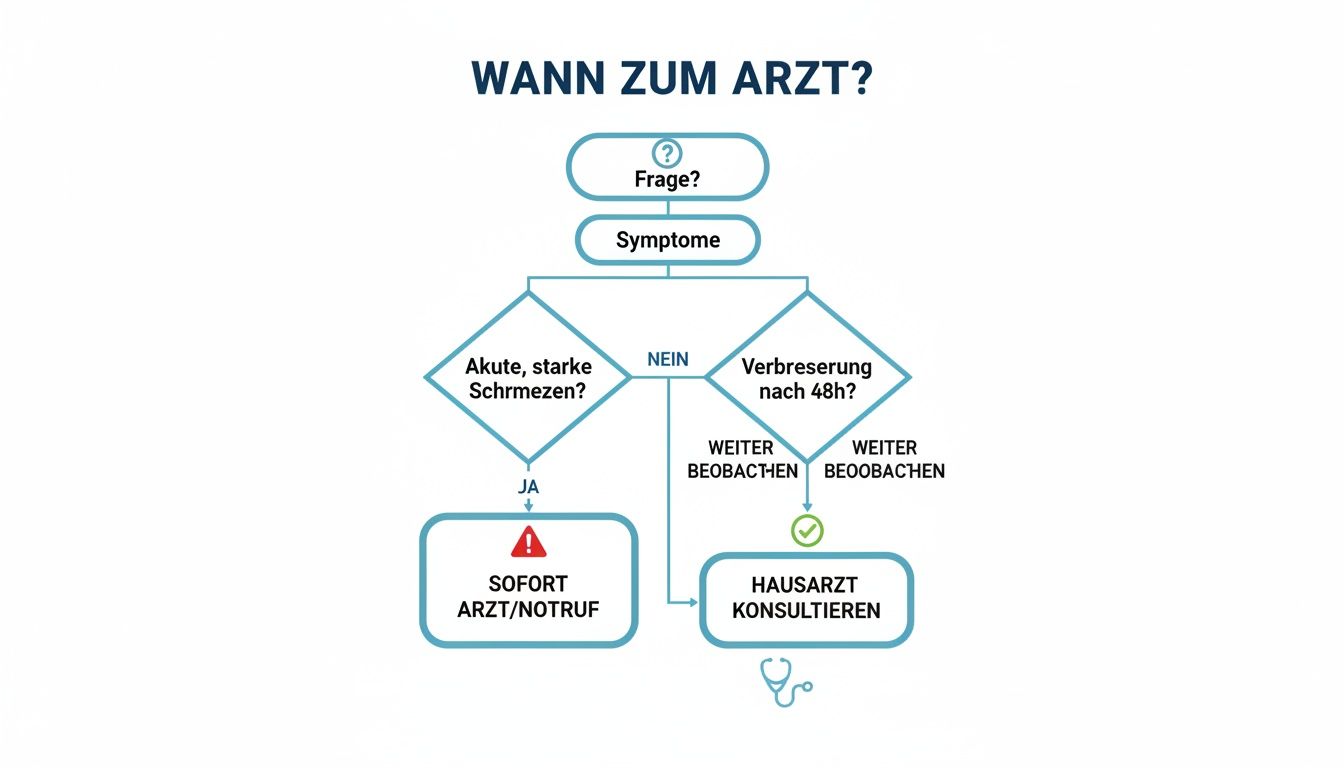
The diagram gives you an overview of the warning signs that mean you should seek medical evaluation in addition to addressing your fatigue, so that more serious causes can be safely ruled out.
Frequently asked questions about constant fatigue
You’ve already read a lot about what could be behind your fatigue. But usually, it’s the very specific questions that stick in your mind. Here, we answer some of them to give you even more clarity on your path to renewed energy.
Can I still be tired despite getting enough sleep?
Yes, absolutely. If you still wake up feeling exhausted after 7 to 9 hours of sleep, it’s a clear sign that lack of sleep isn’t the only issue. Often, sleep quality is the real problem – perhaps you wake up frequently at night without noticing or don’t reach the deeper stages of sleep.
More often, however, unnoticed nutrient deficiencies are behind it, such as low iron or vitamin B12 levels. A hormonal imbalance, for example involving the thyroid or the stress hormone cortisol, can also drain your energy, no matter how long you lie in bed.
Which deficiency makes you the most tired?
When it comes to fatigue, there are three main suspects that play a central role in your energy metabolism:
- Iron deficiency: Your body needs iron to transport oxygen to your cells. If it lacks iron, your muscles feel weak and you become exhausted quickly.
- Vitamin B12 deficiency: This vitamin is essentially the matchstick that fuels energy production in your cells and is extremely important for your nervous system.
- Vitamin D deficiency: The “sunshine vitamin” affects not only your bones, but also your muscle strength and mood. A deficiency often manifests as a lack of motivation and drive.
The good news is that you can easily check all three levels with a blood test from mybody-x.com. This way, you know exactly where to start.
The biggest energy drainers are often invisible and hidden in your blood. Iron, vitamin B12, and vitamin D are the three pillars of your energy supply. If even one of them falls short, the entire system becomes unstable.
How quickly will I feel better after correcting a deficiency?
A little patience is needed here, because improvement doesn’t happen overnight. However, many people with pronounced iron deficiency report a genuine boost in energy after just a few weeks of targeted dietary changes or supplementation.
Vitamin B12 or vitamin D can take a little longer, as the body’s stores first need to be replenished gradually. It’s important to stay consistent and, ideally, discuss the measures with a specialist to monitor your levels and ensure success.
Does diet really play such a major role in fatigue?
A huge one, to be precise. Your diet is the fuel for your body. If you eat a lot of sugar, white flour, and highly processed foods, your blood sugar levels go on a roller coaster ride. The brief energy boost is inevitably followed by a deep crash—and you feel tired and drained.
A balanced diet with complex carbohydrates (from whole-grain products, for example), healthy fats, and enough protein, on the other hand, provides your body with a constant, stable source of energy. This helps you stay fit throughout the day and avoid the classic afternoon slump.
Are you ready to stop guessing and find out the true cause of your fatigue? With a blood test from mybody-x.com, you get clear, scientifically sound insights into your body—simply and conveniently from home. Start your journey to more energy and zest for life now at https://mybody-x.com.



Share now:
Chronic exhaustion: What you can really do when you have no energy left
Bloated belly that looks pregnant: when it’s harmless and when it’s not