

Which nutrients does the body really need every day?
Which nutrients does the body need every day? Basically, the answer can be divided into two main groups: macronutrients provide the energy you need, while micronutrients act as quiet helpers in the background, controlling all the important processes. If even one building block is missing from this system, your body can quickly become unbalanced.
Your daily nutrient roadmap for more energy
Do you sometimes feel as if your engine is sputtering even though the tank seems full? The problem often isn't the amount of fuel, but its quality—that is, the nutrients your body really needs to run smoothly.
Imagine your body as a perfectly synchronized orchestra. The macronutrients are the loud, powerful instruments that set the rhythm:
- Proteins: They are the builders in your body. They repair cells, build muscle, and are essential for almost every structure.
- Fats: Far more than just energy reserves! Fats are essential for hormone production and help your body absorb important vitamins in the first place.
- Carbohydrates: The fast fuel for your brain and muscles. Without them, you lack the energy for everyday life and sports.
The unsung heroes: Vitamins and minerals
But what would an orchestra be without the delicate, quiet notes that bring everything together harmoniously? This is where micronutrients come into play. Vitamins and minerals are the invisible conductors that guide thousands of vital processes in the background—from your immune defenses and nerve function to energy conversion.
If even one player is missing from this team, the entire squad begins to falter. The effects are often gradual: fatigue, difficulty concentrating, or increased susceptibility to infections may be the first signs that something is wrong.
The following graphic clearly shows once again how these two groups work together.
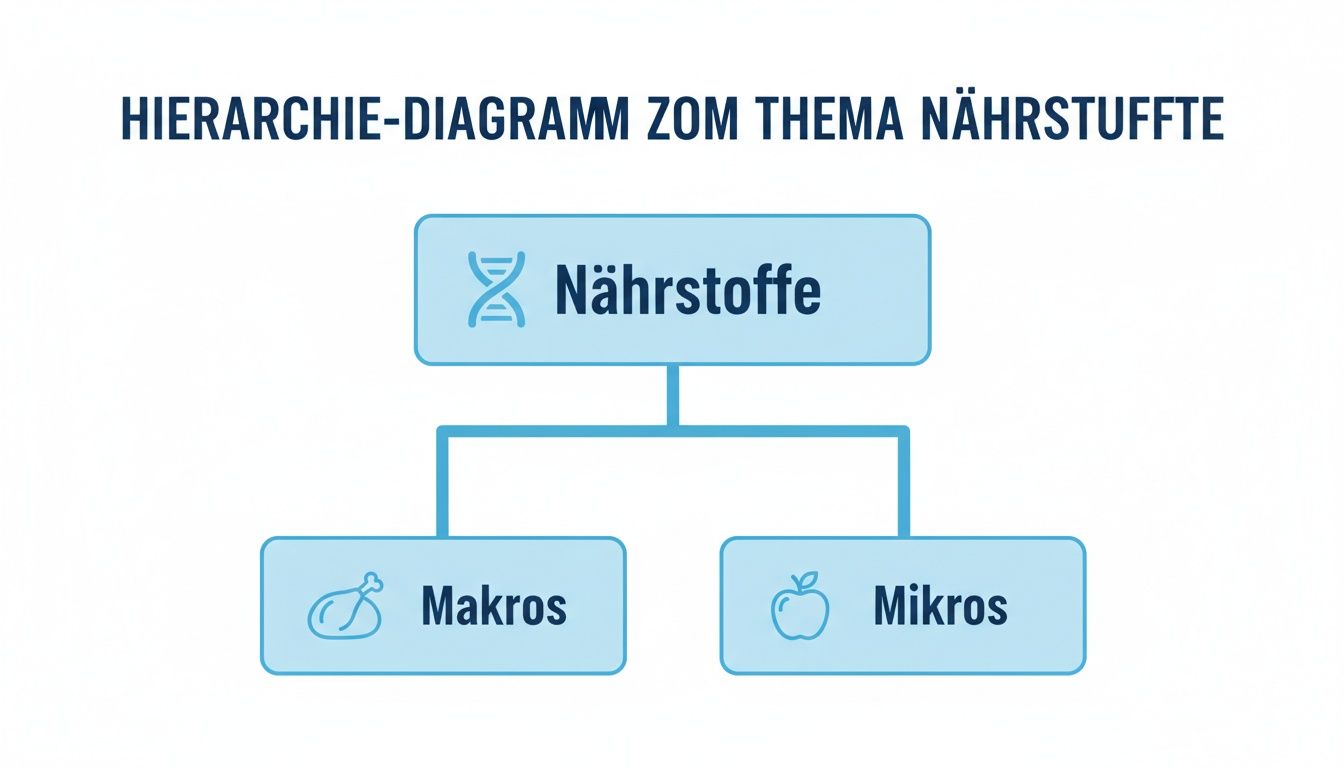
As you can see, macros and micros together form the foundation of your health. Both are essential for everything in your body to run smoothly.
From theory to practice: What are you really missing?
But how do you know whether your personal nutrient team is optimally equipped? General recommendations are a good starting point, but every body works differently. Your individual needs depend on your age, lifestyle, stress level, and many other factors.
A nutrient test is like looking under the hood of your body. It shows you in black and white which nutrients are missing, instead of leaving you guessing.
This overview will help you understand how to strengthen your team strategically. It is not only about knowing what the body needs, but also about specifically identifying weaknesses in your own nutritional intake. If you would like to delve deeper now, you will find 7 Easy Tips for Better Vitamin Absorption in Everyday Life in our guide. A scientifically backed nutrient test from mybody-x.com provides the perfect foundation for this.
Understanding the cornerstones of your energy supply
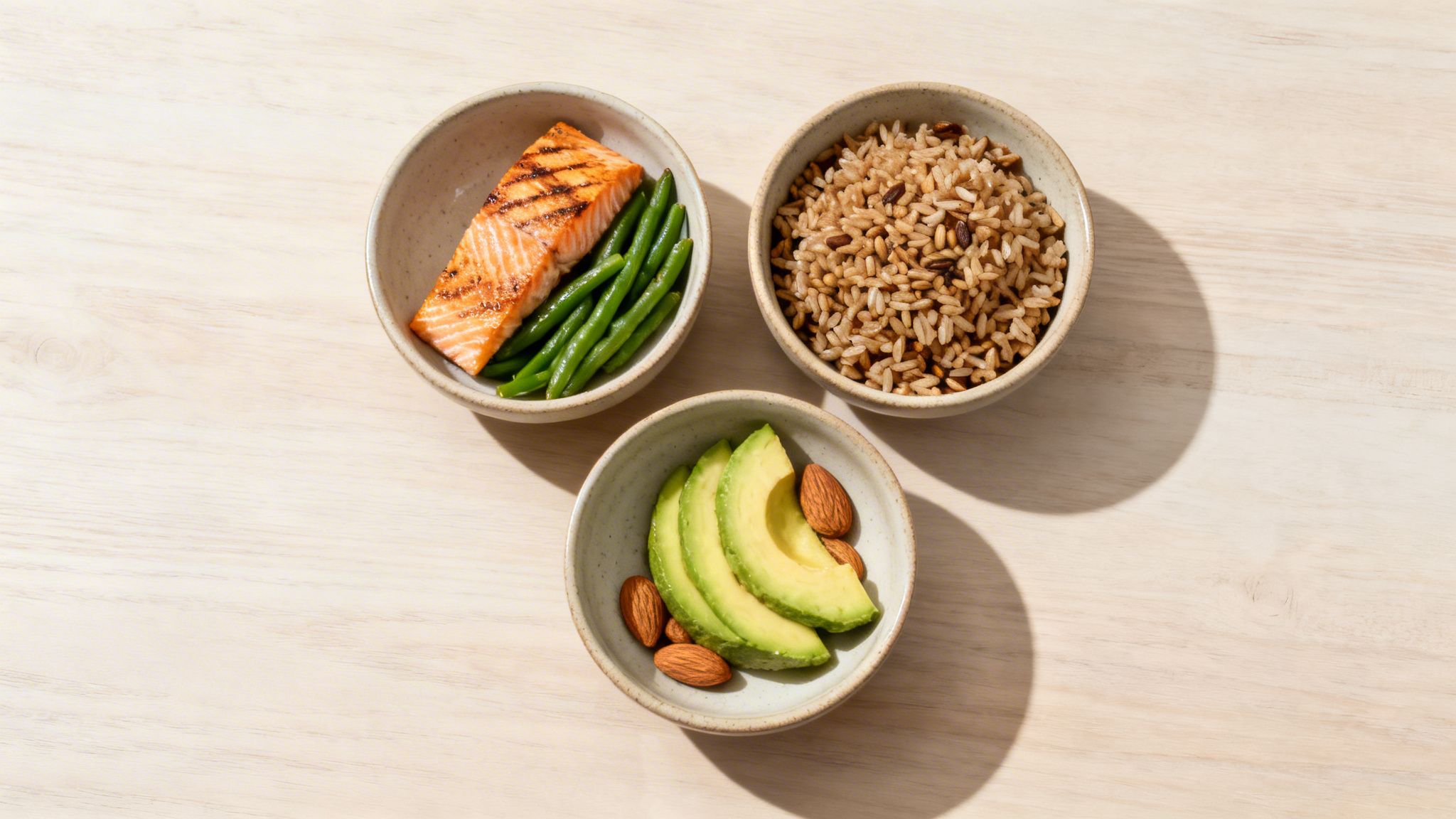
Imagine your body as a house. For it to stand solidly and for you to feel comfortable inside, you need a strong foundation. In nutrition, that foundation consists of the macronutrients: proteins, fats, and carbohydrates. They are the building blocks and energy source for everything that happens inside you—from your heartbeat and thinking to the smallest movement.
But as with any construction project, the quality of the materials and the right proportions matter. That is exactly what determines how well your body performs and how much energy you have in everyday life.
Proteins: The builders of your body
Proteins are so much more than just fuel for your muscles. They are the basic building blocks of every single cell, as well as important enzymes and hormones. Without an adequate protein supply, your body can neither repair damaged tissue nor form new cells.
For most adults up to the age of 65, the German Nutrition Society (DGE) recommends 0.8 grams of protein per kilogram of body weight daily. If you are very physically active or want to build muscle deliberately, your requirement can rise to 1.6 to 2.2 grams per kilogram.
If your body doesn't get enough protein, it starts cannibalizing itself. It draws on its own reserves and breaks down valuable muscle mass just to keep vital functions running. The result? Less strength and a slower metabolism.
Fortunately, there are plenty of delicious sources of protein—not just for meat lovers:
- Animal-based sources: lean meat, fish, eggs, low-fat quark, skyr
- Plant-based sources: lentils, chickpeas, tofu, tempeh, quinoa, nuts
Carbohydrates: The fast fuel for your brain and muscles
Carbohydrates often get a bad reputation—completely undeserved. They are the preferred and fastest source of energy for your brain and muscles. The crucial point, however, is which carbohydrates you eat.
Simple carbohydrates, such as those found in sweets, white bread, or sugary drinks, give you a short, intense energy boost. Your blood sugar level shoots up and then soon plummets. The result: cravings and the classic afternoon slump.
Complex carbohydrates from whole-grain products, legumes, or vegetables are much smarter. They are digested slowly, provide you with stable energy for hours, keep you full, and prevent energy slumps.
Fats: The indispensable energy reserves
Forget the myth that fat is your enemy. Quite the opposite: it is an essential nutrient. Fat serves as an energy reserve, cushions your organs, and is absolutely necessary for your body to absorb the fat-soluble vitamins A, D, E, and K.
Here too, quality makes the difference. Particularly valuable are unsaturated fatty acids, found in avocados, nuts, seeds, and high-quality oils (such as olive or flaxseed oil). They are good for your heart and can help counteract inflammation in the body.
You should avoid so-called trans fats, which are often hidden in fast food, processed foods, and fried dishes. They can negatively affect your blood lipid levels.
How to find the right balance for your everyday life
What is perfect for an elite athlete may not suit your office job. The optimal distribution of macronutrients is always individual. A very simple rule of thumb that really works in everyday life is the “plate method”:
- Half your plate should be filled with colorful vegetables or salad.
- Reserve one quarter of your plate for a high-quality protein source.
- The final quarter is for complex carbohydrates.
This simple breakdown gives you a good sense of which nutrients your body needs every day, all without counting calories. If you want to explore the topic in more depth, take a look at our in-depth article on fat, carbohydrates, and protein. Finding the right balance is the first crucial step toward giving your body exactly the energy it needs for a vibrant life.
Why these little helpers make a difference

While macronutrients are the large, visible building blocks of your body, micronutrients work more behind the scenes. They are the indispensable specialists in the background—so to speak, the highly qualified technical team that ensures thousands of complex processes run smoothly, from energy production in your cells to defending against pathogens.
Without these tiny helpers—that is, vitamins, minerals, and trace elements—even the best building materials would lie around unused. The tricky part is that a deficiency often does not immediately trigger loud alarm signals; instead, it slowly creeps into your everyday life.
Have you often felt inexplicably tired lately? Do you have trouble concentrating or catch every minor infection going around? These could be your body’s first subtle hints that important members are missing from your internal team of technicians.
The quiet heroes and their roles
Every micronutrient has its own specific role in the body. If even one is missing, the entire system can start to falter. Let’s take a closer look at some of the most important players and what happens when they are missing from the team.
- Vitamin D – The immune system’s guardian: This “sunshine vitamin” is not only crucial for strong bones, but also for robust immune defenses. A deficiency is often associated with increased susceptibility to infections and persistent fatigue, especially during the dark winter months.
- Iron – The oxygen transporter: Without iron, your blood cannot transport enough oxygen to your cells. The result is often leaden fatigue, paleness, and brittle nails. Even after getting enough sleep, you simply do not feel rested.
- Magnesium – The relaxation manager: This mineral is involved in more than 300 metabolic processes and is particularly important for muscle and nerve function. A deficiency can manifest as bothersome muscle cramps, inner restlessness, or sleep problems.
- B vitamins – The nervous system’s support: The B-vitamin family (such as B12 and folic acid) is the powerhouse behind your nerves and energy production. Difficulty concentrating, irritability, or a tingling sensation in your hands and feet may indicate a deficiency.
This list could go on for a long time. If you would like to delve deeper into the fascinating world of minerals, you will find plenty of other valuable information in our article on minerals and trace elements.
Who should be particularly attentive?
A balanced diet is certainly the best foundation, but there are certain stages of life and habits that can significantly increase the risk of a micronutrient deficiency. Your personal requirements are not a fixed quantity; they continually adapt to your circumstances.
A nutrient deficiency is like a faint disruptive noise in your body's engine. You may ignore it at first, but over time it can lead to serious problems.
Could you perhaps belong to one of these groups?
- People following a vegan or vegetarian diet: Meeting the need for vitamin B12, iron, and zinc can be particularly challenging, as these nutrients are less common or less readily available in plant-based foods.
- Athletes and very active people: Those who sweat a lot lose not only water but also important minerals such as magnesium, sodium, and zinc. The increased energy expenditure also raises the need for B vitamins.
- Pregnant and breastfeeding women: During these special phases, the need for nutrients such as folic acid, iron, and iodine is significantly increased to optimally support both mother and child.
- People with chronic stress: Stress is a real nutrient drain. In particular, the body’s consumption of magnesium and B vitamins skyrockets under prolonged strain.
From suspicion to certainty with a nutrient test
The symptoms of a deficiency are often nonspecific and easily mistaken for everyday stress or too little sleep. Instead of groping in the dark and trying out various supplements at random, you can gain clarity in a targeted way.
This is exactly where mybody-x.com’s nutrient tests come in. With a simple at-home self-test, you receive a scientifically based analysis of your blood values. This allows you to determine precisely which nutrients your body really needs every day and where your stores may have deficiencies.
Such a test provides you with the facts you need to specifically optimize your diet and lifestyle. This creates the foundation for a personalized and truly effective health strategy—based on your individual needs.
The hidden danger of too much salt
So far, we have taken a close look at which nutrients your body needs to function properly. But it is at least as important to examine what we often unknowingly consume far too much of. After all, a healthy balance does not just mean replenishing deficiencies; it also means avoiding harmful excesses. The prime example: salt.
More specifically, it is the sodium in salt. In small amounts, it is vital to us because it regulates the body's water balance and ensures that nerves and muscles function properly. However, most of us consume many times the recommended amount—and the problem usually does not lurk in the salt shaker on the table.
The hidden salt traps in the supermarket
The lion’s share of the salt we consume each day is hidden in processed foods. The food industry uses it generously to intensify flavor and extend shelf life. As a result, we completely lose track of how much salt we actually consume.
Typical culprits that you might hardly suspect include:
- Bread and baked goods: Hard to believe, but many types of bread contain a substantial amount of salt.
- Processed meats and cheese: Cold cuts, salami, and most types of cheese are heavily salted.
- Ready-made meals and sauces: Whether frozen pizza, instant soup, or ready-made salad dressing, these often contain huge amounts of salt.
- Snack foods: Chips, pretzel sticks, and the like are obvious, but they are also extremely popular sources of salt.
This constant, often unconscious overconsumption can have serious long-term health consequences.
Why less salt protects your heart
If you eat too much salt over a prolonged period, your body has to retain more water in your blood to balance the sodium. This increased blood volume presses more strongly against the walls of your arteries—the blood pressure rises.
Chronically high blood pressure is one of the greatest risk factors for cardiovascular diseases such as heart attacks and strokes. The insidious thing about it is that it damages the blood vessels quietly and over many years, often completely unnoticed.
The scale of the problem in Germany is alarming. Current data from the DEGS study show that 93 percent of men and 90 percent of women are far above the D-A-CH reference value of 1.5 grams of sodium per day. Actual intake is around 4.0 grams per day for men and 3.4 grams for women—more than double what would be good for us. If you would like to explore the topic in greater depth, you can read more insights into nutrient intake in Germany.
How to reduce your salt intake without sacrificing flavor
The good news is that you can significantly reduce your salt intake in everyday life with a few simple tricks, and the food will still taste good—or even better!
- Cook fresh: When you cook for yourself, you have complete control. You alone decide how much salt goes into your food.
- Season smartly: Discover the world of herbs and spices! Fresh or dried herbs, paprika, curry, pepper, onions, and garlic give your dishes incredible depth of flavor, without any added salt.
- Read the labels: Taking a quick look at the nutrition facts is worthwhile. Compare products and choose the lower-salt option.
- Make the change gradually: Your sense of taste is a creature of habit. Reduce the salt gradually, and you will be surprised how quickly you rediscover and learn to appreciate the natural flavor of foods.
A mindful diet that also takes care to avoid “too much” is a major step toward better health. If you want to specifically support your blood pressure, also take a look at our article on how to lower your blood pressure with the right foods. Ultimately, it is always about finding the right balance for your body.
This is how you find out what your body really needs
General dietary recommendations are a good starting point, but they are like off-the-rack clothing—they fit some people fairly well, but very few perfectly. Every one of us is unique. Your personal nutrient requirements are not a fixed number; they change depending on your circumstances.
Factors such as your age, gender, daily activity level, and general lifestyle play a huge role. A construction worker naturally has very different energy and nutrient requirements from someone who spends most of the day at a desk.
But how do you find out exactly what your body needs? How do you move from a vague suspicion to solid facts?
Why symptoms alone often do not help
Do you often feel tired, unfocused, or simply not quite fit? These are typical signals that many of us are familiar with. The problem is that such symptoms are extremely nonspecific. Constant tiredness may indicate an iron deficiency, but it could just as easily be due to too little vitamin B12, a vitamin D deficiency, or simply too much stress.
Trying out some random supplement on a whim is like throwing a dart blindfolded. You might get lucky, but it is more likely that you will not solve the underlying problem—or, in the worst case, even create new imbalances in your body.
Here is a brief overview showing how quickly you can get sidetracked when searching for the cause.
Symptoms and possible causes at a glance
The following table shows how varied the causes of everyday complaints can be and how a nutrient test from mybody-x.com can help finally provide clarity.
| Common symptom | Possible cause (nutrient deficiency) | Suitable test from mybody-x.com |
|---|---|---|
| Constant tiredness & exhaustion | Iron, vitamin B12, vitamin D, magnesium | Nutrient test |
| Concentration problems | B vitamins, iron, omega-3 fatty acids | Nutrient test |
| Frequent infections & a weak immune system | Vitamin D, vitamin C, zinc, selenium | Nutrient test |
| Muscle cramps & tension | Magnesium, potassium, calcium | Nutrient test |
| Brittle nails & hair loss | Biotin (vitamin B7), iron, zinc | Nutrient test |
As you can see, several nutrients are often possible causes of a single symptom. Blindly taking supplements is therefore rarely the best strategy.
The path to certainty: a blood test
This is where a blood test comes in. Instead of guessing which nutrients your body really needs every day, an analysis provides clear, objective data about your nutritional status.
A nutrient test is like looking under the hood of your body. It shows you not what you suspect, but what is actually going on.
Imagine receiving a detailed report that shows you in black and white how well your stores of important vitamins and minerals are filled. You can immediately see what is in the green zone and where there may be a gap holding back your energy and well-being.
How the at-home analysis works
The thought of a blood test puts many people off—they immediately think of doctor’s appointments, waiting rooms, and scheduling hassles. But that no longer has to be the case. With a modern at-home self-test, such as the nutrient test from mybody-x.com, you can easily and conveniently integrate this important step into your daily routine.
The process couldn’t be simpler:
- Order the test kit: Everything you need to collect the sample is conveniently delivered to your home by mail.
- Easy sample collection: Using a small lancet, you collect a few drops of blood from your fingertip yourself—it’s quick and virtually painless.
- Free return shipping: You send your sample in the enclosed return envelope to a certified German specialist laboratory.
- Scientific analysis: Your sample is professionally analyzed, and shortly afterward you receive an easy-to-understand results report.
This report is your very own nutrient map. It gives you not only raw measurements but also specific recommendations tailored to you. This gives you a scientifically sound basis for optimizing your diet and taking control of your health—without guesswork, but based on facts.
Practical steps for optimal nutrient intake
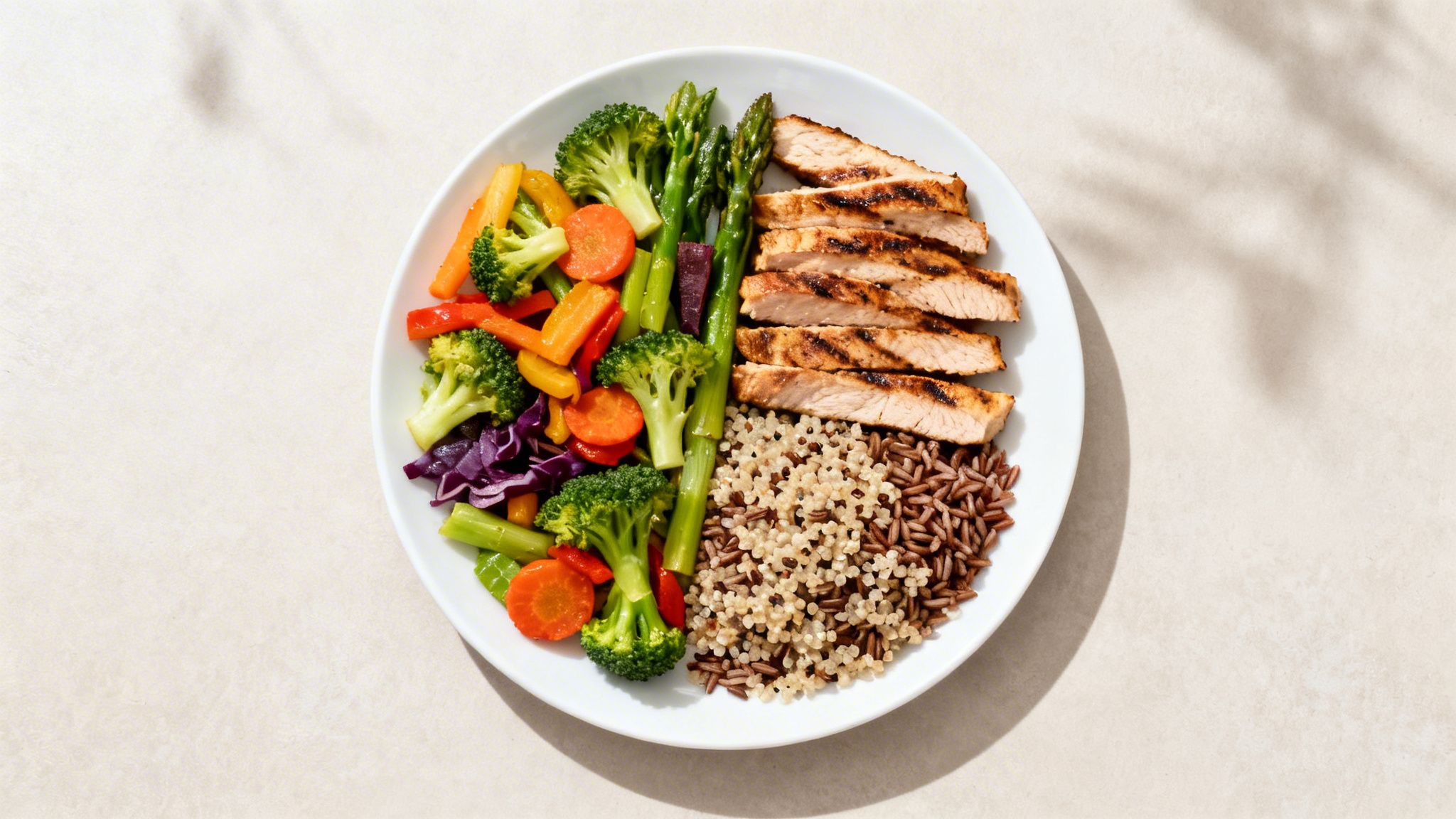
Theory is all well and good, but how do you turn your knowledge about nutrients into real energy for your everyday life? That is exactly what we are focusing on now: putting theory into practice. Don’t worry, it’s easier than it sounds. With a few simple but incredibly effective strategies, you can turn every meal into a true powerhouse for your health.
The first step is the easiest and perhaps most important: Give your plate a clear structure. A great method that has proven itself for years and requires no calorie counting is the “plate method.” It is your visual compass for a balanced meal.
Simply imagine your plate divided into three sections at every main meal.
Your plate as a nutrient compass
This is how you can put together a balanced meal in no time:
- Half of your plate (50%): Vegetables and salad. This area is reserved for the true heroes—the micronutrients. Load it up with anything colorful and fresh-looking: peppers, broccoli, spinach, tomatoes. These powerhouses provide vitamins, minerals and the all-important dietary fiber.
- One quarter of your plate (25%): High-quality proteins. Whether lean meat, fish, eggs, tofu or legumes such as lentils and chickpeas—this is where your muscles get their power. Proteins are not only building blocks, but also keep you feeling full for a long time.
- One quarter of your plate (25%): Complex carbohydrates. Brown rice, quinoa, oats or potatoes are the perfect choice. They provide your brain and muscles with steady energy and prevent the dreaded afternoon slump that nobody needs.
This simple model gives you a clear framework and almost automatically ensures that your nutrient distribution is right.
Foods packed with goodness
If you want to take it a step further, focus on particularly nutrient-dense foods. These are the unsung stars of the kitchen, packing an enormous concentration of valuable nutrients into a small amount of food.
Why not try incorporating these little powerhouses into your diet regularly:
- Dark leafy greens such as kale or spinach (packed with iron, calcium and vitamin K)
- Berries such as blueberries or raspberries (positively bursting with antioxidants and vitamin C)
- Nuts and seeds, such as walnuts or flaxseeds (your source of healthy fats and magnesium)
- Fatty fish such as salmon (an absolute champion when it comes to omega-3 fatty acids and vitamin D)
Targeted supplementation instead of fumbling in the dark
Even with the best diet, gaps can sometimes arise. But when do dietary supplements really make sense? The answer is crystal clear: only when there is a proven need. Taking supplements “just in case” is rarely a good idea and can even backfire.
Think of the results of a mybody-x.com nutrient test as a personal user manual for your body. They show you exactly where you need to start, instead of fumbling around in a fog of guesswork.
For example, if your test reveals a low vitamin D level, you can take targeted action at the right dosage. This is not only much more effective but also safer. With the knowledge from your test and the practical tips, you have all the tools you need to take charge of your well-being and energy.
Your most frequently asked questions about nutrients
Do you still have unanswered questions or wonder what all this means for your everyday life? Here, we’ve collected answers to some of the most common questions we receive time and again.
Do I really need to consume every vitamin in exact amounts every day?
No, thankfully not. Your body is quite clever and can store the fat-soluble vitamins (A, D, E, K) for a while. This allows it to build up a kind of buffer for leaner days.
Water-soluble vitamins, such as vitamin C and the B vitamins, are different. Anything your body doesn’t need right away is usually simply excreted. That’s why regular intake is more important here. The key, then, isn’t obsessive counting but a consistently balanced diet that continuously nourishes your body.
Are dietary supplements essential?
Absolutely not across the board. A healthy, fresh, and varied diet should always be and remain the foundation. Dietary supplements are a sensible support when a deficiency has been confirmed or there is a clearly increased need—for example, during pregnancy. They can also help when meeting your needs through regular food is difficult, such as with vitamin D in winter.
Taking supplements at random is useless at best and potentially harmful at worst. A blood test, such as the mybody-x.com nutrient test, gives you the facts you need for truly targeted and meaningful supplementation.
Is an app enough to track my nutrient needs?
Tracking apps are a great tool for getting a sense of your diet and keeping a rough eye on your macronutrient intake. But they have clear limitations.
An app can’t tell you how well your body actually absorbs the nutrients from your food—the so-called bioavailability. More importantly, it can’t show you your actual blood levels. An app can estimate your intake, but only a blood test from mybody-x.com can give you certainty about your true nutritional status.
Are you ready to move from guessing to knowing? Put your nutrient intake on a solid, scientific foundation. With the mybody-x.com nutrient tests, you receive a precise analysis of your levels and clear recommendations tailored specifically to you and your body.



Share now:
Fatigue despite getting enough sleep: causes, tests, and clear steps
Chronic exhaustion: What you can really do when you have no energy left