
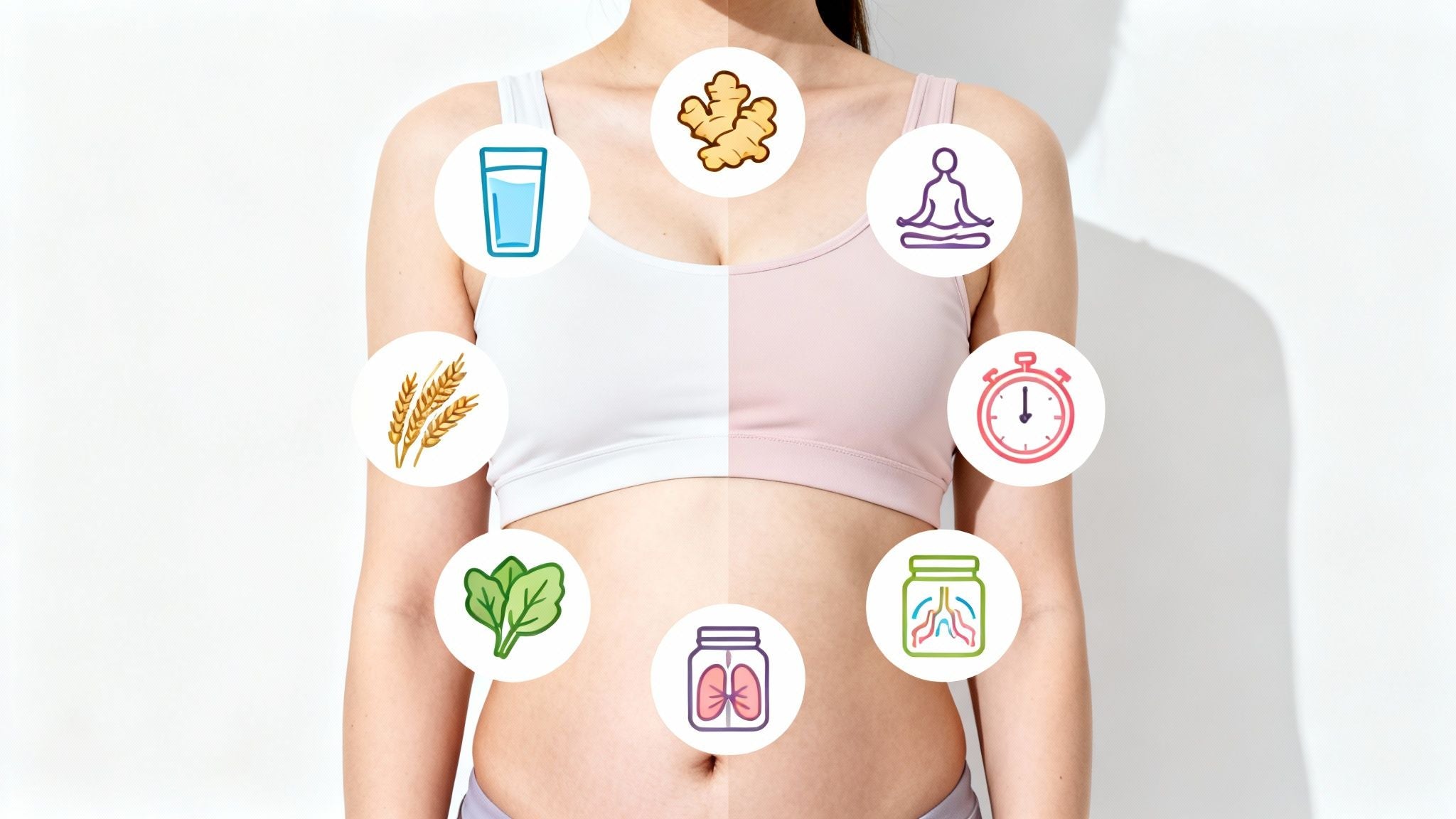
8 Sustainable Tips for a Flat, Bloat-Free Stomach
Do you often feel uncomfortably bloated, as if you had a balloon in your stomach? You are not alone. Bloating, also medically known as meteorism, is a widespread problem that can significantly affect your quality of life. But what is really behind it? In most cases, it is more than simply eating the wrong food at the wrong time. Excess air in the abdomen is caused by gases that are either unknowingly swallowed when eating hurriedly or produced by your gut bacteria while digesting certain nutrients.
The causes are as individual as you are: they range from unfavorable eating habits and consuming gas-producing foods to stress or an imbalance in your gut flora. A stressed gut may break down nutrients less effectively, which further promotes gas production. An imbalance in important gut bacteria often leads to similar symptoms and can disrupt your well-being in the long term.
This article provides you with more than just superficial tips for bloating; it gives you 8 well-founded, tried-and-tested strategies. You will learn how to relieve acute symptoms immediately and ensure a calm, flat stomach in the long term. We show you concrete immediate measures and preventive daily routines, and explain when it makes sense to take a closer look. If recurring symptoms are troubling you, a targeted intolerance test from mybody-x.com could be the crucial step toward identifying hidden causes and finally gaining clarity. Because your well-being begins in your gut.
1. Eat slowly and chew thoroughly
The fastest and perhaps most effective tip for bloating begins not on your plate, but in your mind: consciously deciding to eat slowly. Sounds too simple? The explanation behind it is convincing. Digestion begins in the mouth. Thorough chewing mechanically breaks down food and mixes it with saliva, which contains important enzymes such as amylase. These enzymes immediately begin breaking down carbohydrates. The better this preliminary work is done, the less work your gastrointestinal tract has later—and the lower the risk of fermentation processes that lead to gas production and uncomfortable bloating.

Another crucial factor is the air you swallow while eating (aerophagia). People who eat hastily inevitably swallow more air, which accumulates in the digestive tract and increases the feeling of fullness. Mindful chewing and eating calmly significantly minimize this effect.
Putting it into practice: How to make it work for you
Cultural practices such as Japanese food culture (Hara Hachi Bu: eating only until you are 80% full) and Ayurvedic traditions have emphasized the importance of eating slowly and mindfully for healthy digestion for centuries. However, you do not need to introduce complex rituals to benefit from them.
Practical tips for mindful eating:
- Screen-free zone: Put your phone away and turn off the television. Focus fully on your meal, its flavors, and its textures.
- Put down your cutlery: Make it a habit to briefly put down your cutlery after each bite. This automatically forces you to take a break.
- Count every bite: As an exercise, try chewing each bite at least 20 to 30 times. You may be surprised by how your feeling of fullness changes.
- Start with smaller portions: Begin with a smaller portion on your plate. This encourages you to take your time and get more if needed, rather than quickly eating a large amount.
Important note: If you continue to suffer from severe bloating despite eating mindfully, undetected food intolerances could be the cause. Often, everyday foods are responsible—foods your body cannot process properly. An intolerance test from mybody-x.com can provide targeted clarity and show you which foods you should try avoiding to ease your digestion.
2. Avoid bloating foods
Some of the healthiest foods can also be the main culprits behind bloating. This is because they contain certain hard-to-digest fibers, types of sugar (such as FODMAPs), or sulfur compounds. When these substances reach the large intestine, your gut bacteria ferment them. This process produces gases such as hydrogen, methane, and carbon dioxide, which bloat the abdomen and cause discomfort. A targeted but mindful elimination of these foods can therefore be one of the most effective tips for reducing bloating.
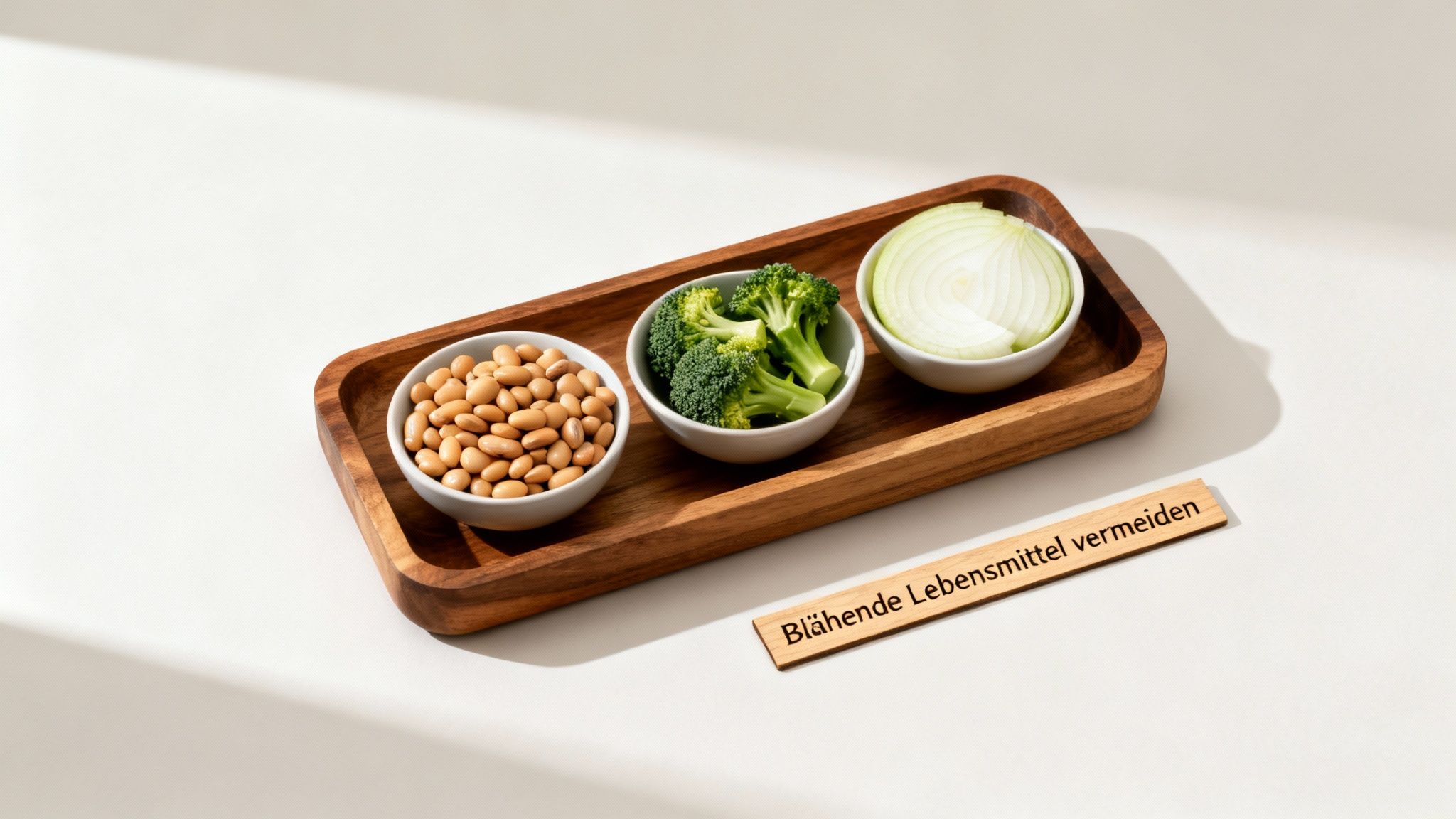
Classic “gas-producing” foods include legumes such as beans and lentils, cruciferous vegetables such as broccoli and cauliflower, onions, garlic, and some fruits high in fructose. However, reactions to them vary greatly from person to person. What causes severe bloating in one person may be completely harmless to another. That is why the goal is not to banish these nutritious foods across the board, but to identify your personal triggers.
Putting it into practice: How to find your triggers
A blanket avoidance approach is rarely the best solution. Instead, a strategic approach can help you determine which foods personally cause bloating for you. The low-FODMAP diet is a well-known example based on this principle of temporary elimination and gradual reintroduction.
Specific tips for identifying your triggers:
- Keep a food diary: For one to two weeks, record exactly what you eat and drink and how you feel afterward. This will help you quickly identify patterns between certain foods and the onset of bloating.
- Reduce selectively, don’t eliminate radically: Start by avoiding just one or two suspected food groups (e.g., cruciferous vegetables) for a few days and observe the change.
- Adjust preparation: The way food is prepared often makes the difference. Legumes are easier to digest if you soak them for a long time before cooking and discard the soaking water. Vegetables are often better tolerated when steamed than when raw.
- Pay attention to quantity: Sometimes the food itself is not the problem, but the amount. A small portion of broccoli may not cause any problems, whereas a large portion might.
Important note: Individual tolerance of foods is genetically determined. While a food diary can help with identification, your DNA can reveal how your body fundamentally processes certain nutrients. Learn more about how a DNA test for your diet can help you tailor your diet to your genetic predispositions and thus minimize digestive problems in the long term.
3. Drink enough water
One of the most fundamental yet often overlooked strategies for combating a bloated stomach is remarkably simple: drink enough water. Your digestive system relies on fluids to function smoothly. Dehydration slows intestinal activity, which can cause stool to remain in the large intestine for too long. The result is not only constipation but also a prolonged fermentation time caused by intestinal bacteria, which in turn leads to excessive gas formation and a painful bloated stomach. Water helps swell dietary fiber and transport food smoothly through the intestines.

Regular and adequate fluid intake therefore directly supports digestion and prevents stagnation. By helping your body eliminate waste products efficiently, you reduce the risk of unpleasant fermentation processes. In addition, a balanced water balance can prevent the body from retaining water in response to dehydration, which can also contribute to a feeling of fullness.
Putting it into practice: How to make it work for you
Traditional teachings such as Ayurvedic medicine have long emphasized the importance of warm water for stimulating the digestive fire (Agni). Many naturopaths also recommend it as a simple morning routine. However, you do not need to follow complicated rules to benefit from its positive effects and soothe your bloated stomach.
Practical tips for optimal hydration:
- Start the day warm: Begin your morning with a glass of lukewarm water, optionally with a splash of fresh lemon. This can gently stimulate digestion.
- Regularly rather than all at once: Drink smaller amounts regularly throughout the day instead of downing two or three large glasses at once. This helps the body absorb the fluid more effectively.
- Timing is everything: Try to drink larger amounts of water about 30 minutes before or 1–2 hours after meals so as not to dilute digestive juices too much.
- Tea as an alternative: Unsweetened herbal teas such as fennel, anise, caraway, or peppermint are excellent alternatives that not only hydrate but also have antispasmodic and digestion-promoting effects.
Important note: Good hydration is the foundation, but sometimes the body develops a bloated stomach despite healthy habits. This may indicate that certain nutrients are lacking or that the body cannot process certain foods optimally. A nutrient and intolerance test from mybody-x.com can show you precisely whether a deficiency in digestion-related vitamins or a hidden reaction to foods is causing your symptoms and provide targeted solutions.
4. Regular exercise and gentle workouts
A sluggish bowel is often a primary cause of a bloated stomach. When food remains in the digestive tract for too long, fermentation processes begin and produce gas. This is where one of the most effective and natural tips for bloating comes in: exercise. Physical activity stimulates peristalsis—the wave-like muscle contractions of the intestines that move food through the digestive tract. An active bowel can move and expel gas more efficiently, reducing pressure and feelings of fullness.

In addition, exercise helps reduce stress. The stress hormone cortisol can slow digestion and disrupt the balance of gut bacteria, which can in turn lead to bloating. Gentle activities act as an outlet for accumulated tension and help restore balance not only to your body, but also to your digestion.
Putting it into practice: How to make it work for you
You don’t have to run a marathon to support your digestion. The goal is to incorporate gentle, regular movement into your daily routine. Even small habits can make a big difference and keep your metabolism active.
Specific tips for getting more exercise:
- The digestive walk: A relaxed 15-minute walk after eating is a classic that works wonders. It gently stimulates intestinal activity without overloading the body.
- Yoga for the abdomen: Certain yoga poses, known as asanas, massage the abdominal organs and can help release trapped gas. Positions such as Child’s Pose (Balasana), Half Lord of the Fishes Pose (Ardha Matsyendrasana), or Knees-to-Chest Pose (Apanasana) are particularly effective.
- Abdominal massage: While lying down, gently massage around your belly button in clockwise circles. This follows the natural path of the large intestine and may support the passage of gas.
- Incorporate movement: Take the stairs instead of the elevator, run short errands on foot or by bike. Every bit of extra activity counts.
Important note: Exercise is a powerful tool for normalizing digestion and naturally stimulating your metabolism. However, if your bloating persists even with an active lifestyle, the cause may lie deeper. Chronic symptoms are often your body’s signal that something is wrong internally, whether it is a food intolerance or a nutrient deficiency. A home self-test can provide valuable insights here.
5. Probiotics and gut bacteria balance
Your gut is home to trillions of microorganisms that together form your gut microbiome. This complex ecosystem is a decisive factor in smooth digestion. When it becomes unbalanced, gas-producing bacteria can multiply, directly leading to bloating. This is where probiotics come in: they are living, “good” bacteria that help restore balance, displace harmful microbes, and reduce fermentation processes.
A healthy microbiome is one of the most fundamental tips for reducing bloating because it addresses the root cause rather than merely treating symptoms. Traditional cultures have long understood the power of fermented foods. Today, modern research confirms that the targeted intake of probiotic strains such as lactobacilli and bifidobacteria can significantly improve gut health and reduce bloating. They support not only digestion but also nutrient absorption and the immune system.
Putting it into practice: How to strengthen your gut flora
Incorporating probiotics into your daily routine is straightforward and can be done through both natural foods and targeted dietary supplements.
Specific tips for a strong microbiome:
- Incorporate fermented foods: Regularly include fermented foods such as plain yogurt, kefir, raw sauerkraut, kimchi, or kombucha in your diet. They are natural sources of a variety of probiotic cultures.
- Start slowly: If you are new to fermented foods, start with small amounts (e.g., a spoonful of sauerkraut) and increase gradually. This gives your gut time to adjust.
- Focus on variety: Look for products containing different bacterial strains (e.g., Lactobacillus acidophilus, Bifidobacterium lactis). Each strain has specific functions, and greater variety is more beneficial for your microbiome.
- Patience and consistency: Sustainable changes to your gut flora take time. Give your body at least four to eight weeks for the positive effects of probiotics to become noticeable.
Important note: Probiotics need “food” to survive and thrive. This food consists of prebiotics, meaning indigestible dietary fiber from foods such as onions, garlic, leeks, asparagus, or bananas. For a comprehensive strategy, you should combine both. Would you like to explore the topic in greater depth? Learn more about how you can naturally build up your gut flora to support your digestion in the long term.
6. Natural herbs and teas
Before reaching for medication, nature offers you a wealth of effective remedies for bloating. Certain herbs and teas have been known for thousands of years for their digestive and soothing properties. They act naturally as antispasmodics, carminatives, and soothers of the gastrointestinal tract, making them one of the gentlest yet most effective tips for bloating.
The effects are based on the essential oils and secondary plant compounds they contain. Menthol in peppermint relaxes the stomach muscles, fenchone in fennel inhibits fermentation processes, and the gingerols in ginger stimulate the production of digestive juices. These mechanisms of action specifically target where gas formation occurs and can both relieve acute discomfort and have a preventive effect.
Putting it into practice: How to make it work for you
Cultures around the world trust in the power of herbs. In Ayurveda, ginger and fennel are an integral part of the daily routine for strengthening the digestive fire (Agni), while in Europe, peppermint and caraway are traditionally served after heavy meals. You can easily incorporate this ancient wisdom into your modern everyday life.
Specific tips for digestion-supporting teas:
- The right time: Drink a cup of tea about 15 to 30 minutes before a meal to prepare your digestion, or afterward to relieve discomfort.
- Choose quality: Opt for high-quality, organic teas, either loose-leaf or in bags. This ensures that the concentration of valuable essential oils is as high as possible.
- Use fresh herbs: Whenever possible, use fresh herbs. Tea made from fresh ginger slices, mint leaves, or crushed fennel seeds is often more effective than dried varieties.
- The most popular remedies: Some of the most proven teas for bloating include peppermint, ginger, fennel-anise-caraway, and chamomile tea. Experiment to find out which one helps you most.
- Regularity: Incorporate one to two cups into your daily routine to support your digestion in the long term and prevent bloating.
Important note: While herbal teas are an excellent aid, they cannot always address the cause of recurring bloating. If you find that your stomach continues to rebel regularly despite these measures, this could be a sign of a deeper imbalance. The cause is often an undiscovered food intolerance. An intolerance test will clarify which foods are putting a strain on your system and help you adjust your diet accordingly.
7. Stress reduction and relaxation techniques
You have probably experienced yourself how your stomach reacts to stress: the queasy feeling before an exam or “butterflies” when you're excited. This phenomenon is not imagined, but the result of a direct and powerful connection known as the gut-brain axis. Your digestive tract is threaded with a complex network of nerves that communicates closely with your brain. Chronic stress and constant tension can disrupt this sensitive system, alter intestinal motility, and thus lead to painful gas, cramps, and bloating.
Stress puts your body into “fight-or-flight” mode. In this state, digestion is shut down as nonessential to survival, which slows the processing of food. The result is fermentation and putrefaction processes in the intestines that promote excessive gas production. Active relaxation is therefore one of the most effective yet often overlooked tips for reducing bloating, as it addresses the underlying nervous-system cause directly.
Putting it into practice: How to make it work for you
Pioneers like Jon Kabat-Zinn have shown that mindfulness practices can significantly improve the body's physical response to stress. You don't have to become an expert; even small, regular moments of relaxation in everyday life can make a big difference to your gut health.
Practical tips for greater relaxation:
- Breathing exercises before eating: Take two minutes before each meal for simple abdominal breathing. Breathe deeply through your nose into your abdomen (it should rise) and slowly exhale through your mouth. This signals your nervous system to switch into “rest-and-digest mode.”
- Start with short meditations: Begin with just 5 to 10 minutes of guided meditation per day. Apps like Calm or Headspace offer an ideal introduction and help you build a routine.
- Progressive muscle relaxation: In the evening, while lying in bed, tense different muscle groups one after another (feet, calves, thighs, etc.) firmly for 5 seconds, then consciously relax them for 30 seconds. This technique helps release physical tension.
- Create relaxing rituals: A warm bath, a cup of herbal tea before bed, or a short walk in nature can work wonders to reduce stress levels.
Important note: If your body continues to react strongly to stress with digestive problems despite relaxation techniques, your hormonal system may be out of balance. Chronic stress affects hormones such as cortisol, which can directly impact your digestion. A hormone test from mybody-x.com can provide clarity on whether a hormonal imbalance is contributing to your symptoms and help enable targeted measures.
8. Stick to regular mealtimes and digestive breaks
Your digestive system is not an indefatigable workhorse but, just like you, needs regular breaks to function optimally. One of the often-overlooked yet most effective tips for reducing bloating therefore lies in structuring your daily eating schedule. Constant snacking and irregular meals overwhelm the gastrointestinal tract because it never gets the chance to fully process one meal before the next arrives. This leads to incomplete digestion, fermentation processes, and the resulting gas formation.
By giving your body clear eating windows and sufficiently long breaks of around four to five hours in between, you enable it to activate the so-called “migrating motor complex” (MMC). You can think of it as a kind of cleaning and tidying team for the intestines that is active only during fasting phases. It transports undigested remnants onward, thereby preventing bacterial overgrowth and gas formation.
Putting it into practice: How to make it work for you
The concept of digestive breaks is deeply rooted in traditional dietary practices and also forms the basis for modern approaches such as intermittent fasting. It is about giving your body a rhythm that it can use for healthy digestion.
Practical tips for structured mealtimes:
- Start with three main meals: Begin by focusing on breakfast, lunch, and dinner, and avoid snacks in between. This alone can make a big difference.
- Establish fixed times: Try to eat your meals at approximately the same time every day, including weekends. This helps your body adjust to a reliable rhythm.
- Use breaks intelligently: Drink enough water or unsweetened herbal tea during breaks between meals. This supports digestion and keeps you hydrated.
- Exercise after eating: A short walk after a meal stimulates intestinal motility and can effectively prevent feelings of fullness and bloating.
Important note: If your bloated stomach persists even when you follow fixed mealtimes and digestive breaks, the cause may lie deeper. Certain foods can overwhelm your system, even if they are considered “healthy.” A food intolerance test analyzes your reaction to a wide range of foods and gives you precise guidance on what you may need to avoid in order to calm your digestion sustainably and find the cause of your bloating.
Brief comparison: 8 tips for reducing bloating
| Measure | 🔄 Implementation effort | ⚡ Resources & efficiency | ⭐ Expected effectiveness | 💡 Ideal use cases / tips | 📊 Main benefits |
|---|---|---|---|---|---|
| Eat slowly and chew thoroughly | 🔄 Low – requires discipline | ⚡ Free, time-consuming | ⭐⭐⭐⭐⭐ – reduces air swallowing | 💡 Put your phone away, put down your utensils, 20–30 min/meal | 📊 Immediate relief, better satiety, no side effects |
| Avoid gas-producing foods | 🔄 Moderate – dietary changes required | ⚡ Low cost, planning & shopping | ⭐⭐⭐⭐ – often provides quick relief | 💡 Keep a food diary, soak legumes | 📊 Reduces gas formation, easy trigger control |
| Drink enough water | 🔄 Low – establish a habit | ⚡ Very affordable, easy to implement | ⭐⭐⭐ – supports digestion & bowel movements | 💡 2–3 L/day, drink throughout the day, warm water in the morning | 📊 Improves digestion, skin & metabolism |
| Regular exercise and light workouts | 🔄 Moderate – consistency required | ⚡ Low cost (time investment) | ⭐⭐⭐⭐ – stimulates bowel activity | 💡 30 min/day, walk after meals, yoga poses | 📊 Promotes peristalsis, reduces stress & constipation |
| Probiotics and gut bacteria balance | 🔄 Moderate – selection & long-term use | ⚡ Cost of supplements or fermented foods | ⭐⭐⭐⭐ – particularly effective in the long term | 💡 Start with small amounts, use multiple strains, stay consistent for 4–8 weeks | 📊 Improves the microbiome, strengthens immunity, supports long-term digestion |
| Natural herbs and teas | 🔄 Low – easy to prepare | ⚡ Inexpensive, fast symptomatic relief | ⭐⭐⭐⭐ – rapid relief possible | 💡 2–3 cups/day, high-quality herbs, 10–15 min before/after meals | 📊 Fast-acting, natural, few side effects |
| Stress reduction and relaxation techniques | 🔄 Moderate – requires regular practice | ⚡ No cost, requires time investment | ⭐⭐⭐⭐ – effective for gut-related symptoms | 💡 5–10 min/day, breathing exercises before meals, meditation | 📊 Improves the gut-brain axis, reduces stress-related bloating |
| Maintain regular meal times and digestive breaks | 🔄 Moderate – time planning & discipline | ⚡ Low effort, planning required | ⭐⭐⭐⭐ – supports digestive control | 💡 4–5 hours between meals, last meal ≥3 hours before sleep | 📊 Reduces fermentation, promotes insulin sensitivity and recovery |
Your next step toward a symptom-free abdomen
You now have a comprehensive collection of practical tips for bloating at your disposal. From consciously structuring your meals and choosing the right foods to the importance of exercise and relaxation, each of these strategies is a valuable building block on your path to greater well-being. The key to success often lies in consistently combining these methods. You may already have realized that you need to start by addressing rushed eating amid everyday stress, or you may be planning to incorporate targeted relaxation exercises into your evening routine.
It is important to understand that bloating rarely has just one cause. Rather, it is often the result of an interplay of various factors. Your lifestyle, eating habits, stress levels, and the individual composition of your gut flora—all of these play a crucial role. The tips for bloating presented in this article provide you with a powerful set of tools for adjusting these various factors.
Important thought: Do not view this advice as rigid rules, but as a flexible system. Experiment and observe closely which changes have the greatest impact on you. Your body is constantly sending you signals, and the goal is to learn how to interpret them correctly.
From knowledge to action: Your personal roadmap
The first step is analysis: Which of the points mentioned apply to you most closely?
- The fast eater: Is your main problem that meals are often rushed and eaten on the go? Then focus first on eating slowly and chewing thoroughly.
- The Stress-Stricken One: Is your stomach especially bloated on challenging days? Prioritize stress-management techniques such as yoga, meditation, or regular breaks.
- The Uncertain One: Do you feel that you are doing “everything right,” but your symptoms persist? The cause could lie deeper, for example in an undetected food intolerance.
Putting these tips into practice is a journey, not a sprint. It is about establishing sustainable habits that fit smoothly into your life. A food diary can be an incredibly helpful tool during the first few weeks for identifying patterns. Do not just record what you eat, but also how you feel afterward. This will quickly help you discover which foods or situations trigger your symptoms.
When general tips are no longer enough
Have you already tried lots of advice, adapted your lifestyle, and reduced foods that cause bloating, yet the flat stomach you long for remains a pipe dream? That is frustrating, but no reason to give up. The causes of recurring digestive problems are often as individual as your fingerprint. What works for one person may be ineffective for another.
This is exactly where it becomes crucial to move from general guesswork to targeted knowledge. Instead of indiscriminately eliminating entire food groups and potentially risking nutrient deficiencies, you can find out precisely what your body really cannot tolerate. Hidden intolerances to gluten, lactose, fructose, or other foods are a common but often overlooked cause of chronic bloating.
If you are ready to take control and uncover the real reasons behind your symptoms, a targeted at-home self-test is the logical next step. Instead of feeling in the dark, you receive clear, scientifically sound data about your own body. This enables you to adjust your diet precisely and finally address the cause of the problem rather than merely alleviating the symptoms. Your journey toward a symptom-free feeling in your stomach begins with truly understanding your body.
Are you ready to stop guessing and gain clarity about your digestion? The mybody x Gesundheit food reaction test analyzes how your body responds to common foods and provides you with a personalized roadmap. With mybody x Gesundheit, finally find out what is behind your bloating and start a life with greater well-being.

Share now:
Analyze Your Own Health – Opportunities for Your Well-Being
How Health Analysis Works for Your Everyday Life