

Analyze Your Own Health – Opportunities for Your Well-Being
More than 40 percent of Germans already use self-tests to learn more about their health. For many, however, visiting a doctor is time-consuming or involves long waiting times. Modern at-home health analyses provide insights into important values and enable early prevention. In this article, you will learn how easily you can obtain precise data about your body from home and what you should definitely consider when choosing and using self-tests.
Table of Contents
- Understanding At-Home Health Analysis
- An overview of modern self-test options
- From DNA to microbiome: How analyses work
- Data protection and security for health data
- Benefits of personalized assessments for everyday life and prevention
- Typical sources of error and what to look out for
Key Insights
| Point | Details |
|---|---|
| Modern Health Analyses | Self-tests enable convenient health checks at home, but they do not replace a medical diagnosis. |
| Variety of Tests | There are various self-tests, including DNA analyses, microbiome analyses, and hormone tests, that can provide valuable health information. |
| Data Protection and Security | Protecting personal health data is essential; users should read privacy policies carefully. |
| Avoiding Sources of Error | When performing self-tests, care is important to avoid distorted results caused by incorrect sample collection or improper storage. |
Understanding At-Home Health Analysis
Do you want to better understand your health without having to make a doctor’s appointment right away? Modern at-home health analyses offer a precise and convenient way to gain important insights into your body. Medical self-tests enable you to make an initial assessment of your health directly from home.
Performing these tests is remarkably simple: You receive a complete test kit at home containing all the necessary materials and detailed instructions. Whether it is a saliva, blood, or stool sample, collection is explained in clear steps and usually takes just a few minutes. After you send in your sample, certified laboratories analyze it and prepare a comprehensive report with personalized health recommendations.
Important to know: These self-tests do not replace a medical diagnosis; instead, they provide valuable additional information. They help you identify risks at an early stage and take targeted preventive measures. Microbiome tests, for example, can provide insights into your gut health, while metabolic analyses offer insights into your metabolism and nutrient balance.
Pro tip for health-conscious individuals: Keep your test results and take the tests at regular intervals. This allows you to document changes in your health over the long term and respond at an early stage.
An overview of modern self-test options
Modern self-tests have revolutionized the way we monitor and understand our health. The most important testing methods now offer an impressive variety of analysis options—from metabolism and gut health to hormonal checks.
Some of the most common self-tests include:
- Stool sample tests for gut health and the microbiome
- Blood tests to check nutrients, hormones, and metabolic markers
- Saliva-based genetic tests for individual health risks and prevention strategies
- Hormone tests to analyze testosterone or estrogen levels
The benefits of modern self-tests are diverse: They are cost-effective, discreet, and enable a quick initial assessment of your health. Stool tests, for example, provide important information about your gut flora and possible inflammation markers without requiring a visit to the doctor.
Pro tip for self-tests: Always choose certified and scientifically validated testing methods to obtain meaningful and reliable results.
From DNA to microbiome: How analyses work
Modern health analyses are a fascinating journey into the depths of our bodies. Scientific health research studies show how complex and individual our genetic and microbiomic structures actually are. These analyses now give us unprecedented insight into our personal health landscape.
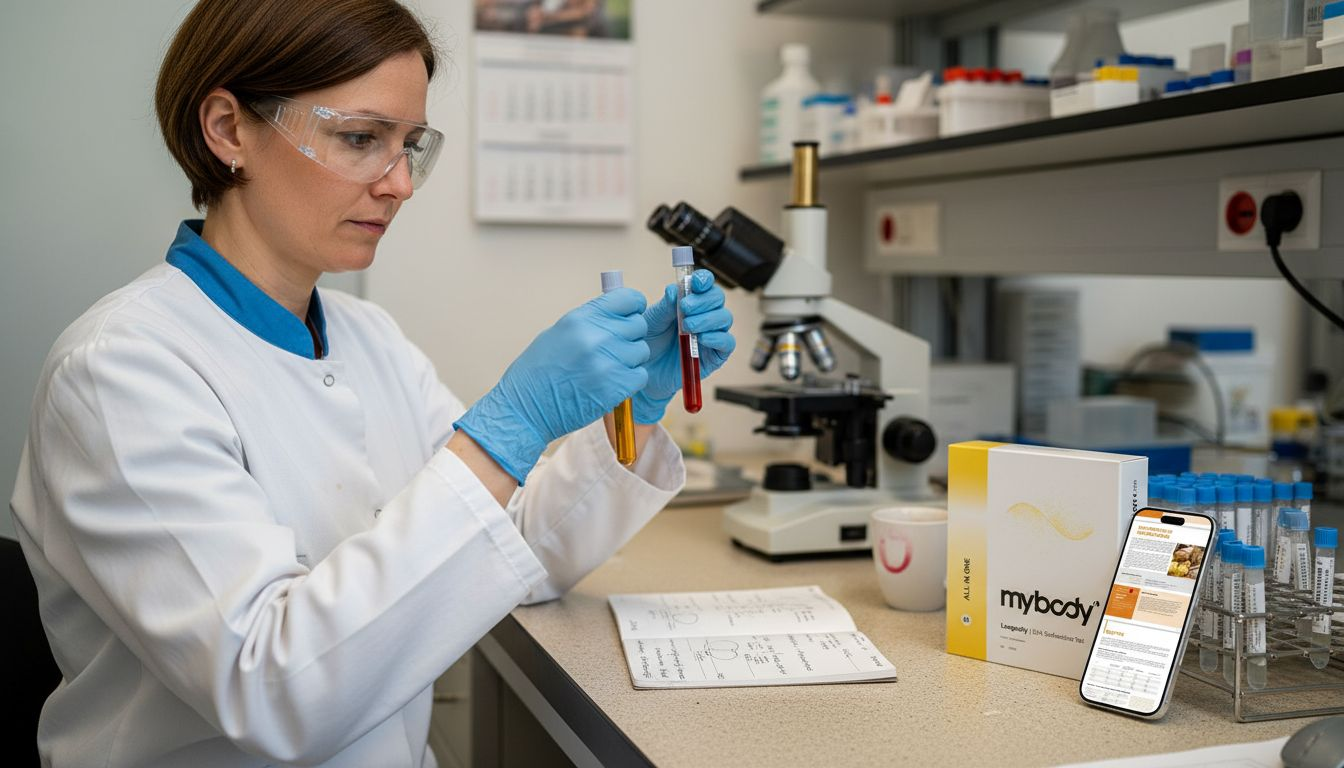
The various analysis methods differ fundamentally:
For a clearer overview, the following comparison table presents the most common types of at-home self-test analyses:
| Analysis method | Application area | Required sample material | Typical results |
|---|---|---|---|
| DNA analysis | Genetic predisposition | Saliva or blood sample | Risk assessment, prevention |
| Microbiome analysis | Gut health | Stool sample | Flora composition, inflammation markers |
| Metabolic analysis | Nutrients, energy | Blood sample | Vitamins, minerals, metabolic status |
| Hormone analysis | Hormonal balance | Blood or saliva | Hormone levels, balance |
- DNA analysis: Examines genetic variations and health risks
- Microbiome analysis: Examines the composition and function of gut bacteria
- Metabolic analysis: Measures metabolic processes and nutrient utilization
- Hormone analysis: Checks hormonal balances and functions
Modern genetic testing methods use advanced technologies such as machine learning to generate precise health information. By analyzing saliva, blood, or stool samples, scientists can now unravel complex relationships between genetics, the environment, and individual health.
Pro tip for health-conscious individuals: Perform analyses at regular intervals to detect changes in your body early and respond to them in a targeted manner.
Data protection and security for health data
Health data is among the most sensitive personal information there is. International health systems are increasingly discussing strategies to protect this highly sensitive data and developing strict security standards.
The most important security aspects of health data include:
- Anonymization: Complete encryption of personal information
- Data encryption: The highest security standards for data transmission
- Voluntariness: Full user control over data sharing
- Transparency: Full disclosure of data use
Modern data protection concepts go far beyond legal minimum requirements. Reputable healthcare providers such as mybody-x guarantee that samples are pseudonymized and destroyed after analysis and that no data is shared with third parties.
This overview shows how health data can be optimally protected during self-testing:
| Data protection measure | Purpose | Importance for users |
|---|---|---|
| Anonymization | Protecting personal information | Identity remains hidden |
| Encryption | Security during data transmission | Protection against data access |
| Voluntary sharing | Control over one's own health data | The user decides for themselves |
| Transparent use | Full disclosure of all data use | Trust is strengthened |
Pro tip for privacy-conscious individuals: Always read the privacy policy carefully and ask questions before sharing sensitive health data.
Benefits of personalized assessments for everyday life and prevention
Personalized health analyses are more than just a snapshot in time. Diagnostic assessment scales in healthcare show how individualized assessments can help us manage our health proactively and effectively.
The key benefits of personalized assessments include:
- Early risk detection: Identification of genetic predispositions
- Tailored prevention strategies: Individual recommendations based on your DNA
- Optimized nutrition planning: Specific dietary recommendations suited to your metabolism
- Lifestyle adjustments: Targeted interventions to improve your health
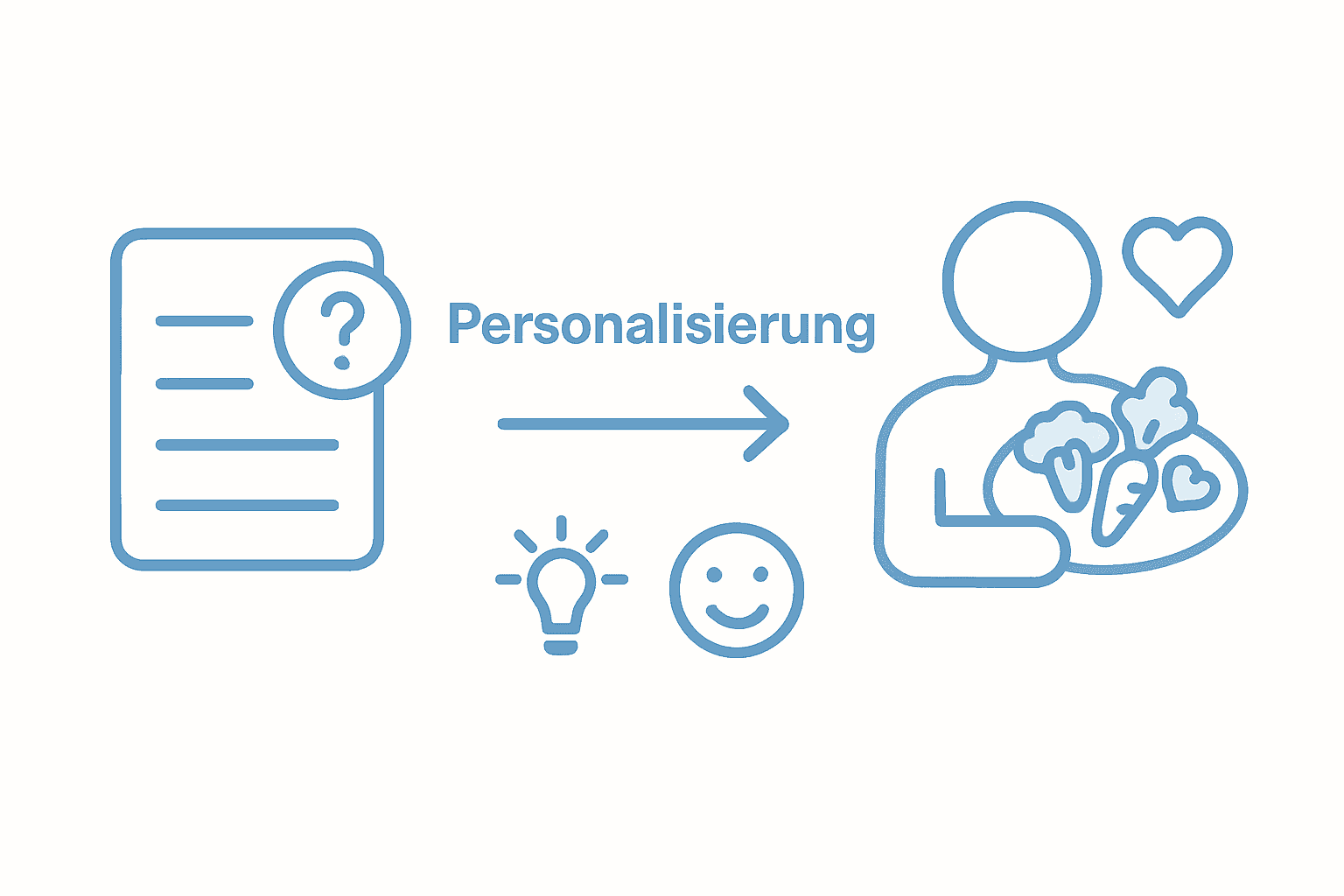
Personalized nutrition strategies enable you to actively shape your health. Instead of standardized diet plans, you receive scientifically grounded recommendations tailored precisely to your genetic makeup and metabolism.
Pro tip for health-conscious individuals: Treat personalized assessments as a dynamic process and review your health data regularly to achieve continuous improvements.
Typical sources of error and what to look out for
Health self-tests can be highly accurate when performed correctly. Medical self-tests require careful attention to various sources of error to ensure reliable results.
Common sources of error in health self-tests include:
- Incorrect sample collection: Failure to follow specific collection instructions
- Improper storage: Temperature and time requirements not followed
- Delayed submission: Exceeding the maximum storage time for the sample
- Contamination: Contamination of the sample by unclean work surfaces
It is especially important to interpret nutrient deficiency symptoms correctly. Do not self-diagnose without consulting a professional—test results are indications, not absolute diagnoses.
Pro tip for accurate self-tests: Read the test instructions carefully several times, and collect the sample calmly and with concentration.
Analyze and actively shape your health
Many people want to better understand their health and detect changes at an early stage. As you know from the article, it is about identifying personal risks and improving well-being and quality of life through targeted measures. This is exactly where mybody®x comes in. Our scientifically grounded at-home health tests offer you simple ways to analyze your body conveniently and safely. From gut health and hormone status to individual metabolism, we create precise reports with tailored recommendations.
Take advantage of modern laboratory diagnostics with certified analyses and maximum data protection. Start your personal health journey with mybody®x and benefit from free shipping, expert advice, and exclusive support through the CareClub. Discover all the options at mybody-x.com and, for example, choose suitable tests from our at-home gut health and intolerance tests and at-home hormone tests. Take the first step toward the health of your future today.
Frequently Asked Questions
What are at-home health analyses?
At-home health analyses are tests that allow you to obtain information about your health without visiting a doctor. They involve collecting samples such as blood, saliva, or stool, which are then analyzed in a laboratory.
How accurate are self-test results?
Self-test results can be very accurate when the tests are performed correctly. It is important to follow the instructions carefully to ensure reliable results.
Do self-tests replace a visit to the doctor?
No, self-tests do not replace a visit to the doctor. They provide valuable additional information but cannot replace a medical diagnosis. If the results are abnormal, visiting a doctor is advisable.
How often should I conduct health analyses?
It is recommended to conduct health analyses at regular intervals to document changes in your health and detect them at an early stage. The frequency may vary depending on your individual health goals.
Recommendation
- Understanding Genetic Analysis: Your Personal Compass for Health – mybody®x
- Gut Analysis Test: Find Your Path to Better Gut Health – mybody®x
- Your Personalized Nutrition: Why a Diet Doesn’t Work – mybody®x
- DNA Analysis for Weight Loss: Find Your Path to Your Feel-Good Weight – mybody®x
- Signs of Dead Batteries: Complete Guide 2025 - accu.blog



Share now:
Microbiome Analysis: Key to Modern Gut Health
8 sustainable tips to reduce bloating for a flat stomach