

Self-tests: How personalized analyses can improve your well-being
Many people buy self-tests hoping for quick clarity about their health. However, not all tests provide added value: some offer genuine, scientifically proven benefits, while others primarily create uncertainty. The difference lies not in the price or packaging, but in the quality of the evidence behind them. In this article, you will learn which self-tests have been proven useful, where their limitations lie, and how to meaningfully integrate the results into your everyday life.
Table of contents
- What are self-tests, and who are they intended for?
- Proven benefits: What do evidence-based self-tests really deliver?
- Which self-tests are useful—and which are not?
- Opportunities and risks: Pitfalls of use by non-experts
- Tips for use and integration into everyday life
- Start better informed: How to use meaningful self-tests safely today
- Frequently asked questions about self-tests
Key findings
| Point | Details |
|---|---|
| Personalization brings benefits | Evidence-based self-tests enable more targeted nutrition and measurable results. |
| Not every test is useful | Only established and validated methods deliver truly reliable results. |
| Professional guidance provides protection | Expert interpretation prevents poor decisions and increases the benefits. |
| Risks of incorrect use | Lay interpretation and unreliable tests can cause more harm than good. |
What are self-tests, and who are they intended for?
Personalized self-tests are analyses that you can conveniently perform at home and then send to a laboratory. The laboratory evaluates saliva, blood, or stool and provides you with an individual report. The self-test process is usually straightforward and well documented.
The most important categories at a glance:
- DNA and metabolic tests: Analyze genetic predispositions related to nutrition, weight, and fitness
- Microbiome tests: Examine the composition of gut bacteria
- Hormone tests: Measure relevant hormone levels for men and women
- Nutrient and mineral checks: Detect deficiencies early
- Intolerance and allergy tests: Identify intolerances
Who are these tests suitable for? In principle, anyone who wants to take an active role in managing their health. They are particularly beneficial for people who make no progress despite eating a healthy diet, or for those with unexplained symptoms such as fatigue, digestive problems, or weight fluctuations. DNA self-tests can reveal metabolic responses and thereby specifically support dietary success. The key difference is this: Personal motivation drives many people to take a test, but the medical benefit depends heavily on the type of test selected. The benefits of personalized nutrition only take effect when the results are properly interpreted.
Proven benefits: What do evidence-based self-tests really deliver?
Not every test is equally well supported by evidence. Let’s look at where the science provides clear answers.
| Test type | Evidence | Main benefit |
|---|---|---|
| DNA nutrition test | Well supported by evidence | Better adherence, individualized nutrition planning |
| BHB ketone test | Well supported by evidence | Effective ketosis monitoring, weight management |
| CGM (blood glucose) | Well supported by evidence | Real-time metabolic monitoring |
| Microbiome test | Limited | Guidance, not a clinical standard |
| Vitamin self-test | Limited | Useful only for at-risk groups |
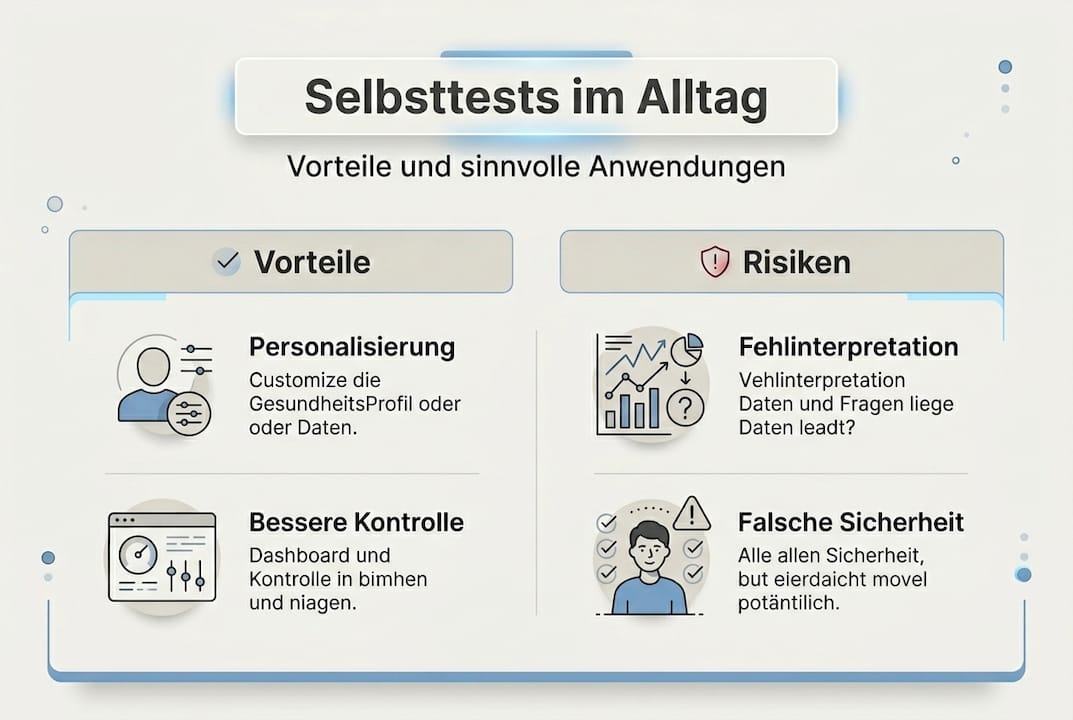
DNA tests accompanied by counseling demonstrably lead to better adherence and help people achieve their health goals more effectively than standard approaches without a genetic basis. This is not marketing, but a finding from controlled studies. Anyone who truly wants to optimize their diet will find a sound starting point in the personalized nutrition analysis.
Another example with strong evidence: BHB tests for monitoring ketosis. Higher BHB levels correlate with measurable weight loss in at-risk groups such as people with overweight or prediabetes. This makes these tests a genuine tool, not just a lifestyle gadget.
Important: Personalized nutrition is more effective than general dietary recommendations—but only if the test has been scientifically validated and the results are professionally interpreted.
Expert tip: When choosing a test, look for ISO-certified laboratory analysis. This is a reliable quality indicator that distinguishes reputable providers from disreputable ones. The role of nutrition tests in health is often underestimated when clear quality standards are not communicated.
Which self-tests are useful—and which are not?
Here is a direct comparison to make your decision easier:
| Test type | Useful for | Be cautious of |
|---|---|---|
| DNA metabolism test | Anyone with dietary goals | Exaggerated claims |
| BHB ketone test | Overweight, prediabetes | Self-diagnosis without a doctor |
| Hormone test | Symptoms, cycle problems | Interpretation without a professional |
| Microbiome test | Digestive problems | Healthy people without symptoms |
| Vitamin check | At-risk groups, vegans | Routine check without a specific reason |
Many tests, including microbiome tests and unvalidated vitamin checks, have little evidence for healthy people, and experts explicitly warn against misinterpretation. This does not mean these tests are worthless. It means they only make sense in a clear context.
How to choose the right test in five steps:
- Define your goal: What would you like to find out? Weight, energy, digestion?
- Check the evidence: Are there studies supporting this type of test for your situation?
- Compare providers: ISO certification, transparent methodology, and data protection are essential
- Plan for consultation: From the outset, plan to discuss the results with a qualified professional
- Keep expectations realistic: A test provides guidance, not a diagnosis
BHB tests for ketone monitoring are among the best-validated methods. For microbiome or vitamin tests, the rule is: use them only when supported by clear evidence and with professional guidance. The article on at-home hormone testing also provides a useful overview, explaining when this test really makes sense.
Opportunities and risks: Pitfalls of use by non-experts
Self-tests provide you with data. But data without context can do more harm than good. This is not a theoretical problem but a frequently observed pattern.
Typical risks of self-interpretation:
- Overdiagnosis: A slightly elevated value is interpreted as an illness even though it is within the normal range
- Missing reference values: Without comparison values from your own medical history, a single result is of limited significance
- Confirmation bias: Looking for confirmation of an existing assumption
- Unnecessary supplementation: Dietary supplements are taken based on unclear results, even though they are not needed
Interpreting results without professional guidance carries real risks. Independent expert knowledge is essential for correctly assessing results and avoiding false conclusions.
Pro tip: Use self-tests as a basis for discussion with your doctor or a nutrition professional, not as a substitute for them. A good provider will give you clear, understandable reports that you can take directly to a consultation.
Extra caution is needed with hormone test interpretation: Hormone levels fluctuate significantly depending on the time of day and the menstrual cycle. A single measurement says little if it was not taken during the correct time window. The same applies to the microbiome test: Proper sample collection is essential for meaningful results.

Tips for use and integration into everyday life
A good test is only as valuable as the consequences you draw from it. Here is a clear roadmap:
- Take preparation seriously: Read the instructions in full before collecting the sample. Errors during sample collection are the most common cause of inaccurate results.
- Choose the right time: Many tests provide better results in the morning on an empty stomach. Hormone tests have specific time windows that you should follow carefully.
- Document results: Record the date, time, and current circumstances (stress, sleep, diet) at the time of testing. This gives you context for interpreting the results.
- Derive specific actions: Personalized results become effective when incorporated into everyday habits and implemented with support. Do not change everything at once; address one thing at a time.
- Monitor progress: A single test is a snapshot. Repeat relevant tests after three to six months to measure changes.
- Seek professional guidance: Many providers offer consultation appointments. Use them, especially when results are unclear or you are planning interventions.
The DNA nutrition test in everyday life illustrates how genetic insights can be translated into concrete dietary adjustments. This is not a one-time event, but a process that requires time and consistency.
Start better informed: How to use meaningful self-tests safely today
You now know which tests offer genuine benefits, where caution is warranted, and how to interpret results correctly. The next step is easier than you might think. At mybody-x, you can find ISO-certified analyses for DNA, metabolism, microbiome, hormones, and nutrients, all conveniently conducted at home. Each test is accompanied by scientifically grounded reports that provide clear recommendations for action. With more than 11,300 satisfied customers, a rating of 4.77 stars, and free shipping from 49 euros, mybody® is a reliable partner for anyone who wants to manage their health based on evidence. GDPR-compliant data protection and a money-back guarantee if no results are provided make getting started risk-free.
Frequently asked questions about self-tests
Who can benefit most from DNA and metabolic self-tests?
People who are overweight or have prediabetes benefit demonstrably: Higher BHB levels correlate with weight loss, making metabolic tests a genuine management tool for these groups.
Why are many microbiome or vitamin self-tests controversial?
Many of these tests show little clinically relevant evidence for healthy people without specific symptoms, which increases the risk of misinterpretation.
What is important when interpreting test results?
Expert assessment is crucial: Interpretation by laypeople is risky and can lead to incorrect conclusions and unnecessary measures.
How can I identify high-quality self-tests?
Quality tests are scientifically validated, ISO-certified, and provide clear recommendations for action. Established methods such as BHB or CGM for at-risk groups are considered reliable standards.



Share now:
Gut health program 2026: Your path to a healthy microbiome
Blood collection at home: Guide to safe home testing