

Blood collection at home: A guide to safe home tests
Anyone who wants to actively monitor their health does not necessarily need to visit a doctor’s office. At-home blood collection enables personalized analyses from the comfort of your sofa, and demand is growing rapidly. However, many people hesitate because they are unsure: Which kit is right? How do I collect blood correctly? What happens if something goes wrong? This guide answers these exact questions. You will learn what materials you need, how collection works step by step, which mistakes you should avoid at all costs, and how to make meaningful use of your results.
Table of contents
- What you need for blood collection at home
- Step-by-step guide: Blood collection by finger prick or vacuum tube
- Common Mistakes, Risks, and Solutions for Home Tests
- Evaluate results and take the next steps
- Faster access to personalized results: Your next step
- Frequently asked questions about at-home blood collection
Key insights
| Point | Details |
|---|---|
| Safe at-home blood collection | With the right preparation and instructions, anyone can collect blood at home. |
| Finger prick and vacuum tubes | For home tests, you can choose between finger prick kits and vacuum tubes; both have specific requirements and benefits. |
| Avoiding risks and errors | Following the instructions carefully and maintaining hygiene are essential for meaningful results. |
| Interpreting results correctly | Home screening tests are convenient, but abnormal results should be reviewed by a doctor. |
What you need for blood collection at home
Before you get started, you need the right equipment. Not every kit is the same, and the difference between the methods is crucial for the quality of your results. At-home blood collection in Switzerland is mainly performed using two systems: finger prick kits and vacuum tube kits.
The finger prick kit (also called a DBS kit, short for Dried Blood Spot) is the most widely used method for home use. You prick your fingertip with a small lancet and let a few drops of blood fall onto special filter paper. The paper dries, is sent in, and analyzed in the laboratory. Diagnostics using dried blood spots have advanced significantly in recent years and are particularly suitable for screening analyses such as nutrient status, hormones, or thyroid levels.
The vacuum tube kit is technically more demanding. A small needle is inserted into a vein, usually in the forearm, and the tube automatically fills with blood through the negative pressure. This method provides more precise results because more blood volume is available and no drying phase is required.
Comparison of the two methods
| Feature | Finger prick (DBS) | Vacuum tubes |
|---|---|---|
| Difficulty level | Low | Medium to high |
| Blood volume | A few drops | 2 to 10 ml |
| Accuracy | Good for screening | Higher, for precise values |
| Pain | Minimal | Low |
| Shipping | Simple, dry | Cold chain required |
| Suitable for | Nutrients, hormones | Complete blood count, lipids |
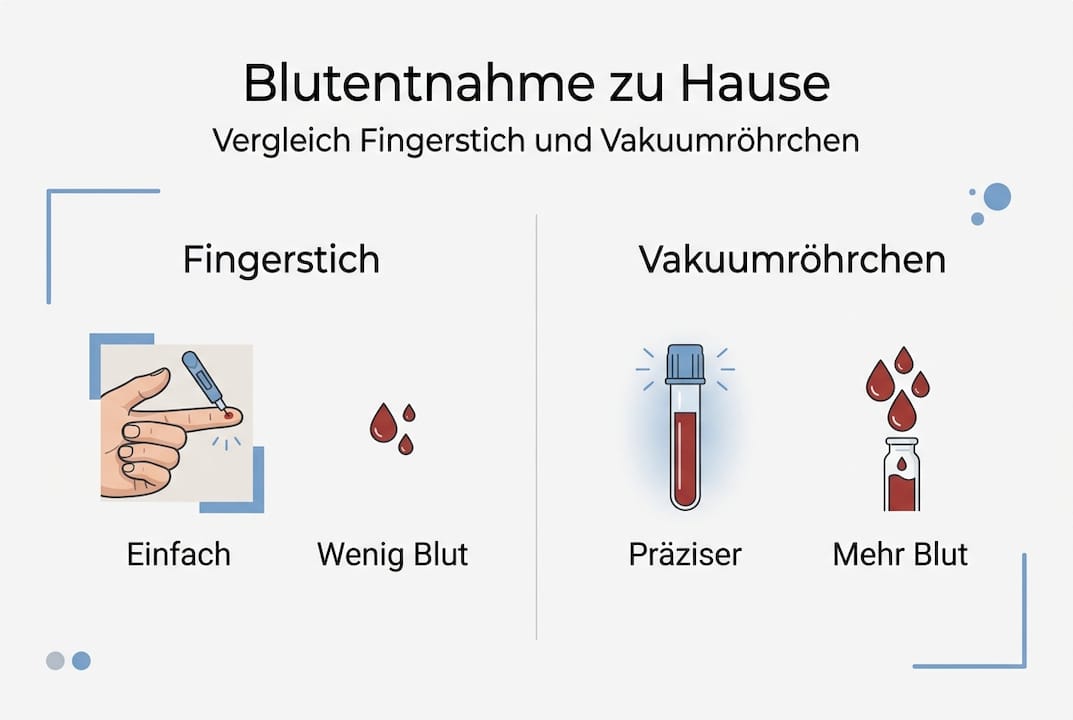
For most home tests in Switzerland, the finger-prick kit is perfectly sufficient. If you want to perform a blood test yourself, specialized providers such as mybody® offer complete kits with everything you need.
What you specifically need
- Lancet: Disposable needle for the finger prick, usually included in the kit
- Disinfectant: Alcohol swabs for the finger and work surface
- Filter paper or tube: Depending on the kit type
- Bandages: For after collection
- Gloves: Optional, but recommended for hygiene
- Return envelope: Usually included in the kit with postage paid
If you are still unsure which method suits your goal, the overview on performing a blood test at home can help.
Step-by-step guide: Blood collection by finger prick or vacuum tube
Once all the materials are ready, the actual collection can begin. Preparation is everything here. A quiet moment, a clean work surface, and a few minutes are all you need.
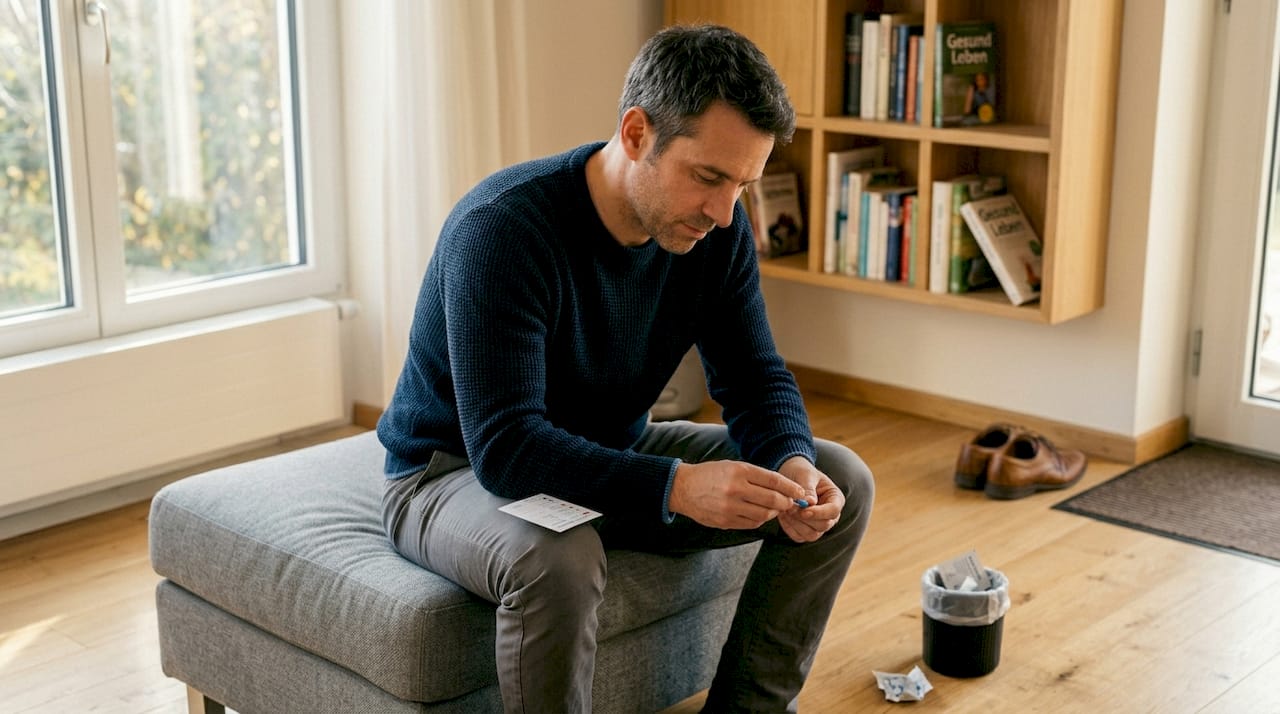
Pro tip: Wash your hands with warm water for at least 30 seconds before collection. Warming improves blood flow to the fingertips and helps the blood flow more easily. This is the most common trick professionals know that beginners often overlook.
Finger-prick procedure (DBS)
- Wash and warm your hands: Wash them with warm water for at least 30 seconds, then pat them dry.
- Disinfect the work surface: Use an alcohol swab on the table, unpack the kit, and lay everything out.
- Disinfect your finger: Apply an alcohol swab to the fingertip (the ring or middle finger is recommended) and let it dry briefly.
- Position the lancet: Press it firmly against the side of your fingertip and activate it.
- Discard the first drop: Wipe away the very first drop of blood with a swab, as it may contain tissue fluid.
- Apply blood drops to the filter paper: Gently massage your finger and let the drops fall directly onto the marked circles; do not wipe.
- Let it dry: Air-dry the filter paper for at least 30 minutes; do not use a hair dryer.
- Send it in: Place it in the return envelope and mail it.
Vacuum-tube procedure
For the vacuum tube, the following applies: Finger-prick sampling and vacuum-tube sampling differ significantly in how they work. The tube fills automatically due to the negative pressure, so you do not need to push or draw blood. Collection typically takes 15 to 30 minutes, including preparation.
Important: The sensitivity of DBS tests is lower in studies than that of venous blood collection. This means they are excellent for screening and monitoring over time, but you should always consult a doctor for diagnosing complex conditions.
You can find detailed instructions for blood testing at home directly from mybody®. Particularly useful: If you want to test specifically for iron deficiency, specialized kits are available. The iron deficiency self-test and the at-home iron test are two proven options for this specific purpose.
Overview: Which Method When?
| Goal | Recommended method |
|---|---|
| Nutrient status (iron, vitamin D) | Finger prick (DBS) |
| Hormone profile | Finger prick (DBS) |
| Complete blood count | Vacuum tubes |
| Lipid profile (cholesterol) | Vacuum tubes |
| Thyroid levels (TSH) | Finger prick (DBS) |
Common Mistakes, Risks, and Solutions for Home Tests
After successful collection, it is important to know the typical mistakes. Even minor carelessness can cause your sample to become unusable or distort the result.
The Most Common Mistakes When Collecting Blood at Home
- Too little blood: The circles on the filter paper are not filled completely. Solution: Warm your hands beforehand and gently massage your finger.
- Wiping instead of dripping: If you press your finger onto the paper instead of allowing the blood to drip, unusable layers form. Always let it drip.
- Sent too early: Wet filter paper in the envelope can develop mold or stick. Always allow it to dry completely.
- Incorrect storage: Samples should not be kept in the sun or in damp rooms. Store them in a cool, dry place until shipping.
- First drop not discarded: The first drop often contains tissue fluid, which can distort the result.
Pro tip: Read your kit’s instructions all the way through before you begin. Not after unpacking it. Not during collection. Beforehand. Every kit has small differences, and these details determine the quality of your sample.
General practitioners in Switzerland criticize the fact that non-indicated home checks can create uncertainty and lead to incidental findings that, without medical interpretation, cause more confusion than clarity.
That is an important point. Home tests are not a substitute for medical diagnostics. They are a tool for self-optimization and early detection. Anyone who finds an abnormal value should always discuss it with a doctor before drawing conclusions or taking action.
According to experts, self-collection is not generally recommended for complete blood counts. Professional collection remains the gold standard. Home tests excel when it comes to regular monitoring, nutrient status, or hormone trends.
If you want to understand how self-tests work in practice and what benefits personalized nutrition such analyses offer, it is worth exploring the relevant resources. The field of innovation in healthcare also shows how significantly the possibilities for individuals have expanded in recent years.
Evaluate results and take the next steps
If you have mastered the sample collection and avoided errors, the results usually arrive within a few days by email or through an online portal. Now the truly exciting part begins: What do these numbers mean for you?
How to handle your results
- Check reference values: Each kit provides reference ranges. Compare your values with them and flag any abnormalities.
- Establish context: A slightly elevated value is not automatically a problem. Factors such as time of day, diet, and stress influence many parameters.
- Monitor progress: A single measurement says little. Only several measurements over weeks or months reveal genuine trends.
- Involve a doctor: Always seek medical advice if values are significantly abnormal or symptoms are present.
- Derive actions: Use the insights to make specific adjustments to your diet, supplementation, or lifestyle.
Personalized analysis kits can cover up to 75 parameters and help you optimize your health in a targeted way. This is no longer a luxury, but a practical tool for anyone who wants to take a proactive approach to managing their health.
Ferritin self-tests have proven particularly effective. Swiss Point of Care ferritin self-tests have been used professionally for over 20 years and are considered a reliable method for determining iron status. If you want to identify iron deficiency, this is a good starting point.
Overview: Results and options for action
| Result | Meaning | Next step |
|---|---|---|
| Value within the reference range | Everything is fine | Repeat regularly |
| Slightly outside the range | Possible tendency | Adjust your diet and monitor |
| Significantly outside the range | Action required | Consult a doctor |
| Repeatedly abnormal | Chronic pattern | Specialist medical evaluation |
The insights from your tests can be directly translated into personalized nutrition. Anyone who knows that their vitamin D level regularly drops in winter can take targeted supplements before symptoms appear.
Faster access to personalized results: Your next step
You now know how at-home blood collection works, which mistakes to avoid, and how to use your results effectively. The next logical step is to choose a test that truly matches your goals. At mybody®, you will find ISO-certified analyses for nutrients, hormones, DNA metabolism, and more, all conveniently conducted from home. More than 11,300 customers in Switzerland and German-speaking countries trust the scientifically validated reports with specific recommendations for action. Free shipping from 49 euros, personal consultation, and a money-back guarantee make getting started easy. Discover what health optimization in Switzerland can look like in practice with the right analyses.
Frequently asked questions about at-home blood collection
Which method is most commonly used for at-home blood collection in Switzerland?
The most common options are finger-prick kits for screening analyses and vacuum tubes for more precise plasma analyses. For most at-home tests, a finger-prick kit is entirely sufficient.
How reliable are at-home tests compared with professional blood collection?
The sensitivity of DBS tests is lower than that of venous sampling. At-home tests are excellent for screening and monitoring over time, while professional sample collection remains the gold standard for diagnosis.
What errors can occur during at-home blood collection?
Insufficient blood, improper collection, and incorrect storage lead to unusable results. Unindicated at-home checks can also cause uncertainty through incidental findings when results are interpreted without medical guidance.
How do I correctly interpret my at-home blood test results?
Compare your results with the kit's reference ranges and always consult a doctor if you receive abnormal results. Kits with up to 75 parameters provide particularly informative overviews.
Can I test all blood parameters at home?
No. Professional sample collection is necessary for complete blood counts and complex diagnoses. At-home tests are designed for screening, nutrient status, and monitoring over time.



Share now:
Self-tests: How Personalized Analyses Enhance Your Well-Being
Self-Test Checklist: The Best Tests for Health