
Home testing: Optimize personalized healthcare with ease
TL;DR:
- More than 60% of Swiss people use home tests to monitor their health.
- Home testing is convenient, cost-effective, and enables personalized preventive healthcare.
- Smart use requires placing the results in a medical context.
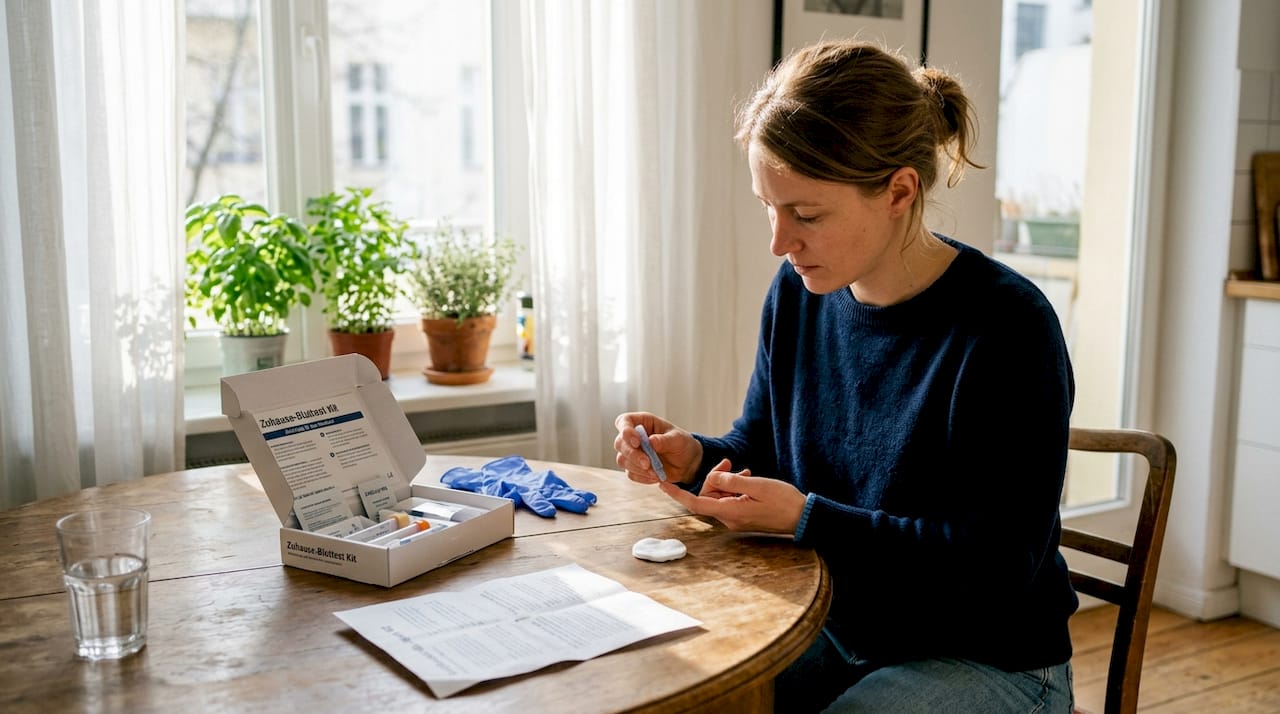
62% of Swiss people are now willing to monitor their health independently using home tests. This is no coincidence. Anyone who truly wants to understand their body does not need long waits for a doctor or expensive laboratory consultations. Home testing makes it possible to have blood, DNA, and microbiome samples analyzed conveniently at home and use the results to derive specific recommendations for nutrition and lifestyle. This article explains how home testing works, what benefits it offers, where its limitations lie, and how to integrate this method sensibly into your everyday life.
Table of contents
- What is home testing and how does it work?
- What health benefits does home testing offer?
- Limitations and criticism: What should you keep in mind?
- Best practices: How to use home testing sensibly
- Our perspective: What really matters in home testing
- Your Next Step Toward Personalized Health
- Frequently Asked Questions About Home Testing
Key findings
| Point | Details |
|---|---|
| Convenience and time savings | Home testing enables straightforward sample collection and individual analysis directly at home. |
| Personalized healthcare | Targeted blood, DNA, and microbiome tests provide you with tailored recommendations for nutrition and lifestyle. |
| Cost savings compared with doctor’s visits | Regular home tests are often significantly cheaper than traditional doctor’s appointments in Switzerland. |
| Consider the risks | Not all tests are useful—results should be discussed with a doctor to avoid misinterpretation. |
| Combine based on empirical evidence | Combine different test types whenever possible and use proven methods for lasting benefits. |
What is home testing and how does it work?
Home testing refers to collecting biological samples independently at home, which are then analyzed in a certified laboratory. The principle is simple: You order a test kit, collect the sample according to clear instructions, and mail it to the laboratory. A few days later, you receive a detailed report with personalized recommendations.
The most common test types explained include three types of samples:
- Capillary blood: A small prick on the fingertip provides enough blood for nutrient and hormone analyses.
- Saliva: Ideal for DNA tests that read genetic information.
- Stool: For microbiome analyses that map the composition of the gut flora.
The process is similarly structured for all variants. You receive the kit, follow the step-by-step instructions, package the sample securely, and send it in. The simple at-home sample collection, together with ISO-certified laboratories, ensures scientifically valid results that are comparable to clinical standards.
| Sample type | Test type | Typical analysis time |
|---|---|---|
| Capillary blood | Nutrients, hormones, minerals | 5 to 7 business days |
| Saliva | DNA, genetics, metabolism | 7 to 14 business days |
| Stool | Microbiome, gut health | 7 to 10 business days |
A blood test at home is easier than many people think. Most kits contain a lancet, collection tubes, and a prepaid return envelope. The sample is ready within minutes.
The world of genetic testing is particularly interesting. Anyone who wants to understand how genetic tests work will learn that specific sections of DNA are examined for variants that provide insights into metabolism, weight predisposition, or nutrient utilization. The result is not a verdict, but a tool.
The report you receive after the analysis contains more than bare numerical values. It translates the laboratory results into specific recommendations for action: which nutrients you should consume more intentionally, which foods suit your genetic predisposition, or how your gut flora compares with healthy reference values. Anyone looking to optimize nutrition for athletes will find particularly valuable baseline data in combined blood and DNA tests.
What health benefits does home testing offer?
Now that you know how it works, let’s take a closer look at the specific benefits you can expect.
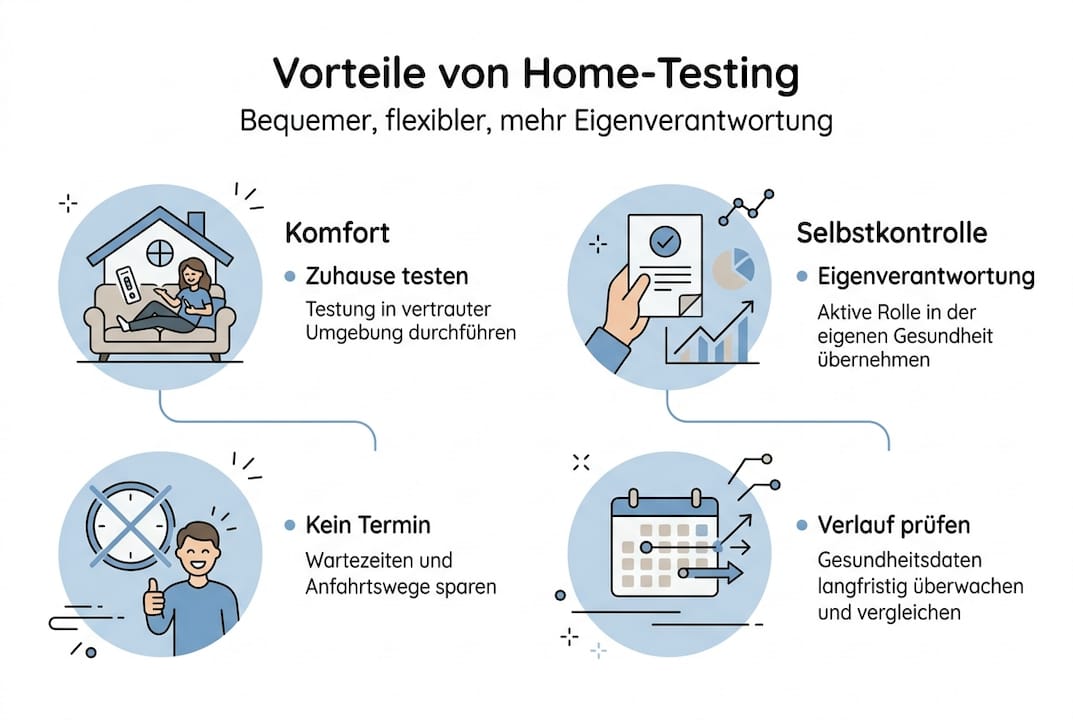
The most obvious advantage is convenience. No appointment, no waiting, no visit to the doctor’s office. You collect the sample when it suits you, whether in the morning while fasting or after exercising. This saves time and lowers the barrier to taking action in the first place.

Cost efficiency is another benefit. Many home tests cost a fraction of a private laboratory test at a doctor's office. Especially with regular monitoring, such as checking vitamin D or iron levels, the savings add up considerably. Home testing is more affordable than regular doctor's visits, particularly for repeated analyses.
The four key benefits at a glance:
- Time savings: No doctor's appointments and no waiting-room wait times.
- Cost efficiency: More affordable analyses, especially with regular use.
- Personalization: Recommendations are based on your individual values, not average values.
- Personal responsibility: You actively and knowledgeably manage your health journey.
| Criterion | Home testing | Doctor's visit |
|---|---|---|
| Time required | Minimal (at home) | High (appointment, travel) |
| Cost | Often more affordable | Higher, sometimes covered by insurance |
| Personalization | High | Variable |
| Availability | Anytime | By appointment |
A particularly important aspect is strengthening personal responsibility. 62% of Swiss people are willing to take regular home tests because they do not want to leave their health to chance. Those who know how their body reacts to certain nutrients make better decisions when shopping, cooking, and exercising.
The DIY trend in healthcare is growing rapidly. Forecasts show that the market will triple by 2030. This is not hype, but a response to genuine needs: more control, more transparency, and more relevance.
Pro tip: Do not use home tests as a one-time snapshot. Schedule follow-up tests after three to six months to identify changes resulting from dietary adjustments. For example, those who combine and evaluate their DNA test and weight can identify patterns that remain invisible through weighing or calorie counting alone. Vegan diets can also be checked specifically for nutrient deficiencies using blood tests.
Limitations and criticism: What should you keep in mind?
The benefits are compelling, but you should also consider the potential risks and critical voices.
The greatest risk of home testing is misinterpretation. An elevated blood value does not automatically indicate an illness. Without medical background knowledge, results can cause anxiety or lead to incorrect conclusions. Taking a value out of context may result in counterproductive action.
Critical points you should know:
- Lack of indication: Not every test is useful for everyone. A thyroid test without symptoms often provides no actionable insights.
- Quality differences: Not all providers work with certified laboratories. Low-cost offers without proof of quality should be treated with caution.
- Overdiagnosis: Too many tests without a clear goal can cause confusion rather than provide clarity.
- Emotional strain: Unexpected results, such as those from DNA tests and prevention, can cause psychological distress when no consultation service is available.
“General practitioners warn against nonspecific checks without a medical indication. Combining them with a consultation with your doctor is expressly recommended to interpret the results correctly.”
Hormone and DNA tests in particular are considered controversial, as they are often primarily criticized as a business model. This does not mean that these tests are worthless. It means that you should choose the right provider and discuss the results with a specialist to put them into context.
The solution is not to avoid home testing. The solution is to use it wisely. Choose providers with ISO certification, clear reference ranges, and an integrated consultation service. Use the results as a basis for discussion with your doctor, not as a definitive diagnosis.
Best practices: How to use home testing sensibly
Critical evaluation is important, but how can you actually use home testing sensibly and based on evidence?
The first step is to define your goal. Ask yourself: What do I want to find out? Is it nutrient deficiencies, genetic predispositions, or the composition of your gut microbiome? The clearer the goal, the more targeted the test.
This is how to proceed systematically:
- Define your goal: Dietary optimization, weight management, gut health, or hormone status.
- Check the provider: ISO certification, transparent methodology, and GDPR-compliant data protection are essential.
- Take the test: Follow the instructions carefully, store the sample correctly, and send it in promptly.
- Interpret the results: Read the report, note the recommendations, and mark any unanswered questions.
- Involve your doctor: Discuss the results during your next conversation with your general practitioner.
- Implement measures: Adjust your diet, supplementation, or lifestyle.
- Plan a follow-up test: Test again after three to six months to measure progress.
Pro tip: Combining a DNA test with a blood analysis provides significantly more insights than a single test. The DNA test shows genetic predispositions, while the blood test shows the current state. Together, they provide a complete picture.
Science supports this approach. According to studies, the genetic influence on weight ranges from 40 to 70 percent. This means that people who know their genetic risk factors can take more targeted action than those who blindly try different diets.
Comparisons of microbiome tests also reveal major differences between providers. Pay attention to the number of bacterial strains analyzed and the quality of the reference database. A good microbiome test provides more than just a list of bacteria; it offers specific dietary guidance and supplement recommendations.
Regular monitoring is key. One-off tests are snapshots. Only by tracking changes over several months do trends become visible, enabling meaningful improvements.
Our perspective: What really matters in home testing
Home testing is not a cure-all and is no substitute for medical care. But it is a powerful tool when used correctly. What we have noticed after years in the field of personalized health analysis is that most people do not fail because of poor tests, but because they lack context.
A result alone changes nothing. Only when you know what it means and what you can specifically do does it create real value. That is why we recommend combining tests and discussing the results with your doctor. This is not a weakness, but a smart strategy.
Anyone who uses DNA tests for prevention should also understand that genes are not destiny. They indicate tendencies. Lifestyle, diet, and exercise can significantly reduce genetic risks. Those who understand this use home testing not out of fear, but out of curiosity and personal responsibility. In addition, simple measures such as strengthening the immune system can noticeably enhance the everyday impact of test results.
Your Next Step Toward Personalized Health
In our assessment, you will find direct access to specialized, evidence-based home testing services here. If you want to optimize your health in a targeted way, the first step is easier than you might think. At mybody®x, you will find a wide range of ISO-certified DNA, blood, microbiome, and hormone tests, all conveniently performed at home. More than 11,300 satisfied customers with an average rating of 4.77 stars show that personalized health analyses deliver real results. Free shipping on orders over 49 euros, personal advice, and a money-back guarantee make getting started risk-free. Get started now and discover what your body is really telling you.
Frequently Asked Questions About Home Testing
How Reliable Are Home Tests in Switzerland?
ISO-certified laboratories analyze samples according to clinical standards, ensuring a high level of reliability for blood, DNA, and microbiome tests. When choosing a provider, always look for proof of this certification.
Which Home Tests Are Most Useful for Optimizing Nutrition?
Blood and microbiome tests provide solid evidence for dietary adjustments, while DNA tests reveal the genetic influence on weight, which ranges from 40 to 70 percent. Combining both approaches provides the most precise recommendations.
Should I Discuss My Results with a Doctor?
Yes, experts expressly recommend discussing home-testing results with a family doctor to avoid misinterpretation. The doctor can place the results in a clinical context and initiate further diagnostic testing if necessary.
How Much Does Home Testing Cost Compared with Seeing a Doctor?
The cost is usually significantly lower than a doctor’s visit, especially for repeated personalized analyses. With regular use to monitor progress, the savings add up considerably.
Recommendation
- At-Home Genetic Test: Personalized Health Explained Simply – mybody®x
- Self-Test Process 2026: How to Use Personalized Analyses – mybody®x
- At-Home Lab Test: Your Guide to Better Health and Well-Being – mybody®x
- Optimize Your Diet Based on Test Results: A Step-by-Step Guide – mybody®x
- 7 Self-Care Tips for Everyday Life – Kühlkern UG (Haftungsbeschränkt)



Share now:
Constant bloating and gurgling in your stomach? Causes & relief
Lifestyle Analysis Explained: Gain Personalized Health