

Understanding electrolytes: function, impact, and nutrition tips
TL;DR:
- Electrolytes are minerals such as sodium, potassium, and calcium that carry electrical charges.
- They are essential for the body's nerve, muscle, and fluid balance.
- A balanced diet and, when needed, targeted supplementation support electrolyte balance.
Even a slight imbalance in your electrolyte levels can leave you feeling weak, unfocused, or even dizzy, despite getting enough sleep and eating sufficiently. Electrolytes are everywhere: in sports drinks, dietary supplements, and health guides. But what is really behind this term? Far more than just an additive for performance athletes. This article explains exactly what electrolytes are, why they matter to every single cell in the body, what risks deficiency and excess pose, and how you can specifically support your electrolyte balance through targeted nutrition.
Table of contents
- What are electrolytes? Definition and overview
- Why are electrolytes essential for the body?
- Regulation of electrolyte balance: How does the body maintain equilibrium?
- Electrolyte Deficiency or Excess: Causes, Symptoms, and Risks
- Everyday life and nutrition: How can I support my electrolyte balance?
- Our perspective: Electrolytes are not a trend but a foundation
- Your Next Step with mybody®
- Frequently Asked Questions About Electrolytes
Key insights
| Point | Details |
|---|---|
| Electrolytes are vital | They regulate essential functions such as nerve conduction, muscle function, fluid balance, and acid-base balance. |
| Balance is crucial | Both deficiency and excess can cause serious symptoms and health risks. |
| Diet is usually sufficient | A balanced diet provides enough electrolytes in everyday life; supplements are rarely necessary. |
| Pay attention to physical strain | Exercise, heat, and illness increase the need—timely adjustments help prevent deficiency. |
What are electrolytes? Definition and overview
To truly understand the topic, you first need a clear, scientifically sound foundation. The term is often used, but rarely explained in depth.
Electrolytes are minerals such as sodium, potassium, chloride, bicarbonate, magnesium, and calcium that carry electrical charges and can conduct electricity when dissolved in fluids. The name comes from Greek: “elektron” means amber (historically associated with electricity), and “lytos” means dissolvable. As soon as these minerals dissolve in water, they break down into positively or negatively charged particles called ions. This charge is precisely what makes them so special.
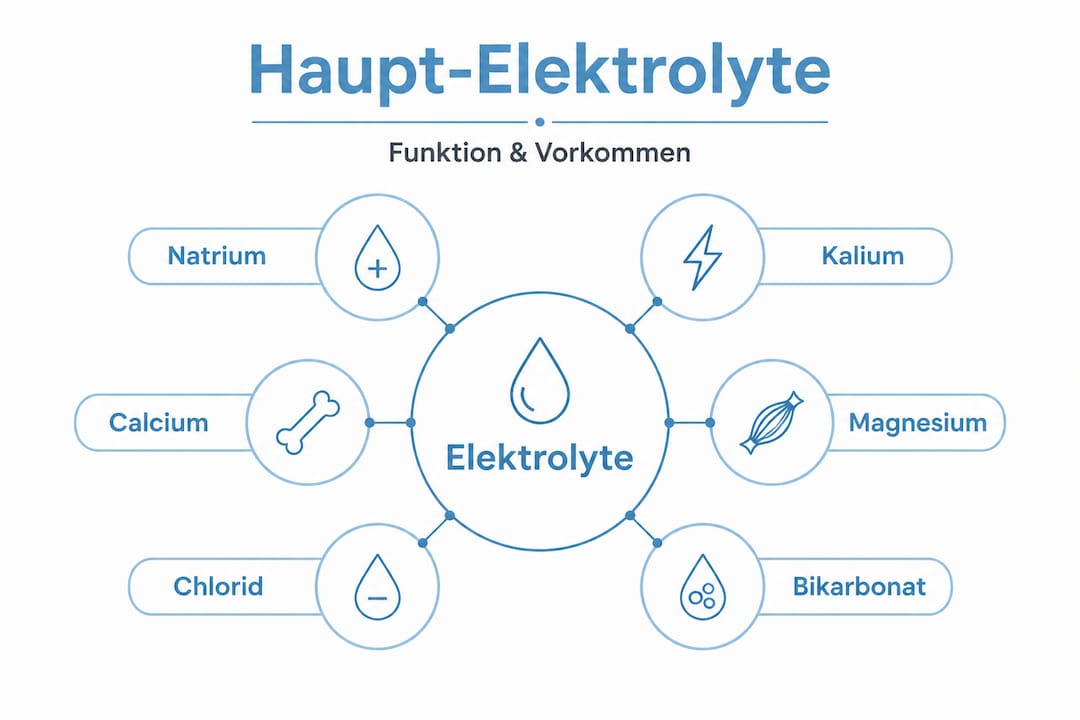
Electrolytes are found everywhere in the human body. They are present in the blood, lymphatic fluid, the cells themselves, and the space between cells. Each of these areas has a specific concentration that is precisely regulated.
| Electrolyte | Charge | Primary location | Main function |
|---|---|---|---|
| Sodium (Na⁺) | positive | Outside the cells | Fluid balance, nerve conduction |
| Potassium (K⁺) | positive | Within the cells | Muscle contraction, heart rhythm |
| Magnesium (Mg²⁺) | positive | Cells, bones | Enzyme activation, muscle relaxation |
| Calcium (Ca²⁺) | positive | Bones, blood | Bone structure, blood clotting |
| Chloride (Cl⁻) | negative | Outside the cells | Acid-base balance |
| Bicarbonate (HCO₃⁻) | negative | Blood | Buffer system, pH regulation |
The key electrolytes can therefore be summarized as six main players, each with a specific role. No individual electrolyte works in isolation. They always work together, much like musicians in an orchestra: if one is missing, the whole piece sounds off-key.
Did you know? Around 60 percent of the human body consists of water, and electrolytes are dissolved in this water. Without them, the water in the body would be biologically almost ineffective.
Anyone interested in possible deficiencies can find a good overview in the topic of vitamin deficiency symptoms of how nutrient deficiencies generally manifest and what signals the body sends.
Why are electrolytes essential for the body?
Once it is clear what electrolytes are, the next step is to examine their vital function. And this function is impressively versatile.
Electrolytes regulate fluid balance, acid-base balance, and water balance in the body, as well as nerve and muscle function and osmosis through concentration gradients. Osmosis may initially sound like a term from chemistry class, but it is actually quite simple: water always moves from where there is little salt to where there is a lot of salt. Electrolytes control this movement and ensure that cells neither dry out nor swell.

Imagine a cell as a balloon. Too little water inside, and it shrinks. Too much water, and it bursts. Electrolytes are the mechanism that keeps the pressure balanced.
Nerves and muscles: The electrical side of life
Every thought you think and every movement you make is based on electrical signals. These signals are generated by the targeted exchange of sodium and potassium across cell membranes. When a nerve fires, sodium flows into the cell and potassium flows out. This exchange creates the electrical signal that travels through the nerve like a wave.
Calcium plays a crucial role in muscle contraction. Without sufficient calcium, a muscle cannot contract properly. Magnesium, in turn, is responsible for relaxation. Anyone who has experienced a nighttime calf cramp may know the result of a temporary magnesium deficiency.
“Small deviations in electrolyte balance can have major consequences: from exhaustion and concentration problems to cardiac arrhythmias and muscle failure."
| Function | Main electrolytes involved | Consequences of a disturbance |
|---|---|---|
| Nerve conduction | Sodium, potassium | Tingling, numbness, confusion |
| Muscle contraction | Calcium, magnesium | Cramps, weakness, tremors |
| Water balance | Sodium, chloride | Edema, dehydration |
| Heart rhythm | Potassium, calcium | Arrhythmias, heart palpitations |
| Acid-base balance | Bicarbonate, chloride | Acidosis, alkalosis |
Hydration during muscle building is often underestimated. Anyone who trains hard but neglects their electrolyte balance risks not only poorer performance but also longer recovery times and an increased risk of injury.
Anyone who would also like to learn more about how metabolic processes are connected to nutrient supply can find further information on the links between mineral supply and metabolism in the section on metabolic disorders.
Regulation of electrolyte balance: How does the body maintain equilibrium?
Once the importance is clear, the question arises: How does the body manage to guarantee this balance? The answer lies in a complex yet elegant regulatory system.
The kidneys filter electrolytes, reabsorb the amounts needed, and excrete the excess to maintain the balance between intake and loss. The kidneys are the most important regulatory organ in this process. Every day, they filter around 180 liters of blood and determine what the body should retain and what it should excrete. This is an enormous achievement.
However, the kidneys do not act alone. They are controlled by hormones:
-
ADH (antidiuretic hormone): This hormone is released when the body needs water. It signals the kidneys to excrete less water, thereby diluting the electrolyte concentration.
-
RAAS (renin-angiotensin-aldosterone system): This system primarily regulates sodium and potassium. When blood pressure drops or sodium is deficient, the body activates RAAS to retain more sodium and excrete potassium.
-
PTH (parathyroid hormone): This hormone from the parathyroid gland regulates calcium levels in the blood. When calcium levels fall, the parathyroid gland releases PTH, which mobilizes calcium from the bones and promotes its absorption in the intestines.
-
Aldosterone: This steroid hormone from the adrenal gland increases sodium reabsorption in the kidneys while simultaneously lowering the potassium concentration in the blood.
-
Calcitonin: An antagonist of PTH, released when calcium levels are too high and storing calcium in the bones.
This interplay functions smoothly under normal conditions. However, after intense exercise, in hot weather, during illness, or when taking certain medications, the system can reach its limits. The body then needs external support through diet or targeted supplementation.
Pro tip: People who exercise regularly or work in hot environments should pay attention not only to their fluid intake but also to which electrolytes are lost through sweat. Sweat contains primarily sodium and chloride, and smaller amounts of potassium and magnesium.
Those who are familiar with and can correctly identify symptoms of deficiency are better able to take corrective action early, before a mild deficiency develops into a serious problem.
Electrolyte Deficiency or Excess: Causes, Symptoms, and Risks
Imbalances are not uncommon and can have serious health consequences. It is important to understand both deficiency and excess.
Typical causes of deficiency include dehydration, overhydration, heavy sweating from exercise or heat, diarrhea and vomiting, certain medications, and diseases of the heart, kidneys, or liver. Symptoms range from fatigue and cramps to cardiac arrhythmias, headaches, and dizziness.
Common causes of electrolyte deficiency:
- Intense exercise with heavy sweating without adequate replacement
- Periods of hot weather, especially among older people
- Persistent diarrhea or vomiting, for example due to gastrointestinal infections
- Diuretic medications, often used to treat high blood pressure
- An unbalanced diet low in vegetables, nuts, or dairy products
- Chronic diseases of the kidneys or liver
- Excessive alcohol consumption, which increases the excretion of magnesium and potassium
Common causes of electrolyte excess:
- Excessive use of dietary supplements without medical necessity
- Kidney diseases in which electrolytes cannot be excreted sufficiently
- Excessive salt consumption over a long period
- Certain hormonal disorders such as hyperaldosteronism
The special case: hyponatremia in marathon runners
A particularly striking example of the dangers of an electrolyte imbalance is hyponatremia, meaning an excessively low sodium level in the blood. Paradoxically, it is not caused by drinking too little, but by drinking too much pure water without electrolytes. Marathon runners who drink large amounts of plain water over several hours can experience such a severe drop in blood sodium levels that confusion, seizures, and, in the worst case, life-threatening conditions may occur.
This shows that drinking more is not always better. The quality of the fluid, meaning its electrolyte content, is crucial.
Expert tip: During prolonged endurance activities lasting 90 minutes or more, you should drink more than just water and opt for electrolyte-containing beverages or salty snacks. A banana and a pinch of salt in water can already make a difference.
Anyone who wants to identify nutrient deficiencies before they manifest as symptoms should regularly pay attention to their body's signals. This is especially true when it comes to symptoms of magnesium deficiency: many people suffer from cramps, sleep problems, or irritability for years without knowing that a magnesium deficiency could be the cause.
According to current data on electrolyte requirements, the hype surrounding electrolyte powders and special sports drinks is exaggerated in many everyday situations. For healthy people with a balanced diet and moderate exercise, supplements are usually unnecessary. However, anyone who trains intensely on a regular basis or suffers from certain medical conditions should assess their needs individually.
Everyday life and nutrition: How can I support my electrolyte balance?
Understanding the importance and risks is the foundation. Now it is time to put this knowledge into practice in everyday life. The good news is that in most cases, a conscious diet can keep electrolyte levels well balanced.
The ACSM recommends electrolytes after 60 to 90 minutes of intense exercise, while the DGE does not recommend routine supplementation for healthy people. For diarrheal illnesses, the WHO relies on oral rehydration solutions, in which glucose actively promotes sodium absorption in the intestines.
Natural food sources of the most important electrolytes:
- Sodium: Table salt, cheese, bread, olives, soy sauce (in this case, less is often more)
- Potassium: Bananas, avocados, potatoes, legumes, spinach, apricots
- Magnesium: Pumpkin seeds, almonds, dark chocolate, whole-grain products, quinoa
- Calcium: Dairy products, sesame, broccoli, tofu, mineral water with a high calcium content
- Chloride: Table salt, seafood, tomatoes, celery
- Bicarbonate: Produced by the body itself and difficult to obtain through food
When is supplementation really worthwhile?
Supplements are not a cure-all, but they can be useful in certain situations. Specific indications include:
- Endurance exercise lasting more than 90 minutes at high intensity
- Severe gastrointestinal infections with significant diarrhea and vomiting
- Working in the heat or staying in tropical climates
- Certain medications that increase electrolyte excretion
- Deficiency confirmed by a blood test
Pro tip: If you are unsure whether your electrolyte balance is in the healthy range, do not blindly purchase supplements. A blood test will clarify where there is actually a need. Targeted supplementation is always better than a scattergun approach.
Practical everyday tips:
- Drink 1.5 to 2 liters of water daily, and more during exercise and hot weather
- Choose calcium-rich mineral water instead of filtered water
- Eat vegetables and legumes daily to ensure a good supply of potassium and magnesium
- Avoid excessive alcohol and caffeine consumption, as both increase electrolyte excretion
- For long training sessions, choose homemade electrolyte drinks: water, a pinch of salt, a little lemon juice, and a small amount of honey
Anyone who wants to optimize their micronutrient intake will find many overlaps with the topic of electrolytes, as many electrolyte-rich foods are also rich in other important micronutrients. And athletes who train with specific goals should also look into nutrition for athletes to optimize performance and recovery holistically.
Our perspective: Electrolytes are not a trend but a foundation
There is one aspect that is almost completely missing from the public discussion about electrolytes: individuality. Most of the advice you find consists of average values. “Drink 2 liters of water daily.” “Eat more bananas for potassium.” This is not wrong, but it does not go far enough.
The truth is that your electrolyte needs depend on your genetics, metabolism, physical activity, stress levels, gut health, and even your sleep quality. Two people can eat the same foods and do the same amount of exercise yet still have completely different electrolyte balances. This is partly due to how efficiently their intestines absorb minerals, how their kidneys regulate them, and which genetic variants affect their enzyme activity.
The uncomfortable thought behind this: Anyone who relies on general recommendations is optimizing for the average person, not for themselves. And the average person does not really exist in biology.
What we repeatedly observe at mybody® is that people who have lived with symptoms such as fatigue, sleep problems, or muscle cramps for years often find surprisingly clear answers through a targeted analysis of their nutrient status. Not because the symptoms are mysterious, but because they have never looked at their individual biochemistry from the right perspective.
Electrolytes are not a hype. They are not a marketing invention of the sports drink industry. They are literally the foundation of every electrical activity in your body. Once you understand that, you stop looking for the next miracle powder and instead begin to understand your own body better.
Your Next Step with mybody®
If you want to know whether your body is actually supplied with all the important electrolytes and micronutrients, mybody® offers precise laboratory analyses that you can conveniently perform at home. With a certified nutrient and mineral check, you receive scientifically validated results for your individual levels, including personalized nutritional recommendations. More than 11,300 satisfied customers already trust the ISO-certified analyses from mybody®. Free shipping on orders over 49 euros, personal consultation, and a money-back guarantee make getting started easy and risk-free.
Frequently Asked Questions About Electrolytes
Which Natural Foods Are Particularly Rich in Electrolytes?
Bananas, nuts, dairy products, green vegetables, and calcium-rich mineral water contain many electrolytes such as potassium, calcium, and magnesium and are the best foundation for most people.
When Is Electrolyte Supplementation Useful?
For endurance exercise lasting more than 60 to 90 minutes, severe diarrheal illness, or a diagnosed deficiency, supplementation may be useful; the ACSM recommendation serves as a guideline for athletes.
What Happens in the Event of an Electrolyte Overdose?
An overdose is risky and can lead to dangerous cardiac arrhythmias, severe headaches, or muscle cramps, which is why natural sources should always be preferred.
How Can I Recognize an Acute Electrolyte Deficiency?
Typical signs include severe fatigue, cramps, dizziness, and, in extreme cases, cardiac arrhythmias that require immediate medical evaluation.
Recommendation
- Proper Nutrition for More Energy and Well-Being – mybody®x
- What Is a Nutrient? Simply Explained for Your Health – mybody®x
- The Most Common Nutrient Deficiencies in Germany | Symptoms & Solutions – mybody®x
- What to Eat for Iron Deficiency – Foods & Recipes – mybody®x
- Best Electrolyte Drinks for Weight Loss - Fueled Framework
- Understand Minerals: Why They Are Important for Your Health – Vitaminone.dk



Share now:
Personalized Health: Your Path to Greater Well-Being
DNA structure explained simply: Your code for health