

How to achieve healthy weight loss sustainably and effectively in 2025
For many people, losing weight is all about restriction and dieting. But did you know that a personalized plan can help you lose 8–10 kilograms in a healthy way over six months? Surprisingly many people start without a clear goal and therefore often give up early. What matters is not rapid weight loss, but how individually, measurably, and realistically you start—that is what ultimately makes the difference.
Table of contents
- Step 1: Define your individual goals
- Step 2: Conduct a health analysis
- Step 3: Create a personalized nutrition plan
- Step 4: Incorporate regular exercise into your daily routine
- Step 5: Monitor your progress continuously
Quick summary
| Main point | Explanation |
|---|---|
| 1. Set clear goals | Define specific, realistic goals for your weight loss. Use a measurable formulation such as “8–10 kilograms in six months.” |
| 2. Conduct a comprehensive health analysis | A health analysis provides insight into your metabolism and genetic predispositions. This optimizes your weight-loss plan. |
| 3. Create a personalized nutrition plan | Your diet should be based on your health analysis and take your individual needs and preferences into account. |
| 4. Incorporate exercise into your daily routine | Exercise should become a regular part of your lifestyle, not just a short-term workout. Small activities add up. |
| 5. Monitor your progress continuously | Document your progress holistically to recognize changes in your body and mind. See setbacks as part of the process. |
Step 1: Define your individual goals
Healthy weight loss does not begin with a diet, but with a clear understanding of your individual starting point. Before starting a weight-loss plan, you need to define your personal goals—precisely, realistically, and measurably.
The first step is an honest self-assessment. Ask yourself: What do you really want to achieve? Is it only about losing weight, or about improving your overall health? It is important that your goals are specific and achievable. Instead of “I want to lose weight,” you should say: “I want to lose 8–10 kilograms in a healthy and sustainable way over the next six months.”
An excellent way to define your goals is to create a personalized nutrition plan tailored precisely to your metabolism and individual needs. Modern analysis methods, such as genetic tests, can help reveal your metabolic characteristics.
Defining your goals also involves some concrete steps:
- Measure your starting weight
- Determine your Body Mass Index (BMI)
- Assess your current physical fitness
- Document your eating habits
Consider not only the numbers but also your personal health history. Factors such as pre-existing conditions, metabolic predispositions, or hormonal characteristics play a crucial role in weight loss.
Another important aspect is mental preparation. Accept that weight loss is a process, not a quick fix. Set realistic interim goals and reward yourself for your progress. The psychological component is at least as important as the physical one.
Step 2: Conduct a health analysis
On the path to successful and healthy weight loss, a comprehensive health analysis is the key factor. It provides valuable insights into your individual metabolism, genetics, and nutritional status—information that will significantly optimize your weight-loss plan.
A scientifically grounded analysis is more than just a weight measurement. It uncovers hidden factors that influence your metabolism and weight regulation. Modern metabolic analyses, for example, can reveal how efficiently your body processes nutrients, which hormonal characteristics are present, and which individual dietary strategies work best for you.
Conducting a health analysis begins with selecting suitable examination methods. Genetic tests, blood tests, and metabolic tests provide precise data about your body's processes. Make sure to choose reputable, scientifically validated testing methods that deliver detailed and meaningful results.
The most important areas to examine include:
- Genetic predispositions for weight management
- Hormonal balance
- Metabolic rate
- Nutrient supply
- Inflammatory markers
After receiving your analysis results, it is important to have them professionally interpreted. A nutritionist or doctor can help you understand the complex data and derive specific recommendations for action. Consider the analysis your personal roadmap for healthy weight loss.
The health analysis not only provides insights into potential challenges but also highlights your individual strengths and potential. It is the scientific foundation on which you will build your customized weight-loss plan.
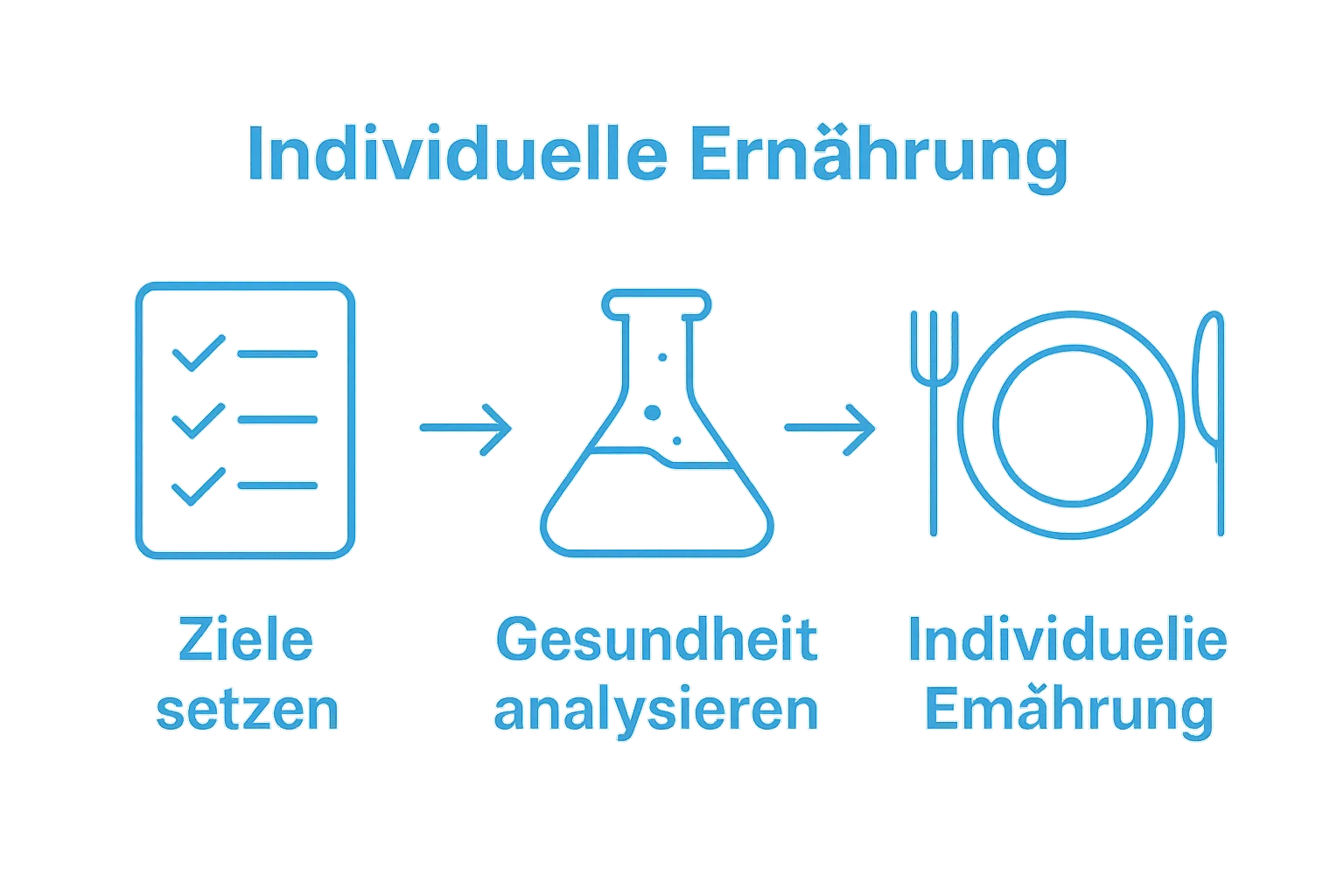
Step 3: Create a personalized nutrition plan
After your health analysis, the next crucial step is developing an individualized nutrition plan. A standardized diet plan does not work for everyone - your nutrition strategy must be as unique as you are.
Begin systematically incorporating the insights from your health analysis into your nutrition plan. Healthy eating for weight loss does not mean deprivation, but rather intelligent nutrient selection tailored to your individual metabolic needs.
When creating your personalized plan, you should consider the following aspects: your metabolic rate, genetic predispositions, hormonal balance, and current nutrient status. A successful plan combines calorie control with maximum nutrient intake. This does not mean eating less, but eating smarter.
A balanced macronutrient distribution is essential. Depending on your individual results, this could mean increasing your protein intake, prioritizing healthy fats, or strategically incorporating complex carbohydrates. The important thing is to use a dynamic strategy that adapts to your progress.
Key elements of your personalized nutrition plan:
- Balanced macronutrient distribution
- Individual calorie goals
- Meal timing and composition
- Consideration of intolerances
- Flexible adjustment options
Plan regular reviews and adjustments. Your body changes, and your nutrition plan should change accordingly. An evaluation conducted every four to six weeks helps measure progress and optimize the plan as needed.
Remember: A perfect nutrition plan is not rigid but dynamic. It should bring you joy, keep you satisfied, and support your health and weight goals at the same time. Experiment, be patient with yourself, and remain open to adjustments.
Step 4: Incorporate regular exercise into your daily routine
Exercise is the catalyst for your weight loss process. Effective training goes far beyond sporadic gym visits - it means integrating activity intelligently and holistically into your lifestyle.
After your personalized health analysis, you already know your individual physical requirements. Use this knowledge to develop an exercise plan that suits your metabolism and genetic predispositions. Natural methods for stimulating metabolism can help increase the efficiency of your training.
The art lies in the combination and consistency. Do not plan only traditional workouts, but integrate movement holistically. This means taking the stairs instead of the elevator, cycling to work, and walking during your lunch break. Small activities add up and have an enormous metabolic impact.
Your exercise plan should include three key components: endurance training, strength exercises, and flexibility training. The emphasis depends on your individual analysis results. Someone with a slow metabolism needs different training stimuli than someone with a fast baseline metabolism.
Important principles for integrating physical activity:
- Find activities that you enjoy
- Set realistic, gradual increases
- Make sure your training routine is well balanced
- Plan recovery periods
- Stay flexible and motivated
**Consistency beats intensity.
 ** It is better to exercise for 30 minutes three times a week than to work out for three hours once a month. Listen to your body, monitor your progress, and continuously adjust your training.
According to research findings from the Robert Koch Institute, regular physical activity not only supports weight loss but also demonstrably improves cardiovascular and metabolic health. View exercise as an investment in your health - not as an obligation, but as an opportunity for self-optimization.
Step 5: Monitor your progress continuously
A successful weight-loss process relies on transparency and continuous self-monitoring. Progress is more than just a number on the scale - it is about holistic changes in body and mind.
Collect data on your development regularly. This means not only taking weight measurements, but also conducting a comprehensive analysis of your physical and mental condition. Long-term health through nutritional strategies supports you in systematically documenting your progress.
Develop a multidimensional tracking system. Record not only your weight, but also body measurements, energy levels, sleep quality, mood, and training performance. This multifaceted approach gives you a comprehensive picture of your transformation.
The following table provides a clear checklist of key elements for monitoring progress while losing weight.
| Checklist | Description |
|---|---|
| Weekly weight and body fat measurements | Regularly tracking the numbers to monitor development. |
| Monthly photo documentation | Visualizing and documenting visible changes over time. |
| Regular performance tests during training | Assessing progress in endurance, strength, or mobility. |
| Documentation of food logs | Recording your daily diet for analysis and adjustment. |
| Subjective assessment of well-being and energy | Recording how you feel, your mood, and your energy level for a holistic assessment. |
Technological tools can make monitoring your progress much easier. Smartwatches, fitness apps, and digital diaries help you record data accurately and stay motivated. Choose tools that suit your personal tracking style.
Key elements of monitoring your progress:
- Weekly weight and body fat measurements
- Monthly photo documentation
- Regular performance tests during training
- Documentation of food logs
- Subjective assessment of well-being and energy
Be patient and realistic. Weight loss is not a linear process. Days with less progress or even slight setbacks are normal and part of the journey. Do not view them as failures, but as valuable learning experiences.
A comprehensive review of your nutrition and exercise plan every three months is recommended. Adapt your strategy flexibly to new insights and changes in your body. A static approach rarely leads to success.
Finally: Celebrate your successes—all of them, big and small. Every step counts, and every positive change benefits your health.
Your individual path to lasting, healthy weight loss starts here
Many people struggle to lose weight because they do not define clear goals and rely on blanket diets. In everyday life, uncertainties keep arising: Which diet is truly suitable for my metabolism? How can I recognize progress and put setbacks into perspective? What if my weight stagnates despite exercising? This is precisely the greatest obstacle to long-term success. The need for real, measurable progress and a solution that fits your body perfectly is at the heart of the matter.
At Individual solutions for overweight, you get more than a diet plan. Our DNA metabolism tests provide a scientific foundation and show you how to optimally support your body. In addition, our DNA metabolism tests for your optimal nutrition give you the opportunity to tailor your goals and eating style to genetic characteristics. Trust the expertise and certified laboratory quality of mybody® Lab. Discover now how you can lose weight sustainably with personalized analyses and tailored strategies. Choose your personal fresh start today and pursue your goals consistently.
Frequently asked questions
How can I define my individual weight-loss goals effectively?
To define your weight-loss goals sensibly, you should formulate them precisely, realistically, and measurably. Instead of general statements such as “I want to lose weight,” set more specific goals, such as “I want to lose 8–10 kilograms in a healthy way over the next six months.”
What role does a health analysis play in weight loss?
A health analysis provides valuable information about your metabolism, genetic predispositions, and nutritional status. This data helps you develop a customized weight-loss plan based on your individual needs.
How do I create a personalized nutrition plan?
A personalized nutrition plan should be based on the findings of your health analysis. Consider your metabolic rate, genetic preferences, and current nutrient status. Make sure your plan offers a balanced macronutrient distribution as well as flexible adjustment options.
How often should I monitor my weight-loss progress?
It is recommended that you monitor your progress regularly, at least weekly and monthly. This should include not only your weight, but also your body measurements, energy levels, and performance during training, to gain a comprehensive picture of your development.
Recommendation
- Healthy eating for weight loss – How to make it easy – mybody®x
- Reducing belly fat – Your plan for sustainable results – mybody®x
- Lose belly fat: Why your metabolism is the key – mybody®x
- Weight loss injection experiences 2025: All the information, opinions & alternatives – mybody®x
- 7 ways to promote sustainability in healthcare - MediCloud Med
- How can resveratrol help with weight loss? 4 benefits



Share now:
Longevity – healthy aging with a DNA test, a healthy diet & a properly functioning metabolism
Keto Diet: The Simple Guide for Beginners