

Keto Diet: The Simple Guide for Beginners
You’ve probably heard of the Keto Diet, usually in the context of rapid weight loss. But it’s more than just a trend. At its core, the ketogenic diet is an eating pattern that is extremely low in carbohydrates and simultaneously very high in fat. It forces your body to switch its primary fuel from sugar to fat—a process that leads to a metabolic state called ketosis.
How the Keto Diet Reprograms Your Metabolism
Welcome to your comprehensive guide to the ketogenic diet. You may be wondering what really lies behind the hype and whether this eating style could work for you. To find out, let’s take a look at how your body normally functions and what fundamentally changes with keto.
Imagine your body as a hybrid car that can use two different fuels: glucose (sugar from carbohydrates) and fat. On a typical Western diet, your engine runs almost exclusively on glucose. Bread, pasta, potatoes, and sugary drinks provide a constant supply of this readily available fuel.
The Keto Diet deliberately flips this switch. By drastically reducing carbohydrates, you deprive your body of its usual energy source. It has to find an alternative—and finds it in your fat stores.
The Macronutrient Shift: Fat Becomes King
The key to ketosis lies in the radically changed distribution of macronutrients on your plate. Instead of relying on carbohydrates, you switch to a completely new composition:
- Fat: At 70–75%, it makes up the lion’s share of your daily calories. This means healthy fats from avocados, nuts, seeds, olive oil, and fatty fish.
- Protein: It plays a moderate role at 20–25%. Protein is important for maintaining your muscles, but too much can interfere with ketosis.
- Carbohydrates: They are reduced to an absolute minimum of just around 5%. This generally means eating only 20 to 50 grams of carbohydrates per day.
This radical change forces your metabolism into a state called ketosis. Your liver now begins converting fat into so-called ketone bodies. These ketones become a new, highly efficient source of energy for your body, especially your brain.
Is this approach right for everyone?
Although the keto diet can deliver impressive results, it is not a one-size-fits-all solution. Every body responds differently, and your individual genetic makeup plays a huge role in how well you can metabolize fats. Before making such a fundamental dietary change, it can therefore be incredibly valuable to learn about your personal nutrition type.
A DNA metabolic analysis can show you whether your body is genetically suited to a high-fat diet or whether another approach would be a better fit for you. This knowledge helps you make an informed decision based on your unique biological characteristics.
By the end of this article, you will have a solid understanding of how the keto diet works, what benefits it may offer, and how to determine whether it is the right strategy for your personal health goals.
The Ketosis Metabolism Explained Simply
Now things get really exciting, because we are going to delve into the fascinating biology of your body. What exactly happens when you give up carbohydrates and make fat your main energy source instead? Don’t worry, the process is much simpler than it sounds. The result is a metabolic state called ketosis.
Imagine your body has a standard fuel: glucose, or sugar from carbohydrates. When this fuel suddenly becomes scarce—because you stop eating bread, pasta, and sugar—your body does not panic. Instead, it activates a clever emergency plan deeply rooted in our evolutionary past.
Your liver becomes the main player. It begins converting stored fat and fat obtained from food into tiny, highly energy-rich molecules called ketone bodies. These ketones are not foreign substances, but an alternative, highly efficient fuel. They now travel through your blood to all the cells that need energy—including your brain.
The difference between a fast-burning and a steady fire
To better understand this change, a simple analogy helps. Normal glucose metabolism is like a fire that you constantly feed with paper. It burns brightly and provides immediate heat (energy), but it also goes out just as quickly. This leads to the familiar blood sugar spikes and subsequent crashes, which often trigger cravings and fatigue.
Ketosis, by contrast, is like a thick log that slowly and steadily glows. It provides constant, stable warmth (energy) for hours, without the constant ups and downs. That is why many people report much greater mental clarity and noticeably fewer cravings for snacks during a keto diet.
This change is actually more common than you might think. A survey in Germany shows that more than 30 % of the population have experience with low-carbohydrate diets, which include the keto diet. The classic version is extremely low in carbohydrates—they often account for less than 5 % of the daily calories.
The following graphic illustrates how drastically the distribution of macronutrients shifts on a keto diet compared with a standard diet.
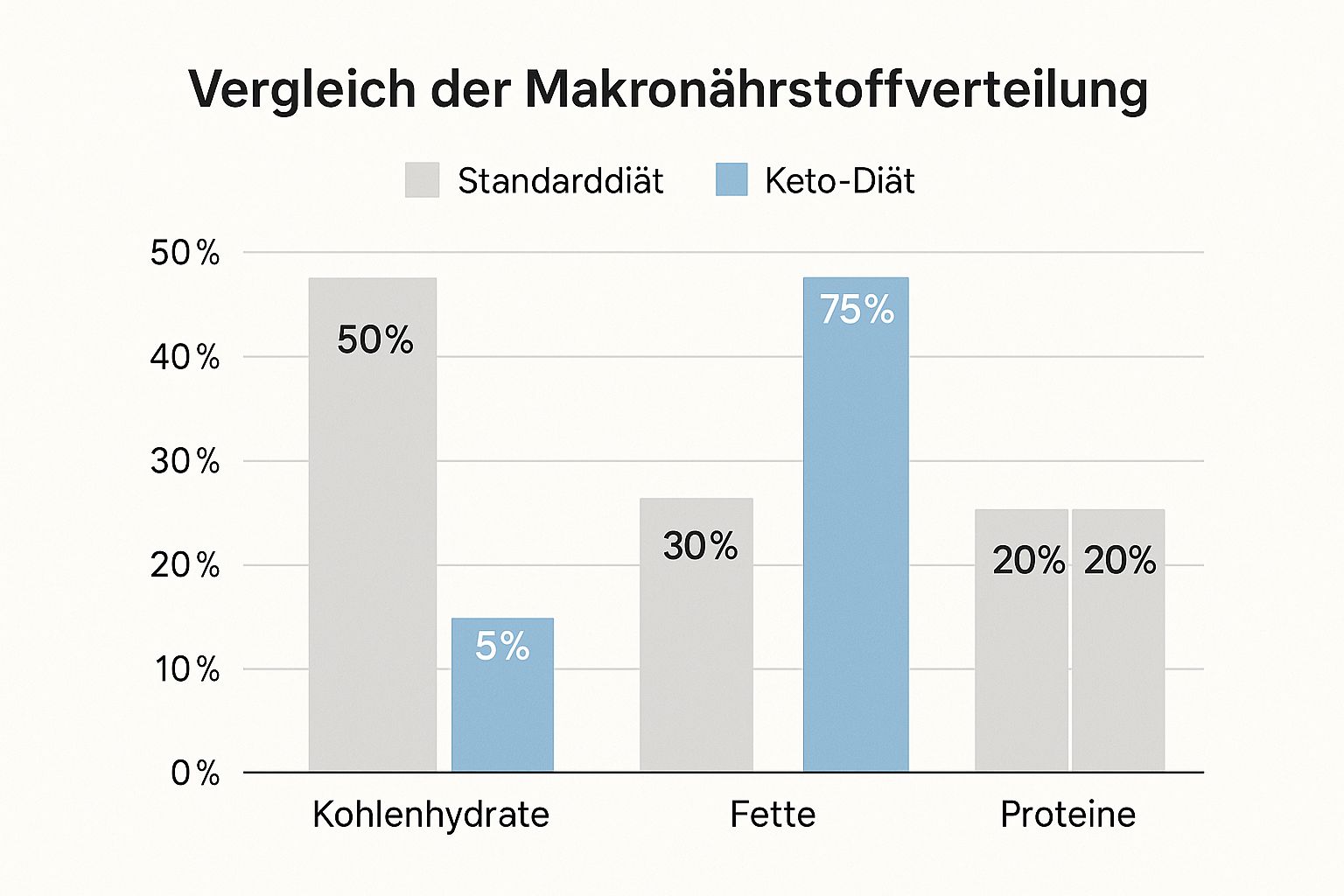
As you can see, fats and carbohydrates essentially switch places, while the proportion of protein remains similarly moderate.
To contrast the two metabolic pathways even more clearly, we have put together a brief overview for you here.
Comparison of the body's energy sources
This table shows the key differences between conventional glucose metabolism and ketogenic metabolism to illustrate the benefits of ketosis.
| Characteristic | Glucose metabolism (high carbohydrates) | Ketogenic metabolism (low carbohydrates) |
|---|---|---|
| Primary energy source | Glucose (sugar) | Ketone bodies (from fat) |
| Energy release | Fast but unstable (blood sugar spikes) | Slow but constant and stable |
| Feeling after eating | Often a brief burst of energy followed by fatigue | Long-lasting satiety and stable energy |
| Effect on cravings | Common due to fluctuating blood sugar | Significantly reduced because blood sugar remains stable |
| Mental performance | Can be impaired by low blood sugar | Often described as clear and focused |
Switching from a quickly blazing fire to a steadily glowing log makes the crucial difference to your energy levels and well-being.
How can you tell that you are in ketosis?
Your body sends you fairly clear signals when it has switched its metabolic mode. In the first days or weeks, you may notice some of these signs:
- "Keto breath": A fruity or slightly metallic smell on the breath is a classic sign. It is caused by acetone, one of the three ketone bodies, and is usually only temporary.
- Changes in Thirst and Urination: At the beginning, the body loses more water and electrolytes, which can lead to increased thirst.
- Less Hunger: The stabilizing effect of ketones on blood sugar levels often leads to a significantly reduced appetite and fewer cravings.
- Mental Clarity: After the initial adjustment phase, many people report a feeling of increased concentration and mental energy—the so-called “Keto focus.”
For an accurate measurement, there are special urine or blood test strips, as well as breath meters that can determine your ketone levels. If you would like to delve even deeper into the fundamentals of your body’s own engine, you can read what metabolism actually is in our article. This will help you understand even better how the Keto Diet can affect your individual body.
Weighing the Benefits and Potential Risks
Honestly, having a clear picture of what to expect is crucial to your success with the Keto Diet. That’s why we’re taking an open look here at what it has to offer—but also where the drawbacks may lie. You’ll understand why Keto often leads to rapid weight loss and a clear mind, but also what the notorious “Keto flu” is all about.

Our goal is to equip you with the knowledge you need to make an informed decision. You should be able to cleverly avoid the risks and make the most of the benefits.
The Impressive Benefits of Ketosis
Once your body has learned to use fat efficiently as fuel, some truly remarkable effects can occur. And they often go far beyond simply losing weight.
One of the best-known benefits is effective weight loss. A ketogenic diet is incredibly filling. And because your blood sugar level remains stable, cravings suddenly become a thing of the past. This means you automatically eat fewer calories while your body goes straight to its fat stores.
Many people also report increased mental clarity and concentration. Ketone bodies, especially the so-called beta-hydroxybutyrate, are an exceptionally clean source of energy for your brain. The result? A feeling of focus and alertness, without the typical afternoon slump.
Another key benefit is improved blood sugar control. By avoiding sugar and most carbohydrates, you can get your blood sugar fluctuations under control. This makes the keto diet particularly interesting for people who want to improve their insulin sensitivity.
In addition, there are other positive effects that are often observed:
- Long-lasting energy: Without constant blood sugar spikes and dips, many people feel more balanced and energetic throughout the day.
- Reduced inflammation: Some studies suggest that ketone bodies may have anti-inflammatory effects. A bonus for overall well-being.
- Improved skin: Some users report clearer skin and less acne, which is probably due to avoiding sugar and processed carbs.
The challenges—and how to overcome them
As the saying goes, where there is light, there is also shadow. Such a fundamental change as the keto diet naturally brings some initial hurdles and potential risks that you should be aware of.
The best-known challenge is probably the so-called “keto flu”. During the first few days, as your body switches from sugar to fat as an energy source, flu-like symptoms may occur.
Typical signs include:
- Headaches
- Fatigue and exhaustion
- Irritability
- Mild dizziness
- Muscle cramps
This is usually due to a lack of water and electrolytes. When you eat hardly any carbohydrates, your body excretes more water—and therefore also important minerals such as sodium, potassium, and magnesium. The good news: You can often prevent or significantly alleviate the keto flu by consciously ensuring an adequate intake of these electrolytes.
Long-term considerations and risks
Although the keto diet is safe for many people, there are a few things you should keep an eye on in the long term. A very high-fat diet can affect blood lipid levels. In some people, “bad” LDL cholesterol increases, while in others it may even improve.
That’s why it’s best to have your levels checked by a doctor before and during the diet. You can also find an in-depth understanding of how to specifically influence your blood lipid levels in our article on lowering LDL cholesterol.
Another issue is the risk of nutrient deficiencies. Since many types of fruit and some vegetables are excluded because of their sugar content, you need to pay close attention to getting vitamins, minerals, and especially fiber from low-carbohydrate sources—think leafy greens, broccoli, or avocados. Otherwise, constipation can be an unpleasant side effect.
Last but not least, not every metabolism is the same. Your genes also determine how well your body can process fats. A DNA metabolic analysis can provide you with valuable insights here. It shows whether a high-fat diet is personally optimal for you or whether you may be a completely different type of eater. This way, you can be sure that you are supporting your body rather than harming it.
Your practical roadmap for getting started with keto

Enough theory—now let’s get to work! This section is your personal action plan, designed to ensure that your transition to a ketogenic diet not only works but also feels really good. We’ll guide you step by step and show you how to master the change with ease—without any question marks in your head.
Getting started is truly easier than you might think. It begins with a well-prepared kitchen and ends with delicious meals that leave you full and satisfied. Simply follow this roadmap and set yourself up for success.
Step 1: Make your kitchen keto-friendly
The first and perhaps most important step: Create an environment that supports you. In practical terms, this means clearing away all foods that could knock you out of ketosis.
Go through your supplies and banish (or better yet, give away) everything that no longer fits into your new plan:
- Sugar bombs: Sweets, soft drinks, juices, cakes, and pastries have to go.
- Grains and the like: Bread, pasta, rice, muesli, and oatmeal are off-limits.
- Starchy vegetables: Potatoes, sweet potatoes, and corn contain too many carbohydrates.
- Most fruits: Unfortunately, bananas, apples, and oranges contain too much fructose.
- Legumes: Beans, lentils, and chickpeas are also too high in carbohydrates.
By keeping these temptations out of reach in the first place, you make it infinitely easier for yourself to stick with it. Especially at the beginning, that’s worth its weight in gold!
Step 2: Load your shopping cart properly
Now we’re restocking your kitchen—but this time with the right things. Your new keto shopping list is packed with nutritious and delicious foods that provide you with everything you need.
Here’s a simple overview of which foods you should put on your list from now on:
Keto Food Traffic Light
This table gives you a quick guide for your shopping and daily meal planning.
| Green (eat freely) | Yellow (enjoy in moderation) | Red (avoid) |
|---|---|---|
| Leafy greens (spinach, lettuce) | Berries (strawberries, raspberries) | Sugar & sweets |
| Fatty fish (salmon, mackerel) | Nuts & seeds | Grain products (bread, pasta) |
| Meat & poultry | Full-fat dairy products | Starchy vegetables |
| Eggs | Dark chocolate (>85%) | Most fruits |
| Healthy fats (avocado, olive oil) | Onions & garlic | Legumes & beans |
| Low-carb vegetables (broccoli) |
With this traffic-light system in mind, every supermarket trip becomes a breeze, and you’ll automatically reach for the right foods.
Step 3: Your simple 3-day starter plan
To make getting started as easy as possible, we’ve put together a simple plan for the first three days. You’ll see how varied and satisfying your meals can be!
| Day | Breakfast | Lunch | Dinner |
|---|---|---|---|
| Day 1 | Scrambled eggs with avocado and spinach | Large salad with chicken breast, olive oil dressing, and a few nuts | Salmon fillet with broccoli sautéed in butter |
| Day 2 | Full-fat Greek yogurt with chia seeds and a handful of berries | Tuna salad (with sugar-free mayo) wrapped in crisp lettuce leaves | Steak with cauliflower purée and herb butter |
| Day 3 | Keto coffee (bulletproof coffee) with MCT oil and butter | Zucchini noodles ("zoodles") with pesto and shrimp | Ground beef skillet with bell peppers, topped with melted cheese |
The keto diet is no longer a niche topic. The global market was estimated at around 12.76 billion US dollars and is continuing to grow. This boom is primarily driven by the growing health awareness of many people who use keto for weight loss and other health goals. You can read more about the economic development of the keto market here. To boost your success even further, it’s useful to know which foods boost your metabolism, as many of them fit perfectly into a ketogenic meal plan.
Step 4: Water and electrolytes – your unsung heroes
Especially during the first few days of the transition, your body excretes more water—and important minerals along with it. To avoid the dreaded “keto flu,” with headaches and fatigue, you absolutely need to focus on two things: drinking enough and replenishing your electrolytes.
- Water: Aim for at least 2-3 liters per day.
- Sodium: Be generous with good salt on your meals, or treat yourself to a cup of broth.
- Potassium: Leafy green vegetables, avocados, and nuts are your best friends.
- Magnesium: Dark chocolate (over 85%), almonds, and spinach provide what you need.
With this roadmap, you are fully prepared to start your journey into the ketogenic diet safely and successfully. Let’s get started!
Is the Keto Diet Right for Your Body?
The keto diet can produce impressive results for many people, but it is not a miracle cure that works equally well for everyone. Every body is unique and responds very differently to such a fundamental dietary change. That is why it is so important to first determine whether this approach truly suits you, your daily life, and, above all, your individual metabolism.
It is not about blindly following a trend. It is about making an honest, well-informed decision for your health. For some people, a ketogenic diet is exactly the right lever, while others should be cautious or take an entirely different approach. This section will help you better assess whether it is right for you.
When the Keto Diet May Be a Good Choice
For some people, switching to a high-fat, low-carbohydrate diet is exactly what they need to achieve their health goals. People with the following goals often see particularly good results:
- Lose weight effectively: If you feel that conventional diets simply do not work for you and you are constantly battling cravings, keto could be a real solution. The long-lasting feeling of fullness from fat and protein, along with stable blood sugar levels, helps many people maintain their calorie deficit much more easily.
- Get blood sugar under control: People with insulin resistance or type 2 diabetes can benefit enormously from drastically reducing carbohydrates. Blood sugar levels fluctuate much less, which is a huge relief for the body.
- Boost mental clarity: Do you often suffer from energy slumps or feel like you have “brain fog”? The steady energy supply from ketone bodies can help improve focus and support more consistent mental performance.
This growing interest is also reflected in the market. In 2023, the global ketogenic diet market was estimated at around US$11.59 billion. The forecast for 2029 is US$15.67 billion. This enormous growth shows how many people see the keto diet as a suitable answer to their health-related questions. If you're interested in the figures, you can learn more here about the keto diet market performance forecasts and the reasons behind them.
Your genetics are the decisive factor. They determine how efficiently your body can metabolize fats and use them as an energy source. Not everyone is naturally a “fat burner.”
Your nutritional type is the key to success
And this brings us to the most important point: your individual predisposition. Your body has a genetic blueprint that determines what type of eater you are. Some people are genetically designed to process carbohydrates highly efficiently, while others are true masters of fat burning. If you try to force a keto diet on a body programmed for carbohydrates, it can not only be difficult but often fails to deliver the hoped-for results.
This is exactly where modern science comes in. Instead of guessing, you can simply find out today.
A DNA metabolic analysis is like looking into your personal biological handbook. It gives you clear answers about whether your body is optimized for a high-fat diet like the keto diet or whether a more balanced mix of nutrients suits you better. You may find that your body actually needs a moderate amount of carbohydrates to function optimally.
This knowledge is the key to sustainable success and well-being. Find out how to identify your personal nutritional type through a DNA analysis, and make decisions based on facts about your own body. This ensures that you choose a dietary strategy that supports you in the long term—instead of working against your own biology.
The most frequently asked questions about the keto diet (and honest answers)
Starting the keto diet feels a bit like jumping into cold water. Suddenly, you're faced with a whole host of questions and uncertainties. That's completely normal, because you're not just changing your meal plan—you’re turning your entire metabolism upside down.
Here we clear up the typical myths and give you clear, practical, tried-and-tested answers. From the dreaded initial phase to dining at a restaurant with friends, you'll find everything you need to know for a confident start.
How long does the transition to keto take?
This is probably the question of all questions: How long does it take my body to get used to the keto diet? The short answer: It’s a little different for everyone, but there is a clear tendency.
The first phase, often known as the “keto flu,” usually lasts between three days and two weeks. During this time, your body switches its engine from sugar to ketones as its primary energy source. Symptoms such as headaches, fatigue, or some irritability are completely normal.
Our tip: Pay close attention to your electrolytes during the first few weeks. A little extra salt in your food, a handful of nuts for magnesium, and a large serving of leafy greens for potassium can work wonders. And most importantly: drink enough water!
Once this adjustment period is over, most people report a boost in energy and mental clarity. Simply give your body the time it needs for this fundamental change.
What can I do about cravings for sweets?
Cravings, especially for sugar, can be a real spoiler. The good news is that with a stable ketogenic diet, they usually disappear on their own because your blood sugar level is no longer on a roller coaster.
If a craving for something sweet does catch you off guard, you’re not powerless. Here are a few simple tricks that can help immediately:
- Reach for smart keto snacks: A small bowl of berries with full-fat yogurt, a piece of dark chocolate (with at least 85% cocoa), or a handful of nuts can often take the edge off your cravings.
- Eat enough healthy fat: Sometimes cravings are simply a hidden signal from your body that it lacks energy. Half an avocado, a spoonful of nut butter, or a piece of fatty fish can quickly solve that.
- Drink a large glass of water or tea: We often mistake thirst for hunger. A warm drink is especially soothing and can fill your stomach.
Believe me, the cravings will become less frequent the longer you stay in ketosis. Slowly but surely, your body forgets its desire for that quick sugar rush.
Can I exercise on the keto diet?
Absolutely! However, there are a few things to keep in mind, especially at the beginning. Your athletic performance may decline briefly during the transition. Your muscles first need to learn how to use ketones efficiently as fuel. It’s like converting a car to run on a new fuel—it needs a short break-in period.
After this adjustment phase, many athletes, especially those in endurance sports, feel more energized and stable than ever before. Your body has learned to access its vast fat stores—virtually an endless tank.
High-intensity training such as sprints or heavy strength training can be a little trickier, as it requires quick energy. Some athletes use targeted approaches such as the “Targeted Keto Diet” (TKD), consuming a small portion of fast-acting carbohydrates directly before training.
The most important thing is to listen to your body and adjust your training during the first few weeks. Give yourself time, and you’ll see that exercise and keto can make a truly powerful team.
How do I handle social occasions and restaurant visits?
Dinner with friends or a family celebration doesn’t have to be a minefield. With a little preparation, you can enjoy keto-friendly meals with ease even outside your own home.
The key to success is simple: preparation.
- Take a look at the online menu: Most restaurants have their menu on their website. That way, you can calmly choose a suitable dish at home.
- Focus on protein and vegetables: A steak, grilled fish, or chicken with a large salad or a vegetable side is almost always a safe bet. Simply ask them to leave out the potatoes or rice and give you extra vegetables instead.
- Be the master of sauces: Ask whether the sauces contain sugar. Often, the easiest option is to ask for olive oil and vinegar for your salad or simply butter for your vegetables.
- Drink smart: Water is always the best choice. If you want alcohol, dry wine or clear spirits such as gin or vodka (without sugary mixers) are much better options than beer or sweet cocktails.
You don’t have to give up your social life. It just takes a little planning and the confidence to ask for what you need. Over time, it will become second nature.
The keto diet is a powerful tool, but the key to success lies in understanding whether it truly suits your unique body. Instead of guessing, you can find out. A DNA metabolic analysis reveals how your body responds to fats, proteins, and carbohydrates. At mybody-x.com, we help you optimize your diet based on your genetic predisposition—for sustainable, science-based results.



Share now:
How to lose weight healthily, sustainably, and effectively in 2025
Drug interactions: How to recognize the invisible danger and protect yourself