
CRP levels: What your levels really mean
Your body constantly sends signals, and the CRP level (C-reactive protein) is one of the clearest. Think of it like a sensitive smoke detector: when it goes off, something is burning somewhere in your system. An elevated level therefore indicates that inflammation is smoldering in your body, often long before you notice any initial symptoms.
Your body speaks a language, and CRP is an important word
Have you ever wondered how your body actually tells you that something is wrong? One of the cleverest mechanisms is the production of C-reactive protein. This protein is produced in your liver and released into your bloodstream as a direct response to inflammation.
A simple blood test can measure CRP levels and provide valuable information to your doctor—or to you. It is known as a nonspecific inflammatory marker. This means it doesn't tell you exactly where the problem is, but it confirms unambiguously that there is one.
An early warning system for your health
The real strength of this marker lies in its sensitivity. The CRP level can rise extremely quickly and sharply in acute events, such as a bacterial infection. This helps doctors assess the severity of an illness and monitor the success of treatment. If the levels fall again, that's a clear sign that the inflammation is subsiding.
But it's not just about acute illnesses. The CRP level becomes particularly interesting when it comes to so-called “silent inflammation.” These are chronic, often unnoticed inflammatory processes that can smolder in your body due to factors such as ongoing stress, an unhealthy diet, or being overweight.
Your CRP level is more than just a number in a lab report. It is a window into the hidden processes in your body and a powerful tool for taking proactive care of your health.
Analyzing your CRP levels gives you the opportunity to take control early on. Instead of merely reacting to illnesses, you can deliberately adjust your lifestyle to reduce inflammation and safeguard your long-term well-being. It's about taking responsibility for your own health and better understanding your body's language. With the tests from mybody-x.com, you can conveniently monitor these kinds of levels from home.
Normal CRP levels and what they mean for you
When you hold a lab report in your hands, all the numbers and abbreviations can be pretty confusing at first. But don't worry—we're about to shed some light on the matter. Your CRP level is a fairly important indicator that you can easily interpret yourself with a little background knowledge.
In general, a CRP level of below 5 milligrams per liter (mg/l) is considered normal in Germany. This is the green zone—your body is not currently fighting any significant inflammation. If your level is higher, it is a sign that your immune system has become active.
Understanding the range of CRP levels
The more severe the inflammation, the higher the CRP level rises. The levels can be roughly divided into different ranges to better assess the situation.
-
Mildly elevated levels (up to 50 mg/l): These levels often indicate mild, localized inflammation or viral infections. Think of an emerging cold, gum inflammation, or the healing phase after a minor surgical procedure.
-
Moderately to severely elevated levels (50 to over 100 mg/l): This is more serious. These levels indicate more extensive inflammation, such as that caused by bacterial infections (e.g., pneumonia), after major surgery, or during an acute flare-up of a chronic condition such as rheumatism or Crohn’s disease. After surgery, peak levels of up to 159 mg/l are not uncommon even with an uncomplicated recovery and are part of the normal healing process.
To give you a better overview, we have summarized the common reference ranges in a table.
CRP levels at a glance
This table shows the common reference ranges for CRP levels and what they typically mean.
| CRP level (mg/l) | Interpretation | Possible causes |
|---|---|---|
| < 5 mg/l | Normal range | No significant inflammatory activity |
| 5 - 50 mg/l | Mild to moderate inflammation | Local bacterial infections, viral infections (e.g., a cold), minor injuries, chronic inflammation |
| 50 - 200 mg/l | Acute, more severe inflammation | Bacterial infections (e.g., pneumonia), major surgery, acute rheumatic flare-up |
| > 200 mg/l | Severe, often systemic inflammation | Severe bacterial infections such as sepsis (blood poisoning), severe burns |
The table gives you a good initial guide. However, always remember: Your individual results should be discussed with a doctor to clarify the exact causes.
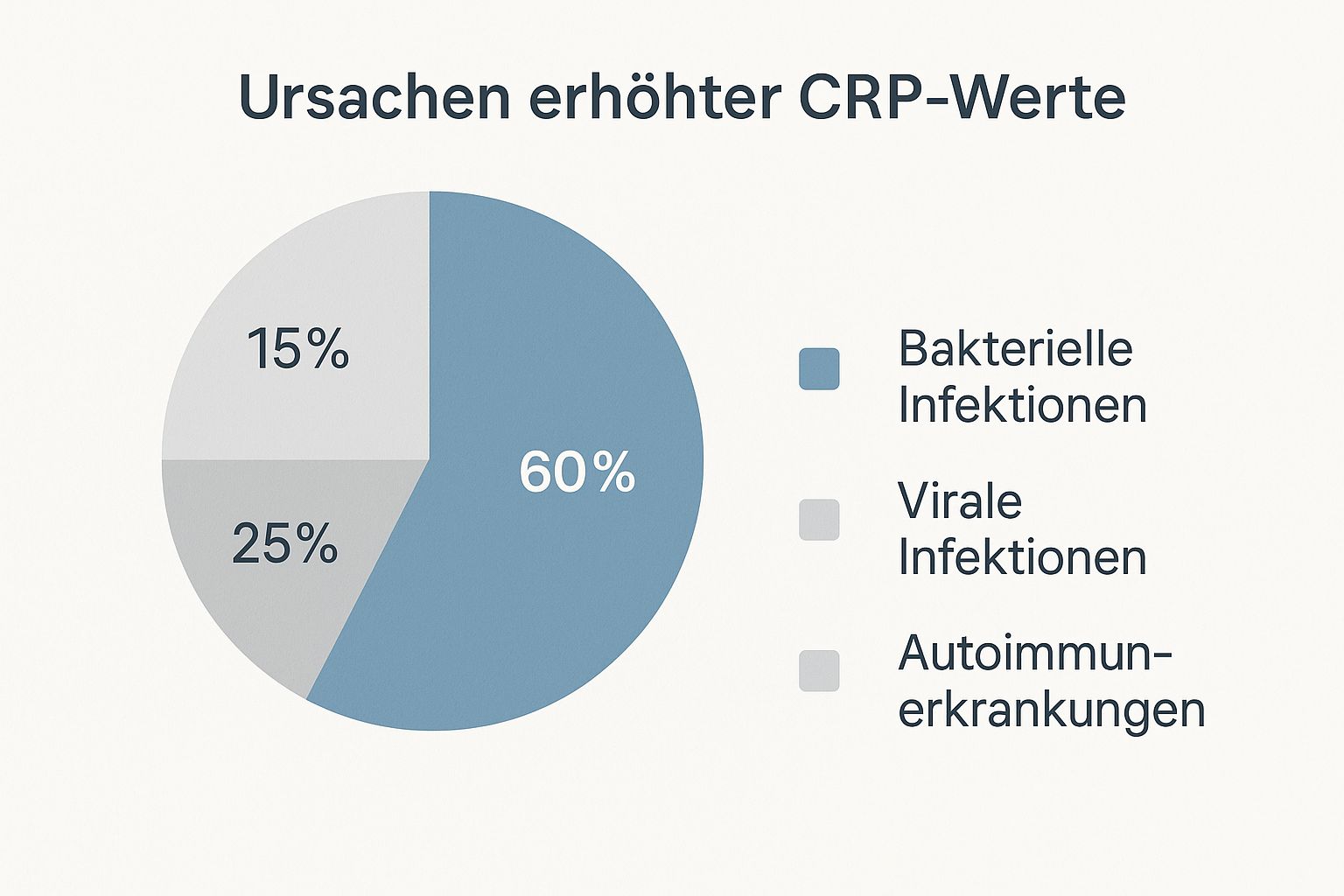
As you can see, bacterial infections are often the main reason for significantly elevated CRP levels, but viruses and autoimmune diseases also play a major role.
The difference between acute and silent inflammation
It is absolutely crucial to distinguish between two types of inflammation here. Acute inflammation, such as with the flu, makes your CRP level shoot up in no time—and fall just as quickly once the illness subsides.
However, what is far more important for your long-term health are the so-called “silent inflammations.” These are chronic, low-grade inflammatory processes that often go unnoticed but can permanently keep your CRP level slightly elevated.
These silent inflammations can be fueled by our lifestyle—think chronic stress, an unhealthy diet, or too little sleep. They place a gradual burden on the body and can lead to serious health problems in the long term.
Developing awareness of these silent dangers is a huge step toward a long and healthy life. If you would like to learn more about the meaning of longevity and preventive measures, feel free to read our related article. This knowledge will help you better interpret your own test results and ask the right questions when speaking with your doctor.
Finding the true causes of elevated CRP levels
An elevated CRP level is like a loud alarm signal—it tells you that something is wrong, but not necessarily where exactly the fire has broken out. Your task now is to become a detective together with your doctor and uncover the true cause. The triggers can be as varied as life itself.

Basically, we distinguish between two main categories of causes: the acute hot spots that immediately stand out and the silent, chronic smoldering fires that often remain unnoticed for a long time.
Acute triggers of high CRP levels
Acute triggers are usually the most obvious suspects. They provoke a rapid and intense response from your immune system, causing CRP levels to shoot up.
These include, above all:
- Bacterial infections: This is the classic cause. Whether it’s pneumonia, a bladder infection, severe tonsillitis with pus, or an infected wound, your body immediately mobilizes all its defenses, and the liver produces massive amounts of CRP.
- Major injuries or surgery: After surgery or a serious injury, your body switches into repair mode. This intensive healing process is always accompanied by a strong inflammatory response, which is reflected in high CRP levels.
- Acute flares of chronic diseases: People with autoimmune diseases such as rheumatoid arthritis or Crohn’s disease often experience acute phases (flares). During these flares, inflammatory activity in the body increases sharply, and the CRP level rises accordingly.
Especially when determining whether an infection is bacterial or viral, the CRP level provides an important piece of the puzzle. In Germany, CRP testing has become firmly established for this purpose. For example, in pneumonia, a CRP level above 50 mg/l can be a strong indication of a bacterial cause. This helps the doctor decide whether an antibiotic is truly necessary and enables more targeted use of these important medications.
Silent Sources of Inflammation: Your Lifestyle as a Cause
Much more insidious and relevant to your long-term health are chronic, often unnoticed inflammations. They are also called “silent inflammation” because they put your immune system into a permanent, low-level state of alert and can keep your CRP levels slightly elevated over the long term.
A consistently slightly elevated CRP level may be a sign that your lifestyle is overburdening your immune system. Often, it is your daily habits that have the greatest impact.
Here are the most common suspects behind this slow-burning inflammation:
- Unhealthy diet: A diet rich in sugar, highly processed foods, and unhealthy fats fuels inflammation throughout the body.
- Chronic stress: Ongoing stress causes the release of stress hormones. These can negatively affect and disrupt the immune system and inflammatory processes.
- Lack of sleep: Too little or poor-quality sleep prevents your body from carrying out important regeneration and repair processes, thereby promoting inflammation.
- Being overweight (especially abdominal fat): Fat tissue is not merely a passive energy store. It is also hormonally active and produces inflammation-promoting messenger substances.
- Nutrient deficiencies: A deficiency in important micronutrients that our immune system needs for regulation can also lead to elevated inflammation levels. Sometimes an undiagnosed iron deficiency can cause symptoms such as fatigue, which can accompany inflammation. In our article, you can read more about how to test yourself for iron deficiency.
The good news is that you largely have these factors in your own hands. A conscious diet, targeted nutrients, and a mindful lifestyle can help your body better regulate this silent inflammation and sustainably improve your well-being.
Silent inflammation—the invisible danger to your heart
So far, we have considered the CRP level a kind of general fever thermometer for inflammation in the body. But there is a special form of this test that provides a much deeper look and can be crucial for your long-term heart health. Here, we explore the world of silent, chronic inflammation—a hidden enemy that often smolders unnoticed in your body for years while causing serious damage.
Imagine the inner walls of your blood vessels as a perfectly smooth highway where traffic flows freely. Silent inflammation is like tiny but constant cracks in the asphalt. At first, you do not notice them, but over time they make the vessel walls rough and fragile. Deposits can form much more easily in these areas. This is the beginning of atherosclerosis (hardening of the arteries)—and therefore the precursor to heart attack and stroke.
The hsCRP test: Your personal radar for your heart
To detect precisely these minimal inflammatory sites, there is a more specialized test: the high-sensitivity CRP test, or hsCRP for short. It is calibrated so precisely that it can detect even the tiniest increases in CRP levels that a standard test would simply miss. Think of it as your personal radar for the risk building up in your blood vessels.
What makes this so dangerous? Silent inflammation often occurs entirely independently of classic risk factors such as high cholesterol or high blood pressure. Your blood lipid levels may be excellent while your body is secretly fighting a battle that is slowly damaging your blood vessels. That is precisely why the hsCRP level is such a valuable independent indicator.
A persistently slightly elevated hsCRP level is more than just a number on a lab report. It is a clear warning sign that your blood vessels are under stress and need your full attention.
What the levels reveal about your risk
In modern cardiovascular prevention, the hsCRP level is used specifically to assess individual risk more accurately. Precise measurement provides insight into the actual state of your vascular health. Studies have shown that levels between 1.0 and 3.0 mg/L may indicate a moderate risk of early narrowing of the coronary arteries. Levels above 3.0 mg/L are already associated with a significantly increased risk. Regular monitoring is crucial to determine whether lifestyle changes are having an effect. You can also find more information about risk assessment at the German Stroke Foundation on schlaganfallbegleitung.de.
Knowing your personal hsCRP level is an incredibly powerful tool for prevention. It gives you the opportunity to take action and protect your heart before things become serious. Of course, other factors also play a role. For example, if you are wondering how all of this relates to cholesterol, take a look at our article on what you can do if your HDL cholesterol is too low. With this knowledge of your CRP levels and their significance for your heart, you can take charge of your long-term health.
How to Actively Lower Your CRP Levels
Knowledge is power, but only action brings change. Now that you understand what your CRP levels mean and what may be causing them, we are giving you back control.
An elevated CRP level is not your fate—it is instead your body's call to take a closer look and take action.

You can specifically combat inflammation in your body and bring your levels back into balance. The key lies in an anti-inflammatory lifestyle built on four strong pillars.
Pillar 1: The Power of Your Diet
Your daily meals are the most effective tool against low-grade inflammation. What you eat can either fuel or extinguish inflammation. Focus on a nutrient-rich, natural diet.
Three groups of dietary heroes are particularly important:
- Omega-3 fatty acids: These healthy fats, found in oily fish such as salmon and mackerel, as well as in walnuts and flaxseeds, are known for their powerful anti-inflammatory effects.
- Antioxidants: Colorful fruits and vegetables (such as berries, broccoli, or spinach) are packed with antioxidants. They act like a shield for your cells and neutralize harmful free radicals that fuel inflammatory processes.
- Probiotics: A healthy gut is the foundation of a strong immune system. Probiotic foods such as yogurt or kefir support a balanced gut microbiome. You can read all about a healthy gut microbiome in our in-depth guide.
It is just as important to avoid certain things: sugar and highly processed foods are the main drivers of inflammation.
Pillar 2: Exercise as an Anti-Inflammatory
Moderate, regular exercise acts like a natural anti-inflammatory medication. You don't have to become a marathon runner. Just 30 minutes of brisk walking, cycling, or swimming on most days of the week can demonstrably lower your CRP levels.
Remember: consistency beats intensity. The goal is to stay active and keep your body moving without overloading it.
Find an activity that genuinely brings you joy. This is the best way to stick with it over the long term and benefit from its positive effects on your body.
Pillar 3: Stress management and sleep
Never underestimate the connection between your mind and body. Chronic stress and sleep deprivation keep your immune system in a constant state of alert, which can drive up inflammation levels.
Therefore, make a conscious effort to relax and get sufficient recovery:
- Reduce stress: Incorporate relaxation techniques such as meditation, yoga, or simple breathing exercises into your daily routine.
- Prioritize sleep: Get 7–8 hours of restful sleep each night. Your body uses this time for essential repair and regeneration processes that combat inflammation.
These pillars form the foundation for naturally lowering your CRP levels. To specifically support your body during this process, certain nutrients can be a useful supplement.
mybody-x products are designed to provide you with scientifically supported ingredients such as high-quality omega-3 fatty acids or targeted vitamin and mineral complexes. This allows you to optimally complement your efforts and take control of your health on your own terms.
Your most frequently asked questions about CRP levels
Okay, by now you have read quite a lot about C-reactive protein—from its role as the body's own alarm system to practical tips on how to get your levels back under control. But often, a few questions still remain unanswered at the end.
That is why we have summarized the most important points for you here once again, briefly and concisely. Think of it as your personal cheat sheet to clear up any remaining uncertainties.
Should I always see a doctor because of elevated CRP levels?
Yes, absolutely. An elevated CRP level is more than just a number on paper—it is a clear signal from your body that something is wrong. And you should take that seriously.
Even if you may not feel ill (yet), it is crucial to have the cause professionally assessed. Your doctor can use additional tests to determine whether an acute infection, a chronic condition, or perhaps your lifestyle is behind it. This is the only way to ensure targeted and, above all, appropriate treatment.
How quickly can I lower my CRP level?
It all depends on the cause. Imagine you have an acute bacterial infection that is being treated with antibiotics. In this case, the CRP level can often drop significantly again within a few days once the treatment starts to work.
With chronic, silent inflammation, which is often linked to lifestyle, the process is more of a marathon than a sprint. You need a little more patience here. But through consistent changes to your diet, exercise, and stress management, you can often see measurable results after just a few weeks to months. It is worth persevering!
The most important thing is simply to get started. Every healthy meal, every short bout of physical activity, and every good night's sleep directly combats the inflammation in your body.
Can stress alone really increase my CRP level?
Absolutely. The days when people thought the mind and body were separate are long gone. Chronic stress puts your body in a constant state of alarm.
It releases stress hormones such as cortisol, which can disrupt the delicate balance of your immune system over time and fuel inflammatory processes. Stress is therefore not merely a “feeling,” but a tangible biochemical process that can show up directly in your CRP levels.
What role does my weight play in my CRP levels?
A very significant one, especially when it comes to abdominal fat. Fat tissue is not a passive energy store, as was once thought. It is a hormonally active organ that produces inflammatory messengers virtually nonstop.
The more abdominal fat you have, the more of these substances, known as cytokines, are released. The result? Constant, low-grade inflammation throughout the body. Achieving or maintaining a healthy weight is therefore one of the most effective ways to sustainably lower your CRP level.
Is there a difference between CRP and hsCRP?
Yes, there is, and it is important to know about it. The standard CRP test is the all-rounder. It measures inflammation in general, such as that caused by acute infections or injuries. Perfect for monitoring such conditions.
The high-sensitivity CRP test (hsCRP) is, as the name suggests, much more sensitive. It detects even the tiniest chronic sources of inflammation—exactly those that play such an important role in cardiovascular risk. So when it comes to assessing your personal risk of heart attack or stroke due to “silent inflammation,” hsCRP is the test of choice.
With this knowledge, you are well equipped to better understand your body's signals and take charge of your health. If you are now curious and want to see your personal values in black and white, mybody-x is the right place for you. Discover our medical self-tests, which you can conveniently carry out from home.
Learn more at https://mybody-x.com.



Share now:
Symptoms of mineral deficiency: How to recognize your body’s signs
7 C-reactive protein levels you should know