

Mineral deficiency symptoms: How to recognize your body’s signs
Do you often feel inexplicably tired or struggle with concentration problems? These vague signs could be your body’s first signals indicating a mineral deficiency. It is your body’s way of showing you that it lacks important building blocks for its daily work. In this guide, we want to help you better understand these signals and show you how to gain clarity about your nutrient supply.
Why your body really needs minerals

Think of minerals as the invisible but absolutely essential employees in a huge company—your body. They are not direct sources of energy like fats or carbohydrates. Instead, they act like behind-the-scenes directors who control countless processes and make them possible in the first place. Without them, the entire production process grinds to a halt.
These vital nutrients are involved in almost all fundamental bodily functions. They ensure that your heart beats to the right rhythm, your muscles can contract and relax smoothly, and your nerves transmit signals flawlessly. Each individual mineral has a very specific role.
The quiet heroes of your metabolism
Minerals are true all-rounders and simply indispensable for your health. Their roles are incredibly diverse and fit together perfectly, like the gears in a finely crafted clockwork mechanism.
- Bones and teeth: Calcium, phosphorus, and magnesium form the stable framework of your skeleton and help keep your teeth strong.
- Energy production: Iron is absolutely central to transporting oxygen in the blood—the basis for energy production in every single cell.
- Immune system: Zinc and selenium are essential for keeping your immune defenses strong and responsive, helping you stay fit throughout everyday life.
- Nervous system and muscles: Magnesium and potassium regulate nerve signal transmission and thereby help prevent bothersome muscle cramps, for example.
A balanced mineral balance is the foundation for your daily well-being and performance. Even a small deficiency can manifest itself through vague symptoms that noticeably limit your quality of life.
A deficiency develops when your body is not supplied with enough of these important substances over an extended period. The first signs are often nonspecific and easily mistaken for everyday stress or too little sleep. That is precisely why it is so important to understand your body’s language and interpret its signals correctly. If you want to understand the basics even better, you’ll find detailed information in our article about what minerals are and what functions they perform.
Ultimately, knowing the symptoms of a mineral deficiency is the first step toward taking responsibility for your own health. With this clarity, you can take proactive action instead of merely reacting to problems.
The most common deficiencies and their typical signs
A mineral deficiency is not a clear-cut medical condition, but rather your body whispering—a collection of signals indicating that something is wrong. The art lies in interpreting these signals correctly. Although some symptoms overlap, there are often very specific signs that point to a particular missing mineral.
Every deficiency feels different because each nutrient plays its own unique, indispensable role. You can think of it like an orchestra: If the first violin is missing (iron, for example), the melody sounds tired and powerless. If the bass is missing (perhaps magnesium), the rhythm is lost and everything becomes restless.
To help you better understand your body’s signals, here is an overview of the most common deficiencies and their distinct symptoms.
Iron deficiency: The energy thief
Iron is the absolute superstar when it comes to transporting oxygen in your blood. When it’s lacking, your cells feel as though they’re permanently under-supplied—like after a marathon that never ends.
- Persistent tiredness and exhaustion: This is the number-one leading symptom. You often feel exhausted from the moment you wake up, even though you actually got enough sleep.
- Pale skin and mucous membranes: A quick look in the mirror or at the inside of your eyelids can reveal a lot. If you lack the red blood pigment, it literally makes you look pale.
- Brittle nails and hair loss: Your hair roots and nail beds have a high metabolic rate and react extremely sensitively when oxygen supply is inadequate.
- Shortness of breath during exertion: Do you get out of breath just climbing the stairs? That’s because your blood can no longer transport enough oxygen.
Magnesium deficiency: The troublemaker
Magnesium is the ultimate relaxation mineral—for your muscles and nerves. A deficiency often leads to a kind of constant inner tension.
- Nighttime calf cramps: This is the classic symptom of magnesium deficiency. The muscles simply can’t relax properly anymore.
- Restlessness and nervousness: Do you often feel stressed for no apparent reason or like you’re "on edge"?
- Muscle twitching and tension: A twitching eyelid or painful tension in the neck are typical warning signs.
A mineral deficiency is not uncommon, and the causes are varied. Inadequate intake through the diet, problems with absorption in the intestines, or an increased need are the main drivers of deficiencies.
The following infographic shows where the most common causes of a mineral deficiency lie.
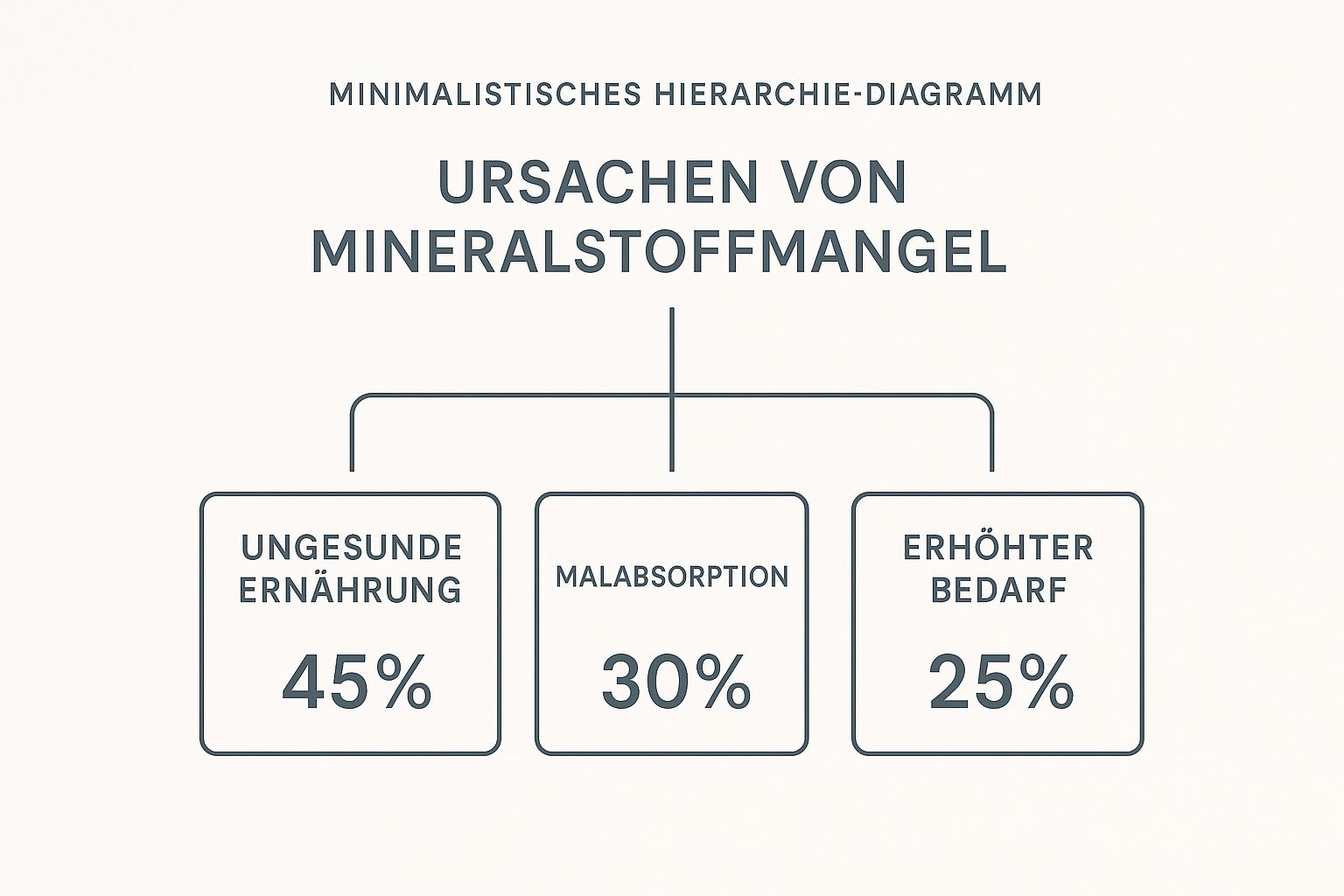
As the graphic clearly shows, an unbalanced diet is 45 % by far the most common cause. Problems with absorption and an increased need come next. This highlights how crucial your daily diet is for good nutritional status.
Zinc deficiency: A troublemaker for your skin and immune system
Zinc is a true all-rounder, but it is especially important for cell division, wound healing, and your immune defenses.
- Weak immune system: Do you feel like you catch every infection going around? This could be a sign.
- Poor wound healing: Small scratches or wounds take forever to heal.
- Skin problems and brittle nails: Dry, flaky skin, acne, or even white spots on your fingernails may indicate a zinc deficiency.
- Hair loss: Zinc is essential for the formation of keratin—the main building block of your hair.
Although minerals and vitamins are often mentioned in the same breath, they have very different roles. If you want to delve deeper into the fascinating world of micronutrients, our article on vitamins and minerals explains how they work together and the exact differences between them.
Don’t forget other important minerals, either: iodine is essential for your thyroid, selenium acts as a powerful antioxidant, and calcium is the basic building block for strong bones. Knowing the symptoms of a mineral deficiency is the first and most important step toward proactively supporting your health and recognizing potential gaps early.
Common causes of a mineral deficiency

A mineral deficiency rarely develops overnight. Rather, it gradually creeps in, often as a result of a long-term imbalance influenced by very different factors in your life. Understanding these causes is the first and most important step toward addressing the symptoms of a mineral deficiency at their root.
The most obvious cause is, of course, diet. A one-sided diet with many processed foods often does not provide enough essential minerals. Strict diets or a vegan diet can also lead to certain deficiencies if they are not carefully planned.
But even if you believe you eat a balanced diet, an optimal supply is not always guaranteed. Certain circumstances in life can drastically increase your individual need for minerals.
When the Body Suddenly Needs More
Some stages of life or habits simply place greater demands on your body—and as a result, it also needs more building materials. These include, above all:
- Pregnancy and breastfeeding: During this time, you are providing for not only yourself but also a new life. The need for iron, calcium, and iodine increases enormously.
- Intense exercise: When you sweat a lot, you lose not only water but also valuable electrolytes such as magnesium, potassium, and sodium. These need to be replenished.
- Growth phases: Growing children and adolescents have increased requirements to build healthy bones, muscles, and tissue.
Hidden Nutrient Robbers in Everyday Life
In addition to increased requirements, there are also factors that specifically block the absorption of minerals in the intestines or accelerate their excretion. Chronic stress is a classic example. It puts your body in a permanent state of alert, in which it uses up huge amounts of magnesium and zinc.
Another crucial but often overlooked factor is your gut health. If your intestinal lining is irritated or your gut flora is out of balance, nutrients can no longer be properly absorbed from food—even if you eat as healthily as possible.
A mineral deficiency is almost always the result of several factors interacting. It is not just about what you eat, but also how well your body can utilize it and how high your individual needs happen to be at that time.
The National Nutrition Survey II (NVS II) shows that mineral deficiencies are also a real problem in Germany. Although many people turn to dietary supplements, adolescents and young adults in particular often fail to reach the recommended intake for important nutrients. For example, an estimated 30% of adults are affected by iodine deficiency, which can manifest itself in thyroid problems. You can find more details about the study results on the website of the Federal Ministry of Food.
This makes it clear: Even when food is readily available, individual nutrient deficiencies are not uncommon. If you want to learn about your status and understand where you personally have gaps, a test can provide a useful starting point.
How to reliably identify a deficiency
Uncertain symptoms and many possible causes—it’s completely understandable that you want clarity at last. Suspecting which mineral you might be lacking is a good start. But to make targeted changes, you need solid facts. Blindly reaching for random supplements is rarely the solution and, in the worst case, can even create a new imbalance.
The crucial step in turning a vague feeling into certainty is a reliable analysis of your mineral status. This transforms a diffuse “Something isn’t right” into clear data, finally enabling you to make informed decisions about your health.
The gold standard: blood analysis
The most precise way to check your nutrient status is and remains a blood analysis. The concentrations of individual minerals are measured directly in the blood, either in serum or whole blood. The result gives you an exact picture of how well your stores are actually filled and where there may be gaps.
A blood test is like taking an inventory of your body. It shows you in black and white which “building materials” are missing, so you can replenish them specifically instead of continuing to grope in the dark.
In the past, you always had to visit a doctor for this. Fortunately, today there is a much more convenient and discreet alternative that brings the same laboratory-backed accuracy to your home.
Modern at-home self-tests
Technology makes it possible: You can easily carry out this kind of analysis from home. Modern nutrient deficiency tests, such as those from mybody®x, are cleverly designed so that you can collect the sample yourself in just a few minutes.
And this is generally how simple it is:
- Order the test: Simply choose the right test for your needs—for example, for zinc, selenium, or magnesium.
- Collect the sample: Use a small, almost painless prick in your finger to collect a few drops of blood. It’s quick and really straightforward.
- Send in the sample: Send your sample directly to a certified specialist laboratory using the enclosed return envelope.
- Receive your results: After the laboratory analysis, you will receive a detailed and, above all, easy-to-understand results report—usually directly on your smartphone or by email.
The greatest advantage is obvious: You combine scientific accuracy with maximum convenience. No appointments, no waiting times. Instead, you gain reliable insights into your body whenever and wherever it suits you best. Find out more about how to test for a nutrient deficiency in our detailed guide.
With this knowledge in hand, you no longer have to guess. You can specifically address the causes of your mineral deficiency symptoms and make informed improvements to your diet or lifestyle. It is the most important first step toward taking control of your health yourself.
Your path to optimal mineral status

A test has given you certainty and shown where your body is lacking important minerals. That's a fantastic first step! Instead of continuing to grope in the dark, you now have a clear roadmap for addressing the symptoms of your mineral deficiency in a targeted and sustainable way. Your journey toward a balanced mineral status begins right here and now—with a concrete plan in hand.
The absolute foundation for full mineral stores is always a conscious, nutrient-rich diet. Think of your meals as the most important source for providing your body every day with all the building blocks it needs for its countless tasks.
Choosing the right foods strategically
To compensate for deficiencies, you should deliberately incorporate foods rich in the missing minerals into your daily routine. Here is a small selection to help you get started:
- For iron deficiency: Add red meat (in moderation), lentils, chickpeas, spinach, and pumpkin seeds to your diet. They provide valuable iron, which your body needs to produce energy.
- For magnesium deficiency: Choose whole-grain products, nuts (especially almonds and cashews), seeds, bananas, and dark chocolate. They help relax your muscles and calm your nervous system.
- For zinc deficiency: Oatmeal, beef, cheese, and legumes are excellent sources of zinc to strengthen your immune system and keep your skin healthy.
A full plate alone does not guarantee full stores. Just as important as intake is your body's ability to actually absorb the nutrients.
There are simple tricks that can significantly improve the absorption (bioavailability) of minerals. For example, a glass of orange juice with a lentil dish is worth its weight in gold: The vitamin C it contains can increase the absorption of plant-based iron many times over. Conversely, you should not drink coffee or black tea directly with an iron-rich meal, as the tannins they contain can block absorption.
Recognize and avoid nutrient robbers
In addition to such “absorption inhibitors,” there are also habits that can quite literally drain your valuable mineral stores. These include, above all, chronic stress, excessive alcohol consumption, and a diet rich in sugar and highly processed products. These factors force your body to use more minerals such as magnesium and zinc to compensate for the negative effects.
By the way, a widespread deficiency in Germany does not only affect minerals. According to the “German Health Interview and Examination Survey for Adults” (DEGS), around 30% of the German population has an inadequate vitamin D supply. This is particularly relevant because vitamin D is closely linked to calcium absorption.
If a deficiency has been confirmed by a test, targeted supplementation can be a very sensible and effective way to replenish your stores quickly and reliably. Choose high-quality supplements whose active ingredients are readily available to the body. Especially when symptoms such as constant fatigue and lack of motivation severely impair your quality of life, targeted supplementation can make all the difference. If you would like to learn more about how to combat nutrient deficiency-related fatigue, you will find further valuable tips from us.
Your path combines smart nutrition, a mindful lifestyle, and, if necessary, targeted support. With the results of the mybody®x nutrient deficiency tests, you have the perfect foundation to follow this path independently and successfully.
Frequently asked questions about mineral deficiencies and symptoms
After all the information about causes, signs, and testing options, you probably still have a few specific questions in mind. Here you will find clear answers to what concerns most people—so you can take the next steps for your health with confidence and good information.
Which symptoms are most likely to indicate a deficiency?
The tricky part is: The first warning signs are often very nonspecific and easy to mistake for everyday stress. You should be particularly alert to these signs:
- Persistent fatigue and a general exhaustion that does not go away even after getting enough sleep.
- Diffuse hair loss or the feeling that your hair is noticeably getting thinner.
- Brittle, ridged, or splitting fingernails that keep tearing.
- An increased susceptibility to infections because your immune system is simply no longer functioning properly.
- Unexplained muscle cramps or annoying muscle twitches, especially at night.
These symptoms of a mineral deficiency often appear first because they affect basic bodily functions. Your body is sending you a clear signal that a deficiency is developing—long before more serious problems arise.
The tricky thing about a mineral deficiency is that the symptoms develop gradually. It is easy to blame them on stress or overwork. An objective test provides the clarity you need and turns vague suspicions into solid knowledge.
How quickly will I notice an improvement once a deficiency has been identified?
This requires a little patience. How quickly you feel an improvement depends entirely on the mineral affected and the severity of your deficiency.
A good example: With a magnesium deficiency, nighttime calf cramps can often improve significantly after just a few weeks of regular supplementation. Replenishing iron stores, on the other hand, is more of a marathon than a sprint. It can easily take three to six months to noticeably and sustainably regain your energy and performance.
Is a healthy diet enough to prevent a deficiency?
Absolutely, a balanced and nutritious diet is and remains the foundation of a stable mineral balance. It is the most important form of prevention that you can control yourself.
However, there are phases of life when the body uses so much more that meeting its needs through food alone becomes difficult or even impossible. These include, for example:
- Pregnancy and breastfeeding
- Periods of intense exercise or high stress levels
- Specific diets, such as a purely vegan diet
- Chronic illnesses or taking certain medications
Especially during times like these, it is crucial to keep an eye on your own status. Instead of guessing whether your diet is still sufficient, a test gives you the reassurance you need.
Are you ready to stop putting up with the symptoms of a mineral deficiency and finally get some clarity? With mybody®x nutrient deficiency tests, you can easily and discreetly check your personal nutritional status from home. Instead of remaining uncertain, you receive reliable data about your body. This gives you a dependable foundation for taking targeted, effective action and taking your well-being into your own hands.
Discover the right nutrient deficiency tests now and start your journey toward more energy and better health.



Share now:
Vitamins and minerals – How they can improve my well-being in the long term.
7 C-reactive protein levels you should know