

7 C-reactive protein levels you should know
C-reactive protein, or CRP for short, is more than just another lab value on your test report. It is a key indicator that provides valuable insights into the inflammatory processes in your body. Whether you live a health-conscious lifestyle, are pursuing fitness goals, or simply want to understand what is happening in your body, knowing your C-reactive protein levels is a crucial step toward taking responsibility for your health and prevention. High levels may indicate an acute infection, while slightly elevated levels are often referred to as silent inflammation and are associated in the long term with chronic conditions such as cardiovascular problems or metabolic disorders.
In this article, we will decode what your CRP levels really mean. We will guide you through the different ranges—from normal levels to highly elevated concentrations—and explain clearly what causes may be behind them. You will learn not only how to interpret these levels, but also what you can actively do to reduce inflammation and proactively support your health. We will look at specific examples and show you proven strategies for lowering your CRP level. Our goal is to provide you with the knowledge you need to make informed decisions about your well-being. Let’s take a closer look at this important biomarker together and understand how you can use it to support strong, long-term health.
1. Normal values (< 3.0 mg/L)
Normal C-reactive protein levels (CRP levels) are an excellent sign of your overall health. They indicate that there are currently minimal or no acute inflammatory processes occurring in your body. For healthy adults, a level below 3.0 milligrams per liter (mg/L) is considered optimal, while levels below 1.0 mg/L indicate a very low level of inflammation and a low risk of cardiovascular disease. A low CRP value is, so to speak, the biochemical equivalent of a calm lake—it reflects inner balance and the absence of acute disturbances.
Analysis: What does a normal CRP value actually mean?
A normal CRP value is more than just a number in a lab report. It is a strong indicator that your immune system does not have to fight acute threats such as infections or injuries. Chronic low-grade inflammation is considered a contributing factor in many lifestyle-related diseases, from cardiovascular disease to metabolic disorders. A persistently low CRP value shows that you have these risk factors well under control.
What this means for you: A normal CRP level is often not a coincidence, but the result of a conscious lifestyle. It confirms the effectiveness of preventive measures such as a balanced diet and regular exercise.
Everyday examples
- Healthy adults during routine examinations: Many people who feel fit and have no symptoms have, as expected, normal C-reactive protein levels during medical checkups. This confirms their good state of health.
- Athletes with optimal health markers: Athletes who pay attention to their diet, recovery, and training often have very low CRP levels. This is a sign that their bodies recover efficiently from exertion and do not have chronic sources of inflammation.
- People with an anti-inflammatory diet: People who consistently follow a diet rich in omega-3 fatty acids, antioxidants, and fiber (such as the Mediterranean diet) can demonstrably keep their CRP levels in the low range.
Your guide: How to keep your levels in the healthy range
You do not need to take radical measures to keep your CRP levels low or reduce them. Consistency and mindful choices in everyday life are the key.
- Choose an anti-inflammatory diet: Incorporate foods such as fatty fish (salmon, mackerel), nuts, seeds, olive oil, and plenty of colorful vegetables and fruit into your diet.
- Exercise regularly: Moderate but consistent exercise such as brisk walking, cycling, or swimming can effectively reduce inflammation.
- Pay attention to the trend: A single measurement is only a snapshot. What matters more is how your CRP levels develop over time. Have them checked regularly to monitor the success of your measures.
Understanding your personal CRP levels can be an important part of your preventive healthcare. Learn more here about how to interpret and optimize your C-reactive protein levels.
2. Slightly elevated levels (3.0–10.0 mg/L)
A slightly elevated C-reactive protein level in the range of 3.0 to 10.0 mg/L is an important warning signal from your body. It indicates what is known as “low-grade” or “silent” inflammation. Unlike an acute infection, which is associated with very high levels, this involves an underlying inflammatory process that often goes unnoticed but can have long-term health consequences. Doctors monitor this range particularly closely because it may signal an increased risk of cardiovascular diseases such as heart attack or stroke.
This infographic summarizes the key aspects of low-grade inflammation. 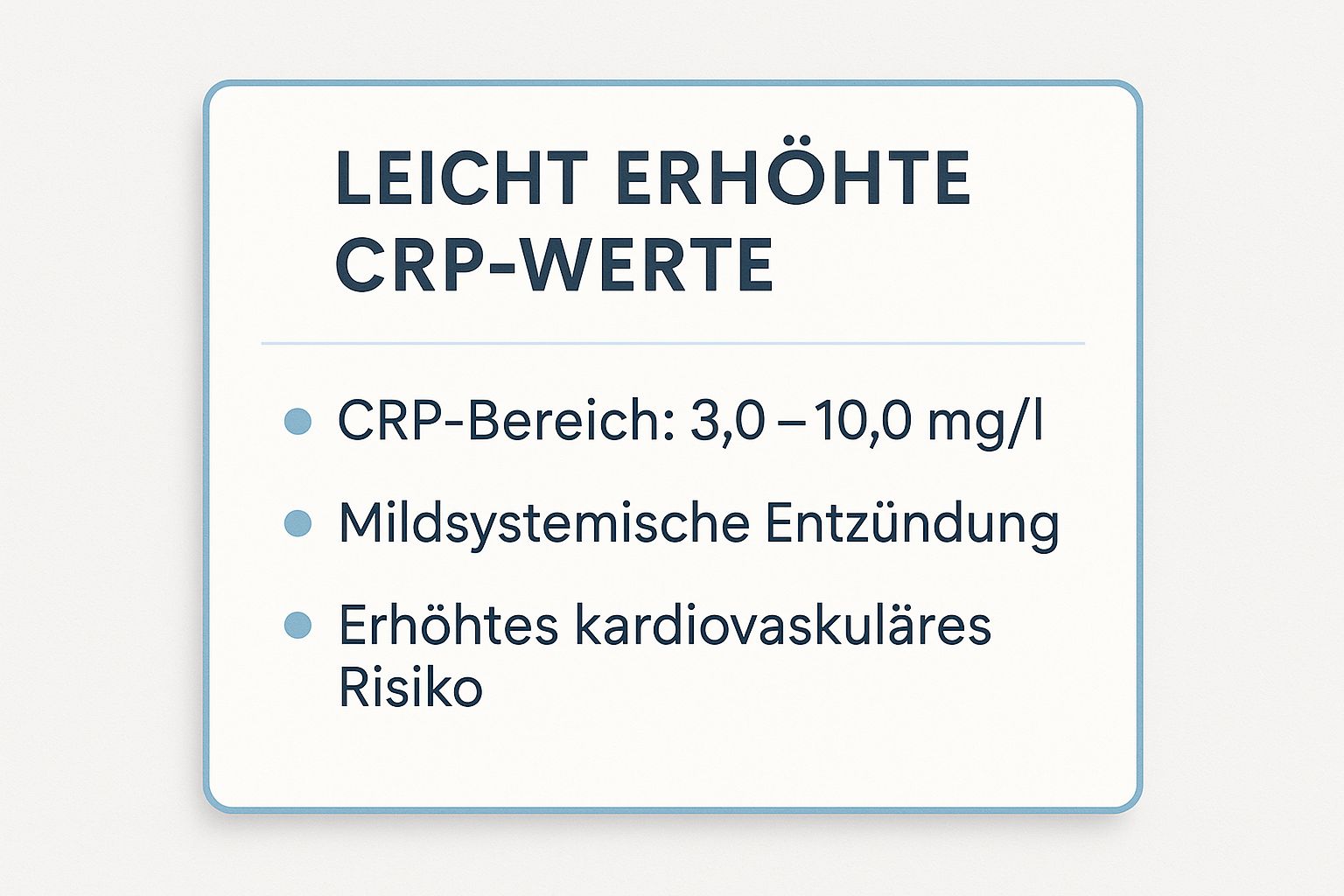 The visualization makes it clear that even a mild elevation in C-reactive protein levels has systemic significance and should be taken seriously as an indicator of potential risks.
Analysis: What does a slightly elevated CRP level actually mean?
A level in this range is no reason to panic, but it is a clear call to action. It shows that your immune system is chronically mildly activated. This ongoing strain can damage blood vessels, promote insulin resistance, and contribute to the development of chronic diseases. The causes are varied, ranging from lifestyle factors such as stress and diet to undiagnosed health problems.
What this means for you: A CRP level between 3.0 and 10.0 mg/L is a diagnostic window. It gives you the opportunity to identify the underlying causes and take proactive steps before serious diseases develop.
Everyday examples
- People with metabolic syndrome: People with abdominal fat, high blood pressure, and impaired sugar and fat metabolism often have consistently slightly elevated CRP levels. Fat tissue, particularly around the abdomen, produces pro-inflammatory messengers.
- People with chronic stress: Ongoing psychological or physical stress leads to the continuous release of stress hormones, which affect the immune system and therefore inflammatory markers such as CRP.
- Early autoimmune diseases: In the early stages of diseases such as rheumatoid arthritis, C-reactive protein levels may already be slightly elevated before clear symptoms appear.
- After a vaccination: A temporary, slight increase in CRP levels after a vaccination is a normal and expected reaction of the immune system and usually subsides quickly.
Your guide: How to deal with slightly elevated levels
If your CRP level falls within this range, it is crucial to find the cause and take targeted measures.
- Find the cause: Talk to your doctor about further tests. Tests for blood sugar (HbA1c), blood lipids, liver values, or specific autoimmune markers can help narrow down the source of the inflammation.
- Optimize your lifestyle: This is the most powerful lever. A consistently anti-inflammatory diet, regular moderate exercise, stress-management techniques (e.g., yoga, meditation), and sufficient sleep are essential.
- Monitor the progression: A single value is only a snapshot. Have your C-reactive protein levels measured again after a few months to see whether your measures are working. The trend is crucial here.
3. Moderate Elevation (10.0–100.0 mg/L)
When the C-reactive protein levels rise to the range of 10.0 to 100.0 milligrams per liter (mg/L), this is a clear warning signal from your body. This range indicates an active, significant inflammatory process that goes beyond mild irritation. Such levels are typical of acute bacterial infections, major tissue injuries, or an active flare-up of a chronic inflammatory disease. A value this high is not something to ignore; it generally requires medical evaluation and targeted treatment to identify and address the cause.

Analysis: What does a moderate CRP elevation specifically mean?
A moderately elevated CRP level is an unmistakable indication that your immune system is working at full capacity to fight a serious threat. Unlike slight elevations, which may indicate subtle, chronic processes, this range reflects an acute and systemic response. The liver releases C-reactive protein in large amounts to support the immune defenses, for example by eliminating pathogens or damaged tissue.
What this means for you: A CRP level between 10 and 100 mg/L is a valuable diagnostic guide. It confirms the presence of clinically significant inflammation and helps monitor the effectiveness of an initiated treatment.
Everyday examples
- Patients with bacterial pneumonia: In bacterial pneumonia, CRP levels often rise rapidly into this moderate to high range. The level serves as an important marker for assessing the severity of the infection and monitoring the success of antibiotic therapy.
- Postoperative inflammatory response: After major surgery, an increase in the CRP level is normal and expected because the body is responding to tissue injury. A decrease in the levels in the days after the procedure signals an uncomplicated recovery.
- Active flare-up of rheumatoid arthritis: People with chronic inflammatory diseases such as rheumatoid arthritis or Crohn’s disease often experience a significant increase in their C-reactive protein levels into this range during a flare-up, reflecting disease activity.
Your guide: How to deal with moderately elevated levels
A value in this range requires active collaboration with your doctor. The goal is to identify the cause and provide targeted support for the healing process.
- Compare symptoms and other markers: An elevated CRP value should always be considered in the context of your symptoms (e.g., fever, pain) and other laboratory values (such as leukocytes) to obtain a complete picture.
- Monitor treatment success: CRP is an excellent marker for monitoring progress. With effective treatment (e.g., antibiotics or anti-inflammatory medications), the levels should fall again. Regular checks show whether the treatment is working.
- Nutrition as support: While medical treatment is the priority, an anti-inflammatory diet can support the body. Make sure you do not have any nutrient deficiencies that could impair your immune function. To get a comprehensive overview of your nutritional status, you can test for nutrient deficiencies and take targeted action.
4. Severe elevation (100.0–200.0 mg/L)
Extremely high C-reactive protein levels in the range of 100.0 to 200.0 mg/L are an unmistakable alarm signal. They indicate a massive, acute inflammatory response that has affected the entire body. Such values are typically not measured in everyday infections or minor injuries, but are characteristic of serious medical emergencies requiring immediate and intensive treatment. In this range, CRP acts as a critical marker, indicating to the medical team that a severe systemic threat is present, such as a generalized bacterial infection or extensive tissue damage.
Analysis: What exactly does such a high CRP value mean?
A CRP value above 100.0 mg/L signals an overwhelming activation of the immune system. The body is engaged in an acute defensive battle against a serious threat. The liver produces massive amounts of CRP in response to pro-inflammatory messengers. This value is a direct indicator of the severity of the inflammation and helps doctors assess the urgency of the situation and monitor the effectiveness of the treatment initiated. A rapid increase or persistently high value in this range requires aggressive medical intervention.
What this means for you: At this level, the CRP value is no longer a preventive marker but a crucial tool for acute disease management. It serves as a key signal for diagnosis and guiding emergency treatment.
Everyday examples
- Severe sepsis or septic shock: In sepsis, often referred to as blood poisoning, bacteria spread through the bloodstream and trigger a life-threatening systemic inflammatory response. C-reactive protein levels often rise far above 100.0 mg/L and are a key marker for diagnosis and monitoring disease progression.
- Extensive burns or trauma: Major injuries or severe burns cause extensive cell death and tissue damage. This triggers an intense inflammatory response, reflected in extremely elevated CRP levels.
- Severe bacterial meningitis: Purulent meningitis is a serious infection of the central nervous system. CRP levels typically exceed 100.0 mg/L in this condition and help distinguish it from viral forms, which are usually less severe.
- Serious surgical complications: After major surgery, complications such as a wound infection or peritonitis can occur and drive the CRP level into this critical range.
Your guide: What should you do in this situation?
With CRP levels of this magnitude, lifestyle changes are no longer the focus; immediate medical measures take priority. The instructions here are primarily aimed at clinical management.
- Requires immediate medical treatment: Such a level is a medical emergency. Identifying the cause and beginning targeted treatment (e.g., high-dose antibiotics) must take place without delay.
- Close monitoring: C-reactive protein levels must be measured serially, often daily. A decline in the levels is a good sign and indicates a response to treatment, while stagnant or rising levels require treatment adjustment.
- Source control: In addition to medication, it is crucial to identify and eliminate the source of the inflammation. This may mean surgically removing an abscess, treating a wound, or draining an infection.
5. Very high elevation (>200.0 mg/L)
Extremely elevated C-reactive protein levels above 200.0 milligrams per liter (mg/L) are a medical alarm signal at the highest level. They indicate a massive, systemic inflammatory response that is often associated with life-threatening conditions. Such levels signal that the immune system is fighting an overwhelming threat that has affected the entire body. At this point, the focus is no longer on optimizing lifestyle, but on acute intensive care interventions to prevent serious complications or organ failure.
Analysis: What does an extremely high CRP level specifically mean?
A CRP level above the 200.0 mg/L mark is a critical marker of an escalating inflammatory cascade. At this stage, the body's own defense response can itself become dangerous and lead to septic shock, extensive tissue breakdown (necrosis), or multiple organ failure. Monitoring C-reactive protein levels becomes a central tool for assessing the effectiveness of emergency treatment and closely managing the course of the disease. The rapid rise and potential decline of the CRP level provide the medical team with crucial information about the body's response to therapy.
What this means for you: Extremely high CRP levels are an indicator of a medical emergency. The priority is rapid identification and treatment of the underlying cause to prevent a systemic catastrophe.
Everyday examples
- Septic shock with multiple organ failure: In sepsis, a life-threatening reaction of the body to an infection, CRP levels often shoot up to well above 200.0 mg/L. They reflect the overwhelming inflammation attacking multiple organ systems.
- Extensive burns: Severe burns affecting a large portion of the body surface cause massive tissue breakdown and an extreme inflammatory response, reflected in dramatically elevated CRP levels.
- Necrotizing fasciitis: This rare but aggressive bacterial infection, which destroys soft tissue, triggers fulminant systemic inflammation that manifests as extremely high CRP concentrations.
- Severe postoperative complications: After major surgical procedures, severe infections or other inflammatory complications may occur, driving the CRP level into this critical range.
Your guide: Management in a clinical emergency
During this critical phase, rapid and decisive medical action is vital for survival. These measures are reserved exclusively for physicians in a clinical setting.
- Intensive care monitoring: Patients with such high CRP levels require continuous monitoring of vital functions in an intensive care unit so that changes can be addressed immediately.
- Aggressive treatment of the cause: The underlying cause (e.g., a bacterial infection) must be treated immediately and aggressively, usually with high-dose intravenous antibiotics.
- Monitoring for complications: Patients must be continuously monitored for signs of organ failure (e.g., kidney, lung, or liver failure) so that supportive measures can be initiated in time.
- Close monitoring of CRP levels: Regular measurements of C-reactive protein levels are essential for evaluating treatment success. A falling level is a positive sign, while stagnant or rising levels require an adjustment of the strategy.
A deep understanding of the dynamics of C-reactive protein levels is invaluable for the clinical assessment of emergency situations.
6. Temporary increase in CRP after exercise (5.0-15.0 mg/L)
A slight to moderate increase in your C-reactive protein levels immediately after intense training is no cause for concern, but rather a sign of an effective training stimulus. This increase, typically in the range of 5.0 to 15.0 mg/L, reflects the body's natural and necessary inflammatory response to the strain. Intense physical activity, particularly strength or endurance training, causes tiny microtears in the muscle fibers. The body responds with a targeted, short-term inflammatory process to repair this damage and rebuild the muscles stronger. This process is fundamental to adaptation and improved performance.
Analysis: What does an elevated CRP level after exercise specifically mean?
A temporarily elevated CRP level after training indicates that you have created an effective stimulus for muscle growth and adaptation. It signals the start of repair and regeneration processes. It is important to distinguish this physiological increase from chronic, disease-related inflammation. The exercise-induced increase is temporary and generally returns to normal within 24 to 72 hours. It shows that your body is actively working to adapt to the strain and become stronger.
What this means for you: Monitoring C-reactive protein levels after training can help athletes optimize the balance between exertion and recovery. A level that does not decrease within 72 hours could indicate overtraining or inadequate recovery.
Everyday examples
- Marathon runners after a race: It is common for runners to have CRP levels after a marathon that indicate mild inflammation. This is a direct result of the extreme muscular and metabolic strain and a normal part of the recovery process.
- Strength athletes after a strenuous training session: Anyone who lifts heavy weights at the gym will also experience a temporary increase in CRP. This is a sign that the muscles have received the stimulus necessary for hypertrophy (muscle growth).
- Participants in high-intensity interval training (HIIT): Short but extremely intense periods of exertion during HIIT lead to significant metabolic stress and, consequently, a physiological inflammatory response that is essential for the body's adaptation.
Your guide: How to correctly interpret and use these values
Understanding exercise-induced CRP dynamics is crucial for smart training management and effective recovery.
- Wait before measuring: To obtain a meaningful baseline CRP level, you should wait at least 72 hours after an intense training session. Measuring too early could falsely suggest chronic inflammation.
- Optimize your recovery: If your CRP level rises sharply after training and remains elevated for longer, this is a signal to intensify your recovery strategies. These include getting enough sleep, eating a protein-rich diet, and using active recovery measures such as gentle stretching or foam rolling.
- Monitor the trend: For athletes, the individual value is not what matters; it is how it changes over time. A consistent, rapid decrease in CRP levels after training indicates good adaptability and a fit body. Learn more here about how you can specifically support your recovery through an optimized lifestyle, including in the context of healthy weight loss.
7. Cardiovascular risk (1.0-3.0 mg/L)
In modern preventive medicine, it is often no longer enough to consider only traditional risk factors such as cholesterol and blood pressure. This is where specific C-reactive protein levels come into play, more precisely high-sensitivity CRP (hs-CRP). A level between 1.0 and 3.0 mg/L in otherwise healthy people indicates mild but chronic inflammation and is classified as intermediate cardiovascular risk. This measurement provides additional prognostic information beyond traditional risk assessments and can help prevent cardiovascular disease more proactively.

Analysis: What exactly does a CRP level in this range mean?
An hs-CRP level between 1.0 and 3.0 mg/L is not a reason to panic, but it is an important warning sign. It indicates that a low-grade, persistent inflammation is present in the body, which can damage blood vessels and promote the development of atherosclerosis (hardening of the arteries). This value serves doctors, particularly in cardiology, as a crucial piece of the puzzle for assessing an individual’s risk of heart attack and stroke more accurately, especially when other risk factors such as low HDL cholesterol are present.
What this means for you: Measuring hs-CRP enables personalized risk assessment. It identifies people who would benefit most from intensified preventive measures, even if their traditional risk profiles may appear unremarkable.
Everyday examples
- Cardiology practices for primary prevention: An hs-CRP test is often added for patients at intermediate risk according to traditional scores. A level above 1.0 mg/L can tip the balance toward starting lifestyle changes or drug therapy, such as statins, earlier.
- Preventive health programs for executives: As part of comprehensive health check-ups, the hs-CRP level is used to obtain a complete picture of a person’s health. It helps uncover hidden risks and provide targeted recommendations for stress management and nutrition.
- Decision support for statin therapy: Large clinical studies have shown that people with low LDL cholesterol but elevated hs-CRP benefited significantly from statin therapy. The CRP level became the decisive biomarker for the treatment decision.
Your guide: How to handle a moderate-risk value
A value in this range is a call to action. You have the opportunity to actively reduce your risk before it becomes a serious problem.
- Prioritize your lifestyle: Before considering medication, dietary changes, regular exercise, and weight management are the most effective tools for combating chronic inflammation.
- Have the level confirmed: Since CRP levels can fluctuate, a single measurement in the moderate-risk range should be repeated after a few weeks to confirm a stable trend and rule out acute, temporary causes.
- Combine the markers: Do not consider your C-reactive protein levels in isolation. Discuss with your doctor how to interpret the level in the context of your other health markers, such as blood lipids, blood sugar, and blood pressure.
Conclusion: Your CRP level as a guide to your health
After this in-depth journey through the world of C-reactive protein levels, one thing should be clear: This single blood value is far more than just a number on a lab report. It is a window into hidden inflammatory processes in your body and a crucial compass pointing you toward better health and long-term well-being.
We have seen that interpreting CRP levels requires a nuanced approach. It is not about panicking over slight elevations, but about understanding your body's signals and taking proactive action. Distinguishing between normal, slightly elevated, moderate, and very high levels gives you and your doctor a clear basis for determining the next steps.
Your key takeaways at a glance
Let's summarize the key points you should take away from this article:
- CRP is a nonspecific marker: An elevated level indicates that inflammation is present, but not necessarily where or why. It is your body's smoke detector, prompting you to look for the fire.
- Context is crucial: A value of 8 mg/L may be completely normal after an intense workout, while the same value without an obvious reason could indicate chronic, low-grade inflammation. Interpreting your C-reactive protein levels must always take your individual situation into account.
- Chronic low-grade inflammation is relevant: Levels particularly in the range of 3.0 to 10.0 mg/L (low-grade inflammation) are insidious. They often cause no direct pain, but in the long term they can promote the development of diseases of civilization such as cardiovascular disease, type 2 diabetes, and other chronic conditions.
- You are in control: This may be the most important message. While acute infections require medical treatment, you can significantly influence chronic inflammatory processes through your lifestyle. Diet, exercise, sleep, and stress management are your most powerful tools.
Your next steps: From knowledge to action
Knowledge alone changes nothing. Only consistent application leads to results. So what are your specific, actionable next steps?
- Know your levels: If you do not know your current C-reactive protein levels, speak with your doctor about having them measured or use a home test. A hs-CRP test (high-sensitivity CRP test) is particularly informative for assessing the risk of cardiovascular disease.
- Analyze your lifestyle: Be honest with yourself. Where is there potential for improvement? Do you eat enough anti-inflammatory foods such as omega-3-rich fish, berries, and green leafy vegetables? Do you exercise regularly? Do you get enough sleep, and do you have effective strategies for managing stress?
- Rely on proven strategies: Focus on the fundamentals we discussed. Reduce your consumption of sugar, processed foods, and trans fats. Incorporate moderate exercise into your daily routine and prioritize restorative sleep.
Engaging with your C-reactive protein levels is not a one-time project, but an integral part of proactive health management. It is about taking responsibility for your body and taking the signals it sends you seriously. By learning to understand these levels and optimize them through targeted measures, you lay the foundation for a long, healthy, and vibrant life. Do not regard the CRP level as an enemy, but as a valuable ally on your journey.
Are you ready to delve deeper into the connections within your body and optimize your health based on data? At MYBODY Lab GmbH, we offer state-of-the-art laboratory tests that provide you with precise insights into your biomarkers, such as C-reactive protein and many others, so you can make informed decisions about your lifestyle. Visit us at MYBODY Lab GmbH and start your journey toward a better understanding of your body.



Share now:
Symptoms of mineral deficiency: How to recognize your body’s signs
Elevated CRP level: causes and tips for lowering it