
Understanding constant burping and pressure in your stomach & resolving them effectively
Why your stomach is constantly rebelling: What is really behind it!
You know this feeling all too well: After eating, and sometimes even while eating, the unpleasant cycle begins. Your stomach feels pressured, the burping simply will not stop, and a feeling of fullness weighs you down for the rest of the day. Many people dismiss these symptoms as minor and think they are just part of everyday life or getting older. But that is a misconception.
Imagine your body as a finely tuned orchestra. Every organ plays an important role in a complex symphony. When individual instruments—such as the stomach or intestines—fall out of rhythm, no harmonious melody is produced. Instead, you hear a dissonance that you feel as constant burping and pressure in your stomach. These signals are not trivial; they are important messages from your body that you should take seriously.
The hidden effects on your everyday life
The consequences of these seemingly harmless symptoms go far beyond mere discomfort. They creep into your everyday life and diminish your quality of life in ways you may not even notice right away.
- Social insecurity: A sudden burp during an important meeting or on a date can be extremely embarrassing. Constantly worrying about it makes you feel insecure around others and may even lead you to avoid such situations.
- Reduced performance: The constant pressure in your upper abdomen and the feeling of fullness drain your energy and concentration. Instead of focusing on your work or hobbies, your thoughts keep circling back to your stomach.
- Reduced enjoyment of life: The pleasure of eating is lost when you associate every meal with the fear of the symptoms that follow. Spontaneous restaurant visits with friends or enjoying a festive meal become a burden.
Ignoring these warning signs is like covering the flashing oil light in your car with tape. At first, everything seems to run normally, but in the long run, you risk serious engine damage.
You are not alone with your symptoms
Do you recognize yourself in these descriptions? Then there is an important message for you: You are not alone. Gastrointestinal problems are widespread among the population. A representative survey from 2017 showed that around 30% of people in Germany experience pressure in the stomach, a feeling of fullness, or burping at least occasionally. About one in ten even reported that these symptoms often or very often interfere with daily life. You can find more details about this survey on this overview page on the frequency of gastrointestinal complaints.
These figures make it clear that this is a widespread condition. But the good news is: You are not helplessly at its mercy. Instead of simply putting up with the symptoms, you can take action yourself. There are scientifically proven ways to identify the true causes and restore balance to your digestion. This article is your first step on that journey.
The fine line between normal and problematic burping

First, let’s dispel a widespread misconception: Burping is not inherently bad. You can think of your stomach as a balloon. Every time you swallow, eat, or drink, this balloon fills with a small amount of air. Carbonated drinks add even more gas. Your body has a clever mechanism to prevent overexpansion—it simply lets the excess air out again. This is a completely normal and even important process.
But when does this natural release become a warning sign of an underlying problem? The answer lies not in that you burp, but in how. The frequency, intensity, and especially the accompanying symptoms are what matter. An occasional burp after a meal is harmless. Constant burping and pressure in the stomach that bothers you for hours or even days, however, is a clear sign that your digestive system has gotten out of balance.
Aerophagia: The Unnoticed Habit of Swallowing Air
A common cause of excessive belching is so-called aerophagia—the unconscious swallowing of too much air. This may sound trivial, but the amount can add up surprisingly quickly. Studies suggest that people swallow more than 1,000 times a day. With each swallow, about 2 to 3 milliliters of air enter the stomach. This amounts to an impressive 2 to 3 liters of air that can accumulate and then escape each day. If you would like to learn more about these physiological connections, you can read more information about the normal frequency of belching.
Some everyday habits can significantly intensify this effect:
- Eating hastily: Anyone who gulps down their food automatically swallows more air.
- Talking while eating: Engaging conversations at the table also allow more air to enter the stomach.
- Chewing gum: The constant chewing motion stimulates the swallowing reflex and therefore increases air intake.
- Stress and nervousness: In tense situations, many people tend to breathe more shallowly and quickly and unconsciously swallow air more often.
- Carbonated beverages: They bring additional gas directly into the stomach, which has to escape.
When you should take a closer look
While simple aerophagia can often be resolved by adjusting your behavior, persistent belching can also indicate more serious problems. It then becomes a symptom of an underlying cause. The following table will help you better assess your symptoms:
| Signs of harmless belching | Warning signs of problematic causes |
|---|---|
| Usually occurs after eating or drinking | Occurs independently of meals and throughout the entire day |
| Short-lived and without any other symptoms | Accompanied by stomach pressure, a feeling of fullness, or pain |
| Odorless or smells like the food consumed | Has a sour smell and is accompanied by heartburn or a burning sensation in the throat |
| Disappears on its own | Continues for days or weeks and interferes with your daily life |
| Can be reduced through changes in behavior | Persists despite dietary changes and stress reduction |
If you recognize yourself more in the right-hand column, this could indicate an imbalanced gut microbiome, a Helicobacter pylori infection, or an undiagnosed food intolerance. For example, lactose intolerance can lead to increased gas production and therefore frequent belching. You can also read how to recognize and test yourself for lactose intolerance to investigate this possibility. Correctly interpreting your symptoms is the first important step toward finding the true cause.
The underestimated power of your gut flora in stomach problems

When looking for the causes of your stomach discomfort, you probably focus entirely on your stomach. But what if the real troublemaker is one level lower? Picture your intestines as a vast, pulsating metropolis inhabited by trillions of microorganisms. This community, known as the gut flora or microbiome, is much more than a passive aid to digestion. It is an active command center that influences your overall health—and especially your stomach.
When this delicate balance in your gut is disrupted—a condition experts call dysbiosis—it can trigger a domino effect. The result is often exactly the symptoms troubling you: constant burping and pressure in the stomach. Healthy gut flora functions like an intact ecosystem. Beneficial bacteria break down nutrients and keep harmful pathogens in check, while others cause problems when they become dominant.
How a disrupted gut flora leads to gas formation and pressure
How exactly does chaos in the gut lead to stomach problems? The key lies in excessive gas production. Certain “unfavorable” types of bacteria attack unused food residues, especially sugars and certain dietary fibers. Their breakdown produces large amounts of gases such as hydrogen, methane, and carbon dioxide.
Think of it like a poorly managed factory: Instead of producing goods efficiently, it releases huge amounts of smoke. Your gut works similarly:
- Excessive gas production: When the wrong bacteria take control, they ferment your food in a way that produces far more gas than your body can handle.
- Increased pressure: This excess gas distends your intestines and creates noticeable pressure that spreads to the upper abdomen and stomach.
- Burping as a release valve: Your body desperately tries to relieve this pressure. The gas takes the easiest route out—up through the esophagus, which you notice as constant burping.
In addition, the gut and brain communicate via the so-called gut-brain axis. Dysbiosis can slow the movement of the intestines (motility). This means that food remains in the system longer, giving gas-producing bacteria even more time to do their work and further intensifying the feeling of fullness.
Modern lifestyle factors as enemies of your gut health
Dysbiosis rarely develops overnight. It is usually the result of our modern way of life, which seriously disrupts our internal balance. The most common triggers include:
- Antibiotic treatments: They are often necessary, but they also significantly disrupt your gut microbiome. They kill not only harmful bacteria but also countless beneficial ones, leaving a gap that problematic germs are happy to fill.
- Unbalanced, highly processed diet: A diet low in fiber but high in sugar and artificial additives feeds the wrong bacteria and literally starves the good ones.
- Chronic stress: Ongoing stress affects not only your mood but also the composition of your gut microbiome and can make the protective intestinal lining more permeable.
- Too little exercise: Regular activity promotes the diversity and growth of beneficial gut bacteria and gets your digestion moving.
Understanding these connections is the first step toward improvement. It's not just about relieving the symptoms but addressing the root of the problem. By the way, your lifestyle isn't the only factor. Your genetic predisposition can also influence how your digestive system responds to certain factors. If you'd like to explore this topic further, you can read more in our article about the connection between digestive problems and genes. Understanding your gut microbiome is a powerful tool for regaining control of your digestive health.
Helicobacter pylori: the invisible saboteur in your stomach
Imagine having a tenant you know nothing about. It lives unnoticed in your stomach, and while it remains peaceful in some people, in others it causes constant unrest. This hidden roommate is Helicobacter pylori, a spiral-shaped bacterium that is remarkably adept at settling into the protective lining of your stomach. An estimated half of the world's population carries this germ, yet around 80% of those infected have no or hardly any symptoms and know nothing about their infection.
However, when this germ becomes active, it can cause persistent constant belching and stomach pressure. Many people affected attribute their symptoms to stress or a poor diet for a long time without recognizing the real culprit. But ignoring these signs can lead to more serious problems in the long term.
How the Germ Survives in the Stomach and Causes Problems
The stomach is essentially a hostile environment for life because of its aggressive acid. So how does Helicobacter pylori manage to survive there? The bacterium has developed a brilliant strategy. It burrows deep into the protective mucus layer of the stomach wall, where the acid concentration is lower. There, it produces a special enzyme called urease. This enzyme converts urea, which naturally occurs in the stomach, into ammonia.
You can think of it as the bacterium building a kind of protective shield out of ammonia that neutralizes stomach acid in its immediate surroundings. This clever trick ensures its survival but disrupts the delicate balance in the stomach. The ammonia irritates the stomach lining and weakens its protective function. This leads to chronic inflammation (known as type B gastritis), creating the basis for further symptoms.
Typical signs of a Helicobacter infection
The symptoms of an active Helicobacter pylori infection are often nonspecific, but revealing when they occur together. If you recognize yourself in several of the following points, this bacterium could be the cause:
- Dull pressure and pain in the upper abdomen: The irritated lining reacts more sensitively to normal stomach acid, causing a constant feeling of pressure.
- Frequent belching and heartburn: The inflammation can disrupt acid production and cause acidic stomach contents to rise more easily.
- Feeling full quickly: You often feel full after just a few bites because the inflamed stomach lining no longer functions properly and food remains in the stomach longer.
- Nausea and loss of appetite: Your stomach rebels against food, leading to a queasy feeling and reduced appetite.
- Unpleasant bad breath: The ammonia produced as a by-product can escape through the breath and cause bad breath that is difficult to explain.
An untreated, active infection is more than just unpleasant. In 10 to 20 percent of those affected, it can lead to stomach ulcers in the long term. The good news, however, is that an infection can be diagnosed and treated effectively. If you would like to find out whether Helicobacter could be behind your persistent stomach pressure and feeling of fullness, learn more about the connections in our article. Uncovering this invisible saboteur is often the crucial step toward lasting relief from symptoms.
When your body misinterprets food: Uncovering intolerances
Sometimes the cause of your symptoms is not what you eat, but how your body processes it. Think of your digestive system as a highly sensitive alarm system. Normally, it sounds the alarm only in response to genuine dangers, such as spoiled food. With a food intolerance, however, this system sometimes reacts to completely harmless substances as if they were intruders. This overreaction can manifest as constant belching and pressure in the stomach.
Food intolerances are true masters of disguise. They hide behind symptoms that you might never directly associate with a particular meal. Unlike a true food allergy, in which the immune system reacts immediately and intensely, the symptoms of an intolerance are often delayed and less dramatic—but chronic and extremely draining over time.
The most common troublemakers on your plate
Three of the best-known triggers of these symptoms are lactose, fructose, and gluten. The mechanism behind them is often very similar: The body cannot properly break down or absorb a particular component of food.
- Lactose intolerance (milk sugar): In this case, the enzyme lactase needed to break down the milk sugar in dairy products is missing. The undigested sugar reaches the large intestine, where bacteria ferment it. This produces gases that cause bloating, pressure in the upper abdomen, and belching.
- Fructose malabsorption (fruit sugar): The same applies to fruit sugar. When the transport proteins in the small intestine are overwhelmed, excess fructose reaches the large intestine, where bacteria also break it down, producing gas.
- Gluten sensitivity (gluten protein): Apart from the well-known condition celiac disease, some people are sensitive to gluten, which is found in many grains. The exact mechanisms are still being researched, but the intestinal reaction often leads to bloating, pressure in the stomach, and other digestive problems.
The tricky thing is that these intolerances can suddenly develop later in life, even if you have tolerated the foods in question without any problems for years.
Detective work for your stomach: tracking down triggers
The first step toward relieving your symptoms is identifying your personal triggers. A systematic food diary is your most important tool for this. For at least two weeks, record exactly what you eat and drink and when, and note when each symptom occurs. This will help you recognize patterns: Does the pressure in your stomach always occur after your morning yogurt? Or do you get severe belching after having an apple as an afternoon snack?
If you have a specific suspicion, you can try a targeted elimination diet. Strictly avoid the suspected food for two to four weeks and observe whether your symptoms improve. Then reintroduce it and pay attention to whether the symptoms return. This process requires patience but is often very revealing.
Modern testing methods can support and speed up this detective work. You can read more about how genetic tests can help identify intolerances in our related article. Identifying your triggers is a crucial step toward being able to enjoy food without symptoms again.
Silent reflux: when stomach acid secretly causes problems
Many people are familiar with classic heartburn—the burning sensation behind the breastbone. But did you know that the reflux of stomach acid can also manifest in completely different ways? This is where silent reflux comes in, also called laryngopharyngeal reflux by medical professionals. It is a hidden troublemaker that often makes itself known only through constant belching, stomach pressure, or a persistent scratchy feeling in the throat—without the typical burning sensation.
Imagine your stomach as a pot with a lid on it. This lid, the lower esophageal sphincter, is actually supposed to prevent stomach contents from escaping upward. With silent reflux, however, this muscle no longer closes properly. Instead of liquid acid, mainly gaseous components and tiny acid droplets rise up. These unknowingly irritate the sensitive larynx and throat area, causing symptoms you may never have associated with your stomach.
The atypical faces of silent reflux
Because the symptoms are so unusual, silent reflux often goes unnoticed for a long time. Those affected do not suffer from the familiar heartburn, but instead complain of a completely different range of symptoms. If the following points sound familiar, silent reflux could be the cause:
- Hoarseness, especially in the morning
- A constant feeling of a lump in the throat (globus sensation)
- Persistent, dry urge to clear your throat or irritation causing the urge to cough
- Difficulty swallowing
- Increased belching and diffuse pressure in the upper abdomen
These symptoms are often mistakenly interpreted as a cold, allergy, or simply a nervous habit. However, constant contact between the sensitive mucous membranes and stomach acid can lead to chronic inflammation over time.
Modern lifestyle factors as contributors
Silent reflux is not a rare problem. On the contrary, it is a widespread lifestyle-related disease encouraged by the way we live today. In Germany, around 20% of the population—approximately 16 million people—regularly suffer from reflux symptoms. You can read more about the prevalence and causes of heartburn and reflux on klinik-gastroenterologie.de.
Various factors can weaken the sphincter of the esophagus or increase pressure in the abdominal cavity, thereby promoting silent reflux:
- Chronic stress: Causes muscle tension that can also affect the stomach area.
- Large, high-fat meals: Put strain on the stomach, stay there longer, and stimulate acid production.
- Certain foods: Coffee, alcohol, chocolate, and spicy foods can relax the sphincter.
- Being overweight: Extra weight puts external pressure on the stomach.
The good news is that targeted adjustments to your lifestyle and diet can often lead to a significant improvement and help settle your stomach again.
Your compass to the answers: Which self-tests really help
Enough of the endless guesswork. Modern at-home self-tests can help you finally gain clarity about the causes of your constant belching and pressure in your stomach. They may even save you weeks of waiting for a specialist appointment. But be careful: Not every test advertised online delivers reliable results. Some promise more than they can deliver. That is why we are taking a close look at the most common options and assessing what they can really do.
Microbiome analysis: Insight into your inner ecosystem
Imagine being able to get a detailed map of your gut—a map that shows you exactly which bacterial strains live there, whether beneficial helpers are missing, or whether too many gas-producing microbes have taken up residence. That is precisely what a microbiome analysis using a simple stool sample makes possible.
This test is especially worth considering if you suspect that dysbiosis—an imbalance in your gut flora—is behind your symptoms. The results report often provides specific, personalized recommendations on how to restore your gut health through an adapted diet and specific probiotics.
Helicobacter pylori self-test: Track down the troublemaker
As already mentioned, the bacterium Helicobacter pylori is a common but often undetected cause of stomach problems. A Helicobacter pylori self-test, usually in the form of a stool antigen test, can quickly and reliably provide an initial indication of whether this microorganism is active in your stomach.
The procedure is straightforward and can be carried out discreetly at home. A positive result is a strong signal and should always prompt a visit to the doctor. The doctor can confirm the diagnosis and initiate targeted treatment, which often brings significant improvement after a short time.
Food intolerance tests: What they can really do
Particular caution is advised here. The market is full of so-called IgG tests that measure antibodies against hundreds of foods and often incur high costs. However, the scientific validity of these tests for diagnosing intolerances is highly controversial and they are not recommended by professional associations.
These tests often only show which foods your body has recently been in contact with—not whether they actually cause problems. Tests that specifically target known intolerances, such as lactose or fructose intolerance, are much more useful. However, keeping a structured food diary remains the best tool for identifying personal triggers.
To give you a better overview, we have summarized the most important self-tests in a table.
Overview of self-tests: advantages and disadvantages of the various testing methods
Comparison table of the most important self-tests for gastrointestinal complaints, including cost, significance, and procedure
| Test type | Cost | Significance | Procedure | Advantages | Disadvantages |
|---|---|---|---|---|---|
| Microbiome analysis | Approx. €120–200 | Medium to high: Provides information about the composition of the gut microbiome (dysbiosis, bacterial diversity). | Collect a stool sample at home and send it to the laboratory. | Comprehensive insight and personalized dietary recommendations. | Interpreting the results can be complex; it does not directly confirm a disease. |
| Helicobacter pylori test | Approx. €20–40 | High: Specifically detects the bacterium’s antigen in stool. | Antigen test using a stool sample or, less commonly, an antibody test using a blood sample collected at home. | Fast, affordable, and reliable as an initial indication. Medical confirmation is required. | Detects only this specific pathogen; other causes remain undetected. |
| IgG food test | Approx. €100–400 | Very low: Not scientifically recognized for diagnosing intolerances. | Collect a blood sample (often via finger prick) at home and send it in. | Easy to perform, with an extensive list of foods tested. | Often leads to unnecessary and incorrect dietary restrictions and high costs. |
| Breath gas test (lactose/fructose) | At the doctor’s office: covered by statutory health insurance; self-test kits: approx. €80–120 | High: Gold standard for diagnosing lactose and fructose intolerance. | After taking a test solution, you breathe into a tube at specific intervals. | Very accurate diagnosis of specific sugar intolerances. | Measures only one specific intolerance; preparation (diet) is required the day before. |
The table clearly shows that not every available test offers the same level of reliability. While tests for Helicobacter pylori or specific intolerances can provide clear indications, broad IgG tests should be viewed with great skepticism.
The following infographic shows you three basic steps you can take immediately to proactively address your symptoms.
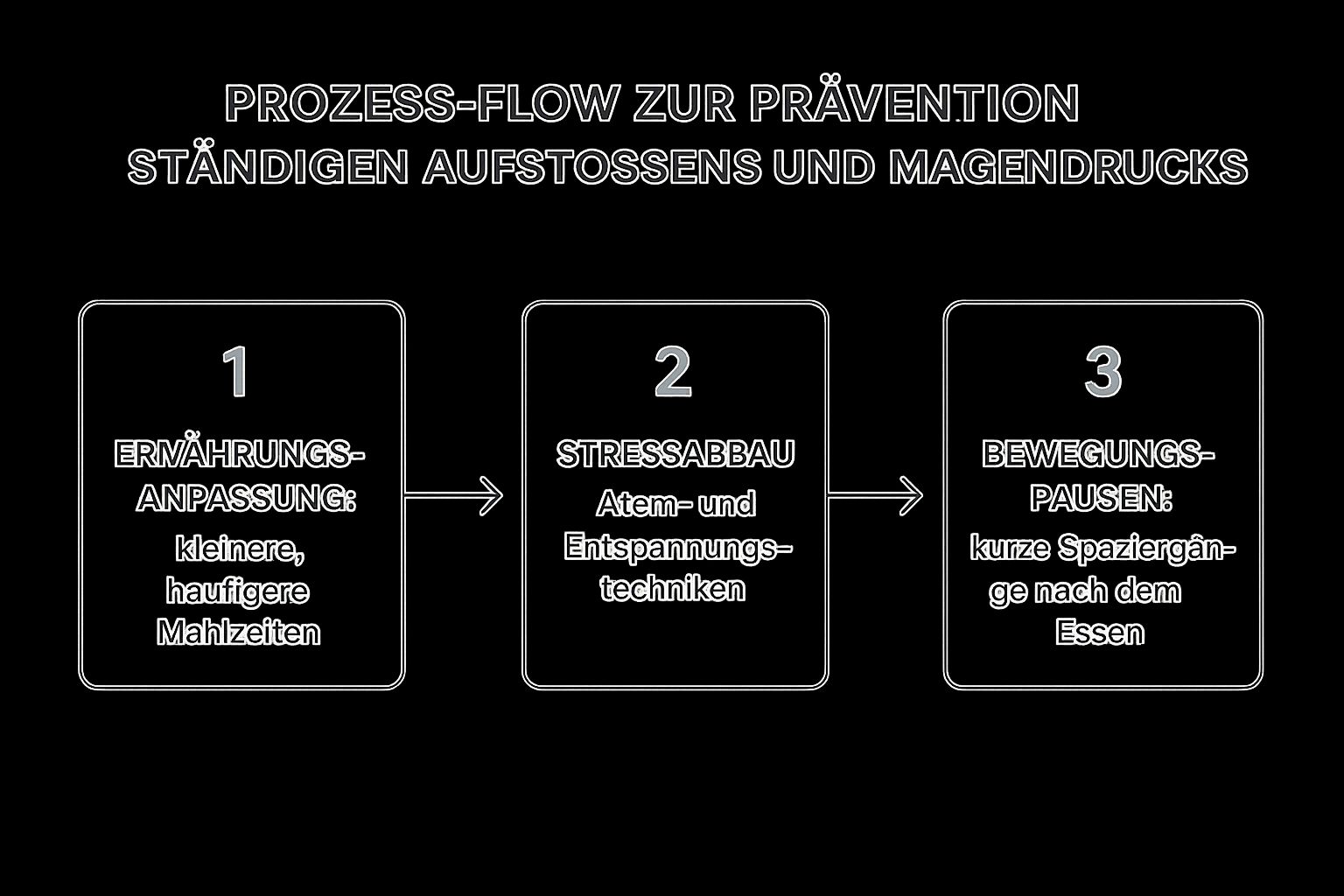
These basic lifestyle adjustments can already provide significant relief and form an important foundation before you decide on specific tests. It is important to have realistic expectations: Self-tests are valuable guides, but in the event of persistent or severe symptoms, they never replace a professional diagnosis by a doctor.
Your personal path to freedom from symptoms: step by step
Now it gets practical. You have understood the many connections between the gut, bacteria, and stomach complaints. Now it is time to turn this knowledge into a clear, actionable plan that will lead you out of the vicious cycle of constant belching and stomach pressure. Think of this plan as a personal navigator that safely guides you through the various options and helps you make the right decisions for your body.
This journey is not a sprint but a marathon. It involves targeted observation, strategic analysis, and consistent implementation. But with every step, you take greater control of your well-being.
Phase 1: Establishing the basics (immediate measures)
Even before ordering a single test, you can lay a solid foundation for improvement. These measures immediately relieve your digestive system and may already noticeably alleviate initial symptoms. They are the foundation for everything that follows.
- Mindful eating: Take your time with each meal. Chew every bite thoroughly, ideally at least 20 times. This not only reduces the amount of air swallowed but also significantly eases your stomach's workload.
- Smaller meals: Spread your food intake over five smaller portions throughout the day instead of three large ones. This prevents overloading the stomach and reduces pressure.
- Drinking breaks: Do not drink directly with your meals; instead, drink preferably 30 minutes before or after. This dilutes stomach acid less, allowing it to do its job optimally.
- Exercise after eating: A short, 10-minute walk after each main meal stimulates digestion and helps prevent uncomfortable gas buildup.
- Start a symptom diary: Starting today, keep a detailed diary. Note what you eat and exactly when which symptoms (belching, pressure, bloating) occur. This record will be invaluable for the next steps.
Phase 2: Targeted investigation of causes with a 4-week plan
Once the basics are in place, the real detective work begins. With a structured plan, you can systematically investigate possible causes and narrow them down.
Here is a practical action plan to guide you through the next four weeks. It helps you proceed systematically without feeling overwhelmed.
4-week action plan for persistent belching and stomach pressure
Structured weekly plan with specific measures, tests, and progress checks
| Week | Main focus | Specific measures | Tests/checks | Success indicators |
|---|---|---|---|---|
| Week 1 | Basic optimization & monitoring | Implement all immediate measures consistently. Focus on stress reduction (e.g., 10 minutes of breathing exercises daily). | Evaluate the symptom diary daily. | First slight reduction in symptom frequency or intensity. |
| Week 2 | Rule out Helicobacter pylori | Continue all measures. Perform a Helicobacter pylori self-test. | Test result. If the result is positive: Schedule a doctor's appointment. | Symptoms remain unchanged (indicating another possible cause) OR the test is positive. |
| Week 3 | Gut flora check | Continue all measures. Perform a microbiome analysis to uncover a possible imbalance. | Send in the sample. Continue keeping the diary and watch for patterns. | Gain insight into the composition of the gut flora and possible imbalances. |
| Week 4 | Plan analysis & next steps | Study the results of the microbiome analysis. Continue all measures and compare them with the new findings. | Evaluation of all data (diary, test results). | A clear picture of the most likely causes. Planning targeted dietary changes or doctor visits. |
This structured approach prevents you from going around in circles and guides you step by step toward the answers. In the end, you will have a clear picture of which factors are most likely influencing your symptoms.
Are you ready to take the first step and specifically address the causes of your stomach problems? The scientifically validated self-tests from mybody®x provide the reliable data you need on your journey toward being symptom-free. Discover now the possibilities offered by our ISO-certified laboratory analyses from MYBODY Lab GmbH and start living a life with greater well-being today.



Share now:
Helicobacter pylori rapid test: Your guide to diagnosis
The building blocks of your health: What nutrients really do