

What a microbiome test reveals about your gut health
Imagine your gut not merely as a digestive organ, but as a bustling metropolis. Trillions of microorganisms live and work in this city—your very own microbiome. A microbiome test is much like a detailed census: It precisely records who lives in this invisible city and how well they coexist. These tiny inhabitants have a far greater influence than just your digestion. They are crucial to your immune system, produce important vitamins such as B12 and K, and can even influence your mood and mental health through the so-called gut-brain axis.

This image shows how complex the microbiome is, often referred to as the “forgotten organ.” If an imbalance—known as dysbiosis—occurs within this community, it can have far-reaching effects on your health.
What exactly does a microbiome test measure?
A modern microbiome test does not simply count bacteria. Using DNA sequencing technology, such as 16S rRNA sequencing, it analyzes the genetic information of microbes in your stool sample. The result is a detailed breakdown of your gut ecosystem. The test provides specific data on the following points:
- Bacterial diversity: Think of a diverse microbiome as a resilient rainforest. It is more stable in the face of disruptions such as stress, an unhealthy diet, or medication. Low diversity, on the other hand, is often associated with chronic health problems.
- Key bacteria: The findings show you both beneficial bacteria (e.g., lactobacilli, bifidobacteria) and potentially problematic strains. You learn whether your “helpful allies” are present in sufficient numbers or whether unwanted germs have spread.
- Firmicutes/Bacteroidetes ratio: This ratio provides important insights into your metabolic health. A shift, for example, may indicate a tendency toward being overweight, as certain bacteria can extract more energy from food.
- Short-chain fatty acid production: Metabolic products such as butyrate, produced by beneficial bacteria from dietary fiber, are essential for the health of your intestinal lining and have an anti-inflammatory effect throughout the body.
Why the science behind the test is so important
Analyzing the microbiome is a demanding process that must be based on solid scientific foundations. Ensuring the exact functionality of a microbiome test is a decisive factor in its quality. The reliability of the results depends directly on the laboratory analysis and the scientific database used for comparison.
The importance of microbiome tests has grown significantly in Germany in recent years, partly due to new scientific findings. For example, the University of Augsburg has developed a computer-assisted method for correcting biases in microbiome studies and further improving the accuracy of such tests. You can learn more about these novel methods for correcting studies at the University of Augsburg. A high-quality test therefore provides not only raw data, but also a scientifically sound basis for specifically improving your health.
This is how easy your microbiome test is
The idea of a microbiome test seems complicated and intimidating to many people. In reality, however, the process is much simpler: the entire process is discreet, straightforward, and can be conveniently completed at home. You do not have to worry about uncomfortable doctor visits or complicated appointment scheduling. The process is designed to provide you with maximum privacy and comfort.
We support you every step of the way, from ordering the kit to receiving your personal health report. This makes the science behind your gut health understandable and accessible to you.
Step 1: Order and prepare the test kit
The first step toward gaining deeper insight into your gut health begins with a simple online order. Providers such as MYBODY Lab send a complete test kit directly to your home. It contains everything you need to collect your sample:
- A sterile sample tube containing a special stabilizing liquid. This liquid protects the DNA of your gut bacteria so it survives transport to the laboratory intact.
- A hygienic sample catcher that makes sample collection clean and easy.
- Detailed, easy-to-understand instructions to guide you through the entire process.
- A pre-paid return envelope for free shipping to the certified laboratory.
The following infographic shows how straightforward the process is, from collecting your sample to receiving your personal results report.
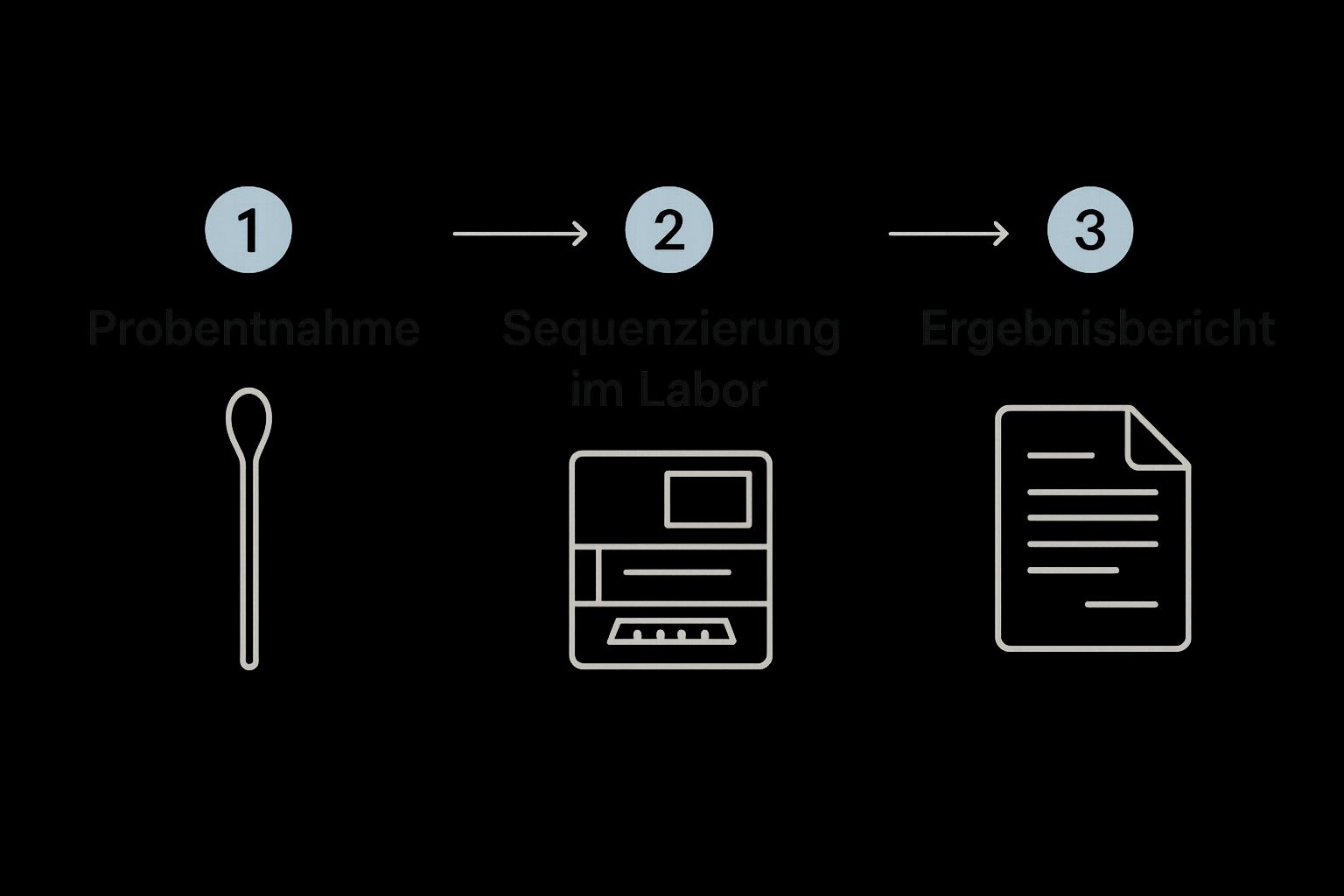
As you can see, the process is divided into three clear phases: easy sample collection at home, scientific analysis in the laboratory, and clear presentation of your detailed results.
Step 2: Discreet sample collection
Collecting the sample itself is an important but very brief step that takes only a few minutes. Thanks to the included sample catcher, the process is hygienic and effortless. You collect a small stool sample, place it in the tube containing the stabilizing liquid, seal it securely, and shake it vigorously. Then you pack the tube securely in the return envelope and take it to the post office. That’s it—the laboratory experts take care of the rest.
To avoid distorting the results, some preparation is important. For example, you should not have taken antibiotics in the weeks before the test, as they can significantly affect the composition of your microbiome. A sudden, drastic change in diet shortly before the test can also skew the results. The goal is to obtain a realistic snapshot of your everyday gut condition.
Step 3: Laboratory analysis and report preparation
As soon as your sample arrives at the laboratory, the most exciting part begins. Here, the DNA of the microorganisms in your sample is isolated and analyzed using a method called 16S rRNA sequencing. Think of it this way: Each bacterial species has a unique genetic “barcode.” The sequencing reads millions of these barcodes and assigns them to the corresponding bacterial strains.
This method is considered the gold standard for a microbiome test because it is precise, efficient, and cost-effective. Unlike the more complex shotgun sequencing, which analyzes the entire genome, 16S sequencing focuses on the key region for identifying bacteria. This allows laboratories such as MYBODY Lab to detect up to 5,000 different bacterial species.
The high-performance computers then compare this data with large scientific databases, interpret the results, and create your personal report. This evaluation process usually takes two to four weeks. This time is necessary to carefully process the enormous amount of data and provide you with well-founded, understandable, and actionable recommendations. However, recurring digestive problems can sometimes have other causes. Learn more in our article about genetic causes of digestive problems and how they can be distinguished from a microbiome imbalance.
What health problems your microbiome test can uncover
Imagine your microbiome as a sensitive early-warning system for your health. It is far more than just an aid to digestion. Often, an imbalance known as dysbiosis sends subtle signals long before clear symptoms become noticeable. A microbiome test can reveal these subtle changes and establish connections to symptoms that, at first glance, may not seem to have anything to do with the gut.

Research is increasingly showing how closely our gut bacteria are linked to chronic health problems. Whether persistent fatigue, skin rashes, or psychological stress—the root of many modern ailments could be hidden in the complex world of our gut flora.
Chronic digestive complaints and inflammatory bowel diseases
The most direct connection is, of course, with digestive problems. A microbiome test provides valuable clues as to whether recurring bloating, irregular bowel movements, or irritable bowel symptoms are attributable to dysbiosis. There is often a lack of beneficial bacteria responsible for producing butyrate—a key short-chain fatty acid that serves as the main source of nourishment for our intestinal lining.
Analysis is particularly important for chronic inflammatory bowel diseases (IBD). In Germany alone, around 8 million people suffer from conditions such as Crohn’s disease and ulcerative colitis, which are closely linked to the microbiome. Studies suggest that around 20 to 30 percent of the German population has dysbiosis, which can promote such inflammatory processes. A test helps identify specific bacterial patterns that indicate an increased risk of inflammation. Further insights into current clinical microbiome research in Germany show how these findings are changing the treatment of bowel diseases.
The connection to the immune system, skin, and allergies
Did you know that around 70% of your immune system is trained in the gut? A balanced microbiome is therefore the foundation of strong defenses. Low bacterial diversity is often associated with increased susceptibility to infections. But the effects go much further:
- Skin problems: Acne, atopic dermatitis, or rosacea are often associated with the so-called gut-skin axis. Pro-inflammatory bacteria in the gut can trigger systemic inflammation, which then manifests on the skin.
- Allergies and intolerances: A permeable gut barrier (“leaky gut”), often caused by dysbiosis, can allow incompletely digested food components to enter the bloodstream. There, they trigger an excessive immune response.
- Autoimmune diseases: Research is providing increasing evidence that an imbalance in gut bacteria may contribute to the development of autoimmune diseases such as rheumatoid arthritis or Hashimoto’s thyroiditis.
The following table provides an overview of common health problems that may be associated with an imbalance in the microbiome.
Common symptoms and their microbiome connections Overview of the most important health problems associated with microbiome imbalances
| Symptom | Microbiome connection | Frequency | Treatment approach |
|---|---|---|---|
| Irritable bowel syndrome (IBS) | Low bacterial diversity, lack of butyrate producers, overgrowth of certain strains | Approx. 10–15% of the Western population | Probiotics, a prebiotic diet, stress management, FODMAP diet |
| Chronic fatigue | Pro-inflammatory bacteria, “leaky gut,” lack of neurotransmitter-producing bacteria | Very common, often undiagnosed | Anti-inflammatory diet, gut restoration, targeted nutrient intake |
| Skin problems (acne, atopic dermatitis) | Disruption of the gut-skin axis, systemic inflammation caused by dysbiosis | Affects millions of people of all ages | Probiotics, a high-fiber diet, avoiding trigger foods |
| Depressive moods/anxiety | Lack of bacteria that produce serotonin and GABA, disruption of the gut-brain axis | Approx. 15–20% of the population over the course of their lives | Psychobiotics, Mediterranean diet, fermented foods |
These connections show how central a healthy gut flora is to overall well-being. A test can be the first step toward identifying the causes of persistent symptoms.
The gut-brain axis: How your gut affects your mental health
One of the most fascinating discoveries of recent years is the gut-brain axis—a direct communication highway between your gut and your brain. Your gut bacteria are tiny chemical factories that produce neurotransmitters such as serotonin and dopamine. These messenger substances directly influence your mood, stress levels, and even your behavior.
A microbiome test can reveal whether a deficiency of certain bacterial strains could contribute to the following problems:
- Depressive moods and anxiety: Studies show that people with depression often have an altered microbiome composition.
- Chronic fatigue and difficulty concentrating: Inflammatory signals from a disrupted gut can contribute to what many people describe as “brain fog.”
- Sleep disorders: The production of the sleep hormone melatonin is also closely linked to gut health.
By uncovering such imbalances, a microbiome test enables targeted measures that can fundamentally improve not only gut health but also quality of life. A healthy gut flora is about much more than simply feeling good in your stomach. Read our related article to learn why your intestinal microbiome is about more than just gut feelings and how it influences your health in many different ways.
How to decode the results of your microbiome test
The report for your microbiome test is finally here—but the wealth of data, charts, and scientific terms can seem quite intimidating at first glance. Don’t worry, that’s completely normal. We’ll guide you step by step through the most important findings and translate the technical jargon into clear, easy-to-understand language. This will make you an expert on your own gut health.
Think of your results not as a school report, but as a personalized map of your gut ecosystem. This map shows you exactly where your strengths lie and which areas you can specifically support to enhance your well-being and achieve your health goals.
Understanding key parameters: diversity and bacterial strains
One of the first and most important values in your report is bacterial diversity. Imagine your microbiome as a colorful, species-rich rainforest. The more different plant species (bacteria) live there, the more stable and resilient the entire ecosystem is against invaders (pathogens) or adverse conditions (such as stress or an unhealthy diet). High diversity is therefore a clear sign of a healthy, robust microbiome. For example, a report from MYBODY Lab shows you how your diversity compares with that of a healthy reference group.
In addition, the microbiome test breaks down the most important bacterial groups for you. There are a few key players here that you should know:
- Beneficial bacteria: These include well-known helpers such as bifidobacteria and lactobacilli. They are the diligent workers in your gut that produce vitamins, strengthen the intestinal lining, and train the immune system. A high proportion of these bacteria is an excellent sign.
- Butyrate producers: Bacteria such as Faecalibacterium prausnitzii are true superheroes for your gut. They convert dietary fiber into the short-chain fatty acid butyrate. Butyrate serves as the main energy source for your intestinal cells and has a powerful anti-inflammatory effect throughout the body.
- Potentially problematic bacteria: Some bacteria can, if they become too abundant, cause inflammation, bloating, or other digestive complaints. The test shows you whether there is an imbalance here that requires your attention.
To help you better interpret the most common measurements in your report, we have compiled an overview of the most important parameters and their significance for you.
Important microbiome parameters and their significance Explanation of the most common measurements in microbiome test reports
| Parameter | Normal value | Significance | Deviation |
|---|---|---|---|
| Bacterial diversity | High | A species-rich microbiome is more resilient and healthier—comparable to a diverse ecosystem. | Low diversity may be associated with inflammation, susceptibility to infections, and chronic diseases. |
| Firmicutes/Bacteroidetes ratio | Balanced (approx. 1:1 to 3:1) | This ratio provides indications of how energy from food is utilized. | An elevated ratio is often associated with overweight because more calories are absorbed from food. |
| Butyrate producers | High | These bacteria produce butyrate, a fatty acid that strengthens the intestinal wall and inhibits inflammation. | A deficiency can lead to a weakened intestinal barrier (“leaky gut”) and elevated inflammation markers. |
| Akkermansia muciniphila | Detected/within the normal range | This bacterium “maintains” the intestinal lining and is important for a healthy metabolism. | A low value is associated with metabolic disorders and a permeable intestinal lining. |
| Potentially pathogenic germs | Low/not detectable | Bacteria that can lead to digestive problems or infections when present in high concentrations. | An elevated value may indicate an imbalance (dysbiosis) and may require targeted measures. |
This table gives you a useful initial overview. The exact relationships and recommended actions are explained in detail in your personal report, so you know exactly what to do.
Decoding the Firmicutes-to-Bacteroidetes ratio
Another crucial value in many reports is the ratio of Firmicutes to Bacteroidetes. These two major bacterial phyla account for the vast majority of bacteria in the human gut. Put simply, Firmicutes bacteria are particularly good at extracting energy (that is, calories) from food. Bacteroidetes, on the other hand, specialize in breaking down complex plant fibers.
Research suggests that an elevated Firmicutes-to-Bacteroidetes ratio is often associated with overweight, as the body tends to absorb more calories from the same meal. A microbiome test can give you a clear indication of whether the composition of your gut flora is supporting or hindering your metabolism. An imbalance can be an important impetus for adjusting your diet to help you achieve your health goals more easily.
Microbiome test providers: How to find the right one
Now that you know what valuable insights a microbiome test can provide, the next question is: Which provider is right for you? The market for gut health analyses is growing, but the differences in quality, scope of services, and support can be significant. Choosing the right laboratory is crucial because it determines how accurate your results are and how helpful the recommendations based on them really are. It is about finding a partner that combines scientific accuracy with understandable explanations and actionable tips.

This image shows how a provider like MYBODY Lab places a clear focus on scientifically validated tests and personal results. The key is the combination of certified laboratory analysis and a user-friendly platform that translates complex data into practical health tips.
Quality criteria: What to look for when choosing
To distinguish a high-quality microbiome test from a less reliable one, you should pay attention to several key criteria. These aspects help ensure that your investment leads to well-founded and useful health insights.
- Analysis method: The established method for accurate analysis is 16S rRNA sequencing. This method has proven efficient and reliable for determining the diversity and composition of the bacterial community. Providers that use this technology are built on a solid scientific foundation.
- Laboratory standards: Look for certifications such as ISO standards. These ensure that the laboratory operates according to internationally recognized quality and safety guidelines—from sample receipt to data analysis. A German or European laboratory also offers short transport routes and complies with strict data protection laws (GDPR).
- Scope of the analysis: A good report offers more than just dry data. It should assess bacterial diversity, explain the Firmicutes/Bacteroidetes ratio, address important key bacteria such as Akkermansia muciniphila, and examine the production of short-chain fatty acids such as butyrate.
- Clarity and actionable recommendations: The best test results are useless if you do not understand them. Look for providers that translate complex data into clear graphics and plain language. Even more important are personalized, scientifically sound recommendations for nutrition and lifestyle.
- Customer service and advice: What happens if you have questions about your results? A good provider does not leave you alone with your results. The option of receiving personal advice from nutritionists or other experts is a decisive quality feature.
Providers compared: MYBODY Lab and international competitors
On the German market, MYBODY Lab has established itself as one of the leading providers, meeting many of these quality criteria. With a certified laboratory in Germany, clear result reports, and personal advice, the company stands out positively. But how does it compare internationally?
The following table provides an overview of important providers and their features:
| Provider | Headquarters | Analysis method | Price (approx.) | Special features |
|---|---|---|---|---|
| MYBODY Lab | Switzerland/Germany | 16S rRNA sequencing | 159 € | German laboratory, personal consultation, clear recommendations for action, strict GDPR compliance. |
| BIOMES | Germany | 16S rRNA sequencing | 159 € | Focuses on easy-to-understand reports and lists potentially pathogenic bacteria separately. |
| myBioma | Austria | 16S rRNA sequencing | 149 € | Strong scientific focus, double ISO-certified, offers a therapist network. |
| Viome | United States | Metatranscriptomics | €259 + shipping | Analyzes gene activity, not just the presence of bacteria; report and recommendations in English only. |
While providers from the United States, such as Viome, use technologically advanced methods, German and Austrian laboratories such as MYBODY Lab, BIOMES, and myBioma offer clear advantages: German-language support, easy-to-understand reports, and the assurance that data is processed in accordance with European data protection standards.
The acceptance of such tests is growing in Germany, as more and more people want to take an active role in managing their health. One study shows that individualized microbiome analysis is already accessible to more than 15 percent of the health-conscious population, particularly in urban areas. Learn more about the spread of microbiome analyses in preventive medicine to understand the growing importance of this topic. For most users, a provider such as MYBODY Lab is therefore an excellent choice, combining scientific depth with practical relevance and reliable service.
After the microbiome test: Your action plan for better gut health
Congratulations, you have taken the first important step: your personal microbiome test has given you detailed insight into the world of your gut bacteria. But these findings are not the finish line—they are the starting point. Now the exciting part begins: turning these insights into noticeable improvements for your health.
Imagine you were the gardener of your inner ecosystem. Your test has shown you which plants (good bacteria) need more care and where weeds (bad bacteria) may be growing rampant. With this knowledge, you can now deliberately fertilize, water, and tend to your garden to cultivate a flourishing, diverse ecosystem. It’s not about complicated diet plans, but about a smart strategy based on science that easily fits into your everyday life.
Module 1: The microbiome-friendly diet
Diet is the most powerful lever you have, because what you eat directly feeds your trillions of gut inhabitants. A microbiome-friendly diet does not mean deprivation, but rather making conscious and targeted choices. The goal is to strengthen beneficial bacteria and deprive harmful bacteria of the basis for survival.
-
Prebiotics—the superfood for your helpful bacteria: Think of prebiotics as high-quality fertilizer for your gut garden. These are special fibers that reach the large intestine undigested, where they serve as food for beneficial strains such as bifidobacteria and lactobacilli. These bacteria produce valuable short-chain fatty acids such as butyrate, which reduces inflammation and strengthens the intestinal wall.
- Top sources of prebiotics: Onions, garlic, leeks, asparagus, chicory, artichokes, as well as bananas and oatmeal.
-
Polyphenols—the colorful protectors: These plant compounds give fruits and vegetables their vibrant colors and are powerful antioxidants. They also serve as food for beneficial gut bacteria. The rule is simple: The more colorful your plate, the more diverse your microbiome.
- Top sources of polyphenols: Berries of all kinds, dark chocolate (with more than 70% cocoa), green tea, nuts, and high-quality olive oil.
- Fermented foods—natural probiotics: Foods such as yogurt, kefir, sauerkraut, and kimchi contain live bacterial cultures. They can directly enrich your microbiome with new, beneficial microbes. Integrate them into your diet regularly in small amounts.
Building Block 2: Use probiotics strategically
Your microbiome test may have shown that certain beneficial bacterial strains are present in only small numbers. In this case, probiotics—that is, taking live microorganisms in capsule form—can be a useful addition. However, instead of blindly choosing any product, you should specifically look for the bacterial strains that match your individual results.
If, for example, your test revealed a deficiency of Lactobacillus rhamnosus GG, targeted intake of precisely this strain can help strengthen your intestinal barrier. If your results indicated a deficiency of butyrate-producing bacteria, a combination of prebiotic fiber and specific probiotic strains is an effective strategy. Learn more in our guide about how a healthy gut through a microbiome test can be promoted.
Building Block 3: More Than Just Nutrition—Your Lifestyle Matters
Your gut health depends not only on what ends up on your plate. Other lifestyle factors also have a direct impact on the composition and function of your microbiome. A complete action plan therefore takes these areas into account as well:
- Stress management: Chronic stress can demonstrably reduce the diversity of your microbiome through the so-called gut-brain axis. Simple techniques such as meditation, yoga, or targeted breathing exercises can make a significant difference.
- Sleep quality: Sufficient, restorative sleep is essential for the regeneration of the entire body—including your gut. Sleep deprivation has repeatedly been linked to lower bacterial diversity.
- Regular exercise: Moderate exercise such as brisk walking, cycling, or swimming stimulates bowel movements and has been shown to increase the diversity of beneficial bacteria.
By gradually incorporating these building blocks into your daily routine, you can turn the insights from your test into lasting improvements for your health. Listen to your body's signals and become an active architect of your own gut health.
The Future of Microbiome Test Technology
Research into our microbiome is advancing rapidly and offers an exciting glimpse into the medicine of the future. Imagine that a microbiome test could not only reflect your current state of health but also enable precise predictions. Based on your gut flora, your doctor could determine which medications are most likely to work for you or how high your risk is for certain diseases. What sounds like science fiction is becoming increasingly close to reality.
Even today, artificial intelligence (AI) is helping decipher the vast and complex amounts of data from a microbiome test. AI algorithms identify tiny patterns and connections that remain invisible to the human eye. This allows them to uncover links between specific bacterial profiles and the success of therapies for chronic inflammatory bowel diseases or even cancer. This technology is the key to precision medicine, in which treatments are no longer based on a one-size-fits-all approach but are precisely tailored to each individual patient.
Personalized Probiotics: Tailored Helpers for Your Gut
The future of probiotics no longer lies in standard products from supermarket shelves, but in personalization. Based on the results of your individual Microbiome Test, customized probiotic blends could soon be formulated exclusively for you. They would contain exactly the bacterial strains that are underrepresented in your microbiome or that it needs to restore a healthy balance.
Imagine it this way: Your test report shows a deficiency of Akkermansia muciniphila, an important bacterium for maintaining the intestinal lining. Instead of taking a general probiotic, you receive a capsule that specifically promotes this one strain. This approach promises much greater effectiveness and could fundamentally change the treatment of metabolic and intestinal diseases.
Psychobiotics: Food for the soul from the gut
One of the most fascinating developments is research into psychobiotics. These are probiotics that have a demonstrably positive effect on mental health. Science is gaining an increasingly better understanding of how closely connected the so-called gut-brain axis is and how strongly our gut bacteria influence our mood, stress levels, and even our cognitive abilities.
Certain bacterial strains can produce important neurotransmitters such as serotonin and GABA, often referred to as the “happiness hormone” or “calming hormone.” A deficiency of these beneficial bacteria is increasingly being associated with depression and anxiety disorders. The vision is that a Microbiome Test could detect such an imbalance and that targeted psychobiotics could serve as a supportive therapy. This approach could complement psychiatry and psychotherapy with an entirely new treatment option with few side effects.
The technology behind the Microbiome Test is therefore evolving from a purely analytical tool into a dynamic instrument for personalized preventive healthcare and therapy. It lays the foundation for a form of medicine that understands people as complex ecosystems in which the smallest inhabitants play one of the biggest roles in our well-being.
Would you like to take the first step toward the future of your health today? With the MYBODY Lab Microbiome Test, discover what your gut flora reveals about you and receive scientifically sound, personalized recommendations. Start your journey toward greater well-being now.
Learn more about the MYBODY Lab Microbiome Test.



Share now:
Metabolic analysis is worthwhile: Here’s how it can improve your health
Helicobacter pylori rapid test: Your guide to diagnosis