

Why metabolic analysis is worthwhile: How it improves your health
Metabolic analysis basics: An overview of the methods
If you are wondering whether a metabolic analysis is worthwhile, you have come to the right place. The first step is understanding which methods are available and what they can offer you. Your metabolism is as unique as your fingerprint, and modern diagnostics offer various ways to unlock its secrets. Think of your body as a highly complex power plant. The analysis methods are like specialized technicians who examine different areas of this power plant to determine its efficiency.
The three main analysis methods
To get a clear picture, the analyses can be divided into three main categories. Each highlights different aspects of your body and provides specific information.
-
Breath gas analysis (spirometry): This method is like a snapshot of your current energy expenditure. By measuring oxygen uptake and carbon dioxide output at rest, your personal basal metabolic rate is determined precisely. The result shows you exactly how many calories your body burns at rest—crucial information if you want to manage your weight.
-
DNA-based tests: Here, we take a look at your genetic blueprint. These tests analyze which predispositions are present in your DNA. They can reveal whether you tend to metabolize fats or carbohydrates more efficiently. Learn more about how a DNA metabolic analysis can deepen your understanding of your body.
-
Blood tests: They provide a current biochemical snapshot of your body. Biomarkers such as blood sugar, blood lipids, hormone levels (e.g., thyroid hormones), and inflammation markers are measured. These values provide insight into your current metabolic state and possible imbalances.
The following chart shows which energy sources an average metabolism primarily uses at rest.
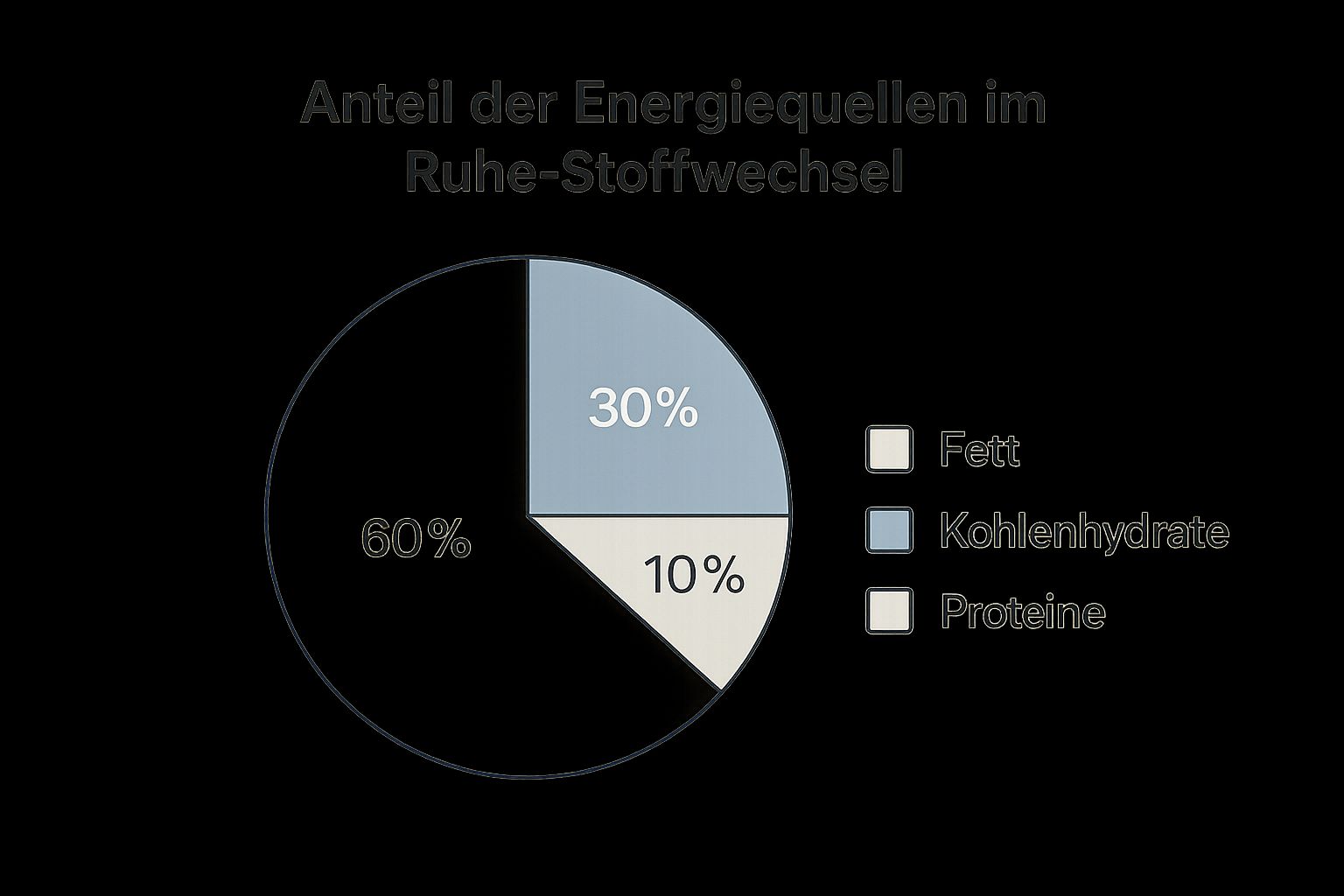
This visualization clearly shows that fats, at approximately 60%, are the main energy source at rest, highlighting the importance of efficient fat burning. Each method has its strengths and provides different pieces of the puzzle for the bigger picture of your health.
Comparison of metabolic analysis methods
The following table provides a quick overview of the key differences and similarities between the three methods presented, helping you make the right choice for your goals.
Overview of breath analysis, DNA testing, and blood analysis, including cost, duration, and informative value
| Method | Cost | Duration | Parameters | Accuracy |
|---|---|---|---|---|
| Breath gas analysis | approx. €80–150 | 5–10 minutes | Basal metabolic rate, fat vs. carbohydrate burning (at the present time) | Very high for the current metabolic state |
| DNA analysis | approx. €120–300 | Results after 2–4 weeks | Genetic predisposition for metabolic types (fat, carbs, protein), nutrient requirements | High for genetic predisposition (valid for life) |
| Blood analysis | approx. €50–250 (depending on scope) | Results after 1–3 days | Blood sugar, blood lipids, hormones, inflammation markers, vitamins | Very high for the current biochemical status |
In summary: Breath gas analysis is ideal for a precise snapshot of your calorie expenditure. DNA analysis provides deep insight into your genetic predispositions, while a blood test shows the current state of your metabolism and reveals possible deficiencies or imbalances.
Specific insights and practical benefits for your health

After looking at the various methods, the crucial question arises: What exactly does such an analysis offer, and how does this translate into everyday life? I will show you which insights were personally life-changing for me and how you can benefit from them too. Realizing that a metabolic analysis is worthwhile was one of the most important steps for my health.
In the past, I relied on generic calorie calculators. The measurement then brought a big surprise: My actual basal metabolic rate was almost 300 calories lower than the value calculated online. That explained why my attempts to lose weight so often failed—I often did not have a real calorie deficit at all. This one figure was the foundation of my later success.
Your personal metabolic dashboard
However, a good analysis offers much more than just your basal metabolic rate. You can think of it as a dashboard for your body that provides precise, data-driven insights into important areas:
- Macronutrient utilization: For example, my DNA analysis revealed that I am genetically a “fat type.” This means my body can obtain energy more efficiently from fats than from carbohydrates. With this knowledge, it became clear why a low-carb diet worked much better for me than the classic low-fat diet.
- Metabolic flexibility: This refers to your body’s ability to switch between burning fat and carbohydrates as needed. If this flexibility is limited, it can lead to energy dips and cravings. The analysis shows whether there is room for optimization.
- Ideal training zones: Instead of general heart-rate formulas, performance diagnostics (a form of metabolic analysis conducted under physical exertion) provide precise heart-rate zones. This allows you to find out in which zone you burn fat most effectively and tailor your training accordingly.
- Hormonal indicators and stress: Blood tests can reveal unexpected connections. In my case, a slightly elevated morning cortisol level was detected, indicating chronic stress. Understanding this connection between stress, sleep, and metabolism was crucial to increasing my energy levels.
Each of these points is a puzzle piece that helps you correctly interpret your body’s signals. Instead of blindly following different diets, you get a clear roadmap. You can adjust your diet and training so that they perfectly match your individual biology—that is where the practical benefit lies.
Target groups: Who can benefit most from metabolic analysis?

Is metabolic analysis only for professional athletes or the treatment of serious illnesses? Not at all. The question “Is a metabolic analysis worthwhile?” can be answered with yes for a surprisingly large group of people. Its applications are as diverse as people themselves. The goal is to obtain data-based answers to personal health questions instead of continuing to speculate.
An analysis can be particularly beneficial for you if you find yourself in one of the following situations.
When you finally want to lose weight sustainably
Are you frustrated because the scale isn’t moving despite exercising and maintaining a calorie deficit? This is exactly where an analysis can provide the crucial insight. It shows whether your basal metabolic rate may be lower than expected or whether your body is genetically predisposed to respond better to a diet rich in fat or carbohydrates. This knowledge of your individual metabolic type helps you find the right path through the diet jungle and avoid the dreaded yo-yo effect.
Being overweight is more than just an aesthetic issue; it is a key factor in metabolic health. The increase in obesity in Germany, which according to the Robert Koch Institute rose from 12% in 2003 to almost 20% in 2025, shows how important individualized solutions are. You can read more about this topic in our article on how a DNA test can help with weight loss.
For chronic fatigue and energy problems
Do you get enough sleep but still feel constantly tired and lacking in energy? Or are you struggling with unexplained digestive problems and fluctuating energy levels after meals? Such symptoms may indicate inefficient energy utilization or undiagnosed intolerances. A metabolic analysis can uncover the causes and show you how to adjust your diet to noticeably increase your energy levels.
For athletes and health-conscious people
If you want to improve your athletic performance or simply stay healthy in the long term, the analysis provides valuable data. You can find out which heart rate zones are most effective for your training or which nutrients your body needs for optimal recovery.
An analysis can also provide valuable insights for the following groups:
- People over 40: Metabolism naturally slows down, and an analysis helps adjust your diet and training accordingly.
- People with a family history: When there are cases of diabetes in the family, early analysis can be an important preventive tool for setting the course for a healthy future.
Metabolic analysis for diabetes and metabolic diseases

In addition to the goal of losing weight or boosting your energy, a metabolic analysis is particularly important for preventing and managing metabolic diseases such as type 2 diabetes. This is not just about optimization, but about actively shaping your future health. An analysis makes it possible to identify risks at an early stage and take targeted countermeasures, long before a disease manifests.
Early detection of prediabetes and insulin resistance
One of the greatest benefits of professional analysis is the ability to detect a prediabetic condition. At this stage, blood sugar levels are already elevated more frequently but do not yet meet the criteria for established diabetes. This condition often persists for years without noticeable symptoms.
A detailed blood analysis can reveal specific biomarkers that indicate impaired glucose tolerance or emerging insulin resistance. Insulin resistance means that the body's cells no longer respond sufficiently to the hormone insulin, which transports sugar from the blood into the cells. As a result, the pancreas must continuously produce more insulin. Over time, this strain can lead to exhaustion of the organ and ultimately to diabetes. Even if you still feel healthy, such values can be an important early warning signal.
The relevance of this topic in Germany is high. According to the German Diabetes Health Report 2025, at least 9.1 million people have type 2 diabetes, and around 450,000 new cases are added each year. Early analysis can help counteract this trend. The Diabetes Health Report at ddg.info provides further insights.
Derive concrete measures
The results of the analysis are far more than just numbers in a report. They provide a data-driven basis for taking targeted, individualized measures. Instead of general recommendations such as “eat less sugar,” you receive specific starting points:
- Adjustment of macronutrients: The analysis shows how your body responds to carbohydrates, allowing you to fine-tune your diet.
- Identification of inflammatory markers: Chronic, low-grade inflammation can worsen insulin resistance. Once identified, targeted anti-inflammatory foods can be incorporated into your diet.
- Assessment of visceral fat: This particularly metabolically active abdominal fat is a significant risk factor and can be assessed through the analysis.
These insights help you adjust your lifestyle in a way that demonstrably lowers your personal risk of metabolic disorders. Sometimes metabolic problems are also linked to digestion. Learn more in the article: Constant stomach pressure and a feeling of fullness – could Helicobacter be the cause?
Modern diagnostics: When the brain no longer “fires” properly
We already know how crucial metabolic analysis can be for the early detection of diabetes. But modern diagnostics now looks even deeper. It is no longer just about whether your metabolism has problems, but also why. One central concept that is gaining increasing importance is what is known as Brain Insulin Resistance, also called central insulin resistance.
Your brain: The command center of metabolism
For a long time, it was assumed that insulin resistance primarily affected muscle and liver cells. Today, research presents a more complex picture: Your brain is the central control center for your metabolism. If insulin action is impaired directly in the brain—referred to as central insulin resistance—vital regulatory processes become disrupted. The hormone insulin can no longer correctly transmit its signals for satiety and body-weight regulation.
The consequences are serious and explain why some people apparently gain weight uncontrollably despite making great efforts:
- The sense of satiety is impaired, which can lead to a constant feeling of hunger.
- The brain mistakenly signals the body to store more energy than it needs.
- This leads to an unfavorable distribution of fat, particularly the accumulation of dangerous visceral abdominal fat.
How an analysis uncovers these invisible processes
This is precisely where a modern metabolic analysis becomes useful, as it makes these hidden processes measurable. By combining detailed blood analyses that measure hormone and inflammation levels with genetic tests, the relationships between brain function, the hormonal system, and body weight can be deciphered. This creates an accurate picture of your individual risk profile.
The importance of these findings is also growing in medical practice in Germany, helping to assess cardiovascular risks more accurately. Impaired insulin action in the brain is a major factor in weight gain and the accumulation of abdominal fat. You can find further fascinating insights on this topic in the article Metabolic update on g-wt.de.
Such precise diagnostics enable entirely new, personalized treatment approaches. Instead of blanket dietary recommendations, treatment strategies can be developed that address the root of the problem directly. This not only relieves symptoms but also restores balance to fundamental metabolic processes and promotes your long-term health.
Costs, provider selection, and financing options
Once you have decided that a metabolic analysis is worthwhile for you, you face the next important question: How much does it cost, and how do you find the right provider? After all, your investment in your health should be worthwhile. The price range is wide and depends greatly on the method chosen and the extent of support provided.
A good analysis is more than just a test result; it is a tool for your personal health journey. That is why choosing the right provider is crucial.
What to look for when choosing a provider
The quality of the provider determines the value of your analysis. It is important to understand that it is not just the test itself but, above all, the subsequent support that makes the difference. Pay attention to the following criteria:
- Professional qualifications: Who evaluates your data? Are they doctors, nutrition scientists, or trained professionals? Sound expertise is essential for reliable recommendations.
- Technology used: Find out which analysis method is used. Modern DNA analyses or precise breath gas devices provide the most reliable data. Also check whether the laboratory is certified.
- Scope of the evaluation: A reputable provider will give you more than just raw data: you will receive an understandable report with specific, actionable recommendations for nutrition and lifestyle.
- Personal follow-up care: Does the provider offer personal counseling to discuss your results and answer your questions? This step is crucial for truly integrating the insights into your everyday life.
Cost overview and financing
The cost of metabolic analyses varies widely. Basic online DNA tests start at around 120 €, while comprehensive analyses at specialized institutes or medical practices with personal support can cost several hundred euros.
The following table gives you an overview of the typical costs and services offered by different providers to help you make your decision.
Overview of costs for metabolic analysis providers
Comparison of prices and services offered by different types of providers
| Provider type | Price range | Scope of services | Follow-up care | Covered by health insurance |
|---|---|---|---|---|
| Online providers | 120 € – 350 € | Usually a DNA test (saliva sample), with an automated report | Often not included or only available for an additional charge (e.g., chat support) | No, entirely self-funded |
| Nutrition counseling | 250 € – 600 € | Often breath gas or BIA analysis, with an individualized nutrition plan | Usually includes 1–2 personal consultation appointments | Partially subsidized if the consultation is provided by a certified professional |
| Sports institutes | 300 € – 800 € | Breath gas (spirometry) or lactate tests, with a focus on training management | Often included, with a focus on performance optimization | No, usually a self-funded service for athletes |
| Medical practice/clinic | €400 – €1,000+ | Comprehensive blood, urine, and/or respiratory gas analyses, medical diagnostics | Yes, medical consultation and treatment planning | Yes, when medically necessary (e.g., diabetes diagnosis) |
The table shows that more affordable online tests often offer less personal support, while specialized institutes and doctors provide a more comprehensive, but also more expensive, service. Your choice should depend on whether you are looking for general guidance or in-depth medical support.
Does health insurance cover the costs? In most cases, you have to pay for a metabolic analysis yourself, as it is often considered a preventive or lifestyle-oriented service. An exception applies when there is a clear medical indication. For example, if there is a suspected metabolic disease such as diabetes, a blood analysis prescribed by a doctor may be covered by health insurance. It is always worth discussing this individually with your health insurance provider and doctor.
A detailed overview of the entire process, from ordering to evaluation, can help you better understand how it works. If you would like to learn more, you can find a detailed description here of exactly how it works. When making your choice, also watch out for potential hidden costs for follow-up consultations or additional services to ensure you make a transparent decision.
My experiences and your next steps toward metabolic success
You now have a good overview of why a metabolic analysis can be a valuable decision for your health. But what do all these numbers and data mean in real life? To wrap things up, let me share my personal experiences, which made the decisive difference for me, and show you how to get started in the best way.
My own journey began with frustration over constant fatigue and the feeling that I was getting nowhere with weight loss. The analysis was the key for me to finally understand what my body really needs.
My key takeaways: What really matters
The most important lesson for me was this: Not all data is equally important. The information that I am genetically a “fat type” was interesting. However, the crucial insight was my actual basal metabolic rate. It was significantly lower than what standard calculators indicated, and finally explained why I was not making progress despite feeling that I was in a calorie deficit. Using this one figure as the new basis was the biggest lever.
It was also surprising how effective small adjustments were:
- Energy levels: I learned to plan my carbohydrates strategically around my workouts. The result was noticeably more stable energy throughout the day—with no dreaded afternoon slump.
- Integrating it into everyday life: Instead of strict prohibitions, the 80/20 rule worked for me. On Sundays, I prepare my meals for the next three days. Knowing why I choose certain foods makes it much easier to stay consistent in family life without becoming dogmatic.
- Challenges: My biggest obstacle was impatience. Physical change takes time. It helped me document my progress not only on the scales, but also in my energy levels and overall well-being. A simple notebook or app can really help here.
Your checklist for starting a new relationship with your body
Are you ready to better understand your metabolism and take control? Here are your next steps for successfully applying the insights from an analysis to your life:
- Choose the right analysis: What is your main goal? Are you primarily interested in your calorie needs (breath analysis), your genetic predispositions (DNA analysis), or your current health status (blood test)?
- Understand your results: Take enough time for the evaluation consultation. Don’t hesitate to ask questions until you truly understand the connections.
- Set priorities: Focus on the 1–2 most important recommendations. Trying to change everything at once often leads to frustration.
- Track your progress: Use an app like Oura or a simple journal. Record your meals, energy levels, and sleep quality to identify patterns and connections.
- Be patient: Your body needs time to adapt. Repeating the analysis after 6–12 months may be useful to review your progress and make adjustments.
If you feel that it’s time to replace assumptions with facts, the next step is simple. A DNA-based metabolism analysis from MYBODY-X is an ideal, straightforward starting point for decoding your personal metabolic code.
Are you ready for change? Discover the MYBODY-X DNA metabolism analysis now and start your journey toward greater energy and well-being!



Share now:
DNA Nutrition Test – My Experiences with a Genetic Test
Understanding microbiome tests: Your guide to gut health