

Drug interactions: How to recognize the invisible danger and protect yourself
Are you taking more than one medication at the same time? Then the topic of drug interactions is absolutely essential for your health. Such an interaction occurs when two or more medications interfere with each other. The result: One medication may suddenly work more strongly, less strongly, or in a completely different way than intended.
What a drug interaction really means
Imagine your body as a finely tuned machine. Every active ingredient in a tablet, liquid medication, or ointment has a clear purpose and a specific path for carrying it out. As long as everything proceeds as usual, the machine runs smoothly.
But what happens when you suddenly introduce several active ingredients into your system at the same time? It is a bit like a busy traffic intersection during rush hour. Traffic jams and detours occur, and in the worst case, accidents happen.
That is exactly what happens during a drug interaction in your body. The different substances can no longer be processed correctly, which leads to unpredictable consequences. Often, it is not just the effect of a medication that is weakened; entirely new, unwanted side effects can also occur.
It’s about more than just prescription pills
A widespread misconception is that only strong, prescription-only medications cause dangerous interactions. The truth is that the risk often lurks where we least expect it.
Your body’s potential “troublemakers” also include:
- Over-the-counter painkillers: A common medication such as ibuprofen or aspirin can significantly affect the action of blood pressure medication or blood thinners.
- Herbal remedies: St. John's wort is a well-known example. It speeds up the breakdown of other medications in the liver and can, for example, render the birth control pill ineffective.
- Dietary supplements: Even high-dose vitamins or minerals can block the absorption of important medications in the intestines.
- Food and beverages: The most famous example is grapefruit. Even a glass of juice in the morning can disable enzymes responsible for breaking down many medications. The result: The level of the active ingredient in the blood rises to dangerously high levels.
So it is not just about which medications your doctor prescribes for you. Every substance you introduce into your body can become part of this complex interplay.
This basic knowledge is the first and most important step toward staying in control. It helps you ask the right questions and confidently identify potential risks before they become a problem.
How your body reacts to a medication cocktail
Taking several medications at the same time is like managing a huge logistics center for your body. Each individual active ingredient must be absorbed, distributed throughout the body, processed, and finally excreted. Your liver and kidneys are the central hubs in this process, often working around the clock at full capacity.
If overload or an unfortunate combination occurs here, this sensitive system can quickly become unbalanced. The consequences are not always immediately noticeable, but they can have a major impact on the effectiveness of your treatment. Essentially, there are two main ways in which medications can interfere with each other.
When the logistics get disrupted: Pharmacokinetic interactions
Think of your liver as the main distribution center for medications. Special “employees” work here—so-called enzymes—that prepare each active ingredient for transport or breakdown. A pharmacokinetic interaction occurs when one medication affects these hardworking workers.
For example, one medication can simply block the breakdown of another. The result? A massive traffic jam on the “breakdown highway.” The concentration of the blocked active ingredient in the blood rises uncontrollably, which can lead to severe side effects or, in the worst case, even poisoning.
But the opposite can also happen: One medication can dramatically accelerate the breakdown of another. The active ingredient is then flushed out of the body so quickly that it has no time to do its job. As a result, the medication is effectively ineffective.
When the effect is directly sabotaged: Pharmacodynamic interactions
The second important type of interaction is the pharmacodynamic interaction. Here, the medications do not interfere with each other while traveling through the body, but directly at their target site—for example, at a specific cell or receptor.
Think of two musicians trying to play on the same stage. If they harmonize well, their effects can reinforce each other in a positive way. But they may also interfere with each other, or one may completely drown out the other. One medication can cancel out the effect of another by blocking its binding site. Or it may have a very similar effect and thereby amplify it to a dangerous level.
The tricky thing about a drug interaction is that it often is not immediately recognized as such. New symptoms are mistakenly interpreted as a new illness or as a simple side effect.
This infographic gives you a quick overview of the basic types of interactions and how they occur in the body.
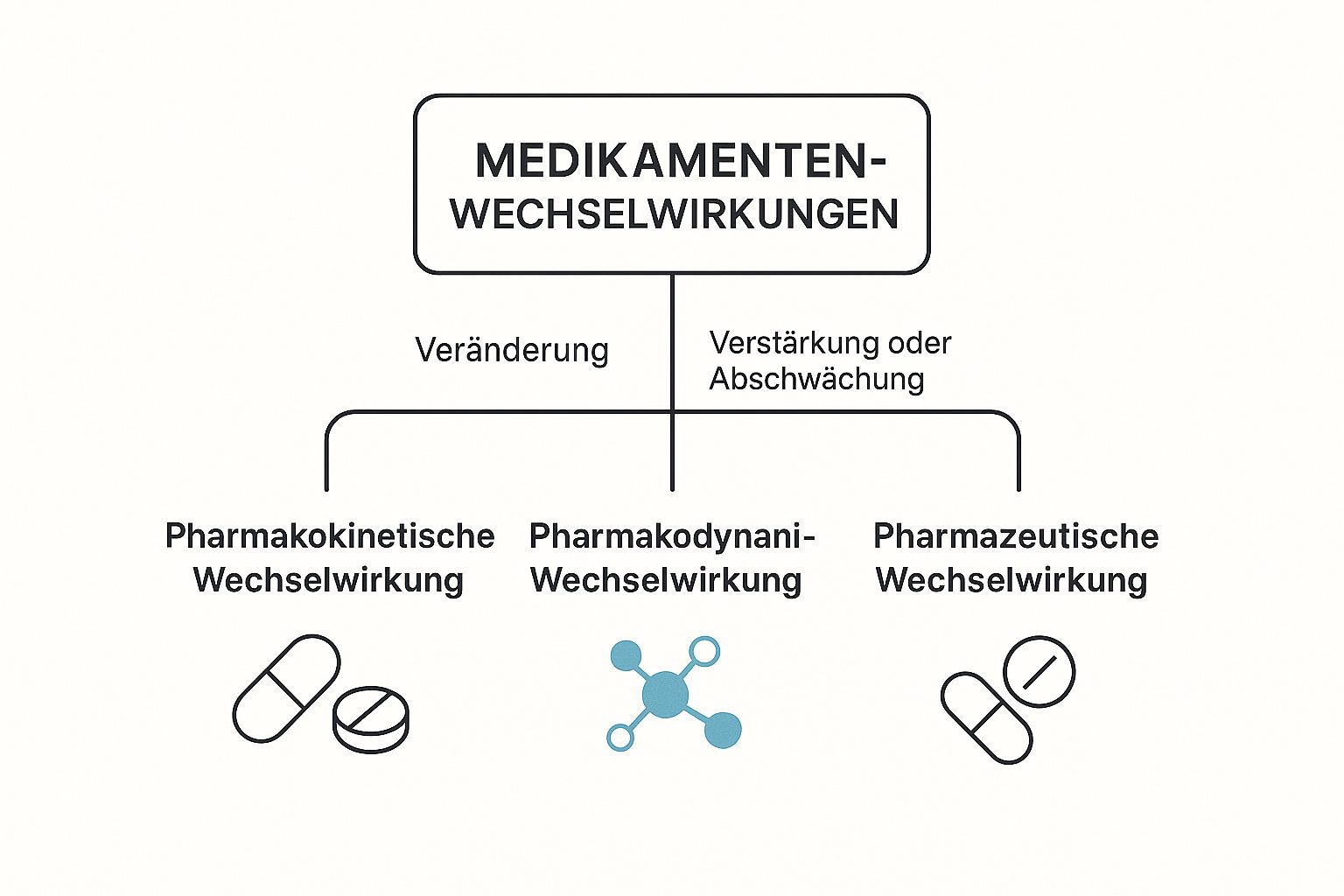
The visualization makes it clear that interactions can occur at entirely different levels—from absorption in the stomach to the actual site of action deep in the tissue.
The relevance of this topic is enormous. A study from Germany showed that about 20 to 30% of all adverse drug reactions are caused by such interactions. Among older patients in hospitals, up to 40% of side effects can even be attributed to a drug interaction. In outpatient care, the figure is still around 15%, resulting from these essentially preventable complications. You can read more about the findings in the full report.
Common Problem Candidates and Risky Combinations
Some medications are a bit like the loud guests at a party—they attract a lot of attention and influence the dynamics throughout the room. It’s much the same in your body: certain active ingredients are simply known to be involved in interactions more often than others.
Knowing these “problem candidates” is already half the battle when it comes to your safety. They are often widely used medications that require particular caution—not just highly specialized drugs. These substances can seriously disrupt your body’s delicate balance when they encounter the wrong partners.
The Usual Suspects in the Medicine Cabinet
Looking at statistics on drug interactions, certain groups of active ingredients appear again and again. Here are the key classes you should watch out for:
- Blood thinners (anticoagulants): Active substances such as Marcumar or warfarin are extremely sensitive. Even a simple painkiller such as ibuprofen can dangerously enhance their effect and drastically increase the risk of internal bleeding.
- Heart and blood pressure medications: Beta blockers, ACE inhibitors, or diuretics form the foundation of many treatments. However, if combined carelessly—for example with certain painkillers (NSAIDs)—they can strain the kidneys or cause blood pressure to drop uncontrollably.
- Antidepressants and psychotropic drugs: Older antidepressants in particular, or herbal remedies such as St. John’s wort, are known to strongly affect the breakdown of other medications in the liver.
- Certain antibiotics and antifungals: Some of these active substances can inhibit the liver enzymes responsible for breaking down many other medications. The result? An unintended overdose.
Understanding these risk groups is crucial. It’s not about causing fear, but about raising awareness of the potential pitfalls. This way, you can ask the right questions.
Practical examples you should know
Theory is one thing, but concrete everyday examples make the danger truly tangible. Take over-the-counter St. John’s wort—a very common but often underestimated interaction.
If you take this herbal remedy for low mood, it stimulates liver enzymes. The result: Other medications, such as the birth control pill, are broken down much faster than intended. This can cause the contraceptive effect to be completely lost without you noticing.
The following table gives you a quick overview of other critical combinations that commonly occur in everyday life.
Examples of common interactions and their consequences
This table shows practical examples of medication combinations that can lead to interactions and explains the potential effects on the body.
| Drug class 1 | Drug class 2 | Possible consequence of the interaction |
|---|---|---|
| Blood thinners (e.g. Marcumar) | NSAID painkillers (e.g. ibuprofen) | Increased risk of bleeding, as both affect blood clotting. |
| ACE inhibitors (blood pressure medication) | NSAID painkillers (e.g. diclofenac) | Kidney damage or reduced effectiveness of the blood pressure medication is possible. |
| St. John’s wort (herbal) | Birth control pill (hormonal) | Loss of contraceptive protection due to accelerated breakdown of the hormones. |
| Statins (cholesterol-lowering drugs) | Certain antibiotics | Muscle pain and even severe muscle damage due to increased statin concentrations. |
| SSRI antidepressants | Certain migraine medications (triptans) | Risk of serotonin syndrome, a potentially life-threatening metabolic disorder. |
These examples illustrate how quickly seemingly harmless combinations can become problematic.
Another classic example is combining painkillers such as ibuprofen or diclofenac with blood-pressure-lowering ACE inhibitors. Both substances can reduce blood flow to the kidneys. When taken together, this effect can be so pronounced that kidney function is seriously impaired.
Such interactions can also affect the release of histamine, which is relevant for people with intolerances. If you would like to learn more about what histamine is and what role it plays in the body, simply read our detailed article on the subject: What is histamine.
The hidden dangers in your kitchen
The greatest risks of a drug interaction do not always lurk in another pill bottle. Sometimes they are hiding inconspicuously in your refrigerator or spice rack. Foods and beverages can dramatically alter the effects of medications, often without us even realizing it.
The best-known example is probably grapefruit. Just one glass of grapefruit juice can block certain enzymes in the intestinal wall that are actually responsible for breaking down many medications. The result? The active ingredient is not broken down as intended, accumulates in the blood, and its concentration can increase up to fivefold—a dangerous overdose may occur.
When food sabotages your treatment
But grapefruit is far from the only “troublemaker” on the menu. Many everyday foods can significantly disrupt the absorption, metabolism, or elimination of medications.
Here are some of the most important interactions you should know about:
- Dairy products and antibiotics: The calcium in milk, yogurt, or cheese can combine with certain antibiotics (such as tetracyclines) in the stomach to form poorly soluble clumps. As a result, the active ingredient is not properly absorbed into the bloodstream, and in the worst case, the treatment for the infection may fail.
- Licorice and heart medications: Licorice contains glycyrrhizin, which can seriously disrupt your body’s potassium balance. If you take diuretics at the same time, a dangerous potassium deficiency can develop, potentially even triggering cardiac arrhythmias.
- Green vegetables and blood thinners: Kale, spinach, and broccoli are true vitamin K powerhouses. This vitamin plays a central role in blood clotting. Anyone taking blood-thinning medications such as Marcumar must therefore ensure a preferably consistent intake of vitamin K. Excessive fluctuations can make the medication’s effect unpredictable.
- Caffeine and asthma medications: Some asthma inhalers or tablets have a stimulating effect on the nervous system. If you also consume a lot of coffee, this effect may be intensified. The result is often nervousness, a racing heart, or restless nights.
It is a misconception that “natural” always means “harmless.” Plant-based substances in particular can contain highly potent compounds that may significantly affect your medication.
Especially with medications that require very precise dosing—such as thyroid hormones—taking them correctly is crucial. L-Thyroxin should always be taken on an empty stomach, as food can reduce absorption of the active ingredient by up to 80 %. You can find more important information on this in our guide.
How to actively protect yourself from interactions
Knowing the risks of a drug interaction is the first important step. Now it is about actively using this knowledge for your safety. The good news: you are not helplessly at its mercy, but can stay in control with some organization and open communication.
Your most important tool for this is an up-to-date and complete medication plan. Think of it as your personal safety document—the indispensable foundation for every conversation with your doctor or pharmacist. Such a plan is so much more than just a loose collection of papers.
Your Complete Medication Plan
A truly helpful medication plan lists everything you take. Remember: Even products that seem harmless can play a role.
These points must not be missing:
- All prescription medications: Include the name, active ingredient, dosage, and when you take them.
- Over-the-counter preparations: The painkiller in your medicine cabinet, allergy medication, and herbal products such as St. John’s wort also belong on the list.
- Dietary supplements: Vitamins, minerals, and special herbal extracts must also be recorded.
- Special instructions for taking them: Do you take a medication with food, in the morning, or in the evening? Make a note of it!
This plan should be your constant companion. Take it with you to every doctor’s appointment and to the pharmacy. This gives everyone involved an immediate, complete overview, enabling them to assess potential risks much more effectively.
Your partners for greater safety
Alongside a good plan, the right people to talk to are invaluable. Your healthcare professionals are your most important allies in the fight against unwanted drug interactions.
Be proactive and don’t see your pharmacy merely as a place where you fill prescriptions. A regular pharmacy knows your medication history and can immediately check new prescriptions for potential conflicts.
Open and honest conversations are essential here. Don’t be afraid to ask questions. You don’t have to be an expert, but you should confidently stand up for your own safety.
A few simple phrases can help you:
- “I’m already taking the following medications. Is this new one compatible with them?”
- “Are there any foods or drinks I need to be particularly careful about with this medication?”
- “I also take [Name des Nahrungsergänzungsmittels]. Is that okay?”
Statistics from German pharmacies show how important these checks are: Around 10 to 15% of all medication plans contain at least one serious interaction requiring consultation with a doctor. This figure has even increased in recent years—a clear sign of how important taking responsibility for your own health is. You can find more details in the ABDA Statistical Yearbook.
In addition to personal advice, digital tools such as drug interaction checker apps can also provide initial guidance. While they can never replace a conversation with a professional, they can sharpen your awareness of potential risks.
By the way, your genes also play a role in how you respond to certain active ingredients. A DNA test for medication intolerances can show you whether your body may process certain medications more slowly or quickly, which can affect the risk of interactions.
Why a strong body is your best protection
Safe medication use does not begin at the pharmacy, but with you. Your body is the foundation of every treatment. The better shape it is in, the more smoothly it can process active ingredients—and the lower the risk of an undesirable drug interaction.
You are not merely a passive recipient of pills, but an active partner throughout the entire process. Your liver and kidneys are the central powerhouses responsible for breaking down and eliminating medicinal substances. When these organs function optimally, they provide the best safeguard for the safe metabolism of medication.
Strengthen your detoxification organs from within
You have the power to specifically support your detoxification organs and make your body more resilient. A nutrient-rich diet packed with antioxidants, vitamins, and minerals provides exactly the building blocks your liver and kidneys need for their daily heavy lifting.
Imagine giving your body's own “filter systems” the best tools so they can operate at full capacity. This not only strengthens your overall health, but also helps your body tolerate medication better and reduces the risk of complications.
A strong, well-nourished body is less susceptible to disruptions. By supporting your organs, you create the best possible conditions for safe and effective medication treatment.
Targeted dietary supplements can be a genuinely worthwhile addition here. Products that support liver health or strengthen the intestinal barrier can give your body the boost it needs. After all, the gut is the central hub for nutrient absorption and plays a huge role in your overall well-being.
A healthy lifestyle, combined with mindful nutrient intake, makes your body your best shield. This means you are well prepared not only for everyday life, but also for periods when you depend on medication.
Frequently asked questions about drug interactions
To wrap up, we’d like to answer a few typical questions that come up repeatedly in everyday life. Here are the answers, briefly and clearly, so you can resolve any lingering uncertainties.
Can I recognize the symptoms of an interaction myself?
Yes, new or suddenly more severe side effects are often the first warning sign. You may suddenly feel dizzy, be inexplicably tired, feel nauseated, or develop a rash. You should also take notice if a medication suddenly no longer works as it usually does.
If you notice such changes, don’t hesitate to speak to your doctor or pharmacist immediately. It’s really important to clarify the cause quickly.
How long should the gap between two medications be?
The idea that a standard two-hour gap is always sufficient is unfortunately a widespread myth—and not a safe solution. Some active ingredients can interfere with each other for many hours, and sometimes even days.
The only reliable method is to have a professional check them. Only your doctor or pharmacist knows the exact properties of your medications and can give you safe instructions on how to take them.
Are herbal remedies harmless?
No, this belief is a dangerous misconception. Herbal remedies also contain highly potent substances that can trigger strong drug interactions. A classic example is St. John’s wort: it can simply cancel out the effects of birth control pills or blood thinners.
Therefore, always inform your doctor fully about all the products you take—even those from natural sources that may seem harmless. This is the only way to ensure your treatment is safe.
Do you have more questions about your health? Then take a look at our FAQ section. We’ve compiled lots of additional information for you there.
Do you want to understand your body even better and actively support your health? At mybody-x.com, you’ll find modern health analyses that help you optimize your diet and lifestyle based on scientific evidence. Discover our tests now and take control of your well-being.



Share now:
Keto Diet: The Simple Guide for Beginners
Keto diet: what it involves and who it isn’t suitable for