

Why am I not losing weight despite dieting? 10 often-overlooked reasons
You stick rigidly to your diet, count calories, exercise—and still nothing changes on the scale. This frustration is not only understandable; it is also extremely common. The good news first: The reason is often not your discipline, but rather complex biological factors that unknowingly slow your progress. Let us take a look together at the hidden causes that may be behind it.
You are giving it your all, but the scale is not budging? You are not alone

The question “Why am I not losing weight despite dieting?” is asked by countless people every single day. When you are trying so hard and simply seeing no results, it is only human to doubt yourself.
But the truth is: Your body is not a simple calorie-counting machine. It is an incredibly complex system in which countless processes must work together perfectly. Often, it is not the obvious things, such as willpower, that make the difference. It is much more likely that invisible factors are sabotaging your progress.
Hidden obstacles on your journey
Imagine your body as a finely tuned orchestra. If even a single instrument is out of tune, the entire melody suffers. Losing weight is very similar.
The following factors can unknowingly interfere with your efforts:
- Your individual metabolism: Every body processes nutrients differently. What works brilliantly for your friend may have exactly the opposite effect on you.
- Hormonal imbalances: Stress hormones such as cortisol or an imbalance in thyroid hormones can directly block fat loss and even encourage your body to store fat.
- Unnoticed nutrient deficiencies: If your body lacks important vitamins or minerals, your metabolism runs on low power—no matter how little you eat.
- Your gut health: The trillions of bacteria in your gut influence how many calories you absorb from food and how your feelings of hunger and fullness are regulated.
This feeling of stagnation is not an isolated case. It is a widespread problem that shows how challenging the journey to your desired weight can be when you do not know the deeper causes.
The figures clearly confirm this: According to a representative forsa survey, 58% of people in Germany are affected by overweight. Although three out of four respondents have tried to lose weight at some point, almost half are dissatisfied with the result because the success simply does not last. Learn more about the challenges of losing weight in the study.
The cause often lies beyond diet alone. Sometimes, targeted relaxation techniques can help you find greater inner balance and stability, which can have a surprisingly positive effect on your weight-loss efforts. In this article, we examine the most common causes and show you how to finally identify the true levers of your success.
Your metabolism is as unique as your fingerprint
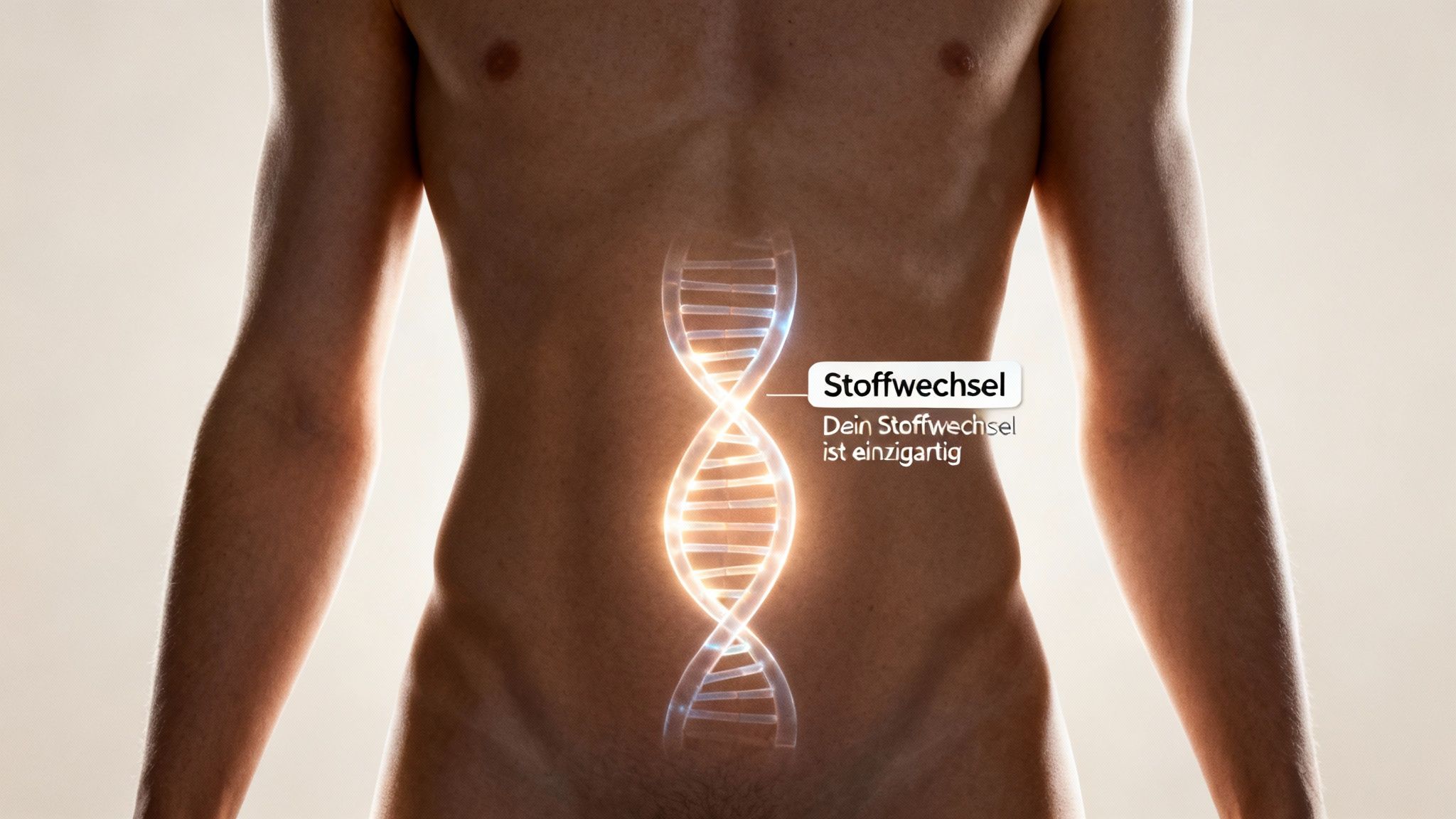 Does this sound familiar? Your friend can enjoy pasta, bread, and cake without gaining a single gram, while for you, even the mere thought of carbohydrates seems to go straight to your hips. The frustrating truth is that this is rarely due to a lack of willpower; it is often deeply rooted in your genetics.
Your metabolism follows a highly personal blueprint that is as unique as your fingerprint. This genetic code determines how efficiently your body can process the three major nutrient groups—fats, carbohydrates, and proteins.
Standard diets based on the “one-size-fits-all” principle completely ignore this biological fact. They give you a plan designed for an average person. But honestly: Who is average?
Your genetic metabolic type determines this
The science of nutrigenetics is making it increasingly clear how strongly our genes influence how we respond to certain foods. Perhaps you are a “carbohydrate type” who practically burns through energy from pasta and rice. But you could just as easily be a “fat type” whose body prefers to use fat as fuel.
Ignoring this predisposition is like trying to fill a diesel engine with gasoline. It simply will not run optimally. For example, if you naturally metabolize fats more slowly, an extremely high-fat diet like keto will probably feel more like a struggle than a path to success.
When you work against your own body, cravings, constant fatigue, and frustration are practically inevitable.
Standardized diet plans can even sabotage your weight-loss success. Only when you know which nutrients your body prefers can you develop a strategy that truly keeps you full, gives you energy, and effectively boosts fat burning.
Find your personal nutrition roadmap
This is exactly where modern analyses come in. With a mybody-x DNA metabolism analysis, you finally gain clear insight into your personal genetic blueprint. Instead of continuing to grope in the dark and trying different diets, the test provides you with a roadmap tailored precisely to your body.
You will find out in black and white:
- What type of metabolism you have: How your body really processes fats and carbohydrates.
- Your optimal nutrient requirements: How much protein you need to stay full and protect your muscles.
- Your personal food list: Which foods support you in losing weight and which ones you should avoid.
This personalized approach is the key to finally working with your body instead of against it. In our article, you can learn more about how your metabolism is rooted in your genes and how you can use this knowledge to your advantage.
How hormones and nutrients sabotage your weight-loss efforts
Sometimes the answer to the question “Why am I not losing weight despite dieting?” is not on your plate but hidden deep within your body. Your hormones and nutrient status are, so to speak, the invisible directors of your metabolism. When there is an imbalance here, even the most disciplined diet can simply come to nothing.
Imagine your hormone balance as a finely articulated mobile: Pull on one side, and the entire system falls out of balance. The stress hormone cortisol is a classic troublemaker here. Under constant stress, your body releases more of it and signals itself to conserve energy—preferably in the form of belly fat. At the same time, it often fuels cravings for sweet and fatty foods.
The thyroid as the pacemaker of your metabolism
Another decisive player in this system is your thyroid. It produces hormones that regulate your cells’ energy expenditure. If you have an undiagnosed underactive thyroid, your metabolism essentially runs on low power. The result: You feel tired and lethargic, and simply do not lose weight despite consuming few calories.
But it is not only hormones; very specific micronutrients are also essential for a functioning metabolism. If your body lacks these important building blocks, it cannot work efficiently.
- Vitamin D: The “sunshine vitamin” plays an important role in hormone regulation and fat metabolism. A deficiency is therefore often linked to weight problems.
- Iron: It is essential for transporting oxygen in the blood. If you lack it, you lack the energy for physical activity, and your metabolism becomes sluggish.
- Magnesium: This mineral is involved in more than 300 metabolic processes. A deficiency can not only trigger cravings for chocolate but also impair insulin sensitivity.
A nutrient deficiency or hormonal imbalance is like driving with the handbrake on. You may step on the gas (diet and exercise), but you still barely move forward.
These invisible blockages are frustrating, but you are not helpless against them. You can uncover them. Targeted analyses, such as mybody-x tests for nutrients or hormones, give you clarity about your individual biomarkers.
With this knowledge, you can specifically address deficiencies and restore balance to your body instead of continuing to grope in the dark. This data-driven approach is often what makes the crucial difference. If you would like to learn more about how you can support your body, you can find 7 effective tips for hormonal balance in our guide.
Why your gut is the secret boss when it comes to losing weight

Did you know that trillions of tiny inhabitants live in your gut and have a huge impact on your weight? This community of bacteria, viruses, and fungi—your gut microbiome—is much more than just a digestive aid. It is a kind of control center that helps determine whether you successfully lose weight or frustratingly remain stuck.
Imagine your microbiome as your own personal chef. Depending on which bacteria are in charge, your food is processed in completely different ways. Some bacterial strains are true masters at squeezing out every last calorie, even from fiber, and making it available to your body. Others, on the other hand, allow more energy to pass through unused.
In plain terms, this means that two people can eat exactly the same thing but absorb completely different amounts of calories because of their different gut flora. An unfavorable composition can therefore cause you to store more energy, even though you’re actually eating a healthy diet.
How your gut bacteria control your weight
But the power of your microbiome goes much further. It affects your weight on several levels and may be an unnoticed reason why you’re not losing weight despite dieting.
Your small gut inhabitants have a direct influence on:
- Your feelings of hunger and satiety: They produce messenger substances that signal to your brain whether you’re full or should eat more. An imbalance can trigger constant cravings.
- Your blood sugar levels: A healthy microbiome helps keep your blood sugar stable. This, in turn, prevents cravings and reduces fat storage.
- Chronic inflammation: Certain bacteria can promote low-grade inflammation in the body, which slows down metabolism and blocks weight loss.
Your gut is not a passive organ, but an active participant in your metabolism. A healthy gut flora is therefore one of the most important, yet often overlooked, prerequisites for lasting weight-loss success.
The good news is that you can actively influence the composition of your gut flora. A mybody-x microbiome analysis gives you a detailed insight into the world of your gut. You’ll discover which bacterial strains predominate in your gut and receive personalized recommendations on how to specifically nourish and support your “good” bacteria.
A thorough look at your gut health can be the crucial step toward finally understanding the real causes of your weight-loss roadblock. If you’d like to learn more about how to care for your gut bacteria, you’ll find valuable tips on building up your gut flora in our guide.
How to uncover hidden calories and everyday pitfalls
You’re really making an effort and watching what you eat, but the number on the scale simply won’t budge? Often, it’s not the major indulgences that throw us off track. It’s the sum of the small, unconscious habits that quietly but effectively sabotage our success.
A splash of milk in your coffee here, a tiny piece of cake at the office there, or the supposedly “healthy” smoothie packed with fruit sugar—these small calorie bombs add up unnoticed throughout the day. We barely perceive them as part of our daily energy balance. An honest assessment can lead to genuine aha moments.
The power of small habits
But it’s about far more than just hidden calories in food. Our modern lifestyle is full of traps that directly slow down our metabolism and make losing weight a real test of patience.
- Sleep deprivation: Getting too little sleep disrupts your hormonal balance. The satiety hormone leptin decreases, while the hunger hormone ghrelin increases. Cravings are practically inevitable.
- Chronic stress: Constant pressure sends cortisol levels soaring. This stress hormone promotes fat storage, especially around the abdomen, and slows down the metabolism.
- Lack of everyday movement: Even if you exercise regularly, sitting at a desk for hours drastically reduces the number of calories you burn throughout the day.
It’s not about being perfect overnight. What matters far more is developing an awareness of these small but powerful saboteurs. Because you can only deliberately change what you know about.
These lifestyle factors are a huge, often underestimated problem. Studies confirm what many people know from personal experience: everyday routines often sabotage diet success. As a result, 51% of people fail to permanently integrate a healthy diet into their lives. At the same time, we are moving less and less—the distance we walk each day decreases by 300–500 meters per decade.
Many of these pitfalls are especially common at work. Valuable tips for healthy eating during the workday will help you avoid the typical office traps.
An absolutely crucial first step is knowing your actual calorie needs. Our guide to calculating calorie needs will help you establish a realistic and honest foundation for your diet.
Your personal roadmap to your goal weight
You now know the many possible reasons why the scales have stopped moving and are wondering, “What now?” No more guesswork. It’s time for a clear plan based on facts about your body—not general diet myths.
The key to success lies in putting the individual pieces of your health together into a complete picture. Instead of fixating on a single possible cause, a 360-degree view gives you the clarity you need to finally adjust the right levers.
Create your 360-degree health profile
Imagine combining the knowledge from different analyses to get a complete picture of your body. This is exactly where the mybody-x tests can work together and point you in the right direction:
- The DNA Metabolism Analysis is your genetic blueprint. It reveals whether you metabolize fats or carbohydrates more efficiently and how high your individual protein requirement is.
- The Microbiome Analysis gives you insight into your gut microbiome. You learn which bacteria support your metabolism and where you can make targeted changes with the right diet.
- The Nutrient Analysis reveals whether you may be lacking important vitamins or minerals that are unknowingly slowing down your metabolism.
This infographic helps you systematically uncover common everyday pitfalls that may be blocking your progress.

As the diagram shows, it is often a combination of several factors—such as sleep, eating habits, and stress—that causes the plateau.
A personalized plan doesn’t mean deprivation, but an intelligent strategy. You gain the confidence to eat exactly the foods and establish the habits that are most effective for your body.
For a “carbohydrate type” with a weakened gut microbiome, such a plan might look like this: main meals with complex carbohydrates such as oats or quinoa, along with lean protein and plenty of prebiotic foods such as leeks or asparagus to nourish the beneficial gut bacteria.
With knowledge about your body and the right tools, you can finally take back control. You stop fighting against your body and start supporting it strategically.
Frequently asked questions when nothing seems to work
Here, we answer some of the questions we encounter most often when, despite your best efforts, the number on the scale simply stops moving. Think of it as first aid and food for thought to help you realign your approach.
Could I be eating too little and therefore not losing weight?
Yes, absolutely. It sounds paradoxical, but it’s a classic stumbling block. If you reduce your calorie intake too drastically, your body goes into panic mode. It thinks a famine is imminent and switches to survival mode.
The result? Your metabolism slows down to conserve energy. Your body clings to every calorie, and weight loss comes to a standstill. Instead of fighting against your body, you need to learn to work with it.
Your body isn't a simple calculation where “less in” automatically means “less on.” An excessively low calorie deficit can slow down your metabolism and have exactly the opposite effect.
A mybody-x DNA metabolism test provides clarity. It shows you exactly how high your individual calorie and nutrient requirements really are—based on your genetics. This way, you give your body exactly what it needs to get your metabolism moving again instead of slowing it down.
How long does it take to see results after changing my diet?
Unfortunately, there is no one-size-fits-all answer, because every body is different. Some people notice the first results after just one or two weeks—whether on the scale, through increased energy, or because their favorite jeans fit more loosely again.
For others, it may take a little longer. This is often the case when underlying factors, such as a hormonal imbalance or an impaired gut microbiome, slow down the process. Give yourself time. Healthy—and above all, sustainable—weight loss is around 0.5 to 1 kilogram per week. Anything more is often just water loss and isn't lasting.
Does my age affect weight loss?
Definitely. As we get older, our bodies change, which often makes losing weight more challenging. Metabolism naturally slows down somewhat, and we tend to lose muscle mass. Less muscle also means a lower basal metabolic rate—meaning fewer calories burned at rest.
Hormonal changes also come into play, which women in particular feel during menopause. These can promote fat storage, especially around the abdomen. That's precisely why personalized analyses become so incredibly valuable as we age. They help you adapt your strategy precisely to your body's new needs instead of struggling with old rules that simply no longer work.
Are you ready to stop guessing and truly understand your body? At mybody-x, you'll find scientifically backed analyses that provide you with a clear roadmap for your health. Discover the right tests for your goals now at https://mybody-x.com.



Share now:
Why am I gaining weight despite a calorie deficit, and what you can do about it
Which diet is right for me and how to finally find it