
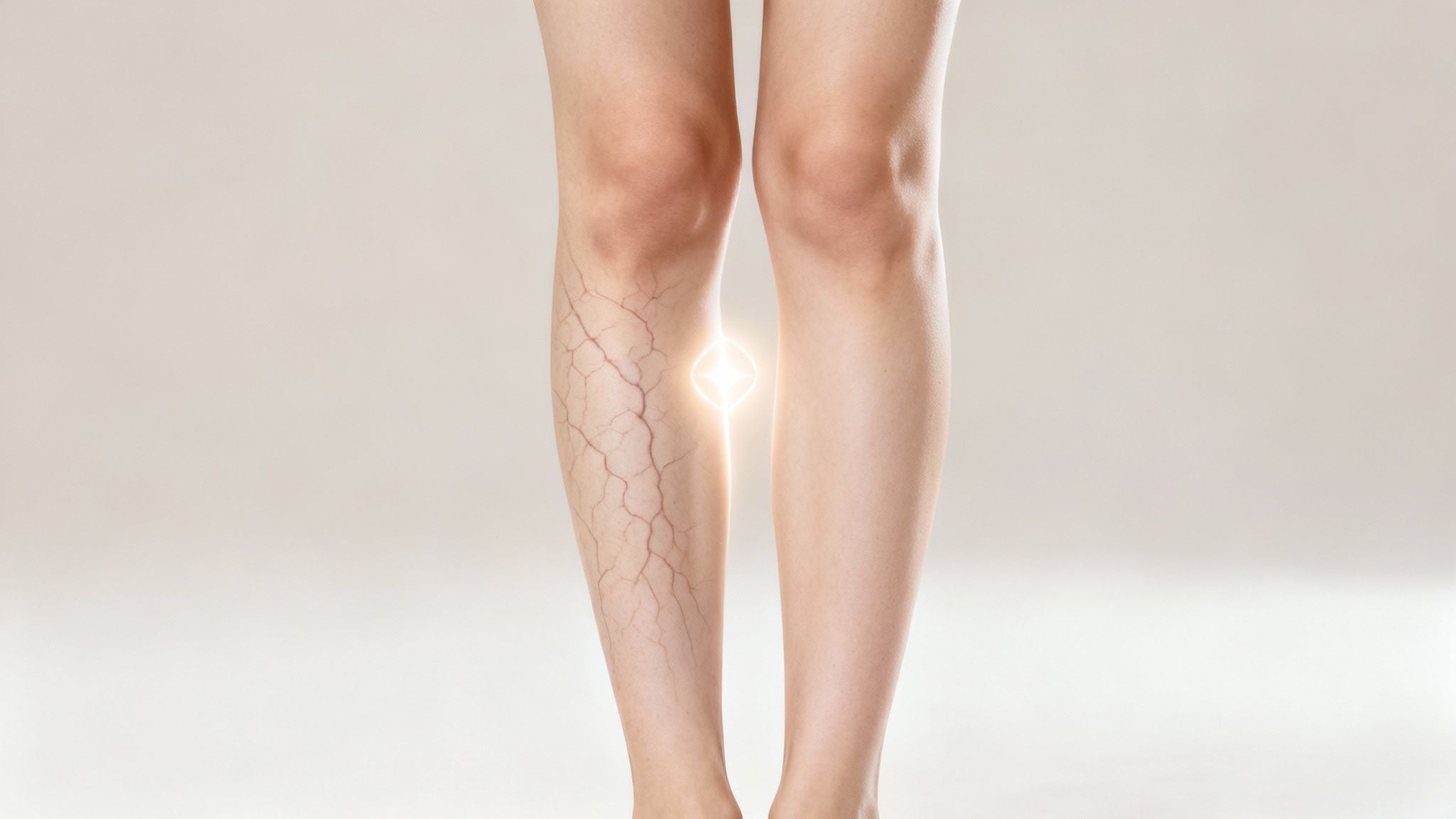
Removing varicose veins: For smooth, healthy legs
Before we look at how to remove varicose veins most effectively, let’s briefly clarify what they actually are. Many people know them as the bluish, sometimes lumpy veins that appear mainly on the legs. Essentially, these are enlarged, twisted veins sending a clear signal: blood is pooling here because its return to the heart is no longer working smoothly. This can be more than just a visual nuisance and can also cause noticeable discomfort.
What you should know about varicose veins
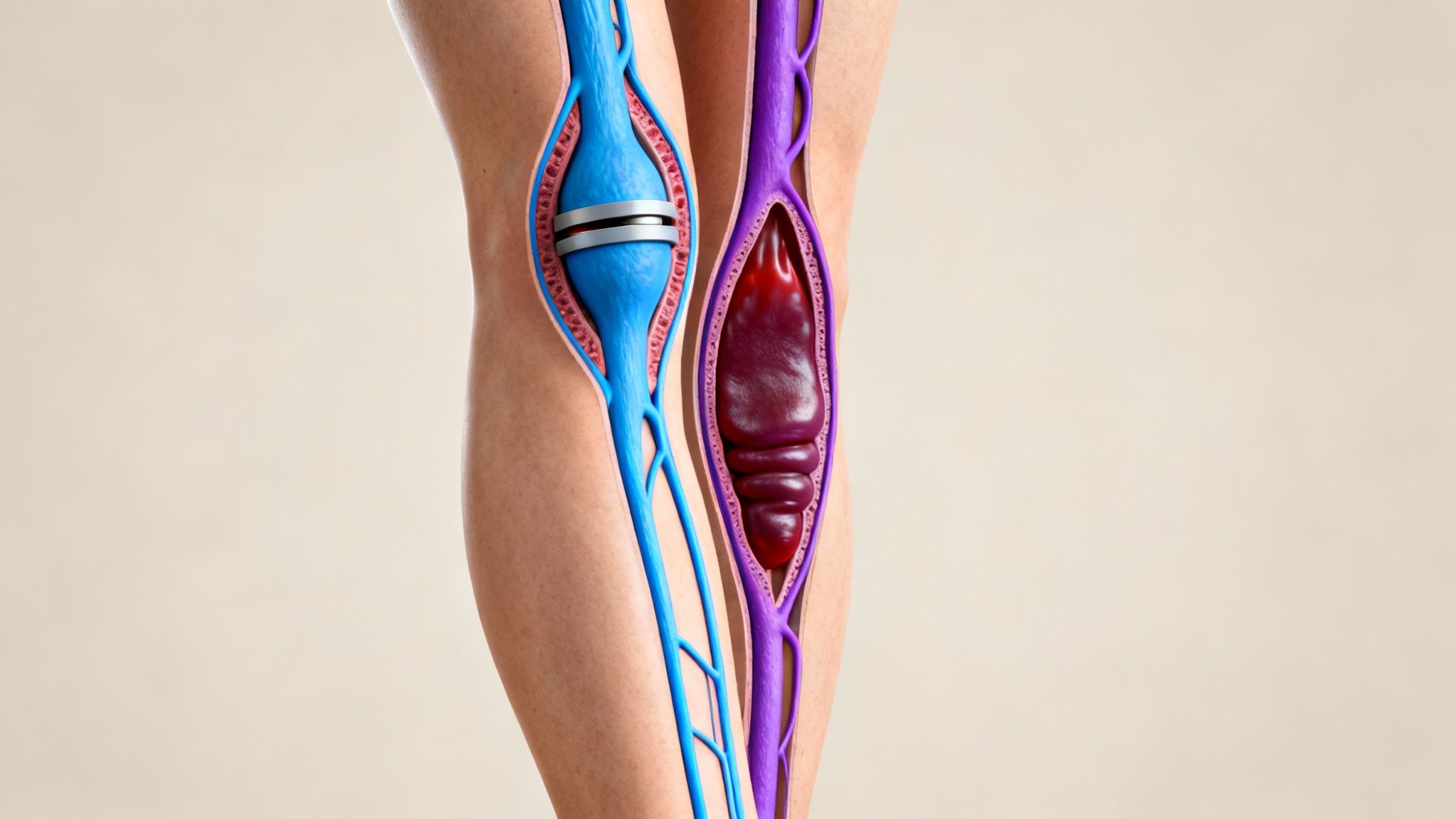
Simply imagine your venous system as a network of one-way streets that tirelessly pumps blood back to the heart against gravity. These “streets” contain small valves, known as venous valves, which prevent the blood from sinking back down. But when these valves weaken or become leaky, the one-way street is blocked.
Blood backs up, pressure in the vein increases, and the vein wall gradually becomes stretched out. That is exactly what we then see as a varicose vein. So it is far more than just a cosmetic problem—it is a clear sign that your venous system needs help.
The most common causes of varicose veins
Rarely is there just one factor to blame. Most of the time, it is a combination of different influences that puts strain on the veins.
- Genetic predisposition: Often, it simply runs in the family. An inherited weakness of the connective tissue is one of the main causes. If your parents or grandparents already struggled with varicose veins, your own risk is unfortunately significantly higher.
- Hormonal changes: Women are affected more often, which is closely linked to female hormones. Estrogen, for example, can make the vein walls softer and more pliable. That is why varicose veins often become more pronounced during pregnancy or menopause. Find out more about what estrogen does in the body in our article.
- Your lifestyle: People who spend a lot of time standing or sitting at work put considerable strain on their veins. The important calf muscle pump, which strongly supports the return of blood, is barely activated.
- Age and being overweight: Over the years, veins naturally lose their elasticity. At the same time, every extra pound on the scale increases the pressure on the entire venous system in the legs.
Why knowing the causes is so important
When you know where the problem originates, you can take much more targeted action. A treatment that only removes visible varicose veins does not address the underlying weakness in the system. And this is exactly where a personalized health analysis becomes incredibly valuable.
Understanding whether you have a genetic predisposition gives you the opportunity to take action early—before a minor weakness becomes a real problem. This allows you to act proactively instead of merely combating symptoms.
A tool like the mybody-x Skincare DNA Metabolism Test can give you precisely these insights. It analyzes whether you have a genetic predisposition to weak connective tissue—a key factor in the development of varicose veins. With this knowledge, you then receive specific, personalized recommendations on how to strengthen your skin and veins from within with the right nutrients. That is the difference between superficial treatment and addressing the problem at its root.
Modern ways to get rid of varicose veins
If you decide to have your varicose veins professionally removed, there are now a whole range of modern, gentle options. Fortunately, the days when major surgery with a lengthy hospital stay was the only option are over. Today’s procedures are designed to get you back on your feet as quickly and painlessly as possible.
No matter which method you ultimately choose, there is always one thing at the beginning: a thorough ultrasound examination (duplex sonography). This allows your doctor to see exactly which sections of the veins are affected, how the blood flows, and where the leaky vein valves—the “valves”—are located. This precise diagnosis is essential for choosing the right treatment. Without it, every procedure would be like fumbling around in the dark.
The classic: vein stripping
Vein stripping is, so to speak, the ancestor of varicose vein surgery and has been considered a proven standard for decades. With more than 300,000 procedures per year, it is still the most commonly performed surgical treatment in Germany.
The method has naturally been refined continuously since its introduction in 1907, but the basic principle has remained the same: Through a small incision, usually in the groin, the diseased main vein (the saphenous vein) is separated from the deep, healthy vein. A special probe is then inserted to remove the vein completely.
Although gentler alternatives have been available since the late 1990s, stripping still has its place. A major analysis of comparative studies from the Ruhr University Bochum Vein Center has shown that the classic operation is absolutely competitive in terms of effectiveness and long-term results. If you would like to explore the subject in greater depth, you can find more about the background to this study on innovations-report.de.
Gentle alternatives: endovenous procedures
The more modern methods take a completely different approach. Instead of removing the vein, they simply close it from the inside. These techniques are minimally invasive, meaning that only tiny punctures rather than large incisions are needed. Often, local anesthesia is sufficient.
The following infographic provides a good insight into how precisely such a modern procedure—in this case, endovenous laser therapy—is performed under ultrasound guidance.
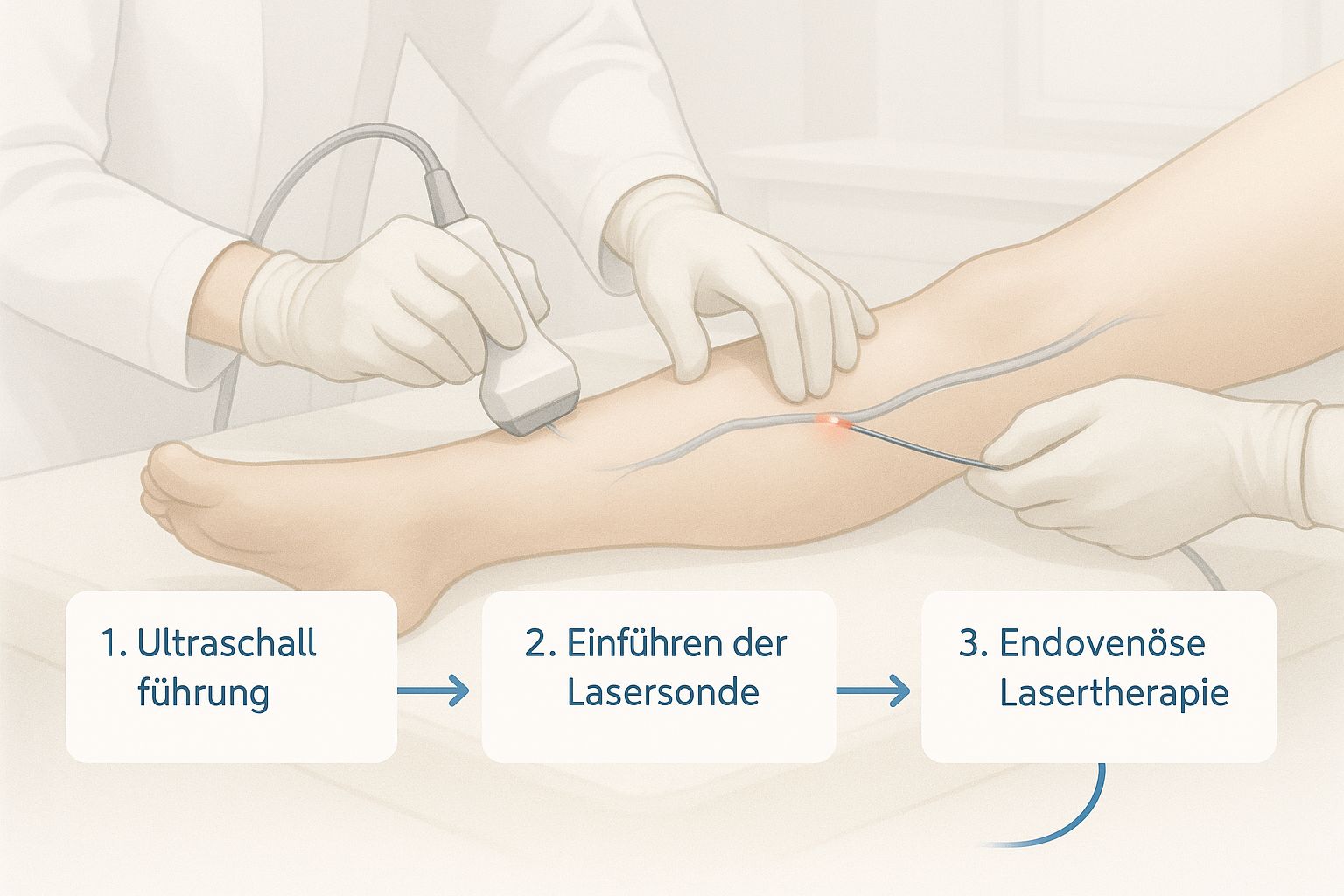
It is clearly visible how the laser probe is positioned precisely in the affected vein to treat it selectively from the inside with heat.
The most important endovenous procedures are:
- Laser therapy (EVLT): A very thin laser fiber is inserted into the vein. The laser energy heats the blood and the vein wall, causing the vein to shrink and close permanently.
- Radiofrequency therapy (RFTA): This procedure works according to a very similar principle, but uses high-frequency radio waves instead of laser light to generate the necessary heat. The result is the same: the vein is sclerosed from the inside.
The greatest advantage of these heat-based procedures is the significantly shorter recovery time. Because there are no large incisions, you experience less pain, hardly any scarring, and can usually resume your normal activities after just a few days.
To give you a better overview, I have summarized the most common methods in a table.
Comparison of the most common treatment methods for varicose veins
This table compares the main medical procedures for removing varicose veins in terms of their technique, invasiveness, anesthesia, and typical downtime.
| Method | Procedure | Anesthesia | Invasiveness | Downtime |
|---|---|---|---|---|
| Vein stripping | Surgical removal of the vein through small skin incisions | General or regional anesthesia | High | 2–4 weeks |
| Laser therapy (EVLT) | Closing the vein from the inside using laser heat | Local or tumescent anesthesia | Minimally invasive | A few days |
| Radiofrequency therapy (RFTA) | Closing the vein from the inside using radiofrequency heat | Local or tumescent anesthesia | Minimally invasive | A few days |
| Sclerotherapy | Sclerosing the vein by injecting an agent | None | Non-invasive | None to a few days |
As you can see, the procedures differ considerably in their approach and the subsequent restrictions. The choice of method is therefore always a very individual decision.
Sclerotherapy: Vein ablation for smaller veins
For smaller varicose veins, tributary veins, or fine spider veins, sclerotherapy, also known as vein ablation, is often the best choice. A special sclerosing agent is injected directly into the affected vein. It sounds simple, but it is highly effective.
The substance triggers a deliberate, controlled inflammatory reaction in the inner lining of the vein. As a result, the walls stick together, the vein closes, and the body gradually breaks it down on its own over the following weeks and months. Depending on the severity, several sessions may be necessary to achieve the desired result.
Which procedure is best for you personally depends on many factors: the size and location of your varicose veins, your general state of health, and, of course, your own preferences. Discuss everything in detail with your doctor, who will provide expert advice. Sometimes it can also be helpful to have a general check-up beforehand—a complete blood count can provide interesting insights here and shed light on your general health status.
Your genetics as the key to healthy veins
Have you ever wondered why some people seem to effortlessly maintain firm legs, while others develop varicose veins early despite exercising and eating a healthy diet? The answer often lies deeper than you might initially think—namely, in our DNA. Our genetic predisposition is one of the greatest factors influencing the stability of connective tissue and the elasticity of vein walls.
This genetic component is precisely why vein problems so often run in families. If your parents or grandparents already struggled with weak veins, unfortunately, the likelihood is higher that you inherited this predisposition. But that does not mean you are at the mercy of fate! It simply means that your risk is elevated and that you can take targeted steps to counteract it. Your genes, so to speak, lay the foundation for your body structure.
Understand your genetic blueprint
You can think of connective tissue as the framework of a house. If it is naturally built to be robust, it can withstand greater strain. But if it is genetically predisposed to be somewhat looser, the walls—in this case, your veins—can give way more easily under pressure. The result: The veins become stretched, the valves no longer close properly, and blood pools. This is how unsightly varicose veins develop.
This is precisely where modern science comes in. Instead of simply following general advice that may not suit you at all, you can now find out exactly what your body really needs.
Discovering a genetic predisposition is not a verdict but a genuine opportunity. It gives you the power to take proactive action and support your veins exactly where they need it most.
Knowing your genetic makeup is the first crucial step toward addressing the problem at its root, instead of always treating only the symptoms once it is already too late.
Personalize your prevention with a DNA analysis
And that is exactly what solutions like the mybody-x Skincare DNA Metabolism Analysis are designed for. Such a test gives you direct insight into your personal genetic blueprint, going far beyond general health advice. It analyzes highly specific genetic markers responsible for collagen production, skin elasticity, and the overall strength of your connective tissue.
Based on your individual results, you will learn specifically:
- Are you genetically predisposed to weak connective tissue? The test shows whether your genes favor a less stable collagen structure—a direct indication of your vein health.
- Which nutrients are truly essential for you? You receive personalized recommendations for the vitamins and minerals your body needs to strengthen connective tissue from within. This could include more vitamin C for collagen production, zinc, or certain amino acids, for example.
- How can you specifically adjust your diet? Instead of guessing, you receive clear guidance on which foods are precisely tailored to your genetic needs.
This approach gives you a truly personal strategy to optimally support not only your skin but also your veins.
If you would like to take a deeper dive into how DNA analysis works and how to learn to understand and use your genes for your health, read our detailed article on the subject. This allows you to take control yourself and strengthen your body exactly where your genetics require it.
Your personal strategy against new varicose veins
The best way to get rid of varicose veins is not to give them a chance in the first place. Prevention is key. If a DNA analysis such as the mybody-x Skincare DNA Stoffwechselanalyse has already shown you where your personal risks lie, you can move from general advice to a truly tailored strategy. This guide will help you shape your daily routine so that you actively protect and strengthen your veins.
It is not about radical changes, but about establishing small yet incredibly effective habits tailored precisely to your body’s needs. This puts you in control and enables you to take proactive steps to support the health of your legs.
Activate your calf muscle pump purposefully
It cannot be said often enough: Your calf muscles are the most important engine for returning blood from your legs. Every time you tense them, they compress the veins and pump the blood powerfully back toward your heart. Sitting or standing for long periods virtually paralyzes this natural pump—the perfect breeding ground for blood pooling and vein problems.
Make targeted “vein breaks” a habit:
- Foot presses at your desk: Regularly move your feet up and down, as if you were pressing a gas pedal. This activates the muscle pump almost effortlessly, without requiring you to stand up.
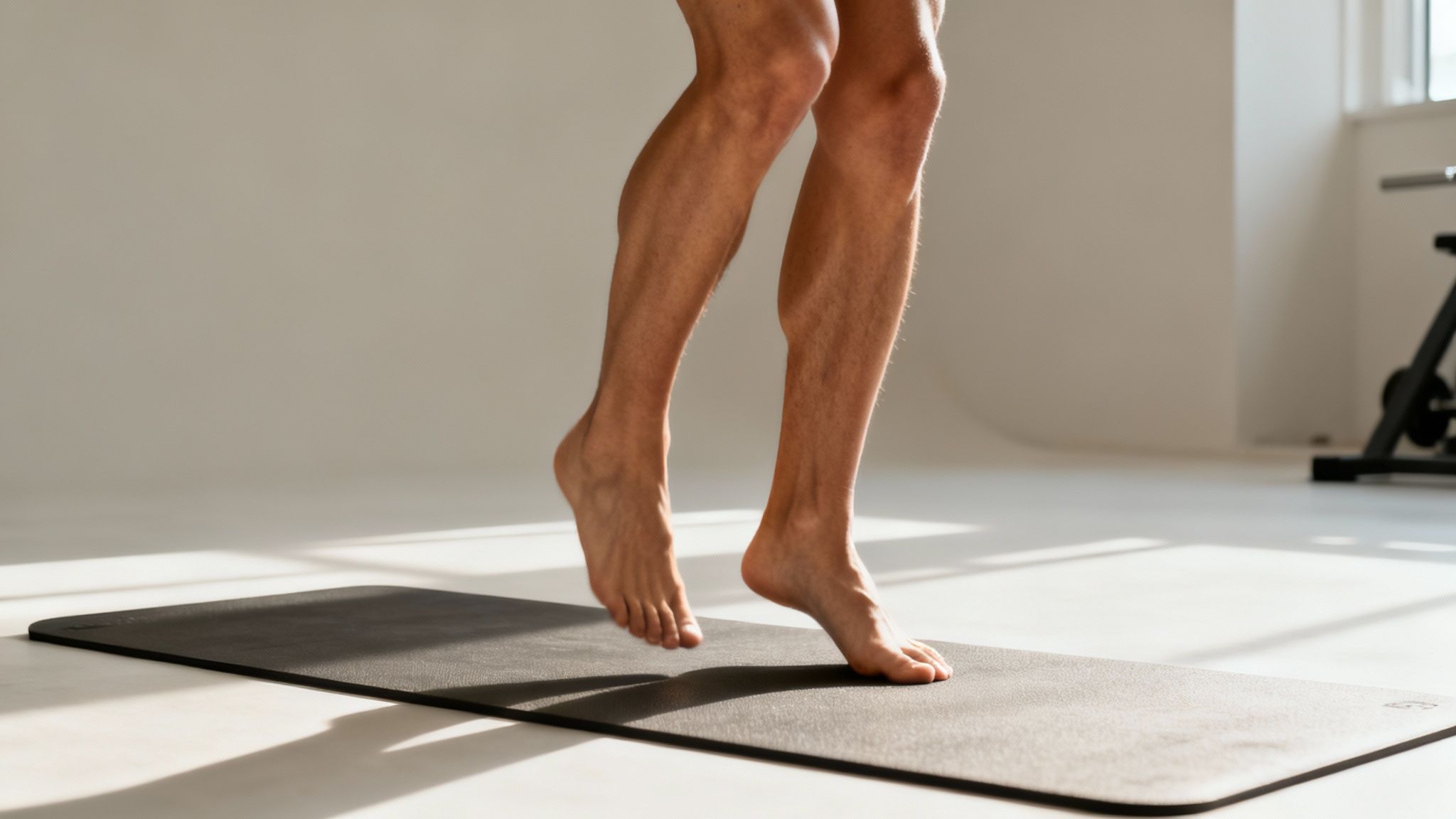
- Stand on your toes in everyday life: Use those short waiting times—while brushing your teeth, at the coffee machine, or at the bus stop. Simply rise slowly onto your toes and roll back down every now and then.
- Stairs instead of the elevator: Every single step is a small workout for your veins. Take every opportunity you get to keep moving.
Nourish your connective tissue from within
Strong connective tissue is like a supportive corset for your veins. When it is firm and elastic, the vein walls can withstand the pressure of the blood much better. Your DNA analysis can provide valuable insights into which nutrients your body particularly needs to build a stable collagen framework.
Focus on foods that strengthen your vein walls:
- Vitamin C boost: Vitamin C is essential for collagen production. Regularly include peppers, broccoli, citrus fruits, and berries in your diet.
- Antioxidant power: Flavonoids found in dark berries, grapes, and green tea protect the vein walls from harmful free radicals and can improve their elasticity.
- Zinc and copper: These trace elements also contribute to the formation of collagen and elastin. Whole-grain products, nuts, and legumes are excellent sources.
A personalized diet based on your genetic needs is one of the most powerful tools for prevention. You give your body precisely the building blocks it needs to maintain its natural protective function.
Make everyday life vein-friendly
Apart from exercise and diet, there are many small tricks that can noticeably relieve your veins in everyday life. Often, it is the simple things that make a huge difference overall and ensure that you never even need to consider removing varicose veins.
- Elevate your legs: Whenever possible, put your legs up. This immediately relieves the veins and uses gravity to support the return of blood.
- Contrast showers in the morning: At the end of your shower, alternate between cold and warm water over your legs. It is best to start with your right foot and slowly move the water jet upward. This is like a fitness workout for the elasticity of your blood vessels.
- Use compression stockings: Forget the old cliché! Modern compression stockings look like regular stockings, but apply targeted outward pressure. This supports the veins and makes the muscle pump even more effective. Ideal for long journeys, jobs that require standing, or simply as a preventive measure.
The importance of early diagnosis and prevention cannot be emphasized enough. Varicose veins are widespread and affect approximately 30% of all adults in Germany—and they are more than just a cosmetic nuisance. The German Society for Ultrasound in Medicine (DEGUM) warns that untreated varicose veins can lead to serious complications such as deep vein thrombosis or leg ulcers. Therefore, an early ultrasound examination is recommended to determine the extent of the condition and establish the right strategy. Find out more in DEGUM's press releases.
By supporting your body with targeted prevention, you create the best foundation for healthy, beautiful legs in the long term. You can also find additional inspiration for a mindful lifestyle in our article on 10 Tips for a Healthy Lifestyle.
A conclusion for your leg health
Let’s summarize the most important points once again: The path to healthy, light legs is not rocket science, but a smart combination of modern medicine and your own initiative. As you have seen, there is now a whole range of safe and effective methods for getting rid of existing varicose veins—from traditional stripping to gentle laser therapy.
More importantly, however, is realizing that you hold the key yourself—especially when it comes to preventing new varicose veins. They are not simply a matter of fate, but usually the result of our lifestyle and the genetic predisposition we inherit.
Knowledge is the first step toward improvement
A look at the figures from the Bonn Vein Study, one of the largest studies in Germany, makes the problem clear: The proportion of adults with varicose veins rose from 14.3% to 19%. The main reasons are often excess weight and sitting for too long in everyday life. This trend shows how crucial it is to take action yourself. If you would like to explore the figures in more depth, you can read more about the rising trend in Ärztezeitung.
As soon as you know your personal risk factors, you can take targeted action and prevent new varicose veins from developing.
Your vein health does not begin in the doctor’s office, but at home. Every walk, every mindful meal, and awareness of your genetic predispositions are building blocks for long-term healthy, beautiful legs.
Your personal blueprint lies in your genes
This is exactly where a personalized approach comes in. Instead of following general advice, you can find out what your body individually needs. The mybody-x Skincare DNA Stoffwechselanalyse provides precisely these in-depth insights into your predisposition.
The analysis shows whether you have a genetic predisposition to weak connective tissue. Based on this, you receive very specific, actionable recommendations:
- Tailored nutrition: Find out which nutrients really strengthen your connective tissue.
- Personalized lifestyle tips: Get advice perfectly tailored to your genetic blueprint.
- Effective prevention: Act proactively instead of waiting until the first spider veins become visible.
Consider this guide an encouragement to take the first step. Whether that means having a clarifying conversation with a doctor or choosing a more conscious lifestyle based on your DNA—your vein health will thank you.
Frequently asked questions about varicose vein removal
Finally, I would like to answer a few questions that I am repeatedly asked in my practice. Hopefully, this will give you even more confidence in your decision.
Does health insurance cover the treatment?
Whether your health insurance provider covers the costs clearly depends on medical necessity. If your varicose veins cause significant symptoms such as pain, heavy legs or even skin changes, the chances are good. In such cases, recognised procedures, especially traditional vein stripping, are generally covered.
However, if your concern is purely aesthetic, you will usually have to pay the costs yourself. For modern, minimally invasive methods, I always recommend clarifying coverage in advance directly with your health insurance provider to be on the safe side.
How painful is varicose vein removal?
I hear this concern often, but I can reassure you: Modern procedures are specifically designed to be as gentle as possible. Techniques such as laser or radiofrequency therapy are usually performed under local anaesthesia and are barely painful.
Afterwards, you may naturally experience a slight feeling of tightness or bruising, but these can be managed easily with simple measures. Traditional stripping is a more extensive procedure that can also be associated with more discomfort after surgery.
Can varicose veins come back after treatment?
A valid question. The good news is that the vein that was treated is permanently closed and will not cause any more problems. The bad news is that the procedure does not change your fundamental predisposition to venous weakness. New varicose veins can therefore certainly develop in other areas.
That is precisely why sustainable prevention tailored specifically to you is so important. This addresses the problem at its root and can actively reduce the risk of developing new varicose veins.
Understand your genetic predisposition and strengthen your connective tissue from within. Discover with mybody-x which nutrients your body really needs.


Share now:
Omega-3 fatty acids explained for the heart, brain, and skin
Calculate your biological age – Find out how fit your body really is