
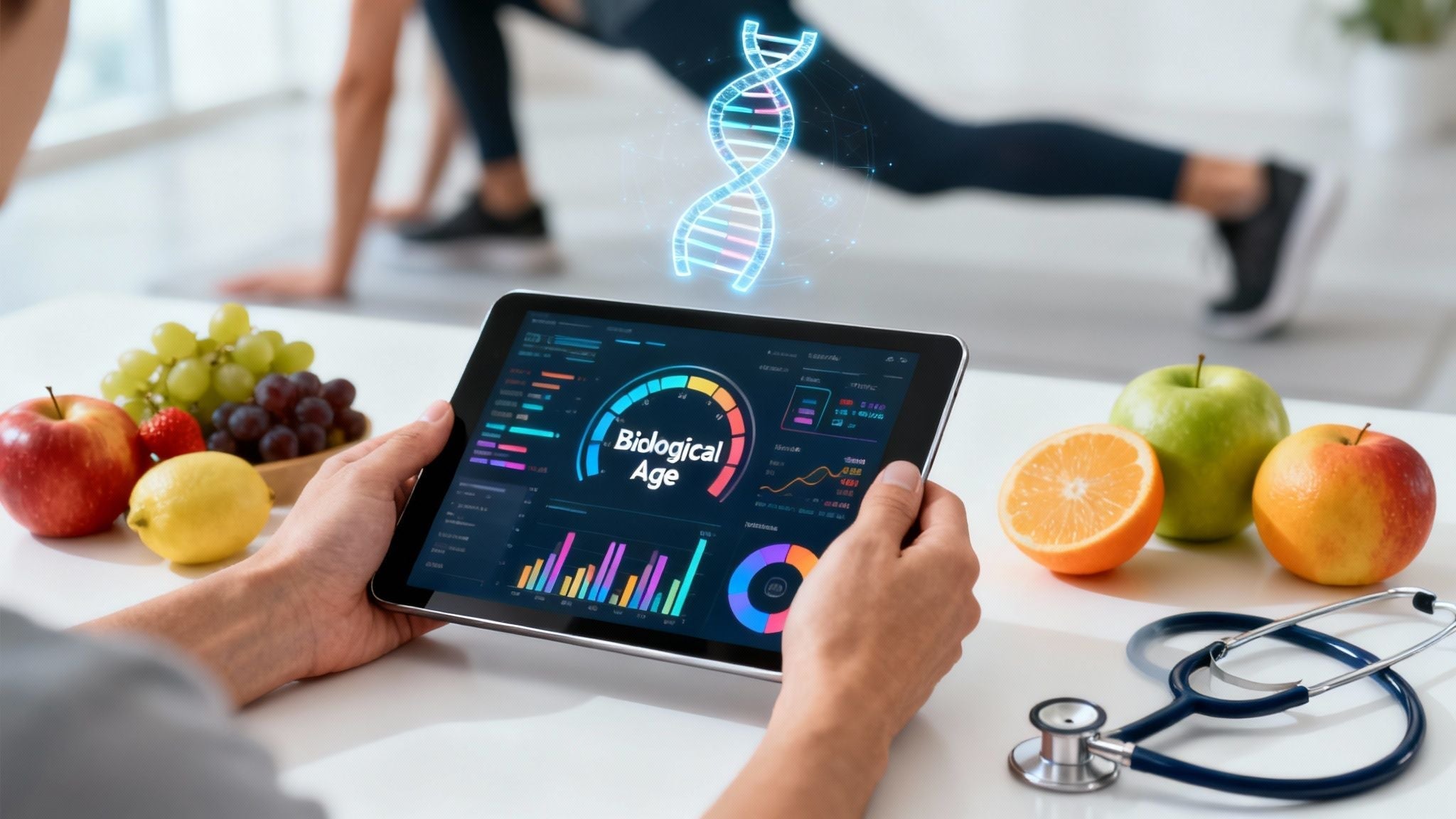
Calculate Your Biological Age – Find Out How Fit Your Body Really Is
Do you sometimes feel fitter and younger than your ID suggests? That is far more than just a feeling. When you learn to calculate your biological age, you gain a powerful tool. It helps you actively manage your health and vitality and understand how your body is really aging.
Why Your Biological Age Really Matters

Your birthday determines your chronological age—a number that simply measures the time that has passed since your birth. Yet this number says surprisingly little about how healthy your cells, organs, and metabolism actually are.
This is exactly where biological age comes into play. It is a dynamic value that reflects your body’s true condition and can be influenced—unlike your date of birth.
More Than Just a Number on Your ID
Imagine two people, both 50 years old. One smokes, barely exercises, and eats whatever comes to mind. The other pays attention to a healthy diet, exercises regularly, and has learned to cope with stress. Although they are the same chronological age, their biological ages will probably differ by years, perhaps even decades.
Biological age is therefore a much more meaningful measure of your health and life expectancy. It encompasses the sum of all the influences that affect your body every day. This insight is becoming increasingly important, especially in a society that is steadily growing older.
The demographic trend in Germany makes it clear: The proportion of older people is increasing sharply. Projections indicate that by 2050, almost one-third of the population will be over 65. In this context, biological age provides much better predictions of an individual’s health than chronological age alone. You can read more directly from the Federal Statistical Office.
Your biological age is not fixed. It is the result of your lifestyle, genetics, and environment. Knowing it is the first step toward actively shaping the aging process instead of simply accepting it.
The factors behind your internal clock
So what exactly determines how quickly your biological clock ticks? It is a complex interplay of various factors that affect your body down to the cellular level:
- Your lifestyle: Nutrition, exercise, sleep, and stress management are the biggest levers you have control over.
- Your genetics: Your DNA provides a certain predisposition. But you have a major influence on how these genes are “read” (epigenetics).
- Environmental influences: Factors such as air quality, exposure to pollutants, and your daily dose of sunlight also play an important role.
By determining your biological age, you obtain an honest snapshot of your health. This knowledge is worth its weight in gold because it enables you to take targeted measures to boost your vitality and promote longevity. In our in-depth article, you can learn more about the meaning of longevity and how you can positively influence it.
How your biological age is actually measured
If you want to calculate your biological age, looking in the mirror or relying on how you feel alone is not enough. It is about looking deep into the processes of your body. Fortunately, scientists have now developed impressive methods that precisely measure your internal clock and provide you with concrete data about your cellular health.
The best part: These advanced analyses are no longer reserved solely for research. Today, they are accessible to anyone who wants to take proactive control of their health.
The epigenetic clock—the gold standard
At the top of the list of methods is measuring your epigenetic clock. It is considered the most accurate and informative method. Think of your DNA simply as a gigantic cookbook. Epigenetics is the chef who decides which recipes (that is, genes) are actually read and which are ignored.
One central mechanism here is DNA methylation. These are tiny chemical markers attached to your DNA that can selectively switch genes on or off. Over time, this pattern changes in a highly predictable way—almost like a clock that ticks endlessly.
Analyzing these methylation patterns makes it possible to determine your biological age with impressive accuracy. Scientists have now used huge amounts of data to develop a genetic clock that can determine biological age with a precision of plus or minus 2.5 years. This method motivates many people to take their health into their own hands through a healthier lifestyle.
Want to delve even deeper into this topic? Our article explains what epigenetics actually is in clear, easy-to-understand terms and how it influences your health every day.
Important to know: Epigenetic tests are considered the gold standard because they do more than reflect your current aging status. They also show how your lifestyle directly affects your genes. The results are therefore direct feedback from your body on your habits.
Telomere length – a look at the ends of chromosomes
Another method that has been known for some time is measuring telomere length. Telomeres are the small protective caps at the ends of our chromosomes, a bit like the plastic tips on shoelaces. Their job is to protect DNA during cell division.
However, they become slightly shorter with each cell division. Once telomeres become too short, the cell can no longer divide and either dies or enters a kind of “resting state.” Shorter telomeres are therefore associated with a higher biological age.
However, this method also has its drawbacks. Telomere length can fluctuate from day to day and is influenced by acute factors such as stress or a cold. It is therefore significantly less stable and precise than the epigenetic clock.
Blood biomarkers – what your blood reveals
Your blood is a true information carrier. It contains countless substances that can provide valuable insights into your health and aging process as biomarkers.
Analyzing specific blood values is often a good first step toward roughly estimating biological age.
- Inflammatory markers (e.g., hs-CRP): Chronic, low-grade inflammation is considered one of the main drivers of aging.
- Metabolic markers (e.g., HbA1c, cholesterol): They show how well your body can process sugar and fats.
- Organ markers (e.g., liver and kidney values): They indicate how well your primary detoxification organs are still functioning.
Although this method provides a good overall picture, it is more of a snapshot. It primarily captures the consequences of aging, not the underlying causal epigenetic changes.
The following graphic compares the two leading methods and helps you decide which one is right for you.
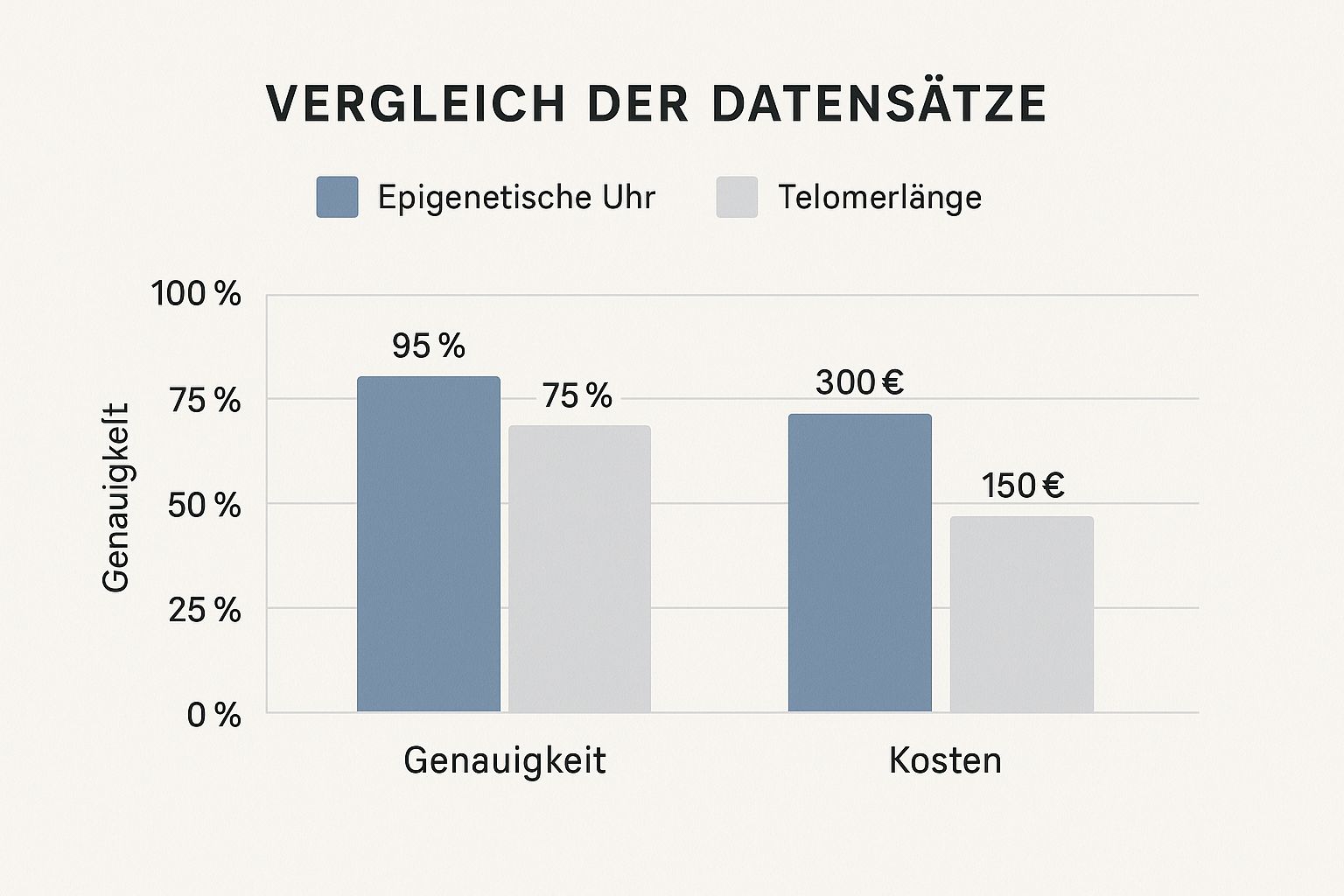
You can see it clearly: With an accuracy of 95 % the epigenetic clock is clearly ahead. This also justifies the higher cost of around 300 € —because this gives you a far more reliable and meaningful result.
Which biomarkers reveal your true age
Your blood is practically an open book that provides remarkably detailed information about your health and aging process. Certain values—known as biomarkers—are particularly revealing. They show how quickly your biological clock is actually ticking.
To calculate your biological age, you need to know and understand these key indicators. Instead of feeling in the dark, they give you a clear picture of where your body may need support and help you make informed decisions about your health.
Inflammatory markers as silent accelerators of aging
One of the most important markers is high-sensitivity C-reactive protein (hs-CRP). A persistently elevated level is a clear warning sign of silent, chronic inflammation in the body—one of the main drivers of aging. These invisible processes strain your immune system and can cause cell damage throughout the body over time.
Low-grade inflammation is often caused by an unhealthy lifestyle, chronic stress, or an unbalanced diet. Think of it as constant background noise that consumes your valuable resources and secretly accelerates the aging process.
Your metabolism as a reflection of cellular health
How your body handles energy is another key factor. Two values are particularly important here:
- HbA1c (long-term blood sugar): This value shows how high your average blood sugar level was over the past three months. If it remains elevated, it is a strong indication of developing or existing insulin resistance. This harms the cells and causes the blood vessels to age faster.
- Cholesterol (LDL/HDL ratio): An unfavorable ratio of “bad” LDL to “good” HDL cholesterol is a known risk factor for cardiovascular disease. Healthy blood lipid levels, on the other hand, are a sign of a metabolism that is functioning smoothly.
A well-functioning metabolism is the foundation for healthy cells. When your body can process sugars and fats efficiently, it protects your organs and slows the aging process at the molecular level.
The performance of your internal organs
Your liver and kidneys are your body's central detoxification and filtration stations. Their performance directly affects how well your body copes with stressors. Important values here include:
- Liver values (GGT, ALT): Elevated levels may indicate an overburdened liver, often caused by alcohol, medication, or an unhealthy diet.
- Kidney values (creatinine, eGFR): They show how effectively your kidneys filter the blood. Declining kidney function is a clear sign of an advanced biological aging process.
An impressive study of 38-year-olds in Germany demonstrated the significance of such biomarkers. Researchers examined 18 different markers, including liver, kidney, and cholesterol levels. The result was astonishing: The biological age of participants who were the same chronological age ranged from 28 to 61 years! Those with a higher biological age already showed measurable declines in cognitive and motor skills. You can read more in this article about the findings of this German study on age determination.
These markers are not isolated numbers but pieces of a larger puzzle. The following table gives you a quick overview of the most important values.
Key biomarkers and their significance for biological age
An overview of the most important biomarkers, their function in the body, and how they influence the aging process.
| Biomarker | Function in the body | Influence on biological age |
|---|---|---|
| hs-CRP | Marker of inflammatory responses | Chronic inflammation accelerates cellular aging (inflammaging). |
| HbA1c | Long-term blood sugar memory | Elevated levels cause cell damage through “sugarification” (glycation). |
| LDL/HDL cholesterol | Transport of fats in the blood | An unfavorable ratio increases the risk of vascular calcification (arteriosclerosis). |
| GGT, ALT | Liver enzymes | Elevated levels indicate strain on the liver and impaired detoxification. |
| Creatinine, eGFR | Indicators of kidney function | Poor kidney function leads to the accumulation of waste products in the body. |
Each of these values tells part of your health story.
If you would like to know what a comprehensive blood test looks like and which diseases can be detected through it, you will find valuable information in our guide to the complete blood count. Interpreting these values in their overall context provides the crucial insights you need to positively influence your biological clock.
How to find out your biological age – without a laboratory
Of course, the most precise way to determine your biological age is through a laboratory test. But that’s not the only place to start. Even without spending a fortune, you can gain an initial, often surprisingly clear overview. An honest self-assessment of your lifestyle is the first step.
Think of your body simply as an account: Every healthy habit is a deposit, and every unhealthy one is a withdrawal. Over time, the balance reveals quite accurately how well you have managed your account.
Your lifestyle under the microscope: The most important levers
The following questions are based on scientifically established factors that directly influence your aging process. Take a moment to answer them honestly for yourself. It’s not about being perfect, but about getting a sense of where you stand.
- Exercise: How active are you really in everyday life? It’s not just sweat-inducing workouts that count. Do you take the stairs instead of the elevator? Do you go for regular walks? Every form of movement is a deposit into your account. Experts recommend at least 150 minutes of moderate activity per week.
- Nutrition: How colorful is your plate? A diet rich in vegetables, fruit, healthy fats, and high-quality protein fights inflammation and provides your cells with everything they need. Sugar and highly processed foods, on the other hand, are like poison to your cells – they accelerate the aging process.
- Sleep: Do you get 7–8 hours of restorative sleep every night? Sleep is your body's most important regeneration phase. During this time, cell repair and detoxification take place. Chronic sleep deprivation is like a constant attack on your cellular health.
Stress and social factors – the silent accelerators of aging
Alongside the classic pillars of nutrition and exercise, your mental well-being and social connections also play a huge role in your biological clock.
Chronic stress, whether caused by pressure at work or personal worries, puts your body in a constant state of alert. Over time, the stress hormone cortisol causes inflammation and damages your cells. It is a true accelerant of aging. Ask yourself: Do you have effective strategies for dealing with stress? Meditation, hobbies, or simply spending time in nature can work wonders here.
The quality of your social relationships is also often underestimated. A stable network of friends and family, along with regular, positive interaction, has been shown to protect against stress-related illnesses and contributes greatly to a higher quality of life.
Your self-check is not a medical diagnosis, but an opportunity. It shows you exactly which levers you can pull. Every small step in the right direction adds to your health account and can help turn back your biological clock.
From Feeling to Certainty: When You Want to Know for Sure
Perhaps you noticed areas while answering the questions where you would like more clarity. And that is exactly where we come in at mybody-x. If your diet isn’t always optimal, for example, targeted nutrient checks can uncover deficiencies long before they become a real problem.
Our analyses help you translate the vague suspicions from the self-check into concrete, measurable data. This allows you to see in black and white where your body really needs support—whether in nutrient supply, gut health, or metabolism.
Understanding Your Result and Taking Action

So, you’re holding your result in your hands. Maybe your biological age is higher than expected, or perhaps it’s pleasingly low. No matter what the number looks like, don’t see it as a final verdict, but as your personal starting line. It is an honest assessment that shows you exactly where you can take action.
This number is your chance to take control. It is tangible proof that your lifestyle has a direct, measurable impact on your cells. And this is where the exciting part begins: You can take targeted action and positively influence your biological clock.
From Knowledge to Action: Pulling the Right Levers
The best news is that almost all the key factors are in your hands. You don’t have to overhaul your entire life. Often, small but consistent adjustments in everyday life can have an enormous impact and are the key to optimizing your biological age.
It’s best to focus on the four major pillars of your health:
- Nutrition: Choose anti-inflammatory foods. Colorful vegetables, berries, nuts, and omega-3-rich fish such as salmon combat low-grade inflammation, which is considered a primary driver of aging. At the same time, reduce sugar and highly processed products that unnecessarily burden your cells.
- Exercise: Find a good balance between strength and endurance training. Endurance exercise clearly strengthens your cardiovascular system. But strength training is at least as important for maintaining valuable muscle mass—an essential factor for an active metabolism as you age.
- Stress management: Chronic stress is pure poison for your cells. Find a method that suits you, whether it’s meditation, yoga, a walk in the woods, or mindfulness exercises. Just a few minutes a day can measurably lower your stress level.
- Sleep: Good sleep is your most important phase of regeneration. Ensure a quiet, dark environment and consistent bedtimes. This is the only way your body can repair and renew itself optimally.
Your result is your personal compass. It not only shows you where you stand, but also points the way toward a more vital and longer life. Every step in the right direction counts.
Targeted support for your cells
Sometimes the body needs a little targeted support from the outside to compensate for deficiencies or optimize certain processes. This is exactly where high-quality dietary supplements can make a valuable contribution.
They are designed to support specific areas such as metabolism or nutrient supply—both crucial factors in healthy aging.
Based on your results, you can take targeted action. For example, if you want to learn how your diet directly affects the aging process, you’ll find valuable, practical tips in our guide to longevity nutrition.
With the right strategy and targeted support, you can not only stop your biological clock but actively turn it back a little.
Questions we're asked again and again
After all that information, you probably still have a few thoughts swirling around in your head. That's a good thing, because the topic is incredibly fascinating and multifaceted. Let's clarify the most frequently asked questions so you get a complete picture.
Are these online biological-age calculators actually reliable?
You probably know them: the free online calculators that calculate your biological age after a few clicks. Sure, they're intriguing. They're also a great starting point for thinking about your own lifestyle.
But be honest: Their informative value is limited. They only scratch the surface and can never replace a proper blood analysis of biomarkers or an epigenetic assessment. Treat the result as a rough estimate, a first prompt—but under no circumstances as a scientifically precise diagnosis.
Can the aging process really be reversed?
Rewinding time completely like in a Hollywood movie? Unfortunately, that remains science fiction. But what definitely isn't fiction is that you can significantly slow down the aging process and actually turn back your internal clock a little. Research shows that epigenetic changes—that is, the switches on our genes—are flexible.
With targeted adjustments to your diet, exercise, and stress management, you can demonstrably improve your cellular health. This isn't hocus-pocus; it's measurable. You take control and actively influence how quickly you age.
What role do genes actually play?
Of course, genetics establishes a kind of basic framework. Some people are simply lucky enough to age a little more slowly than others by nature. But your genes are not your destiny.
A good saying sums it up: Genetics loads the gun, but lifestyle pulls the trigger.
Your daily choices have a huge influence on which of your genes are "switched on" or "silenced." Even if your genetic starting point isn't perfect, you can use a conscious lifestyle to positively influence your biological clock and age healthily.
Are you ready to move from rough estimates to precise, scientifically grounded data about your body? At mybody-x.com, you'll find medical self-tests that help you truly understand your health and optimize it in a targeted way. Discover your options now at https://mybody-x.com.



Share now:
Remove varicose veins: For smooth, healthy legs
Selenium effects that really change everything