
SIBO Nutrition Counseling: 6 Proven Diet Strategies for 2025
Bloating, cramps, unpredictable digestive problems—if this sounds familiar, you’re not alone. Many people suffer from the symptoms of small intestinal bacterial overgrowth (SIBO), often without knowing the exact cause. SIBO develops when bacteria that normally belong in the large intestine migrate into the small intestine and multiply excessively there. The result is not only unpleasant gas and pain but often also nutrient deficiencies and a significant reduction in your quality of life.
A targeted diet is the key building block for specifically starving these unwanted bacteria and helping your gut regain its balance. But which diet is right for you? From the well-known FODMAP diet and the Specific Carbohydrate Diet (SCD) to specialized protocols such as the Bi-Phasic Diet, there are various approaches, each with a different focus.
Professional SIBO nutrition counseling is essential for finding the approach suited to your individual situation and avoiding mistakes. In this article, we present the 6 most proven dietary strategies in detail. We explain how they work, examine their advantages and disadvantages, and provide practical tips. This will help you regain control of your gut health and discover which strategy will lead to lasting success.
1. FODMAP elimination diet: The scientific gold standard
The low-FODMAP diet is currently the best-studied and most scientifically grounded dietary approach for alleviating SIBO symptoms. Developed by researchers at Monash University in Australia, this method has become an effective tool for reducing bacterial fermentation in the small intestine and thereby minimizing symptoms such as bloating, abdominal pain, and irregular bowel movements.
How does the FODMAP diet work?
The principle is simple but requires a structured approach. FODMAPs are fermentable oligo-, di-, monosaccharides, and polyols—in other words, short-chain carbohydrates. They are poorly absorbed in the small intestine and serve as food for the bacteria living there. The bacteria ferment these sugars, causing gas production and an influx of water into the intestine. These processes are precisely what cause the typical symptoms of SIBO.
Professional SIBO nutrition counseling guides you through the diet’s three crucial phases:
- Elimination phase (2–6 weeks): You avoid all foods high in FODMAPs. The goal is to calm the gut and drastically reduce symptoms.
- Reintroduction phase: You systematically test individual FODMAP groups to identify your personal triggers and tolerance limits.
- Personalization phase: Based on the insights gained during reintroduction, you create a long-term, nutrient-rich diet with as few restrictions as necessary.
Important note: The elimination phase is not a long-term solution. Excessively prolonged restriction can negatively affect the diversity of your gut microbiome. Therefore, guidance from a specialized dietitian is essential.
The following infographic provides a clear overview of the key facts about the FODMAP diet.
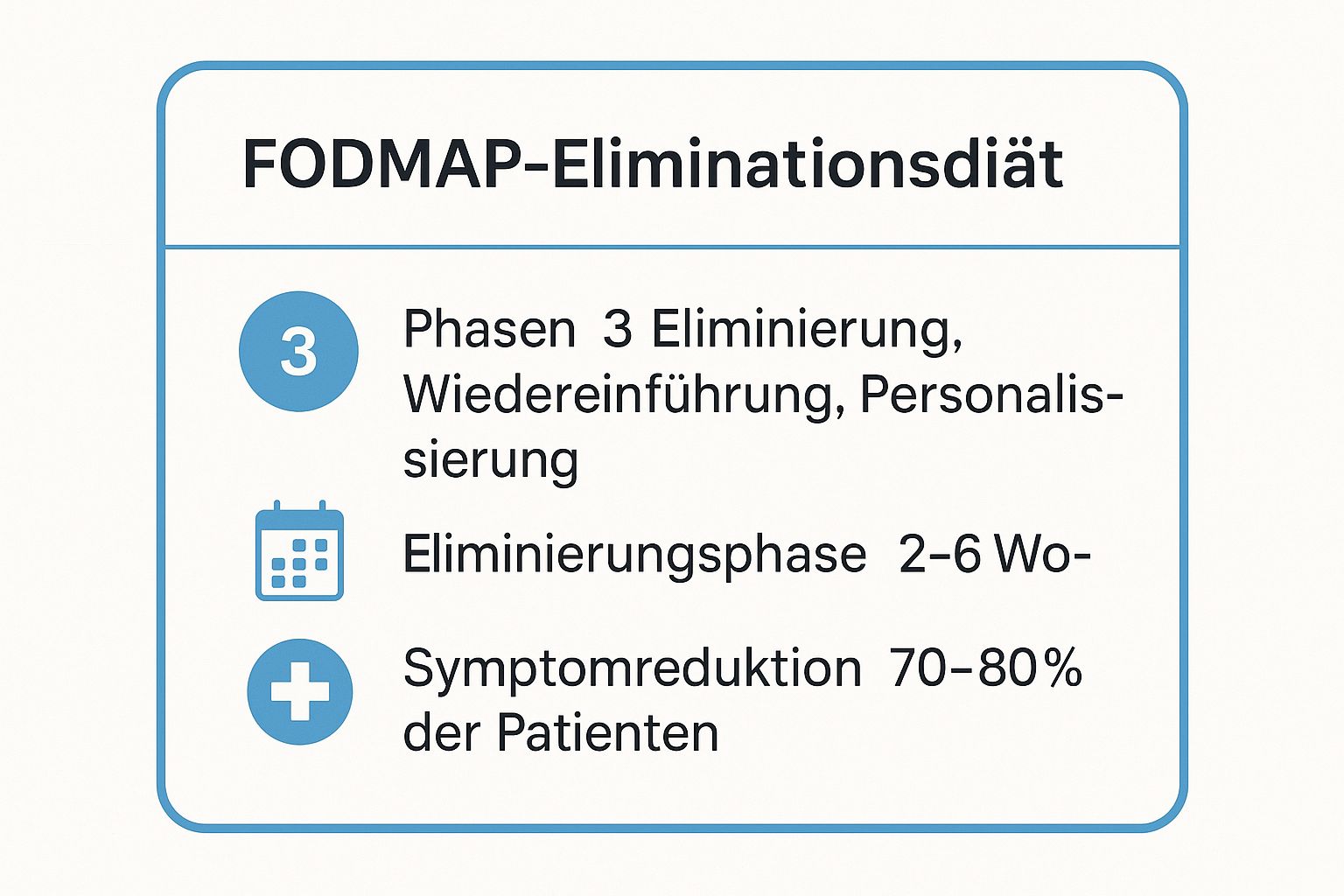
As the data shows, the diet is a clearly defined, time-limited process that leads to significant symptom improvement in a large proportion of those affected.
Practical implementation tips
- Use validated resources: The Monash University FODMAP App is the gold standard for checking the FODMAP content of foods.
- Keep a symptom diary: Carefully document what you eat and how you feel. This is crucial for the reintroduction phase.
- Pay attention to nutrients: During the elimination phase, focus on nutrient-dense, permitted foods such as leafy greens, high-quality proteins, and healthy fats.
The FODMAP diet is more than just a way to manage symptoms; it is a diagnostic tool that helps you better understand your body. Learn more about the basics of the SIBO diet on mybody-x.com and how this approach can help you.
2. Specific Carbohydrate Diet (SCD): The classic approach to restoring gut health
The Specific Carbohydrate Diet (SCD) is an established and strict dietary approach designed to specifically starve bacterial overgrowth in the small intestine. Developed by Dr. Sidney Haas and popularized by Elaine Gottschall’s book “Breaking the Vicious Cycle,” the SCD is based on a simple but effective principle: only carbohydrates that your body can digest easily and quickly are allowed.

How does the SCD work?
The basic principle of the SCD is to deprive the bacteria of their food source. Complex carbohydrates such as grains, lactose (milk sugar), and sucrose (table sugar) are broken down slowly or incompletely in the small intestine. They remain in the intestine longer and serve as “food” for SIBO bacteria, leading to fermentation, gas production, and inflammation. The SCD completely eliminates these complex carbohydrates.
Monosaccharides (simple sugars) such as glucose and fructose, found in fruits, honey, and certain vegetables, are permitted instead. They are absorbed by the body so quickly that they are barely accessible to bacteria in the small intestine. Professional SIBO dietary counseling can help you follow this demanding but often highly effective path safely. The diet’s success is reflected in numerous success stories shared in the book "Breaking the Vicious Cycle" and by the large online community of SCD users.
Important note: The SCD is highly restrictive and requires strong motivation and careful planning to prevent nutrient deficiencies. It should not be followed as a long-term diet without professional guidance.
Practical implementation tips
- Start with the Intro Diet: Begin with a very simple, 2–5-day introductory diet consisting of well-cooked and puréed foods to give your gut maximum relief.
- Cook for yourself and plan ahead: Since almost all processed foods are prohibited, preparing your own meals is essential. Invest in good kitchen tools.
- Seek support: Join online support groups or forums. Connecting with like-minded people is a valuable source of motivation.
- Monitor your nutrient intake: Due to the severe restrictions, it is important to keep an eye on your intake of vitamins and minerals. A specialized advisor can provide targeted support.
The SCD is a profound approach that can provide significant relief from SIBO symptoms when followed consistently. It is particularly suitable for people for whom other diets, such as the FODMAP diet, have not produced the desired results.
3. Bi-Phasic Diet Protocol: The Structured Two-Part Approach
The Bi-Phasic Diet Protocol, developed by SIBO expert Dr. Nirala Jacobi, is a targeted dietary approach often used alongside antimicrobial therapy. It combines strict restriction for rapid symptom relief with gradual reintroduction to establish a sustainable diet. This approach is particularly structured and is therefore often recommended by specialized practitioners.
How does the Bi-Phasic Diet Protocol work?
The protocol divides the dietary change into two clearly defined phases aimed first at starving the bacteria in the small intestine and then at deliberately rebuilding the microbiome. It combines elements of the low-FODMAP diet with the principles of the Specific Carbohydrate Diet (SCD), making it particularly effective but also challenging.
Experienced SIBO nutritional counseling is essential here to guide you safely through both phases:
- Phase 1 – Reduction & Repair (4–6 weeks): This is the strictest phase. It aims to stop bacterial fermentation processes by significantly reducing fermentable carbohydrates. At the same time, the focus is on easily digestible, anti-inflammatory foods to soothe and repair the intestinal lining.
- Phase 2 – Rebuilding & Removal: During this phase, additional foods, especially certain FODMAPs, are gradually and systematically reintroduced. At the same time, antimicrobial treatment often takes place, as the bacteria are weakened by the restricted food intake and become more susceptible to the therapy.
Important note: The Bi-Phasic Diet Protocol is a therapeutic tool, not a permanent diet. The strict first phase requires careful planning to prevent nutrient deficiencies and avoid placing excessive strain on the body.
Close collaboration with a consultant is crucial for success.
Practical implementation tips
- Good preparation is everything: Prepare meals for Phase 1 in advance so you do not have to resort to unsuitable foods during stressful moments.
- Pay attention to your body: Monitor your energy levels closely and ensure adequate fluid and electrolyte intake, as carbohydrate restriction can affect your fluid balance.
- Plan the right timing: Begin Phase 1 during a period that is as stress-free as possible so you can focus fully on the dietary changes.
The Bi-Phasic Diet Protocol is an intensive but often highly effective way to specifically combat SIBO. It not only helps alleviate symptoms but can also provide insight into the individual causes of your digestive problems. Learn more about how a DNA analysis can help with digestive problems and provide a deeper understanding of your body.
4. Elemental Diet Protocol: The Radical Gut Reset
The Elemental Diet Protocol is a highly effective but also intensive medical nutritional therapy for treating SIBO. It is a liquid specialized formula that provides your body with all the necessary nutrients while essentially depriving gut bacteria of their food source. This approach gives the digestive system maximum rest and can effectively reduce bacterial overgrowth in the small intestine.

How does the Elemental Diet Protocol work?
The idea behind this diet is to provide nutrients in their simplest, predigested form. The liquid nutrition consists of free amino acids, simple sugars (such as glucose), short-chain fats, vitamins, and minerals. These molecules are so small that they are completely absorbed in the uppermost section of the small intestine. As a result, no food residue reaches the lower sections of the intestine, where the bacteria reside. This deprives the bacteria of nourishment, leading to their reduction.
SIBO nutritional counseling is essential with this protocol, as it involves a significant dietary intervention:
- Preparation phase: You prepare mentally and physically for an exclusively liquid diet.
- Implementation phase (1–3 weeks): You consume only the elemental diet. Solid food is off-limits during this time.
- Reintroduction phase: After completing the protocol, solid foods are reintroduced very slowly and gradually so as not to overwhelm the gut.
Important note: The Elemental Diet is a short-term therapy and should be carried out exclusively under medical or therapeutic supervision. It is not suitable as a long-term dietary approach.
This approach is often an option when other diets, such as the low-FODMAP diet, have not produced the desired results or when rapid and significant symptom reduction is sought. It also supports the regeneration of the intestinal lining. Learn more about how a healthy intestinal barrier works and what affects it in Leaky Gut on mybody-x.com.
Practical implementation tips
- Improving the taste: Chill the formula well or drink it over ice. This can significantly improve the taste, which is often perceived as unpleasant.
- Drinking through a straw: A straw helps minimize contact with the taste buds on the tongue.
- Planning social activities: Since you cannot eat during this time, plan social gatherings carefully. A walk is often more suitable than a shared dinner.
- Preparing for reintroduction: The phase after the diet is crucial. Work with your advisor to plan a very gradual reintroduction of foods to avoid relapses.
5. Fast Tract Diet: A points-based approach to symptom management
The Fast Tract Diet, developed by Dr. Norm Robillard, offers a flexible alternative to strict elimination diets. Instead of categorizing foods broadly as “allowed” or “forbidden,” this approach focuses on the so-called fermentation potential (FP) of carbohydrates. This makes the diet a more individualized and often less restrictive approach to managing SIBO symptoms.
How does the Fast Tract Diet work?
The core principle is based on a simple scientific fact: Not all carbohydrates are the same. Some are fermented quickly and in large quantities by gut bacteria, leading to gas and discomfort, while others have lower fermentation potential. The Fast Tract Diet assigns foods FP points based on this potential. Your goal is to stay below a specific daily point limit.
An experienced SIBO nutritionist can help you adapt this approach to your individual needs, typically in three steps:
- Symptom relief phase: You begin with a very low FP point limit to reduce bacterial activity and achieve rapid symptom improvement.
- Testing and adjustment phase: Once your symptoms are under control, gradually increase your daily FP budget to determine your personal tolerance threshold.
- Long-term maintenance phase: You shape your diet based on your individual FP limit, allowing for greater food variety and flexibility in everyday life.
Important note: The Fast Tract Diet requires careful tracking, but for many people it is more sustainable than a strict elimination diet. It promotes an understanding of how quantities and combinations of foods affect symptoms, rather than just the foods themselves.
This approach puts you back in control and makes it possible to reintroduce many favorite foods into your diet in adapted portions.
Practical implementation tips
- Use the official app: The “Fast Tract Diet” app is the most important tool for quickly and reliably looking up the FP points of foods.
- Combine FP points with symptom tracking: Record not only the points you have consumed but also how you feel. This will help you identify patterns and precisely adjust your budget.
- Focus on nutrient density: Within your points budget, prioritize nutrient-rich foods such as low-FP vegetables, high-quality proteins, and healthy fats.
- Start conservatively: Begin with the recommended low FP limit and increase it slowly to avoid setbacks and safely determine your tolerance threshold.
The Fast Tract Diet is a powerful tool for managing your diet based on your symptoms. Learn more about the importance of an individualized diet plan for SIBO on mybody-x.com and how a points-based approach can help improve your quality of life.
6. GAPS Diet (Gut and Gut Psychology Syndrome)
The GAPS diet, developed by Dr. Natasha Campbell-McBride, is an intensive nutritional protocol that goes beyond merely relieving SIBO symptoms. The approach aims to heal the intestinal lining (“seal a leaky gut”) and fundamentally restore the balance of the microbiome. It is a holistic approach that is particularly popular in functional medicine and complementary healing practices.
How does the GAPS diet work?
The core principle of the GAPS diet is the strict avoidance of difficult-to-digest carbohydrates such as grains, starches, and processed sugar, which can promote bacterial imbalance in the small intestine. Instead, the focus is on nutrient-dense, healing foods. The diet is based on the idea of providing the gut with the building blocks for regeneration while simultaneously depriving harmful bacteria of their food source.
Specialized SIBO nutritional counseling for the GAPS protocol guides you through the various strictly defined phases:
- Introductory phase: This phase is divided into six stages and begins very restrictively with homemade bone broth, cooked meat, and probiotic juices. Additional well-tolerated foods such as egg yolk and fermented vegetables are gradually introduced.
- Full GAPS diet: After successfully completing the introductory phase, the selection of foods is expanded. The foundation consists of meat, fish, eggs, certain vegetables and fruits, healthy fats, and large amounts of fermented foods.
- Reintroduction phase: Once your gut has healed and remained stable for an extended period, individual foods that were previously avoided can gradually be tested again.
Important note: The GAPS diet is extremely restrictive and requires a high level of commitment and preparation. It should not be undertaken without professional guidance to prevent nutrient deficiencies and manage the process correctly.
This approach is particularly suitable for people who, in addition to SIBO, have chronic inflammation, autoimmune reactions, or neurological symptoms.
Practical implementation tips
- Start slowly: The introductory phase is crucial. Take your time with each stage and carefully observe your body’s reactions.
- Quality over quantity: Invest in high-quality foods, especially pasture-raised meat for bone broth and organic vegetables.
- Introduce ferments cautiously: Start with tiny amounts of probiotic foods (e.g., one teaspoon of sauerkraut juice) and increase the amount slowly to avoid an overly strong reaction.
- Seek support: Work with a certified GAPS coach or an experienced nutritionist who can guide you through the challenges.
The GAPS Diet is a profound approach that goes far beyond nutrition and also takes aspects such as detoxification and lifestyle changes into account. To understand how your individual genetic predisposition may influence your response to such specific dietary plans, learn more about the basics of nutrigenetics on mybody-x.com.
Comparison of the 6 SIBO dietary approaches
| Approach | 🔄 Implementation complexity | 💡 Resource requirements | 📊 Expected results | 💡 Ideal use cases | ⭐ Main advantages |
|---|---|---|---|---|---|
| FODMAP Elimination Diet | Moderate to high: three phases, detailed planning | Nutrition knowledge, dietary advice, apps | Symptom reduction in 70–80% | Patients with SIBO, identifying individual triggers | Scientifically grounded, clear guidelines |
| Specific Carbohydrate Diet (SCD) | High: very restrictive, intensive preparation | High time commitment, home-cooked meals | Improvements in many patients | Various digestive problems, bacterial overgrowth | Comprehensive approach, strong community |
| Bi-Phasic Diet Protocol | Moderate: two clearly structured phases | Discipline, preparation, medical support | Rapid symptom improvement | SIBO treatment with sustainable symptom control | Rapidly effective, sustainable use |
| Elemental Diet Protocol | High: medically supervised, liquid diet | Medical supervision, expensive formulations | Highest success rate for bacterial reduction | Severe cases, rapid bacterial reduction | Complete nutrition, rapid improvement |
| Fast Tract Diet | Moderate: learning the point system | App use, continuous tracking | Symptom control through portioning | Flexible nutrition, long-term use | Flexible, preserving social eating situations |
| GAPS Diet | Very high: complex, lengthy introduction | High effort, specialty foods | Holistic gut healing | Complex digestive problems, gut healing | Holistic approach, microbiome support |
Your path to a healthy gut: How to find the right strategy for you
In this article, you have taken a journey through the various dietary strategies for SIBO—from the well-known FODMAP diet and the strict Specific Carbohydrate Diet (SCD) to the therapeutic Elemental Diet. One thing has become clear: there is no single perfect SIBO diet. Instead, there is a toolkit of valuable approaches from which you can choose the tool that best suits you.
The key to success lies in personalization. Your body, your daily life, your specific symptoms, and the underlying causes of your small intestinal bacterial overgrowth determine which path is right for you. While a short-term, strict diet such as the Bi-Phasic Protocol may be necessary during an acute phase, a more flexible and sustainable approach such as the Fast Tract Diet is often better suited for long-term success.
The key takeaways at a glance
To master the complexity and make an informed decision, we will summarize the key points once again:
- Keep a symptom diary: Document exactly what you eat and how you feel. This is the only way to identify patterns and understand which foods trigger your symptoms. This is the foundation for every successful adjustment.
- Proceed in phases: Do not start with the most complicated diet. Often, a targeted reduction of FODMAPs is enough to experience significant relief. Professional SIBO nutritional counseling can help you choose the right starting strategy.
- Reintroduction is crucial: An elimination diet is not a long-term solution. The most important part of the process is systematically reintroducing foods to find your personal tolerance threshold and make your diet as varied as possible.
- Think holistically: SIBO is rarely just a dietary issue. Stress management, sufficient sleep, and moderate exercise are equally important pillars of healthy digestion and a balanced nervous system.
The path out of the SIBO jungle can seem overwhelming, but you do not have to walk it alone. The first and most important step is to gain clarity about the state of your gut. Instead of guessing which diet might work, you should rely on data-based facts.
A deep understanding of your individual gut microbiome is not a luxury but the foundation for targeted and effective therapy. It transforms vague assumptions into concrete instructions for action.
With a thorough analysis, you create the conditions for truly personalized SIBO nutritional counseling. You no longer make decisions based on guesswork, but on what your body really needs. Take control now, invest in your knowledge, and begin your journey toward a calmer stomach, more energy, and a renewed quality of life.
Are you ready to take the first step and uncover the causes of your digestive issues? At mybody-x, we offer comprehensive gut microbiome analyses that provide precise insights into your gut health and create the perfect foundation for successful SIBO therapy. Find out now what your gut is trying to tell you!



Share now:
Leaky Gut Nutritional Therapy: Your Path to a Healthy Gut
Testing for leaky gut: what you can do if it’s suspected