
Diet for irritable bowel syndrome: How to soothe your stomach
The right diet for irritable bowel syndrome (IBS) is your own personal path to greater well-being. Forget the idea that there's one perfect diet. It's more of a journey of discovery, where you learn which foods make you feel good and which trigger your typical symptoms like bloating, abdominal pain, or digestive problems. This process begins with understanding your body's signals and listening to them honestly.
Understanding Irritable Bowel Syndrome: What Your Gut Is Trying to Tell You
When your stomach rebels, it's more than just an unpleasant feeling. It's a clear signal from your body that you can learn to interpret. Irritable bowel syndrome (IBS) is not imaginary, but a serious functional bowel disorder that can significantly restrict your daily life. It's important to know that it's not an organic disease like Crohn's disease, but rather a disruption in gut-brain communication.
And you're far from alone. In Germany, an estimated 11.1 million people suffer from irritable bowel syndrome (IBS) – that's almost one in seven inhabitants. Experts assume the actual number is even higher, as many sufferers don't seek medical help due to shame or uncertainty. You can find more information about the prevalence and symptoms of IBS from specialized providers.
The many faces of irritable bowel syndrome
The insidious thing about irritable bowel syndrome (IBS) is that it manifests differently in everyone. Some people struggle mainly with diarrhea (IBS-D), while others suffer from persistent constipation (IBS-C). Many also experience a constant fluctuation between these extremes, often accompanied by painful cramps and bloating (IBS-M).
This diversity makes general recommendations impossible. Your path to a better diet for irritable bowel syndrome begins with identifying your personal symptom type:
- The diarrhea type (IBS-D): Frequent, often sudden urge to defecate and very soft stools are the main characteristics.
- The constipation type (IBS-O): Infrequent and difficult bowel movements, which are often painful, characterize everyday life here.
- The mixed type (IBS-M): Here, phases of diarrhea and constipation alternate, which makes planning particularly challenging.
The important connection between gut and brain
One often underestimated factor is the gut-brain axis . Imagine it as a direct data highway between your brain and your digestive system. Stress, anxiety, and emotional strain send signals directly to your gut via this axis – and can thus trigger or worsen symptoms.
This explains why you might experience more severe symptoms during stressful periods. Your gut reacts directly to your emotions. A holistic approach that also considers your mental well-being is therefore not just a "nice-to-have," but a crucial component for your recovery.
That's why it's so important not only to look at what's on your plate, but also at your living situation. It's about developing an awareness of what's good for you and your gut. Sometimes it's not just the food itself, but the hectic pace in which it's eaten.
Why a medical diagnosis is so important
Before you radically change your diet, one step is essential: a thorough medical diagnosis. The symptoms of irritable bowel syndrome (IBS) can closely resemble those of other, more serious conditions such as celiac disease, lactose intolerance, or inflammatory bowel disease.
A doctor can rule out other causes for your symptoms through targeted examinations. This certainty is the foundation on which you can confidently and purposefully work on your diet.
Remember: Every body is unique. What works for one person might not work for you. Sometimes genetic predisposition also plays a role. You can learn more about how your DNA can be related to digestive issues in our article on digestive problems and DNA analysis . Your path is individual, but with the right knowledge and a little patience, you can regain control over your well-being.
Using the low-FODMAP diet as a tool
For many who struggle with irritable bowel syndrome (IBS), the low-FODMAP diet is the first truly tangible step towards finally finding peace in their gut. It's important to understand that this isn't a rigid set of rules, but rather a clever tool to help you regain control. Think of it as a reset button for your irritated gut.
But what exactly is behind this complicated name? FODMAP is an acronym for fermentable oligosaccharides , disaccharides , monosaccharides , and polyols . These are essentially various short-chain carbohydrates and sugar alcohols found in many everyday foods.
For most of us, these substances are completely harmless. However, in people with a sensitive digestive system, such as those with irritable bowel syndrome (IBS), they can cause considerable disruption. They are poorly absorbed in the small intestine and attract water there – often leading to diarrhea. If they then pass into the large intestine, the bacteria living there practically devour them. This fermentation process produces gases, which in turn trigger the typical, painful bloating, cramps, and that unpleasant feeling of fullness.
The low-FODMAP diet has a clear goal: to drastically reduce these triggers for a certain period of time. It's about giving your gut a well-deserved break so that the chronic irritation can finally subside. This is the so-called elimination phase .
The first phase: the strict reduction
In the first few weeks of the transition, you'll consistently avoid anything high in FODMAPs. Yes, that sounds like a real challenge at first, but with good lists and a little planning, it will surprisingly quickly become routine. The key is to stick to this phase consistently for about four to six weeks . Only then will you get a meaningful result – namely, a significant reduction in your symptoms.
Most importantly: Don't see the diet as a life sentence! It's a diagnostic tool and a personal guide. The goal is to use the rest period to specifically identify which FODMAPs you can tolerate and in what quantities, so that you can make your diet as varied and colorful as possible again.
This image gives you an idea of what an irritable bowel syndrome-friendly, i.e., low-FODMAP, plate can look like.
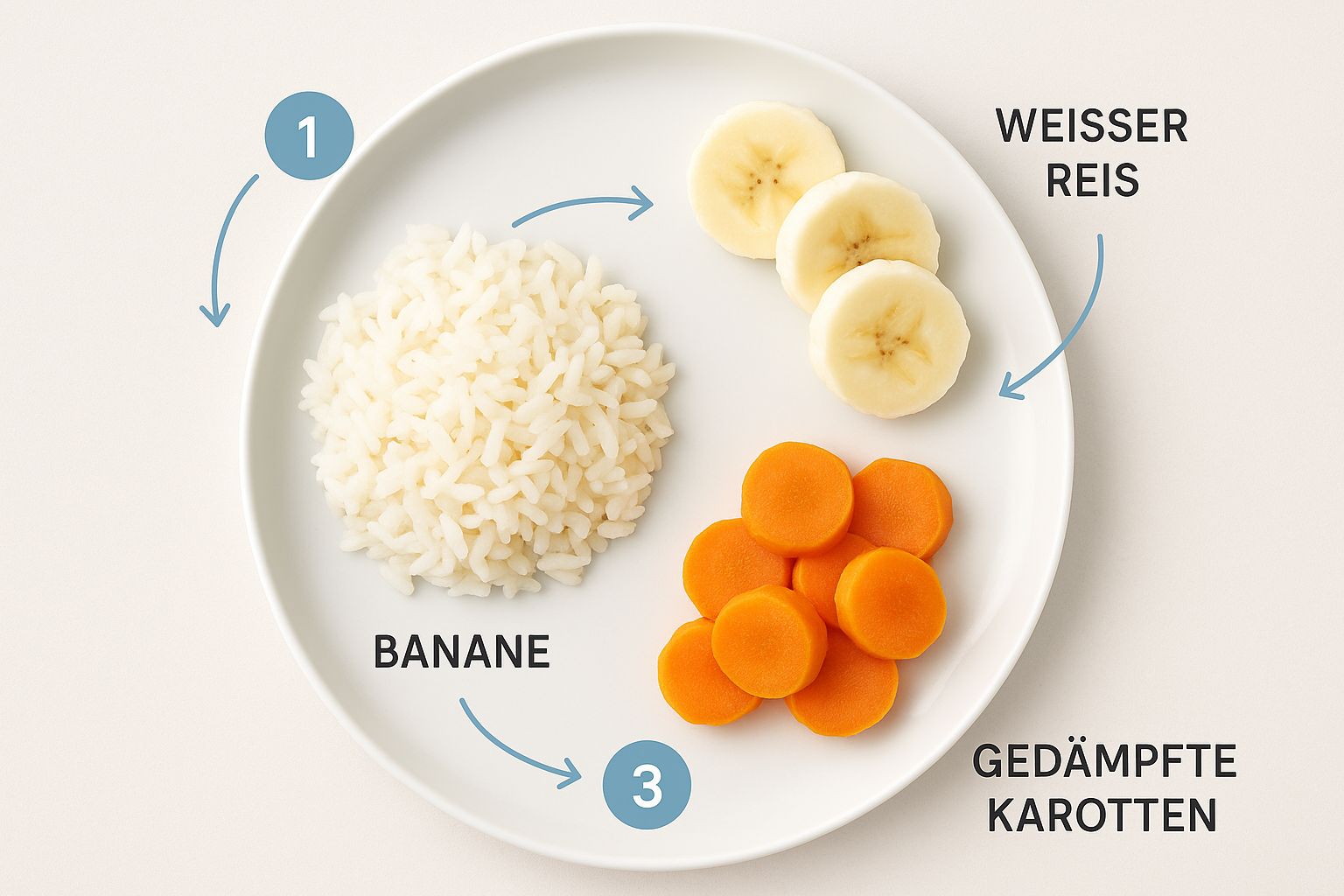
Choosing simple, easily digestible foods such as cooked rice, bananas or steamed carrots takes the burden off your intestines and helps them to calm down.
To make it as easy as possible for you to get started, we have created an overview to help you with shopping and cooking.
FODMAP-rich foods and their alternatives
A clear structure is invaluable at the beginning. The following comparison shows you which foods you should initially avoid and which you can enjoy without hesitation.
| Food category | Foods to avoid (High FODMAP content) | Recommended alternatives (low FODMAP content) |
|---|---|---|
| Fruit | Apples, pears, mangoes, cherries, watermelon, dried fruit | Bananas (mostly green), blueberries, strawberries, oranges, kiwi |
| Vegetables | Onions, garlic, leeks, cauliflower, mushrooms, asparagus | Carrots, cucumbers, zucchini, bell peppers, potatoes, spinach, tomatoes |
| Grain products | Wheat, rye and barley products (bread, pasta, muesli) | Oat flakes (small amounts), gluten-free bread, rice, quinoa, millet |
| Legumes | Beans, lentils, chickpeas, soybeans | Only in very small, tested quantities; best to avoid initially. |
| Dairy products | Cow's milk, yogurt, cream cheese, soft cheese | Lactose-free milk, hard cheese (e.g. Parmesan), plant-based drinks (rice, almond) |
| sweetener | Honey, agave syrup, sugar substitutes (sorbitol, xylitol) | Maple syrup, rice syrup, stevia, regular table sugar (in moderation) |
This overview serves as a starting point for your diet if you have irritable bowel syndrome ( IBS). Don't stress if everything isn't perfect right away. The goal is to reduce the main burden of FODMAPs in your diet. A good tip: Read ingredient lists carefully, as onion powder, garlic, or fructose syrup are often hidden in ready-made meals and sauces.
It's best if you prepare your meals fresh. This way, you have complete control over what ends up on your plate. This initial, strict phase is the foundation for everything that follows. It creates the calm your gut needs right now and prepares you for the next, truly exciting step: reintroducing food and discovering your own personal tolerance levels.
Find your personal trigger foods
You've mastered the strict phase of the low-FODMAP diet? Great! You've given your gut a much-needed break. But now the really exciting part begins: the journey of discovery, where you find out what you personally tolerate. It's no longer about strict deprivation, but about making your diet more varied again and learning exactly where your limits lie.
This phase, often called the reintroduction or testing phase , is your very own personal learning process. The goal is clear: You want to identify your individual trigger foods and your tolerance threshold for the different FODMAP groups. Ultimately, you should have a flexible eating plan that allows you to enjoy your food while reliably keeping your symptoms under control.

The structured path back to enjoyment
Reintroducing FODMAPs needs to be approached systematically, otherwise you'll quickly lose track. Fortunately, the principle is quite simple: You test one FODMAP group at a time while continuing to maintain a strict low-FODMAP diet for your core diet. This way, you can clearly attribute your body's reactions to a specific food.
This is what a test for a FODMAP group could look like:
- Day 1: Introduce a small amount of the test food.
- Day 2: If everything went well, increase the amount to a medium portion.
- Day 3: If you continue to feel good, eat a normal portion.
- Days 4 & 5: Take a two-day break and observe whether any delayed reactions occur.
If you experience any discomfort during the test, stop the trial for that group. This isn't a failure, but an important learning experience! You now know that you are sensitive to this type of FODMAP. Note the result and return to your safe low-FODMAP diet for a few days until everything has calmed down.
Your most important tool: the food diary
During this phase, a food diary will be your best friend. Don't see it as a chore, but as your personal research log. Record everything here to identify patterns and finally interpret your body's signals correctly.
A good food diary is key to uncovering the subtle connections between food and well-being. It transforms a vague feeling ("I don't think I can tolerate this") into a concrete insight ("Whenever I eat more than 100g of yogurt, I get bloated.").
What should definitely be in your diary?
- Date and time: When did you eat what?
- Food and quantity: Be as precise as possible, also with the test quantities.
- Symptoms: Note the type (e.g., bloating, cramps, diarrhea), the severity (on a scale of 1-10), and when they occur.
- Other factors: Note your stress level, sleep quality, and any significant events. These can also affect your digestion.
This approach not only helps you identify problematic foods but also helps you find your own personal tolerance threshold. Perhaps you can't tolerate half an onion, but a small amount of onion powder in a sauce causes you absolutely no problems. This knowledge alone gives you back an enormous amount of freedom in your everyday life.
Targeted testing of individual FODMAP groups
To proceed systematically, test each FODMAP group individually. My tip: Start with the foods you miss the most. Here are some examples of how you can test each group:
| FODMAP group | Example test food | Typical test quantities |
|---|---|---|
| Fructans | 1 slice of wheat bread, ½ clove of garlic, 1 tbsp onions | Start small, then gradually increase. |
| lactose | ½ glass of milk (100 ml), ½ cup of yogurt | Increase to 200 ml of milk or 1 cup of yogurt. |
| Fructose | ½ mango, 1 tsp honey, 2-3 asparagus spears | Increase quantities slowly to find the threshold. |
| Galactane (GOS) | ¼ cup lentils, ½ cup chickpeas (canned, well rinsed) | Start very small here, as it is often poorly tolerated. |
| Polyols | 3-4 mushrooms, ½ avocado, some sugar-free chewing gum (sorbitol) | Also, be aware of hidden polyols in "light" products! |
Be patient with yourself and your body. Sometimes the distinction isn't easy. If you feel like you're reacting to many things, it can be worthwhile to dig deeper. In our article on uncovering intolerances, you can learn more about how to gain clarity.
The trial phase is not a race. It's a valuable investment in your future well-being. At the end of this process, there will be no rigid prohibitions, but rather a sound understanding of which diet works best for you personally when dealing with irritable bowel syndrome .
Here's how to create an irritable bowel syndrome-friendly everyday life
Okay, so now you know about FODMAPs and perhaps even some of your personal triggers. But how do you translate that into a relaxed and delicious everyday life, without feeling like you're depriving yourself? Putting theory into practice is often the biggest hurdle. Don't worry, with a few clever strategies, an IBS-friendly diet will quickly become second nature.

It's about finding a way that works for you without having to agonize over meals for hours. The key lies in planning and adapting familiar dishes simply and creatively. You'll see: enjoyment and a happy stomach aren't mutually exclusive.
Practical ideas for your meals
To make it easier for you to get started, here are a few concrete ideas. Consider them as inspiration that you can adapt to your preferences and tolerances as you wish.
A breakfast that gives you energy:
- Oatmeal porridge: Cooked with water or lactose-free milk and garnished with a handful of blueberries, a spoonful of maple syrup, and a few walnuts. Oatmeal is a great source of soluble fiber , which works wonders for many people with irritable bowel syndrome.
- Gluten-free bread with toppings: A slice with lactose-free cream cheese and cucumber slices or a hard-boiled egg are a simple but filling option.
- Rice cakes with banana: Quick, easy, and usually very well tolerated. A few crushed raspberries add extra flavor.
Light and delicious lunch:
- Large mixed salad: A base of lamb's lettuce or lettuce, plus cucumbers, tomatoes, bell peppers, and carrots. Grilled chicken breast strips or some tuna (in its own juice) make good protein sources. A dressing of olive oil, lemon juice, salt, and pepper is quick and easy to make.
- Rice bowl with vegetables: Cooked rice forms the base, topped with steamed zucchini, carrots, and a few broccoli florets (often tolerated in small amounts). A drizzle of soy sauce (tamari for a gluten-free option) completes the dish.
Relaxed dinner:
- Oven-baked salmon with potatoes: Bake a piece of salmon fillet with herbs and lemon in the oven, served with boiled potatoes with a little butter and dill. A classic that almost always works.
- Chicken curry (mild): Prepare diced chicken with coconut milk, turmeric, ginger, and easily digestible vegetables such as carrots and bell peppers. Served with basmati rice, this is a warming and comforting dish.
Shop smart and cook in advance (meal prep)
A well-planned shopping trip is half the battle. Create a shopping list that fits your weekly schedule. This not only saves time and money, but also prevents impulse purchases of less suitable foods.
Meal prep is another fantastic strategy for reducing stress. Simply take an hour or two on the weekend to prepare components for the week:
- Cook a large portion of rice or quinoa.
- Wash and cut the lettuce and vegetables.
- Boil some eggs hard.
- Prepare a safe salad dressing in a screw-top jar.
So during the week, all you have to do is assemble the prepared ingredients. This is a real game-changer on long workdays when you lack the energy for elaborate cooking. It prevents you from resorting to problematic ready-made meals due to lack of time.
Remain confident while traveling and when invited to events
Eating out or being invited to friends' houses can be a real challenge at first. But with a few simple tricks, you can master these situations without any stomach aches.
- At the restaurant: Take a look at the online menu beforehand. Look for simple, straightforward dishes like grilled meat or fish with sides such as potatoes or rice. Don't hesitate to ask for small changes, for example, serving the sauce separately or omitting onions. Most kitchens are accommodating.
- When visiting friends: Communication is key. Speak openly with your hosts about your situation. Most people are understanding and grateful for the heads-up. Alternatively, you can offer to bring a salad or dessert that you can tolerate – this takes the pressure off your host and ensures there's something delicious for you.
Making your daily life more irritable bowel syndrome-friendly is a process. It's about establishing new habits that truly benefit you. If you'd like to delve deeper into the connections, you'll find valuable information in our article on gut health and the microbiome test , which explains how the composition of your gut bacteria can influence your food intolerances.
More than just nutrition: Your holistic approach
An IBS-friendly diet is an incredibly powerful tool for managing your symptoms. But your body isn't a machine that simply needs the right ingredients to function. A calm gut is the result of a delicate interplay between diet, mental balance, and a mindful lifestyle. So let's broaden our horizons and explore the other important pillars of your well-being.
The connection between your head and your gut isn't just your imagination; it's based on solid science. The so-called gut-brain axis is a direct communication highway between the two. Chronic stress, anxiety, or emotional tension send stress signals directly to your gut via this axis – this can cause muscle tension and completely disrupt your digestion.
The power of stress and relaxation
Does this sound familiar? You feel stressed and immediately notice your symptoms worsening. This is a classic pattern with irritable bowel syndrome (IBS). Stress puts your body into a "fight-or-flight" mode, where digestion is deemed non-essential and therefore slowed down. The good news is: you can actively counteract this.
It's not about leading a completely stress-free life overnight – that's unrealistic. What's much more important is integrating conscious breaks into your daily routine. Even just a few minutes can make a huge difference.
Simple breathing exercise for instant relaxation:
- Sit or lie down comfortably.
- Place one hand loosely on your stomach.
- Breathe in slowly and deeply through your nose, so that your abdomen noticeably rises. Count to four as you do so.
- Hold your breath for a brief moment.
- Breathe out slowly and completely through your mouth. Count to six as you do so.
- Repeat this for 5-10 breaths and feel the calmness return.
This simple exercise activates the parasympathetic nervous system – the part of your nervous system responsible for rest and proper digestion.
Did you know that the connection between mind and digestion is so strong that even official bodies recognize it? Data from BARMER health insurance shows that around 17 percent of Germans suffer from irritable bowel syndrome (IBS). The same studies indicate that stress can significantly worsen symptoms, which is why holistic treatment approaches are recommended. You can read more fascinating insights in the health insurance company's analysis .
Exercise that's good for your gut
Exercise is generally fantastic for digestion, but with irritable bowel syndrome (IBS), it's all about finding the right amount and type. While gentle activities are truly beneficial, overly intense exercise can actually worsen your symptoms.
- Gentle exercise (highly recommended): Regular walks, gentle yoga or relaxed cycling promote bowel movement (peristalsis), help against bloating and reduce stress as a side effect.
- Intense exercise (with caution): High-intensity training, such as long, fast jogging, can put the body under stress. This can lead to discomfort, especially for those prone to diarrhea.
Listen to your body and find a form of exercise that you truly enjoy and that leaves you feeling energized and not completely exhausted.
The often-forgotten helpers: sleep and drink
Two other fundamental, but often neglected, factors are sleep and adequate hydration. It can't be said often enough.
Lack of sleep is pure stress for your body and can significantly increase the sensitivity of your gut. Aim for seven to eight hours of restful sleep per night. Maintain a regular bedtime and a quiet, dark environment – your gut will thank you.
It's equally important to drink enough fluids. Aim for 1.5 to 2 liters of still water or unsweetened herbal tea per day. This keeps stools soft (especially important for constipation) and supports all metabolic processes.
A holistic approach means taking your health into your own hands. By combining stress management, gentle exercise, good sleep, and a smart diet, you create the best conditions for a permanently calm gut. To better understand the fundamentals of healthy digestion, we recommend our article on the importance of a healthy gut microbiome .
Your most frequently asked questions about the irritable bowel syndrome diet
The path to a diet that's good for your gut naturally raises many questions. You've already learned quite a bit about the basics, the low-FODMAP diet, and holistic approaches. To conclude, I'd like to give you some honest answers to the uncertainties that repeatedly arise in consultations. This will help you embark on your journey with more confidence and assurance.
Do I have to avoid high-FODMAP foods forever?
No, absolutely not – and that's one of the most important messages I can give you! The strict phase where you avoid FODMAPs is only a temporary measure. Think of it as a much-needed break for your gut. This phase usually only lasts a few weeks.
The real goal comes next: the reintroduction phase. Here you specifically test which of the FODMAP groups (i.e., fructose, lactose, etc.) you can tolerate and in what quantities. Many people are then relieved to discover that a small portion of avocado or a splash of milk in their coffee is suddenly no longer a problem.
Don't see this as a rigid diet full of prohibitions, but rather as a learning process. You'll develop a much deeper understanding of your body and learn to recognize and respect your own personal tolerance levels. The result is maximum freedom and variety on your plate.
What role do probiotics play in irritable bowel syndrome?
Probiotics are live microorganisms that can positively influence the balance of your gut flora. Since irritable bowel syndrome (IBS) is often associated with dysbiosis, an imbalance of gut bacteria, the use of probiotics initially sounds very logical and promising. And for some, they are indeed a great help, especially in strengthening the intestinal barrier or relieving bloating.
But, and this is crucial: the effect is extremely individual. There are countless different strains of bacteria, and not every strain helps every symptom or every person equally well. Research in this area is progressing rapidly. It's best to discuss taking it with a doctor or a qualified nutritionist. This way, you can find a supplement with strains whose effectiveness in treating irritable bowel syndrome (IBS) symptoms has already been proven in studies.
Can I still eat out if I have irritable bowel syndrome?
Yes, absolutely! Don't let anything spoil your enjoyment of restaurant visits or invitations from friends. It might require a little more planning at first, but over time it will become routine. With a few simple tricks, you can enjoy such occasions completely stress-free.
My tips for visiting a restaurant:
- Preparation is key: Check out the menu online beforehand. This way you can take your time looking for dishes that are likely to work well for you.
- Simplicity wins: Look out for simple dishes. Grilled fish or meat with baked potatoes, boiled potatoes or rice, and steamed, easily digestible vegetables are often a safe bet.
- Communicate politely: Don't be afraid to ask for small adjustments when ordering. A request like "Could I have the sauce separately, please?" or "Please without onions and garlic" will be understood in most kitchens.
When invited to someone's home, a quick, open conversation with the hosts often helps. Most people are grateful for a heads-up and happy to accommodate requests. Another great tactic: Offer to bring a side dish or dessert for everyone. This takes the pressure off your friends, and you're guaranteed to have something delicious for yourself.
Your path to a calmer stomach is unique. If you feel stuck and can't seem to make progress despite your best efforts, a professional analysis of your gut health or potential intolerances can finally bring clarity. At mybody-x.com, we offer scientifically sound tests that help you understand the true causes of your discomfort and tailor your diet accordingly. Find out with us what your body really needs: Discover the tests at mybody-x.com .


Share:
Building up your gut flora made easy – your guide to a healthy microbiome
Microbiome Test: Your Guide to Better Gut Health