
Microbiome Test: Your Guide to Better Gut Health
A microbiome test is essentially an inventory of your gut flora. It gives you a deep insight into which microorganisms live in your gut and what their composition is. Think of it as a detailed map of your inner world. This map shows you which inhabitants populate your gut and how they influence your digestion, your immune system, and even your mood. The goal is quite simple: to recognize connections and derive personalized steps for your health.
What a microbiome test really reveals

You might be wondering what such a test actually means for you and your health. The answer lies in the fascinating complexity of your gut, which you can think of as a huge, living ecosystem.
This ecosystem, your microbiome, is home to trillions of tiny inhabitants. In Germany alone, an estimated 40 trillion microbes live in our gut – that's far more than we have body cells! This community of bacteria, viruses, and fungi works together like a self-contained organ. Its density is highest in the large intestine, where most of the "work" takes place.
A personal inventory of your gut
A microbiome test is therefore a snapshot of this complex system. Modern laboratory technology analyzes which bacterial strains are present in your body and whether there is a healthy balance (eubiosis) or an imbalance (dysbiosis).
This will give you a clear picture that helps you understand the invisible connections between your lifestyle, your diet, and your well-being. It's not about diagnosing a disease. Rather, the test provides you with valuable knowledge so you can make informed decisions for yourself.
A microbiome test is a tool that puts you in control. You get the data to go from being a passive observer to an active shaper of your gut health.
From knowledge to action
The true strength of such a test lies not only in the knowledge it provides, but also in the action it offers. Instead of following general advice that's supposed to apply to everyone, you receive personalized insights. You see exactly where your gut flora might need support and receive concrete starting points for improvements.
This could affect, for example, these areas:
- Bacterial diversity analysis: A diverse microbiome is often more resilient. This test shows you the level of diversity in your gut.
- Identification of key bacteria: You will learn whether important groups of bacteria, which are responsible for the production of useful substances such as butyrate, are present in sufficient quantities.
- Indications of imbalances: The report can show whether certain bacteria are proliferating or whether you are lacking important, protective strains.
The following table gives you a quick overview of what you can learn from a test.
Your benefits at a glance
This table shows you what key information a microbiome test provides and what it means for your health.
| Analysis area | What is being investigated? | Your practical benefit |
|---|---|---|
| Bacterial diversity (diversity) | The number and distribution of different types of bacteria. | A high diversity is considered a sign of a robust and healthy intestinal ecosystem. |
| Key bacteria (e.g., butyrate producers) | The presence of important bacteria that produce short-chain fatty acids. | You can tell whether your intestinal lining is well nourished and your intestinal barrier is intact. |
| ratio of Firmicutes to Bacteroidetes | The balance between these two major strains of bacteria. | Provides insights into your predisposition for calorie utilization and your weight management. |
| Dysbiosis Index | A value that describes the overall balance of your gut flora. | You can see at a glance whether your gut flora is balanced or if action is needed. |
With this information, you can specifically adjust your diet, select the right probiotic or prebiotic aids, and optimize your lifestyle.
If you would like to delve deeper into the basics of gut health, also check out our comprehensive article on the connection between gut health and microbiome testing .
At the end of the day, a microbiome test gives you the chance to unlock your full health potential by understanding the invisible world inside you and influencing it in a targeted and positive way.
Your gut as a complex ecosystem

Your gut is so much more than just a digestive organ. Think of it as a thriving, living garden – a complex ecosystem where trillions of microorganisms live and work tirelessly for you. This community, known as the microbiome , is a crucial partner for your overall health.
These tiny helpers are true all-rounders. They not only help you break down your food and absorb valuable nutrients, but they also produce vital vitamins, such as vitamin K and certain B vitamins. Without these hardworking inhabitants, your body wouldn't be able to optimally utilize many nutrients.
Furthermore, they are essential for a strong immune system, as a large proportion of your immune cells reside in the gut. A healthy microbiome trains your immune system and helps it distinguish between friend and foe.
Balance is key
Just like in any garden, the right balance is crucial in your gut. In a healthy ecosystem, beneficial "plants" (beneficial bacteria) and potential "weeds" (harmful bacteria) keep each other in check. We call this harmonious coexistence eubiosis .
However, if this balance is disrupted, it's called dysbiosis . You can imagine it like weeds taking over your garden and crowding out the good plants. This can be triggered by various things:
- Stress: Prolonged stress can negatively affect the composition of your gut flora.
- Nutrition: A one-sided, low-fiber diet with lots of sugar and processed foods tends to "fertilize" weeds.
- Medications: Antibiotics in particular can kill not only harmful but also beneficial bacteria, thus disrupting the balance.
Dysbiosis rarely goes unnoticed. It can manifest as digestive problems such as bloating or abdominal pain. However, the effects often extend far beyond this and can also lead to fatigue, skin problems, or increased susceptibility to infections.
The diversity of your gut microbiota is the most important indicator of your gut's resilience. The more different types of beneficial bacteria live in your gut, the more stable and adaptable your entire ecosystem is.
Understanding good and bad roommates
To restore balance, it's helpful to understand the key players in your gut. There aren't simply "good" and "bad" bacteria, but rather many different groups with very different functions.
Among the best-known beneficial bacteria are bifidobacteria and lactobacilli . They produce lactic acid, creating an acidic environment in which pathogens thrive. At the same time, they strengthen your intestinal lining, an extremely important protective layer. Problems with this barrier function are also known as leaky gut. You can learn more about this in our article, which explains how a leaky gut test can provide clarity .
Other important helpers are butyrate-producing bacteria , such as Faecalibacterium prausnitzii . Butyrate is a short-chain fatty acid that serves as the main energy source for the cells of your intestinal lining and inhibits inflammation. A deficiency of butyrate can weaken the intestinal barrier.
This is precisely where a microbiome test comes in. It helps you recognize these connections. It shows you the diversity of bacteria in your gut and whether any important bacterial groups are missing. This knowledge is the essential foundation for correctly interpreting your test results later and taking targeted steps to improve your well-being.
Here's how easy a home microbiome test works
The idea of a lab analysis often conjures up images of doctor's visits, complicated procedures, and long waiting times. But reality has long since changed. A modern at-home microbiome test is designed to fit easily and discreetly into your daily routine. You manage the entire process conveniently from home – from ordering the kit to receiving your personal results.
The whole thing is designed to make controlling your health data as straightforward as possible. It's about removing barriers and showing that you don't have to be an expert to gain deep insights into your body.
Your path to colon analysis step by step
The entire process is surprisingly simple and can be broken down into a few clear steps. This quickly turns the idea of learning more about your gut into a tangible reality.
-
Ordering and delivery of the test kit: It all starts with ordering your test kit, which will be delivered discreetly to your home by mail. Inside you will find everything you need for sample collection, including very easy-to-follow instructions.
-
Simple and hygienic sample collection: This step worries many people beforehand, but thanks to the clever design of the test kits, it's completely straightforward. You take a tiny stool sample using the enclosed swab. The tube already contains a special liquid that keeps your sample fresh and preserved on its way to the lab.
-
Free return shipping to the lab: Once the sample is in the tube, pack it securely in the provided, prepaid return box. Simply drop it in the nearest mailbox. From here on, the professionals take over.
The following graphic clearly illustrates how simple the process is from sample to finished report.
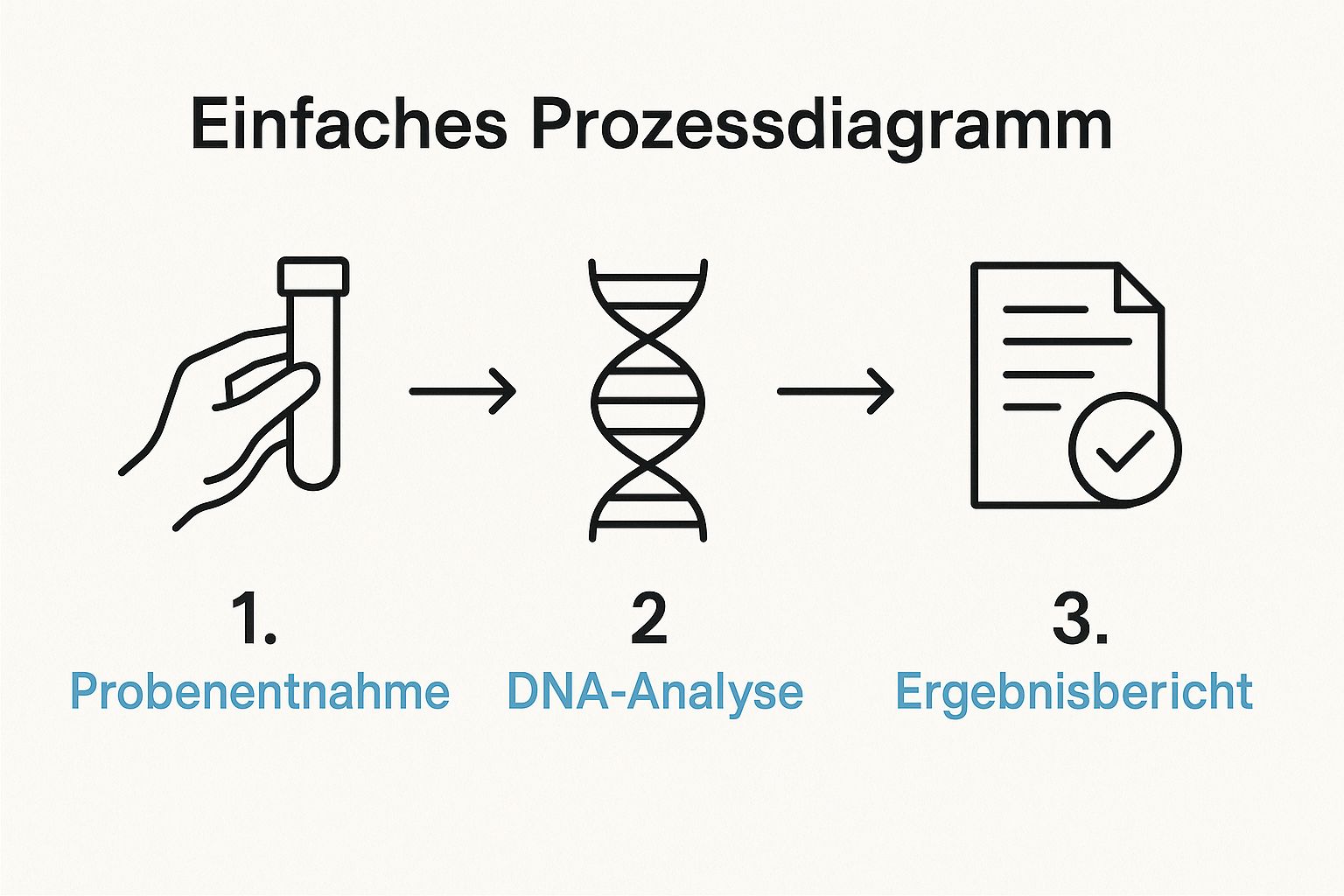
As you can see, everything is designed to make it as easy as possible for you. This allows you to fully concentrate on what really matters: the new insights for your health.
A look behind the scenes of the laboratory
Once your sample arrives at the certified laboratory, the real scientific work begins. This is where state-of-the-art technology comes into play, deciphering the genetic material of the countless microorganisms in your sample. But what exactly happens during this process?
The most common and scientifically recognized standard for a microbiome test is the so-called 16S rRNA gene sequencing . This sounds terribly complicated at first, but it can be explained quite simply.
Imagine that every bacterium carries a kind of genetic fingerprint – the 16S rRNA gene. All bacteria have this gene, but its exact expression is unique to each species. In the lab, the DNA from your sample is isolated, and this exact gene is amplified millions of times and then read.
By comparing the identified gene sequences with huge scientific databases, the laboratory can determine very precisely which types and strains of bacteria live in your gut and, above all, how many of them are present.
This process essentially creates a detailed map of your very own gut ecosystem. Bioinformatic algorithms analyze these vast amounts of data and generate your personalized report. This report translates the complex lab data into understandable graphics and clear explanations, showing you the strengths and perhaps also the weaknesses of your gut flora.
If you would like to delve even deeper into the basics, our article on the home stool test will provide you with further insights .
At the end of this process, you'll hold a comprehensive report in your hands that doesn't just provide you with dry data. It helps you understand the connections and derive concrete, personalized steps for your health. In this way, a tiny sample becomes a powerful tool for your well-being.
Understand and implement your test results

The moment has arrived: You're finally holding the results of your microbiome test in your hands. So exciting! But what exactly do all those graphs, percentages, and complicated Latin names mean? Don't worry. We'll help you extract valuable insights for your health from the raw data. We'll translate the jargon and show you how to not only understand your results but also translate them into concrete, positive changes.
A well-prepared microbiome test report thankfully doesn't leave you with just the raw data. It's designed so that you can easily understand the complex interactions within your gut. Simply imagine the report as the blueprint of your inner garden: it shows you which "plant species" (bacteria) are growing there, whether the "soil" (your intestinal lining) is well-nourished, and whether the entire system is in balance.
The most important key figures in your report
Your test results likely contain several key indicators that tell you at a glance about the health of your gut. Each of these values tells a small part of the story about your internal ecosystem.
The core values usually include:
- Bacterial diversity: This is perhaps the most important indicator of all. High diversity means that many different types of bacteria live in your gut. This is a great sign of a robust and adaptable microbiome that is better equipped to withstand disruptions.
- Dysbiosis Index: This value summarizes whether your gut ecosystem is in balance (eubiosis) or out of balance (dysbiosis). An elevated value may indicate that potentially problematic bacteria have gained the upper hand.
- Analysis of key bacterial groups: This test shows you the presence of key bacteria. These include, for example, butyrate producers such as Faecalibacterium prausnitzii . They produce a crucial energy source for your intestinal lining, thus strengthening the important intestinal barrier.
- Ratio of Firmicutes to Bacteroidetes: The balance between these two major strains of bacteria provides interesting clues about how efficiently your body obtains energy from food.
Your test result is not a diagnosis. It's a valuable snapshot and a data foundation. Consider it a starting point to understand the connection between your lifestyle and your well-being and to take proactive action.
From analysis to practical application
The true value of your microbiome test lies in integrating the results into your daily life. Instead of following general advice, you can now specifically target the right areas for improvement. A good results report therefore provides you not only with numbers, but also personalized recommendations for action.
Based on your individual values, specific tips could look something like this:
Example 1: Low diversity
- Recommendation: Increase the variety of plant-based foods in your diet. Aim for 30 or more different plants per week . These include vegetables, fruits, legumes, nuts, seeds, and whole grains. Each type of plant feeds different beneficial bacteria.
Example 2: Deficiency of butyrate-forming agents
- Recommendation: Incorporate more resistant starch and soluble fiber into your diet. This is practically the favorite food of butyrate-producing bacteria. So, eat more cooled potatoes, green bananas, oatmeal, and lentils.
Example 3: Signs of dysbiosis
- Recommendation: Reduce sugar, highly processed foods, and unhealthy fats. They promote the growth of unwanted bacteria. At the same time, you can incorporate fermented foods like yogurt, kefir, or sauerkraut to support your microbiome with beneficial probiotic cultures.
The scientific basis for such analyses is constantly strengthening. For example, the Robert Koch Institute (RKI) analyzed a total of 9,378 different bacterial strains in Germany alone in 2024. This enormous diversity underscores the importance of precise tests for understanding the unique properties of bacteria and for providing health recommendations based on this understanding.
Your test result is therefore the first step. Implementing these recommendations will help you actively shape your gut flora. If you'd like to proceed systematically, our guide on building gut flora can provide valuable tips . Consider your report your personal roadmap to greater well-being – a tool that helps you set the right course.
Here's how to find the right microbiome test for you
The market for gut health tests is booming, and the sheer number of options can be overwhelming. How are you supposed to find the microbiome test that's truly right for you and provides real answers? It's not about simply grabbing the cheapest provider. A few key quality indicators are far more important, so that in the end you don't just get a bunch of data, but genuinely understandable and actionable insights for your health.
Remember: Choosing the right test is an important step on your path to better well-being. You're entrusting a company with your sensitive health data and investing time and money in the hope of gaining clarity. It's important to take a close look.
What you should pay attention to when making your selection
To make your decision easier, we've summarized the most important points that define a high-quality test. Think of it as your personal checklist to separate the wheat from the chaff.
- Scientific method: The gold standard for analysis is 16S rRNA gene sequencing . This method is precise, reliable, and firmly established in science. A reputable provider should be transparent about which method they use.
- Certified laboratory: Your sample belongs in the hands of professionals. Ensure that the analysis is performed in a certified laboratory. ISO certifications (such as ISO 9001 or ISO 13485) are a clear seal of high quality standards and verified processes.
- Data privacy is paramount: Your health data is extremely personal. The provider must guarantee the highest data protection standards, above all GDPR compliance. This includes processing your sample pseudonymously and storing your data with absolute security.
- Understandable results: What good are pages of tables filled with technical terms you can't decipher? A good report translates complex lab results into clear graphs and simple explanations. It should show you what the results mean for you personally.
- Concrete recommendations for action: This is perhaps the most valuable part. The test should give you practical, personalized advice. You need actionable tips for your diet and lifestyle that are directly tailored to your individual findings.
Scientific accuracy is a point that should not be underestimated. Research is constantly evolving. For example, a new approach in microbiome research at the Friedrich-Alexander University of Erlangen-Nuremberg has demonstrated how crucial precise and transferable methods are for truly proving the benefits of microbiome tests for humans.
The mybody-x approach: Your partner for gut health
At mybody-x, we've made it our mission not just to send you a test, but to truly support you on your journey to greater well-being. Our approach is based on scientific precision, maximum transparency, and above all, clarity. Because we know: the real value lies not in the data itself, but in what you do with it.
We won't leave you alone with your results. Our goal is to explain the connections within your body in such a way that you can take control and make informed decisions for your health.
Therefore, our microbiome test meets all the aforementioned quality criteria. From the analysis in our ISO-certified partner laboratory to the preparation of your results – every step is designed to offer you security and real added value.
The mybody-x microbiome test was developed precisely for this purpose: to give you a deep yet easily understandable insight into your gut ecosystem.
It offers you a comprehensive analysis that provides clarity. You not only receive an evaluation of your bacterial diversity, your dysbiosis index and important key bacteria, but also very specific, practical recommendations for your diet and lifestyle that you can implement immediately.
With the mybody-x microbiome test, you're not just investing in an analysis, but in the knowledge and tools to actively and independently manage your health. It's your personal partner, helping you understand your body's language.
Frequently asked questions about the microbiome test
You now have a good insight into the world of your microbiome and the possibilities of testing. But often, a few very specific questions remain unanswered. That's why we've compiled and answered the most frequently asked questions here to clear up any remaining uncertainties.
For whom is a microbiome test useful?
A microbiome test is perfect for anyone who wants to take control of their health and truly understand their body. It's a fantastic tool for those who want to be proactive and not wait until problems arise.
The test can be especially helpful if you:
- You repeatedly struggle with nonspecific digestive problems such as bloating, a feeling of fullness, or irregular bowel movements.
- You want to specifically build up your immune system, but don't know where to start.
- You're curious about how your diet affects your gut microbiome and where there's room for improvement.
- You are looking for ways to sustainably increase your energy levels and overall well-being.
It's important to know that this test is not a medical diagnostic tool. Think of it more as a preventative guide that reveals the invisible connections between your lifestyle and how your body feels. You'll receive concrete data to finally make conscious decisions for your health.
How often should you repeat a test?
Your microbiome is anything but static. Think of it more as a dynamic ecosystem that constantly adapts to your life. An initial test is therefore a valuable inventory – essentially your personal map of its current state.
When you then start making changes based on the results – perhaps changing your diet, eating more fiber or incorporating probiotic foods – that's when things get really exciting.
A good time for a follow-up test is about three to six months after a major lifestyle change. This is usually enough time for measurable changes to occur in your gut flora.
A follow-up test then serves as your own personal progress check. You'll see in black and white whether your efforts are paying off and how your little community of bacteria in your gut has developed. This can be incredibly motivating and encourage you to stick with it.
What is the difference between a home test and a stool analysis performed by a doctor?
This is a very important question, because the two approaches pursue very different goals. A home test, like the one you find with us, is designed for prevention and optimizing your lifestyle. The focus here is on:
- The composition of your gut microbiome: How diverse are your bacteria? Is there a good balance?
- Optimizing your everyday life: You will receive very specific, personalized recommendations for your diet.
- Health care: It helps you to proactively take care of your well-being before problems arise.
A stool analysis performed by a doctor, on the other hand, is usually done when there is a specific suspicion of a disease. The doctor then looks specifically for certain things, for example:
- Pathogens: Bacteria, viruses or parasites that could trigger an acute infection.
- Inflammatory markers: Values such as calprotectin, which indicate chronic inflammatory bowel diseases.
- Blood in the stool: An alarm signal that must be investigated immediately.
The two tests are therefore not mutually exclusive, but rather complement each other perfectly. The home test is your companion for preventative care, while the medical analysis is the tool for diagnosis.
Can medications affect the results?
Yes, absolutely. Certain medications can significantly disrupt the composition of your microbiome and skew the test results. Antibiotics are a prime example. They don't distinguish between "good" and "bad" bacteria and thoroughly clean up your gut.
But other medications can also play a role:
- Proton pump inhibitors (stomach protection): They change the pH value in the stomach, which in turn affects which bacteria make it to the intestines.
- Metformin: A common medication for type 2 diabetes that is known to alter the intestinal flora.
- Laxatives: They can greatly accelerate intestinal transit and thus temporarily alter the composition of the microbes.
Therefore, it is extremely important that you honestly state which medications you are taking when taking the test. To get the clearest possible results, we recommend taking the test no sooner than four weeks after finishing a course of antibiotics . If you are unsure or take medication regularly, it is best to speak briefly with your doctor or therapist beforehand.
We hope these answers have helped you gain more clarity. The path to better gut health begins with the first step: understanding your own body. The mybody-x microbiome test was developed precisely for this purpose – scientifically sound, simply explained, and with concrete tips to guide you on your journey to greater well-being.



Share:
Diet for irritable bowel syndrome: How to soothe your stomach
Microbiome testing for improved gut health